Feeds:
Posts
Comments

Archive for the ‘Offshore Energy – General’ Category

Wadden Sea

Germany will work with the Dutch exploration and production company, ONE-Dyas, to operate a gas field in the North Sea above Schiermonnikoog and the German Wadden island of Borkum, Dutch broadcaster NOS reported on Wednesday.

The announcement was made on Tuesday by Bernd Althusmann, economy minister of the state of Lower Saxony, NOS reported.

“We cannot afford to ask the Netherlands for more gas and continue to refuse to extract our own gas,” Althusmann said.

EURACTIV

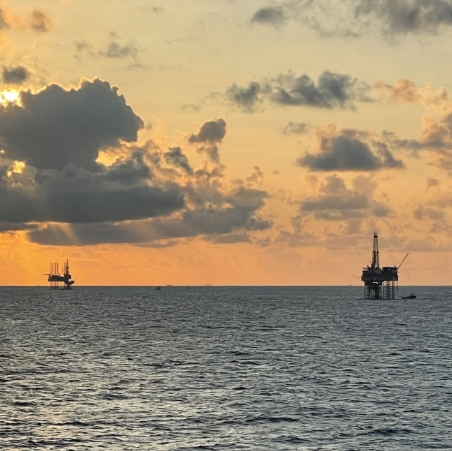
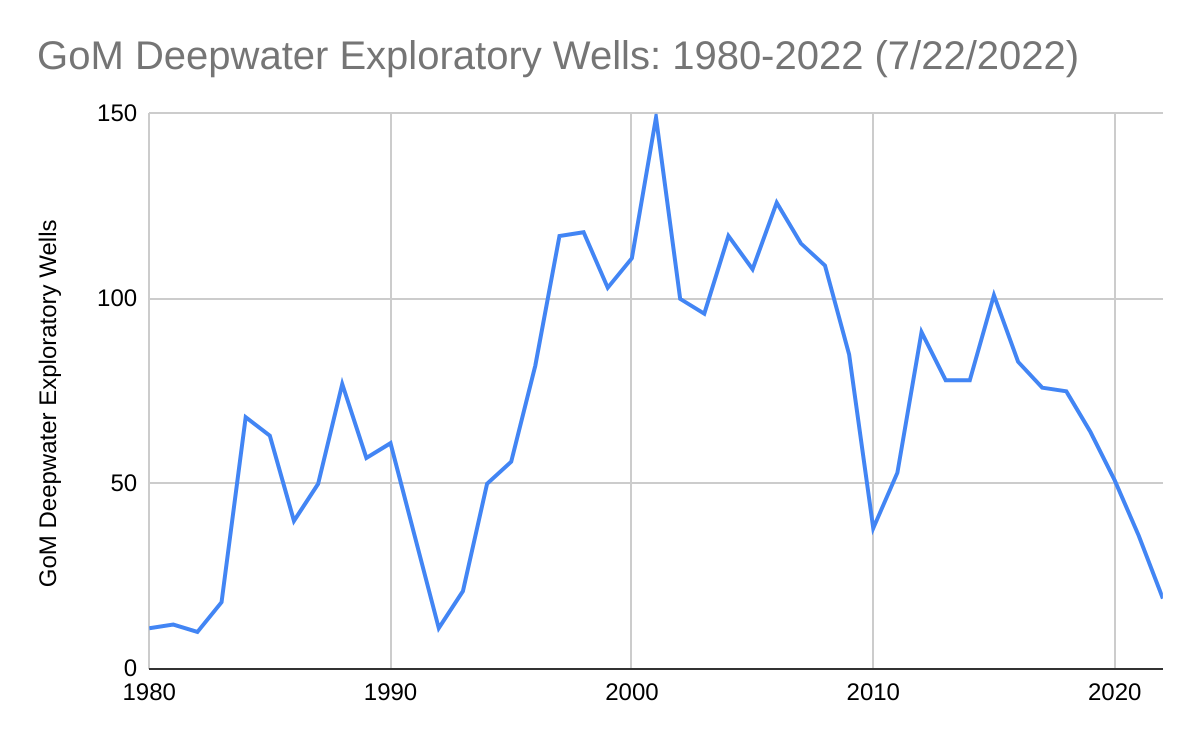
Meanwhile, the US offshore program continues to be paralyzed.

Read Full Post »

Read Full Post »

Why U.S. Oil Companies Aren’t Riding to Europe’s Rescue

This article is primarily about Texas shale oil production. Offshore production, particularly in deepwater areas, is much more capital intensive, requires longer lead times, is exclusively on government leases, and is highly regulated by multiple agencies. These factors weigh against quick responses to market conditions. A Bloomberg article about Shell’s Vito project provides a good offshore perspective.

Vito

Another important factor in the offshore sector is that the major oil and gas producers seem to be going through an identity crisis, torn between what they are and what they (aided by some loud and powerful voices) think they should be. The future of these companies is dependent on how they navigate through all of this. The need for oil and gas is clearly not going away (see EIA projection below). Who will provide the supply and where will it be produced?

Read Full Post »

The administration has taken steps toward a resumption of leasing on Federal onshore lands, which account for only 7% of domestically produced oil and 8% of our natural gas. While this is a positive step, our economy is largely being driven by production on private lands, absent which we would have a serious supply crunch. This new EIA graphic illustrates where the growth in natural gas production has been, and most of that growth has been on private land.

The growth in US oil production has been largely dependent on the Permian Basin:

Industry leaders have raised concerns about the extent to which Permian production can continue to grow and the country’s over-reliance on shale production.

There are no private offshore lands, and the future of US offshore production is almost entirely in the hands of the Federal government. It has now been 525 days since the last offshore lease sale. The Administration chose not to appeal the DC Federal Court decision vacating Sale 257, leaving that to the State of Louisiana and API (parties that actually support offshore oil and gas leasing).

It’s disappointing that the reasoning behind the judge’s Sale 257 decision has received so little attention, especially given that it hinged on BOEM not analyzing the benefit of high oil prices. (i.e. <leasing = <production = >prices = <intl consumption = < CO2) The decision was issued as Russian troops were amassing on the Ukraine border only 28 days before the invasion. Oil prices (WTI) had already reached $87/bbl and would soon spike to $120/bbl, so the decision embracing higher oil prices was (at best) bad timing. Keep in mind that this was not a matter of BOEM failing to consider GHG issues; BOEM had conducted those assessments. The judge’s decision was specific to BOEM not analyzing the GHG benefits of reduced foreign consumption as a result of the higher prices associated with reduced leasing.

Meanwhile, The 5 year program, without which offshore leasing cannot proceed, expires in June. Fellow Democrats Manchin and Kelly sent a letter to the President on 31 March urging the Administration to develop and implement a new 5 year program without delay. There is no online evidence of a response. Presumably, the 5 year program issue will be addressed in the bipartisan energy legislation that Senator Manchin is drafting.

Read Full Post »

Important BSEE safety alert – barricades and fall protection

hazardous grating

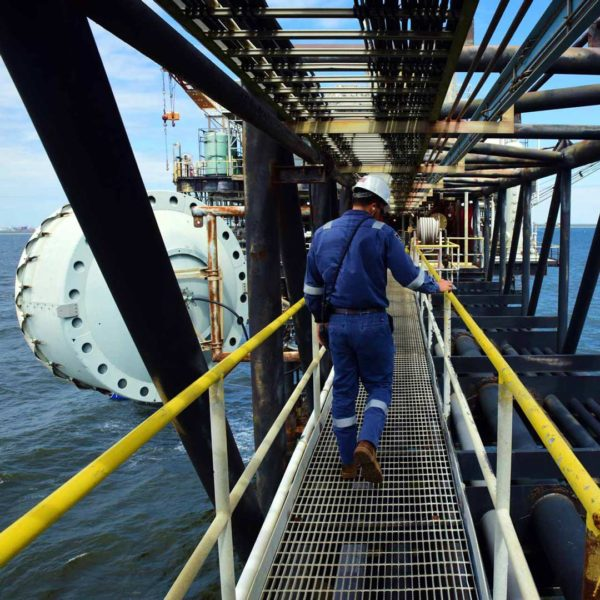
I never liked the label “slips, trips, and falls” because it trivializes serious safety incidents. Falls don’t get headlines, but they kill workers. In the 10 years prior to Macondo, falls were the leading cause of Gulf of Mexico fatalities. 17 workers died from fall incidents during that period. Related incidents associated with falling or moving equipment (15) and lifting operations (5) accounted for another 20 fatalities. There was only one fire related fatality.

Unfortunately, BSEE’s posted incident data are incomplete, so more detailed, company specific analysis is difficult. No incident summaries whatsoever are posted for 2001-2012 and 2021, and 2020 fatalities are only described as “occupational” or “non-occupational.”

BSEE does do a very good job with their safety alert program, and has repeatedly expressed concerns about chronic grating and fall issues. 2022 Safety Alerts 438 and 427, and 8 other BSEE alerts issued within the last 3 years (nos. 353, 365, 378, 389, 399, 409, 416, 423) addressed grating and falls. BSEE has also conducted blitz inspections to identify problem facilities, and the Coast Guard has repeatedly raised concerns about grating and fall protection.

Per BSEE Safety Alert 365, grating, open hole, and fall prevention safety measures were seriously deficient at many of the facilities visited during their blitz inspections in 2019. The prevention of fall incidents requires the full commitment of management. Some companies are clearly not making that commitment.

Read Full Post »

Paul Post – Mardi Gras, New Orleans

The offshore world lost an outstanding petroleum geologist when my friend and former colleague Paul Post passed away last week. His detailed obituary is linked.

Paul was the world’s leading authority on the oil and gas resource potential of the US Atlantic. He was also a gifted speaker who was skilled at presenting technical data to lay audiences. As Paul explained it, the US Atlantic has not been explored in paleo deep- and ultra-deepwater areas using exploration concepts proven successful in analogous West African and South American settings where massive discoveries have been made.

Paul estimated that the US Atlantic could contain 21.4 billion BOE with the major caveat that the presence of a working petroleum system was required and that could only be determined through drilling. At this point, the probability of major discoveries was thus modest, but the resource potential (should discoveries be made) was massive.

Unfortunately, Paul’s theories may never be tested. Prior to the 2020 elections, our self-described “energy dominance” President cynically withdrew the prospective Mid and South Atlantic areas through 2032. He had already withdrawn the highly prospective Eastern Gulf of Mexico in response to Florida political interests (even though the best EGOM prospects are more than 100 miles from Florida’s coast). Our current energy deficit President seems content to not hold any offshore lease sales while drawing down our strategic reserves.

Oh well, it was a great privilege to have known Paul and worked with such a dedicated professional. I’ll close with a couple of his favorite quotes:

“Uncertainty is an essential and nonnegotiable part of a forecast.”

Nate Silver, The Signal and the Noise

“The time to hesitate is through.”

Jim Morrison, Poet, Songwriter, and Lead Singer of The Doors

Read Full Post »

[Disclosure: I assisted the legal team that defended Bob Kaluza. That said, I completely disagreed with the charges against him and Don Vidrine before my involvement in the case.]

Bob Kaluza (L) and Don Vidrine

Unsurprisingly, there was a lot of tough guy talk in Washington DC after the blowout:

“Our job is basically to keep the boot on the neck of British Petroleum” 

Ken Salazar, Secretary of the Interior

Weeks after the explosion, President Obama told NBC’s Matt Lauer he was trying to figure out “whose ass to kick.”

Texas Monthly

It was therefore predictable that the Department of Justice (DOJ) would choose to prosecute BP employees individually. There were BP managers who would have been good candidates, but instead DOJ chose to criminally prosecute the working stiffs – the two BP well site leaders on the rig. They were the lowest ranking BP employees associated with the incident. This was apparently acceptable to BP, since their plea agreement blamed Kaluza and Vidrine’s for their role in overseeing the negative pressure test (#blametheworker). Never mind that:

  • BP management was responsible for the well planning and shortcuts that were the root causes of the blowout (see the previous posts in this Macondo series).
  • the extent to which the negative pressure test was misconducted and misinterpreted was and remains a topic of dispute.
  • there were no regulations or standards requiring this test or explaining how it should be conducted, and BP’s internal guidance was woefully inadequate.
  • Bob Kaluza was a temporary replacement for the regular well site leader, had worked primarily onshore, and had never conducted or witnessed a negative pressure test.
  • Kaluza and Vidrine were themselves victims and were fortunate to have survived the incident.

Despite all of this, DOJ still chose to prosecute the two well site leaders. However, the weaknesses in the DOJ case became more obvious over time, and DOJ dropped all but a misdemeanor water pollution charge. Vidrine, who had health issues that were exacerbated by the case, accepted a plea deal. Kaluza was confident of his innocence and chose to make his case in court. His defense team was very strong, and the trial was essentially a walkover. After less than 2 hours of deliberation, the jury fully acquitted Bob Kaluza (2/25/2016). Sadly, Don Vidrine passed away the following year.

LInked is a very good Texas Monthly article about the case.

Read Full Post »

While the previously discussed planning, cementing, and well suspension issues allowed the well to flow, there were many other equipment, operational, and management deficiencies that elevated the incident to a disaster. Below are those that bother me the most:

  • Blowout Preventers
    • The Deepwater Horizon BOP stack had a single blind shear ram. Regardless of what the regulations allowed, you don’t drill a complex well like this without redundant shearing capability (and at the time of the blowout most deepwater drillers were using rigs with dual shear rams). All well control emergencies requiring the emergency disconnect sequence, deadman, and autoshear functions are dependent on effective shearing capability. You can have redundancy in every other BOP element, but without dual shear rams, you don’t have a redundant BOP system. Further, for full redundancy both shear rams should be capable of sealing the well bore after shearing. In that regard, the present regulations and the applicable standard (API S 53) require only one shear ram capable of sealing. They are thus deficient and should be updated.
    • The DWH BOP system did not have full bore shearing capability (available at the time) which may have sheared the deflected drill pipe.
    • The DWH BOP system was not properly maintained and recertified as required by regulation.
    • Transocean’s “condition based maintenance” was a euphenism for “fix it when it fails.” Perhaps worse, BP authorized the continuation of operations knowing that an annular preventer was leaking.
  • The initial flow from the well was directed to the mud-gas separator instead of being routed overboard via the diverter. Routing the flow to the diverter would have provided additional time for the crew to safely evacuate.
  • Gas detectors
    • Not all gas detectors were fully operational. As justification, Transocean’s report expressed concerns about alarm fatigue, a weak excuse. Alarm issues can be effectively managed without disabling the devices.
    • The gas detectors did not automatically shutdown the generators, the source of the initial explosion. This is somewhat understandable on a dynamically positioned rig that is dependent on power to maintain position. However, someone should have shut down the generators as soon as gas was detected.
  • Engine overspeed devices didn’t work, and apparently weren’t tested regularly. Had they worked, the engine room explosion may have been prevented.
  • The crew had time to activate the Emergency Disconnect Sequence, but did not.
    • Deficient training
    • Uncertain chain of command
    • Fear of repercussions?

Read Full Post »

Industry standards are critical to safety achievement. They represent best practices as determined by leading experts in the many disciplines that support oil and gas exploration and development. Another plus for standards is that, unlike regulations, they can be developed in a timely manner, particularly where there is an immediate need. However, industry mergers and streamlining have reduced the diversity of input, and some companies either do not participate or participate primarily to promote or protect their particular interest. The need for a consensus can also result in “lowest common denominator” outcomes that lack the necessary rigor.

Minerals Management Service (MMS) reviews indicated that cementing issues were the leading contributing factor to well control incidents between 1992 and 1996 (see chart below). On August 16, 2000, MMS challenged a new API cementing work group to improve zonal isolation, reduce the occurrence of sustained casing pressure, and prevent annular flow incidents before, during, and after cementing operations. Unfortunately, the standard was long delayed because of internal disagreements within the work group. Feedback indicated that some participants preferred a watered down, less rigorous version.

It is undisputed that the primary cement at Macondo failed to isolate hydrocarbons in the formation from the wellbore—that is, it did not accomplish zonal isolation. If the cement had set properly in its intended location, the cement would have prevented hydrocarbons from flowing out of the formation and into the well. The cement would have been a stand-alone barrier that would have prevented a blowout even in the absence of any other barriers (such as closed blowout preventer rams, drilling mud, and cement plugs).

Chief Counsel’s Report, National Commission on the BP Deepwater Horizon Oil Spill

API Standard 65-2, Isolating Potential Flow Zones During Well Construction, if completed in a timely manner and complied with would likely have prevented not only the Macondo disaster, but also the 2009 Montara blowout in Australia. (The Montara investigation hearings were covered extensively on this blog in 2010.) This important standard was ultimately finalized in a reactive manner after the Macondo well blew out.

Standard 65-2 focuses on the prevention of flow through or past barriers that are installed during well construction. A few key elements that are pertinent from a Macondo perspective:

  • Companies are required to perform a risk assessment prior to utilizing foamed cement and make sure that the results of this assessment are incorporated in the cementing plan. In setting the production casing on the Macondo well, foamed cement was used in an oil-based mud environment, destablizing the cement and contributing to the failure to isolate the highly productive oil reservoir.
  • The standard specifies float valve and cement requirements for the shoe track at the base of the casing, the Macondo failure point. (Weatherford float equipment failures were a common element to both the Montara and Macondo blowouts. Weatherford’s $75 million settlement with BP seems rather modest when one considers the magnitude of the damage costs.)
  • The framework in Annex D of the standard does a good job of outlining the questions that should be asked in conducting a cementing risk assessment. These issues identified in the Chief Counsel’s report, which includes an outstanding review of the technical and management issues associated with the cementing/zonal isolation of the Macondo reservoirs, should have been addressed by BP and their contractors before initiating the well suspension program:
    • narrow pore pressure/fracture gradient;
    • use of nitrogen foamed cement;
    • use of long string casing design;
    • short shoe track;
    • limited number of centralizers;
    • uncertainty regarding float conversion;
    • limited pre-cementing mud circulation;
    • decision not to spot heavy mud in rathole;
    • low cement volume;
    • low cement flow rate;
    • no cement evaluation log before temporary abandonment; and
    • temporary abandonment procedures that would severely underbalance the well and place greater stress than normal on the cement job.

Unfortunately, such an assessment was not conducted and critical operational decisions were made in a rash manner with the objective of saving time. We know the outcome – 11 lives lost, massive pollution, and enormous social costs

Despite making multiple changes over the last nine days before the blowout, the Macondo team did not formally analyze the risks that its temporary abandonment procedures created. The Macondo team never asked BP experts such as subsea wells team leader Merrick Kelley about the wisdom of setting a surface cement plug 3,000 feet below the mudline to accommodate setting the lockdown sleeve or displacing 8,300 feet of mud with seawater without first installing additional physical barriers. It never provided rig personnel a list of potential risks associated with the plan or instructions for mitigating those risks.

Almost every decision the Chief Counsel’s team identified as having potentially contributed to the blowout occurred during the execution phase.

Chief Counsel’s Report

.

Read Full Post »

U.S. crude oil production in the forecast averages 12.0 million b/d in 2022, up 0.8 million b/d from 2021. We forecast production to increase another 0.9 million b/d in 2023 to average almost 13.0 million b/d, surpassing the previous annual average record of 12.3 million b/d set in 2019.

EIA

The short-term forecast doesn’t say how much of that production will come from the Gulf of Mexico. Last year, EIA forecast 2022 Gulf production to average 1.75 BOPD which seems about right based on the the most recent production data.

Read Full Post »

« Newer Posts - Older Posts »