Production at Chevron’s Leviathan, a giant offshore gas field
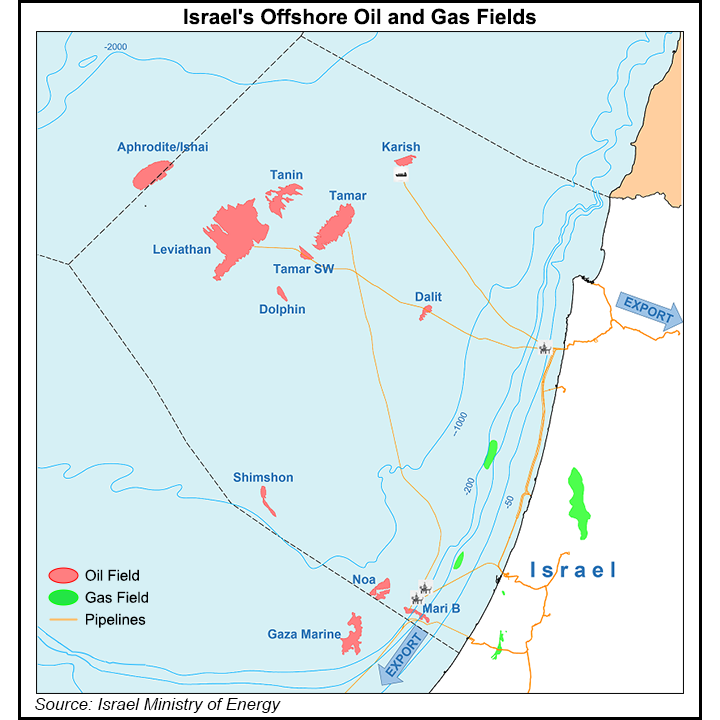
This may come as a surprise to many, but Israel produced 752 billion cubic feet of gas in 2022, which is nearly equivalent to US offshore gas production (788 bcf in 2022).
Chevron is the main operator in Israel, having purchased Noble’s assets in 2020. Absent Noble’s bold and pioneering exploration in the Eastern Mediterranean, Israel would have continued to be an energy importer dependent on coal for power generation.
Presumably, the protection of these offshore assets is a high priority for the Israeli Navy.
Edward J. Tennyson passed away last Friday at his Smith Mountain Lake, Virginia home. Ed worked in the Department of the Interior’s offshore program for more than 20 years, and arguably has done more than any single individual to advance oil spill response capabilities. A few of Ed’s many achievements:
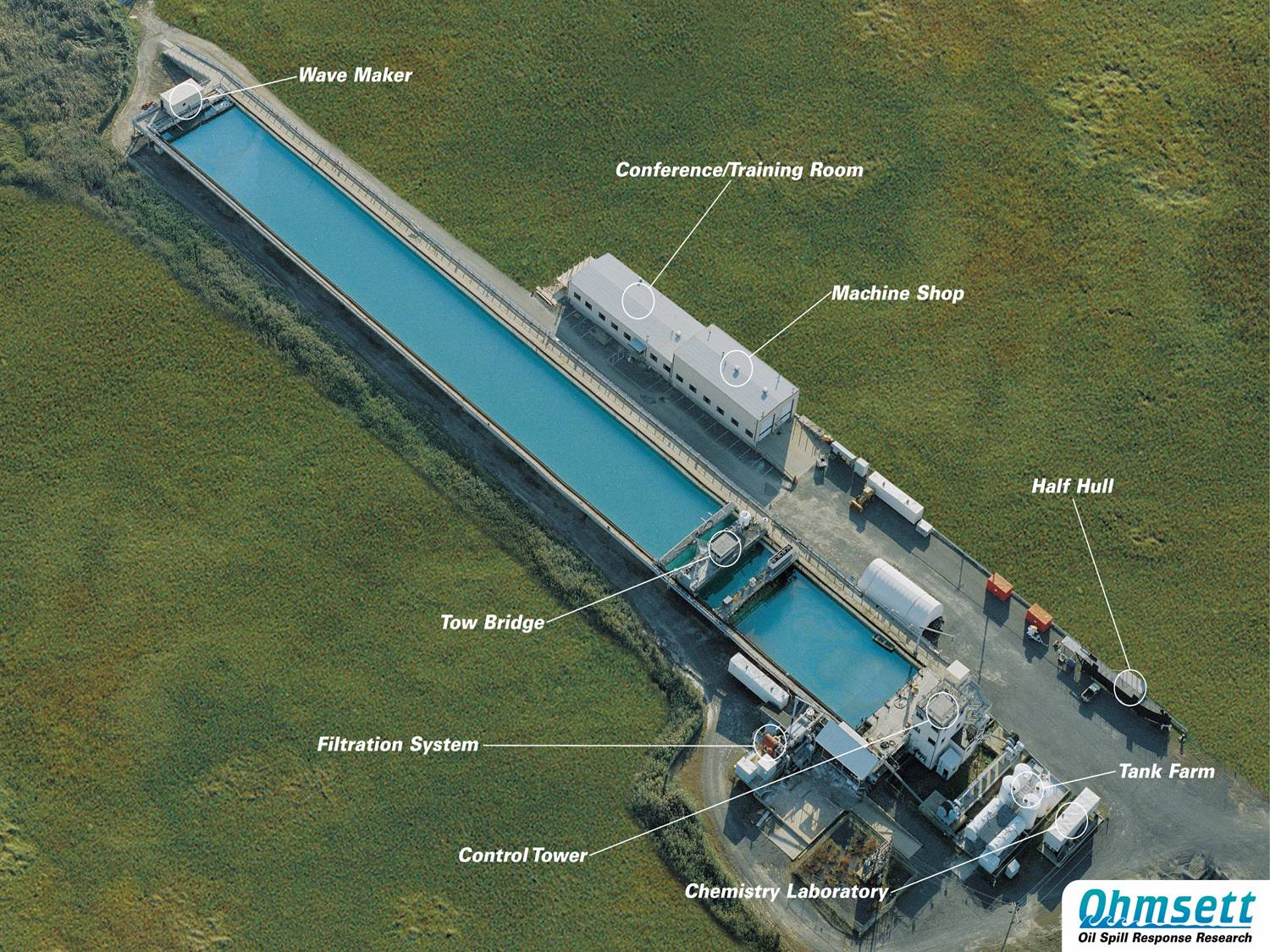
Ohmsett: EPA operated the Ohmsett spill response test tank in Leonardo, New Jersey, beginning in the early 1970s, but the facility fell into disrepair in the 1980s. Thanks to Ed’s vision and persistence, and the enactment of the Oil Pollution Act of 1990, the Minerals Management Service (MMS) began restoring the facility. Ed led the effort and did everything from operating forklifts to designing upgrades. Senator Frank Lautenberg (NJ) and a host of dignitaries participated in the grand reopening event in 1992. It was an amazing day, and Ohmsett, MMS’s only industrial facility, has exceeded even Ed’s lofty expectations.
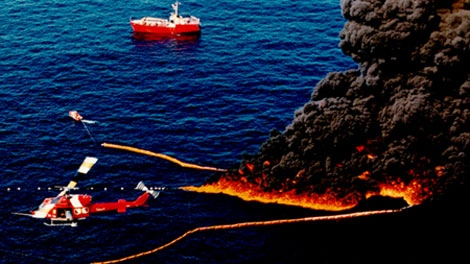
Burning oil slicks: Ed and a few of his US and international partners were the first to consider in situ burning as an oil spill response method. After some lab work, Ed proposed larger scale testing at Ohmsett in the presence of ice. The testing was amazingly successful, removing almost all of the oil. When Ed told a leading skeptic about the impressive results, his response was “you didn’t do it right.” 😀
Newfoundland burn: Because research spills were prohibited in US waters, Ed worked with his Canadian partners to conduct an in situ burning test offshore Newfoundland in 1993. Ed was an amazing leader during any kind of field trials, and was always the first person on the dock directing team members to their stations!
Remote sensing: Ed’s research led to a patent on the use of shipborne radar for locating oil slicks. Ed greatly advanced this capability by developing tools for airborne mapping and thickness determinations. As Ed frequently said, “90% of the oil is in 10% of the area.” By identifying where the oil was thickest, you could optimize spill response. (Ed was also an expert at identifying slicks with what he called his mach 20 eyeball 😀).
Chemical treatment: Ed was a leader in researching dispersants, herding agents, and other chemical methods for preventing spills from impacting shorelines or other sensitive areas.
Ed was an entertaining and informative speaker and was often called upon to brief congressional panels, and discuss his research at public meetings and professional conferences. He was rightfully a media darling and was often contacted for comments on oil spill response matters. Perhaps his most famous quote was in the Wall Street Journal during the Valdez spill in Prince William Sound. Ed described the spill response as follows: “Like mowing a 40 acre field with a 1/4 inch lawn mower.” 😉
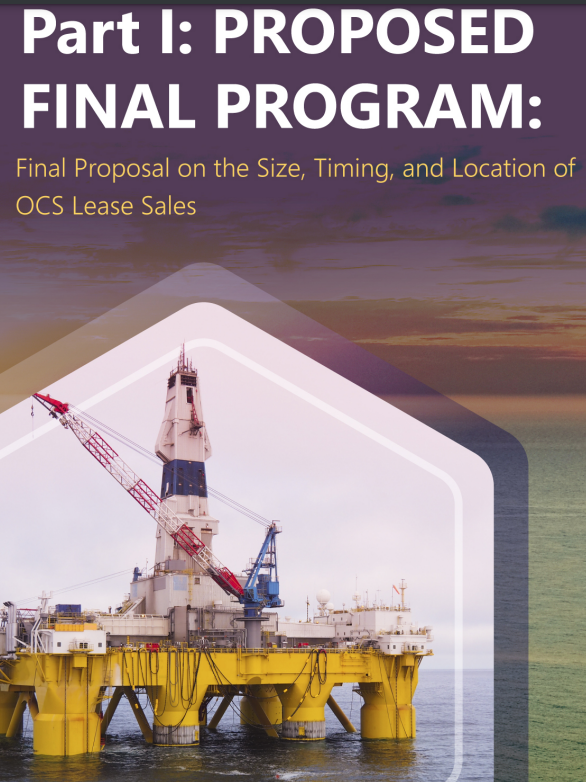
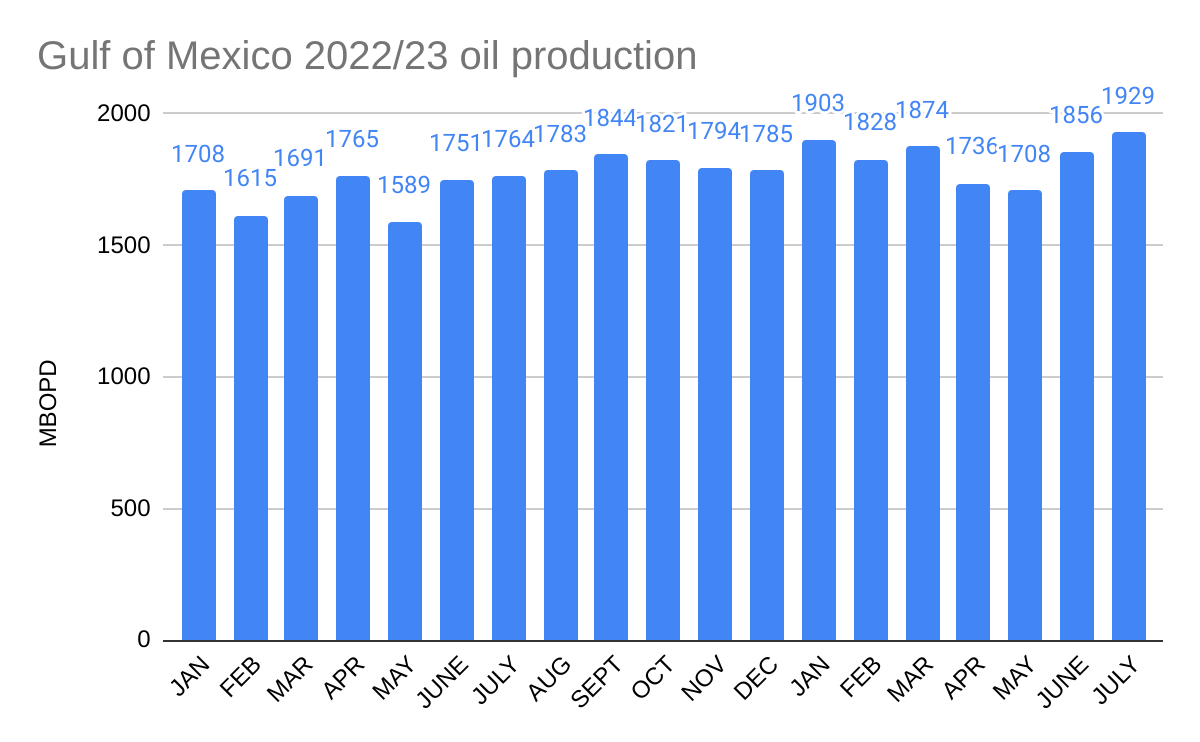
The Polar Pioneer was once a good rig for sub-arctic operations, but is not at all similar to the modern drilling units that are used on the deepwater Gulf of Mexico leases that now account for 93% of OCS oil production and 76% of the natural gas. With the exception of the GoM shelf, which is laudably being gleaned by independent producers, the deepwater GoM blocks are all that is left of the once robust US offshore leasing program.
Unless the picture of the scrapped drilling rig is intended to be symbolic of the current state of the leasing program, the photo choice implies inattention to significant technical details. The document does not include a single picture of a deepwater drilling unit or production facility.
Tommy first served as Senior Advisor in the Bureau of Ocean Energy Management, Regulation, and Enforcement (BOEMRE), a transition bureau in the wake of the blowout, and was later named Director of the Bureau of Ocean Energy Management (BOEM), one of the two new bureaus that were established to manage the offshore program. He subsequently served as DOI Chief of Staff, and was appointed Deputy Secretary in 2021.
Tommy was a strong leader and an energy moderate. He was highly regarded by the rank and file in BOEMRE and BOEM.
The press release announcing his departure is very professional with appropriate quotes from Secretary Haaland and Tommy. No reasons for his resignation are provided. However, given his balanced perspective on energy development, it would not be wildly speculative to suggest that he might have been a bit uncomfortable working in the policy bubble that produced documents like the latest offshore leasing plan.
United Oil and Gas Plc, which holds the right to search for oil offshore Jamaica, gave notice to investors that it would announce a preferred drilling partner in weeks.
The UK-based explorer requires a partner to split the risk for drilling offshore, which it estimates at US$30 million.
United Oil holds oil and gas assets in Egypt, United Kingdom and a high-impact exploration licence in Jamaica. Its net worth, at US$27.7 million, is less than the cost to drill a test well, but its team of professionals are betting on the island.
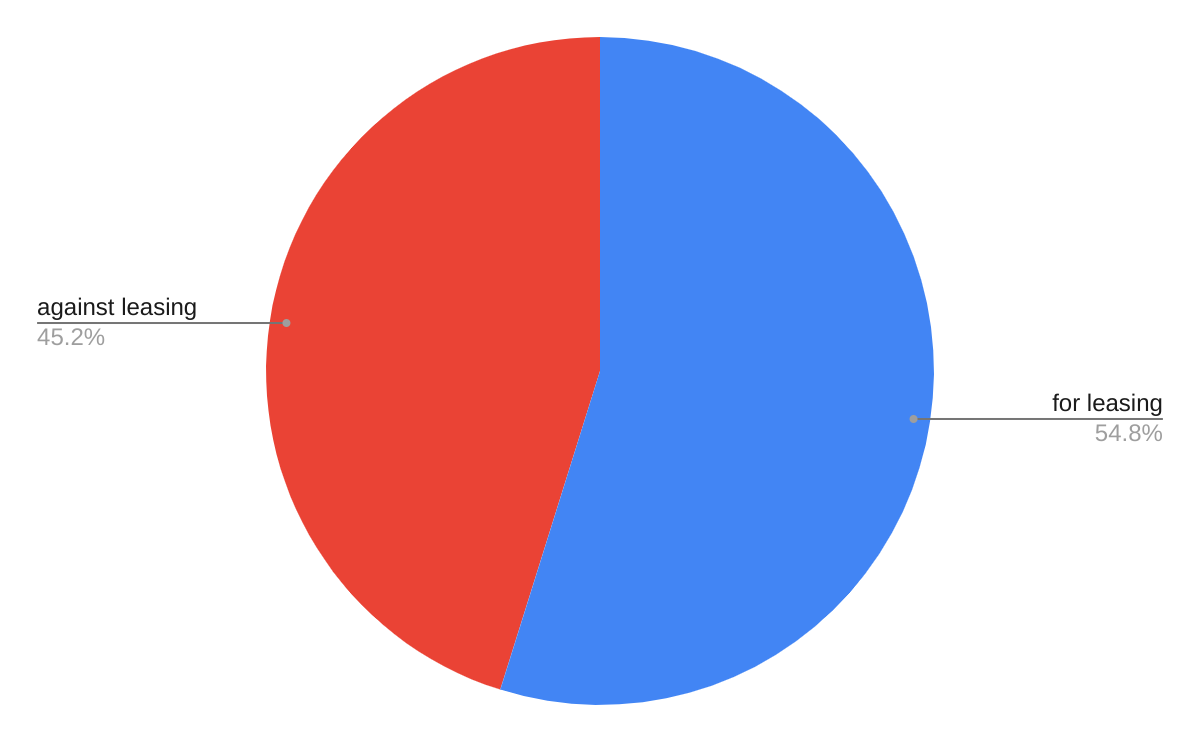
BOEM’s five year plan presented one of the few recent opportunities to “vote” solely on the issue of offshore oil and gas leasing. Advocates facilitated the voting process by providing form letters for and against leasing. Both opponents and supporters are quite good at these campaigns, so neither side had a significant organizational advantage.
BOEM summarized (Table A-11 of the plan) the public comments, and I tabulated the 748,719 letters on the attached spreadsheet. The number of letters supporting oil and gas lease sales exceeded those opposed by 72,383 or 21.4%. The supporters campaign also had more breadth in that there were 49 separate campaigns vs. 45 for leasing opponents.
The NRDC demonstrated their organizational clout with the largest single campaign (107,355 letters). Denise Neal, a name that is unfamiliar to me, impressively organized the largest proponent campaign (61,122 letters).
Summary:
letters supporting offshore oil and gas leasing: 410,551
letters opposing offshore oil and gas leasing: 338,168
letter campaigns supporting leasing: 49
letter campaigns opposing leasing: 45
largest campaign: NRDC – 107,355 letters in opposition (32% of all such letters)
largest pro-leasing campaign: Denise Neal – 61,122 letters in support (15% of all letters in support)
reduce energy costs, farming costs, prices of gasoline and other goods
climate
jobs
environmental justice, local communities
energy independence
fisheries
intl competitiveness
marine environment
national security
marine mammals
GoM production is lower in carbon intensity, higher US environmental stds.
fossil fuel dependency, unnecessary to meet energy needs, oppose new fossil fuel investments, leasing “would not reduce gas prices”
domestic oil and gas preferable during transition
oil spill risks
help improve supply chain
air pollution
help address inflation
stockpiling ocean space, energy price gouging
Interesting contradiction: Opponents of Sale 257 argued in Federal Court that BOEM failed to consider the positive GHG effect that higher prices (the logical result of lower production) would have as a result of reduced demand. The judge agreed with that argument and vacated the sale. Some of the same groups have now commented (per the BOEM summary) that additional leasing “would not reduce gas prices.”
The current leasing policy as articulated in both the draft and final proposed program is to phase out oil and gas production:
The long-term nature of OCS oil and gas development, such that production on a lease may not begin for a decade or more after lease issuance and can continue for decades, makes consideration of net-zero pathways relevant to the Secretary’s determinations on how the National OCS Program best meets the Nation’s energy needs.
Basing leasing decisions on highly uncertain “net-zero pathways” would seem to be a considerable stretch of the Secretary’s authority under the OCS Lands Act. A strategic shutdown of the offshore oil and gas program, which would dramatically increase energy supply and security risks going forward, should be authorized by Congress. Even the threat of such a shutdown could have major economic implications.
The Proposed Final Program includes a maximum of three potential oil and gas lease sales – the fewest oil and gas lease sales in history – in the Gulf of Mexico Program Area scheduled in 2025, 2027 and 2029.





 Bud's Offshore Energy (BOE)