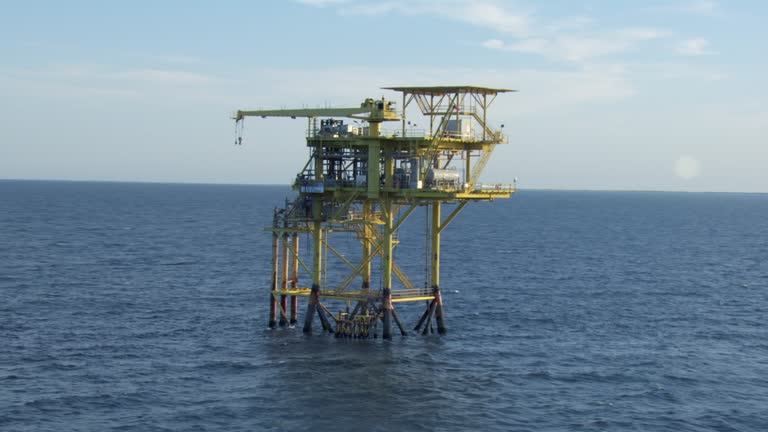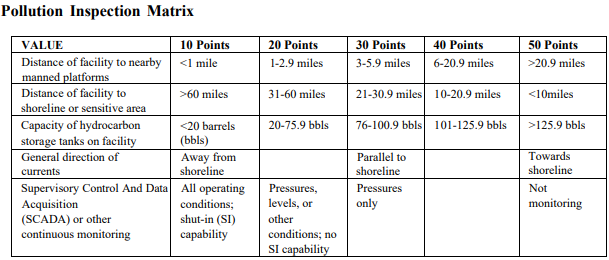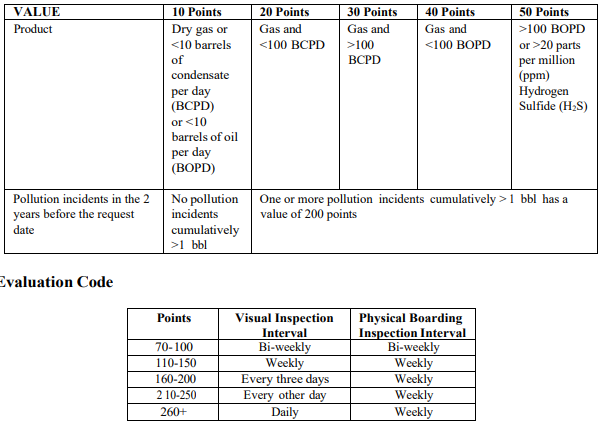
BSEE data for the past 3 days are tabulated below. Data are as of 12:30 p.m. ET on the specified date. Barring offshore or downstream infrastructure damage, production should begin to resume over the next few days.
Prior to the shale boom, when our national production was lower and the OCS accounted for a larger share, these numbers would have had a more significant effect on oil and gas prices. That is not the case today with only a 2.4% rise in WTI prices.
Chevron slide: Advances in seismic imaging help characterize deepwater development opportunities
A new JPT article features comments from BOE contributor Lars Herbst on advances in HPHT technology, control systems, sensors and transmitters, and automation that are facilitating the next era of deepwater development.
Well capping technology, which provides a tertiary well control capability, is an essential element of post-Macondo exploration and development. Lars points to the importance of BSEE’s unannounced drill program to verify that capping stacks can be transported and installed in a timely manner. Chevron expresses pride in leading a team that deployed and installed a capping stack in 6,200 feet of water in a drill monitored by BSEE. During that drill, a remotely operated vehicle (ROV) closed 10 valves to shut in a simulated well.
Exxon’s Jayme Meier aptly characterizes the challenge and excitement of deepwater development:
“You are floating on a surface, and you have to be able to pinpoint exactly where you’re going to land subsea hardware, exactly where you’re going to moor an FPSO and hit target boxes that are a few feet by a few feet, and they’re 6,000 ft below you,” she said. “It is the most exciting thing that I’ve ever been involved in. And it involves technology, technical know-how, and an ability to really plan the base plan and the contingency plan.”
Advances in deepwater technology are indeed impressive, but continuous improvement must always be the objective. In that regard, Lars rightfully emphasizes the importance of sustaining research through the industry’s up and down cycles.
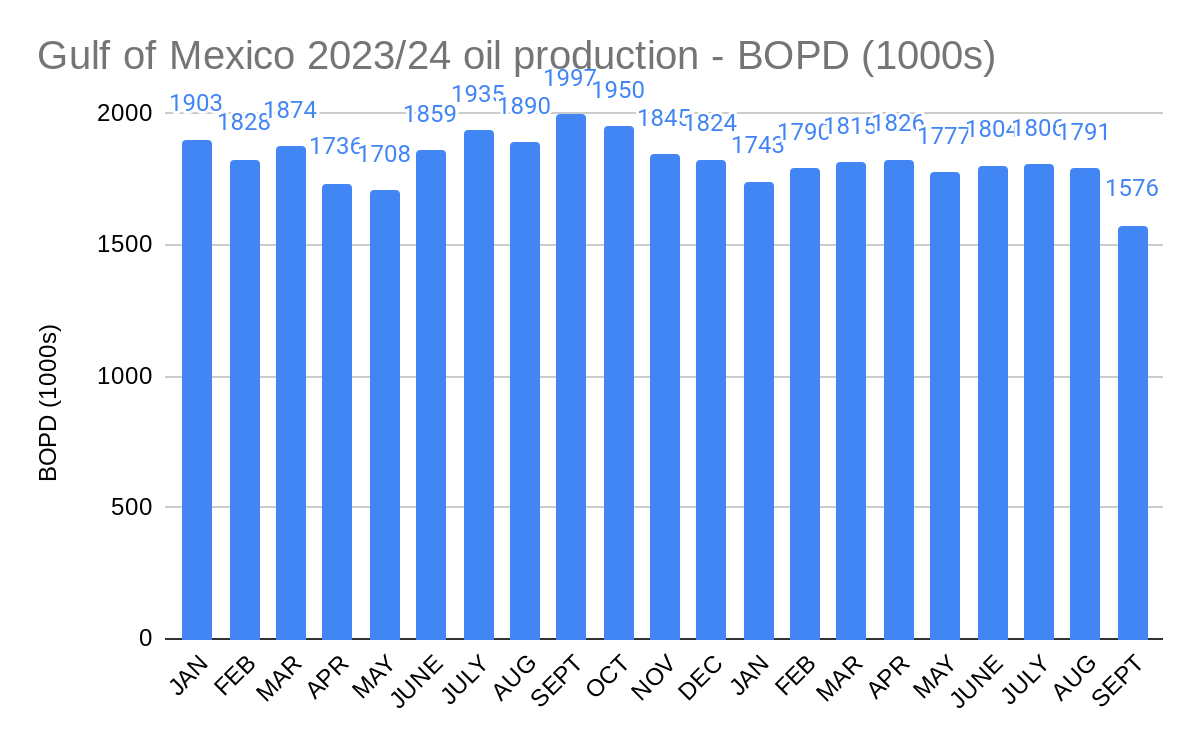
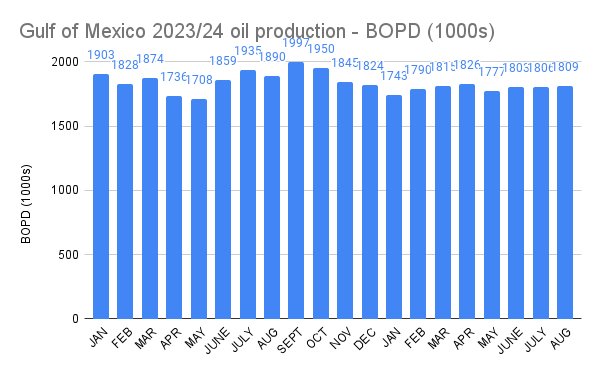
EIA has posted the June 2024 US production data. Gulf of Mexico production was remarkably flat from February through June, with a maximum deviation of only 2.0% (FEB vs. APR) and a deviation of only 0.5% from the beginning of this 5 month period to the end. Looking at the historical EIA data, this is about as stable of a 5 month period as I could find. Presumably, production from the new deepwater facilities is offsetting declines elsewhere as anticipated.
Per ONRR data, the Gulf of Mexico continued to be the top oil producer for Federal lands in 2023. An additional 72.7 million bbls were produced on Native American lands. New Mexico, which has experienced significant Permian basin production growth, ranked second. The Texas Permian was the dominant US oil producer, but that production is almost exclusively on private lands (a big factor in the Permian success story).
In response to a lawsuit filed by the Sierra Club et al, a Federal judge in Maryland vacated a 2020 biological opinion by the National Marine Fisheries Service (part of NOAA) that addressed risks to endangered species, most notably Rice’s whale, from oil and gas operations in the Gulf of Mexico. The decision by Federal Judge Deborah Boardman, who was appointed to her position in 2021, is attached.
Judge Boardman’s ruling is effective on Dec. 20, 2024. After that date, no new GoM leases may be issued and no new operating plans may be approved pending a new biological opinion. Existing GoM operations could also be affected. In other words, the ruling could have unprecedented effects on the OCS oil and gas program. (If you wonder how a Maryland judge can issue a ruling that could have major consequences for Louisiana and Texas, it is presumably because NOAA’s headquarters office is in Silver Spring, MD.)
The biological opinion process will likely be lengthy given the political considerations in an election year and the prospects for related litigation.
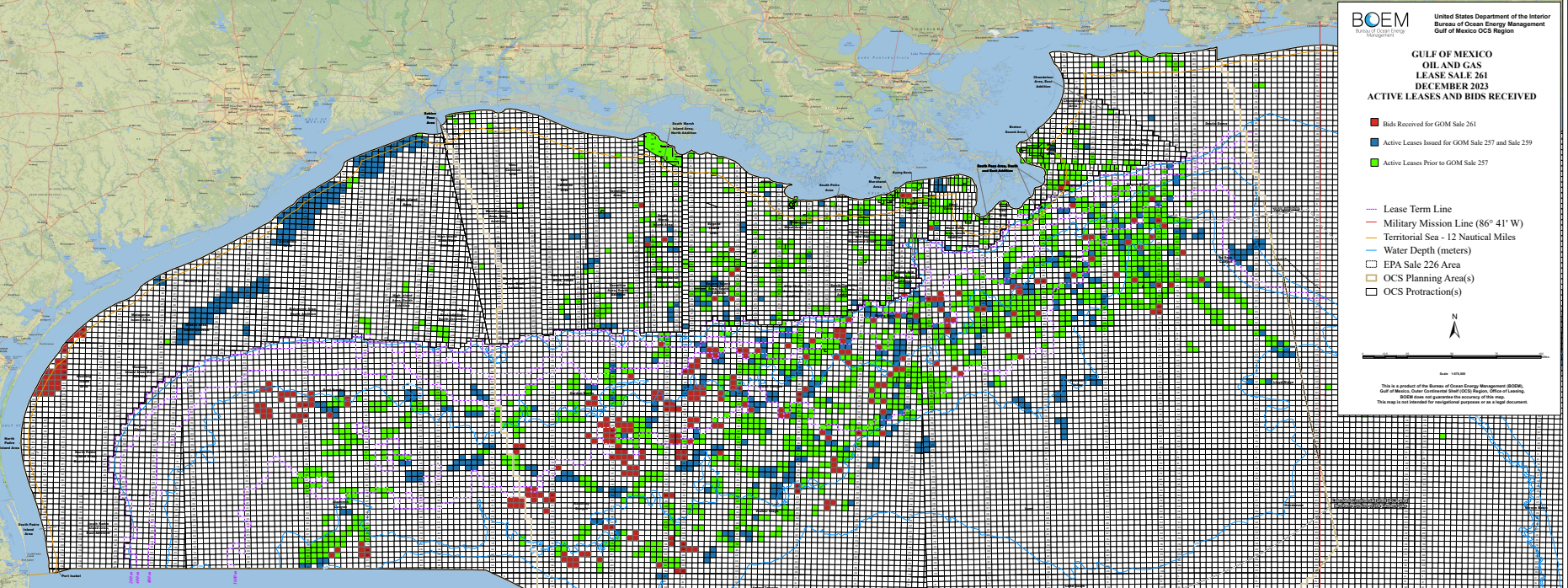
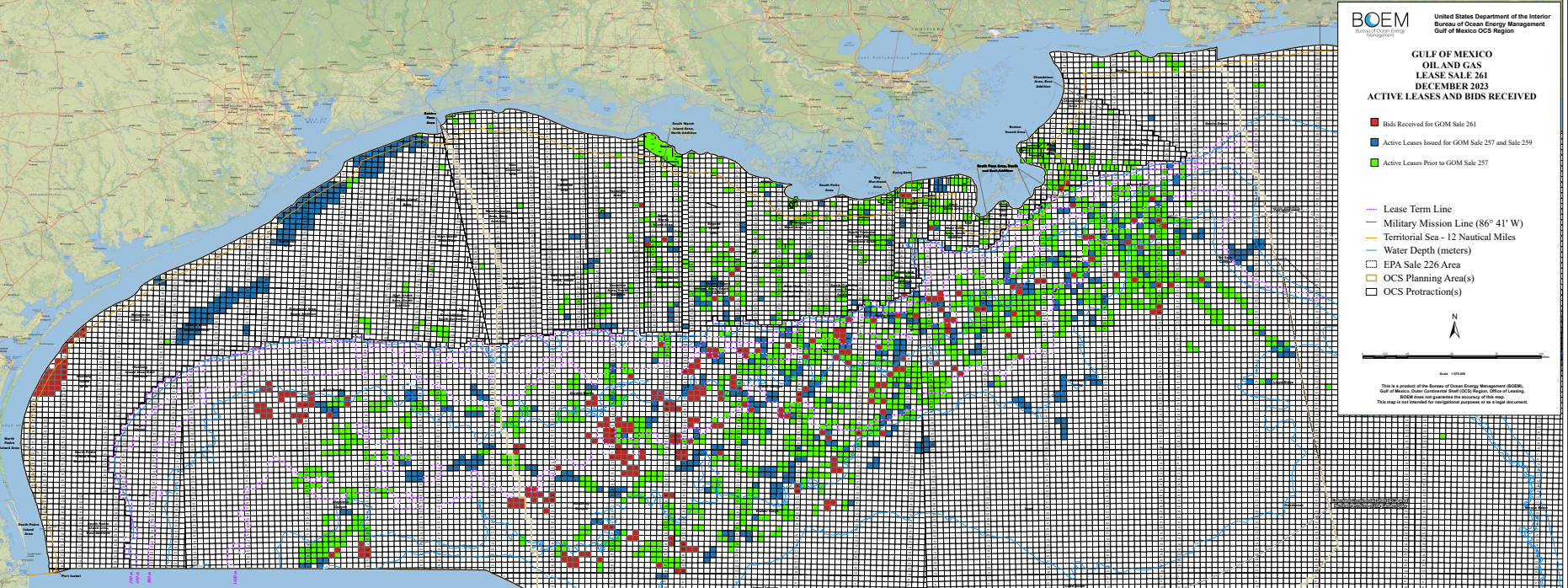
The judge’s ruling could also affect wind leasing in a manner that was perhaps unforeseen. Offshore wind leasing, which the plaintiffs strongly support despite the risks to the critically endangered North Atlantic Right Whale, could be delayed. Per a provision in the “Inflation Reduction Act,” no offshore wind leases may be issued after 12/20/2024, the one year anniversary of the last oil and gas lease sale (no. 261). Ironically, this is the same date as the effective date of the judge’s ruling.
The judge’s decision will likely further delay the next oil and gas lease sale (no. 262) well into 2025 or later, and extend the pause in issuing wind leases that begins on 12/20/2024. Perhaps with that in mind, BOEM has been forging ahead with wind auctions despite the troubling Vineyard Wind blade failure, economic challenges for the wind industry, and growing opposition from coastal residents. An editorial by the publisher of Nantucket Magazine expresses concerns that should not be overlooked in the rush to auction wind leases.
(More on a new biological opinion related to the Right Whale in a future post.)
Four of the five simpler, safer, greener deepwater platforms featured on this blog are now producing. The 5th platform (Whale) is on location and scheduled to begin production later this year.
platform
operator
first production
King’s Quay
Murphy
April 2022
Vito
Shell
Feb 2023
Argos
bp
April 2023
Anchor
Chevron
Aug 2024
Whale
Shell
late 2024
These platforms are in 4000 to 8600′ of water, are expected to reach peak production rates of 100-150,000 boe/day, and have favorable emissions characteristics on a per barrel basis.
This is all good, but what is next? Will technological advances once again sustain GoM production? The short answer appears to be yes!
The efficiencies achieved with the simpler platform designs combined with the high pressure (>15,000 psi) technology developed over the past 2 decades will facilitate production from the highly prospective Paleogene (Wilcox) deepwater fans. (For those interested in learning more about the geology, see the excellent presentation by Dr. Mike Sweet, Univ. of Texas, that is embedded below.)
Chevron’s Anchor is the first deepwater, high-pressure development. Three similar deepwater hub platforms (table below) will begin production over the next 5 years. These host platforms will also facilitate additional production from nearby fields. Each will have production capacities of approximately 100,000 boe/day. Note the long lead times in achieving first production given the technological issues that had to be evaluated and addressed.
platform
operator
discovery date
first production
Kaskida
bp
2006
2029
Sparta
Shell
2012
2028
Shenandoah
Beacon
2009
2025
Wood Mackenzie sees these high pressure projects as the key to sustaining GoM production rates. Their projections for 2024 and 2025 seem optimistic based on 2024 YTD data, which adds to the importance of the projected new production.
Rystad Energy projects a 10% annual compound growth rate for the subsea market from 2024 to 2027, with total spending anticipated to exceed $42 billion by the end of this period.
Brazil dominates the subsea umbilical risers and flowlines (SURF) market. Unsurprisingly, the US is lagging given the absence of a robust offshore leasing program and the dearth of deepwater discoveries in recent years.