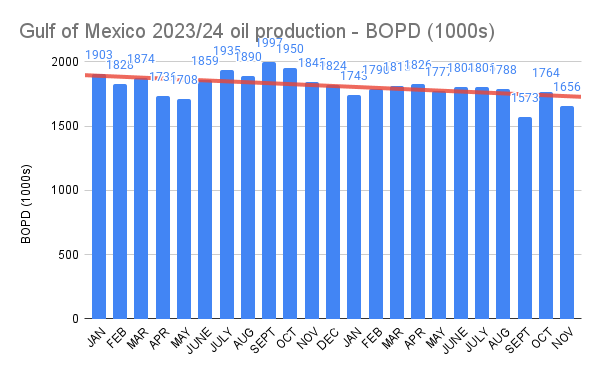
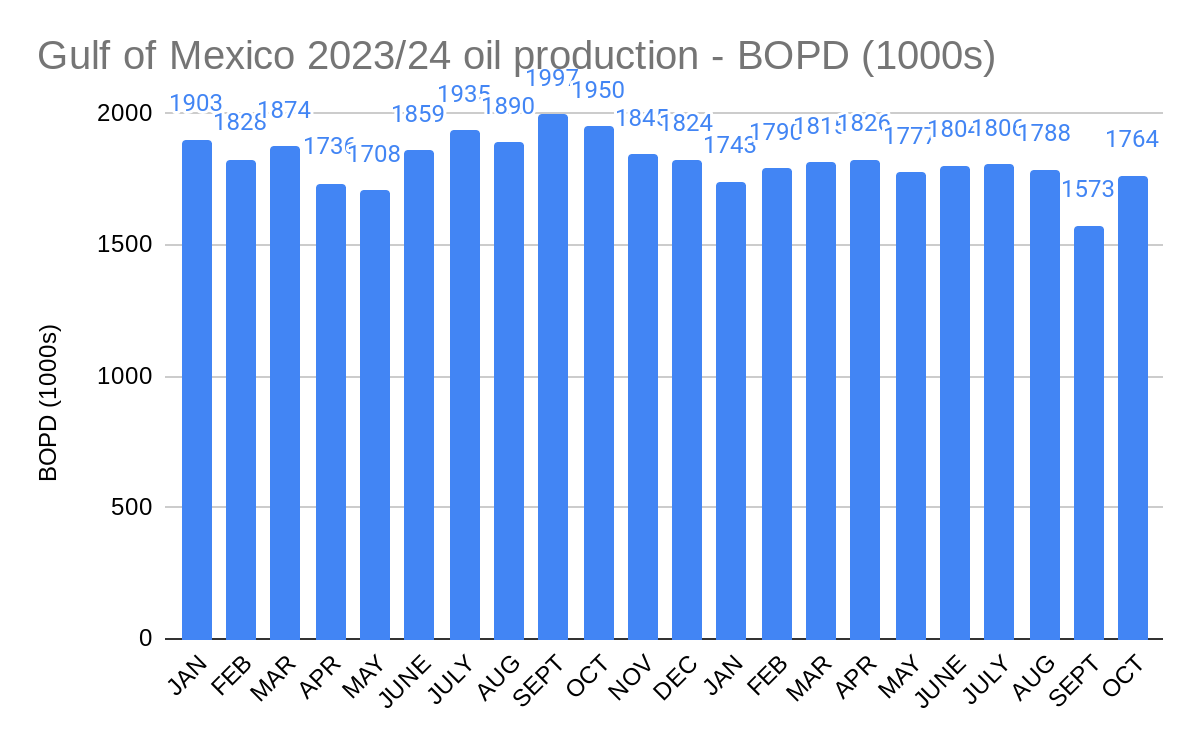
November 2024 Gulf of Mexico oil production was the lowest in the 2023/24 timeframe, with the exception of Sept. 2024 when production was reduced by Tropical Storms Francine and Helene.
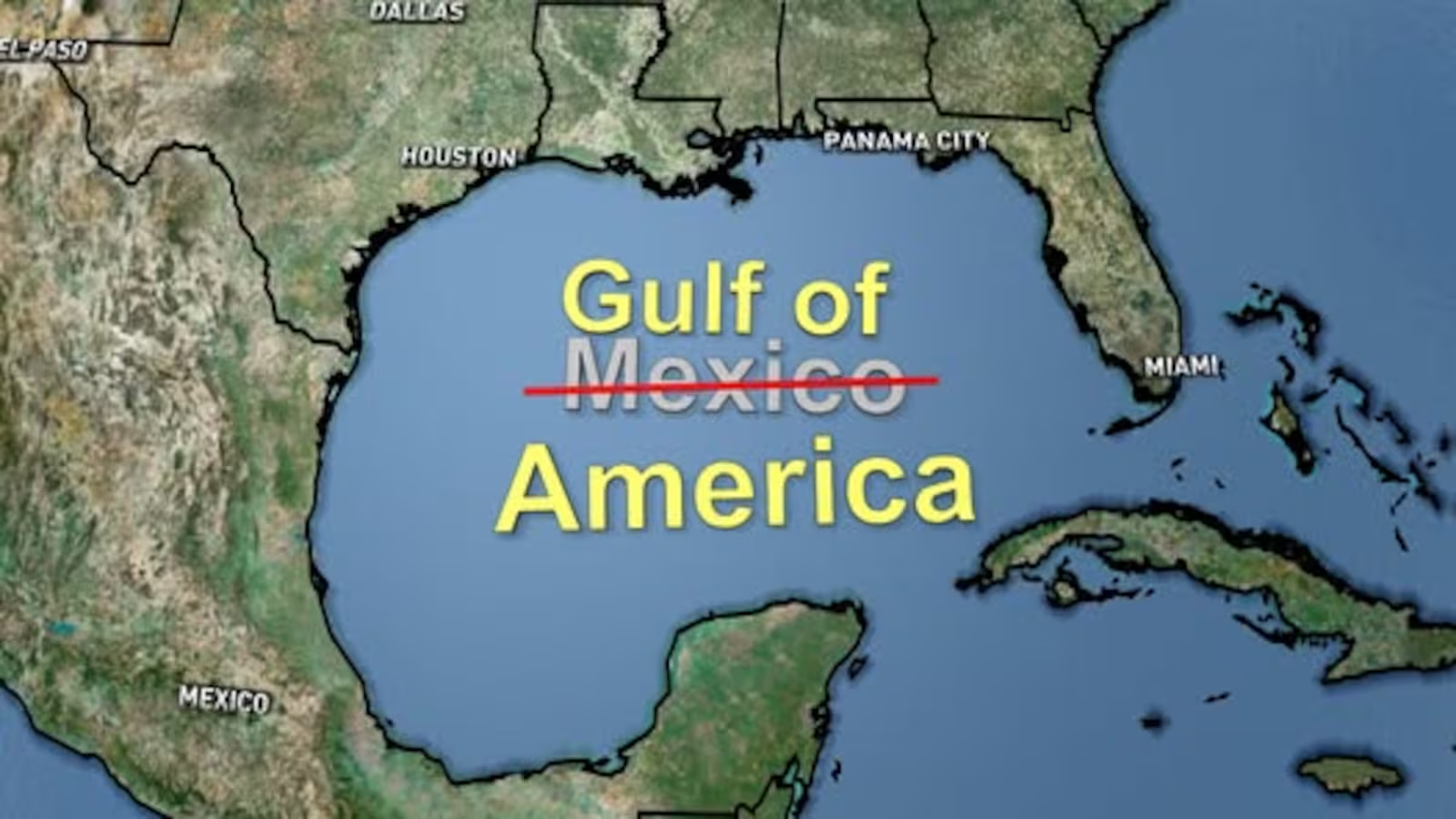
Look for production in the Gulf of America to soar! (eventually😉)
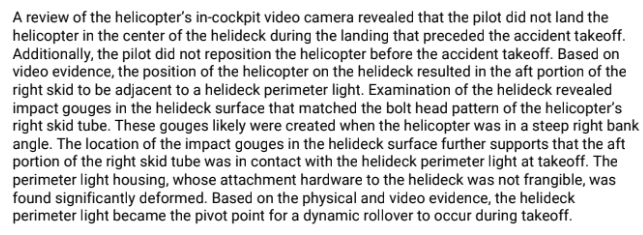
The NTSB has finally issued their report (attached) on the 12/29/2022 helicopter crash that resulted in 4 fatalities at Walter’s West Delta 106 A platform. The NTSB report on the Huntington Beach pipeline spill took a comparable amount of time (26 months) to complete. By comparison, the lengthy and complex National Commission, BOEMRE, Chief Counsel, and NAE reports on the Macondo blowout were published 6 to to 17 months after the well was shut-in.
The gist of the NTSB’s findings is pasted below.
The report summarizes operations standards, but does not consider the associated operator/contractor safety management systems that are intended to prevent such incidents. The report notes that:
Was the contractor/operator aware of these deviations from company policy? Should they have been?
The report implies that human (pilot) error was the cause of the dynamic rollover, but fails to assess the organizational controls that are intended to prevent such errors. How was a pilot with 1667.8 flight hours (1343.8 as the PIC), who had made 23 trips to this platform, repeatedly making fundamental positioning and takeoff errors?
The report also notes that:
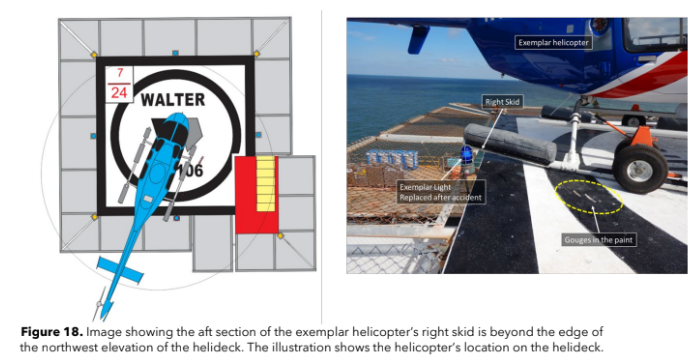
This is interesting wording given that the perimeter light was identified as the pivot point, one of the 3 requirements for a dynamic rollover. Why wasn’t that violation observed by the operator/contractor and corrected? What helideck inspection procedures were in place? Did NTSB consider the fragmented regulatory regime for helicopter safety, particularly with regard to helidecks?
The attached bill not only nullifies most OCS leasing bans, but fundamentally changes the OCS Lands Act provision (Sec. 12(a)) that authorizes such Presidential withdrawals.
Revoke all Presidential leasing bans except for the 2020 withdrawals, which could presumably be reversed by President Trump.
Limit withdrawals to under 150,000 acres (the equivalent of 26 lease blocks of typical size) in total or contiguous with any other withdrawal.
Limit cumulative withdrawals to 500,000 acres (87 lease blocks) without congressional approval.
Sunset withdrawals after 20 years.
Require geological, economic, and security assessments for any future withdrawals.
Give Congress the authority to review and potentially overturn future withdrawals.
Ensure that future withdrawals do not contradict an approved Five-Year Offshore Oil and Gas Leasing Program.
Does this bill have a chance? Realistically, the prospects are probably not good. Although the bill currently has an impressive list of 24 sponsors, all are Republicans and none are from Florida. Absent support from Florida Republicans and some interior state Democrats, it will be difficult to gain traction.
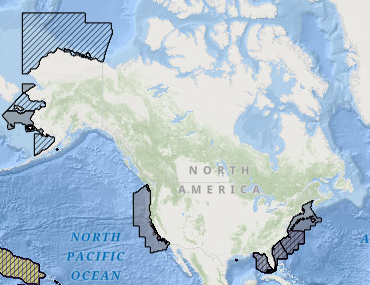
Interactive map showing OCS areas where oil and gas leasing is now prohibited (I.e everywhere but the Central and Western Gulf of Mexico and the Cook Inlet)
Withdrawal from the Paris Climate Change Agreement:The US Ambassador to the UN shall immediately submit formal written notification of the US withdrawal from the Paris Agreement under the United Nations Framework Convention on Climate Change.
Regulatory Freeze: Agencies may not propose or issue a rule until approved by a Presidential appointee. OMB may exempt emergency or urgent rules (déjà vu for regulators 😉).
Alaska: Withdraws a Secretarial Order intended to halt ANWR oil and gas leasing. Rescinds cancellation of ANWR leases.
Encourage energy exploration and production on Federal lands and waters, including on the Outer Continental Shelf.
Eliminate the electric vehicle (EV) mandate.
Requires immediate review of actions that could burden the development of energy resources.
Develop and begin implementing action plans to suspend, revise, or rescind all unduly burdensome agency actions.
Revoke climate change and “clean energy” EOs.
Terminate all activities, programs, and operations associated with the American Climate Corps (RIP 😉).
Expedite and simplify permitting processes.
Facilitate the permitting and construction of interstate energy transportation and other critical energy infrastructure, including pipelines.
Disband the Interagency Working Group on the Social Cost of Greenhouse Gases.
Terminate the Green New Deal.All agencies must immediately pause the disbursement of funds appropriated through the Inflation Reduction Act of 2022 (Public Law 117-169) or the Infrastructure Investment and Jobs Act (Public Law 117-58).
The Secretary of Energy is directed to restart reviews of applications for LNG export projects as expeditiously as possible.
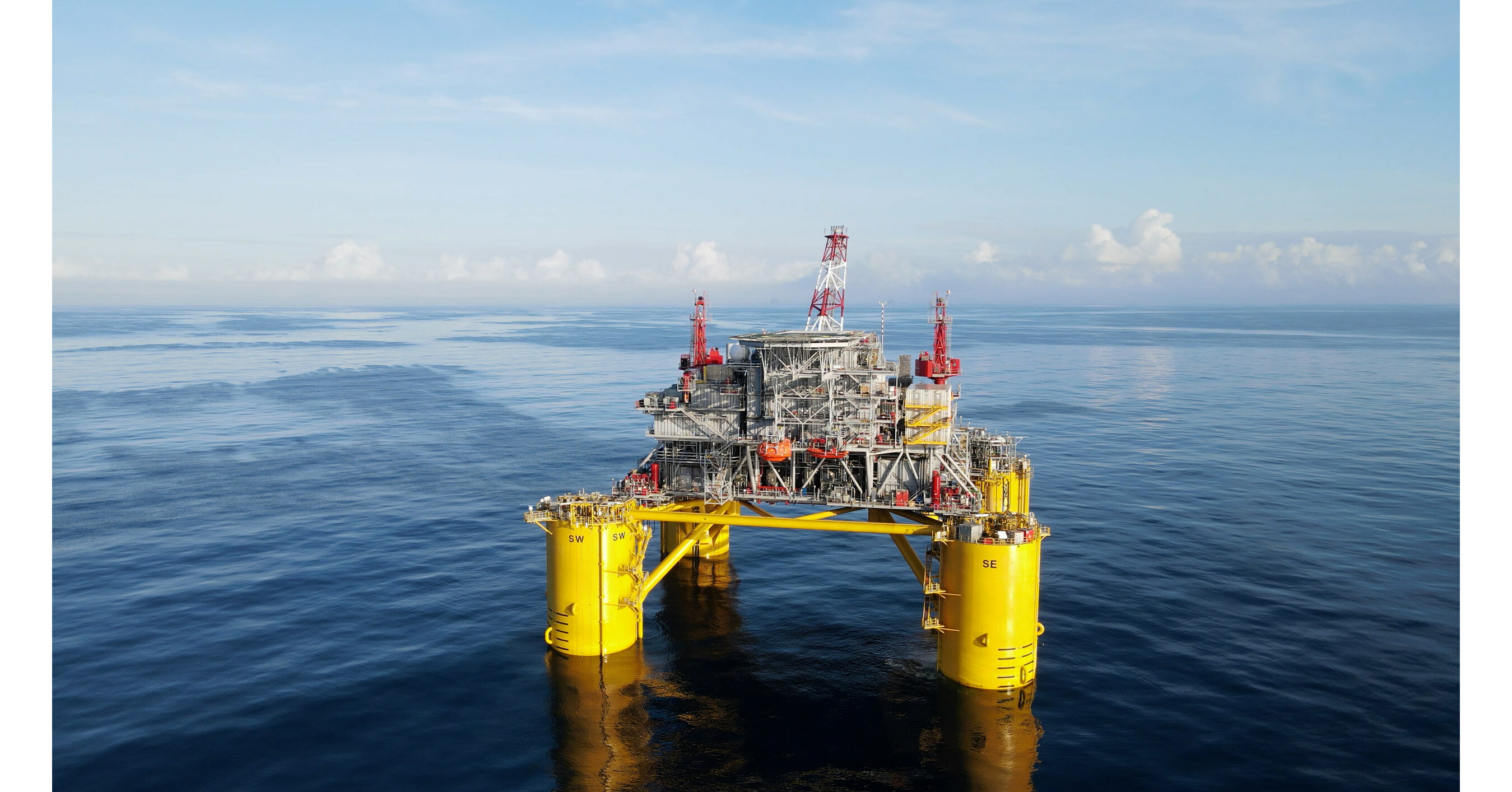
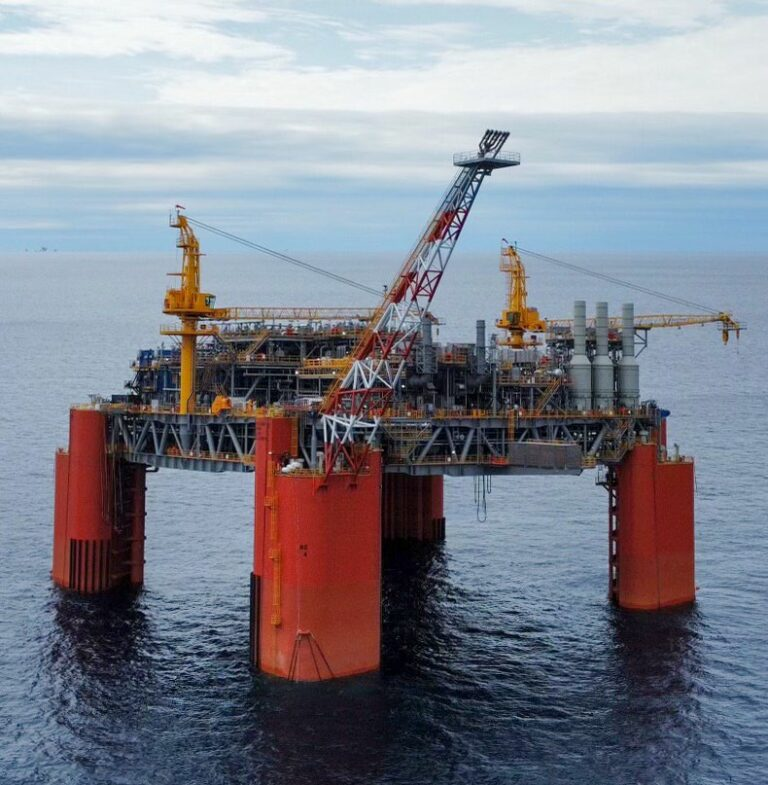
estimated peak production:100,000 barrels of oil equivalent per day (boe/d)
water depth – 8600 ft
200 miles south of Houston
estimated recoverable resource: 480 million boe.
first oil only 7.5 years after discovery (includes COVID delay)
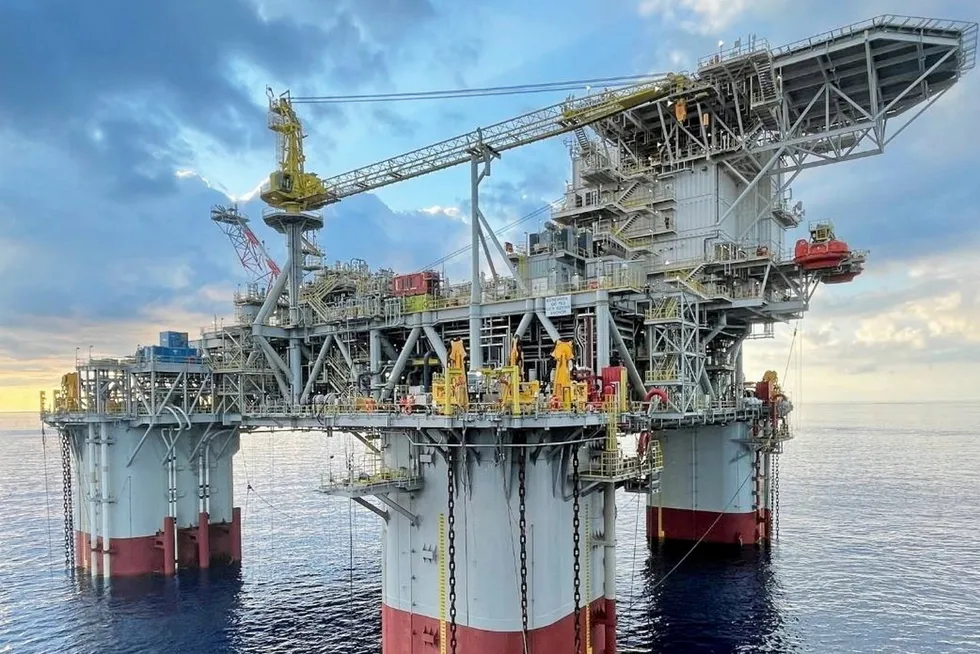
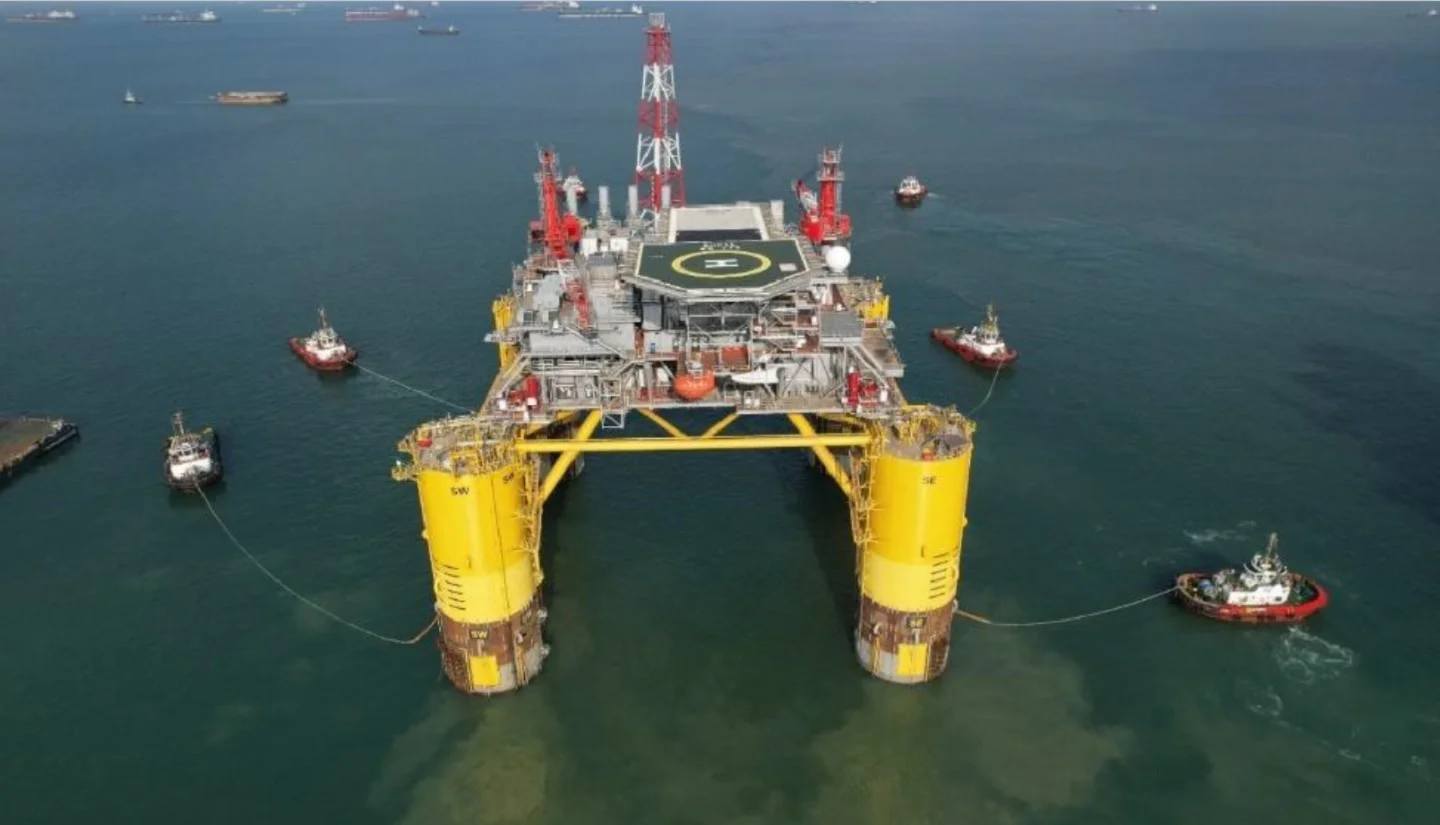
Vito clone: replicates 99% of the hull design and 80% of the topsides from Vito.
high efficiency gas turbines and compression systems
~ 30% lower greenhouse gas (GHG) intensity over its life cycle than the already efficient levels being achieved at Vito. (Why the push to run electric cables from shore to North Sea platforms with ample gas production?)
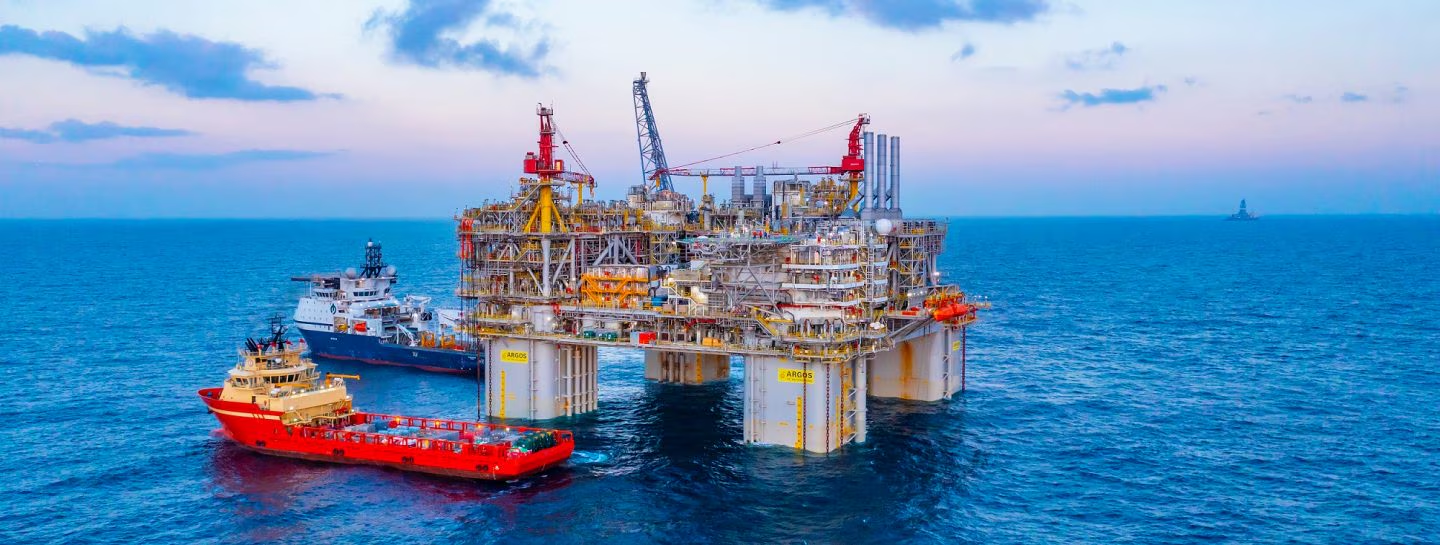
This is all good, but what is next? Will technological advances once again sustain GoM production? The short answer appears to be yes!
The efficiencies achieved with the simpler platform designs combined with the high pressure (>15,000 psi) technology developed over the past 2 decades will facilitate production from the highly prospective Paleogene (Wilcox) deepwater fans. (For those interested in learning more about the geology, see the excellent presentation by Dr. Mike Sweet, Univ. of Texas, that is embedded in this post.)
The NTSB has still not issued a final report, which is troubling. However, the detailed Operations Group Factual Report (including attachments) can be accessed in the case docket This and other items in the docket should be of interest to those involved with offshore operations and helicopter safety.
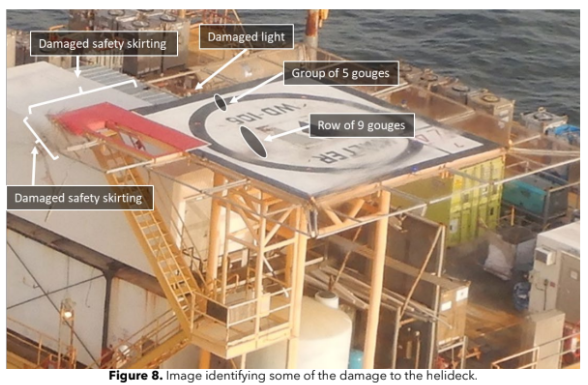
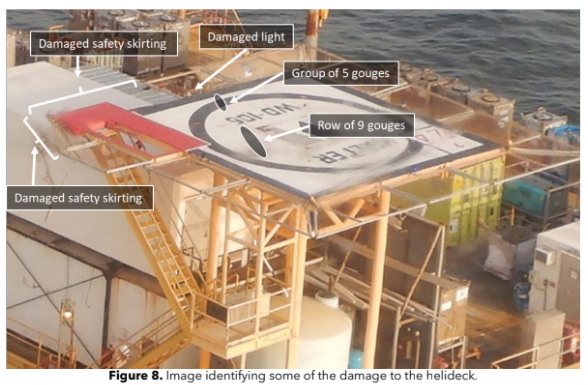
From the factual report, below are graphics showing the helideck damage and assumed final position of the helicopter.
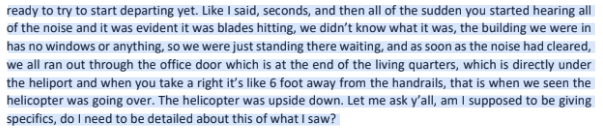
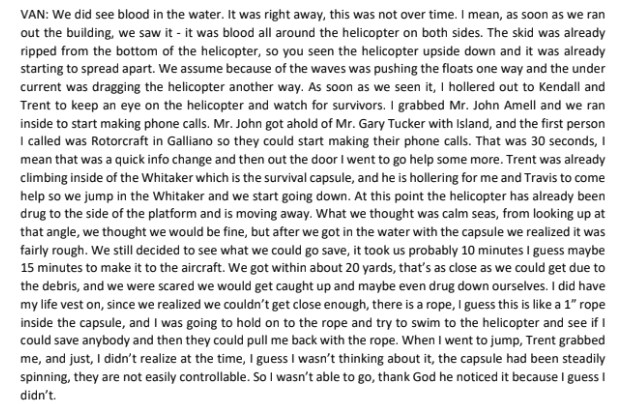
Excerpts from the testimony of a worker at the platform who was part of an attempted search and rescue operation in the platform’s Whitaker escape capsule:
After a zero fatality year in 2023, the first in at least 60 years, Jason Mathews of BSEE advises that one worker was killed during US OCS oil and gas operations in 2024.
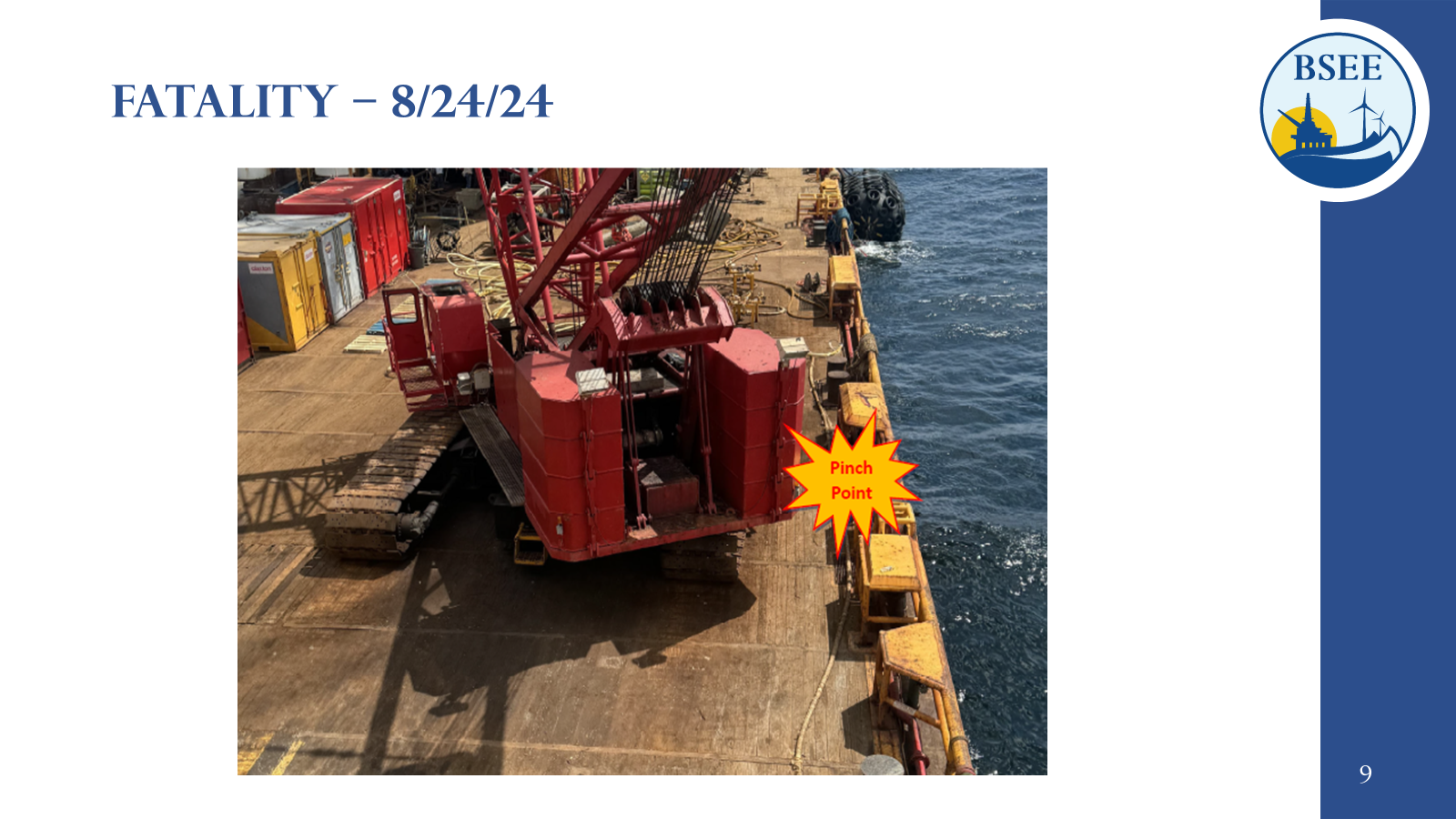
The fatality occurred during decommissioning operations on the Helix D/B EPIC HEDRON at Talos Energy’s Ship Shoal Block 225 “D” platform in the Gulf. The platform was to be reefed in Eugene Island Block 276.
The victim, who worked for Triton Diving Services, was moving hoses on the port side of the barge and got caught between the bulwark and counterweight of the crawler crane (see picture below).
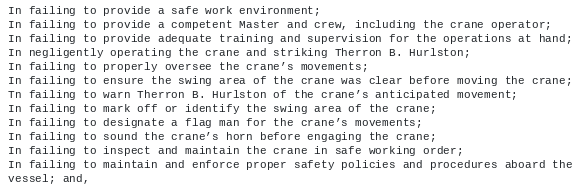
The victim’s family have filed a wrongful death lawsuit against Helix Energy Services and Triton Diving Services. The plaintiffs assert that prior to the crane movement the crane operator and crew had not undertaken measures to assure that the crane’s swing area was clear of other crew members. Per their filing, Triton and Helix were negligent as follows:
As expected, the White House announced the largest ever permanent ban on offshore oil and gas leasing in the US, and to the best of my knowledge, anywhere in the world.
The sheer magnitude of the ban makes other such withdrawals appear modest by comparison. It’s amazing how bold Presidents (and their handlers) become when they are about to leave office.
The permanent ban includes:
The entire Atlantic Outer Continental Shelf (OCS): While there are no current oil and gas leases in the US Atlantic, the region is highly prospective and could contain more than 20 billion barrels of oil equivalent (BOE).
The Eastern Gulf of Mexico: This is the OCS area that many petroleum geologists find most attractive. The best prospects are >100 miles from shore which minimizes coastal risks, and the high natural gas potential aligns with Florida legislation supporting the use of gas for power generation.
The entire Pacific OCS: While the resources are substantial, their loss has been a foregone conclusion for 25 years. When you can’t even decommission old platforms or restore production on important existing facilities (i.e. the Santa Ynez Unit), how can you possibly expect to issue new leases?
The remainder of the OCS offshore western Alaska. The wishes of the majority of Alaskans, who support offshore exploration and development, have been largely ignored for decades.
President-elect Trump has vowed to reverse President Biden’s leasing ban, but that may not be so easy. This is not a matter of simply reversing an executive order. Sec. 12(a) of OCSLA grants the authority to withdraw lands to the President and does not provide for reversal by future Presidents. The attached NYU Law brief concludes that “a subsequent president lacks authority to restore previously withdrawn lands to the federal oil and gas leasing inventory.”
The new Administration will no doubt have a different view than that expressed in the NYU Law brief, but any reversal decision will likely be challenged in court.
Those who wrote and approved Sec. 12(a) should have had more foresight. However, 72 years ago the authors presumably thought Presidents would only use the authority to remove small, especially sensitive areas from leasing consideration, and never thought that a President would remove both of our oceans and much of the Gulf of Mexico!
Congress could of course reverse the Biden bans, but given the complexity of offshore energy issues, such legislation may be difficult to pass.
Following the 200,000 bopd decline in Sept. because of Tropical Storms Francine and Helene, Oct. GoM oil production was once again in the normal range for 2024. With the exception of Sept., average 2024 production has been remarkably consistent from month to month.





 Bud's Offshore Energy (BOE)