Feeds:
Posts
Comments

Archive for the ‘energy policy’ Category

His speech began with a slide declaring that “unsubstantiated, shrill, partisan, self-serving, apocalyptic warnings are ALWAYS wrong.”  Stuart Kirk, HSBC

Financial Times

Here is the presentation that caused the furor:

Sadly, any oil industry exec who dared to publicly question climate orthodoxy would face a similar or worse fate.

I do like this very sensible quote:

A former Blackrock executive focused on sustainable investment said Kirk’s remarks had “done us a service” in discussions on climate change risk by “infusing a dose of honesty into a debate that is otherwise leading us nowhere,”

NY Post

Read Full Post »

Federal Oil & Bas Corp. (FOGCO)

Guyana’s pending decision regarding the formation of a national oil company brings back memories of unsuccessful attempts to do the same in the US in the 1970s.

The most serious attempt at forming a national oil company in the US was a 1975 Senate bill to establish the Federal Oil and Gas Corporation or FOGCO. (Oddly, the bill’s sponsors weren’t troubled by that acronym.) FOGCO was proposed at a time when natural gas supplies didn’t satisfy demand, and that was the primary impetus behind the legislation. (Supply issues went away when price controls were lifted.)

Concerns about a FOGCO then and now:

  • The political pressures under which a national oil company operates are not conducive to sound, expeditious decisionmaking. (Unfortunately, some current industry execs seem overly responsive to pressure from governments and activist organizations, which is not always in the best interest of the company and its shareholders).
  • Would limit competition and private investment.
  • Would delay or prevent innovation:
    • The shale revolution was driven by nimble private companies operating on private land in supportive states. Why is there Marcellus shale development in PA, WV, and OH, and none in NY? (Hint: It’s not the absence of resources.) Why could the US shale experience not be replicated in Europe?
    • Innovative deepwater development projects were driven by private companies and the supportive public policies of the 1990s.
  • A national oil company could be the first step in the process of nationalizing the petroleum industry.

Guyana is far different from the US and should do what is perceived to be in their best interest. Best wishes to the people of Guyana as they weight their options.

Read Full Post »

I vote for stupid comment.

The CEO of Italian power firm Enel has cast doubt on the continued benefit of using gas to produce electricity, telling CNBC it is “stupid” and that cheaper and better alternatives are now available.

“You can produce electricity better, cheaper, without using gas … Gas is a precious molecule and you should leave it for … applications where that is needed,” he added.

Francesco Starace to CNBC

Gas is scarce and expensive in Europe because of bad foreign and energy policy decisions, most notably dependence on Russia and unrealistic expectations regarding renewables. Mr. Starace seems intent on doubling down on the latter. Of course, Enel is a large renewable energy generator and a natural gas purchaser and consumer (not a producer). His comments are thus rather self-serving.

I do agree with Enel on CCS:

Although the company could rely on carbon offsets or carbon capture to hit that target, Bernabei said the technology has failed to take off, despite receiving funding from the EU and national governments. He said there is no reason to expect that situation to change, especially since carbon capture and storage, or CCS, technology is not guaranteed to eliminate 100% of emissions.

“These are very big and complex projects. And at the end, they will not solve the problem,” Bernabei said. “We already tried CCS in the past and it didn’t lead to success. So why do it again?”

SPGlobal

Read Full Post »
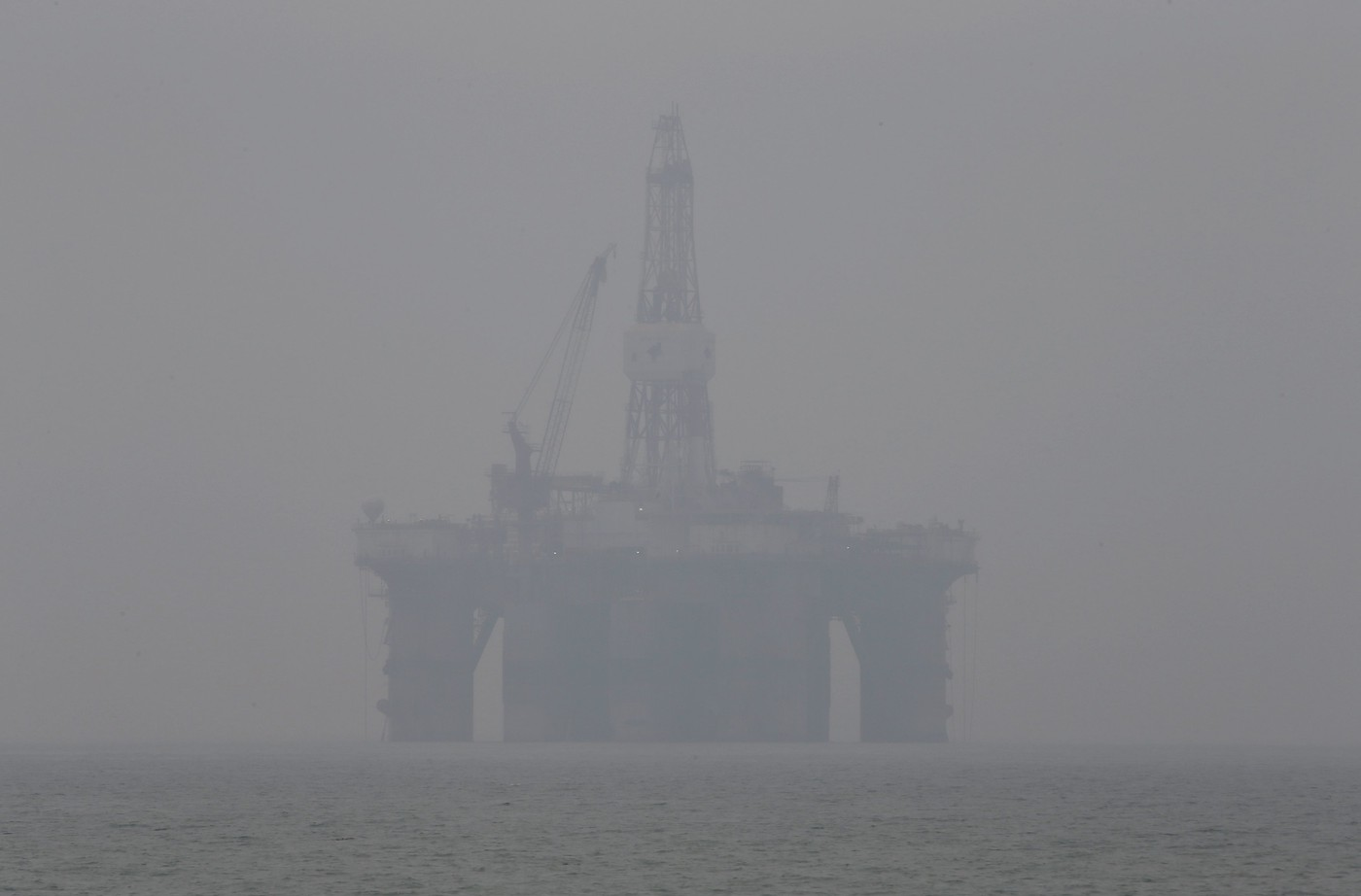
Not really, but current economic and energy security realities doomed a bill to prohibit drilling and production in State waters. Strong quotes from bill opponents:

“SB 953 was held because it didn’t work — it was going to cost the state billions of dollars for a symbolic victory,” Andrew Meredith, president of the State Building and Construction Trades Council of California, said in a statement. “The California Senate is rightfully more concerned with actually improving the plight of workers and our environment than chasing headlines.”

Politico

“I think most legislators understand that every barrel of oil we don’t produce here under our strict environmental rules must be imported by foreign tankers floating offshore in our crowded ports from Iraq, Saudi Arabia, or the Ecuadorian rainforest,” California Independent Petroleum Association CEO Rock Zierman said in a text message.

Politico

Read Full Post »

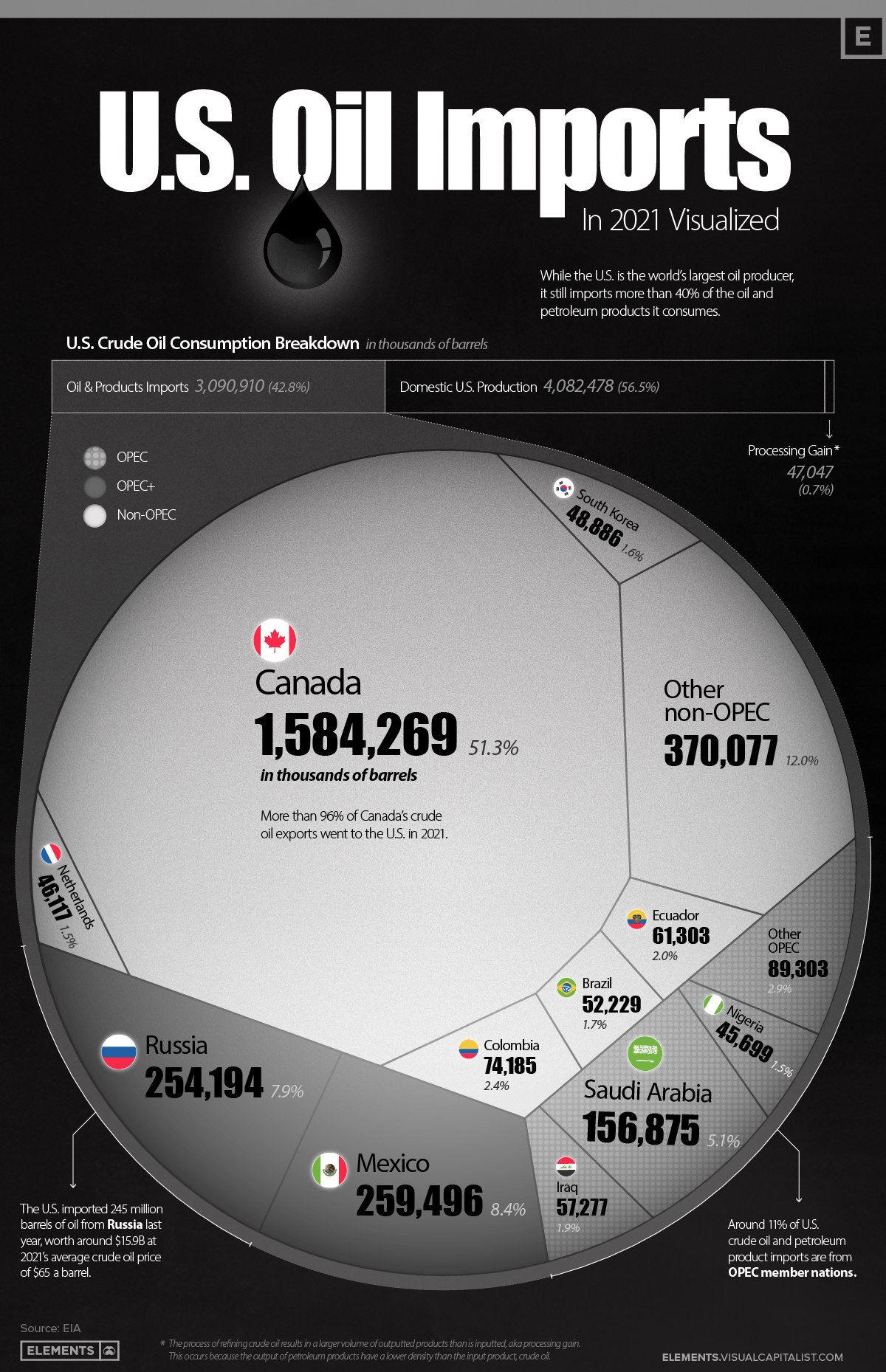
This graphic uses 2021 EIA data to compare the volumes of crude oil and petroleum products imported by the US from other countries.

Read Full Post »

WASHINGTON — During testimony before the U.S Senate Committee on Energy and Natural Resources today, Secretary of the Interior Deb Haaland confirmed that, despite delays in implementation from the previous Administration, the Interior Department will release the Proposed Program – the next step in the five-year offshore energy planning process – by June 30, 2022, which is the expiration of the current program. A Proposed Program is not a decision to issue specific leases or to authorize any drilling or development.

DOI

Here is the timeline for the 5 Year Leasing Program (light blue).

A sale this year under the new program is thus highly unlikely. The process will no doubt be delayed even further by litigation. As we have said previously, the only hopes for a sale this year are a successful appeal of Judge Contreras’s Sale 257 ruling or successful congressional action (unlikely but possible under the circumstances).

Read Full Post »

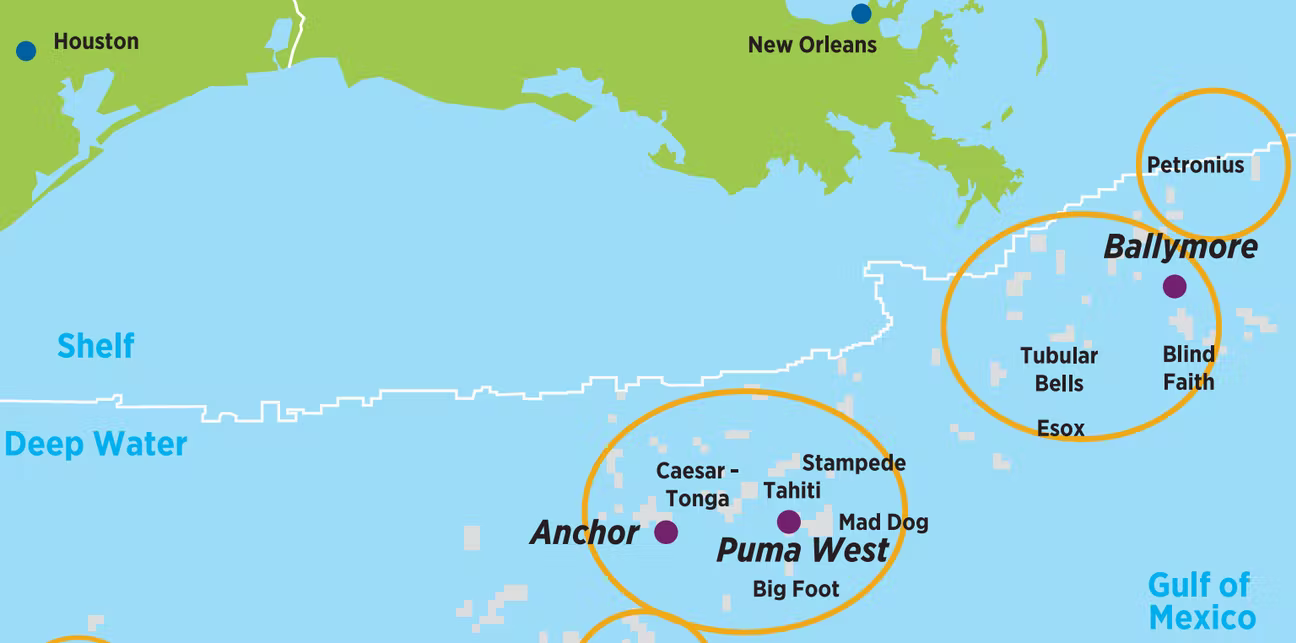
Ballymore will be produced with 3 seafloor wells (6540′ water depth) that are expected to transport 75,000 bopd via a three-mile subsea tieback to Chevron’s Blind Faith floating production unit. Per BOEM, the Ballymore field was discovered in December, 2017. First production is expected to be in 2025.

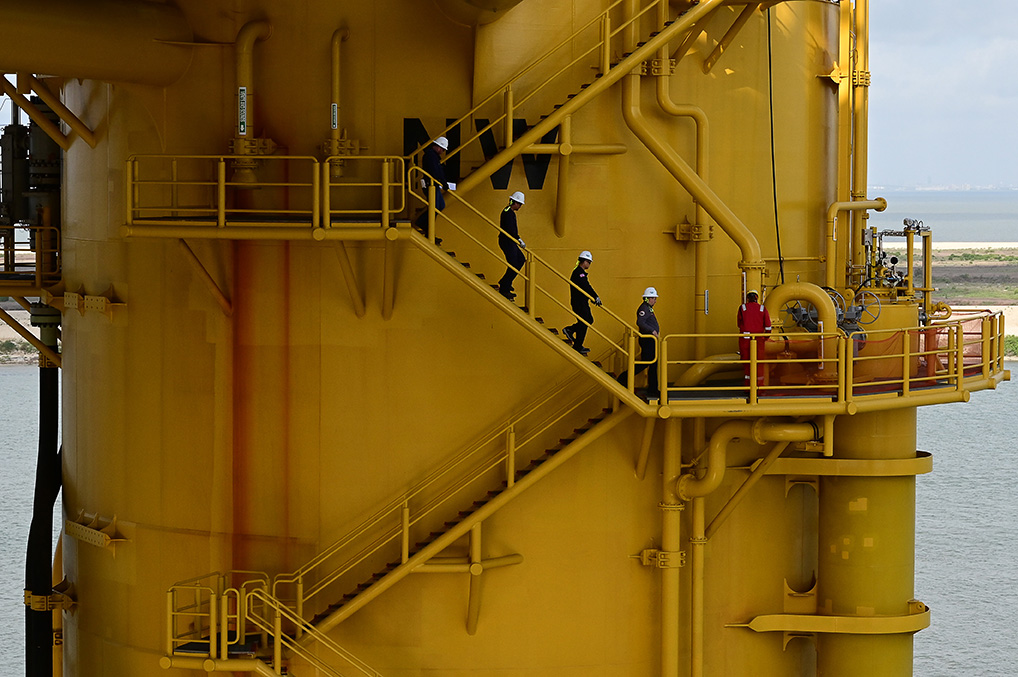
Pre-production inspection, Shell Vito
Vito

Shell’s Vito floating production unit was inspected last week by BSEE personnel. Vito is expected to begin production later this year or early next year and produce up to 100,000 bopd. Per BOEM data, the Vito field was discovered in 2010.

As these projects demonstrate, deepwater development takes time and is often dependent on related projects on other leases. This is why future production is dependent on regular, predictable lease sales.

Read Full Post »

  1. Gulf of Mexico Lease Sale 257 was vacated on 1/27/2022 because DC Federal Court Judge Contreras ruled that BOEM failed to consider the “positive” effect that higher prices (the logical result of lower production) would have on reducing foreign consumption and the associated GHG emissions. Think about that in the context of the timing and magnitude of this ruling. Why did the court fail to consider the other logical consequences of tight oil supplies and higher prices – increased coal consumption and energy poverty? To avoid the latter, India, the world’s second largest coal producer and consumer, is boosting coal production to record highs.
  2. The Administration, which had only proceeded with Sale 257 because a prior court ruling invalidated the President’s leasing pause, chose not to appeal the decision by Judge Contreras. Why appeal a decision that is consistent with your agenda?
  3. The legislatively mandated 5 year leasing program, without which no Federal offshore leases sales may be conducted, expires at the end of June. This is why last week’s cancellation of the 3 remaining sales in the current 5 year program was rather meaningless. Despite bipartisan congressional support for prompt completion of a new 5 year plan, this does not appear to be a high priority for the Department of the Interior. The only hope for a sale this year might be a successful appeal by Lousisiana and API of Judge Contreras’s Sale 257 ruling.

Read Full Post »

From Reuters article:

  • bp: Only 15% of shareholder votes backed a call for the company to accelerate its energy transition, compared with the 21% in favor in a similar vote last year.
  • Oxy: Only 17% of investors backed a call for emissions-reduction targets. (I wonder how Buffett voted 😀)
  • Marathon: 16% supported a measure calling for the company to report on how its transition plans affected workers and communities
  • ConocoPhillips: 42% supported an emissions-reductions targeting measure vs. 58% last year.

Exxon, Shell, and Chevron are on deck!

Read Full Post »

The video below is from 6 months ago but is even more relevant today. Those who produce nothing but insults shouldn’t be dictating corporate strategy.

Amen Byron!

Read Full Post »

« Newer Posts - Older Posts »