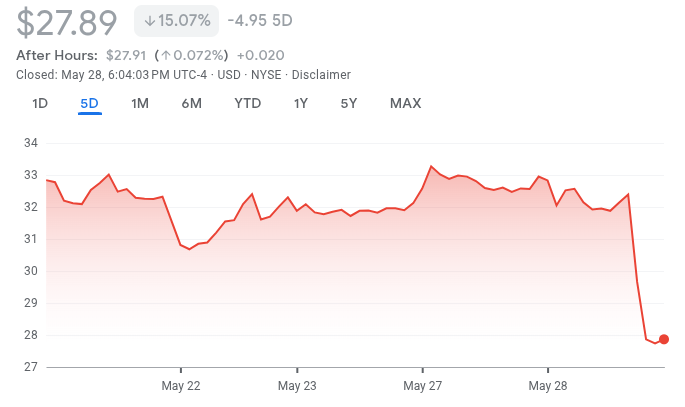
BP has announced it will cut its renewable energy investments and instead focus on increasing oil and gas production.
The energy giant revealed the shift in strategy on Wednesday following pressure from some investors unhappy its profits and share price have been lower than its rivals.
BP said it would increase its investments in oil and gas by about 20% to $10bn (£7.9bn) a year, while decreasing previously planned funding for renewables by more than $5bn (£3.9bn).
The future looks like this: BP Argos floating production unit, Gulf of America – simpler, safer, greener
It’s more than okay to be an oil and gas producer – no need to apologize or pretend to be something else. Oil and gas are, and will continue to be, essential to economies worldwide. Companies should focus on safely and cleanly achieving production objectives.
If a company thinks other types of energy investments make good business sense, they should engage in those activities. However, they should not do so to curry favor with anti-oil factions who can never be placated. Attempts to do so will only weaken your company.
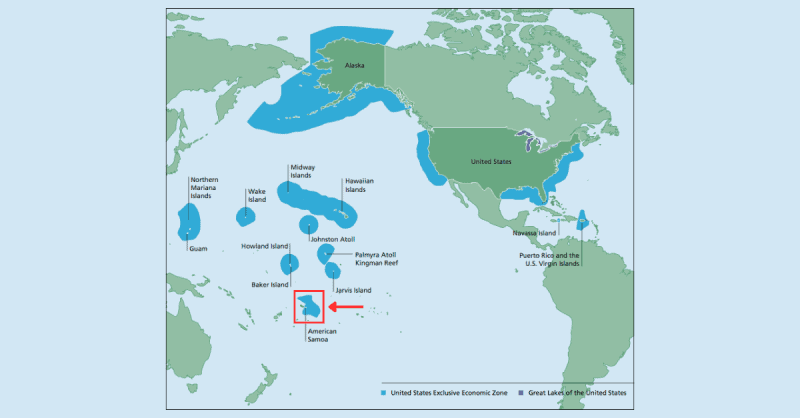
BP is doing well in the Gulf of America – no. 2 producer in 2024.
The Santa Barbara County Board of Supervisors tie vote on the transfer of permits from Exxon to Sable has both sides declaring victory! (And I thought I was the only one who was confused!)
“During Wednesday’s meeting of the county Planning Commission, Lisa Plowman, director of Planning & Development, expressed uncertainty about the future of the permits and said the split vote meant that the board took no action.
“We are in the process of (…) determining what that actually means in the long run for Sable and the opponents,” Plowman said.”
“The county has not in recent memory had a tie vote under this section. The county is looking into what happens next.”
Sables’ take: “Sable is pleased the appeals failed and the Planning Commission’s approval of the Santa Ynez Unit permit transfer to Sable stands. We look forward to continuing to work with the county to finalize the permit transfer and to safely restarting production as soon as possible.”
Environmental Defense Center’s take: “We applaud the Board of Supervisors’ decision to NOT transfer permits to Sable to operate a defective pipeline and dangerous processing facilities on our shores.”
Just when you thought this couldn’t get more complicated!😖😣
The Board voted 2-2 to uphold the approval of the transfer of permits from Exxon to Sable. The tie vote meant the appeal of the previous approval failed.
Interestingly, one of the Supervisors reportedly slammed the California Coastal Commission for being politically motivated and abusing the law.
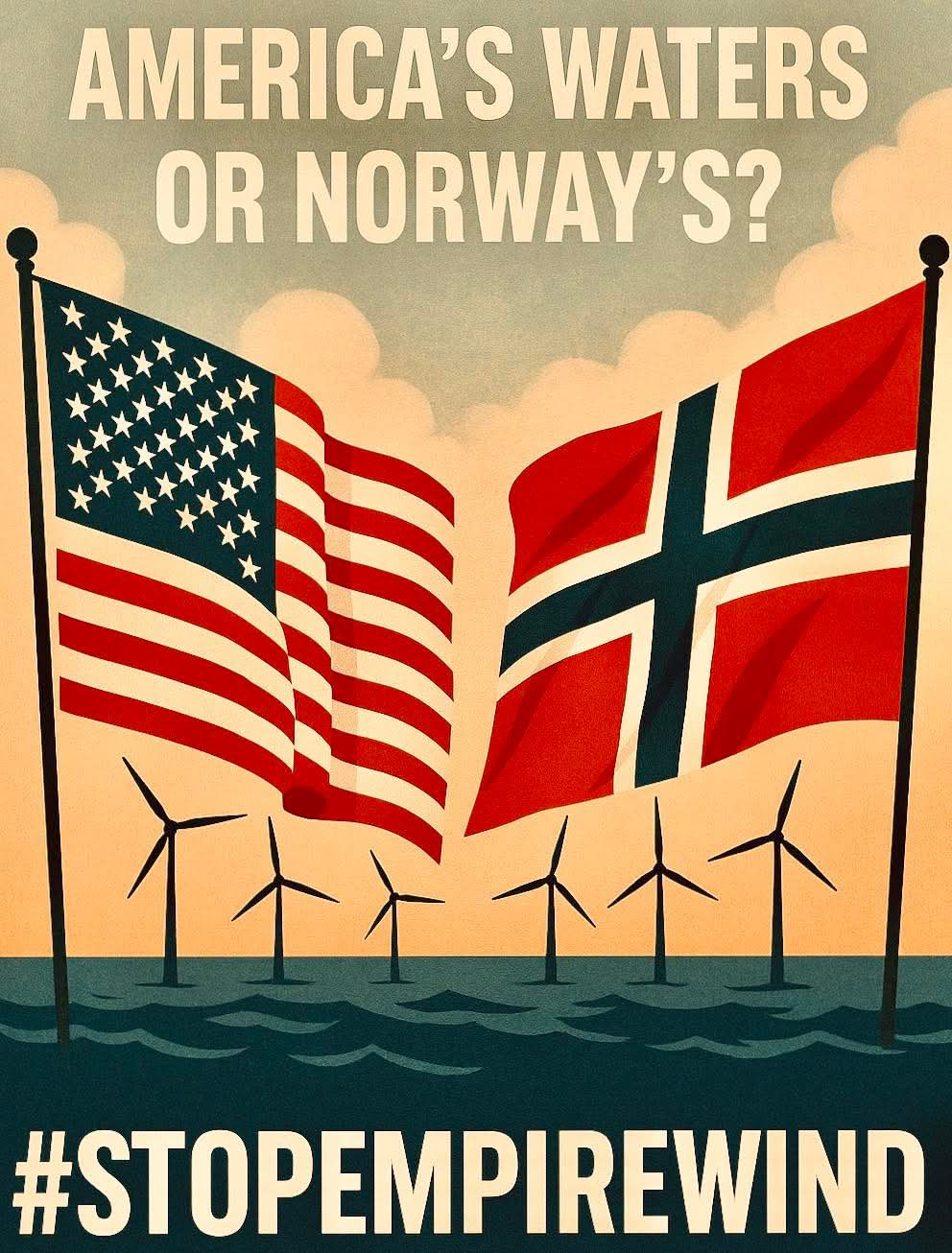
Now that the favored wind industry is struggling, the Washington Post is conveniently endorsing an “all of the above” energy policy and urging Interior Secretary Burgum to “stand up for wind energy.” Where was this support for “all of the above” when offshore oil and gas leasing was halted, important pipeline approvals were being denied, States were banning hydraulic fracturing, nuclear plants were stalled, and coal workers were being told to “learn how to code?”
WP: “Opponents of wind power — many of them tied to the fossil fuel industry — have taken note and are furiously lobbying the government to block projects already under construction, as well.”
Comments:
The fossil fuel industry is frequently accused of supporting groups that oppose wind energy, yet names and details are never provided.
Most opponents of offshore wind are members of grass roots groups that have no connection to the oil and gas industry.
Supporting anti-wind groups would be foolish from legal, political, and public relations standpoints.
Wind opposition would also be contrary to the business plans of most oil and gas companies, some of which are/were major wind energy investors.
Lastly, most anti-wind groups are also opposed to offshore drilling. Would “Big Oil” fund groups like this?
WP: “China’s capacity for wind power is already three times that of the United States.”
Comment: Does this make China an environmental leader? Does the WP also support China’s world-leading and still growing coal consumption (see below)?
WP: “Denmark derives about 60 percent of its total energy from wind.”
Comment: Is the WP unconcerned about the intermittency of wind power, the dramatic fluctuations in capacity factors, and the need for alternate power sources, typically coal and natural gas? How do these wind capacity factors look (chart below)? Does the WP support other Danish climate policies like the tax on cow emissions?
The nominally conservative CDU has vowed not to form a coalition with the “far-right” (actually conservative libertarian) AfD, and will thus have to join hands with the left-leaning SPD and Greens. This doesn’t bode well for the significant changes many believe are needed.
On the plus side for AfD supporters, the party’s growth in just 8 years has been most impressive:
2017: AfD – 0 seats (4%)
2021: AfD – 94 seats (12%)
2025: AfD – 150+ seats (20%)
AfD was dominant in the East which fears a return of the Marxism they experienced prior to the “Wende.”
AfD’s energy policy (p.77) seems pretty sensible given the supply and cost challenges facing Germany. A few highlights:
The AfD supports “Protection of the Environment”, but not the “German Climate Protection Policy” and plans for “decarbonization” and the “Transformation of Society”. They want to end the perception of CO² as an exclusively harmful substance and stop Germany’s maverick policy in the reduction of CO² emissions.
Because the average output is so variable, renewable energy generators are not viable replacements for conventional large power stations.
Renewable sources necessitate a massive expansion of the electric grid systems and jeopardize grid stability.
Fracking: Explore Opportunities and Risks, Involve Citizens
Nuclear Energy: Explore Alternatives, Grant Lifetime Extensions in the Interim
Groups and individuals opposing Atlantic wind projects sent the attached letter to Interior Secretary Doug Bergum asking for the withdraw of wind permits.
The groups cite serious problems with the National Marine Fisheries Service (NMFS) Letters of Authorization (LOA) for Incidental Take of endangered and threatened species. The LOAs authorized cumulative Takes of 548 individuals from a population of around 338.
The groups’ “no list” (project analysis deficiencies):
No EIS for the NMFS Incidental Take Authorization
No consideration of the impact of harassment in the Biological Opinion including cumulative impacts
No harassment authorization for the turbine installation ship
No consideration of using suction caissons instead of pile driving
No consideration of sediment plumes from ocean currents flowing through wind facilities
No assessment of a project’s contribution to the overall effects of multiple wind projects
No consideration of continuous operating noise
No consideration of physical presence-based harassment
We “feel misled” Nantucket Select Board member Dawn Hill Holdgate gives State Rep Thomas Moakley and State Sen. Julian Cyr an earful on Vineyard Wind.
“We as a board, and the community at large even more vehemently, really feel misled by the representations we were given back in 2020…”
“The visual simulations we were given were not accurate.”
“The promises on the lighting, they have been fully lit for quite a long time now. That never should have happened.”
“The safety and the environmental impacts on the sea life are just far greater than the information we were provided when we were offered a financial settlement based on just the visual impact on our historic landmark, which is far more impactful than the simulations we were shown.”
Blade replacement update: “They’ve removed four complete sets to date,” Nantucket Select Board chair Brooke Mohr said tonight. That would mean 12 of the 66 compromised blades Vineyard Wind is required to remove have been taken down.
John Smith forwarded Sable’s court filing (attached) and highlighted important text.
The Coastal Commission has asserted that anomaly repair work on Sable’s onshore pipeline, which was required by the California Fire Marshall and approved by Santa Barbara County, constitutes a violation of the Coastal Act.
Santa Barbara County had confirmed in writing that Sable’s repair work is authorized by the pipeline’s existing coastal development permits and, consistent with the County’s past practices, no new or separate Coastal Act authorization is required.
John and I believe Sable has a strong case, but you can be the judge. For the Commission and County to have such divergent opinions is rather surprising.
Among other assertions, Sable argues (par. 115) that the Coastal Commission violated the takings clause of the Fifth Amendment to the U.S. Constitution, as incorporated by the Fourteenth Amendment, which prohibits the temporary or permanent taking of private property for public use without prior, just compensation. This could lead to significant liability costs for the State.
Remember that Chevron was once Standard Oil ofCalifornia. The attached WSJ article discusses the ugly divorce after all these years.
Chevron tired of California’s attempts to dictate corporate strategy. Per Chevron CEO Mike Wirth:
“Putting bureaucrats in charge of centrally planning key segments of the economy hasn’t worked in other socialist states,” Wirth said in a Nov. 1 call with investors. “I doubt it will be any different in California.”
California wanted Chevron to commit to the State’s energy agenda:
“Chevron has a future in clean energy in California. They can join us in our steady, long-term transition to a state powered by clean energy,” said Daniel Villaseñor, a spokesman for the governor’s office.
California wanted the interests of shareholders to be subordinate to the State’s carbon goals:
Newsom said Wirth had invested far more in shareholder payouts than in developing low-carbon energy.
Other State actions that contributed to the divorce:
accused Chevron and other companies of price gouging
accused Chevron, as a fossil fuel producer, of indirectly causing tragic fires