Feeds:
Posts
Comments

Archive for the ‘energy policy’ Category

Given the absence of industry and government data on wind turbine incidents, Scotland Against Spin (SAS) has done yeoman’s work in filling the void. SAS gathers information from press reports and official releases. A PDF of the latest SAS update summary (through 2024) is attached. You can view their complete incident compilation (324 pages) here. Kudos to SAS for their diligence.

Be sure to see the introductory text at the top of the attached table. Some key points:

  • The table includes all documented cases of wind turbine incidents which could be found and confirmed through press reports or official information releases.
  • SAS believes that this compendium of accident information may be the most comprehensive available anywhere.
  • SAS believes their table is only the “tip of the iceberg” in terms of numbers of accidents and their frequency:
    • On 11 March 2011 the Daily Telegraph reported that RenewableUK confirmed that there had been 1500 wind turbine incidents in the UK alone in the previous 5 years.
    • In July 2019 EnergyVoice and the Press and Journal reported a total of 81 cases where workers had been injured on the UK’s windfarms since 2014. SAS data includes only 15 of these (<19%).
    • In February 2021, the industry publication Wind Power Engineering and Development admitted to 865 offshore accidents during 2019. SAS data include only 4 of these (<0.5%).
    • SAS includes other examples supporting their “tip of the iceberg” claim.

Although SAS is committed to reforming the Scottish government’s wind energy policy, their incident data summaries are credible. It’s disappointing that the wind industry is unwilling to publish comprehensive incident data that would help protect lives and the environment, and improve the performance of all participants.

Read Full Post »

As expected, the White House announced the largest ever permanent ban on offshore oil and gas leasing in the US, and to the best of my knowledge, anywhere in the world.

The sheer magnitude of the ban makes other such withdrawals appear modest by comparison. It’s amazing how bold Presidents (and their handlers) become when they are about to leave office.

The permanent ban includes:

  • The entire Atlantic Outer Continental Shelf (OCS): While there are no current oil and gas leases in the US Atlantic, the region is highly prospective and could contain more than 20 billion barrels of oil equivalent (BOE).
  • The Eastern Gulf of Mexico: This is the OCS area that many petroleum geologists find most attractive. The best prospects are >100 miles from shore which minimizes coastal risks, and the high natural gas potential aligns with Florida legislation supporting the use of gas for power generation.
  • The entire Pacific OCS: While the resources are substantial, their loss has been a foregone conclusion for 25 years. When you can’t even decommission old platforms or restore production on important existing facilities (i.e. the Santa Ynez Unit), how can you possibly expect to issue new leases?
  • The remainder of the OCS offshore western Alaska. The wishes of the majority of Alaskans, who support offshore exploration and development, have been largely ignored for decades.

President-elect Trump has vowed to reverse President Biden’s leasing ban, but that may not be so easy. This is not a matter of simply reversing an executive order. Sec. 12(a) of OCSLA grants the authority to withdraw lands to the President and does not provide for reversal by future Presidents. The attached NYU Law brief concludes that “a subsequent president lacks authority to restore previously withdrawn lands to the federal oil and gas leasing inventory.”

The new Administration will no doubt have a different view than that expressed in the NYU Law brief, but any reversal decision will likely be challenged in court.

Those who wrote and approved Sec. 12(a) should have had more foresight. However, 72 years ago the authors presumably thought Presidents would only use the authority to remove small, especially sensitive areas from leasing consideration, and never thought that a President would remove both of our oceans and much of the Gulf of Mexico!

Congress could of course reverse the Biden bans, but given the complexity of offshore energy issues, such legislation may be difficult to pass.

Read Full Post »

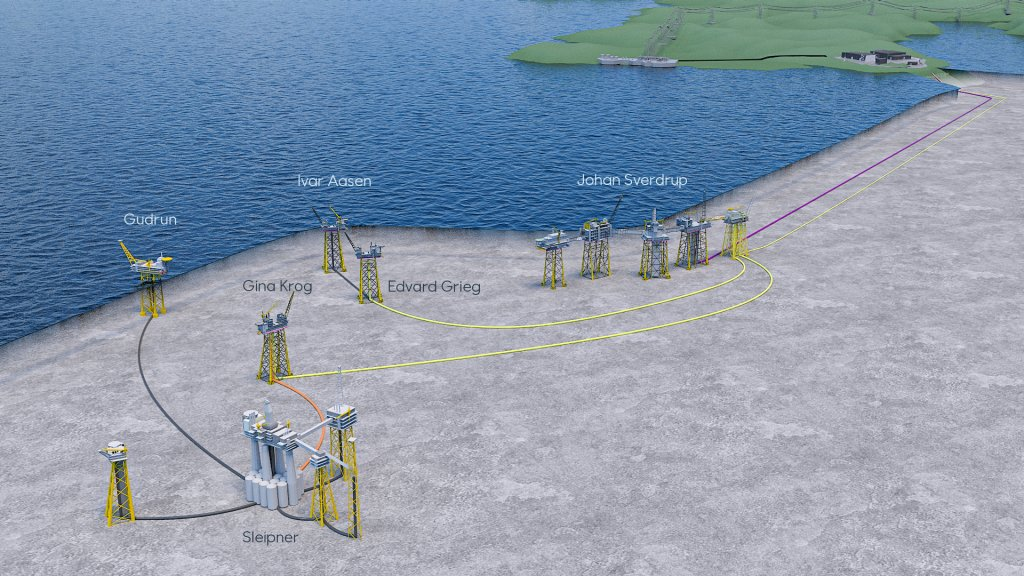
Equinor diagram: power cables from shore to Johan Sverdrup field

“It’s an absolutely sh*t situation,” said Norway’s energy minister Terje Aasland reacting to electricity prices in the country that are six times that of the EU average.

The two ruling parties in Norway want to cut the two power inter-connectors that link the country with Denmark when they come up for renewal in 2026. The smaller coalition party, the Center Party, wants to revisit similar energy links with the UK and Europe.

A related matter is Norway’s push to power offshore platforms with electricity from shore. This policy makes neither economic nor environmental sense, and introduces new safety and operational risks.

This BOE post cites the obvious (per NPD): “The power from shore projects will lead to an increase in electricity prices in Norway.” The post also presents seven other reasons why powering those facilities from shore is not a good idea.

Meanwhile, Total’s plan to partially power the Culzean field (UK) with a floating turbine is similarly irrational. The scheme adds costs and risks with no apparent benefit.

Read Full Post »

Sec. 12(a) of the Outer Continental Shelf Lands Act (OCSLA, 43 U.S. Code § 1341(a)): “The President of the United States may, from time to time, withdraw from disposition any of the unleased lands of the outer Continental Shelf.”

As previously posted, the Sec. 12(a) authority has been cynically exercised by Presidents from both parties and should be repealed or revised.

Unsurprisingly, there are now reports that President Biden intends to permanently withdraw large areas of the OCS from leasing consideration before he leaves office in 2 weeks. Apparently, the leasing ban will include large segments of the Atlantic, Pacific, and the eastern Gulf of Mexico.

Sec. 12(a) facilitates (encourages?) rash, politically motivated decisions that could have major long-term implications for energy security and the economy, and allows Presidents to ignore the deliberate, multi-phase review and comment process that has been established for making leasing decisions.

Note that Presidents have exercised this authority seven times. In every case, the action was taken just prior to the end of the President’s term in office.

Questions:

  • Can a President reverse a Sec. 12(a) decision made by a predecessor? That is a massive legal question that has yet to be fully considered by the legal system.
  • Could legislative action reverse a Sec. 12(a) decision? Yes, but such legislative action would be difficult to enact (just as it would have been difficult for any of the Sec. 12(a) withdrawals to have been enacted legislatively).
  • Is a revision to Sec. 12(a) being considered? Not that I am aware of. Given that the authority has been exercised by both parties and that strong opposition is likely, a revision would be challenging.

Related:

Read Full Post »

JL Daeschler, a BOE contributor, subsea engineer, and resident of Scotland, warned 11 years ago (see clip below) about the demise of North Sea infrastructure and the exit of important companies. JL now comments as follows:

“We have unfortunately taken down all the support facilities needed to conduct a complete offshore sequence – finding, engineering, and producing – even under a more favorable tax climate. We will have to call on Norway to do anything!”

Read Full Post »

In honor of President Carter:

Opinions on Jimmy Carter’s presidency vary, but he merits praise for his administration of the OCS program from 1/1977 to 1/1981. Carter oversaw an active leasing program in all OCS regions. On the operations side, he appointed Don Kash to head the Conservation Division of the US Geological Survey, the OCS regulator at the time. Dr. Kash was an outstanding leader and a gifted communicator and program manager.

Some of the Carter administration’s impressive accomplishments during his 4 year term:

  • 15 lease sales including 3 offshore Alaska, 3 in the Atlantic, and 1 offshore California
  • Drilling activity in all 4 regions: GoM, Pacific, Alaska, and Atlantic
  • Natural gas discovery in the Mid Atlantic (Hudson Canyon Unit)
  • North, Mid, and South Atlantic District offices for permitting and inspections
  • 5300 well starts including 97 in water depths > 1000′
  • 314 new platforms including Cognac, the world’s first platform in > 1000′ of water
  • Comprehensive amendments to the OCS Lands Act (1978)
  • Annual natural gas production reached nearly 5 tcf (approximately 6 times current OCS gas production)
  • Annual oil production was approximately 1/2 current levels which is impressive given that the deepwater era was just beginning and shelf wells had relatively low productivity.

Thank you Jimmy. RIP.

Read Full Post »

The response by the Nantucket group’s attorneys is attached. Key excerpt:

NMFS absurdly argues that agency officials, in preparing a biological opinion for a project, must ignore information about impacts on endangered species from other offshore wind turbine projects that are planned and in various stages of development and governmental review. Perhaps even more bizarrely, NMFS contends that, in preparing a biological opinion for a project, it must consider the cumulative impacts of planned state and local projects but ignore the impacts of planned federal projects.

Background:

Read Full Post »

This important S&P Global study is particularly breathtaking for those of us who remember when Gulf of Mexico LNG import facilities were in the advanced planning stages. The shale gas pioneers completely reversed the scenario!

The LNG industry is critical to serving the world’s energy needs and has rapidly become an integral contributor to the US economy.

Let’s not repeat the harmful pause in the construction of LNG export facilities. Per S&P Global:

The impact of an ‘extended halt’ in new US LNG development due to legal and regulatory risks is striking. In this scenario, more than $250 billion in lost contribution to GDP and an average of >100,000 US jobs are at risk. Gas price savings in an ‘extended halt’ are minimal for domestic consumers, with less than 1% gas cost impact per household. Furthermore, 85% of the energy gap from lost US LNG is expected to be filled by fossil fuels from non-US sources.”

Read Full Post »

With the collapse of Bundeskanzler Scholz’s governing coalition, elections set for 23 Feb, and the Alternative für Deutschland (AfD) party gaining support, perhaps there is a chance for more rational German energy policy.

The AfD, led by Alice Weidel, supports coal, natural gas, and nuclear power generation. The AfD also argues that Germany should be compensated for the damage to the Nord Stream pipelines.

Read Full Post »

Seattle Times: “Don’t block the will of voters on natural gas”

Nearly 2 million residents voted to approve Initiative 2066, which aims to protect the use of natural gas as an energy source in state law and within Washington’s building codes. This month, climate advocates, joined by King County and the City of Seattle, filed suit in court to block the will of those voters.

While the courts will have final say, Gov. Jay Inslee and Democratic legislative leaders support killing off what they see as a misguided and overly broad initiative. Their view brushes aside the concerns of the majority of state voters. Those leaders fail to see a genuine fear that, during the clean energy transition, the fundamental supply of energy to homes and businesses — the basic ability to stay warm, cook food and bathe — is under threat.” 

Kudos to the Seattle Times for their common sense editorial. In addition to noting the economic and social necessity of natural gas, it would have been nice if the editorial board had also acknowledged natural gas’s environmental benefits. However, that would have probably been a bridge too far in Seattle.

The reasons for transitioning to natural gas are arguably clearer and better substantiated than the reasons for transitioning from natural gas.

Read Full Post »

« Newer Posts - Older Posts »