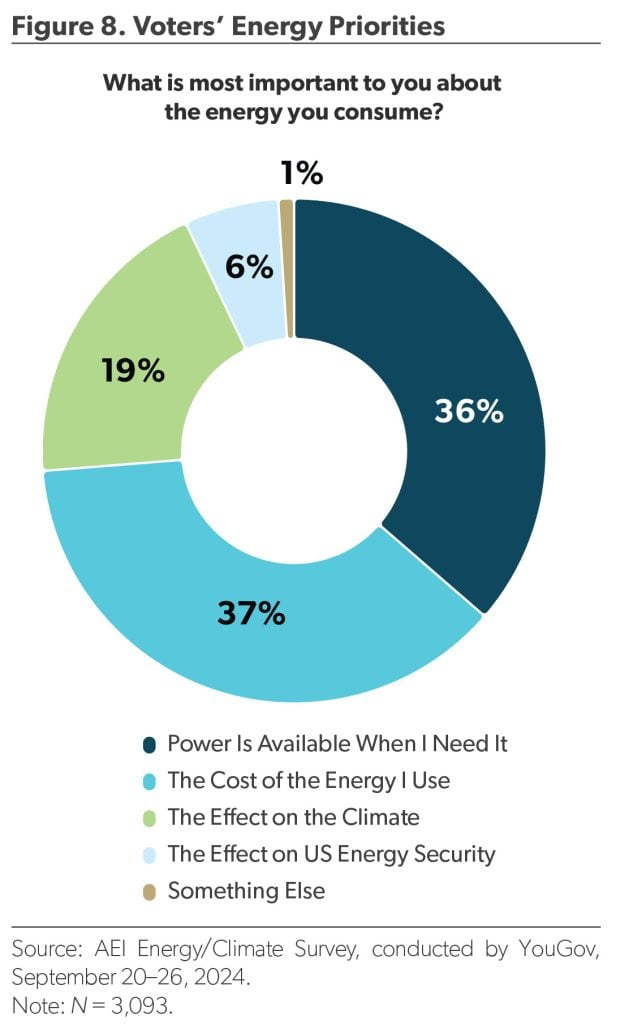
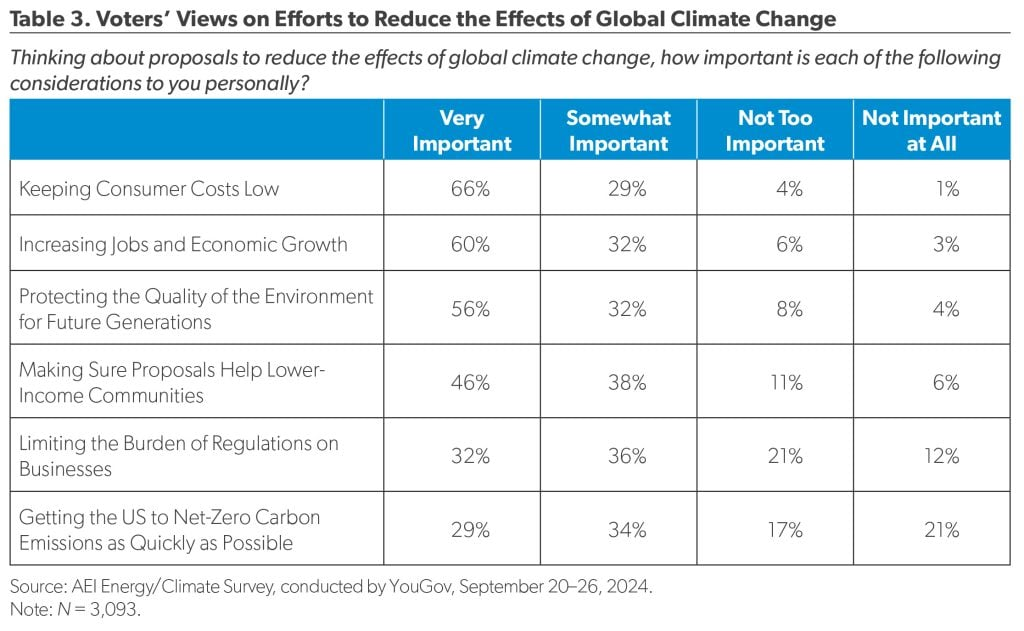
The public is most interested in the cost and reliability of the energy they use and the convenience and comfort of their energy-using products. They are unwilling to sacrifice much at all financially to address climate change or significantly change their consumer behavior.
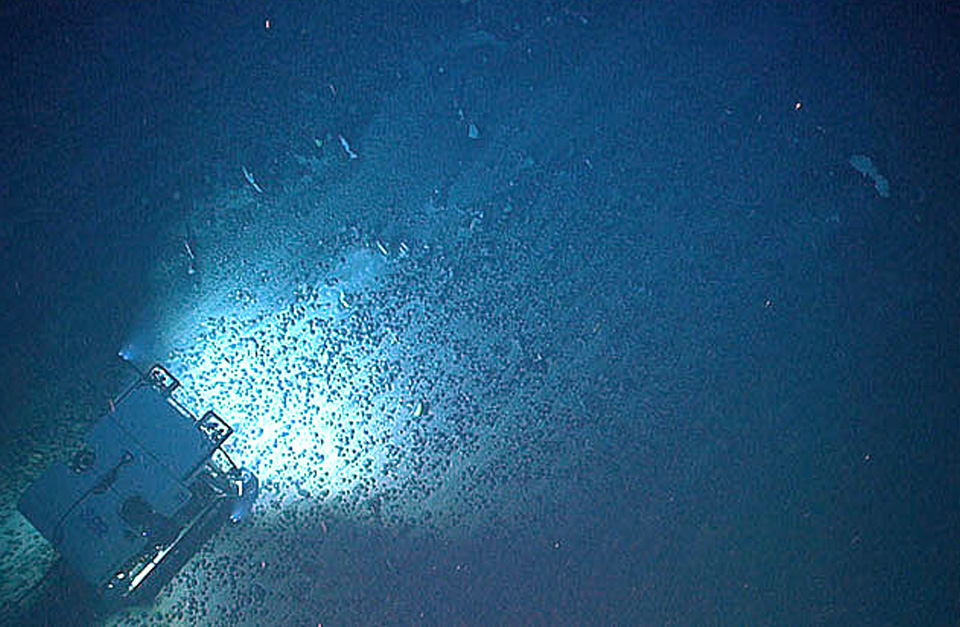
Remotely operated vehicle traverses over an extensive field of ferromanganese nodules that form the bulk of the hard seafloor substrate. Credit: NOAA.
The proposed rule is attached. Important points:
How can the US issue mining licenses in international waters (controversial)?
“The International Seabed Authority (ISA) regulates deep seabed mining in areas beyond national jurisdiction for countries that are parties to the United Nations Convention on the Law of the Sea (UNCLOS). The United States is a non-party to UNCLOS. Under U.S. law, NOAA may issue licenses and permits to U.S. citizens in areas beyond national jurisdiction under the Deep Seabed Hard Mineral Resources Act (DSHMRA).“
Main objective of the proposed rule (paraphrased):
The deepsea mining industry has gained experience from site specific exploration activities. As a result, later entrants may be able to capitalize on the information gained by previous explorers and lessen the need for further exploration of previously explored areas. In such cases there may be a need for a consolidated licensing process in which permit applicants could meet exploration license requirements to establish priority of right, and permit requirements, simultaneously.
Comment: The proposed rule seems reasonable in that qualified companies that gather the necessary site information would have the right (after NOAA review and approval) to collect the minerals. This would align deepsea mining more closely with offshore oil and gas in that companies acquiring licenses would be able to proceed to production after regulatory approvals.
We preferred the House version, but the Senate Parliamentarian killed the provisions that reduced the risk of litigation and processing delays.
Whether justified or not, the royalty rate is now capped at 1/6 and a 10-year deepwater lease term is locked in.
The favorable terms and assurance of regular GOA lease sales put the ball squarely in industry’s court. We are looking for a good showing at Sale 262, including some new bidders and the return of some prominent companies.
“Leases awarded through Lease Sale 262 will be for oil and gas exploration and development only.” (News Release)
“Leases issued as a result of GOA Lease Sale 262 are expressly limited to oil and gas exploration and development.” (p. 16 of the Sale Notice)
Comment: Why would BOEM stipulate, for the first time ever, that an Oil and Gas Lease Sale is only for oil and gas exploration and development? Perhaps because, at the last 3 sales, 2 companies wrongfully acquired oil and leases for carbon disposal purposes. Those leases will likely expire at the end of their primary term, and the lessees will have nothing to show for their investment.
Other items of interest:
“Congress may enact legislation through reconciliation efforts sometime after publication of this Proposed NOS“
Comment: The Offshore Oil and Gas Leasing provisions in the “Big Beautiful Bill” make OCS leases more attractive in that they minimize sale uncertainty and return royalty rates to pre-IRA levels.
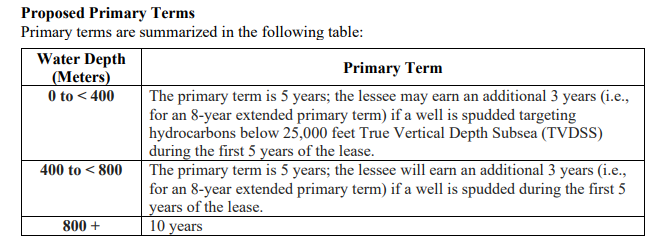
Proposed Primary Terms
Comment: Time for an update. The drilling requirements for a primary term extension should be the same for leases in 0-400 m as for those in 400-800 m. The requirement for an ultra-deep subsurface well is selectively punitive to shelf operations. These operations, although typically less lucrative, are important to the Gulf’s infrastructure.
Restricted Joint Bidders On April 29, 2025, BOEM published the most recent List of Restricted Joint Bidders in the Federal Register (90 FR 17832). Potential bidders are advised to refer to the Federal Register prior to bidding for the most current list at the time of the lease sale. Please refer to the joint bidding provisions at 30 CFR 556.511-556.515
The differences between the House and Senate versions of the Big Beautiful Bill are summarized in the table below. (See the previous post on the House version.)
The Senate bill includes royalty and lease terms that favor deepwater lessees, but excludes the provisions in the House bill that streamline the leasing process and minimize litigation risks. At least some of those House provisions were rejected by the Senate Parliamentarian.
The House will vote on the version that passes the Senate. So the Senate version is more likely to be enacted.
House
Senate
Comment
royalty: 12.5% to 18.75%
royalty: 12.5% to 16 2/3%
Lowering the royalty cap to 1/6 (16 2/3%) unduly limits the Secretary’s discretion and may reduce revenues without significantly increasing production.
2 GOA sales/yr over next 15 yrs.
same as House
Would have liked the opportunity for consideration of very limited Atlantic leasing or stratigraphic test drilling, but that is not politically feasible at this time.
use Sale 254 form and stips 4-10, may update stips 1-3
sale 254 lease form and stips 4-9, may update stips 1-3 and 10
The minor difference favors the Senate version. Stip 10 pertains to restrictions due to Rights-of-Use and Easement for Floating Production Facilities, and needs to be updated with each sale
mandates 10 year lease term for water depths >800 m
Although a 10 year term for deepwater leases is generally prudent, the Secretary should be able to choose a shorter term if concerns about timely exploration and diligent development arise (more likely given the increase in leases that could be issued as a result of the 2 sales/yr mandate).
requires approval of subsurface commingling unless there is “conclusive evidence” of safety or ultimate recovery issues
Although BSEE’s policy change on downhole commingling was warranted, the legislative change removes essentially all discretion by mandating approval unless there is “conclusive evidence” to the contrary. Conclusive evidence is dependent on production history, at which point it may be too late.
Adherence with the Biological Opinion shall satisfy the Secretary’s obligations under the Endangered Species Act of 1973 and the Marine Mammal Protection Act of 1972
This provision reduces govt/lessee litigation risks
Previous EIS’s for the Gulf of Mexico shall satisfy the Secretary’s NEPA obligation.
Rejected by the Senate Parliamentarian.
Consistency determinations prepared by BOEM for Lease Sale 261 for the States of Texas, Louisiana, Mississippi, Alabama, and Florida will satisfy the Secretary’s CZMA obligations.
The States or Parliamentarian may not have been comfortable with this provision which simplifies plan approval processes.
The Secretary may waive any requirement under the Outer Continental Shelf Lands Act that the Secretary determines would delay issuance of a lease.
Rejected by the Senate Parliamentarian?
A lease must be issued to the highest responsible qualified bidder not later than 90 days after the sale date.
Rejected by the Senate Parliamentarian.
A Governor may nominate for leasing under a lease sale held under this section an area of the OCS that is adjacent to the waters of the State
Never understood the need for this provision.
G&G surveys must be approved within 30 days after a complete application is received.
Not feasible in some cases given endangered species concerns.
A lease awarded under Lease Sale 259 or Lease Sale 261 shall not be set aside, vacated, enjoined, suspended, or cancelled except in accordance with section 5 the Outer Continental Shelf Lands Act (43 U.S.C. 1334). Also, new terms or conditions may not be added to these leases.
Reduces litigation risks.
Any action to approve, require modification of, or disapprove any exploration plan, development and production plan, bidding procedure, lease sale, lease issuance, or permit or authorization related to oil and gas exploration, development, or production, or any inaction resulting in the failure to hold a lease sale shall be subject to judicial review only in a United States court of appeals for a circuit in which an affected State is located.
This provision significantly reduces litigation risks. Rejected by Parliamentarian?
6+ Cook Inlet sales over next 10 yrs.
6+ Cook Inlet sales over the next 7 years
90% of Cook Inlet revenues to the State of Alaska.
70% of Cook Inlet revenues to the State of Alaska.
The percentages are high, but the revenues are likely to be low.
Today’s Supreme Court decision limits the power of federal district judges to issue universal injunctions. I wonder if this decision restricts courts in DC and Maryland from ruling on oil and gas operations in the Gulf of America? Perhaps not, because those decisions are linked to Federal agencies in the DC area even though the activity is in the Gulf.
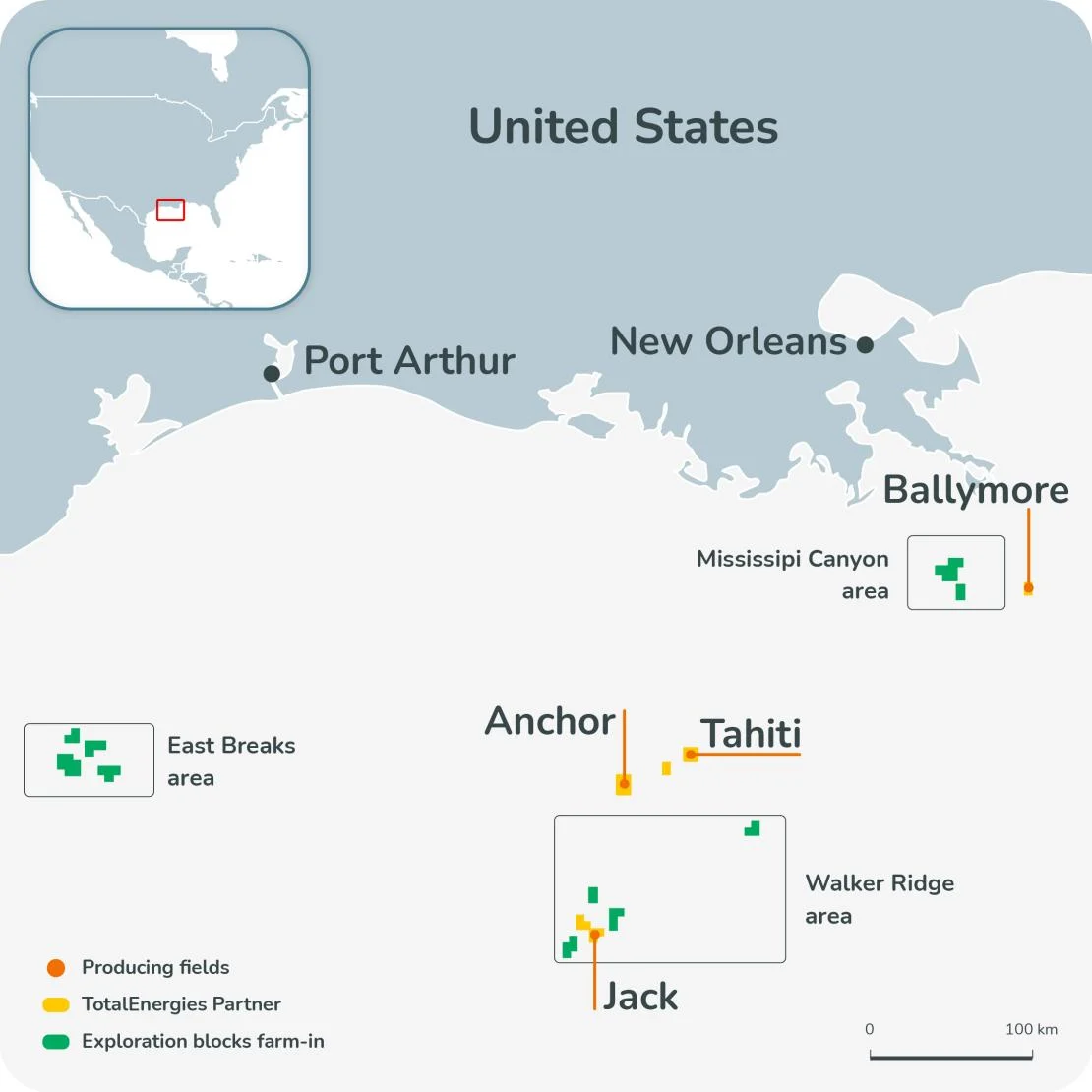
This week Total announced the acquisition of a 25% working interest in 40 Chevron leases in the Gulf of America. Total already owned interest in Chevron’s producing Ballymore (40%), Anchor (37.14%), Jack (25%), and Tahiti (17%) fields. Ironically, Federal regulations prohibited Total from jointly bidding with Chevron for any of those leases at the time of the sales. How does that make sense?
Total did not submit a single bid in any of the past 4 Gulf of America lease sales. Perhaps they prefer to acquire interest in blocks previously leased to companies like Chevron. That is a reasonable acquisition strategy. However, farm-in acquisitions yield no bonus dollars to the Federal government. Wouldn’t it have been in the government’s best interest if some of those acquisition dollars were spent at lease sales where the bonus bids go to the US Treasury?It’s long past time to remove the joint bidding restrictions!
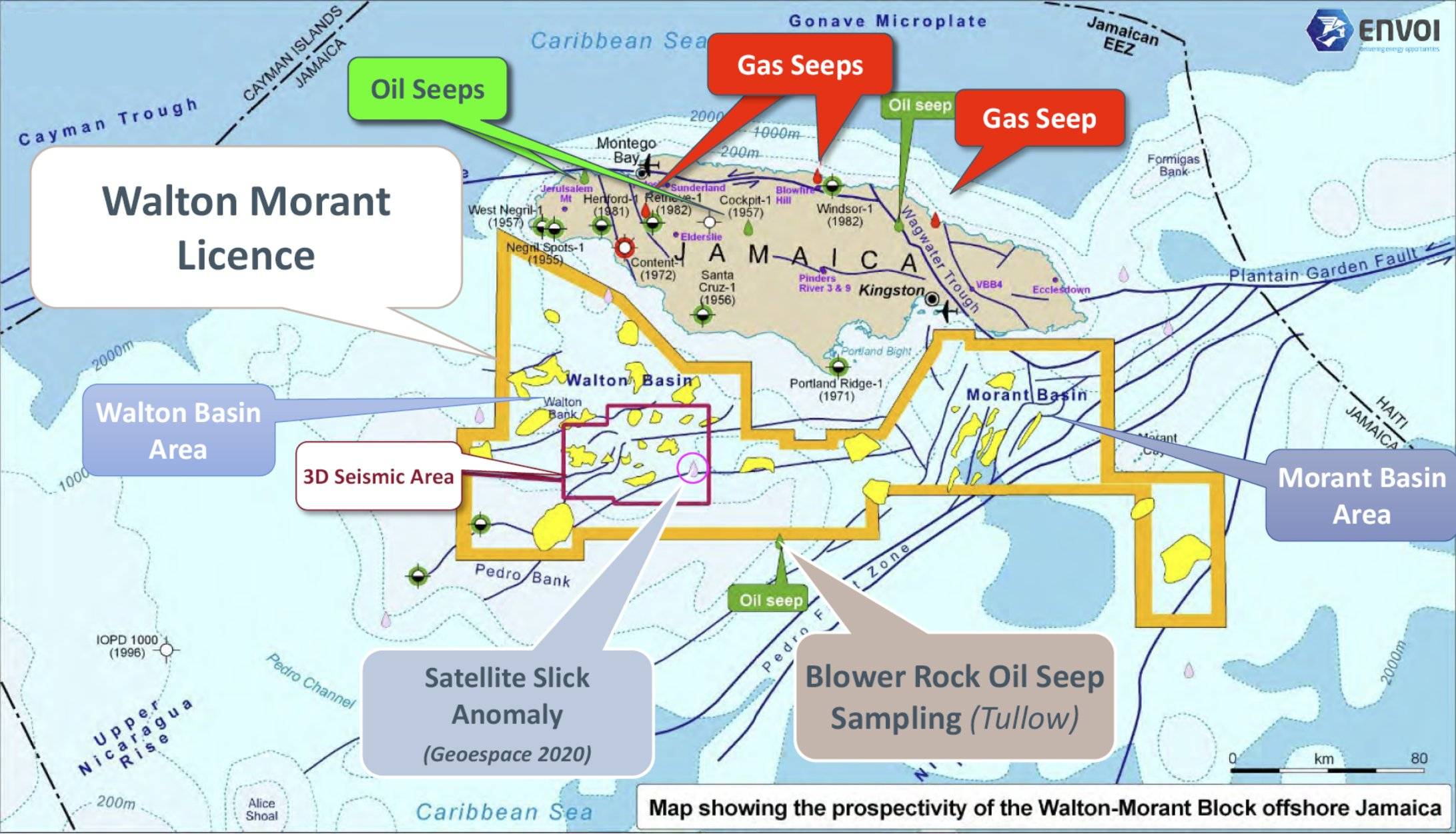
While Jamaica’s Walton Morant Block has impressive potential, that doesn’t equate to oil and gas reserves, and speculation about the “next Guyana” is highly premature.
The block’s licensee, United Oil & Gas (UOG), lacks the financial resources to fulfill its drilling commitment, and is thus dependent on finding industry partners. The Government of Jamaica has generously granted multiple license extensions to UOG, the latest through 1/31/2028.
Will UOG succeed in their quest for partners? Is the confidence expressed below justified? Stay tuned.
#UOG CEO Brian Larkin: “We’re in the best position yet — interest is real, and it’s backed by evidence provided to our NOMAD.”
🔹Hydrocarbon shows in all 11 historical wells confirm an active petroleum system 🔹Licence secured through to January 2028 pic.twitter.com/dfogPhpCnH
— United Oil & Gas (LON:UOG) (@UOGPLC) June 12, 2025
🔹 7Bn bbl potential — same source rock & economics as Exxon's Stabroek 🔹 $8/bbl dev. cost | $25/bbl break-even 🔹 Comparable to Guyana & Namibia — but Jamaica remains wide open for entry 📈 Scale like this is rare pic.twitter.com/ZfQda5DQ5Q
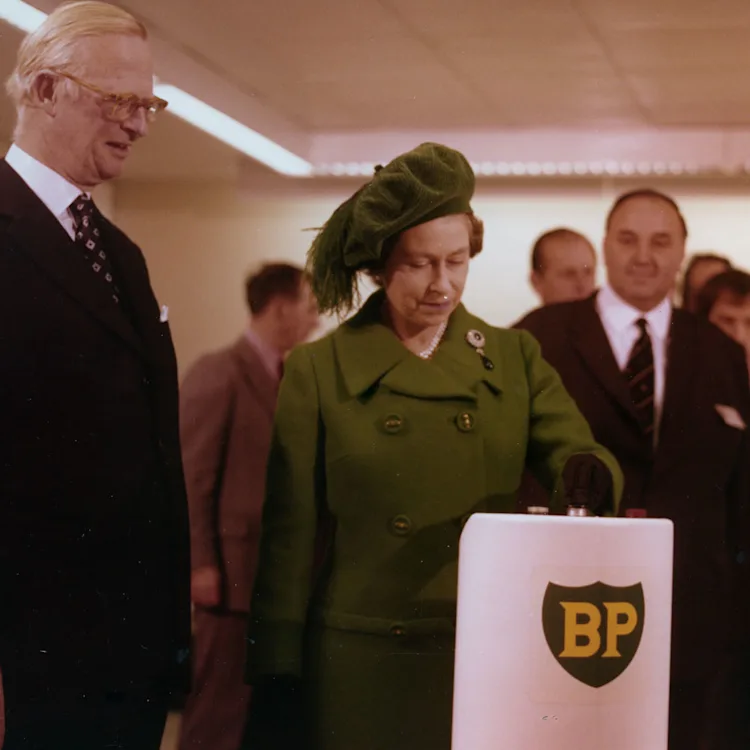
Argyll first productionQueen Elizabeth inaugurates the Forties fieldQueen Elizabeth: a day of “outstanding significance in the history of the United Kingdom” and a “critical milestone in the development of our energy resources.”
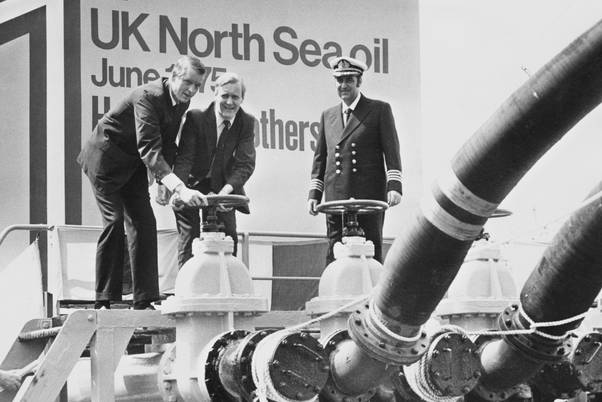
JL Daeschler recalls the inauguration of production at the Argyll field (18 June 1975) and Forties field (3 Nov 1975):
While some were bitter that Hamilton Brothers, a company owned by 2 brothers from Denver, was able to start production before British giant BP, there was never a race between the companies.
Instead there was a broad industry effort to initiate production during a financial crisis.
All operators exercized caution. We learned slowly with safety in mind. There was a great transfer of knowledge between operators small and big.
BP’s Forties field was a major achievement – designed for 400,000 bopd. 240 miles of 36″ pipeline were required (110 miles offshore and 130 miles onshore). The biggest delay was associated with the pipeline system, not the platform or wells.
The Hamilton Brothers Argyll field project (30,000 bopd) was not comparable in magnitude, requiring only a few wells and short infield flowlines.
The inauguration of Argyll (photo above) was with the UK Energy Minister, Ferris and Fred Hamilton, and a Greek tanker captain. There was minimal promotion and PR followup.
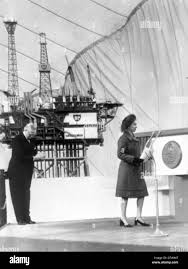
Contrast that with the Forties inauguration (photo above), a big event featuring Queen Elizabeth!
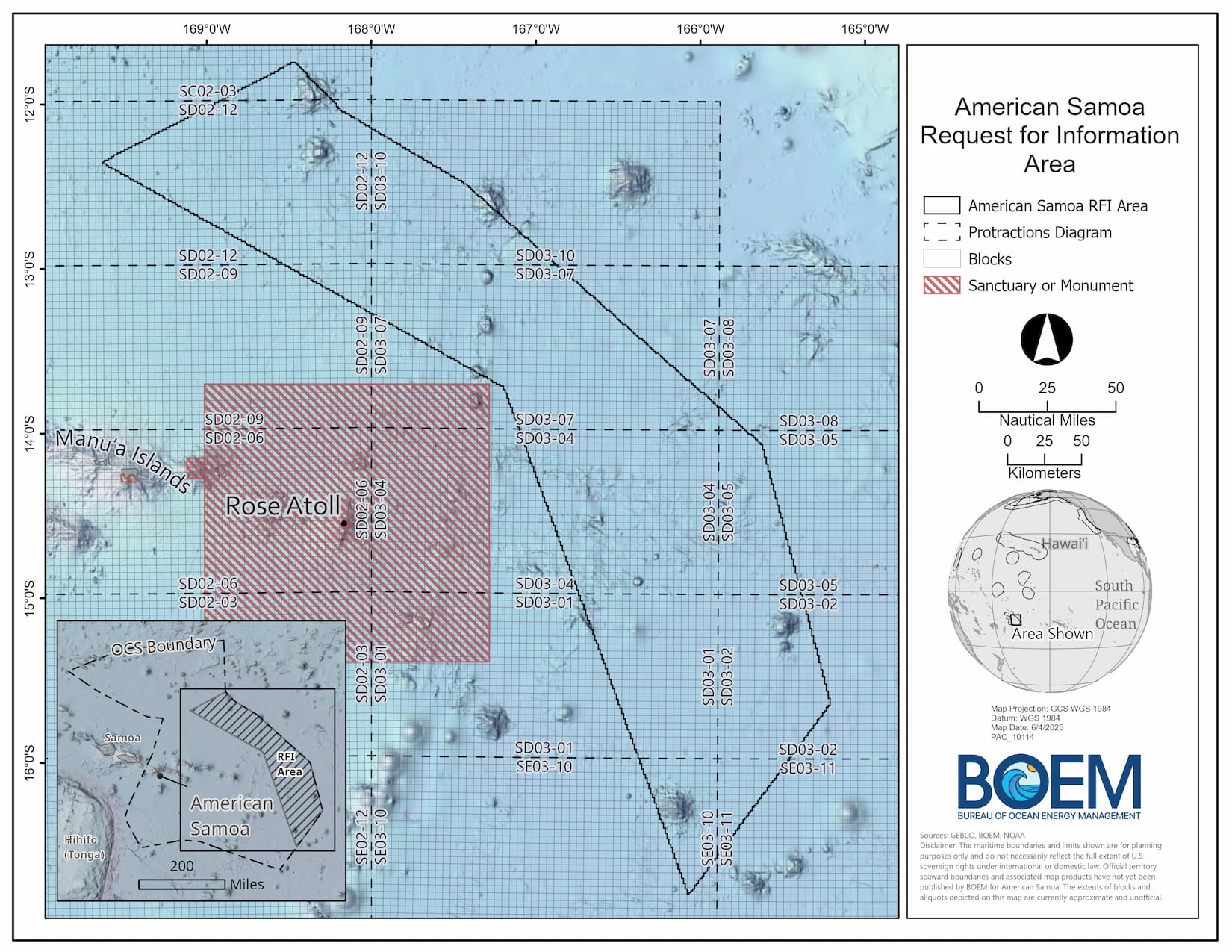
For those who want to provide input on an American Samoa marine minerals sale, now is your chance. See the attached Request for Information and Interest.
 Bud's Offshore Energy (BOE)