The Ondjaba-1 well will be drilled at a new world record water depth of 3,628 m. The current world record is 3,400 m, set by Maersk Voyager’s sister drillship Maersk Venturer when it drilled the Raya-1 well for TotalEnergies offshore Uruguay in 2016.
The record US water depth well (3051m/10,011′) was drilled in 2003 by Transocean for Chevron in Alaminos Canyon Block 951 the Gulf of Mexico. The deepest well drilled in US GoM in 2021 YTD was for Shell in 9352′ of water in Alalminos Canyon Block 815.
While brief celebrity space flights are major news stories, these economically important and technical challenging accomplishments by the offshore industry receive very little attention even as oil prices pierce the $82/bbl mark.
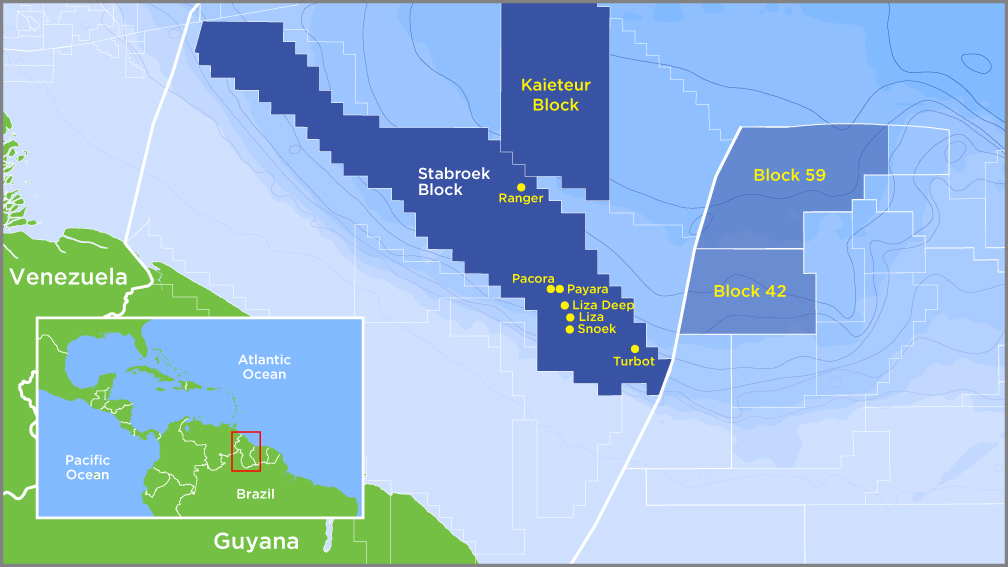
IRVING, Texas – ExxonMobil increased its estimate of the discovered recoverable resource for the Stabroek Block offshore Guyana to approximately 10 billion oil-equivalent barrels.
While the official BOEMRE-USCG and National Commission/Chief Counsel investigation reports were quite good and there are countless court documents and ad hoc reviews of the blowout, some important Macondo issues have not been fully addressed. BOE will touch on these issues periodically starting with the decision to terminate the top kill operation on 5/28/2010.
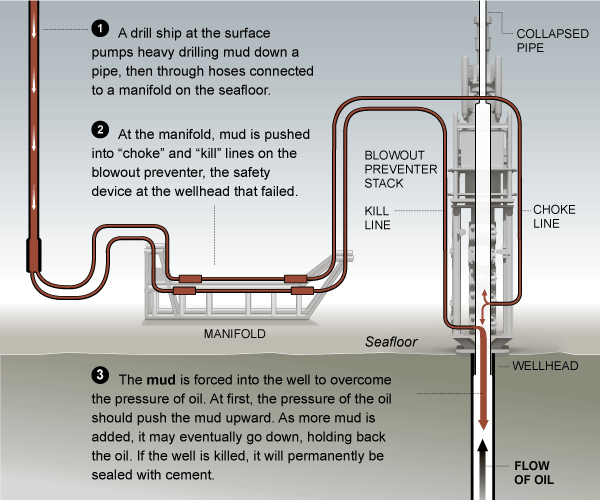
The top kill operation (see diagram above) was intended to overcome and halt the flow of oil by pumping heavy mud into the well bore. The operation was not successful because the pumping rate and mud weight did not generate sufficient pressure. Per an excellent paper by Dr. Mayank Tyagi and colleagues at LSU (Analysis of Well Containment and Control Attempts in the Aftermath of the Deepwater Blowout in MC252):
It is very likely that if the top kill had been designed to deliver more than 109 bpm of 16.4 ppg drilling fluid below the BOP stack for a sustained period, the Macondo blowout could have been stopped between May 26-28, 2010. Given that the well was successfully shut-in with the capping stack in July, and that the subsequent bullhead (static) kill was successful, certainly a higher rate top kill would have been successful at that time.
The American Thinker, citing the New York Times, reports that Energy Secretary Chu stopped the top kill operation over the objections of some BP engineers. While it was reasonable to be concerned about possible casing leaks and the fracturing of subsurface formations, the subsequent (7/15/2010) closure of the capping stack demonstrated that the well had sufficient integrity to support the top kill operation. Questions regarding why a higher rate top kill effort was not attempted and how that decision was made are therefore important and merit discussion. Did the Macondo well flow unnecessarily into the Gulf for an additional 48 days (5/28-7/15)? Did the National Incident Command facilitate or delay source control?
Keep in mind that the NIC almost made a similar mistake in July. Even after the capping stack successfully shut-in the well on 7/15, Incident Commander Thad Allen (USCG) continued to call the closure of the capping stack a temporary test and threatened to require BP to resume flow from the well. Fortunately, informed input from experienced engineers prevailed. The well remained shut-in and the static well-kill operation was successful.
This Canadian video was a big hit at an awards program in Houston 15 years ago. I was pleased to find it on YouTube and thought it would be a nice Labor Day feature. Kudos to the workers who produce the energy that supports our economy and our way of life. Your efforts are greatly appreciated! Happy Labor Day!
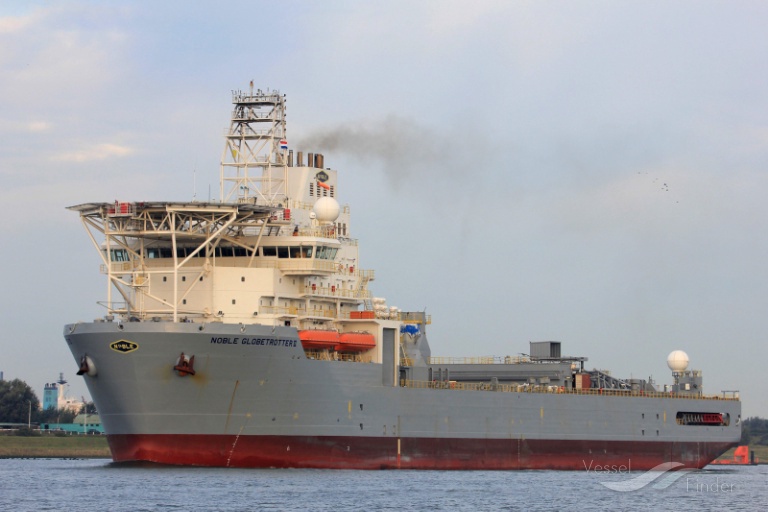
SUGAR LAND, Texas, Aug. 29, 2021 /PRNewswire/ — Noble Corporation (NYSE: NE, “Noble” or the “Company”) today announced that all personnel onboard the Pacific Sharav, Noble Globetrotter I, and Noble Globetrotter II ultra-deepwater drillships in the US Gulf of Mexico are safe and accounted for following Hurricane Ida. Each rig successfully secured its respective well in progress and took evasive actions to avoid the storm’s path. Of the three, the Noble Globetrotter II is the only vessel that encountered hurricane-force conditions. The vessel maintained stability throughout the weather event and is operating on its own power with functional marine and safety systems. A full assessment of its condition will be completed as soon as the weather clears.
BSEE’s 8/29 update indicates that over 1.74 million BOPD have been shut-in by Ida. Based on the most recent EIA production data, this is essentially all Gulf of Mexico oil production.
There has also been some early noise on social media about offshore facility damage. None of these reports have been confirmed by the Coast Guard, BSEE, or the companies involved. The most credible reports relate to the Noble Globetrotter II deepwater drillship. Per the reports, allegedly from workers on the rig, the Globetrotter II was hit by Ida before the riser was disconnected and recovered. The rig is reported to have sustained significant damage and there may have been injuries. This type of incident has occurred in the past when dynamically positioned drillships have not successfully pulled their riser and relocated prior to the storm’s arrival. One report indicated 60′ waves and 140 mph winds at the rigs’s location.
The only 2021 Atlantic drilling activity offshore North America and south of Newfoundland was in Bahamian waters. Yesterday, Challenger Energy (formerly Bahamas Petroleum) provided an interesting update. Some highlights:
The Perserverance I well was drilled approximately 20 miles from the Bahamas-Cuba maritime border, in water 518 meters deep. This was the first exploration drilling in The Bahamas since the mid-1980s, and the first test of any prospect located in deeper waters off the shallower water carbonate banks.
There were no safety or environmental incidents.
The well was plugged and secured in accordance with international and BSEE standards.
Challenger advised the Government of The Bahamas of its intent to renew its exploration licences.
Geologic summary:
Perseverance-1 reached total depth of 3,905 metres, having intersected five Albian, Upper Aptian, and Mid-Aptian horizons of interest. Post-drill analysis of the well has confirmed the geological risk elements for trap, seal and reservoir were present in the Lower Cretaceous carbonate play. Perseverance encountered high quality reservoirs in the targeted Lower Cretaceous carbonate closures, with thick sequences of evaporites providing effective seals. Depth and thicknesses of reservoir sections encountered were generally as prognosed pre-drill, and reservoir porosity was likewise generally in line with pre-drill expectations (in the range of 10% to 20%).
The presence of hydrocarbons was encountered at various horizons, indicated by elevated gas chromatography readings detected continually during drilling, generally increasing with depth and through the deeper Aptian reservoir column in particular. Oil was identified from high oil saturation values from logs in a number of reservoir sections, thus verifying the existence of a working Lower Cretaceous petroleum system and reservoir quality sequences in the Aptian.
Although hydrocarbons were present, these were not in commercial quantities, with the source quality and migration interpreted as being the primary reason for this non-commercial well outcome.
Petrophysical analysis of the well logs have confirmed high quality reservoirs down to the base of the well with no significant deterioration in porosity with depth, indicating the potential for high deliverability reservoirs in the underlying Jurassic formations.
In aggregate, the analysis of the data from Perseverance-1 drilling is broadly indicative of increased potential for oil in the underlying Jurassic interval (which was not penetrated by Perseverance-1). In particular, the relatively cool well temperatures place the postulated Jurassic source rock (producing in nearby Cuba and the US Gulf of Mexico) in the oil window, thus oil generative.
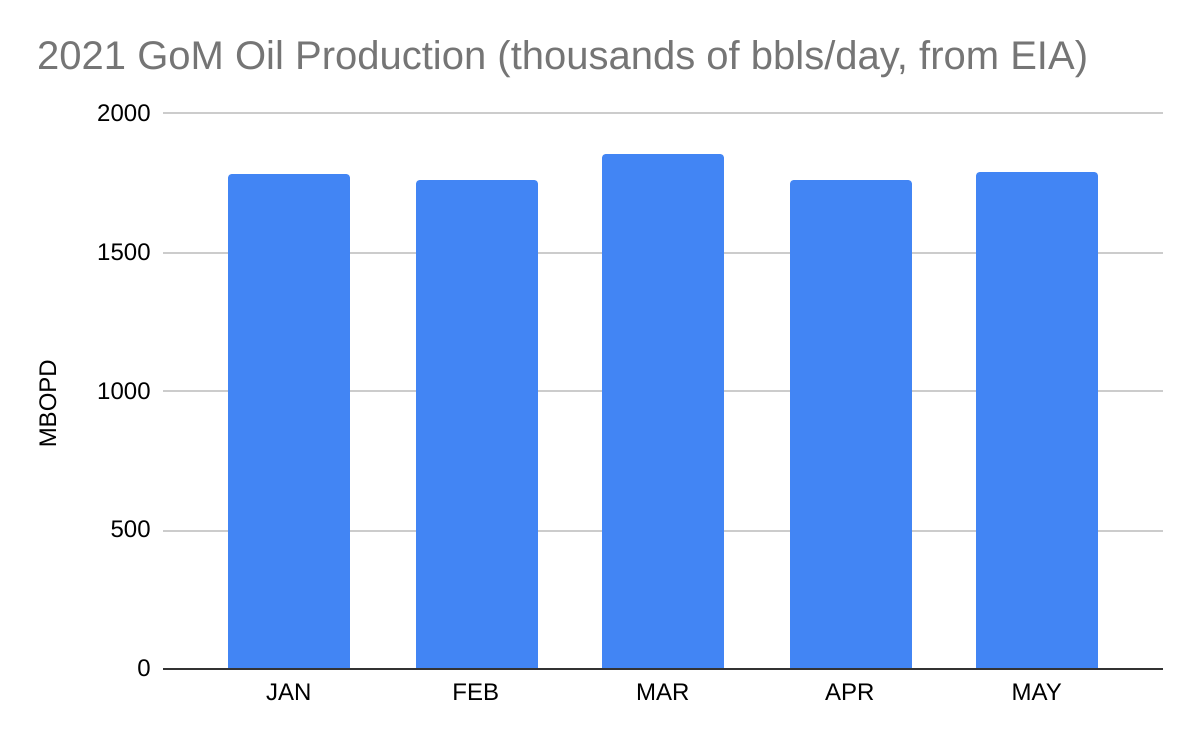
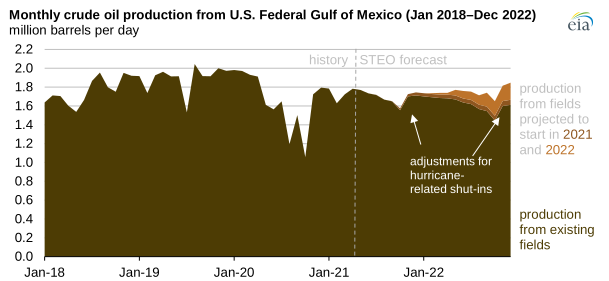
A previous BOE post estimated that current stabilized GoM oil production rates were 1.7 – 1.8 million BOPD. EIA recently announced that May production was 1.791 million BOPD, which is consistent with our estimate. Per the chart below, GoM production was essentially unchanged from the beginning of the year despite a 37% increase in the price of oil (WTI) from 1 January to 31 May. This suggests that stabilized GoM production may have peaked pending first oil from several new projects.
Key production questions:
Will new production from Mad Dog 2, Vito, PowerNap, Thunder Horse South 2, and the recently sanctioned Whale project offset high depletion rates elsewhere in the deepwater GoM?
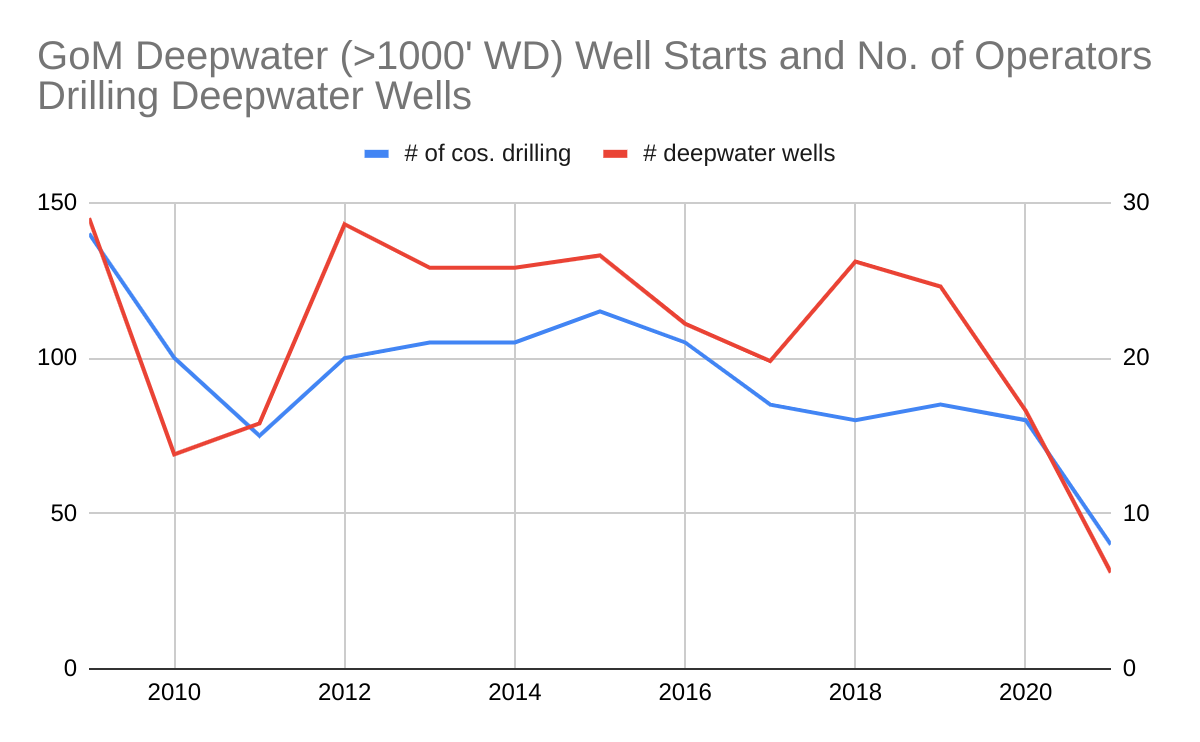
Looking further ahead, is deepwater GoM production sustainable without increased drilling activity? Per BSEE data, only 33 deepwater wells were started in 2021 YTD, just 18 of which are classified as exploratory. Drilling is thus at historic low levels. For reference, there were 477 wells started in 2001, 149 of which were exploratory. This level of activity facilitated a 30% growth in oil production, peaking at 2 million BOPD in 2019.
Regardless of one’s views on the urgency and timing of the “energy transition,” is there any doubt that oil and gas will continue to be important to our economy and security for years to come? If not, should deepwater GoM production, with its relatively low carbon intensity, be a core element of our energy strategy? To better understand the trade-offs, I suggest that BOEM’s Environmental Studies Program conduct a peer reviewed assessment of the carbon intensity of domestic and international supply alternatives. Product transportation considerations should be included in this assessment.
In light of energy security and price considerations, rebounding oil demand, uncertainty about the long-term viability of non-conventional onshore production, and the elimination of most other offshore options, sustaining deepwater GoM production should be a high-priority U.S. policy objective. The deepwater GoM also offers significant environmental advantages in that approximately 1.6 million BOPD are produced from only 58 widely dispersed surface facilities that are well maintained, closely monitored and inspected, and distant from shore. Another advantage of US deepwater production is the low carbon intensity relative to other sources of petroleum (more on this in a later post).
EIA (Chart 1) projects relatively stable GoM production over the next 2 years. Platt’s (Chart 2) is forecasting a slight decline in 2021 production primarily because of COVID-related delays in the initiation of production at Shell’s VIto and PowerNap and BP’s Mad Dog 2 and Thunder Horse South 2 facilities. Based on the latest available EIA data, current stabilized GoM oil production appears to be in the 1.7-1.8 million BOPD range.
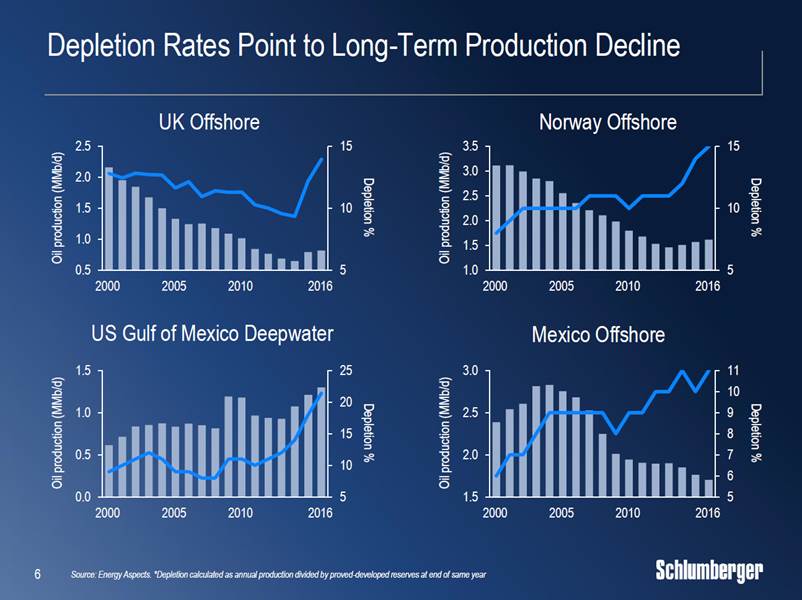
Going forward, the concern is the high rate of reserve depletion and the absence of drilling activity needed to replace reserves. Schlumberger data through 2016 (Chart 3) show depletion rates rising to above 20%, the highest (by far) of the offshore regions analyzed. I was unable to find more recent data, but unless this trend line has made a sharp turn, production declines are likely in the next 3-5 years. Further, drilling trends do not suggest the likelihood of significant reserve growth. Data from BSEE’s Borehole File (Chart 4) indicate deepwater well start activity that is comparable to the moratorium years of 2010 and 2011. Even more concerning is the absence of exploratory drilling (chart 5) and the very few operating companies that are drilling deepwater wells. Only five operators have spudded deepwater exploratory wells in 2021 YTD. One US supermajor hasn’t started a well since 2019, and another US major has essentially exited the Gulf.
Deepwater production trends are not easily reversed, so dialogue is urgently needed to assess the implications of declines in drilling, reserves, and industry interest. As the resource manager on behalf of the public, BOEM is the logical choice for initiating these discussions. BOEM’s Norwegian equivalent, the Norwegian Petroleum Directorate (NPD) demonstrates the importance of pro-active land management. The NPD has done an outstanding job of sustaining exploration activity and production consistent with Norwegian safety and environmental values, which are among the highest in the world. On their website, NPD provides ongoing updates on exploration, production, and reserve depletion parameters. Their competency and commitment to sustaining production on the Norwegian shelf is underscored in this news release, an excerpt from which is pasted below:
Exploration is of great importance for the long-term value creation on the shelf. The supply of oil and gas resources from new discoveries, as we have seen so far this year, is necessary so that activity in the petroleum industry does not fall sharply after 2030. Without new discoveries, production can fall by more than 70 percent in 2040 compared to 2020, says Torgeir Stordal, director of Technology and coexistence in the Norwegian Petroleum Directorate.
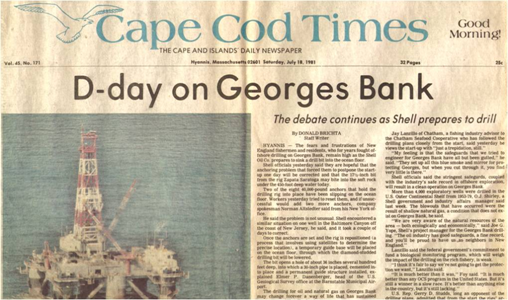
40 years ago today, drilling began on the first two exploratory wells on Georges Bank, a large seafloor feature that separates the Gulf of Maine from the Atlantic Ocean. The Cape Cod Times headline (below) attests to the drama that was unfolding 155 miles southeast of Nantucket. After years of debate, oil embargoes, gas lines, and the threat of future supply disruptions had tipped the political balance in favor of offshore leasing, and OCS Sale No. 42 (North Atlantic) was held one week before Christmas in 1979. Looking back, I find it remarkable that only 19 months elapsed between the lease sale and the initiation of drilling. During that time, bids were evaluated, exploration and spill response plans were drafted by the operating companies and reviewed by the Federal regulators and six coastal states, fisheries issues were addressed, and a comprehensive monitoring program was developed and initiated. Perhaps most impressive was the manner in which government (Federal and State), industry, and academic professionals with very different personal opinions about offshore drilling collaborated to assess and monitor impacts and mitigate risks.
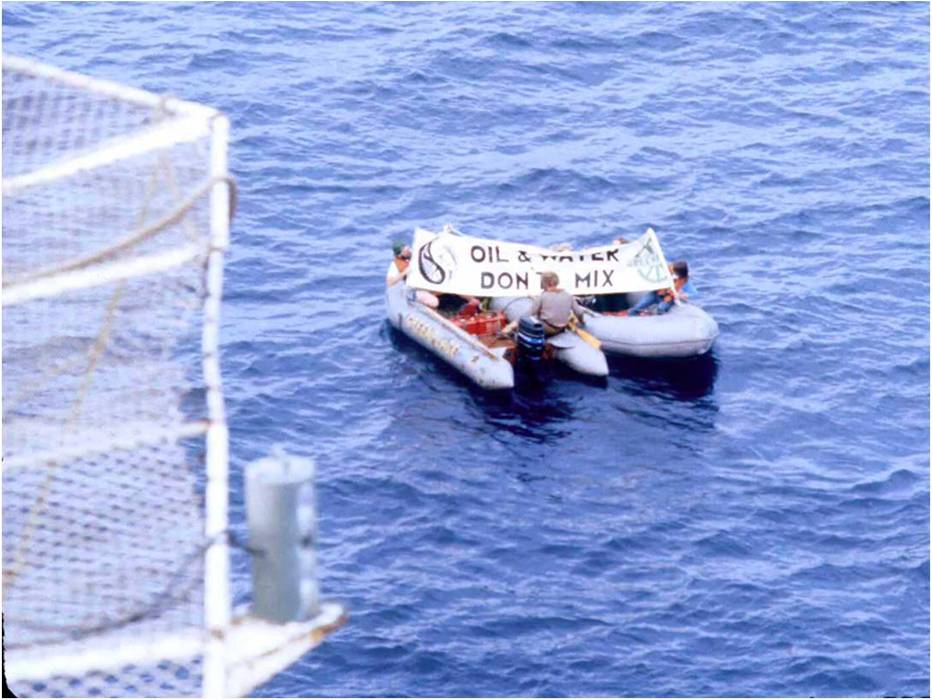
The protesters pictured above were dispatched to the Zapata Saratoga drilling rig from the Greenpeace vessel Rainbow Warrior. Given the remote location, the protest was unexpected. However, the drilling operation was not disrupted and no action was taken against the protesters. Four years later, the Rainbow Warrior was bombed by French commandos while in port in Auckland, NZ prior to planned protests against French nuclear testing in the South Pacific. Sadly, one crew member was killed during this incident.
Below is a list of the exploratory wells that were drilled on Georges Bank. In addition, two off-structure geologic test wells were drilled in 1976 and 1977. None of the wells discovered commercially significant oil and gas resources. However, gas shows led to erroneous press reports such as the article below. In 2000, the Minerals Management Service (MMS) published a summary of the geologic findings.
Operator Lease No. Block/Well Rig ___________
Water Depth (ft.)
_________
Lat/Long Miles SE Nantucket ____________
Onsite
__________
Spud
________
Offsite
_________
Well Depth (ft. ) ________
Exxon 0170 133/1 Alaskan Star
225
40°49’05” 67°56’03” 112
7/22/81
7/24/81
11/24/81
13,808
Shell 0218 410/1 410/1R Saratoga
452
40°34’24” 67°12’32” 155
7/10/81 8/8/81
7/24/81 8/10/81
8/8/81 3/31/82
875 15,043
Mobil 0200 312/1 Midland
260
40°39’27” 67°45’55” 125
11/21/81
12/8/81
6/27/82
19,652
Exxon 0153 975/1 Alaskan Star
209
41°00’24” 67°37’19” 125
11/24/81
11/25/81
3/10/82
14,313
Tenneco 0182 187/1 Alaskan Star
300
40°46’15” 67°23’19” 140
3/10/82
3/12/82
8/22/82
17,744
Shell 0210 357/1 Saratoga
265
40°36’51” 67°44’41″1 128
4/2/82
4/14/82
9/27/82
19,090
Conoco 0179 145/1 Aleutian Key
300
40°49’59” 67°17’06” 145
5/9/82
5/13/82
8/25/82
14,115
Mobil 0196 273/1 Midland
302
40°41’04” 67°30’12” 140
6/28/82
6/30/82
9/13/82
15,190
Excerpted from “Georges Bank Exploratory Drilling, 1981-1982” by EP Danenberger
Regulatory policy lessons from the Georges Bank experience:
Regulators with overlapping responsibilities function best as a joint authority, particularly at the field level. While MOUs/MOAs tend to be primarily for the purpose of protecting regulatory turf, joint authorities focus on the specific mission and how the performance objectives they can best be achieved. Capt. Barry Eldridge had the foresight to co-locate a USCG Marine Safety Detachment, headed by Bob Pond, adjacent to the USGS office at Barnstable Municipal Airport. This facilitated cooperative reviews, coordinated inspections, and joint exercises. This collaboration led to the first ever unannounced offshore response drills. Similar USCG/DOI organizational arrangements have proven effective in the Pacific and in the Gulf of Mexico, particularly for monitoring hurricane preparations and responses.
Strive to conduct regulatory functions at a single field office. USGS had the foresight to assign exploration plan review, environmental assessment, and coordination with State government responsibilities to our district office. As a result, our environmental specialists, geologists, engineers, and inspectors worked together, along with our State and Federal partners, from the initial planning to the decommissioning stages. Positive working relations were developed and everyone was informed and involved. A subsequent reorganization changed the structure of our office and led to greater control from Washington, which (unsurprisingly) was not helpful.
Transparency may be a bit of a buzzword, but it’s critical to regulatory success. Other than proprietary geologic information and well reports, we fully informed our regulatory partners about the status of activities, all incidents and near-misses, and any operational issues. Conveying news that is not-so-good, like the mooring failures that were experienced by 2 Georges Bank rigs, is part of the mission.
Those regulating the operations should be informed about and a part of the environmental monitoring programs. Our office worked closely with the Woods Hole and other scientist conducting the comprehensive Georges Bank Monitoring Program. In support of Mike Bothner, USGS Woods Hole scientist, we tracked every drilling fluid additive, and verified the materials that were available on each rig. Mike conducted a material balance on the barite and looked for chromium and other metals in sediments near the well sites. His outstanding work is summarized in this paper.





 Bud's Offshore Energy (BOE)