Feeds:
Posts
Comments

Archive for the ‘drilling’ Category

Sen. Joe Manchin III (D-W.Va.), a critical swing vote, has rejected a provision (in the “Build Back Better Bill”) that would prohibit all future drilling off the Atlantic and Pacific Coasts, as well as the eastern Gulf of Mexico, according to three people familiar with the matter

Washington Post

New oil and gas leasing is unlikely in these areas, but broad permanent bans are never a good idea.

Read Full Post »

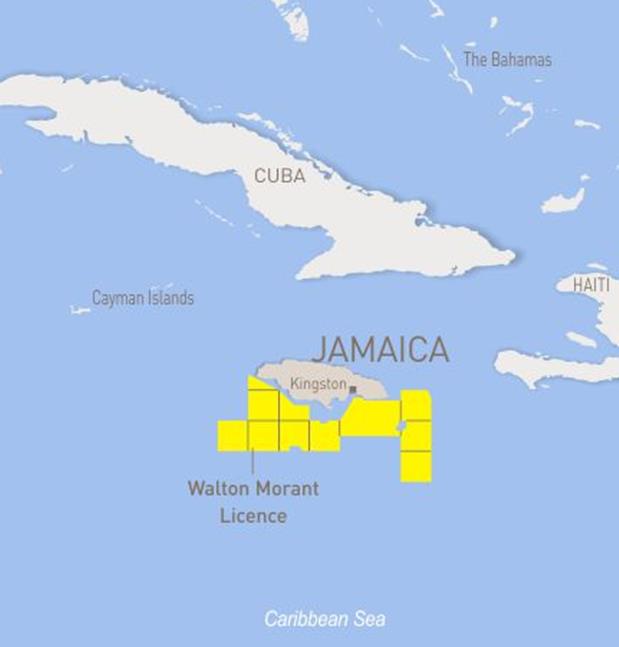
United Oil & Gas is looking for partners to drill the promising Colibri prospect offshore Jamaica. United’s exploration license has been extended after the completion of Jamaica’s first 3-D seismic survey. The results were encouraging as indicated in the video below. High risk, high reward opportunity!

Walton Morant - UOG
United Oil and Gas Video

Read Full Post »

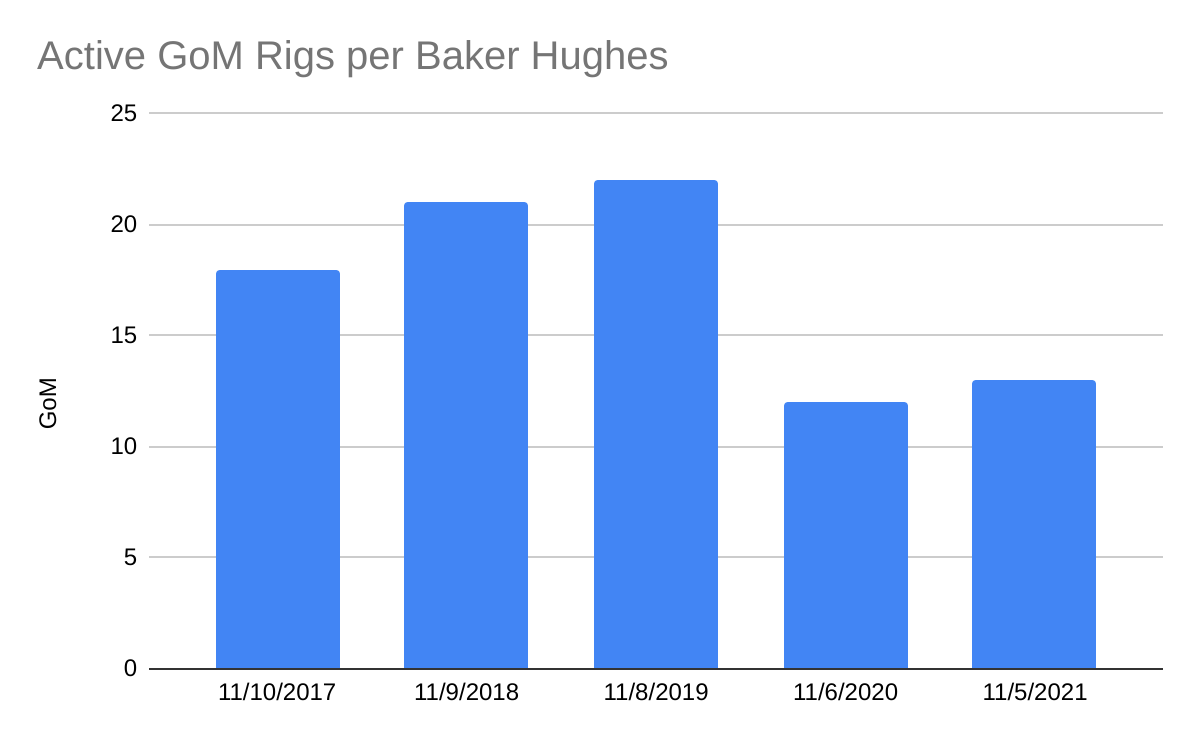
  • Chart 1: Gulf of Mexico rig count remains low
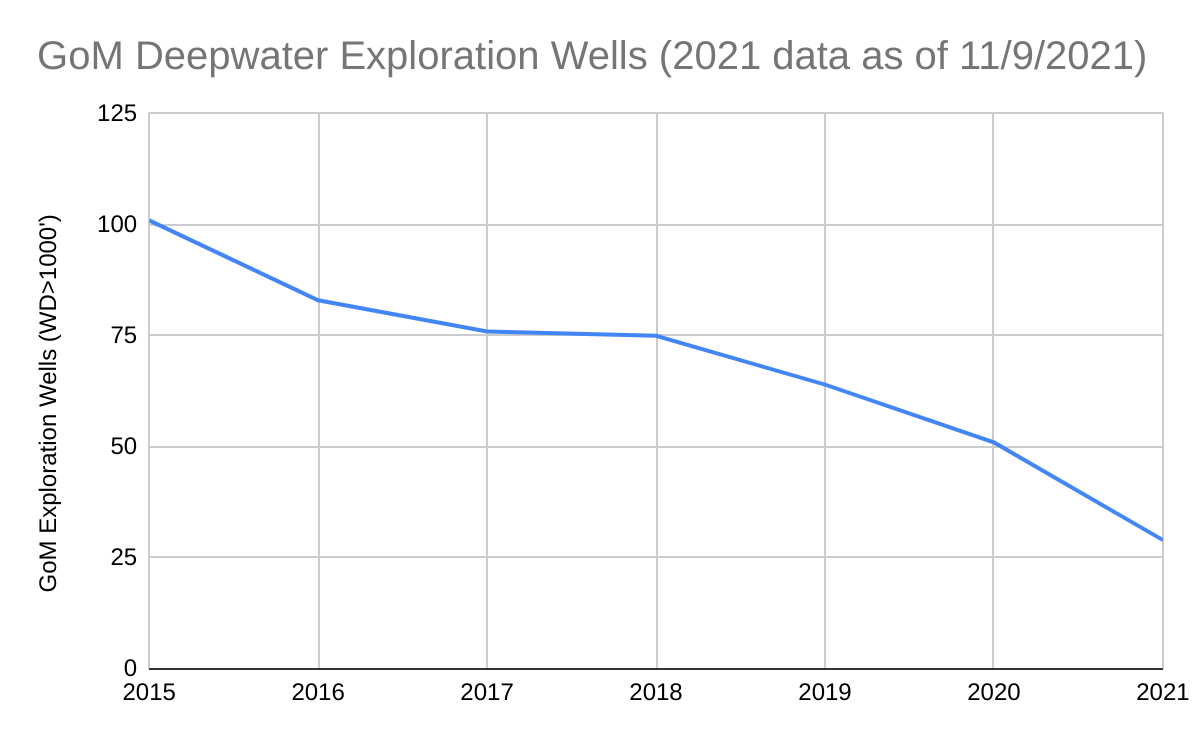
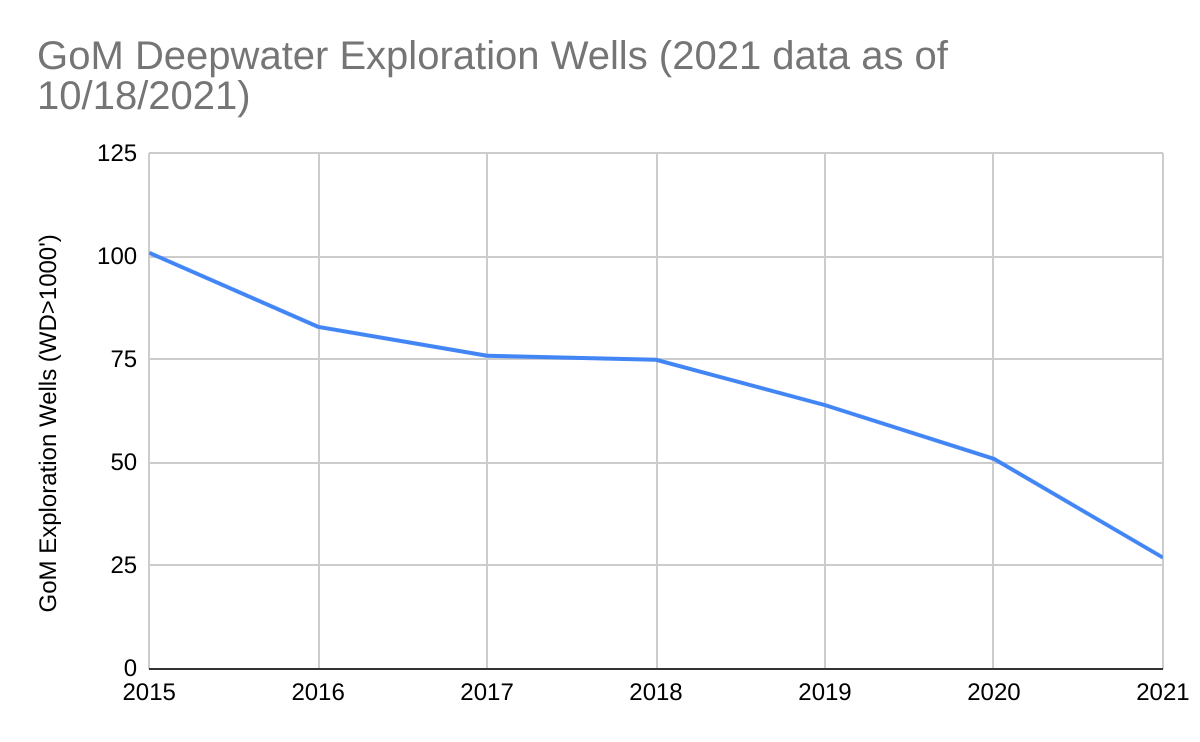
  • Chart 2: Exploratory drilling continues to decline and may be insufficient to replace reserves
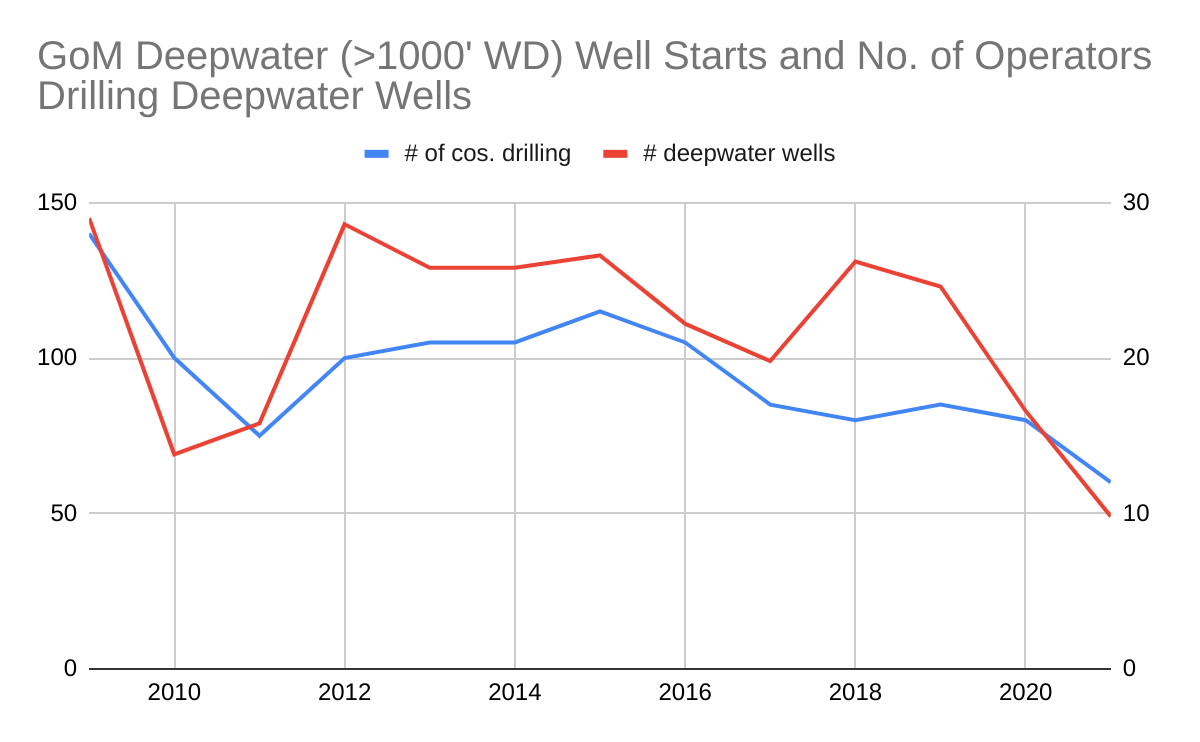
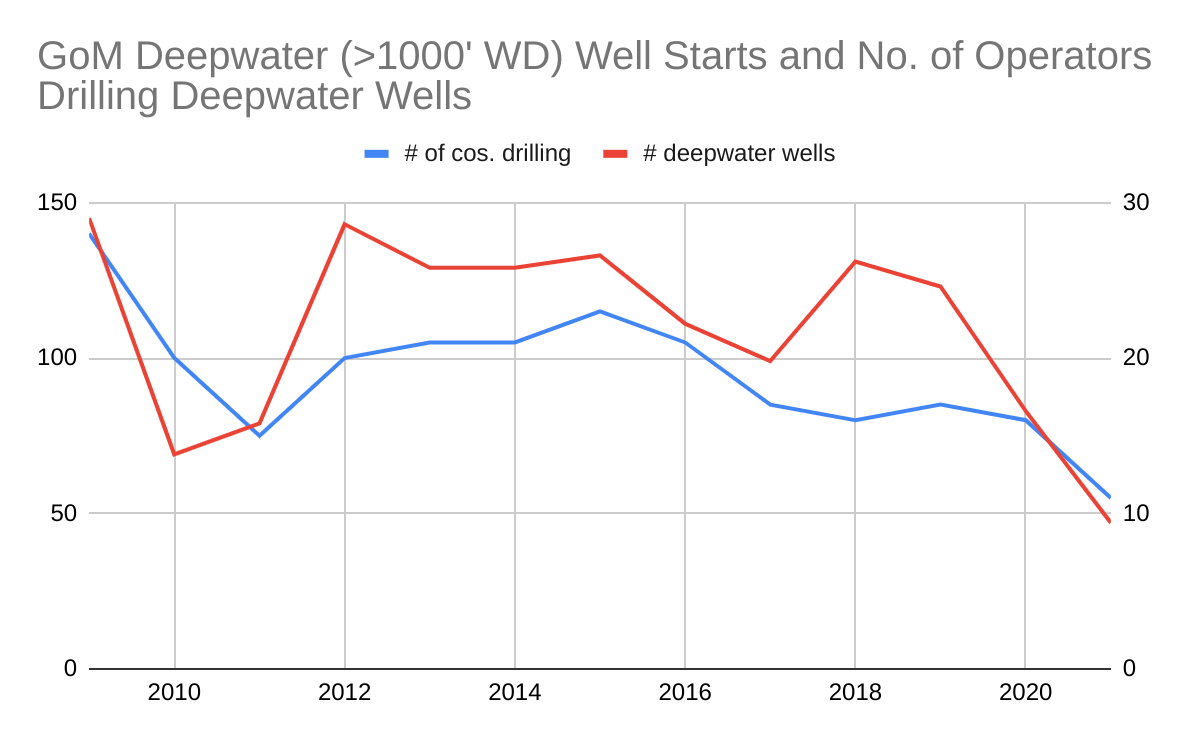
  • Chart 3: Well starts and number of operators drilling remain at historic low levels
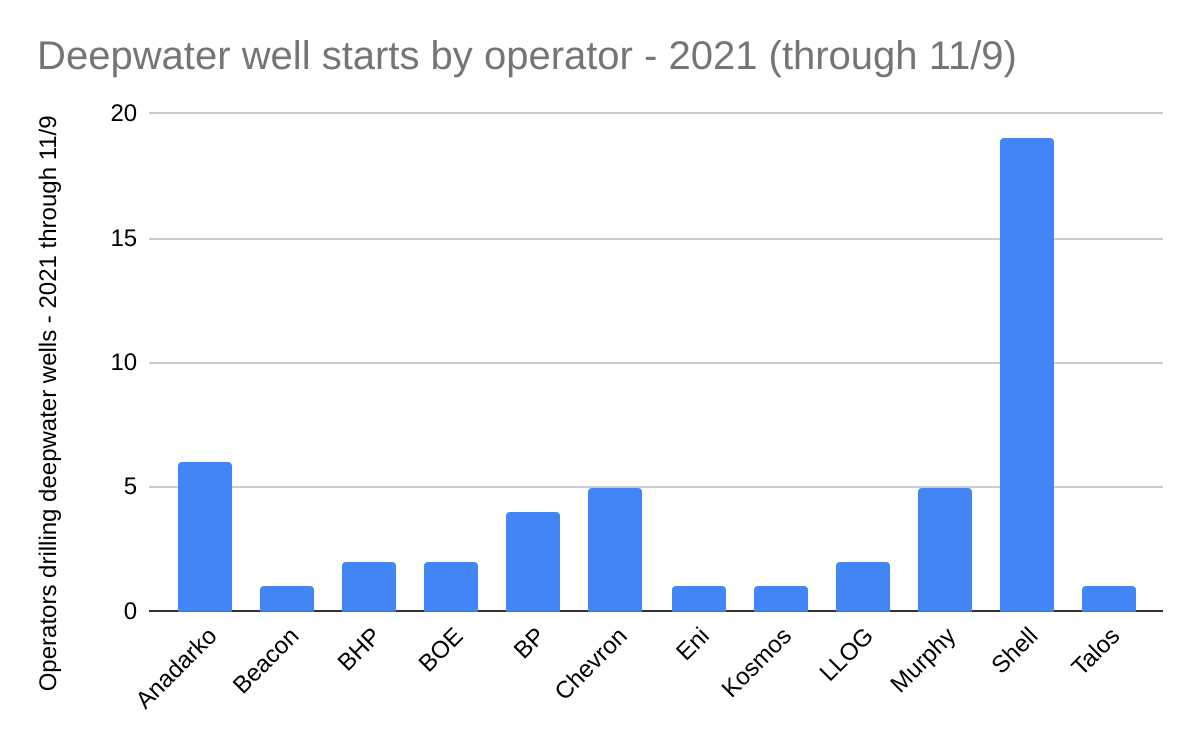
  • Chart 4: (1) One company (Shell) accounted for 39% of the 2021 YTD deepwater well starts in the GoM. (2) Five companies (Shell, Oxy/Anadarko, Chevron, Murphy, and BP) accounted for 80% of the deepwater well starts.

More certainty regarding lease sales would help. Prospective participants need assurances that they will have opportunities to apply findings and test exploration and development strategies. Will Lease Sale 257 be held on schedule next week?

Read Full Post »

Read Full Post »

Maersk Drilling awarded contract extension to drill world record well in Angola

The Ondjaba-1 well will be drilled at a new world record water depth of 3,628 m. The current world record is 3,400 m, set by Maersk Voyager’s sister drillship Maersk Venturer when it drilled the Raya-1 well for TotalEnergies offshore Uruguay in 2016.

Maersk

The record US water depth well (3051m/10,011′) was drilled in 2003 by Transocean for Chevron in Alaminos Canyon Block 951 the Gulf of Mexico. The deepest well drilled in US GoM in 2021 YTD was for Shell in 9352′ of water in Alalminos Canyon Block 815.

While brief celebrity space flights are major news stories, these economically important and technical challenging accomplishments by the offshore industry receive very little attention even as oil prices pierce the $82/bbl mark.

Read Full Post »

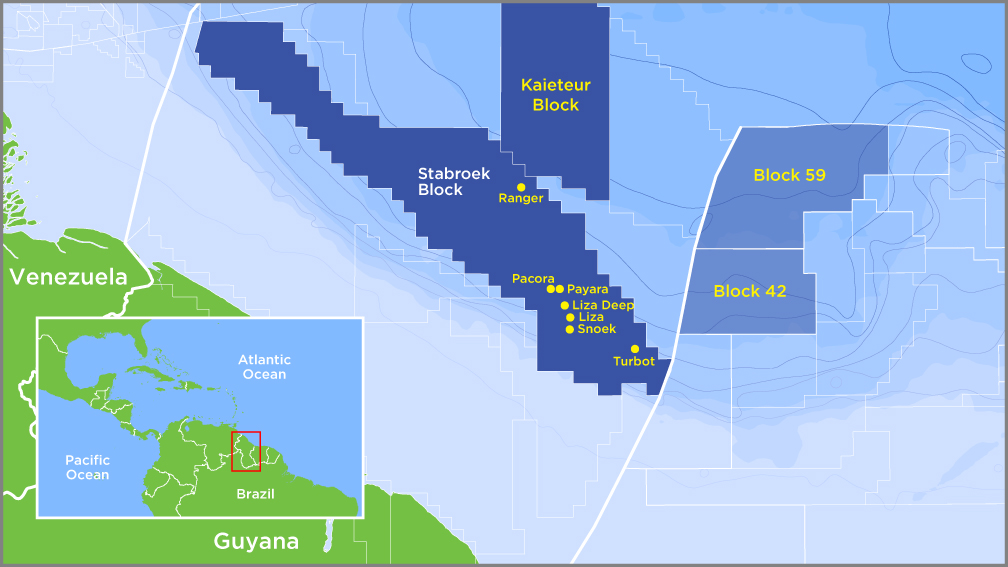
IRVING, Texas – ExxonMobil increased its estimate of the discovered recoverable resource for the Stabroek Block offshore Guyana to approximately 10 billion oil-equivalent barrels. 

ExxonMobil
null

Where would you drill?

Read Full Post »

While the official BOEMRE-USCG and National Commission/Chief Counsel investigation reports were quite good and there are countless court documents and ad hoc reviews of the blowout, some important Macondo issues have not been fully addressed. BOE will touch on these issues periodically starting with the decision to terminate the top kill operation on 5/28/2010.
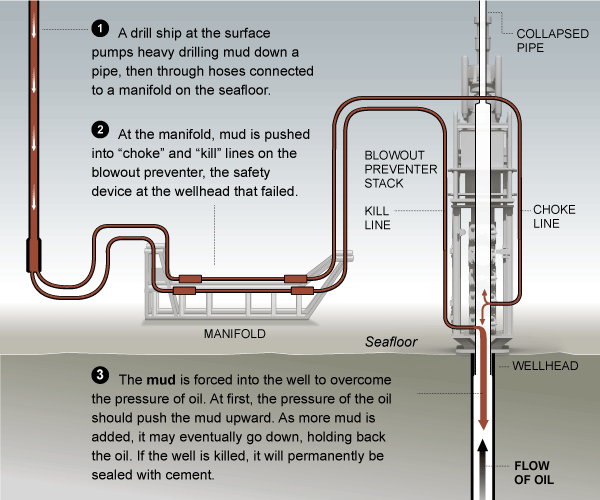
The top kill operation (see diagram above) was intended to overcome and halt the flow of oil by pumping heavy mud into the well bore.  The operation was not successful because the pumping rate and mud weight did not generate sufficient pressure.  Per an excellent paper by Dr. Mayank Tyagi and colleagues at LSU  (Analysis of Well Containment and Control Attempts in the Aftermath of the Deepwater Blowout in MC252):

It is very likely that if the top kill had been designed to deliver more than 109 bpm of 16.4 ppg drilling fluid below the BOP stack for a sustained period, the Macondo blowout could have been stopped between May 26-28, 2010. Given that the well was successfully shut-in with the capping stack in July, and that the subsequent bullhead (static) kill was successful, certainly a higher rate top kill would have been successful at that time.

The American Thinker, citing the New York Times, reports that Energy Secretary Chu stopped the top kill operation over the objections of some BP engineers. While it was reasonable to be concerned about possible casing leaks and the fracturing of subsurface formations, the subsequent (7/15/2010) closure of the capping stack demonstrated that the well had sufficient integrity to support the top kill operation. Questions regarding why a higher rate top kill effort was not attempted and how that decision was made are therefore important and merit discussion. Did the Macondo well flow unnecessarily into the Gulf for an additional 48 days (5/28-7/15)? Did the National Incident Command facilitate or delay source control?

Keep in mind that the NIC almost made a similar mistake in July. Even after the capping stack successfully shut-in the well on 7/15, Incident Commander Thad Allen (USCG) continued to call the closure of the capping stack a temporary test and threatened to require BP to resume flow from the well. Fortunately, informed input from experienced engineers prevailed. The well remained shut-in and the static well-kill operation was successful.

Read Full Post »
This Canadian video was a big hit at an awards program in Houston 15 years ago. I was pleased to find it on YouTube and thought it would be a nice Labor Day feature. Kudos to the workers who produce the energy that supports our economy and our way of life. Your efforts are greatly appreciated! Happy Labor Day!

Read Full Post »

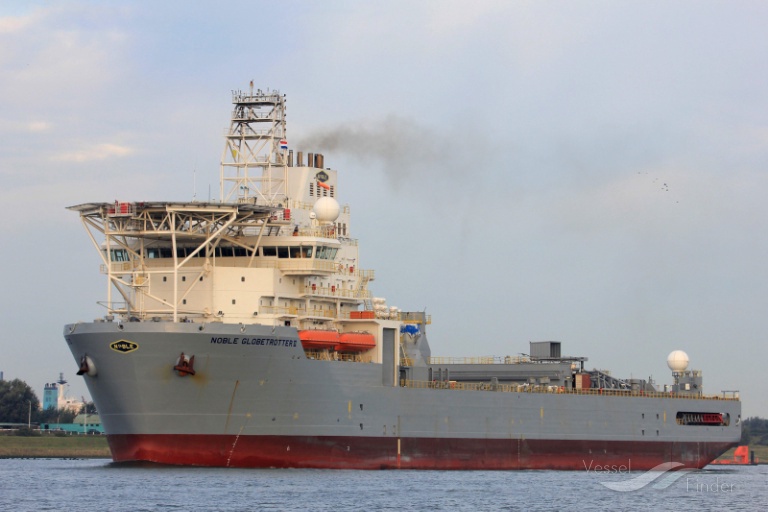
Noble doesn’t address the rumored disconnect and relocation issues, but in a carefully worded statement confirms that the Globetrotter II encountered hurricane conditions.

SUGAR LAND, Texas, Aug. 29, 2021 /PRNewswire/ — Noble Corporation (NYSE: NE, “Noble” or the “Company”) today announced that all personnel onboard the Pacific Sharav, Noble Globetrotter I, and Noble Globetrotter II ultra-deepwater drillships in the US Gulf of Mexico are safe and accounted for following Hurricane Ida.  Each rig successfully secured its respective well in progress and took evasive actions to avoid the storm’s path.  Of the three, the Noble Globetrotter II is the only vessel that encountered hurricane-force conditions.  The vessel maintained stability throughout the weather event and is operating on its own power with functional marine and safety systems.  A full assessment of its condition will be completed as soon as the weather clears.

GLOBETROTTER II photo
Globetrotter II

Read Full Post »

BSEE’s 8/29 update indicates that over 1.74 million BOPD have been shut-in by Ida. Based on the most recent EIA production data, this is essentially all Gulf of Mexico oil production.

There has also been some early noise on social media about offshore facility damage. None of these reports have been confirmed by the Coast Guard, BSEE, or the companies involved. The most credible reports relate to the Noble Globetrotter II deepwater drillship. Per the reports, allegedly from workers on the rig, the Globetrotter II was hit by Ida before the riser was disconnected and recovered. The rig is reported to have sustained significant damage and there may have been injuries. This type of incident has occurred in the past when dynamically positioned drillships have not successfully pulled their riser and relocated prior to the storm’s arrival. One report indicated 60′ waves and 140 mph winds at the rigs’s location.

Read Full Post »

« Newer Posts - Older Posts »