DOT and others shouldn’t make statements they can’t back up (see the X post below).
As a supporter of responsible offshore oil and gas operations, I find statements like this to be irresponsible and embarrassing. Sable Offshore is not using newer or safer drilling technology than is used in many other areas.
The Sable Offshore Project is using new technology to drill oil that is more safe and environmentally friendly than anywhere in the WORLD@PHMSA_DOT is proud to be a part of this and making America ENERGY DOMINANT 💪 https://t.co/q3ztD1G0R4
— U.S. Department of Transportation (@USDOT) June 10, 2026
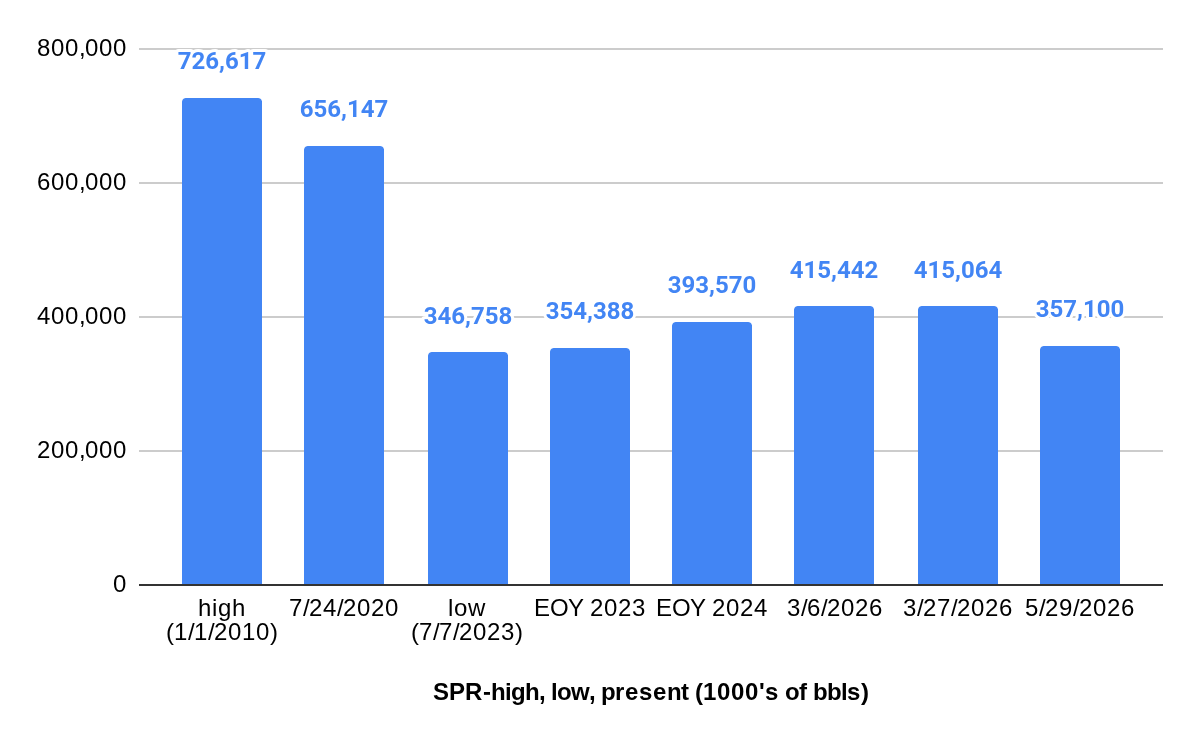
Nothing tilts public opinion more than high gasoline prices, or worse yet shortages! Hence the 1975 legislation establishing the SPR, the massive SPR drawdown in 2022, and this year’s withdrawals.
Looking back to the halcyon days of the US offshore program, it was the gas lines in the 1970s that drove the remarkable and rather unlikely growth in the program during the Carter Administration (1977-1981). A few highlights from those four years:
15 lease sales including 3 offshore Alaska, 3 in the Atlantic, and 1 offshore California
Drilling activity in all 4 regions: GoM, Pacific, Alaska, and Atlantic
North, Mid, and South Atlantic District offices for permitting and inspections
5300 well starts including 97 in water depths > 1000′
314 new platforms including Cognac, the world’s first platform in > 1000′ of water
Perhaps unthinkable today, the Governor of Massachusetts from 1979-1983, Ed King, was a strong supporter of offshore drilling. Absent that support, the exploratory drilling on Georges Bank would probably have never occurred. /s/ Nostalgic Old Man 😉
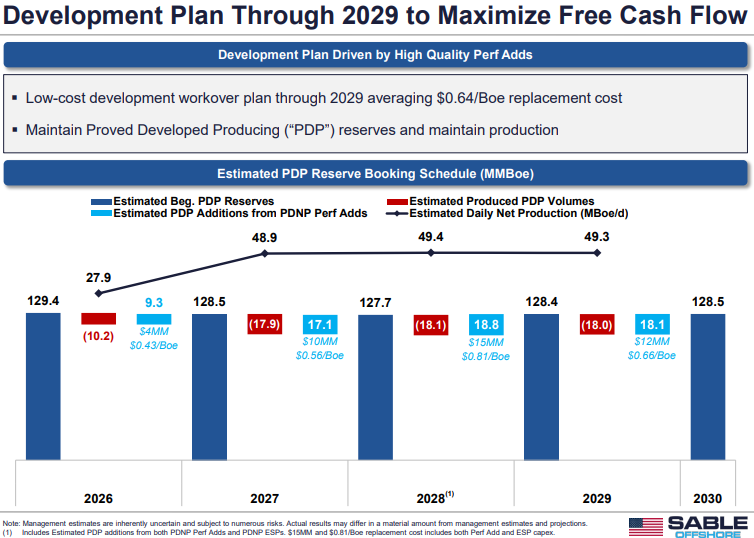
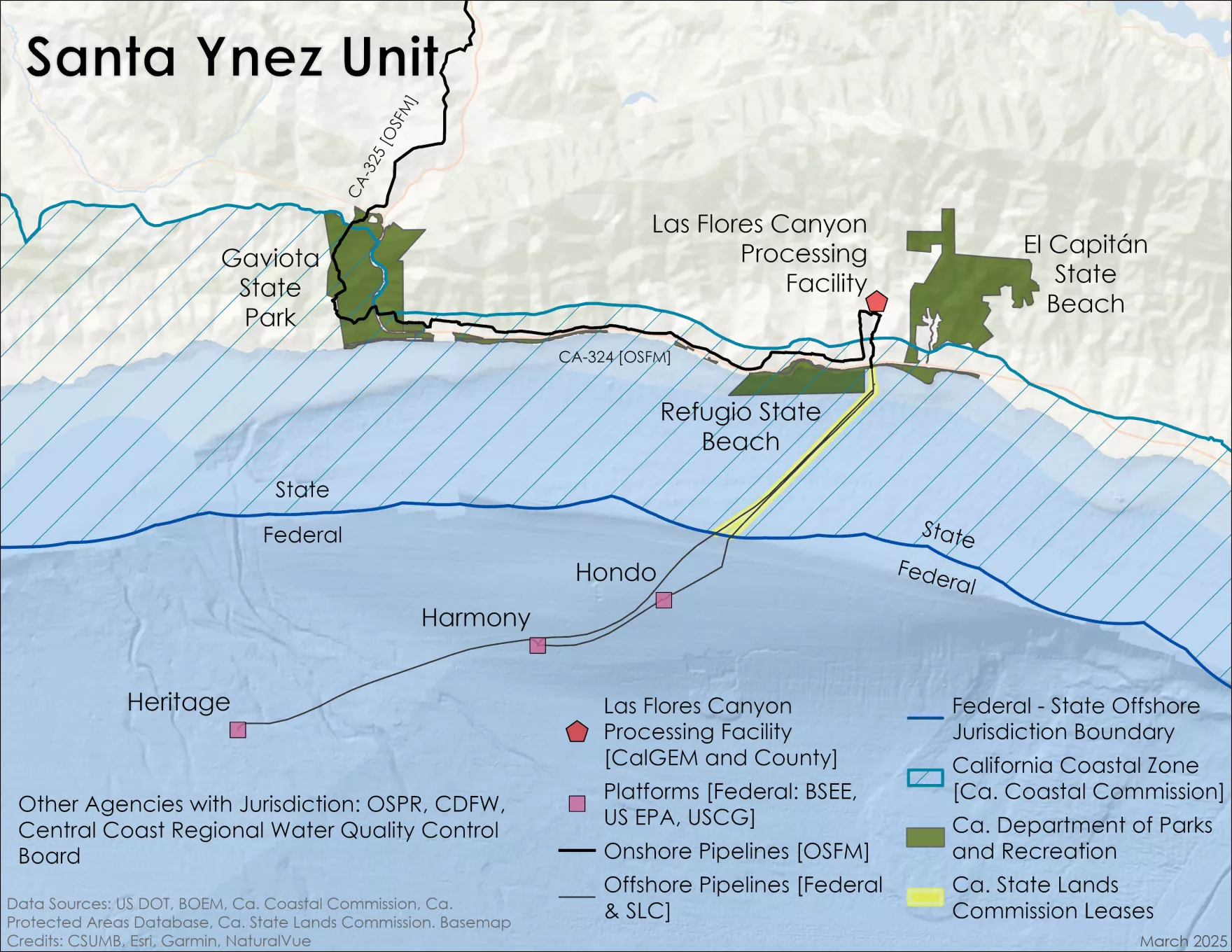
Those who have been following the Santa Ynez Unit saga should take a look at Sable’s informative PowerPoint update (attached). The presentation includes reserve data, well operation plans, production forecasts, financial and legal updates, and regional energy supply information.
Also, Sable CEO Jim Flores has announced that Energy Secretary Wright and Interior Secretary Burgum will be visiting the project this week. Transportation Secretary Duffy was also expected, but he will not be attending.
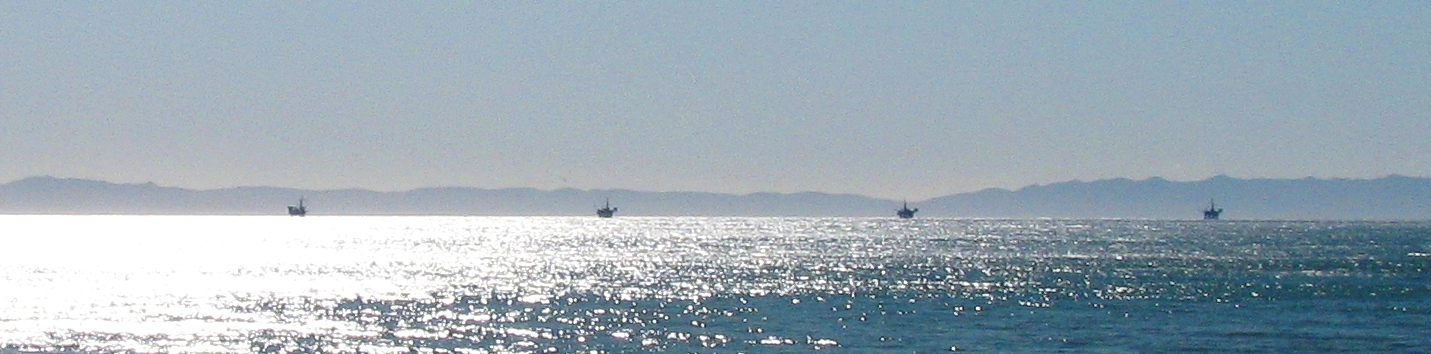
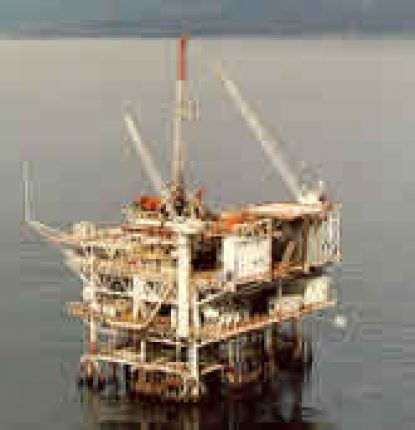
Santa Barbara Channel, Dos Cuadras Field platforms (L to R): Hillhouse, A, B, and C; Antandrus Wiki photo
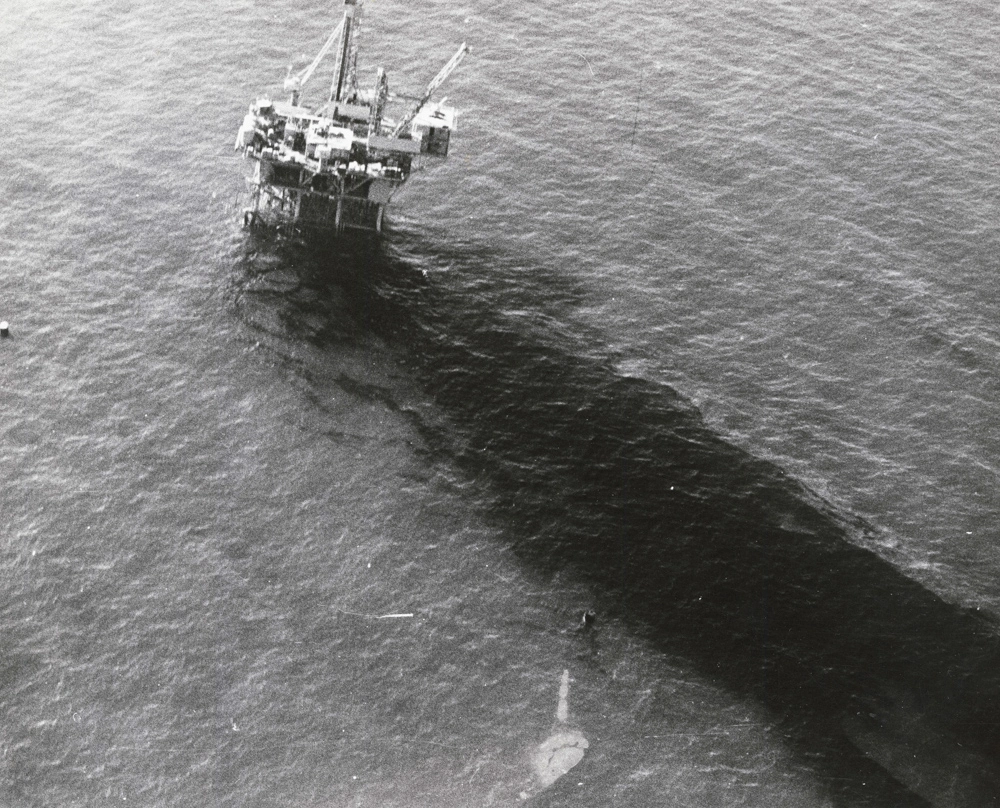
As part of the recent focus on decommissioning and financial assurance requirements, I looked at borehole data for platforms A, B, and C on Lease OCS-P 0241 in the Santa Barbara Channel. Platform “A” is where a well blew out in 1969, permanently scarring the US offshore program. Observations:
There are 140 completed and unplugged wells on the 3 platforms. None of the wells on these platforms have been permanently plugged and only one is temporarily abandoned.
The latest available production information (2024 data) indicates ave. daily oil production of 3791 bopd for the lease, including 1901 bopd from Platform A, the highest production for any platform in the region in 2024.
41 of the lease’s completed (unplugged) wells are on Platform A.
The number of these wells that are currently producing is not publicly available.
30 of the completed Platform A wells were drilled prior to 1985.
The blowout well was the 5th well drilled from platform A. All 4 of the wells drilled prior to the 1/28/1969 blowout are still unplugged:
well A-20: spudded on 11/19/1968, reached total depth on 12/2/1968
well A-41: spudded on 11/27/1968, TD on 12/19/1968
well A-25: spudded on 12/18/1968, TD on 12/28/1969
well A-38: spudded on 1/12/1969, TD on 1/24/1969
Note how quickly the wells were drilled. The wells were shallow (2299-4051′ true vertical depth), and the operator (Union Oil) saved time by omitting a casing string. (This decision was a root cause of the blowout and thus changed history 😡)
Lease documents and regulations at 30 CFR § 250.1710require that all wells be permanently plugged within one year of lease termination. For leases like 0241 that are still active, 30 CFR § 250.1711 stipulates that BSEE will order a well to be permanently plugged if the well poses a hazard to safety or the environment, or is not useful for lease operations and is not capable of oil, gas, or sulphur production in paying quantities. In the Gulf of America Region, the policy is to require wells that have not been used in the past 5 years to be permanently plugged. Allowing old wells to remain unplugged is neither prudent nor consistent with the regulations.
Judge Stephen V. Wilson, US District Court for the Central District of California ruled that Sable’s pipeline doesn’t imminently harm Gaviota Park. Judge Wilson said the state “is grasping at straws,” for evidence of real environmental harm, and the federal consent decree governing the terms of the system’s restart is controlled by the California Office of the State Fire Marshall, not the parks department.
The judge didn’t rule on the larger question of whether the Defense Production Act order to restart the Las Flores pipeline system was lawful.
John Smith’s update on California OCS Decommissioning Obligations is attached. His comments:
Chevron and FMC hold joint and several liability responsibilities for many platforms and all of those operated by DCOR. This reflects Chevron’s long history in developing CA onshore and offshore oil and gas resources. A 2020 report issued by BSEE estimated the nine platforms operated by DCOR had a combined decommissioning cost of $397 million.The actual cost could be 2-3-fold higher based on estimates for decommissioning California state water platforms prepared by experienced decommissioning consultants.
Chevron may be checking out of California by moving its corporate offices to Houston, but as someone once said about decommissioning – referring to the popular Eagles Hotel California song “You can check out but you can never leave.”
Official decommissioning anthem 😉: Hotel California
Excerpt from the lyrics – Hotel California, Eagles, 1976
Last thing I remember I was running for the door I had to find the passage back To the place I was before “Relax, ” said the night man “We are programmed to receive You can check out any time you like But you can never leave”
The CBD had challenged an April 2025 BOEM decision concludingthat Sable was not required to revise its development and production plan for the SYU. They sought a court order requiring a revised plan. This suit seemed to be a stretch, so its dismissal is not a surprise.
Per the Dept. of Justice, the court dismissed the lawsuit because the plaintiffs’ asserted procedural injury had no basis in the statute, was not traceable to any action by BOEM, and could not be redressed by an order of the court.(Other than that, it was just fine. 😉)
Among other problems the court identified with the plaintiffs’ case, they invoked a provision of the statute that governs “approval of a development and production plan,” not revision of an already-existing plan. It will be interesting to see the full decision so that we can better understand the context for that statement. Distinguishing revised plans in that manner could have significant policy implications.
For a full update on Sable litigation, see the section of their Quarterly Report beginning on p. 12.
BSEE (2020) estimates the cost of decommissioning these facilities to be $85 million (too low), and there is no collateral or third party guarantee.
The responsibility for decommissioning these platforms has yet to be settled. ConocoPhillips, Oxy, and Devon have appealed decommissioning orders from BSEE. The Interior Board of Land Appeals (IBLA) has yet to rule on those appeals. The appellants are funding some plugging operations and facility upgrades pending the IBLA decision.
Per BSEE’s borehole file, this is the current status of the Hogan and Houchin wells:
33 completed and not yet plugged; these wells were drilled between 1968 and 2010
43 temporarily abandoned (TA) wells plugged in accordance with 30 CFR § 250.1721
10 wells have been updated to TA status in the past 6 months (latest 3/22/2026), so some progress is being made
If you are interested in the Hogan/Houchin mess or decommissioning liability in general, I highly recommend that you look at Devon’s informative and rather compelling appeal to IBLA. Similar appeals were submitted by Oxy and ConocoPhillips.
Lease history (excerpted from the Devon appeal):
Lease OCS-P 0166 was issued effective January 1, 1967.
Phillips Petroleum Company (“Phillips”) (predecessor to ConocoPhillips), Cities Service Oil Company (predecessor to Oxy), and Continental Oil Company (predecessor to ConocoPhillips) were the initial lessees
Phillips was designated operator on January 25, 1967
February 28, 1983: Petro-Lewis Funds, Inc., obtained the 37.5% interest of the Continental Oil Company (which in 1979 had changed its name to Conoco Inc., now Conoco Phillips Company (“ConocoPhilips”)).
November 1983: Cities Service Oil Company assigned its 37.5% interest to Cities Service Oil and Gas Corporation (now OXY U.S.A. Inc).
July 2, 1987: the Minerals Management Service (“MMS”) approved two more assignments of the Lease. One, from PetroLewis Funds, Inc. to American Royalty Producing Company (“American Royalty”), was approved retroactively to December 31, 1984. The other, from American Royalty to Santa Fe Energy Company(“Santa Fe”), was approved retroactively to April 30, 1987.
April 1, 1988: Santa Fe transferred a 3.75% interest to Maersk Energy Incorporated, reducing Santa Fe’s share to 33.75%.
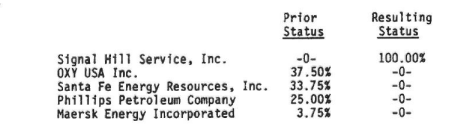
1991 Assignment to Signal Hill: MMS approved assignment of the lease to Signal Hill effective February 5, 1991. The assignment was approved without any provision under which the assignors agreed to be liable for decommissioning operations on the lease. MMS’s approval actually had the opposite effect, leaving such obligations to the assignee. The assignment was approved despite concerns within the MMS about the financial strength of Signal Hill and the technical competence of Pacific Operators Offshore Inc (POOI), the affiliate that would operate the facilities.
Comments:
The assignment to Signal Hill should have never been approved. The outcome was predictable.
The Devon, Oxy, and ConocoPhillips appeals are very strong and would seem to have a good chance of success. Perhaps that is why the IBLA decision is taking so long (nearly 5 years to date).
Given the uncertainty regarding this appeal, the absence of transparency about other potential decommissioning liabilities, and the uncertainties regarding the administration of predecessor liability, this is not the time to be relaxing financial assurance requirements and further exposing taxpayers to decommissioning risks.
This is the final day to comment on BOEM’s proposal: