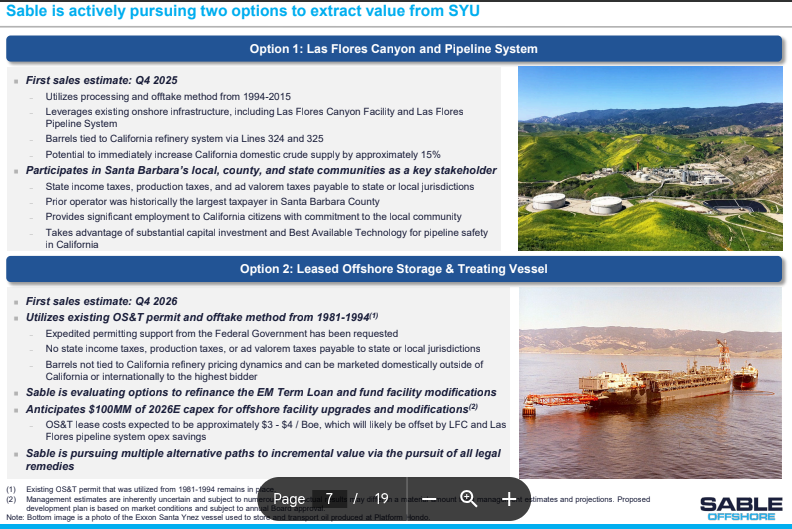
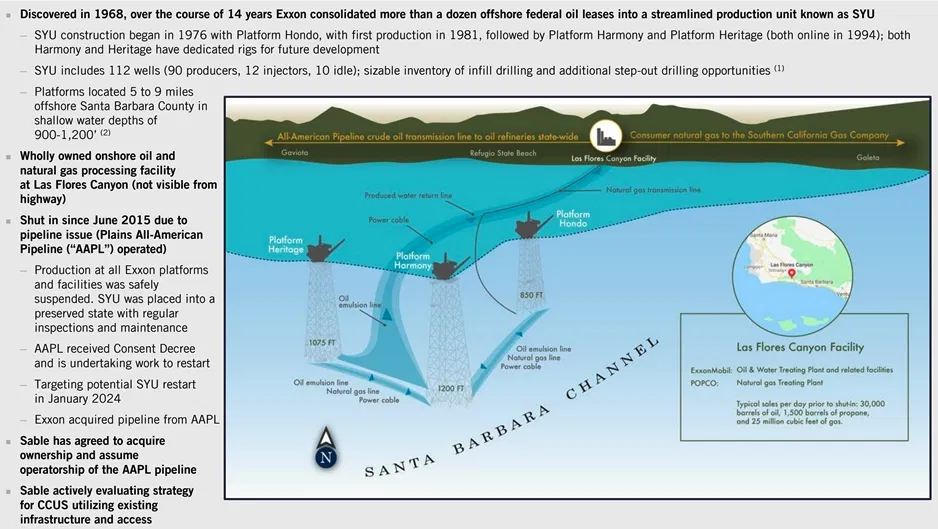
Those of us who were involved with OCS oil and gas operations in the 1970s remember the heated battles between Exxon and Santa Barbara County that led to the installation of the infamous Offshore Storage & Treatment (OS&T) facility in Federal waters. This was the first floating production, storage, and offloading facility (FPSO) in US waters by 3 decades!
In light of Sable’s difficult (bordering on impossible) onshore permitting challenges, the company resurrected the OS&T option in a recent presentation to investors (pertinent slide pasted above). The extent to which this is purely a tactical maneuver remains to be seen, but this option would be very difficult to execute, even with a supportive Federal regulatory environment.
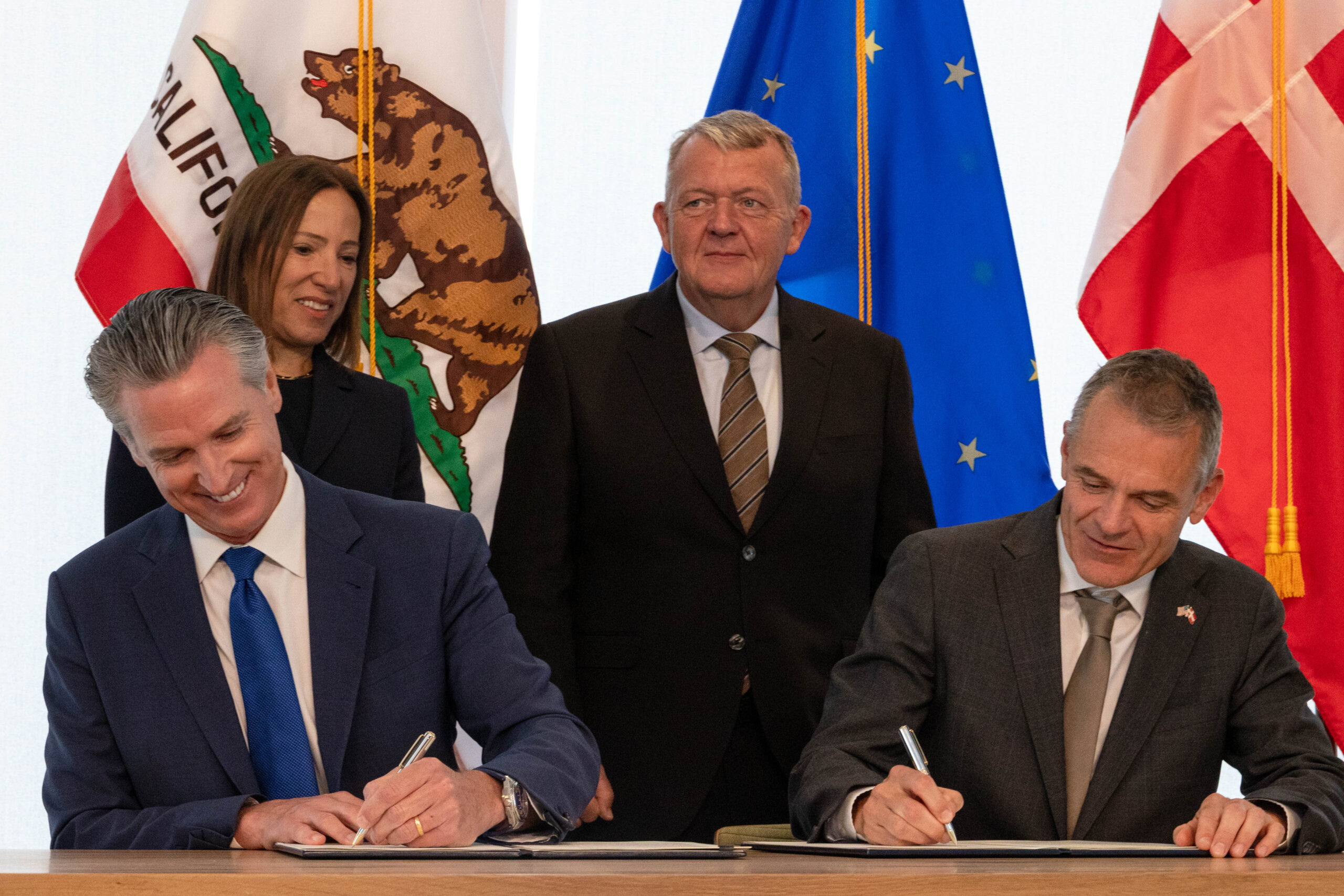
Gov. Newsom and Danish Foreign Minister Lars Løkke Rasmussen
As is the case for most MOUs, the attached 8/22/2025 agreement between California and Denmark is long on promotion and short on substance. No funds are obligated and there are no work commitments.
The MOU made sense for Gov. Newsom in that he strengthened his green credentials by aligning with the country that is the spiritual leader for climate activists.
The benefits for Denmark were unclear, but the risks should have been apparent. The White House is fundamentally opposed to the climate and energy objectives identified in the MOU. Ørsted (50.1% govt owned) and other Danish business interests are very much dependent on decisions made by the US Federal govt.
Work on Ørsted’s Revolution Wind project has been halted by Interior Secretary Burgum. His decision is being challenged in court, but no matter what the outcome, offshore wind development will be difficult for Ørsted and other foreign companies going forward. The Secretary has broad regulatory authority under the OCS Lands Act, under which there is no such thing as “a fully permitted project.”
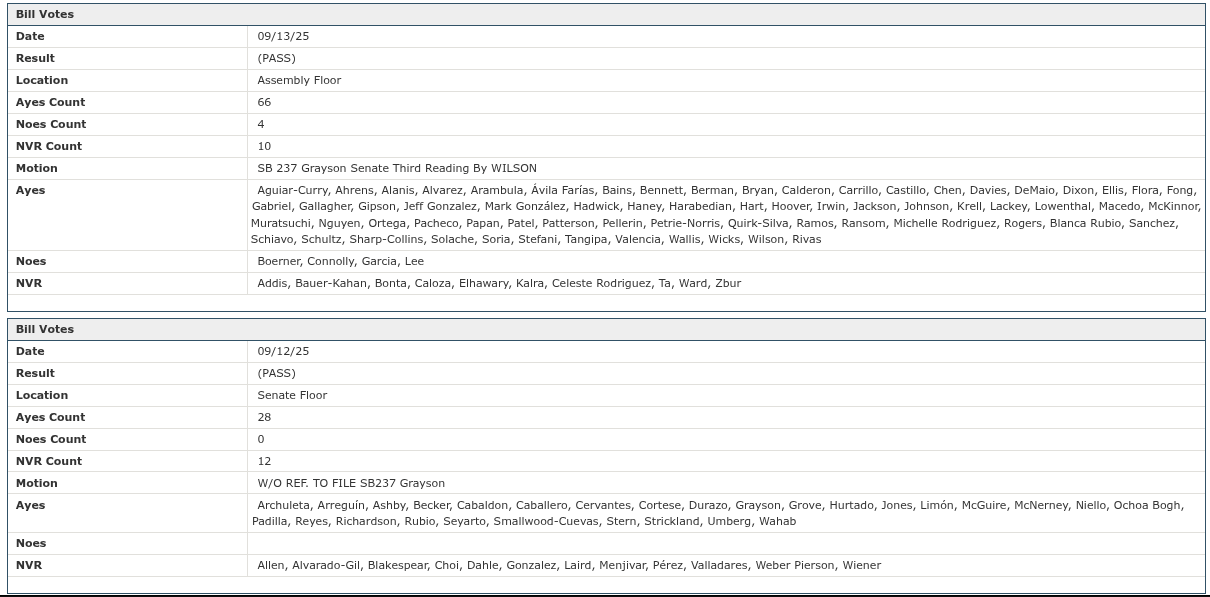
Meanwhile, California’s green status has taken a hit with the passage of S 237, which pragmatically authorizes new onshore drilling.
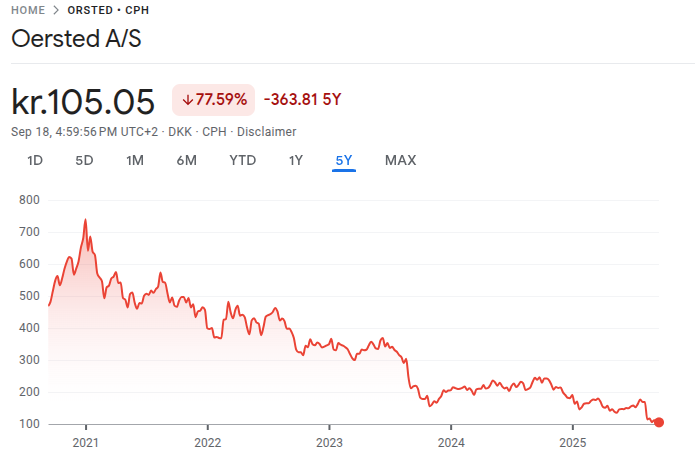
Lastly, as the chart below illustrates, Orsted’s problems didn’t begin in 2025.
John Smith shared the attached letter from Senators Adam Schiff and Alex Padilla, and members of the California congressional delegation. The letter questions BSEE’s inexplicable announcement about the resumption of Santa Ynez Unit (SYU) production. That announcement boasted:
“This is a significant achievement for the Interior Department and aligns with the Administration’s Energy Dominance initiative, as it successfully resumed production in just five months.“
BSEE’s announcement, which has not been explained and is still featured on their homepage, served only to further complicate the resumption of production from the SYU, which has reserves in excess of 500 million barrels.
California Senate Bill 237, the compromise oil legislation supported by Gov. Newsom, Assembly Speaker Rivas, and Senate President McGuire, opens up Kern Co. drilling in exchange for pipeline safety measures that will doom the Santa Ynez Unit (SYU) if Sable fails to restart production by Jan. 1.
Particularly intriguing is the the list (below) of SB 237 supporters and opponents. The Western States Petroleum Assoc. (WSPA), is aligned with the unions for onshore drilling and against the SYU. Note that Exxon is a prominent WSPA members! Exxon assigned the SYU to Sable and is on the hook for massive decommissioning costs if production is not resumed. Perhaps Exxon has a backup plan for the SYU?
Also note that all of the environmental groups are aligned against SB 237. Compromise is not in their playbook.
John Smith’s highlighted summary of SB 237 is attached. Here is the provision that would seem to doom Sable:
Clarifies in the Coastal Act that development associated with the repair, reactivation, or maintenance of an oil pipeline that has been idled, inactive, or out of service for five years or more requires a new CDP, as provided.
REGISTERED SUPPORT / OPPOSITION: Support Associated Builders and Contractors of California Berry Petroleum Company, LLC California Conference of Carpenters California Independent Petroleum Association California Resources Corporation and Subsidiaries California state Pipe Trades Council California State Association of Electrical Workers City of Bakersfield Consumer Watchdog County of Kern State Building & Construction Trades Council of California Western States Petroleum Association
Opposition Asian Pacific Environmental Network Action California Environmental Justice Alliance Action California Environmental Voters Campaign for a Safe and Healthy California
Center for Biological Diversity Center on Race, Poverty & the Environment Central California Environmental Justice Network Clean Water Action Climate First: Replacing Oil & Gas Communities for a Better Environment Earthjustice Leadership Council for Justice and Accountability Physicians for Social Responsibility Los Angeles
John Smith has highlighted the attached bill that could, if passed, further derail Sable’s plans to restart Santa Ynez Unit (SYU) production.
This provision appears to target Sable:
Section 3(b)(2): Repair, reactivation, and maintenance of an oil and gas facility facility, including an oil pipeline, that has been idled, inactive, or out of service for five years or more shall be considered a new or expanded development requiring a new coastal development permit consistent with this section.
The legislation would be effective on 1/1/2026 so perhaps Sable will already be producing. Sable may also explore the jurisdictional and interstate commerce issues touched on in this post.
This LA Times update adds to the confusion as to the implications for Sable.
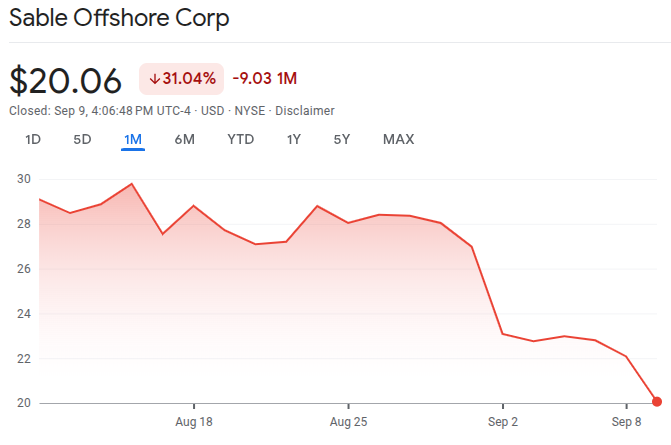
Sables’ share price sank on Tuesday following reports from Bloomberg and others that Governor Newsom is proposing new restrictions on California’s offshore oil industry. With Sable Offshore as a primary target, stricter requirements for restarting inactive intrastate oil pipelines would be imposed. •
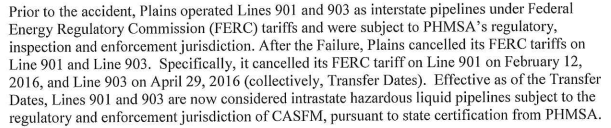
This could trigger yet another legal battle or increase the complexity of those that are ongoing. The onshore pipeline, now owned by Sable Offshore, was originally classified as an interstate pipeline under Federal jurisdiction. However, following the 2015 Refugio oil spill, it was reclassified as an intrastate pipeline via a 2016 letter of understanding signed by representatives of the Federal Office of Pipeline Safety (DOT-PHMSA) and the Office of the State Fire Marshal (pertinent text pasted below).
Given that the Sable pipeline will carry OCS production, it would seem to fundamentally be an interstate line (Federal jurisdiction), as it was when owned by Plains. Could DOT reverse the 2016 letter agreement? That is conjecture for the attorneys and courts to consider.
Meanwhile, below is an upbeat Sable video on the pipeline!
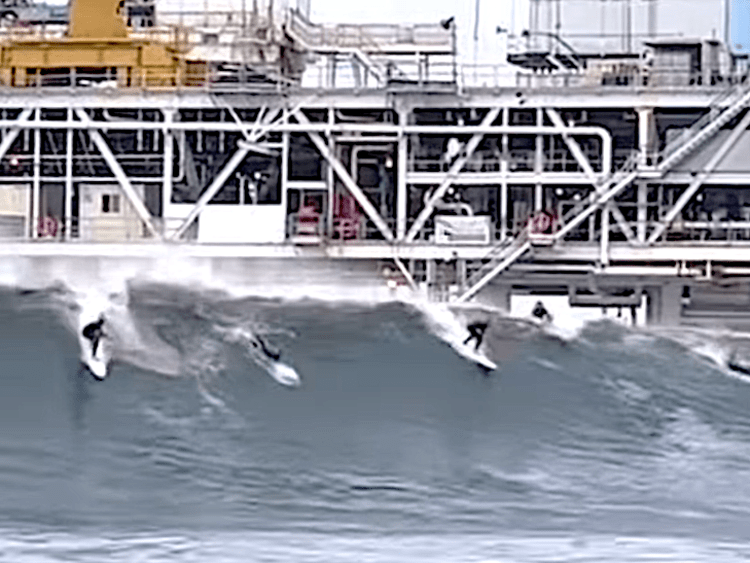
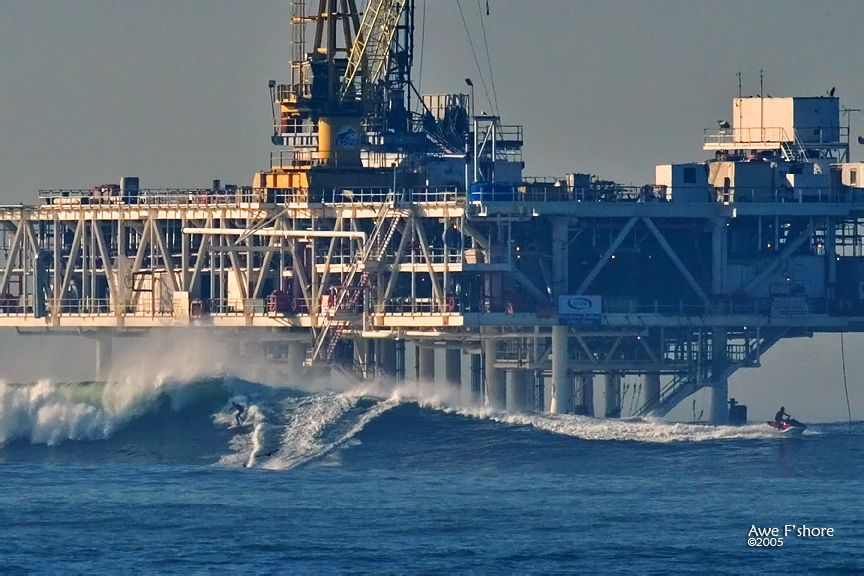
Eloquent eulogy by DCOR (platform operator) CEO Alan Templeton: “Last Sunday, August 10, I joined a small group of DCOR personnel on Platform Esther to witness her final moments of operation. At exactly 3:00 p.m., we pressed the ESD on the production deck, and one by one, the sounds of compressors and pumps faded until the platform fell silent — a profound and bittersweet moment in California’s energy history.
For over half a century, Esther stood off the coast of Orange County, first installed in the early 1960s as one of California’s iconic man-made oil islands. She blended into the horizon while quietly producing oil and gas, surviving storms, and later being rebuilt in 1985 into the platform we know today. More than just steel and pilings, Esther was a proving ground for innovation, a dependable asset, and a source of pride for the men and women who worked safely on her decks.
While she has now been permanently shut in, her legacy remains — a testament to the ingenuity, resilience, and dedication that have defined California’s offshore industry for generations.“
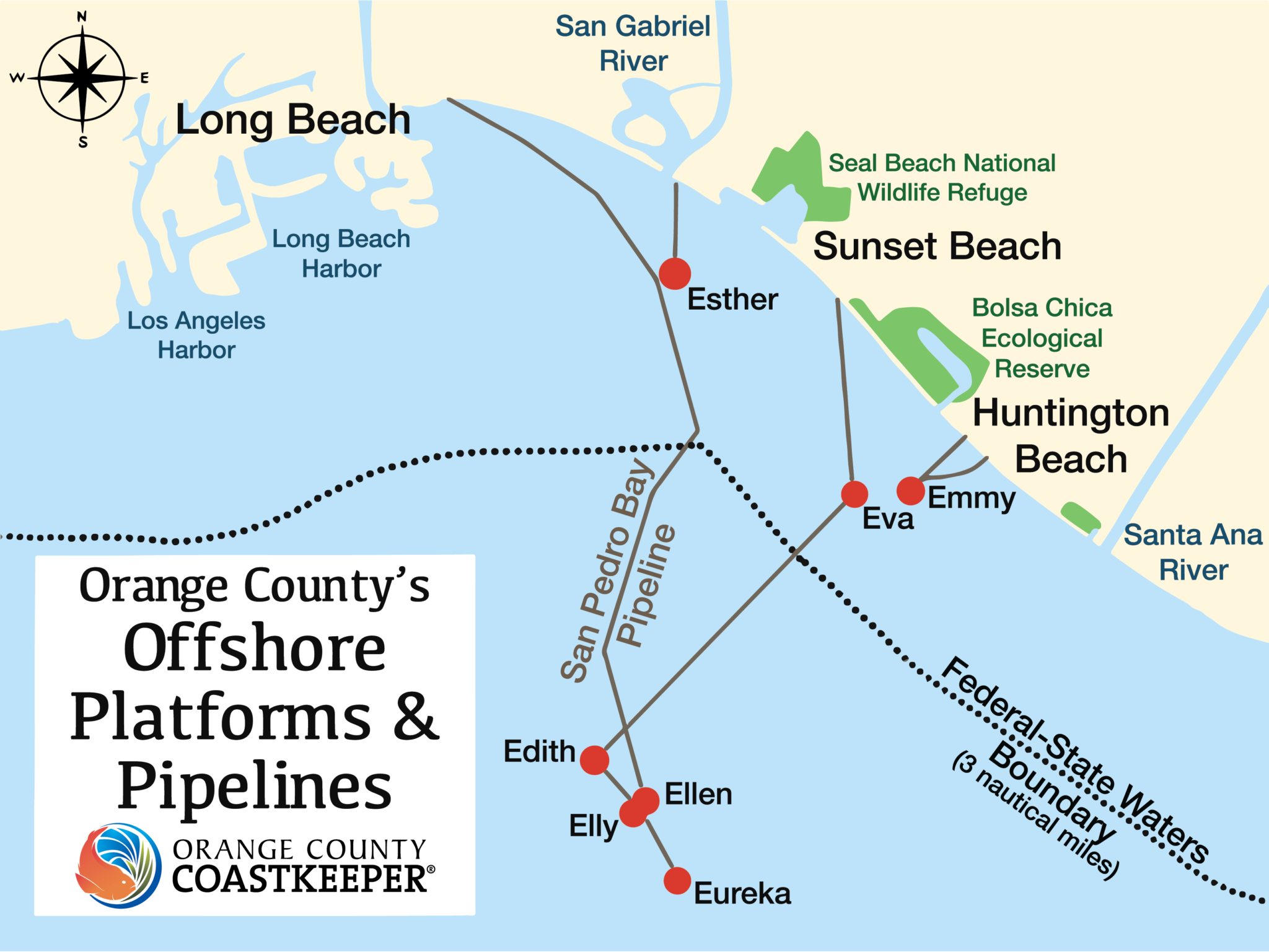
Litigation prematurely ended production at Esther, which would have had an estimated 15 more years of operative life. The attached settlement agreement, shared by John Smith, ends a dispute between the State Lands Commission and DCOR over repurposing a pipeline to transport oil from state Platform Eva to Federal Platform Edith (diagram above).
In exchange for relinquishing its mineral rights and decommissioning Platform Esther, the settlement grants DCOR a $10 million royalty credit on future oil produced from Platform Eva. This credit is significantly less than the value of remaining production from Esther.
Platform Esther, is one of three remaining oil production platforms in California state waters.
In addition to the Johnson filing, at least 7 other law firms (links below) have announced class action litigation alleging that Sable Offshore made false or misleading statements regarding the restart of Santa Ynez Unit production.
“This is a significant achievement for the Interior Department and aligns with the Administration’s Energy Dominance initiative, as it successfully resumed production in just five months.“
Will the Dept. of Justice intervene on behalf of Sable?
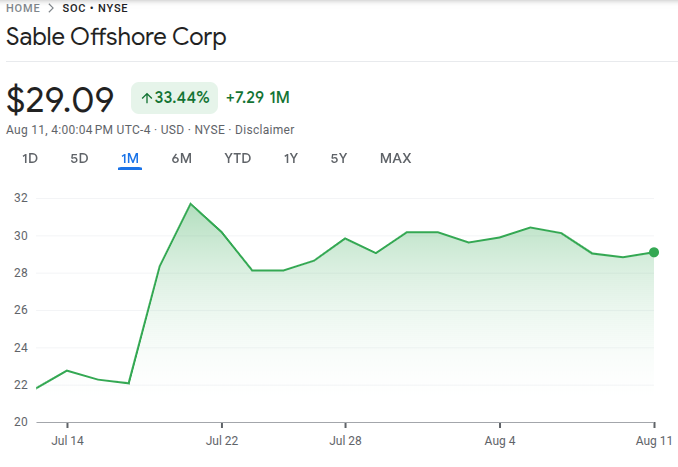
Meanwhile, Sable’s share price rebounded in mid-July and is holding up surprisingly well (see below). Perhaps investors don’t see the class action suits as a significant incremental threat given the risks associated with decisions by 8 California agencies, Santa Barbara County, and various judges, and the persistent challenges by well-organized opponents of offshore production.