As the Minerals Management Service’s liaison to the Marine Board of the National Academies and subsequently as a Marine Board member, I had the privilege of working with many outstanding engineers on matters related to offshore safety and environmental protection. Dr. Martha Grabowski was a clear standout because of her exceptional leadership and communications skills, modest ego, and willingness to assist.
Dr. Grabowski excels in analyzing and mitigating operational risks including those associated with human and organizational factors. As such, she was a great resource in our work on safety management and culture.
The conclusion of the investigation is that Swedish jurisdiction does not apply and that the investigation therefore should be closed,” the Swedish Prosecution Authority said in a statement.
Little has changed since our last update. Will we finally get a substantive update from an official investigator?
STOCKHOLM, Feb 5 (Reuters) – The prosecutor leading Sweden’s probe into the Nord Stream gas pipeline blasts in the Baltic Sea in 2022 plans to announce a decision this week on whether to drop the case, press charges or request that someone is detained, his office said on Monday.
The statement confirmed an earlier report by Swedish daily Expressen. It was not immediately clear which day an announcement would be made, a spokesperson for the prosecutor’s office said.
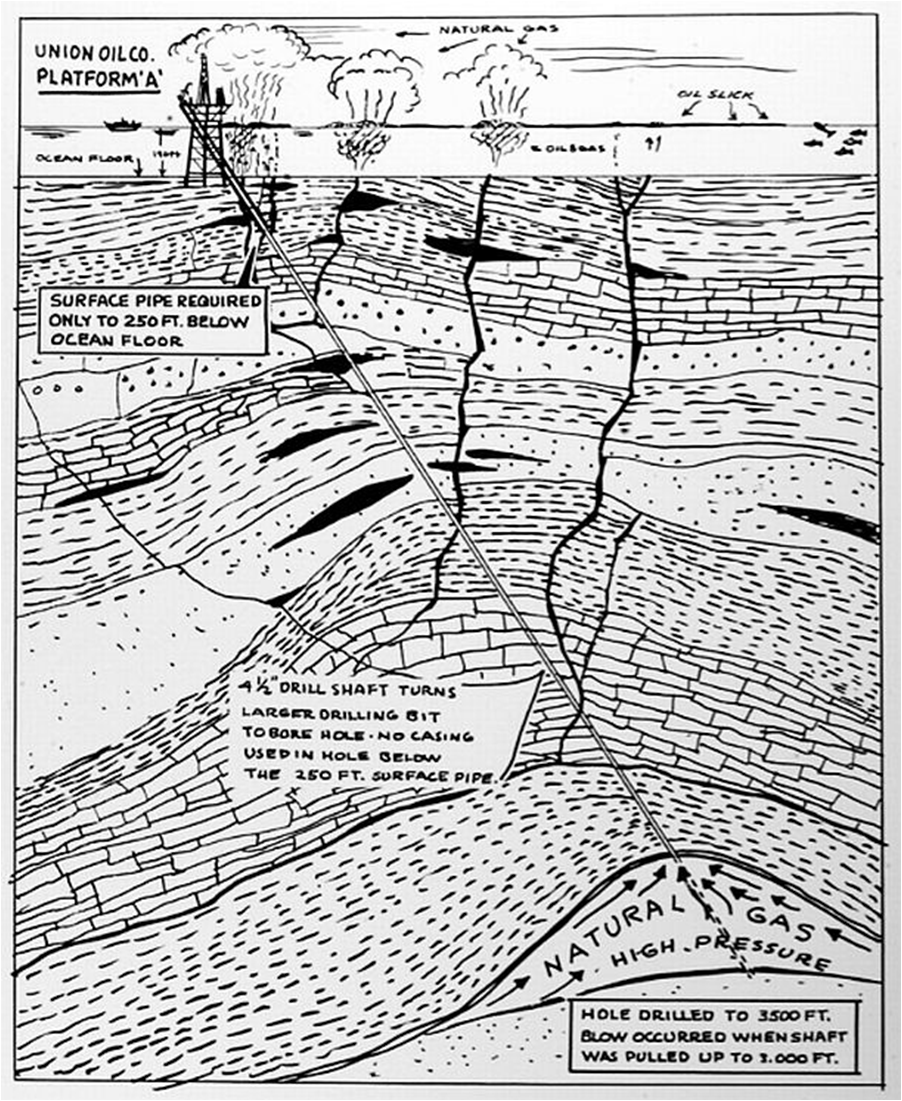
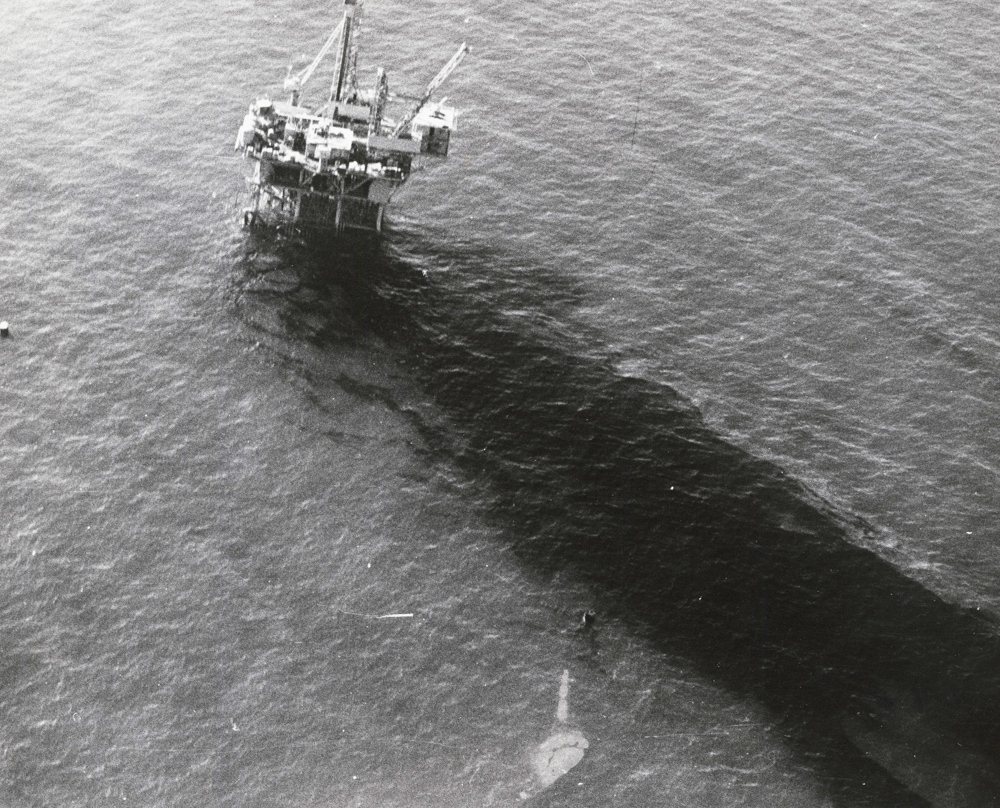
On January 28, 1969, well A-21, the 5th well to be drilled from Union Oil Company’s “A” platform began flowing uncontrollably through fractures into the Santa Barbara Channel.
The absence of any well casing to protect the permeable, fractured cap rock meant that the operator couldn’t safely shut-in a sudden influx of hydrocarbons into the well bore (i.e. a “kick”). Shutting-in the well at the surface would create well bore fractures through which oil and gas could migrate to shallow strata and the sea floor. The probability of an oil blowout was thus essentially the same as the probability of a kick (>10-2). Compare this with the historical US offshore oil blowout probability (<10-4) and the probability of <10-5 for wells with optimal barrier management.
Here, in brief, is the well A-21 story:
Well drilled to total depth of 3203′ below the ocean floor (BOF).
13 3/8″ casing had been set at 238′ BOF. The well was unprotected from the base of this casing string to total depth.
Evidence of natural seeps near the site suggested the presence of fracture channels
The well was drilled through permeable cap rock and a small high pressured gas reservoir before penetrating the target oil sands.
When the well reached total depth, the crew started pulling drill pipe out of hole to in preparation for well logging.
The first 5 stands of drill pipe pulled tight; the next 3 pulled free suggesting the swabbing of fluids into the well bore..
The well started flowing through the drill pipe. The crew attempted to stab an inside preventer into the drill pipe, but the well was blowing too hard. The crew then attempted unsuccessfully to stab the kelly into the drill pipe and halt the flow.
The crew dropped the drill pipe into the well bore and closed the blind ram to shut-in the well.
Boils of gas began to appear on the water surface. Oil flowed to the surface through numerous fracture channels. The above sketch by former colleague Jerry Daniels (RIP) depicts the fracturing, which greatly complicated mitigation of the flow.
We need to continue studying these historically important incidents, not just the technical details but also the human and organizational factors that allowed such safety and environmental disasters to occur. The idea is not to shame, but to remember and better understand.
The attached BSEE Safety Alert addresses chronic and persistent helideck issues that pose significant risks to offshore workers. Meanwhile, we are still waiting for the final NTSB report on the tragic 12/29/2022 helideck incident that killed the helicopter pilot and 3 passengers.
As we approach the 55th anniversary of the Santa Barbara blowout (more to follow), pioneering subsea engineer JL Daeschler reminds us of a lesser known, but very serious, drilling blowout that occurred the same year offshore Northern Australia.
As is the case with most historic incidents, the lessons learned are still pertinent today and should be studied by those involved with well operations. Training sessions should consider what went wrong then, how technology and practices have changed since, how similar incidents could still occur, and innovations and improved practices that could further mitigate well control risks.
While well control technology and procedures are much improved, the fundamental issues discussed in the attached video remain the same. Well control must always be considered a work in progress with continuous improvement being the objective.
(The Sedco 135G semisubmersible that drilled this well is of the same design as the Sedco 135B rig that sank offshore Borneo in 1965.)
The 3rd quarter update by Jason Mathews and a followup inquiry confirm that there were no work-related fatalities associated with US OCS oil and gas operations in 2023! This major achievement deserves public recognition given that the zero fatality goal has long eluded offshore operators, contractors, and regulators.
In a proper safety culture, continuous improvement is the primary goal, and both good and bad outcomes must be carefully assessed. The 2023 zero-deaths milestone is thus tempered by life threatening incidents such as those described in the attached safety alert and investigation report. Address these issues, identify other potential problem areas, and continue to drive the culture forward. Be proud and confident through training, planning, and achievement, but be wary!
On Nov. 17, the Coast Guard reported a “crude oil release” in the Gulf of Mexico near the Main Pass Oil Gathering (MPOG) company’s pipeline system southeast of New Orleans. After 3 weeks of investigation, no pipeline leak has been identified.
The cause and source of the incident remain under investigation. The entire length of the main pipeline has been assessed to date, along with 22.16 miles of surrounding pipelines with no damage or indications of a leak identified. Remotely operated vehicles (ROVs) and divers continue to reassess the main pipeline and surrounding pipelines as a sustained effort to locate the source of the suspected release.
Postaccident investigation determined that the containerships MSC Danit and Beijing had dragged anchor near the pipeline months before the oil release, on January 25, 2021.
Firstly, taking 2.5 years to publish an investigation report is unacceptable for an organization with BSEE’s talent, resources, and safety mandate. Unfortunately, such delays now seem to be the rule as the summary table (below) for the last 4 panel reports demonstrates. The most recent report implies that the actual investigation was completed in 2-3 months. Why were another 2+ years needed to publish the report? (Note that the lengthy and complex National Commission, BOEMRE, Chief Counsel, and NAE reports on the Macondo blowout were published 6 to to 17 months after the well was shut-in.)
incident date
report date
elapsed time (months)
incident type
5/15/2021
10/31/2023
29.5
fatality
1/24/2021
7/24/2023
30
fatality
8/23/2020
2/15/2023
30
fatality
7/25/2020
2/15/2023
31
spill
Four most recent BSEE panel reports
The subject (May 2021) fatality occurred during a casing integrity pressure test, and some of the risk factors were familiar:
The platform was installed 52 years prior to the incident, and had been shut-in for more than a year.
The well of concern (#27) was drilled in 1970, sidetracked in 1995, and last produced in February 2013.
Diagnostic tests clearly demonstrated communication between the tubing, production casing, and surface casing.
In light of the known well integrity issues and the absence of production for more than 8 years, the prudent action would have been to plug and abandon the well in a timely manner. However, under 30 CFR 250.526 as interpreted at the time, Fieldwood had another option – submit a casing pressure request to BSEE to confirm the integrity of the outermost 16″ casing and (per p. 10 of the report) “continue to operate the well in its existing condition.” Given that the well had not produced for 8 years and that the platform had been shut-in for more than a year, the option to continue operating the well should not have been applicable.
The only issue for Fieldwood to resolve with the regulator should have been the timing of the plugging operation. Additional well diagnostics would only serve to create new risks and further delay the well’s abandonment.
The resulting pressure test of the outermost (16″) casing was solely for the purpose of confirming a second well bore barrier. Per the report (p.10), there is a “known frequency of outermost casings in the GOM experiencing a loss of integrity as a result of corrosion.” Whether or not the 16″ casing passed the test, the inactive well had clear integrity issues and should have been plugged.
Fieldwood proceeded with the pressure test rather than correcting the problem. The regulations, as interpreted, thus facilitated the unsafe actions that followed. These factors heightened the operational risks:
Extensive scaffolding and a standby boat were needed for the test.
Process gas via temporary test equipment was used to conduct the test.
The Field-Person In Charge (PIC) heard about the test for the first time on the morning of the incident.
The PIC and victim had no procedures to follow, and had to figure out how to conduct the test on the fly.
A high pressure hose was connected without a pressure regulator or pressure safety valve.
The digital pressure gauge had two measurement modes, one to display pressure in psi and the other in bars. (One bar is equivalent to 14.5 psi. Assuming that the readings were in psi rather than bars would thus result in serious overpressure of the casing.)
Seconds after the victim told the field-PIC the pressure was 175 psi (presumably 175 bar and 2538 psi), the casing ruptured. The force of the explosion propelled the victim into the handrail approximately 4 feet away, which bent from the impact. The victim’s hardhat was projected 60 to 80 feet upwards, lodging into the piping.
The investigation report fails to address the wisdom of conducting the pressure test and the regulatory weaknesses that enabled Fieldwood to defer safety critical well plugging operations. The pressure test option in 30 CFR § 250.526, was not intended for long out-of-service wells with demonstrated well integrity issues. The only acceptable option was corrective action (plugging the well) without further delay. The pressure test option added risks without addressing the fundamental problem and helped enable the operator to further delay decommissioning obligations.
Postscript: According to BOEM data, the lease where the fatal incident occurred expired on 7/31/2021. Per the BSEE Borehole and structures files, neither the platform (#14) nor any of the other 4 structures remaining on the lease have been removed, and the well (#27) has yet to be plugged.




 Bud's Offshore Energy (BOE)