GE Vernova retained Arcadis US, Inc., to perform an initial assessment of environmental considerations associated with the presence of the blade debris in the water and along the shoreline. That report is attached. Linked is a Nantucket Current article on the assessment.
Archive for the ‘accidents’ Category
Initial environmental assessment of Vineyard Wind blade debris
Posted in accidents, Offshore Energy - General, Offshore Wind, tagged debris, environmental assessment, turbine blade failure, Vineyard Wind on July 24, 2024| 1 Comment »
Aquinnah (Gay Head, Martha’s Vineyard) tribe calls for moratorium on offshore wind development
Posted in accidents, energy policy, Offshore Wind, tagged Aquinnah, Cheryl Andrews-Maltais, Gay Head, Martha's Vineyard, moratorium, turbine blade failure, Vineyard Wind, Wampanoag Tribe, wind development on July 23, 2024| Leave a Comment »

In the aftermath of a broken turbine blade off their coast, the Wampanoag Tribe of Gay Head (Aquinnah) is calling for a moratorium on all offshore wind development in the United States until further research can be done on the impact of wind farm construction.
In a letter to BSEE Director Kevin Sligh, Aquinnah Wampanoag chairwoman Cheryl Andrews-Maltais:
- expressed “strong concerns and outrage” over the fractured Vineyard Wind turbine blade and the debris that washed ashore on Nantucket.
- said the foam and fiberglass debris have “potential negative and adverse impact[s]” on the environment, marine life, and human health.
- said fragments in the water pose a threat to shellfish, which are a crucial part of both the marine food web and also ingested by humans.
- commented that the potential contamination of shellfish with fiberglass and other materials could have severe consequences for human consumption and public health.
- criticized the lack of communication from federal officials to the tribe.
- called for an “immediate stoppage” of offshore wind construction in U.S. waters until they can be evaluated for microfractures and other damages.
Vineyard Wind’s financial assurance waiver cites robust insurance policies, proven technology, and guaranteed electricity sales
Posted in accidents, decommissioning, Offshore Wind, tagged BOEM, decommissioning, financial assurance, Good Neighbor Agreement, Nantucket, Vineyard Wind on July 22, 2024| 2 Comments »
Pasted below is an excerpt from the BOEM letter waiving the“pay as you build” financial assurance requirement for the Vineyard Wind project.
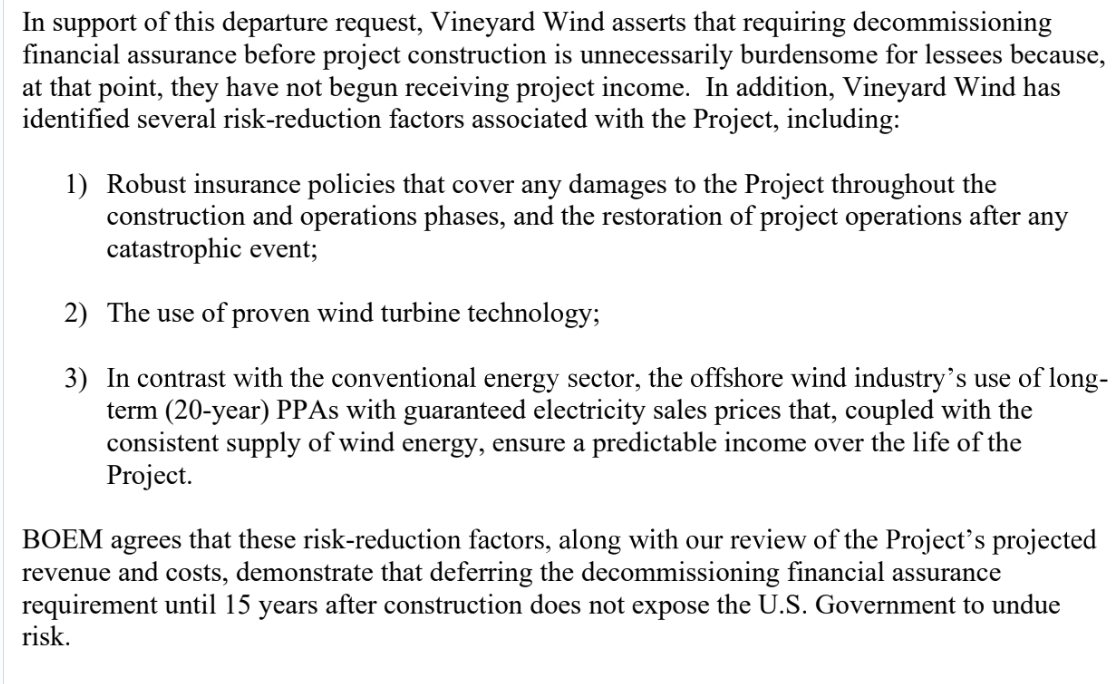
Comments on the 3 risk reduction factors cited in the letter:
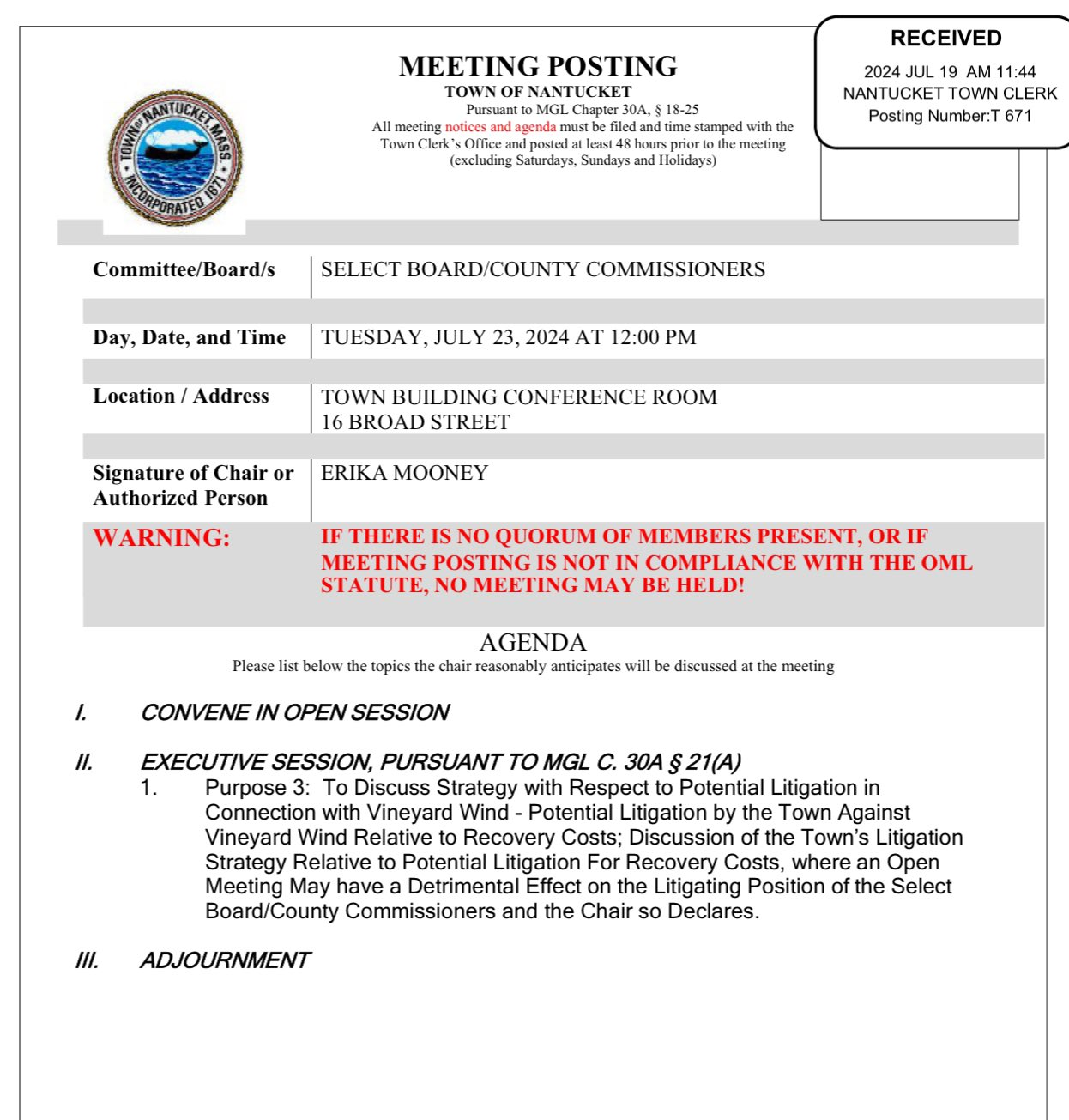
Factor 1: Those “robust insurance policies” may soon be tested given the costs associated with the turbine blade incident and potential law suits. (The notice pasted below informs that Nantucket officials will meet on Tuesday to consider litigation. A question for attorneys is the extent to which Nantucket is compromised by their good “Good Neighbor Agreement” with Vineyard Wind. That agreement essentially calls on Nantucket to promote the Vineyard Wind projects in return for payments that seem modest relative to the economic benefits from tourism and fishing.)
Factor 2: To the extent that GE Vernova Haliade-X 13 megawatt turbines are proven technology (and that is very much in doubt), the use of proven technology doesn’t prevent premature abandonment associated with unexpected incidents.
Factor 3: Reliable power generation and predictable long-term income remain to be demonstrated.
Vineyard Wind: regulatory observations
Posted in accidents, Offshore Wind, tagged BOEM, BSEE, CVA, marine debris, Vineyard Wind on July 19, 2024| 1 Comment »
Vineyard Wind statement (7/18):
- “This morning, a significant part of the remaining GE Vernova blade detached from the turbine. Maritime crews were onsite overnight preparing to respond to this development, though current weather conditions create a difficult working environment.”
- “We are staying apprised of GE Vernova’s efforts to manage the situation, including the removal and recovery of the remaining blade attached to the turbine.”
- Staying apprised? As operator, Vineyard Wind is fully responsible. This is their situation to manage.
- BSEE has ordered Vineyard Wind to suspend power production and wind turbine generator construction.
- Kudos to BSEE for their decisive and timely action. They need to better understand what happened before allowing operations and construction to continue.
- Imagine the pressure on the regulator if the project was providing a significant portion of the region’s electricity.
- BSEE’s comment that there has been “no harm to any marine resources or mammals from the incident” is premature given the extensive marine debris and the associated risks to mammals.
What about the CVA?
- The regulations at 30 CFR § 285.707-712 assign important responsibilities to Certified Verification Agents (CVAs), independent third parties with established technical expertise. These responsibilities include detailed reviews of the design, fabrication, and installation plans.
- Oddly, the CVA’s “Statement of Qualifications” and “Scope of Work and Verification Plan” have been redacted in their entirety from Vineyard Wind’s Construction and Operations Plan (COP) (see Appendix I-C and I-D).
- Who was the CVA and why was that important information redacted?
- Were any of the CVA requirements waived per 258.705?
- Will BOEM, the lessor and Federal wind program manager, be making a statement? Will they be reassessing their COP review procedures?
- BOEM should temper their over-the-top promotion of offshore wind. The complete shutdown of the first utility scale offshore wind farm heightens public concerns about the intermittency of this power source, and the need for reliable backup sources.
Debris poses a significant risk to marine mammals
Posted in accidents, Offshore Wind, tagged mammals, marine debris, RIght Whale, turbine blade failure, Vineyard Wind on July 17, 2024| 1 Comment »
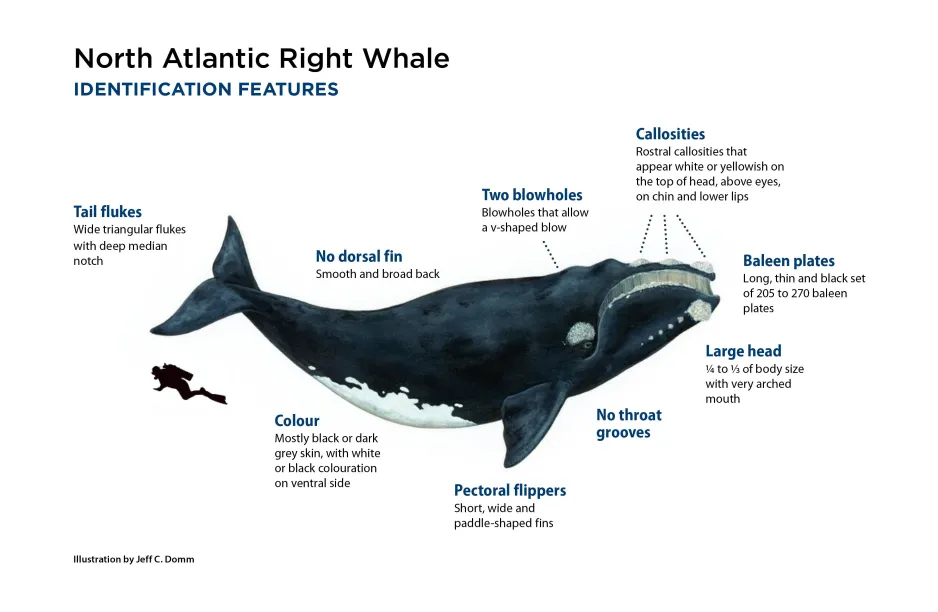
In the wake of the Vineyard Wind turbine blade incident, it’s important to note that marine debris is a significant risk factor for mammals. This is a particular concern for baleen whales, like the endangered right whale, which filter large amounts of water. Per NOAA:
Marine Mammals: Many species of marine mammals have also been confirmed to eat marine debris. A review by Kühn and van Franeker found that 69 species of marine mammals have been found to ingest debris – that’s 56% of all marine mammals! This includes 44 species of odontocetes (toothed whales), manatees, and multiple seal species. Marine mammals are highly protected, which can make it difficult to research them. Most research on marine mammals takes place after an animal dies, making it difficult to understand what marine debris live animals eat. However, we do know that because baleen whales filter extremely large amounts of water while feeding, they may get plastic debris entangled in their baleen plates.
An Argentinian study describes the “finding of plastic litter in the digestive tract of a southern right whale (Eubalaena australis) juvenile male, which was found dead on the shores of Golfo Nuevo, Chubut, Argentina in 2014.”
Vineyard Wind operations shut down
Posted in accidents, Offshore Wind, tagged BSEE, investigation, shutdown, Vineyard Wind on July 17, 2024| 1 Comment »
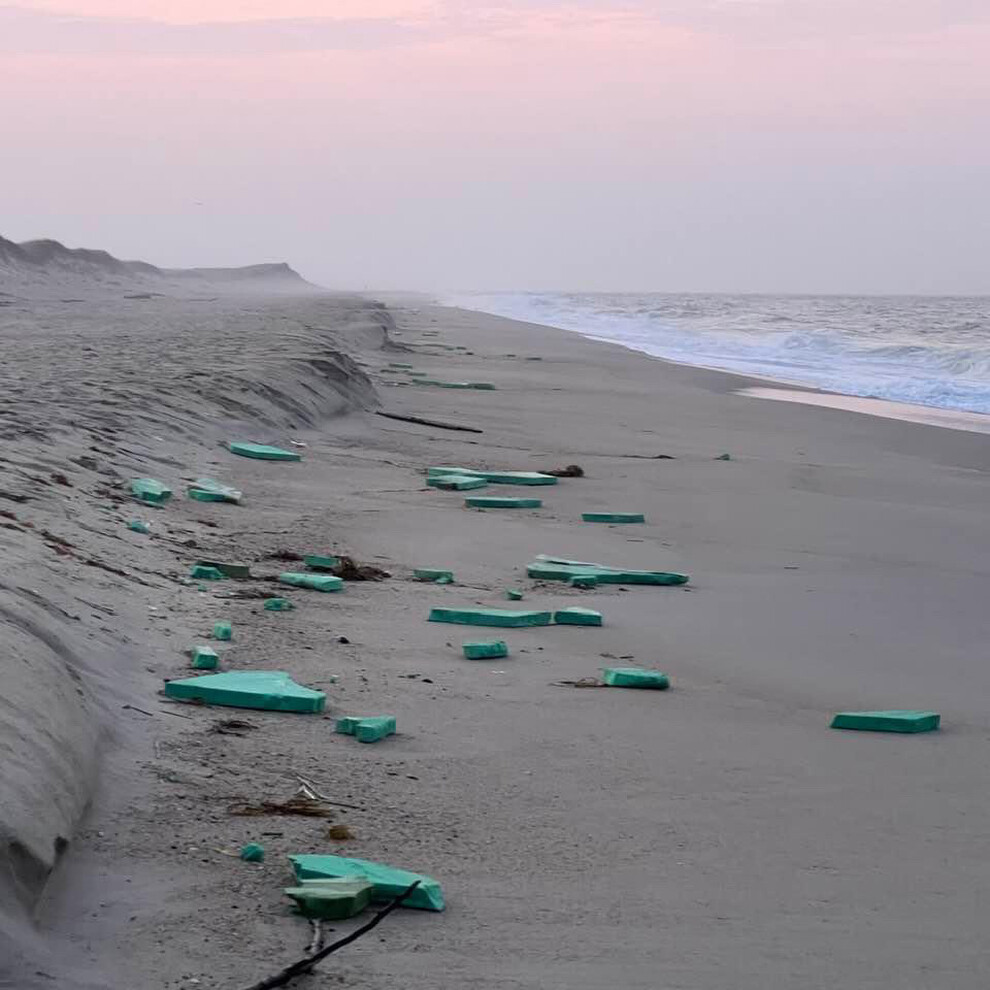
Appropriate response by BSEE.
Late Tuesday afternoon, the Bureau of Safety and Environmental Enforcement said all operations are shut down until further notice.
“A team of BSEE experts is onsite to work closely with Vineyard Wind on an analysis of the cause of the incident and next steps,” the agency said in a statement.
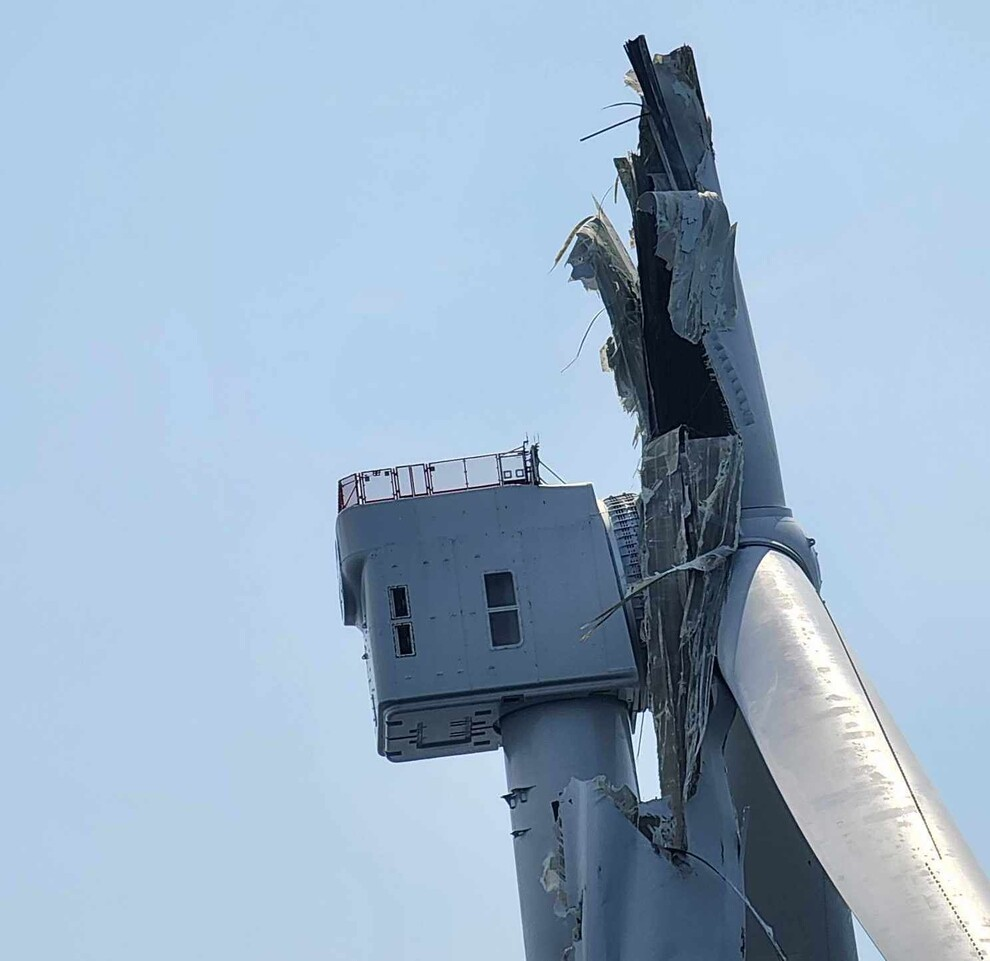
Vineyard Wind turbine blade incident
Posted in accidents, Offshore Energy - General, Offshore Wind, tagged BSEE, Capt. Carl Bois, Coast Guard, GE, Nantucket, turbine blade failure, Vineyard Wind on July 17, 2024| 2 Comments »
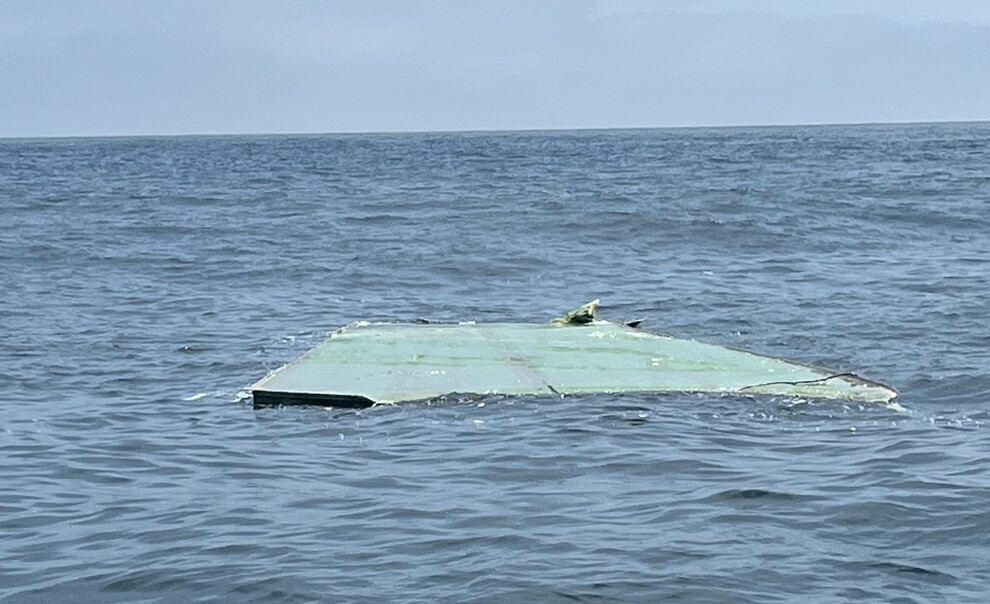

On Sunday (7/14), Capt. Carl Bois, of the fishing charter Topspin out of Nantucket, told the Current he noticed a significant amount of debris in the Vineyard Wind lease area.
“There was so much debris at the wind farm,” Bois said. “We covered many miles and only saw the debris at the wind farm site: big sheets of fiberglass with foam core and lots of loose foam.”
On Saturday night (7/13) the Coast Guard warned Mariners as follows: “Coast Guard received a report of 03 floating debris 10 meters by 2 meters in the vicinity of approximately 26 NM SE of Marthas Vineyard and 22 NM SW of Nantucket in position 40 59.559N 070 25.404W. All marines are requested to use extreme caution while transiting the area.“
On Monday (7/15), Vineyard Wind confirmed that a turbine blade incident occurred on 7/13: “On Saturday evening, Vineyard Wind experienced blade damage on a wind turbine in its offshore development area. No personnel or third parties were in the vicinity of the turbine at the time, and all employees of Vineyard Wind and its contractors are safe and secure.”
On 7/16, Vineyard Wind issued another statement advising that they were deploying teams to Nantucket to clean up debris from the incident.
Comments:
- Not a good look for the first large-scale offshore wind project in the US.
- It’s unclear what the status of operations was at the time of the incident.
- Vineyard Wind seems to be passing the buck a bit when they note that “GE, as the project’s turbine and blade manufacturer and installation contractor, will now be conducting the analysis into the root cause of the incident.” While GE’s findings are critical, Vineyard Wind, as operator, is fully responsible and accountable for the incident and should be leading the analysis.
- Was their a third party review of the turbine design?
- Was the incident reported to BSEE, the safety regulator for offshore wind? State and local government?
- BSEE and the Coast Guard should ensure that Vineyard Wind’s findings and their own independent report are made publicly available in a timely manner. Ditto for Safety Alerts.
- What other incidents have occurred during offshore wind facility construction and operations?
- In 2017, Vineyard Wind requested to defer providing the full amount of the required financial assurance until year 15 of actual operations. That request was denied, but was approved when resubmitted in 2021. The regulations have now been revised to allow such deferrals of financial assurance on all offshore wind projects.
Vineyard Wind is a joint venture between Avangrid, a Spanish company, and Copenhagen Infrastructure Partners. They were
The Secret Service, OCS incident data, and high consequence events
Posted in accidents, drilling, Offshore Energy - General, Uncategorized, tagged BSEE, drilling blowouts, high consequence events, OCS incident data, performance measures, Secret Service on July 16, 2024| Leave a Comment »

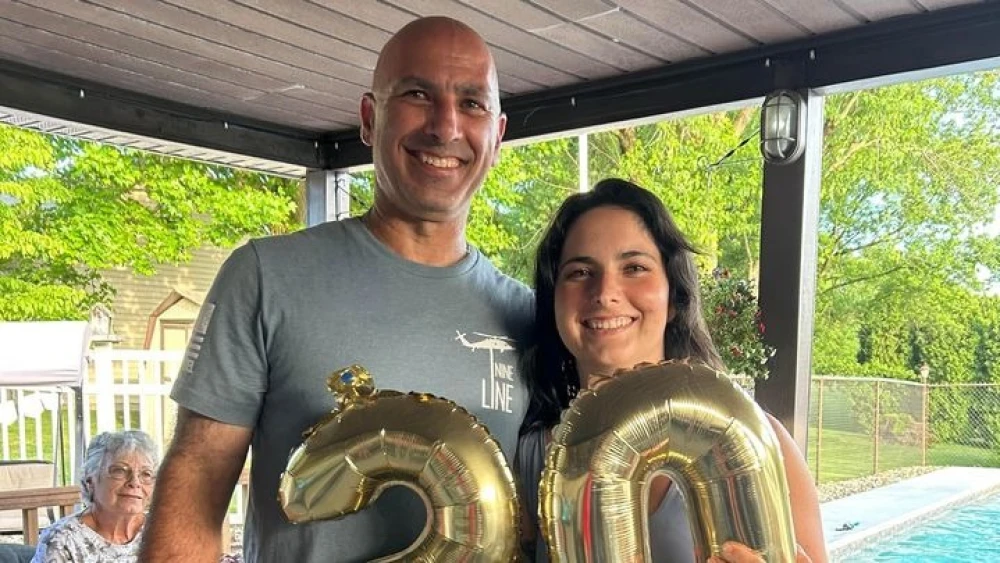
As is the case with many Federal and corporate entities, the Secret Service website is long on promotion and short on substantive details and performance data. The limited “Measurable Impact” statistics on their webpage advise that the Secret Service protected 6623 foreign and domestic visits “without incident” in Fiscal Year 2022, which ended 22 months ago.
Their 2024 budget request overview includes a bit more information (pasted below). The Secret Service gives themselves a perfect score if protectees arrive and depart safely. When your scores are always 100%, your performance measures are clearly inadequate.
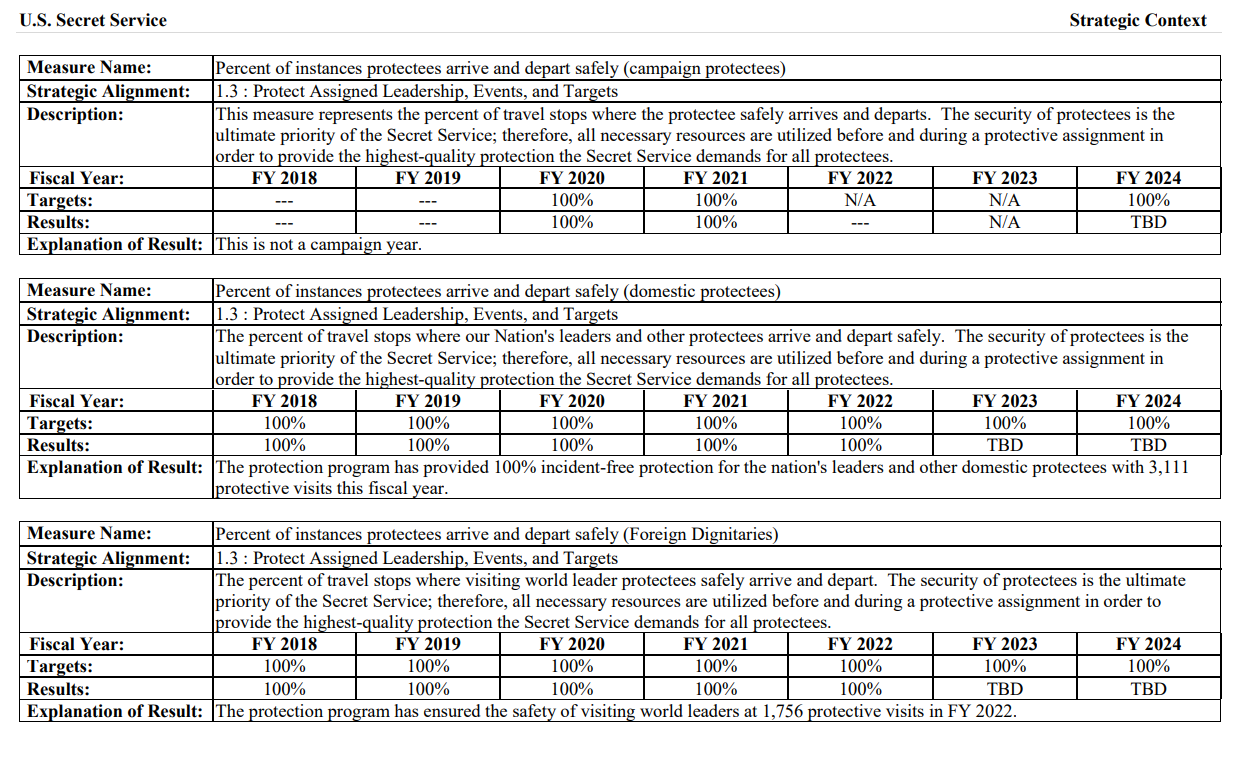
Like drilling blowouts, assassinations are low frequency, high consequence events. Prevention requires gathering data on lesser events, identifying leading indicators, and tracking high-potential precursors. You don’t prevent high consequence events by only tracking high consequence events.
Inspections are also critical. Does the Secret Service inspect events to assess protective measures such as verifying that the surrounding areas are cleared and being observed? If so, what do those numbers look like.
BSEE, the OCS safety regulator, does a good job of collecting data, but fails to compile and post updates in a timely manner. Their latest incident tables are for 2022, and even those data are incomplete. Panel investigations, which are conducted for the more serious incidents, now take 2.5 years to complete. This is unacceptable for an organization with BSEE’s talent, resources, and safety mandate.
“The most common error of a smart engineer is to optimize a thing that should not exist.” ~Elon Musk
Posted in accidents, Uncategorized, well control incidents, tagged common error, Elon Musk, engineers, Gaza pier, macondo, Montara, Santa Barbara blowout on July 15, 2024| Leave a Comment »
This is very true, but engineers may not have a choice when directed to optimize a flawed decision.
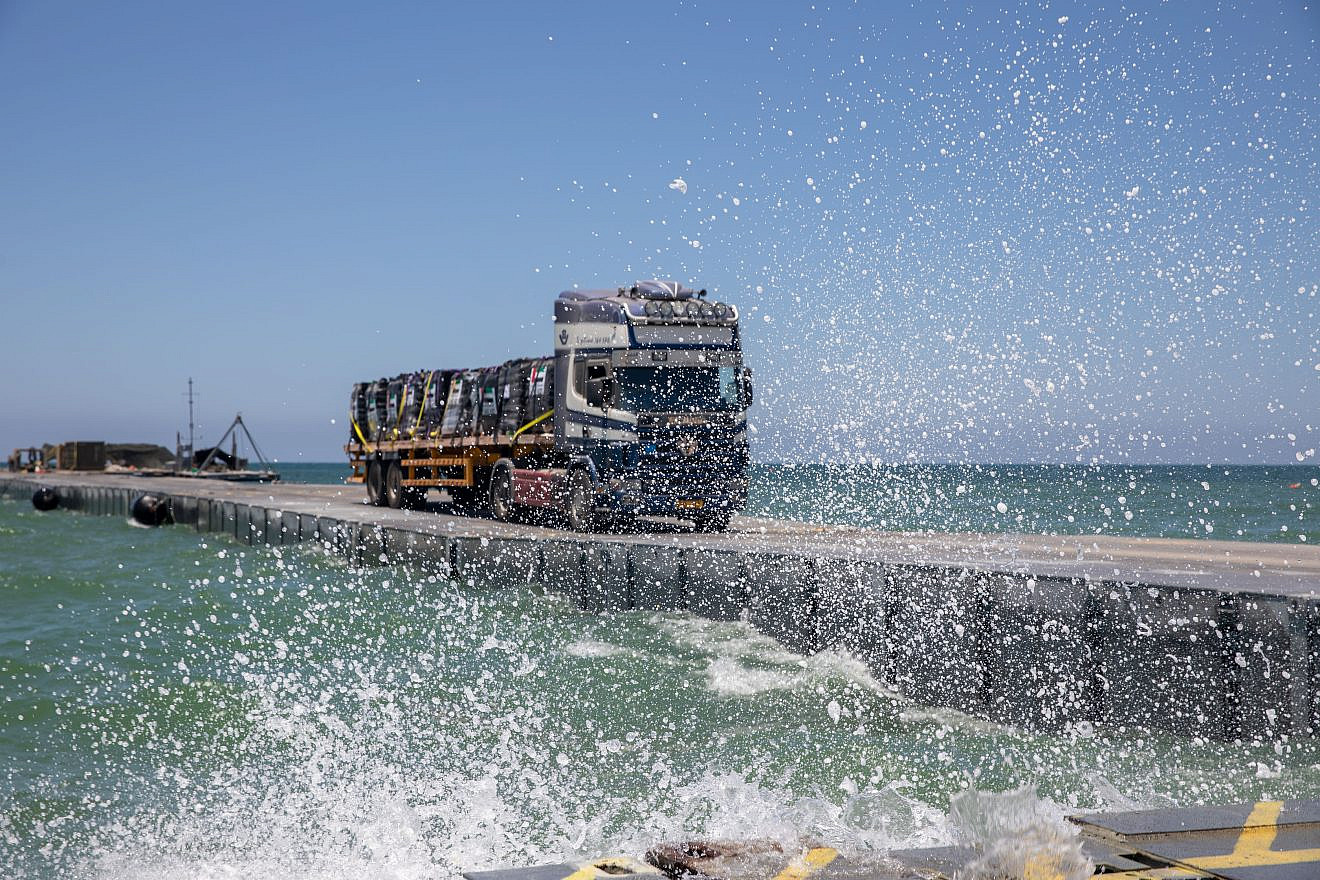
For example, the installation of the Gaza pier was a political decision imposed on military engineers without assessing the operational risks. The $230 million pier was in operation for only 20 days, long enough for several serious injuries to result from the reckless decision.
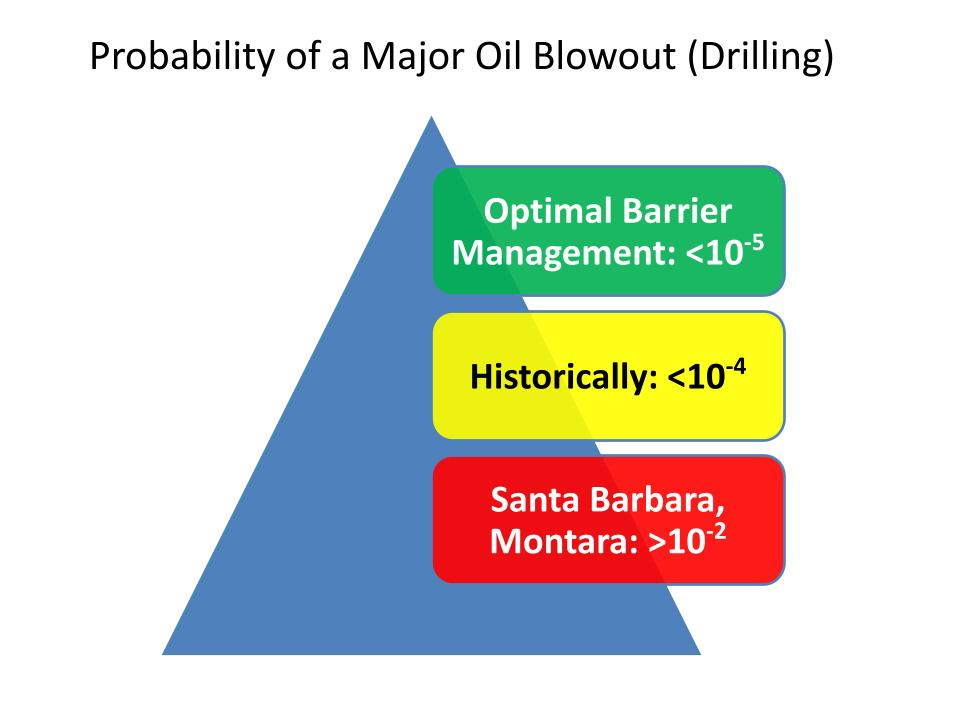
Some of the worst offshore drilling incidents were largely the result of culture or management driven attempts to save time and money. Modest cost savings were prioritized over verifying well integrity during both the Montara and Macondo well suspensions. The Santa Barbara blowout was the result of eliminating a casing string during development drilling, which virtually assured an uncontrolled flow in the event of a well kick.
Our team flew in a Bell 212 helicopter to conduct inspections in the North Atlantic
Posted in accidents, Offshore Energy - General, tagged Bell 212, Georges Bank drilling, Georges Bank Monitor, helicopter crash, Iran on May 21, 2024| Leave a Comment »
A Bell 212 helicopter is in the news following the crash that killed Iran’s President and Foreign Minister. Given the difficult weather conditions and mountainous terrain, the crash was most likely an accident.
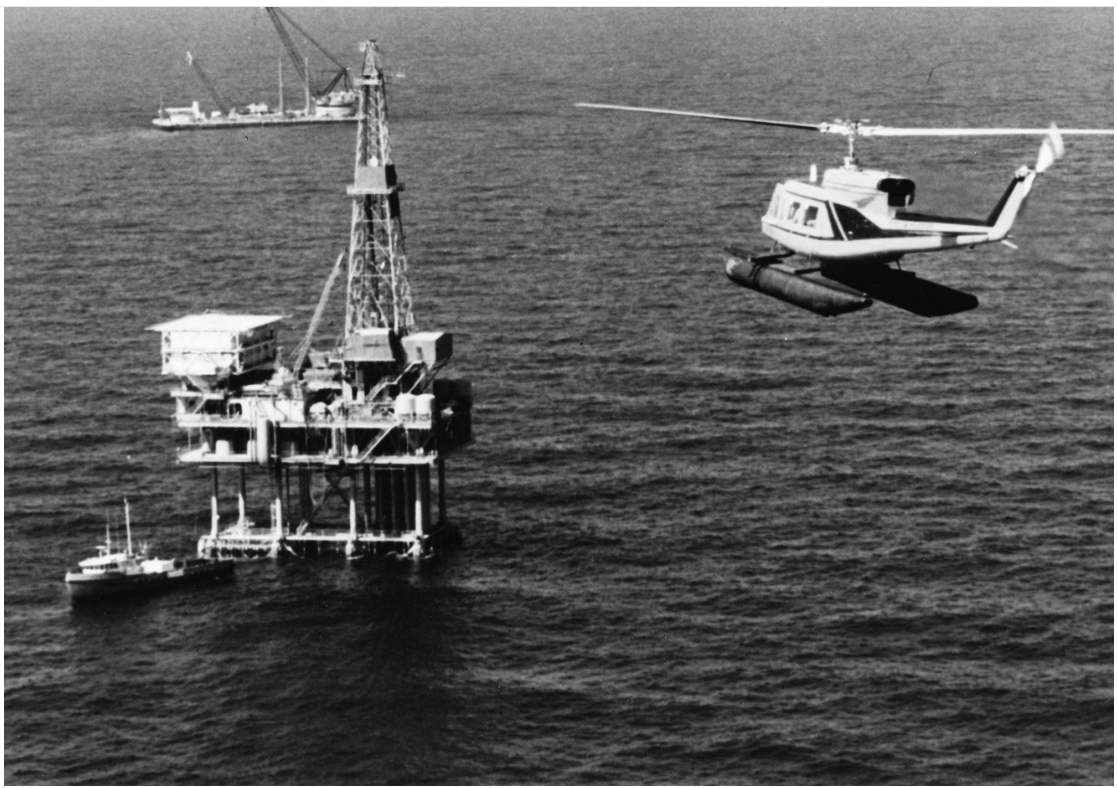
As noted in this vintage newsletter (p. 8), we flew to Georges Bank drilling rigs in the early 1980’s in a Bell 212 contract helicopter, owned and operated by Petroleum Helicopters Inc (PHI).
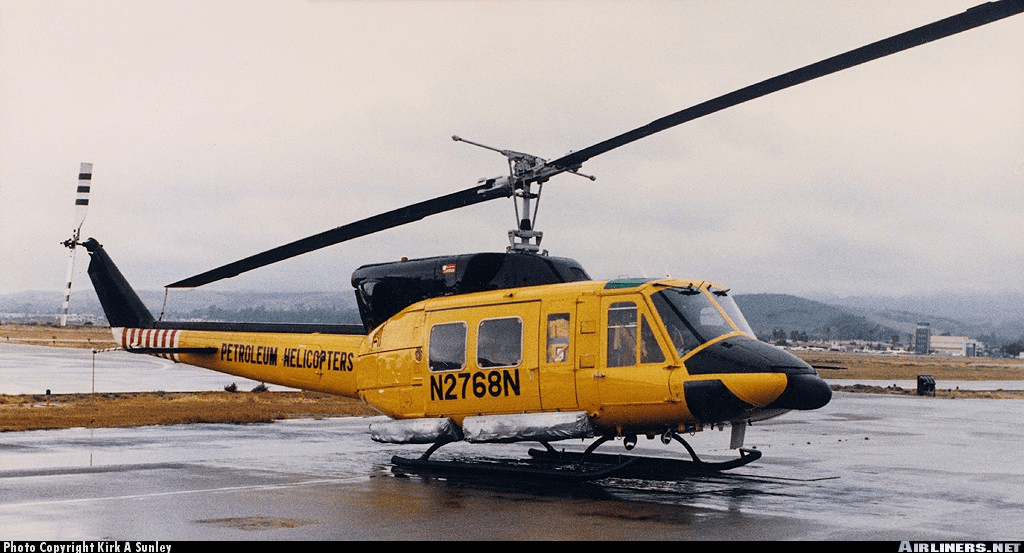
The Bell 212 was chosen by the USGS aviation expert because of its range, reliability, and IFR capabilities that enabled flying in limited visibility. Because of difficult fog conditions on Georges Bank, drilling rigs were sometimes not visible until we were descending to land.
For the most part, the offshore industry has replaced Bell 212 helicopters with newer models, but the 212 was in use for many years and had an excellent performance record.
 Bud's Offshore Energy (BOE)