The carbon disposal industry, which overplayed its hand on the OCS, has managed to alienate traditional oil and gas industry supporters, sparking grassroots opposition in conservative areas of Louisiana. Carbon Capture and Sequestration (CCS) is also opposed by climate activists and the environmental justice movement.
The Advocate has nicely summarized opponents concerns: “land rights; the impact on underground aquifers if CO2 leaks; skepticism of climate change; skepticism of its effectiveness in fully capturing CO2; and opposition to the use of federal money and tax credits to finance the effort.”
Gov. Landry issued an executive order on Oct. 15 in an apparent attempt to calm the opposition. Following 34 “whereas” clauses intended to justify carbon disposal in Louisiana, the EO directs a pause in the review of new Class VI CO2 disposal wells. As evidenced by the attached press release, Save My Louisiana and other opposition groups are far from satisfied.
To the planners behind the scenes in Glasgow, Edinburgh, and London who draw borders with maps but never set foot on the land they destroy.
To the investors who calculate profit and pretend it’s about the planet.
And it’s addressed to all who love Scotland, to those who still believe that the Highlands are sacred ground, that wilderness is not a void, but the pulse of something ancient and irreplaceable.
To those who once walked through moorland and silence and felt that rare sense of belonging to something pure.
And to those who now see it slipping away, amidst noise, steel, and greed.
Let’s stand together for what we love! Before it’s too late!
Beyond the Kyle of Sutherland the heart of the Highlands is being remade not by nature, but by contracts, cables, cranes, and lots and lots of money!
For example: In Invershin and Golspie they plan to house 400 workers, 150 here, 250 there, for five years of construction, working around the clock. (As in numerous other places in Scotland)
Diesel trucks will thunder down our single-track roads,shaking cottages and scaring sheep.
Quiet valleys will become supply corridors.
The night will be lit by headlights and engines.
And when they’re finished, silence will not return, because the monster turbines will remain, and with them, endless power lines will be built in the name of the price of progress.
They will stand like giant steel soldiers, an eternal monument to power and greed in the middle of our once pristine nature!
From Spittal to Beauly, a high-voltage line will soon run through the heart and soul of the North, right through forests, moors, and nesting grounds.
They call it a necessary connection. But why?
Because they produce more than they can transport! Because their greed is limitless!
To make a profit, to export, to a faraway market.
This isn’t about clean energy for Scotland.
It’s about feeding the industrial grid, at the expense of our ecosystems, our wildlife, our peace.
The osprey, the golden eagle, the bats that hunt over rivers, all will suffer from what you call development in the name of progress.
Migratory birds will collide with turbines taller than our churches.
Red deer will lose their habitat.
The once living soil will be buried under concrete.
What they will take from us
They will drain the peat bogs our greatest natural carbon stores, and turn them from the lungs of the Highlands into scars.
They will clear forests for turbine foundations and access roads.
Thousands of trees will fall in the name of green energy!
They will carve paths through river valleys where salmon once leaped and otters played.
They will pour thousands of tons of concrete into living soil.
And if you call it green energy I ask:
How green is a forest without trees?
How clean is a wind that smells of diesel?
The Death of the Dark Night
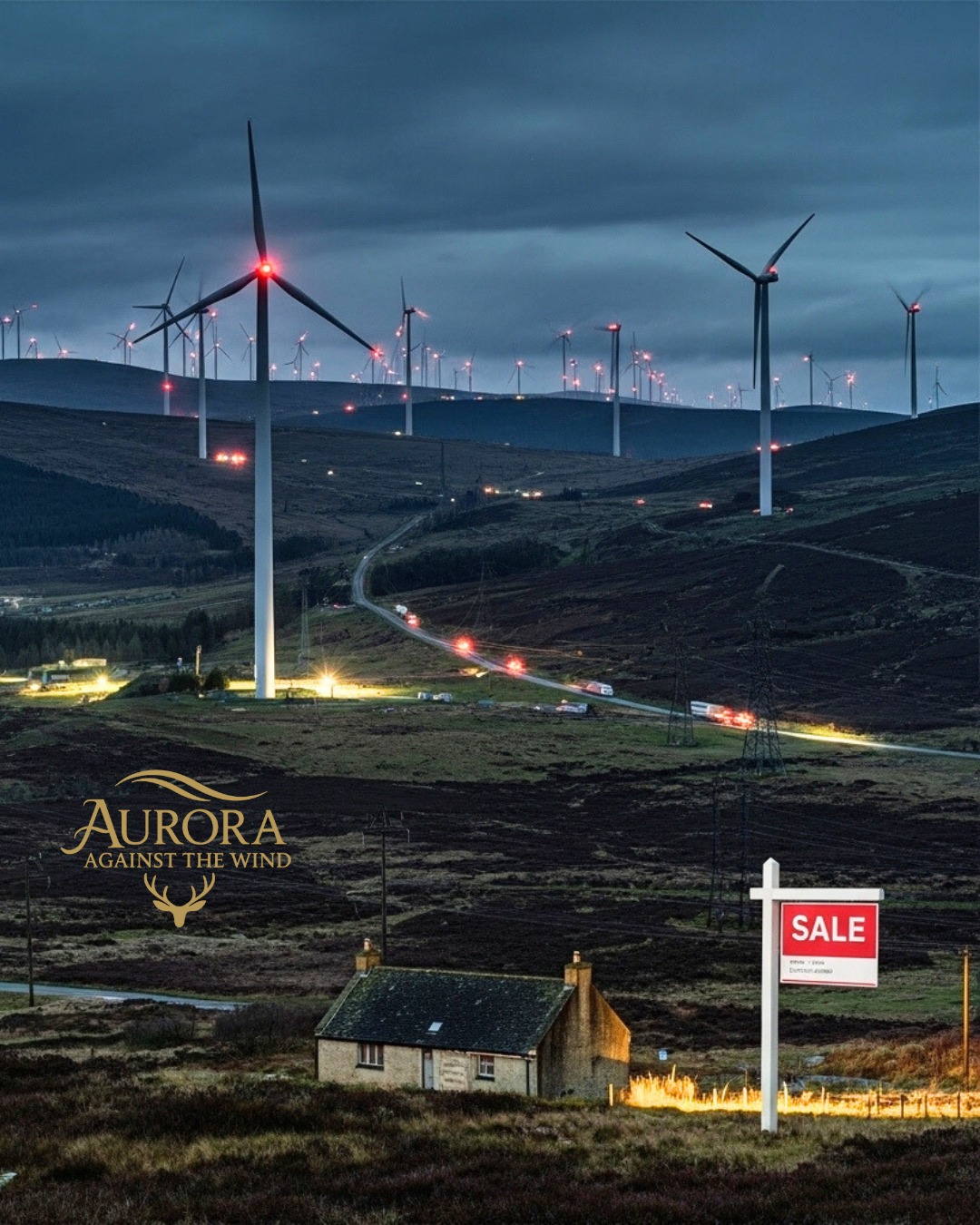
They will fill our skies with red, flashing lights,visible for miles!
A constant warning, the cold heartbeat of industry.
But for the creatures that live here,that light is death.
Bats are disoriented. Birds are drawn to their doom.
And for us, who once saw the aurora dance, it is deep sadness. It moves me to tears to think of what we will lose!
The Milky Way will disappear behind their towers.
The silence of darkness will be gone forever.
The darkness of old gives way to a constant blinking that neither man nor beast can rest.
Their promise of green jobs for us who live here—all false!
They bring contractors, workers, and convoys.
We locals are left with rising electricity prices, broken roads, and a never-ending hum. Radiation pollution day and night! Sound waves are our constant companions! Our houses are rapidly plummeting in price and becoming unsellable!
Instead of Highland idyll, construction noise!
The people of the Highlands are experiencing industrial colonization disguised as green energy. Communities are shrinking while wind turbines are growing.
In the Kyle of Sutherland, there will soon be almost one turbine per inhabitant.
Imagine that: one person, one monster turbine!
A land once characterized by loneliness, now trimmed by rotor blades and power pylons—all climate-neutral, of course!
They call it renewable. But what is being renewed? The money is in their pockets!
An endless hunger for more, disguised as green miracle energy!
A question for the powerful
Do you know what it feels like to live under a sky that never sleeps?
To feel the hum of the power grid in your bones?
To lose the stars one by one and call it progress?
You don’t live here.
You don’t walk these hills in the rain.
You’ve never seen the mist dance or watched the owl fly in the dark night.
You don’t stand by the river at dusk and listen.
You don’t know the natural sounds of the night or the silence when everything is asleep!
You don’t know the starry sky, a wonder with millions of lights that guide your way. You don’t feel the magic when the Northern Lights dance and enchant everything around them.
You only listen to the voice of money.
But let me tell you!
Scotland is not your factory.
The Highlands are not your testing ground.
You cannot pave the North with steel and call it salvation.
You cannot blind the sky and call it clean.
Look up.
The blinking lights that you love so much are not progress.
It is the wilderness’s last breath.
And when the final aurora fades behind your towers, remember:
It was not nature that failed you.
It was you who failed it.
I will fight for every blade of grass and every tree to save the Highlands a piece of their soul!
A Voice from the Highlands, for all who still believe that beauty and silence are worth defending.
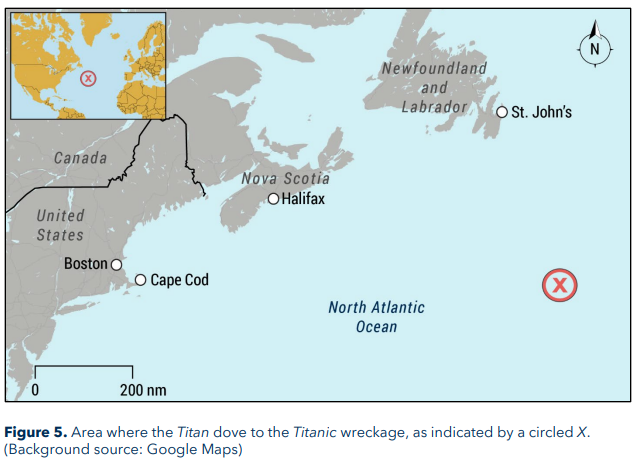
JL Daeschler brought the report on the Titan submersible tragedy to my attention. In June 2023, five died when the Titan dove to the Titanic wreckage in the North Atlantic (map below).
The full NTSB report has now been issued and is attached.
The NTSB found that OceanGate’s engineering process for the Titan was inadequate and resulted in the construction of a carbon fiber composite pressure vessel that contained multiple anomalies and failed to meet necessary strength and durability requirements. Because OceanGate did not adequately test the Titan, the company was unaware of the pressure vessel’s actual strength and durability, which was likely much lower than their target, as well as the implications of how certain operational changes, including storage condition and towing, could impact the integrity of the pressure vessel and overall safety of the vessel. Additionally, OceanGate’s analysis of Titan pressure vessel real-time monitoring data was flawed, so the company was unaware that the Titan was damaged and needed to be immediately removed from service after dive 80.
As is the case with most NTSB reports, the technical analysis and findings are very sound. However, it would be helpful if the NTSB also considered the organizational factors that contributed to the engineering process failures, testing inadequacies, and data analysis flaws. Was there pressure to accelerate the mission? Budget crunch? Training deficiencies? Oversight issues? This type of information can help improve management systems and prevent accidents throughout the marine industry and beyond.
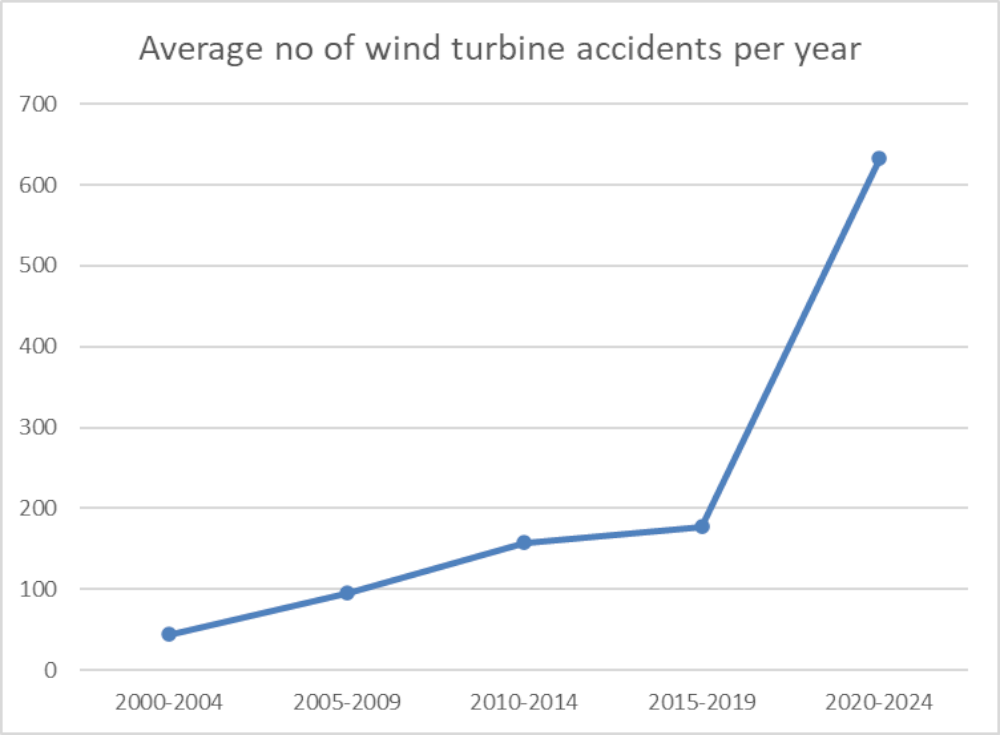
The SAS data indicate that the number of wind turbine incidents has risen sharply in recent years (see chart below). The increased number of turbines worldwide, and perhaps better news coverage of incidents, presumably contributed to the sharp increase. Nonetheless, the growing number of incidents is disconcerting, as is the absence of industry and government summaries and reports.
SAS acknowledges that their list, which is dependent on publicly available reports, is merely the “tip of the iceberg.” For example, the list does not include the June 2, 2025, Empire Wind project fatality.
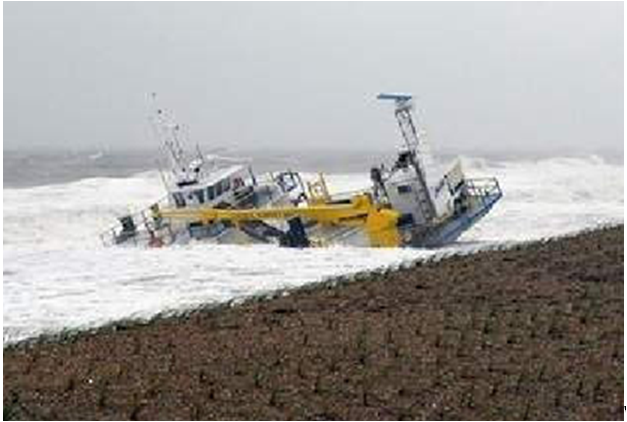
The SAS list does capture the 2018 collapse of the Russell Peterson liftboat, which was collecting data offshore Delaware for a wind project. One worker died and another was seriously endangered. The Coast Guard never issued a report on this tragic incident. Serious questions remain about the positioning of a liftboat in the Mid-Atlantic for several months beginning in March when major storms are likely, the liftboat’s failure mechanisms, the operator’s authority to be conducting this research, and the actions that were taken in preparation for storm conditions.
As the above discussion demonstrates, the issue before the Court is not whether the specific work conducted by Sable was or is ultimately necessary or appropriate for pipeline safety. The issue before the Court is whether the Commission abused its discretion in issuing the April 10 Orders under the standards for review by petition for administrative writ of mandate.
Based on the foregoing analysis and a review of all of the arguments of the parties and the AR, the Court finds the Commission’s factual findings are supported by substantial evidence and that Sable has not met its burden to show an abuse of discretion by the Commission in issuing the April 10 Orders.
Accordingly, the petition for administrative mandate as set forth in the first cause of action of Sable’s FAP will be denied.
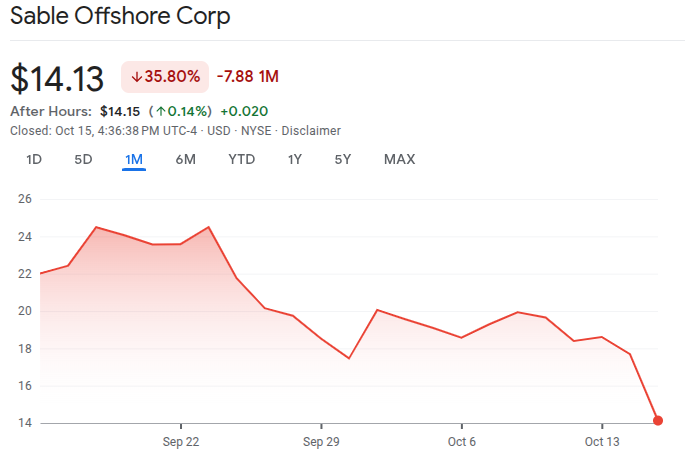
The road ahead for Sable continues to get rockier, and their share price took a major hit today.
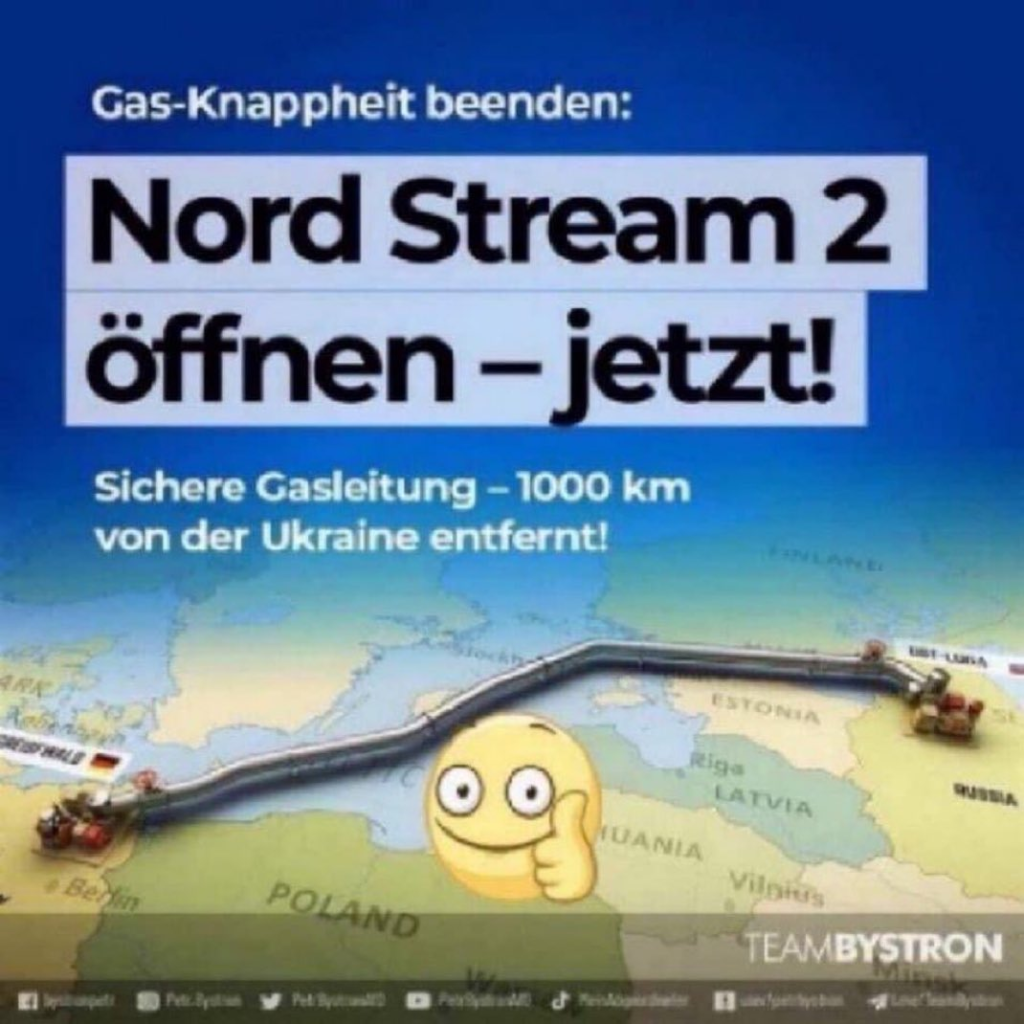
Sławomir Cenckiewicz, who leads Poland’s national security bureau and is a key adviser to President Karol Nawrocki, told the Financial Times in an interview that Germany should not continue the prosecutions if it wanted to align Russia policy with Poland and other Nato allies.
“From our point of view, this investigation doesn’t make sense, not only in terms of the interests of Poland but also the whole [Nato] alliance,” Cenckiewicz said, adding that prosecuting Nord Stream saboteurs might serve German justice, but also “Russian injustice.”
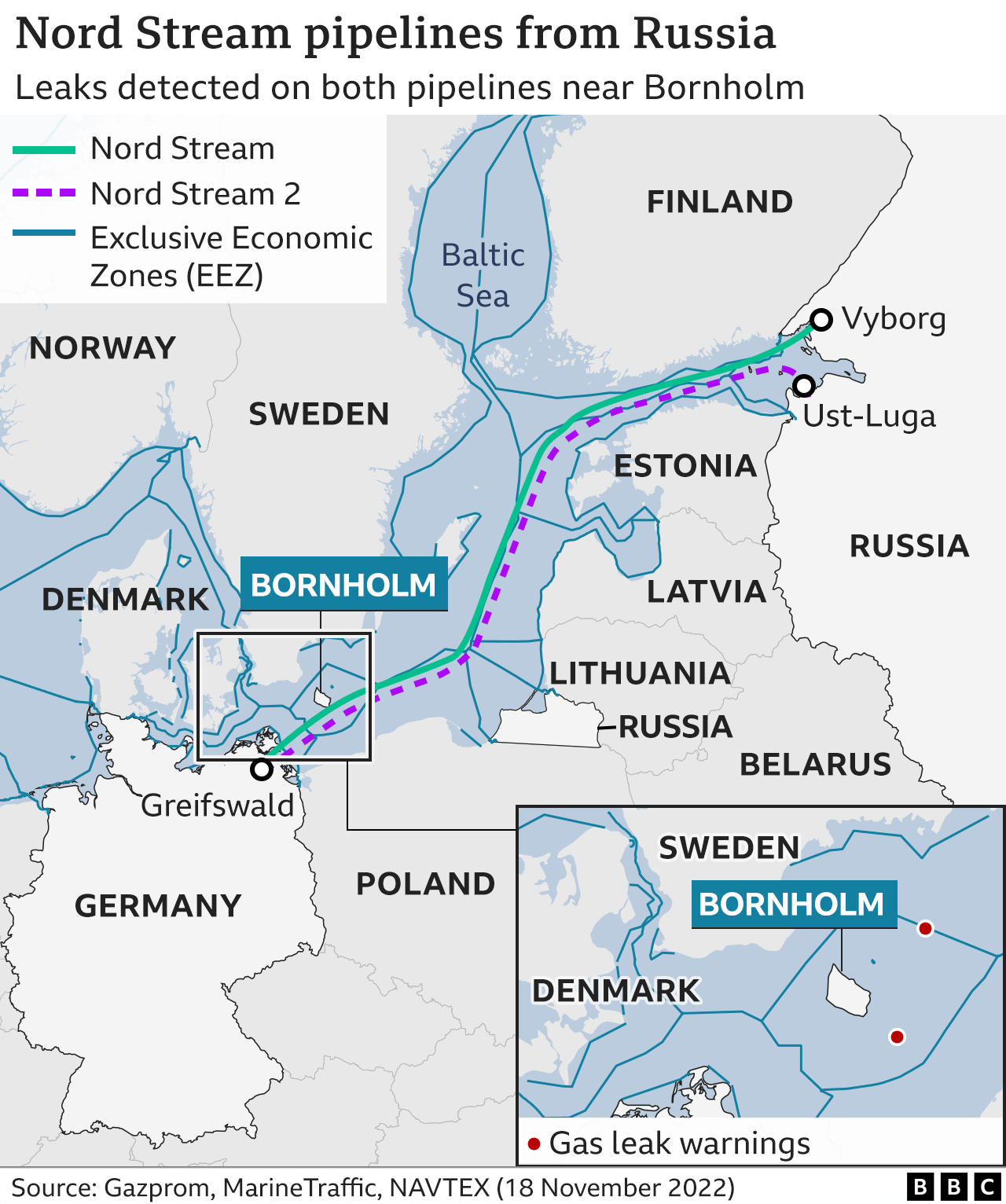
Whether or not the sabotage was justified, finding out who directed and executed the destruction of economically important energy infrastructure should have been a high priority for Sweden, Denmark, and Germany. Sweden and Denmark conveniently opted out after lengthy investigations, leaving only Germany to pursue what many believe to be a half-hearted inquiry.
The Snorre field is in 300-380m of water in the North Sea ~200 km west of Floro.
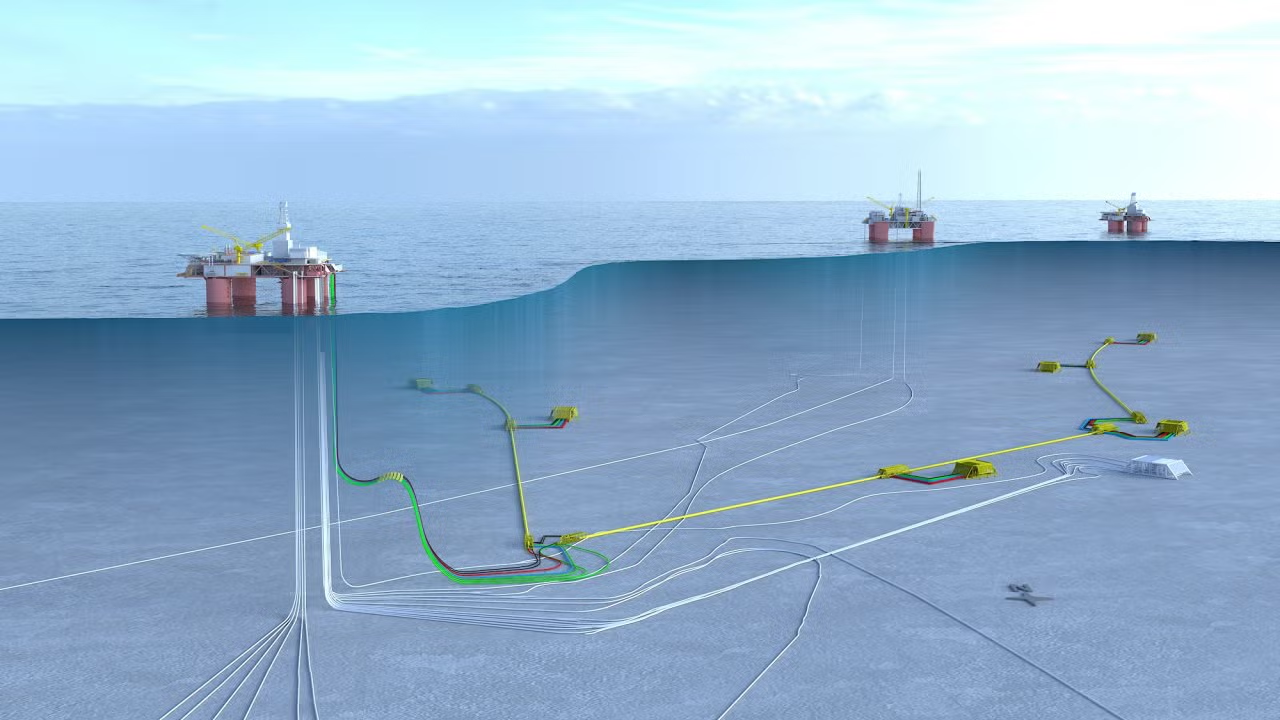
According to Reuters and others, Equinor will no longer pursue electrification of Snorre A and B, Heidrun, Aasgard B, and Kristin platforms, but still plans to proceed with projects at Grane and Balder fields.
A number of BOE posts since Jan. 2022 have questioned Norway’s electrification strategy for offshore platforms. Our reasons:
Most offshore platforms produce sufficient gas to support their power demands
Assuming gas that is not used to power a platform is marketed and consumed elsewhere, the net (global) reduction in CO2 emissions from electrifying offshore platforms is negligible. (Perhaps there is actually a small increase in net emissions given the power required to transport the gas to markets and the emissions associated with onshore power generation).
Offshore power demands are highly variable, especially when drilling operations are being conducted.
Gas turbines are reliable, and capable of responding to variable power demand. Excess generation capacity is typically provided.
Power from shore increases the cost of platform operations and could decrease ultimate recovery of oil and gas resources.
Per NPD, electrification of the shelf will increase electricity prices for onshore consumers and increase the need for onshore facility investment.
Gas turbines or diesel generators are still necessary to satisfy emergency power needs at the platforms.
Long power cables are vulnerable to damage (accidental or intentional), as are onshore power stations.
The reliability, cost, and cable vulnerability concerns have clearly been validated. The reality is that powering distant platforms from shore increases operating costs, safety risks, and onshore electricity prices with no net environmental benefit.
It also seems rather hypocritical for a major natural gas exporter to prevent offshore operators from powering their platforms with gas produced at their platforms.
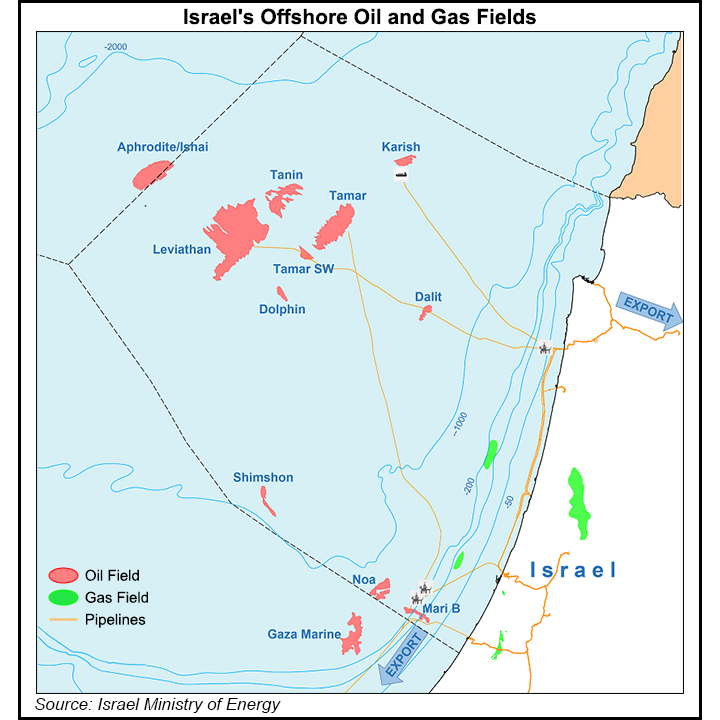
In light of the fantastic Middle East news, planning for the redevelopment of Gaza is underway. The Gaza Marine Gas Field should be a high priority given the power generation and revenue potential.
The field, which was discovered in 1999 by British Gas (now part of Shell), is located approximately 30-36 km off the coast of Gaza in the eastern Mediterranean and has estimated natural gas reserves of ~ 1 Tcf.
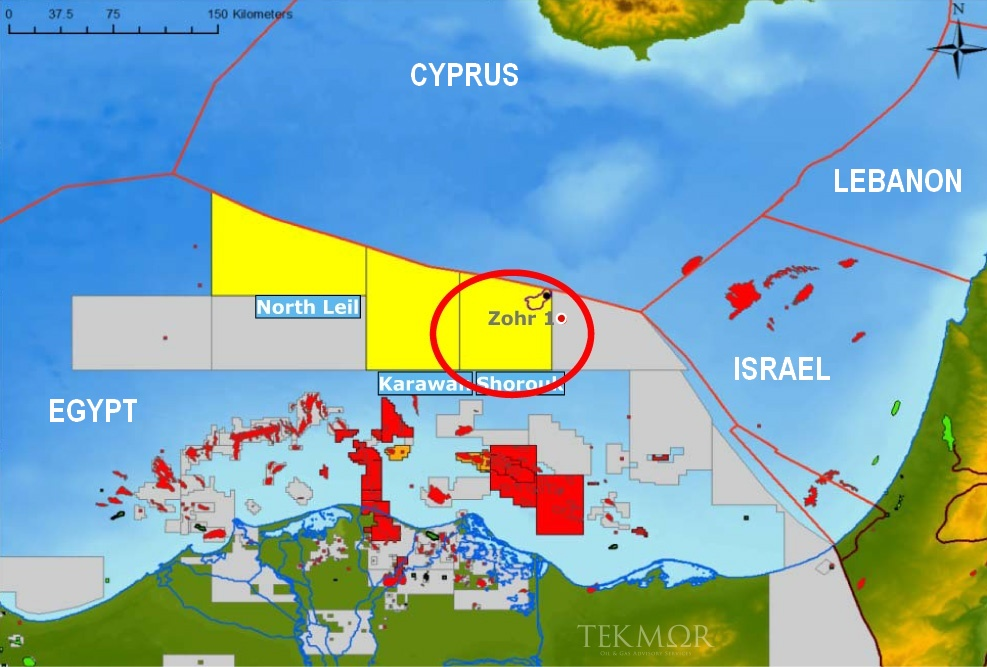
Who should be licensed to develop the field? In June 2023, there was a proposed agreement between the Palestinian Authority and an Egyptian consortium led by state-owned Egyptian Natural Gas Holding Company (EGAS). A resurrection of this arrangement may align with Palestinian interests. EGAS has experience in Mediterranean gas projects including the giant Zohr field (see map below).
Other candidates for developing the Gaza Marine field (pure speculation):
Chevron would be a logical choice given their extensive eastern Mediterranean experience as a result of their acquisition of Noble Energy. However, there might be concerns about undue US and Israeli control of this important resource.
Regional giants like Saudi Aramco, Qatar Energy, and Abu Dhabi National Oil Company (ADNOC) would be good candidates.
Another interesting possibility might be Equinor, which is 2/3 owned by the Norwegian govt. Equinor seems to sometimes make socially desirable investments that are less profitable.
Some combination of the above companies might also be a possibility. In any event, it’s critical to manage this resource in a manner that best benefits the recovery effort.

 What they will take from us
 The Death of the Dark Night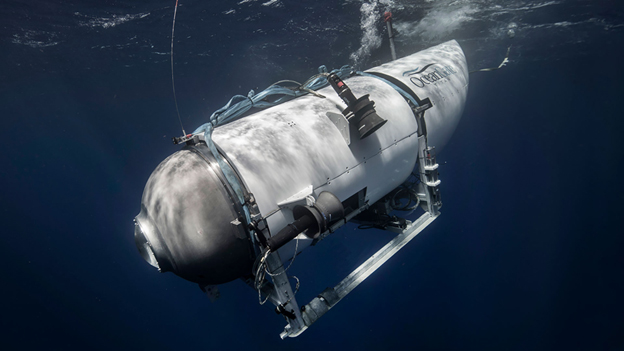




 Bud's Offshore Energy (BOE)