Feeds:
Posts
Comments

Archive for January, 2024

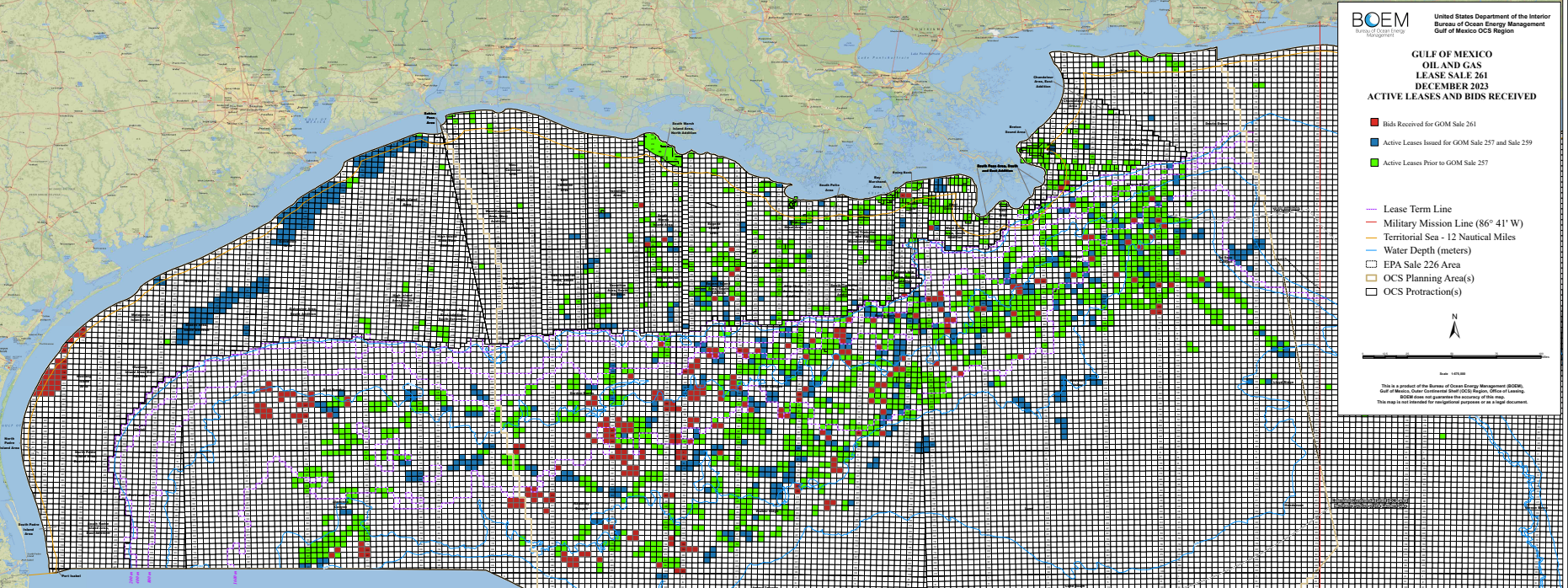
At Sale 261, Repsol was the sole bidder for 36 nearshore Texas tracts in the Mustang Island and Matagorda Island areas (red blocks at the western end of the map above). Exxon acquired 163 nearshore Texas tracts (blue in map above) at Sales 257 and 259.

Why Repsol’s carbon disposal bids should be rejected (as Exxon’s Sale 257 and 259 bids should have been):

  • Sale 261 was an oil and gas lease sale. The Notice of Sale said nothing about carbon sequestration and did not offer the opportunity to acquire leases for that purpose. Therefore, the public notice requirements in 30 CFR § 556.308 were not fulfilled.
  • Because there was no draft or final Notice of Sale for sequestration (carbon disposal) leasing, interested parties did not have the opportunity to comment on tract exclusions, stipulations, bidding parameters, rental fees, royalties, and other factors pertinent to any OCS lease sale.
  • 30 CFR § 556.308 requires publication of a lease form. No carbon sequestration lease form has been posted or published for comment.
  • Carbon sequestration operations were not considered in the environmental assessments conducted prior to this or any other OCS lease sale.
  • No evaluation criteria for carbon sequestration bids have been published.

Hopefully, the carbon sequestration regulations that are under development will preclude conversion of leases acquired at Sales 257, 259, and 261. At a minimum, these regulations should require a competitive process for converting any oil and gas leases.

The difference between the conversion of the Exxon and Repsol leases and the conversion of other existing oil and gas leases is that the Exxon and Repsol leases were acquired solely for the purpose of carbon disposal with no intention of oil and gas exploration and production. Also, they can conduct geophysical surveys on their extensive (arguably monopolistic) nearshore Texas lease holdings, which gives them an unfair competitive advantage should a carbon sequestration lease sale be held.

To their credit, Repsol bid legitimately on 9 oil and gas leases at Sale 261. Exxon did not participate in Sale 261, and their only participation in Sales 257 and 259 was for carbon disposal purposes. Prior to Sale 257, the company had not acquired an OCS lease since 2008.
Read Full Post »

Cox proposes to sell its Gulf of Mexico assets to W&T Offshore for $88.5 million. The bankruptcy case docket has 64 pages of linked documents including many objections to the terms of the sale.

The bankruptcy court’s priorities should be 1) minimizing safety and environmental risks and 2) protecting the public from the massive decommissioning liabilities.

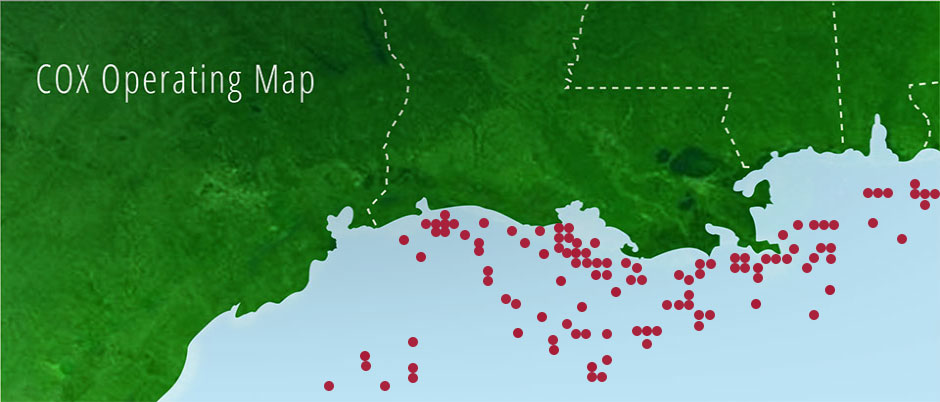
Per the latest BOEM information, Cox and affiliates Energy XXI and EPL operate 477 platforms, which is 31% of the Gulf of Mexico total! (See the related information posted last June.) BSEE estimates that the decommissioning costs for these platforms will exceed $4.5 billion!

Per BSEE data, Cox and its affiliates were cited for 780 incidents of noncompliance (violations) in 2023. They thus accounted for 43% of all 2023 GoM INCs.

Questions:

  • How will taxpayers be protected from Cox’s $4.5+ billion decommissioning obligations?
  • What is the plan for both safely decommissioning facilities and operating those that remain?
  • Why was Cox allowed to continue expanding GoM operations without demonstrating financial assurance and operational competence?
  • Why did BOEM propose to eliminate consideration of a company’s compliance record in determining the need for supplemental financial assurance?
  • How was a failing operator (Cox) selected just 8 months ago for a Federally funded (DOE) project to repurpose GoM facilities for carbon sequestration purposes?

The Cox bankruptcy is yet another costly lesson for Federal regulators. Moving forward, decommissioning and lease assignment policies must prioritize safety, environmental protection, and protection of the public’s financial interests.

Read Full Post »

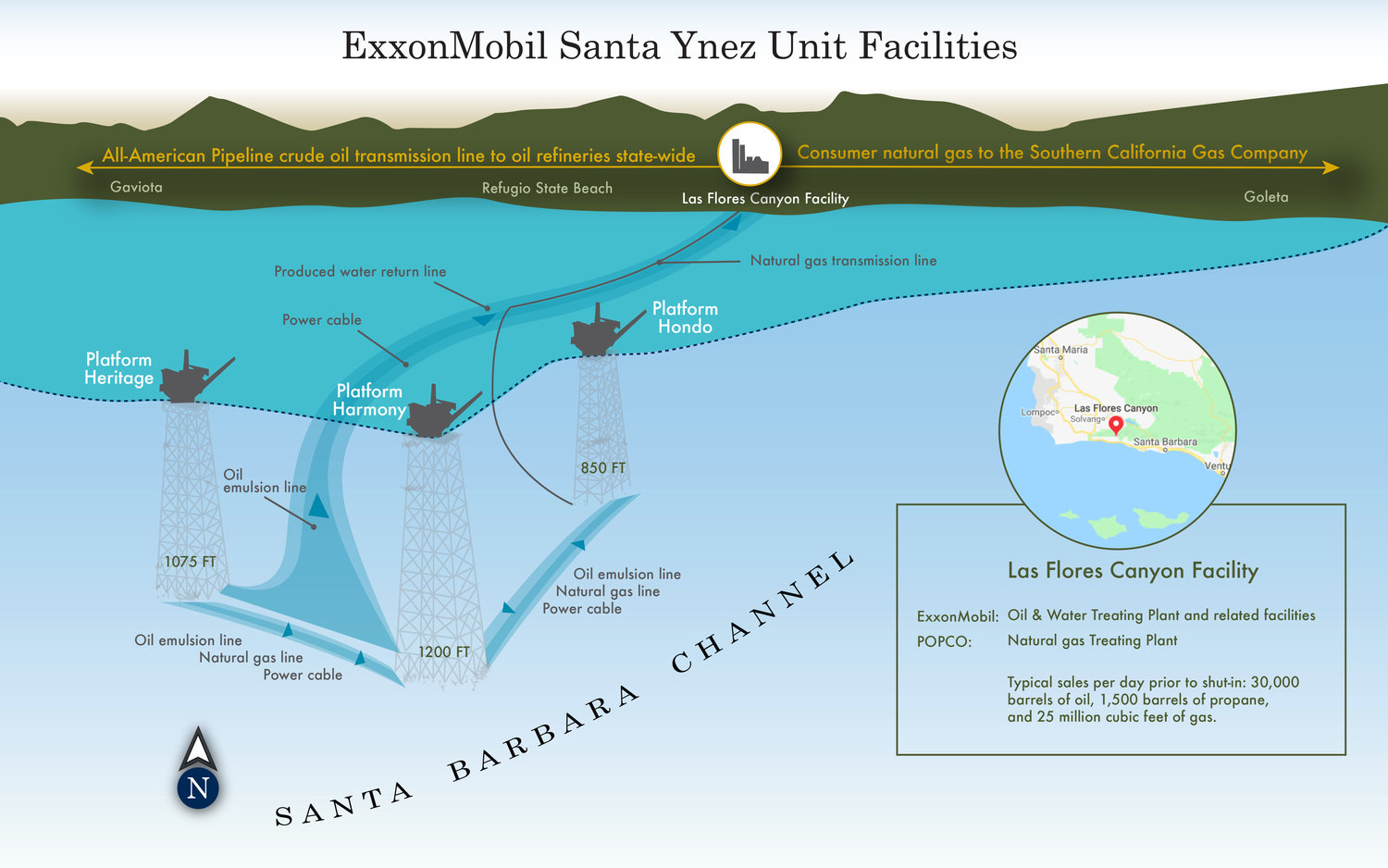
Exxon has joined Chevron in announcing Q4 write downs associated with California operations. In Exxon’s case, the estimated $2.4 billion to $2.6 billion impairment is the result of their troubled Santa Ynez unit facilities in the Santa Barbara Channel where the unit’s 500+ million barrels of reserves are unlikely to ever be produced.

The Santa Ynez saga is really quite remarkable. More here and here.

Read Full Post »

On January 2, 2024, Chevron Corporation announced that for fourth quarter 2023, the Company will be impairing a portion of its U.S. upstream assets, primarily in California, due to continuing regulatory challenges in the state that have resulted in lower anticipated future investment levels in its business plans. The Company expects to continue operating the impacted assets for many years to come. In addition, the Company will be recognizing a loss related to abandonment and decommissioning obligations from previously sold oil and gas production assets in the U.S. Gulf of Mexico, as companies that purchased these assets have filed for protection under Chapter 11 of the U.S. Bankruptcy Code, and we believe it is now probable and estimable that a portion of these obligations will revert to the Company. We expect to undertake the decommissioning activities on these assets over the next decade.

SEC filing

On Monday, we will be posting comments on the proposed bankruptcy sale of Cox’s GoM assets and the related safety and decommissioning concerns.

Read Full Post »

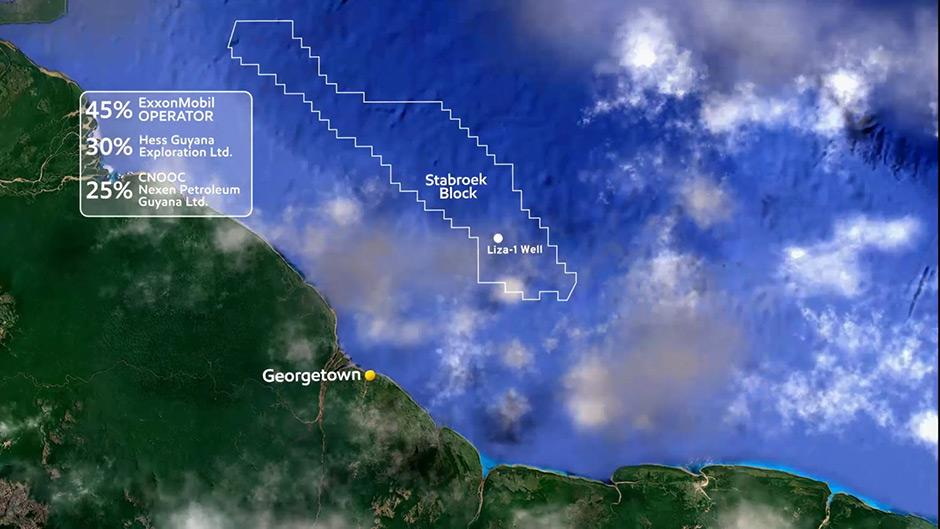
OilNow has posted a good Guyana update. Production should reach 620,000 bopd in Q1 and grow to >1.2 million bopd in 2027/28. The growth in production is plotted below.

End of year data from gov.guyana for 2021-23. 2024 (Q1) and 2027 estimates are from OilNow
Map shows locations of Exxon’s Guyana developments (current and planned)

Neighboring countries in the Caribbean region are taking notice!

Read Full Post »

Dr. Maurice (Mo) Stewart, an outstanding petroleum engineer, author, and teacher, passed away over the holidays after a long battle with ALS. Mo worked in the Office of Field Operations in the Gulf of Mexico Region of the US Geological Survey (which became part of the Minerals Management Service in 1982) while earning a PhD in Petroleum Engineering from Tulane University.

Mo specialized in production operations and the associated safety systems. He was the lead author of the production safety sections of the MMS operating regulations when they were completely revised in the 1980s. He authored or co-authored (with Ken Arnold) several textbooks and numerous technical papers on oil and gas processing. He was active on API technical committees and was a lecturer for the Society of Petroleum Engineers in the US and internationally.

Mo conducted training sessions for MMS staff at all levels of the organization. He was an outstanding speaker who spiced his presentations with anecdotes and slides from his many travels. His presentations were not just informative, they were highly entertaining!

After leaving MMS, Mo was an instructor and consultant in Indonesia, where he lived for some time, and throughout the world. His incredible life was brought to a sad end by an incurable disease. I’m grateful to have had the opportunity to work with such an outstanding engineer, dedicated safety professional, and all-around good guy. Bud

Read Full Post »

The 3rd quarter update by Jason Mathews and a followup inquiry confirm that there were no work-related fatalities associated with US OCS oil and gas operations in 2023! This major achievement deserves public recognition given that the zero fatality goal has long eluded offshore operators, contractors, and regulators.

In a proper safety culture, continuous improvement is the primary goal, and both good and bad outcomes must be carefully assessed. The 2023 zero-deaths milestone is thus tempered by life threatening incidents such as those described in the attached safety alert and investigation report. Address these issues, identify other potential problem areas, and continue to drive the culture forward. Be proud and confident through training, planning, and achievement, but be wary!

Read Full Post »

Keathley Canyon and Walker Ridge bids at Sale 259: blue=1 bid, red=2 bids, green=3 bids

Based solely on a comparison of the bids (Sale 261 vs. Sale 259), the Sale 259 rejections were, on balance, to the benefit of the public (table below). On the plus side:

  • Assuming all of the high Sale 261 bids are accepted, the net gain to the US Treasury is $8,749,365
  • Of the 14 tracts with rejected high bids at Sale 259, 8 received bids at Sale 261
  • Seven of those 8 bids were higher than the Sale 259 high bids, and 5 of those 7 were more than $1 million higher.
  • The Sale 259 bid rejections in the Keathley Canyon and Walker Ridge areas proved to be 100% beneficial. All 6 of those tracts received much higher bids at Sale 261.
  • The best BOEM decisions were the rejections of the Sale 259 bids for AT 5 and WR 795 and 796. The Sale 261 high bids on these 3 tracts were $10.8 million higher than the Sale 259 bids.
  • WR 795 and 796 were single bid tracts at Sale 259.
  • AT 5 received 3 bids at Sale 259. BOEM rejected the high bid despite the competitive bidding. That proved to be the right call given that the Sale 261 high bid was $3.5 million higher.

On the other hand:

  • None of the 5 Green Canyon rejections received any bids at Sale 261.
  • The high bid for GC 777 was rejected twice (Sales 257 and 259) at a cost of $1.8 million, the BP/Talos high bid at Sale 257. At sale 259, BP was the sole bidder for GC 777, and their bid was only $583,000, less than 1/3 of their Sale 257 bid. GC 777 received no bids at Sale 261.
  • The worst BOEM Sale 259 decisions were the rejections of the DC 622, GC 547, and GC 591 bids at a cost of $4.6 million ($5.2 if the Sale 261 bid for DC 622 is rejected).
  • This is not to say that the tracts with rejected bids will not ultimately be leased. However, the uncertainty regarding future sales changes the historic GoM leasing dynamic. The next opportunity for purchasing unleased tracts is a troubling unknown. Absent leasing and exploration, their resource and revenue potential will never be known.
area and blockSale 259 high bid – companySale 261 high bidgovt gain (loss)
DC 6222,101,836 – Shell615,628* – Shell(1,486,208)
GC 173307,107 – Woodsideno bid(307,107)
GC 5471,783,498 – Chevronno bid(1,783,498)
GC 5911,291,993 – Chevronno bid(1,291,993)
GC 642605,505 – Anadarkono bid(605,505)
GC 777583,103 – bpno bid(583,103)
AT 51,551,130 – Anadarko5,215,628* – Shell3,664,498
AT 133607,107 – Woodsideno bid(607,107)
KC 745707,777 – Beacon2,422,222 – Beacon1,714,445
KC 789707,777 – Beacon2,143,299 – Beacon1,435,522
WR 794724,744 – Beacon1,487,624 – Beacon762,880
WR 795774,242 – Beacon5,301,107 – Woodside4,526,865
WR 796774,242 – Beacon3,310,107 – Woodside2,535,865
WR 750724,744 – Beacon1,498,555 – Beacon773,811
*The BOEM sale 261 bid summary misidentifies the DC 622 and AT 5 bids as being for MC 622 and GC 5 respectively. The corrected identification above is based on the “Blocks Receiving Bids” file correlated with the block number and company code.

Read Full Post »

Onward!

“Knowledge not shared is knowledge wasted.”

Read Full Post »

« Newer Posts