Feeds:
Posts
Comments

Archive for 2023

Some preliminary thoughts about BOEM’s proposed revision to the decommissioning financial assurance regulations for US offshore oil and gas operations:

  1. BOEM has rather surprisingly proposed to eliminate consideration of a company’s compliance record in determining the need for supplemental financial assurance. An opposing view will be posted tomorrow.
  2. If a lease has proved reserves with a value of at least three times that of the estimated decommissioning cost, no supplemental financial assurance would be required. Comparing two imprecise and variable estimates is neither a simple nor reliable method for determining the need for supplemental financial assurance. BOEM should look at the history of the Carpenteria field (Santa Barbara Channel) and the reserve estimates that were provided to discount decommissioning risks. More on this at a later date.
  3. Transferor liability applies only to those obligations existing at the time of transfer; new facilities, or additions to existing facilities, that were not in existence at the time of any lease transfer are not obligations of a predecessor company and are considered obligations of the party that built such new facilities and its co- and successor lessees. This is a good policy, but is difficult to implement. Some of the complexities may need to be addressed. More later.
  4. The “reverse chronological order” provision was withdrawn in April, so there is no defined process for issuing decommissioning orders to predecessor lessees. Is it good policy to first issue such orders to companies who may have owned leases decades ago, in some cases prior to the establishment of transferor liability in the 1997 MMS “bonding rule?”
  5. The proposed rule would clarify that BOEM will not approve the transfer of a lease interest until the transferee complies with all applicable regulations and orders, including the financial assurance requirements. BOEM needs to be firmly enforce this policy. See tomorrow’s post.
  6. The proposed rule would not allow BOEM to rely upon the financial strength of predecessor lessees when determining whether, or how much, supplemental financial assurance should be provided. This is a good provision.
  7. BOEM proposes to use the P70 probabilistic value to set the amount of any required supplemental financial assurance. These estimates do not seem sufficiently conservative to protect other parties and the public in the event of default. This is particularly true after storm damage which can increase plugging costs more than tenfold.
  8. The probabilistic cost estimates were updated in 2020 and are based on data submitted subsequent to 2016 and 2017 NTLs. How often will these estimates be updated?
  9. The final rule should specify that funds may not be withdrawn from decommissioning accounts for operational purposes, and that BOEM approval is required for such withdrawals.

Read Full Post »

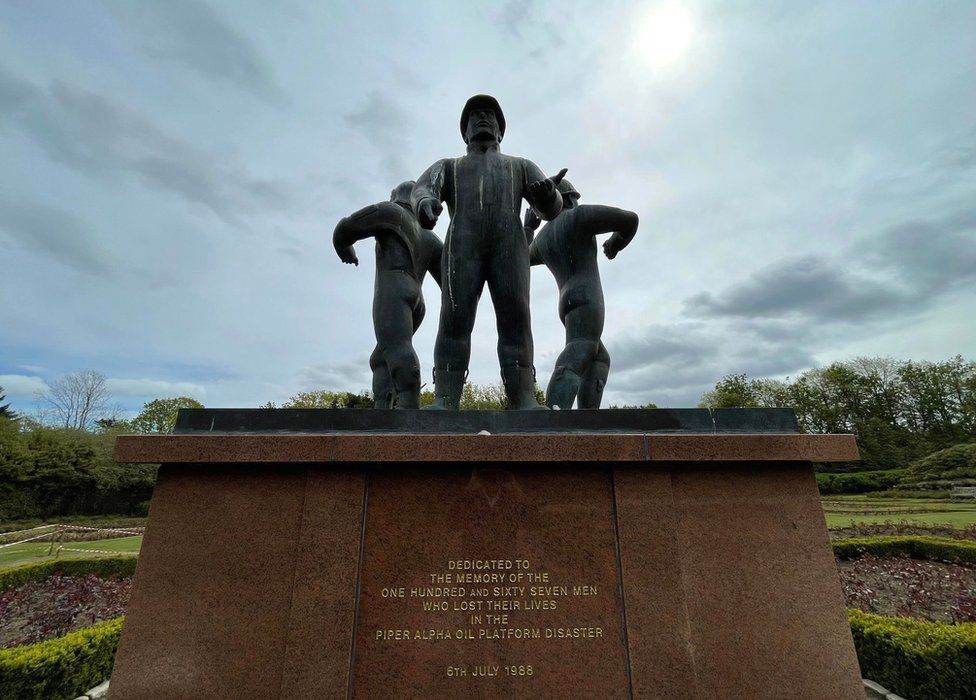
The Piper Alpha fire was the worst disaster in the history of offshore oil and gas operations and sent shock waves around the world. Eight months later another interactive pipeline-platform fire killed 7 workers at the South Pass 60 “B” facility in the Gulf of Mexico. A US Minerals Management Service task group reviewed the investigation reports for both fires and recommended regulatory changes with regard to:

  1. the identification and notification procedures for out-of-service safety devices and systems,
  2. location and protection of pipeline risers,
  3. diesel and helicopter fuel storage areas and tanks,
  4. approval of pipeline repairs, and
  5. location of ESD valves on pipelines.

Paul Schneider and I wrote a paper on the task group’s findings and that paper was published in Offshore Operations Post Piper Alpha (Institute of Marine Engineers,1991). The proposed regulations that followed summarized these findings and can be be found at this Federal Register link.

Lord Cullen’s comprehensive inquiry into the Piper Alpha tragedy challenged traditional thinking about regulation and how safety objectives could best be achieved, and was perhaps the most important report in the history of offshore oil and gas operations. Per Cullen:

Many current safety regulations are unduly restrictive because they impose solutions rather than objectives. They also are out of date in relation to technological advances. Guidance notes lend themselves to interpretations that discourage alternatives. There is a danger that compliance takes precedence over wider safety considerations and that sound innovations are discouraged.

Cullen advocated management systems that describe the safety objectives, the system by which those objectives were to be achieved, the performance standards to be met, and the means by which adherence to those standards was to be monitored. He called for safety cases that describe major hazards on an installation and provide appropriate safety measures. Per Cullen, each operator should be required in the safety case to demonstrate that the safety management systems of the company and the installation are adequate to assure that design and operation of the platform and its equipment are safe.

Links for the full Piper Alpha Inquiry: volume 1 and volume 2

Read Full Post »

This is a surprisingly high number of rejections given that only one Sale 257 bid was rejected and all 69 of the carbon sequestration bids were accepted (even though such bidding was not authorized).

Specifics on the Sale 259 rejections have not yet been posted, but one of the rejections was bp’s bid for Green Canyon Block 777. This is not terribly surprising given that the bp/Talos GC 777 bid was the sole Sale 257 rejection, and bp’s sale 259 bid was less than 1/3 of their Sale 257 bid.

Read Full Post »

Because space requirements and intermittency limit the ultimate potential of other renewable energy super-sources, ultradeep geothermal may be the most exciting energy alternative on the horizon. However, ultradeep geothermal’s enormous potential can only be achieved if we can reliably drill deep beneath the surface and tap into superheated rock. As Quaise Energy’s Carlos Araque, formerly a Schlumberger engineer, has noted: “A lot of the challenges are the same as for oil and gas.”

This short video provides a good summary of the drilling technology that is under development.

Read Full Post »

As we approach the 4th of July, remember this:

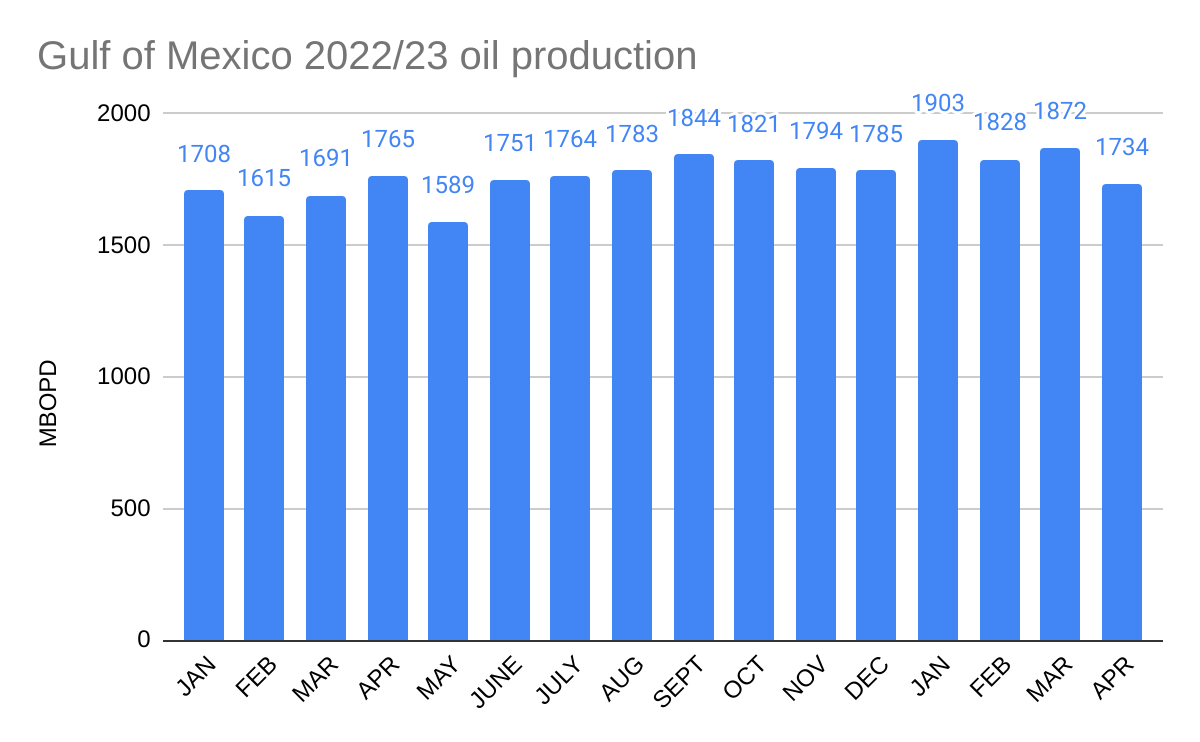
In 1979 Gulf of Mexico oil production had declined to 263 million barrels and many believed that further declines were inevitable. 40 years later, a record 693 million barrels were produced.

Onshore, lateral drilling and hydraulic fracturing capabilities are continuing. As a result, Exxon and others are predicting projecting higher recovery factors in the Permian Basin. Per Exxon CEO Darren Woods: “We are beginning to see the signs of some very promising new technologies that will significantly improve recovery.”

Opportunity + Ingenuity ➡ Energy Independence + Prosperity

Read Full Post »

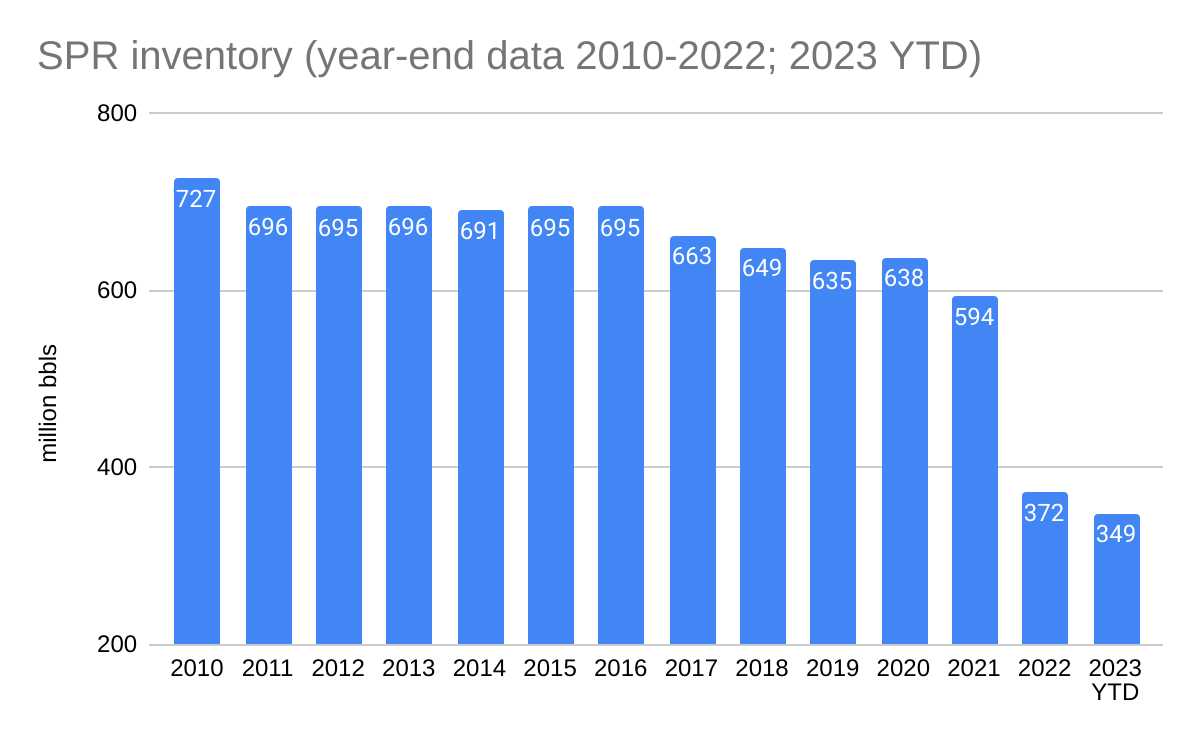
Meanwhile, the Strategic Petroleum Reserve is down to 348.6 million barrels as of June 23, but 6 million barrels, a relative drop in the bucket, are to be added in the fall.

Read Full Post »

Just posted in the Federal Register.

Read Full Post »

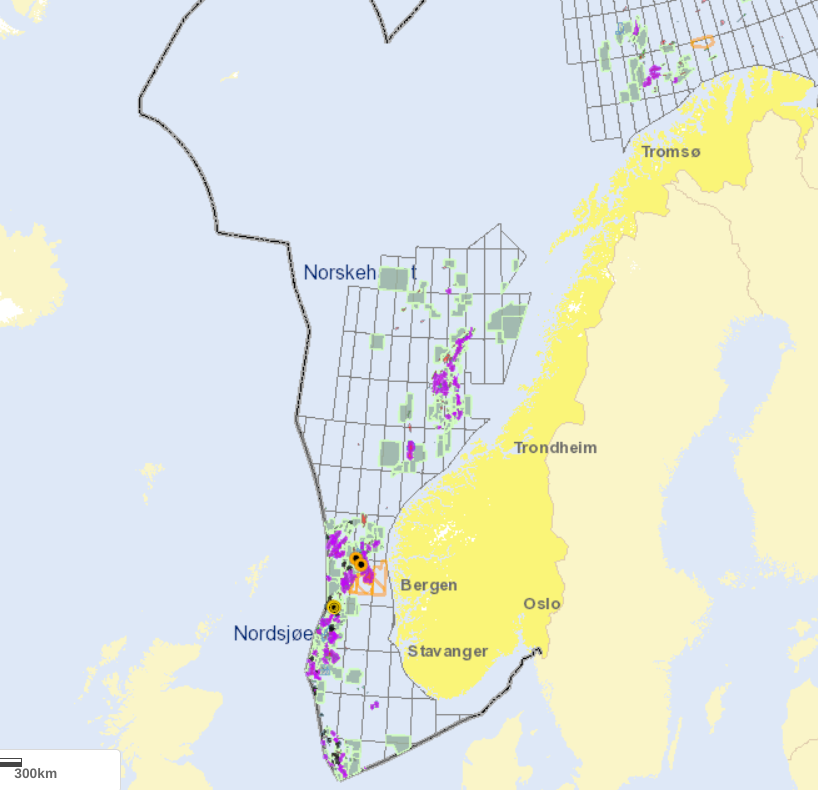
OSLO, June 28 (Reuters) – Norway’s government said on Wednesday it has given approval for oil companies to develop 19 oil and gas fields with investments exceeding 200 billion Norwegian crowns ($18.51 billion), part of the country’s strategy to extend production for decades to come.

“These are projects that will contribute to a continued high and stable output from Norway’s continental shelf as well as employment and value creation,” Minister of Petroleum and Energy Terje Aasland told a news conference.

Read Full Post »

The Bureau of Ocean Energy Management (BOEM) today announced proposed changes to modernize financial assurance requirements for the offshore oil and gas industry, in order to better protect American taxpayers from incurring the costs associated with the oil and gas industry’s responsibility to decommission offshore wells and infrastructure, once they are no longer in use. The proposed changes will publish in the Federal Register on June 29, which will open a 60-day public comment period that ends on August 28. 

It looks like BOEM punted on the contentious issue of considering predecessors when determining financial assurance requirements:

The proposed regulatory changes would provide additional clarity and reinforce that current grant holders and lessees bear the cost of ensuring compliance with lease obligations, rather than relying on prior owners to cover those costs. BOEM is interested in public comments on the costs and benefits of considering predecessors when determining how much financial assurance a company must provide.

On that point, comments will differ 😉.

Read Full Post »

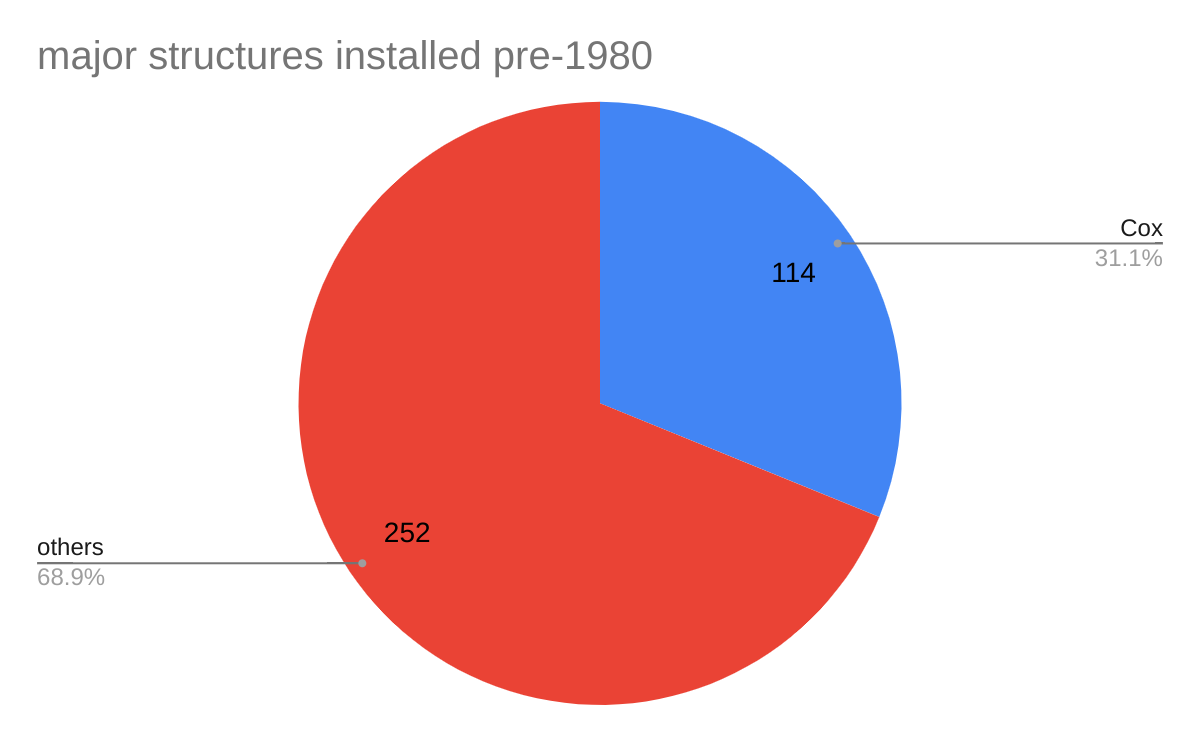
As illustrated in the charts below, Cox has the distinction of being the Gulf of Mexico (world?) leader in aging offshore platforms. Per BOEM data, Cox (includes affiliates Energy XXI GOM and EPL) operates more than 1/4 of all GoM platforms. 44% of these platforms were installed prior to 1980, 114 of which are major structures (defined in notes below). 27 of these major structures were installed prior to 1960!

No information has been shared on the extent to which Cox or predecessor lessees are financially prepared to decommission these facilities. This could get rather uncomfortable for prior owners and the lessor (i.e. the Federal government). Keep in mind that the murky issue of predecessor liability for leases assigned prior to 1997 has not been addressed in the courts.

Notes: (1) A major structure contains at least 6 well completions or more than 2 pieces of production equipment. (2) The platform numbers in an earlier post are incomplete in that they include only structures with helidecks.

Read Full Post »

« Newer Posts - Older Posts »