 BOE has received unconfirmed reports that BP’s internal investigation into the causes of the Macondo blowout will be released on Wednesday (8 September) in Washington, DC. The investigation team of more than 70 engineers and other staff has been headed by Mark Bly, BP’s Group VP for Safety and Operations. Stay tuned!
Posts Tagged ‘well control’
Rumor: BP’s internal report to be released on Wednesday.
Posted in accidents, well control incidents, tagged accidents, blowouts, Bly Report, BOE, bp, Deepwater Horizon, drilling, Gulf of Mexico, macondo, offshore oil, safety, well control on September 6, 2010| Leave a Comment »
Deepwater Horizon BOP Recovered
Posted in accidents, well control incidents, tagged accidents, blowouts, BOP, Deepwater Horizon, drilling, Gulf of Mexico, macondo, oil spill, safety, well control on September 5, 2010| Leave a Comment »
if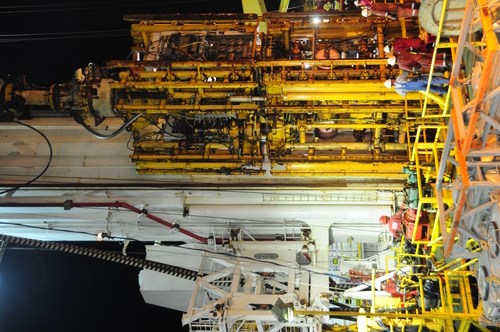
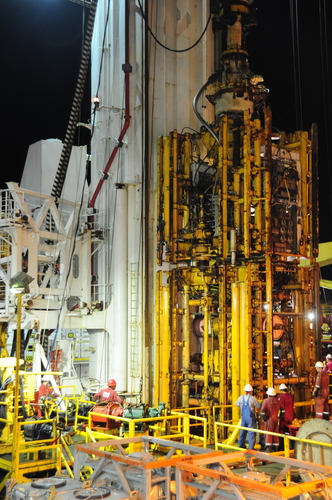
Deepwater Horizon BOP Stack
Oh, what might have been …..
If this BOP had prevented the explosion, fire, and blowout, 11 offshore workers would still be alive, a mega-spill would have been prevented, tens of billions of dollars would have been saved, the Gulf region would have avoided a major crisis, the national economy would be stronger, and our energy future would be much brighter.
New Orleans Times-Picayune Article
Posted in accidents, well control incidents, tagged accidents, blowouts, Deepwater Horizon, drilling, Gulf of Mexico, macondo, Montara, offshore oil, oil spill, safety, well control on September 5, 2010| Leave a Comment »

This article is nicely done, but like most commentary on the factors contributing to the Macondo blowout, it assumes that the well flowed in the annulus outside the production casing. Steps 1-3 would be irrelevant if the well flowed up through the shoe track and inside the production casing (ala Montara).
Macondo BOP Successfully Replaced
Posted in accidents, well control incidents, tagged blowouts, Deepwater Horizon, drilling, Gulf of Mexico, macondo, safety, well control on September 4, 2010| Leave a Comment »
“Under the direction of the federal science team and U.S. government engineers, BP used the Development Driller II to successfully install a fully functioning and tested Blow Out Preventer (BOP) on the cemented Macondo 252 well. Earlier today, BP lifted the damaged BOP, which will now be lifted to the surface and recovered. During the period of time between the removal of the damaged BOP and installation of the replacement BOP, there was no observable release of hydrocarbons from the well head. This procedure was undertaken in accordance with specific conditions I set forth last week in a directive authorizing this procedure. This is an important milestone as we move toward completing the relief well and permanently killing the Macondo 252 well. I will continue to provide updates as necessary.” Admiral Allen
You have to love the wording of these Unified Command announcements. I trust (hope) that the language in bold is added by the public relations staff, and that the Admiral and the science team are secure enough in their leadership roles that they don’t need to continuously remind people about their importance.
Have the Admiral and the science team also directed the operations that have not gone so well, or only the successes? In particular, we would be interested in learning about the decision making process that led to the early cessation of the dynamic top-kill, the Unified Command’s insistence that pressure be vented after the well had been capped (fortunately, this decision was reversed), and the rationale for finishing the relief well intercept.
BP Issues Report on Macondo Response
Posted in accidents, well control incidents, tagged accidents, blowouts, bp, Coast Guard, Deepwater Horizon, drilling, Gulf of Mexico, macondo, offshore oil, oil spill, relief well, safety, unified command, well control on September 3, 2010| Leave a Comment »
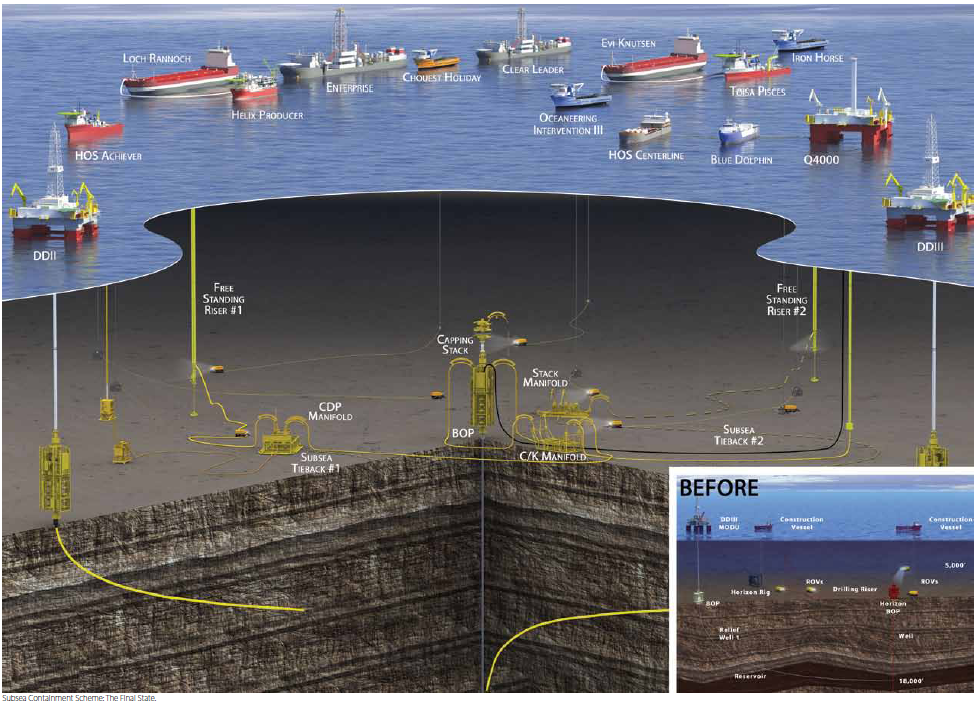
BP has issued a report on the response capabilities and innovative new technology and procedures demonstrated following the Macondo blowout. While the report is somewhat promotional (understandably), the information is summarized and compiled in a useful manner and underscores the magnitude of the response. Although most close observers probably have issues with certain actions taken by BP or the Unified Command, one cannot deny the unprecedented size and complexity of the response. We can only imagine how chaotic this response could have been if the operator did not have the resources and the will to mount such an enormous effort.
I hope BP will be similarly forthcoming with the results of their internal review of the blowout’s causes. When will that very important report be released?
At some point, BP’s candid observations on the functioning and effectiveness of the Unified Command system would also be helpful. The more we can learn about the differences of opinion and problems that arose during the response, the better we can prepare for future incidents. Will any of the official investigations be looking into these aspects of the response? At BOE, we are particularly interested in the well intervention, capping, containment, and relief well decisions.
Acona Wellpro on Macondo
Posted in accidents, well control incidents, tagged accidents, blowouts, BOE, Deepwater Horizon, drilling, Gulf of Mexico, macondo, Montara, offshore oil, oil spill, safety, well control on September 2, 2010| 1 Comment »
While there are no new details on the causes of the blowout, available information on the possible contributing factors is nicely summarized. The presentation also includes a very good summary of risk management considerations.
Barriers against accidents are not only technical and operational and “physical” but are also non-physical built around strategic and organizational measures and decisions
During the Montara hearings and later in Macondo discussions, we raised concerns about the timing of the production casing pressure test. This issue has not received enough attention in our view, possibly because most of the Macondo focus has been on annulus flow and barriers. It was good to see this comment in the presentation:
Pressure tested well far too early – could have blown out cement of shoe track
Official Macondo Investigations
Posted in Uncategorized, tagged accidents, blowouts, chemical safety board, Deepwater Horizon, drilling, Gulf of Mexico, macondo, national academies, National Commission, offshore oil, safety, well control on September 1, 2010| 1 Comment »
Some readers have suggested links and information on the official US investigations of the Macondo blowout. Some basic information is provided below. The links will be added to the blogroll in the right column.

We will be examining the relevant facts and circumstances concerning the root causes of the Deepwater Horizon explosion and developing options to guard against, and mitigate the impact of, any oil spills associated with offshore drilling in the future. This may include recommending improvements to federal laws, regulations, and industry practices.
Joint BOMRE – Coast Guard Investigation
The purpose of this joint investigation is to develop conclusions and recommendations as they relate to the Deepwater Horizon Mobile Offshore Drilling Unit (MODU) explosion and loss of life on April 20, 2010. The facts collected at this hearing, along with the lead investigators’ conclusions and recommendations will be forwarded to Coast Guard Headquarters and Minerals Management Service (MMS) for approval. Once approved, the final investigative report will be made available to the public and the media. No analysis or conclusions will be presented during the hearing.

This study will address the performance of technologies and practices involved in the probable causes of the Macondo well blowout and explosion on the Deepwater Horizon. It will also identify and recommend available technology, industry best practices, best available standards, and other measures in use around the world in deepwater exploratory drilling and well completion to avoid future occurrence of such events.

The CSB intends to proceed with an investigation of the root causes of the accidental chemical release that destroyed the Deepwater Horizon rig and took the lives of 11 workers. The investigation will include the key investigators who were involved in the CSB’s 2005-2007 investigation of the March 23, 2005, explosion at the BP Texas City refinery.
Various congressional committees are also reviewing issues associated with the blowout, most notably the Senate Committee on Energy and Natural Resources and the House Committee on Energy and Commerce. As time permits, BOE will post updates on post-Macondo legislative actions.
Houston Chronicle Shear Rams Piece – On the Cutting Edge
Posted in accidents, drilling, well control incidents, tagged blowout preventers, blowouts, offshore oil, shear ram, well control on August 31, 2010| Leave a Comment »
Besides cutting through thicker steel, the new blade design – which features a wicked-looking spear in the center – requires less ram force to do the job, allowing use of lighter support equipment, such as smaller accumulator bottles that use compressed gas to slam the valves shut.
Industry Action Plan
Posted in accidents, tagged drilling, Gulf of Mexico, macondo, offshore oil, safety, well control on August 31, 2010| 2 Comments »
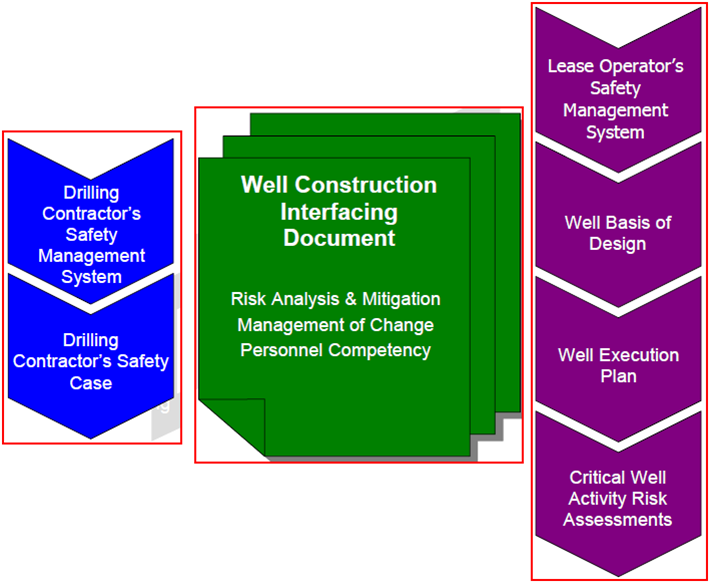
Norwegian Report Compares Regulatory Regimes in the US and Norway
Posted in Uncategorized, tagged Gulf of Mexico, macondo, Norway, offshore oil, OLF, safety, well control on August 30, 2010| 1 Comment »
Gro Brækken
The function-based regulations in Norway allow for continuous development, while at the same time, the operatingcompanies have a very clear and specific responsibility. This means extra quality control in all operations. I have no doubt that this contributes to the high level of safety. Gro Brækken, Director General of the Norwegian Oil Industry Association

This is an important report for BOE’s regulatory philosophers and those who are involved in one of the post-Macondo reviews. The description of the US regime is not entirely accurate, but this comparison is nonetheless very useful.
 Bud's Offshore Energy (BOE)