Feeds:
Posts
Comments

Posts Tagged ‘Vineyard Wind’

Per the New Bedford Light:

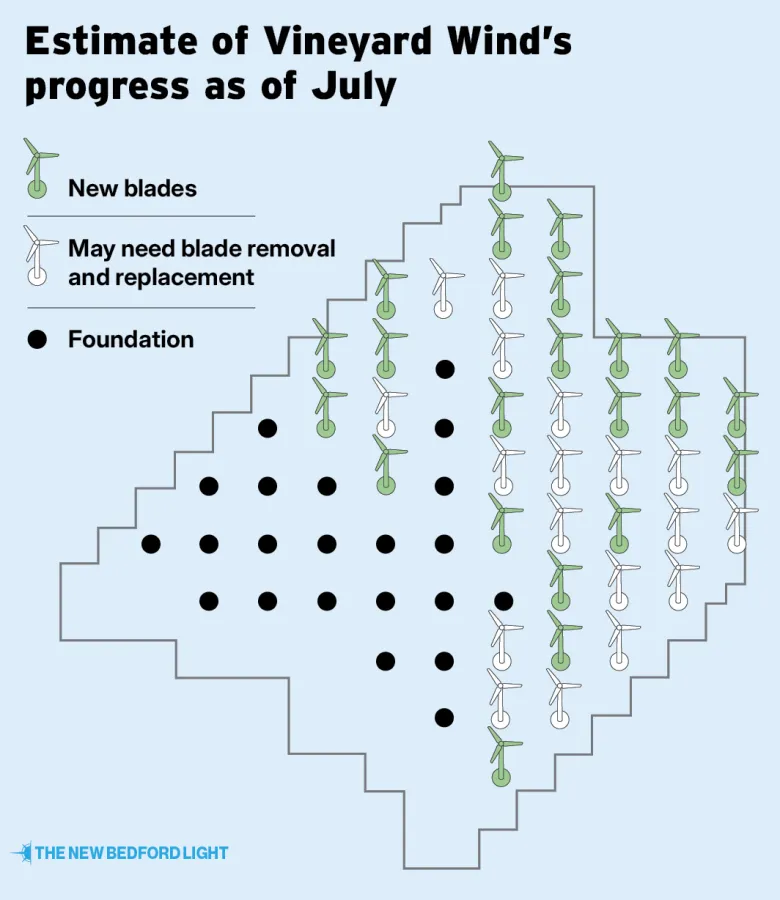
  • Vineyard Wind is now sending power from 17 turbines to the Massachusetts grid, up from four in May.
  • According to satellite images, it appears at least 40 of the project’s 62 turbines are in the water as of this month.
  • Can’t tell how many blades are from the Canadian plant that manufactured the blade that failed, and therefore need to be removed and replaced.
  • A cross-examination of past detailed maps from Vineyard Wind and new satellite images suggests that about 22 of the 40 seemingly installed turbines are likely complete.
  • A second turbine installation vessel,  the new Danish jack-up Wind Pace, has arrived and is assisting the Sea Installer, the primary installation vessel.

Given the absence of updates from Vineyard Wind and its regulators, the excellent reporting by local media like the New Bedford Light and Nantucket Current is much appreciated.

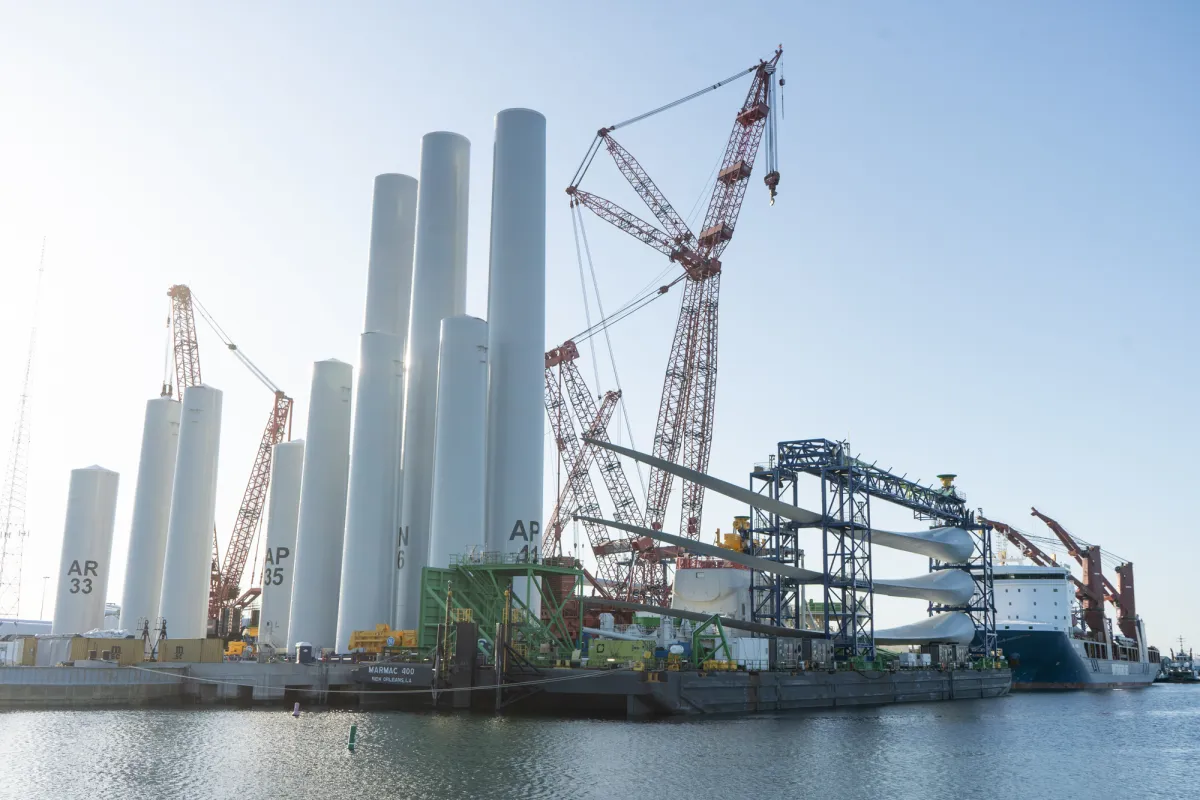
Turbine tower components stand tall at the New Bedford Marine Commerce Terminal in April 2025. Credit: Eleonora Bianchi / The New Bedford Light

Read Full Post »

Nantucket Current: Nantucket officials and attorneys will hold a press conference next Tuesday, July 29th, at 9:30 a.m. regarding “Vineyard Wind’s failure to meet its legal and public commitments to the community.” 

Meanwhile, is this a satisfactory response from BSEE to the Current’s inquiry regarding the bureau’s long delayed report on the turbine blade incident?

“BSEE’s comprehensive and independent investigation is ongoing,” an agency spokesperson wrote in an email to the Current on Tuesday. “There is no timetable for the completion of the investigation, as BSEE focuses on ensuring that the investigation is thorough and complete.”

Read Full Post »

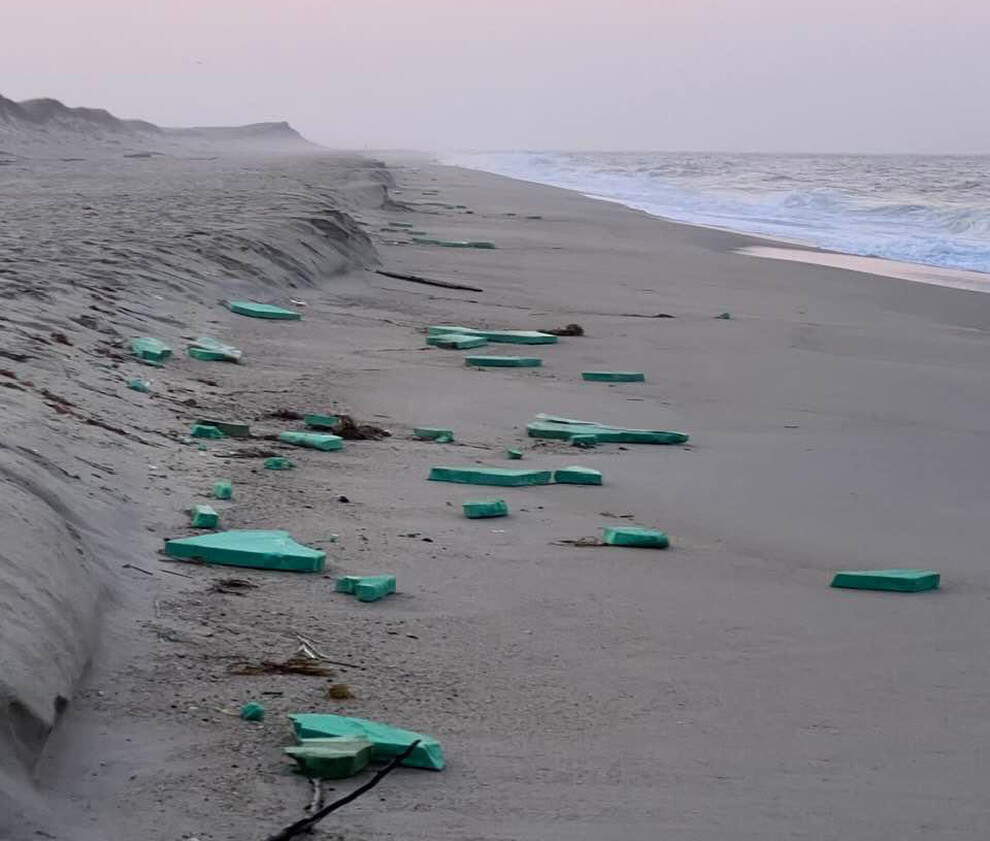
Debris from the failed Vineyard Wind blade littering the south shore of Nantucket in July 2024. Nantucket Current photo.

Nantucket reached a settlement agreement (attached) with turbine manufacturer GE Vernova (GEV), praising that company while criticizing Vineyard Wind (VW), the lessee and operator:

“The Town of Nantucket commends GE Vernova for its leadership in reaching this agreement. By contrast, the Town has found Vineyard Wind wanting in terms of its leadership, accountability, transparency, and stewardship in the aftermath of the blade failure and determined that it would not accept Vineyard Wind as a signatory to the settlement,” the town stated Friday morning.

Comments:

  • For a relatively modest sum ($10.5 million) paid by the contractor (GEV), the agreement further limits the Town’s ability to hold Vineyard Wind, the lessee and operating company, accountable. See sections 4, 5(a), and 9 of the agreement.
  • The Town’s ability to challenge the project was already compromised by their unpopular “Good Neighbor Agreement.”
  • What ever happened to operator responsibility? This fundamental tenet of the OCS oil and gas program also applies to offshore wind. Vineyard Wind should be the party that is fully accountable for the damages associated with their project. VW can seek compensation from GEV, but VW is the accountable party.
  • Can you imagine if BP had attempted to stay on the sidelines while Transocean and other contractors settled claims associated with the Macondo blowout? Unthinkable!
  • Nantucket should have insisted on VW’s participation, rather than excluding them.
  • Do we need an Offshore Wind Liability Trust Fund, ala the Oil Spill Liability Trust Fund?
  • What does the lessor, the Federal govt, have to say about damage compensation? Are civil penalties forthcoming? When will we finally see the BSEE investigation report!

Read Full Post »

Why has the BSEE investigation report still not been issued?

Construction on the Vineyard Wind project continues yet important questions about quality control, regulatory departures, debris recovery, and environmental impacts remain.

Given the investigation’s significance, not only for Vineyard Wind, but for other offshore wind projects planned or under construction, how is the delay in issuing the report acceptable?

Keep in mind that the lengthy and complex National Commission, BOEMRE, Chief Counsel, and NAE reports on the Macondo blowout were published 6 to to 17 months after the well was shut-in.

Read Full Post »

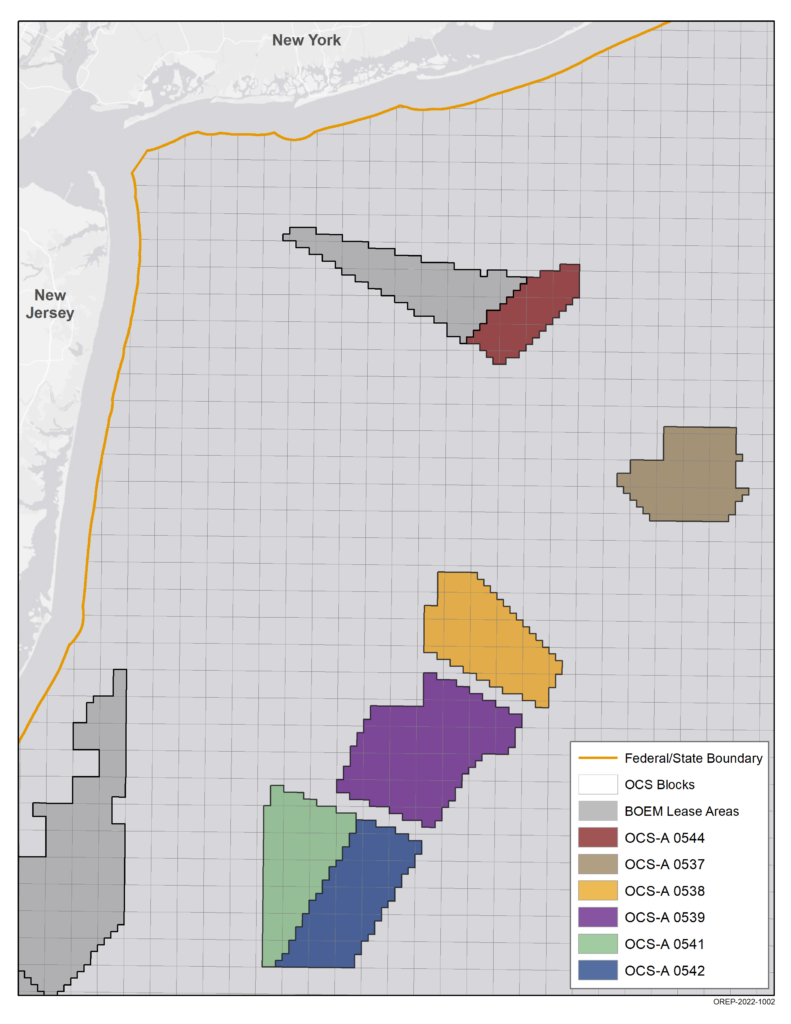
Bidding at the February 2022 Atlantic (NY/NJ) wind sale seemed incomprehensible given the economic and political uncertainties associated with offshore wind development.The 6 leases garnered bids ranging from $285 million to an astounding $1.1 billion, with total high bids of $4.37 billion! The Administration’s victory message correctly boasted that this was the “nation’s highest grossing competitive energy lease sale in history.”

The intense bidding was driven by the lure of subsidies, guaranteed power sales, unprecedented Federal and State promotion, peak climate activism, inattention to mounting public opposition, and irrational expectations regarding the role of offshore wind in powering the regional economy.

That wind bubble has since burst, as demonstrated by the lackluster (at best) August 2024 Atlantic sale, the disinterest in Gulf of America wind leases, and recognition of the costly realities of floating turbine projects in the Pacific. Any air that remained in the balloon was released following the Presidential election.

The table below summarizes the sale results and the current status for the 6 leases issued following the 2/2022 sale. One lease has been essentially terminated by the partners and the State. The other leases are in holding patterns in the planning phases.

high bidderlease #acresbid ($millions)status
Bluepoint Wind (EDP, ENGIE, Global Infrastructure Partners)053771,522765Site Assessment Plan (SAP) review
Attentive Energy
(Total and Corio Generation)
053884,332795Construction and Operations Plan (COP) review
Community Offshore Wind
(RWE, National Grid)
0539125,9641100no plans submitted
Atlantic Shores
(Shell, EDF)
054179,351780dead?
Invenergy
054283,976645no plans submitted
Vineyard Mid-Atlantic (Avangrid, Copenhagen Industy Partners)054443,056285COP review

The first US commercial offshore project, Vineyard Wind, has proven to be a major step backward for the wind industry. After being granted questionable financial and quality assurance waivers to reduce costs and “allow Vineyard Wind to adhere to its construction schedule,” the July 2024 turbine blade failure and subsequent lightning strike have raised new questions about the technology, industry, and regulatory regime. The report on the blade failure, which should arguably be a precursor to the resumption of Atlantic wind development, has yet to be released.

The one shining light, relatively speaking, for Atlantic wind development, has been Coastal Virginia Offshore Wind. That large project is on track to be completed at the end of 2026. Although the cost has risen about nine per cent, to $10.7 billion, that increase is understandable given the higher than anticipated costs for upgrading the onshore network.

Read Full Post »

  1. Responsible Offshore Development Alliance (RODA), Petitioner, Amicus briefs submitted by Green Oceans, America First Policy Institute, and the Save Right Whales Coalition
  2. Seafreeze Shoreside, Inc., Petitioner, Amicus briefs submitted by Green Oceans, Protect Our Coast NJ, America First Policy Institute, and the Save Right Whales Coalition

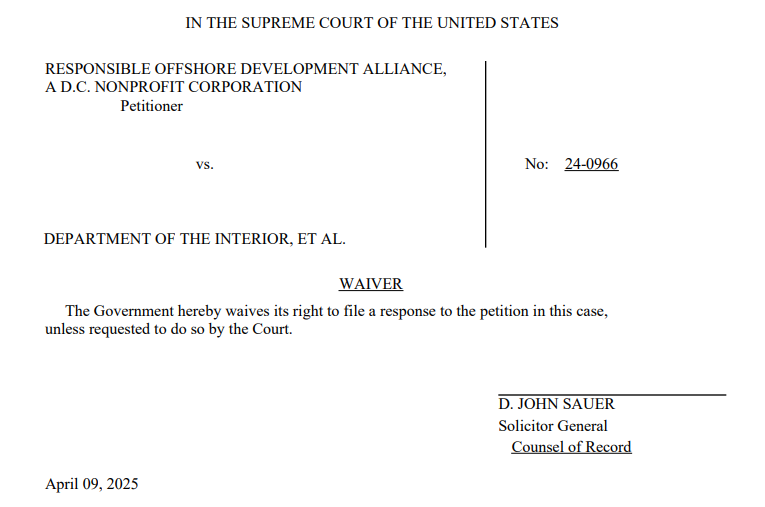
Given that the SCOTUS declined to hear a Vineyard Wind challenge by the Nantucket-based ACK for Whales group, the odds of the new challenges being heard would seem to be low. However, it’s noteworthy that both Vineyard Wind and the Federal Government have waived their right to respond to these petitions. The Government’s waiver to respond to the RODA petition is pasted below.

Read Full Post »

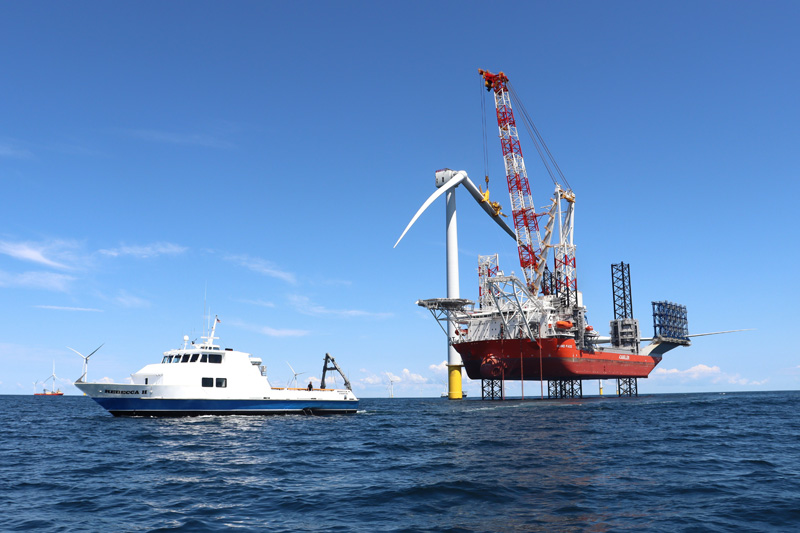
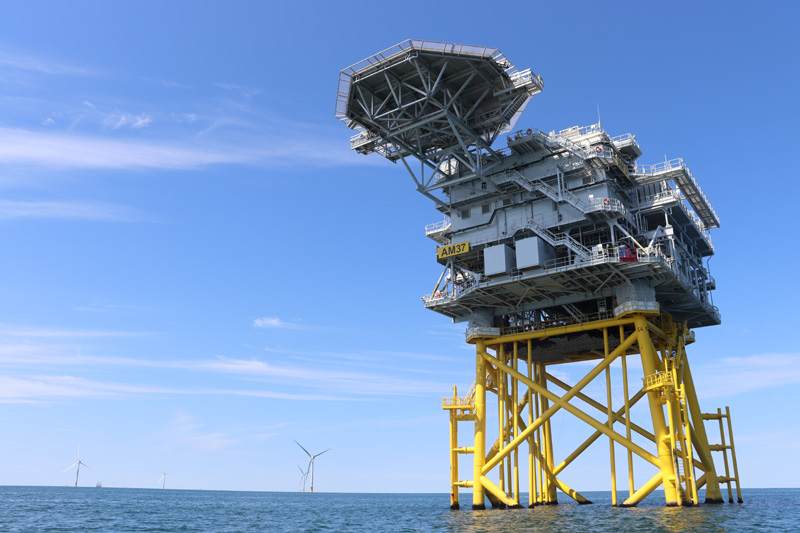
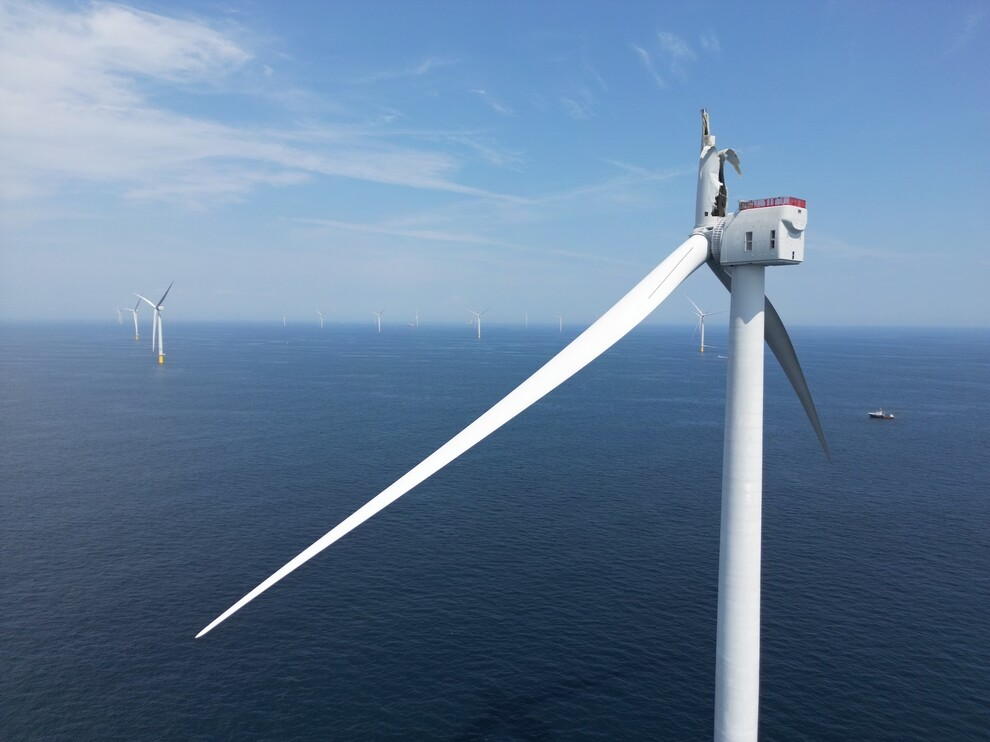
Below are interesting pictures of Vineyard Wind’s repair and installation activity taken today by Nantucket pilot Doug Lindley. He commented that only of the turbines was spinning.

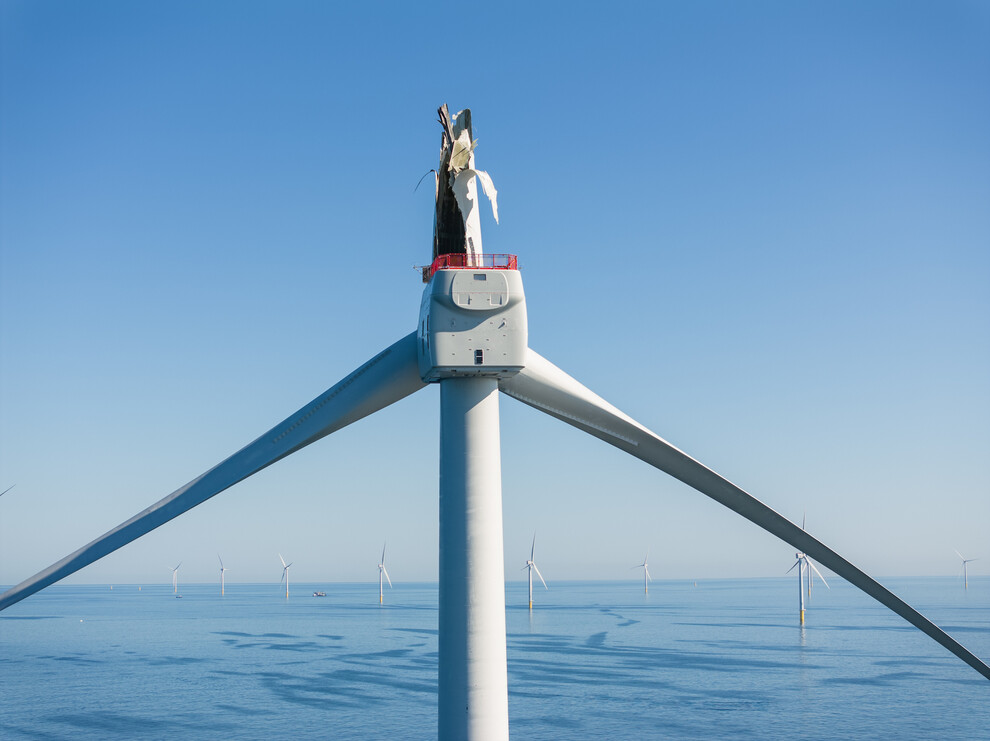
Note the lightning damage to the turbine with the failed blade. The lightning protection system was not operational on that turbine.

Also note the vessel transporting replacement blades.

It’s a bit difficult to rationalize all of this, but the Administration of Massachusetts Governor Maura Healey sees these projects as being critical to the Commonwealth’s energy future.

In December 2023, the Governor ordered a transition away from natural gas and set a goal of making Massachusetts carbon-neutral by 2050. As a candidate for governor in October 2022, then-Attorney General Maura Healey bragged,Remember, I stopped two gas pipelines from coming into this state. This in a State where half of the households are heated with natural gas.

Read Full Post »

In February, EPA Region 2 asked the agency’s Environmental Appeals Board to remand Atlantic Shores’ air emissions permit back to the Region for reconsideration. That remand (attached) was granted on 14 March over the objections of Atlantic Shores Offshore Wind.

Atlantic Shores Offshore Wind still exists despite the exit of 50% partner Shell and a $940 million write down by the remaining owner EDF. The diagram depicts Atlantic Shores South (0499) and North (0549) lease areas.

EDF intends “to preserve the company and its future development.” Whether or not they can hold the leases indefinitely without pursuing development remains to be seen. BOEM’s diligence regulations for offshore wind projects are vague, and neither the Construction and Operations Plans nor BOEM’s Record of Decision (Atlantic Shores South) include work schedules.

Does EDF have the right to sit on the lease until the financial and regulatory environment is attractive? That is not allowed for oil and gas leases, and rightfully so. (See a related post on Total’s wind lease.)

Meanwhile, ACK for Whales has petitioned EPA Region 1 to reopen and reanalyze the air permits for permits for the New England Wind 1 and 2 projects asserting that:

  • The analysis does account for emissions related to and resulting from blade failures, which would warrant emergency repairs or replacement activities.
  • The decision to group Vineyard Wind 1, New England Wind 1 and New England Wind 2, as a single stationary source is both legally questionable and could have the effect of masking localized emission spikes.
  • Insufficient consideration of cumulative vessel emissions could lead to 1-hour NO₂ exceedances.
  • The emissions from pile driving are not adequately modeled in isolation or synergistically.

Read Full Post »

BSEE statement:

BSEE’s report on the initial (7/13/2024) blade failure has still not been released.

Read Full Post »

The same Vineyard Wind turbine blade that failed last summer has now been struck by lightning:

Lightning struck the fractured stub of Vineyard Wind’s broken turbine blade in the early morning hours on Friday (2/27), according to representatives from Vineyard Wind and the Coast Guard. It was the remnants of the broken blade that snapped this July that were still attached to the turbine.”

It appears the town (Nantucket) was not informed of the lightning strike by Vineyard Wind until it received media inquiries about it, over 48 hours after it happened.”

More on the Vineyard Wind saga.

Read Full Post »

« Newer Posts - Older Posts »