Attached is the supplemental complaint in the lawsuit Revolution Wind, LLC v. United States Department of the Interior, Case No. 1:25-cv-02999-RCL, filed in the U.S. District Court for the District of Columbia.
The December 28 court ruling is consistent with the Department of the Interior’s position that the TRO request be converted to a request for a preliminary injunction. Interior had argued that a preliminary injunction motion could likely be resolved by mid-to-late-January.
The Government also asserted that more time is needed to submit the classified information that is central to the dispute.
Thoughts on this case: A respected colleague recalled this advice from Don Hodel, a widely admired Secretary of the Interior during the Reagan administration: “For all its faults, a contract is a contract, great men and great nations keep their word.”
Another colleague reminded me of the offshore North Carolina oil and gas leases that were suspended in the 1990s. The companies sued the Federal government for breach of contract, and the U.S. Supreme Court ruled 8-1 on June 26, 2000, in Mobil Oil Exploration & Producing Southeast Inc. v. United States, that the government must repay the lessees.
If the suspended Atlantic wind leases are cancelled, the govt would presumably have to compensate lessees for lease purchase and development expenditures. The costs to the Federal govt would be enormous – in the tens of $billions.
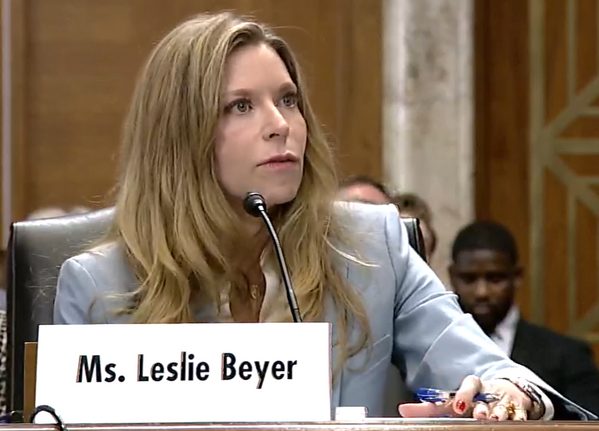
Leslie Beyer, Assistant Secretary for Land and Minerals Management (ASLM), has stepped down from her post as the leader of the Dept of the Interior’s offshore energy programs. She was the senior official at this month’s BGG1 lease sale, and made strong remarks about the importance of the offshore oil and gas program. Ms. Beyer was confirmed by the Senate in September.
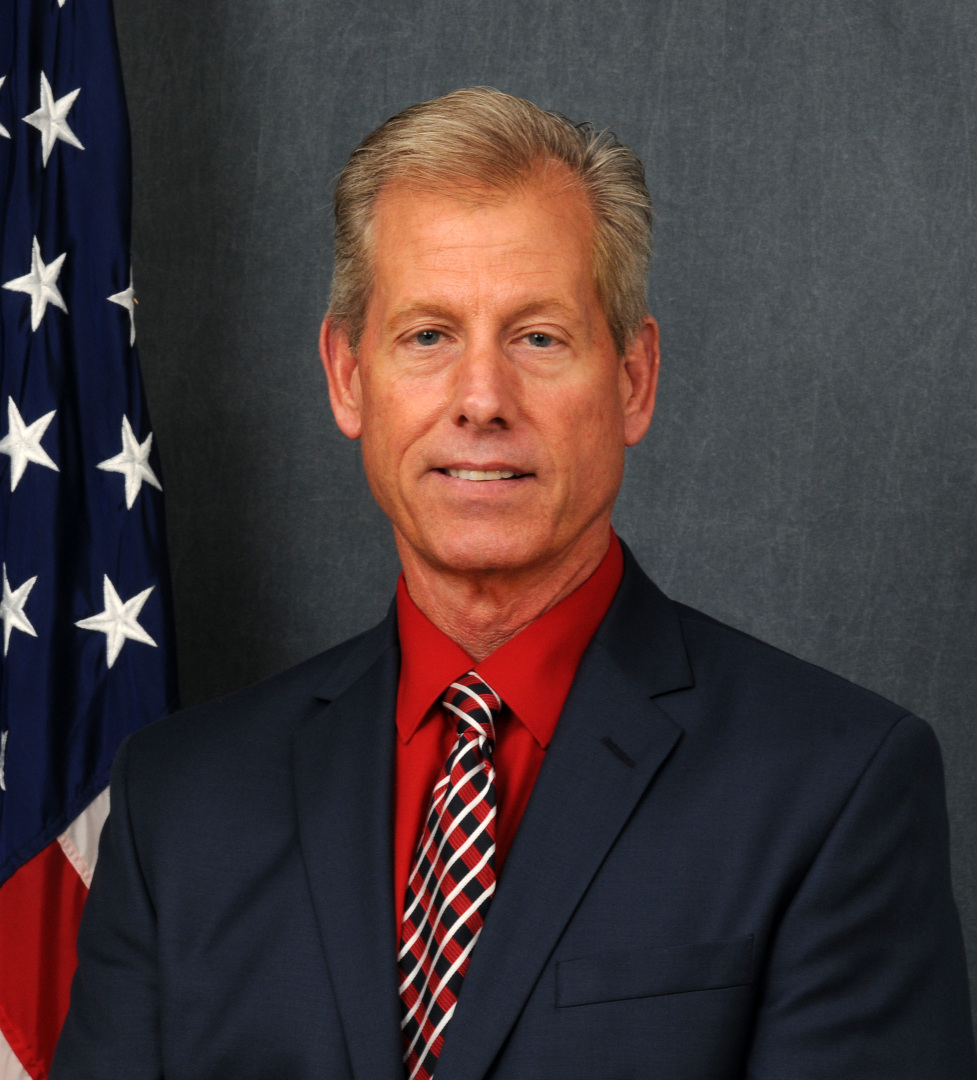
Lanny Erdos, Director, Office of Surface Mining Reclamation and Enforcement, has been named Acting ASLM.
This leaves the offshore energy program without a confirmed Asst. Secretary and with Acting Directors at both BOEM (Matthew Giacona) and BSEE (Kenny Stevens).
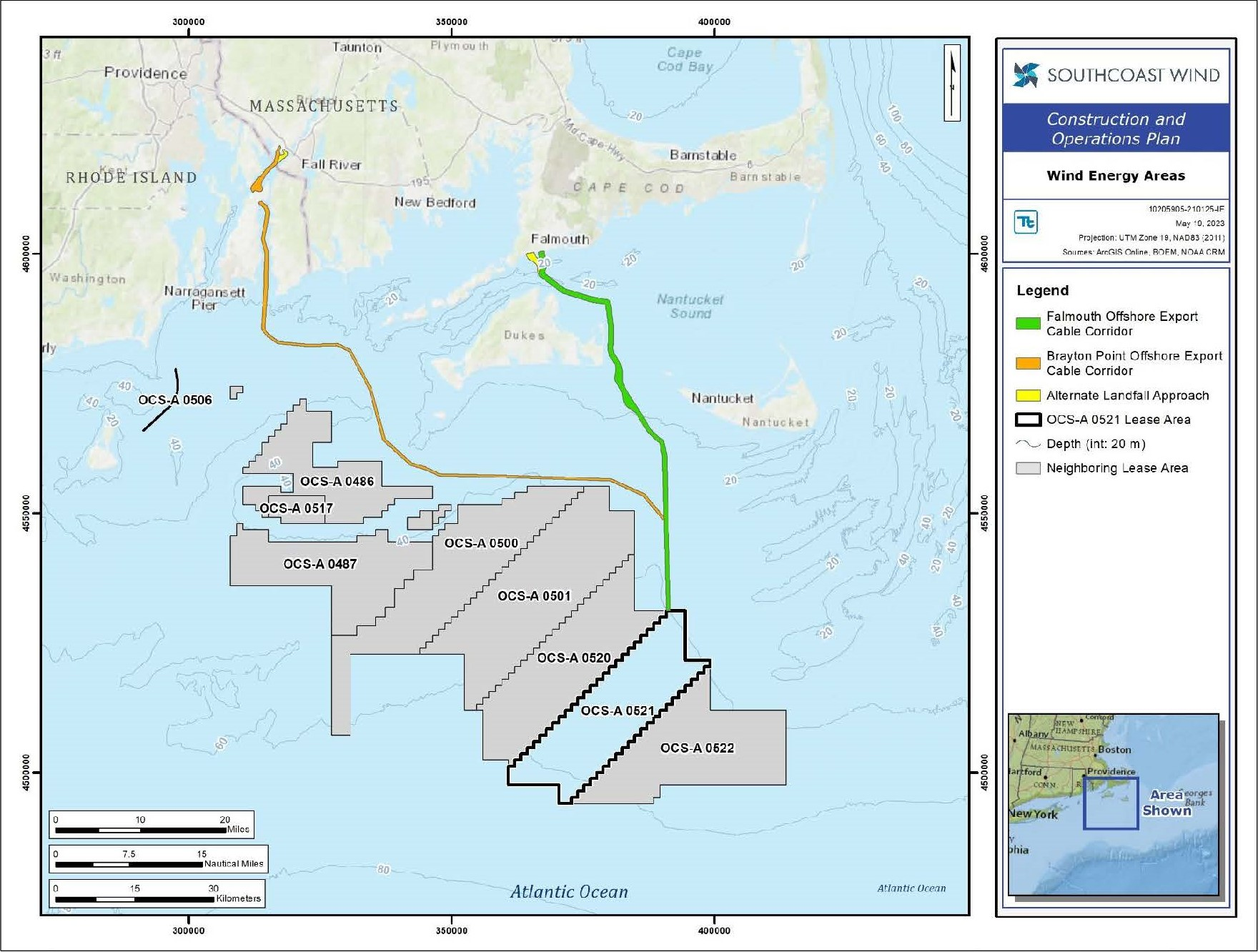
The Construction and Operations Plan (COP) for the SouthCoast Wind project was approved during the last week of the Biden Administration. That approval has been challenged by the Town and County of Nantucket. Ocean Wind, a joint venture of EDP Renewables (Portugal) and ENGIE (France), is the leaseholder.
As is the case for Maryland Wind, a court filing (attached) indicates that DOI is reconsidering the approval of the SouthCoast Wind COP. Construction has not begun on this project.
A further deferral of Federal Defendants’ responsive pleading deadline in this case is needed because Interior intends to reconsider its COP approval and will therefore be moving for a voluntary remand of that agency action by September 18, 2025.
Historically, State and local governments have tended to be aligned, either for or against offshore energy (primarily oil and gas) leasing. However, a new (offshore) world orderis emerging with local governments joining the new Administration in opposition to wind projects.
Most recently, and consistent with previous speculation, the Federal govt announced its intent to revoke approval of the Construction and Operations Plan for the US Wind project offshore Maryland and Delaware. (See the attached court filing.) This project is not yet in the construction phase.
Particularly noteworthy, as has been the case for other wind projects offshore Mid-Atlantic and New England states, is the alignment of Federal and local (coastal) govts in opposition to State policies.
Specifically, with regard to the US Wind project, the positions of State and local leaders couldn’t differ more:
Ocean City MD Town Manager Terry McGean:
“This is an extremely positive development in our fight against the irresponsible and costly US Wind project,”McGean said to WBOC on Monday. “We have stated all along that the approval of this project was fast and tracked without adequate public input and that approvals ignored significant risks to our economy, fishing industry, marine mammals, and the horseshoe crab. We are glad that our concerns are finally being taken seriously.”
“For the past eight years, Ocean City has voiced strong opposition to the proposed US Wind project. Unfortunately, we believe this project was fast-tracked and that our serious concerns have been largely ignored throughout the review process.“
“Canceling a project set to bring in $1 billion in investment, create thousands of good paying jobs in manufacturing, and generate more Maryland-made electrical supply is utterly shortsighted,” the Governor’s statement reads in part. “The President’s actions will directly lead to utility-rate hikes by taking off most promising ways for Maryland to meet its looming energy generation challenges.”
Such sharply divergent views are also evident in other coastal states. Offshore wind could be a factor in the upcoming gubernatorial race in NJ. The pro-wind energy candidate has the support of large environmental NGOs, while her opponent is supported by grass roots environmental groups that strongly oppose wind projects.
BOEM’s streamlining rule codified the deferred financial assurance option. The rule authorizes the transfer of decommissioning risks from developers to taxpayers and consumers by (1) not requiring any additional supplemental financial assurance at the Construction and Operations Plan (COP) approval stage, (2) not requiring supplemental assurance at the installation stage, and (3) providing for incremental supplemental assurance post-installation (e.g. for Vineyard Wind, the full amount is not due until 15 years after installation). See the rule’s previous and current language in the table below (emphasis added).
30 CFR 585.516 – What are the financial assurance requirements for each stage of my commercial lease?
financial assurance required before BOEM will:
language prior to 4/24/2024 “modernization” rule
current language
Approve your COP
A supplemental bond or other financial assurance, in an amount determined by BOEM based on the complexity, number, and location of all facilities involved in your planned activities and commercial operation. The supplemental financial assurance requirement is in addition to your lease-specific bond and, if applicable, the previous supplement associated with SAP approval.
There is no supplemental bond requirement at the COP approval stage.
Allow you to install facilities approved in your COP
A decommissioning bond or other financial assurance, in an amount determined by BOEM based on anticipated decommissioning costs. BOEM will allow you to provide your financial assurance for decommissioning in accordance with the number of facilities installed or being installed. BOEM must approve the schedule for providing the appropriate financial assurance coverage.
A supplemental bond or other authorized financial assurance in an amount determined by BOEM based on anticipated decommissioning costs of the proposed facilities. If you propose to incrementally fund your financial assurance instrument, BOEM must approve the schedule for providing the appropriate financial assurance.
The current financial assurance language is fuzzy enough that BOEM could deny deferred funding requests and require full financial assurance at the time facilities are installed. However, revising the language to clearly require that assurance be fully demonstrated prior to installation would provide clarity and eliminate the deferral option going forward.
The more difficult challenge may be adjusting financial assurance requirements for the projects already under construction. It’s also important to ensure that parent corporations are not shielded from decommissioning and other liability risks.
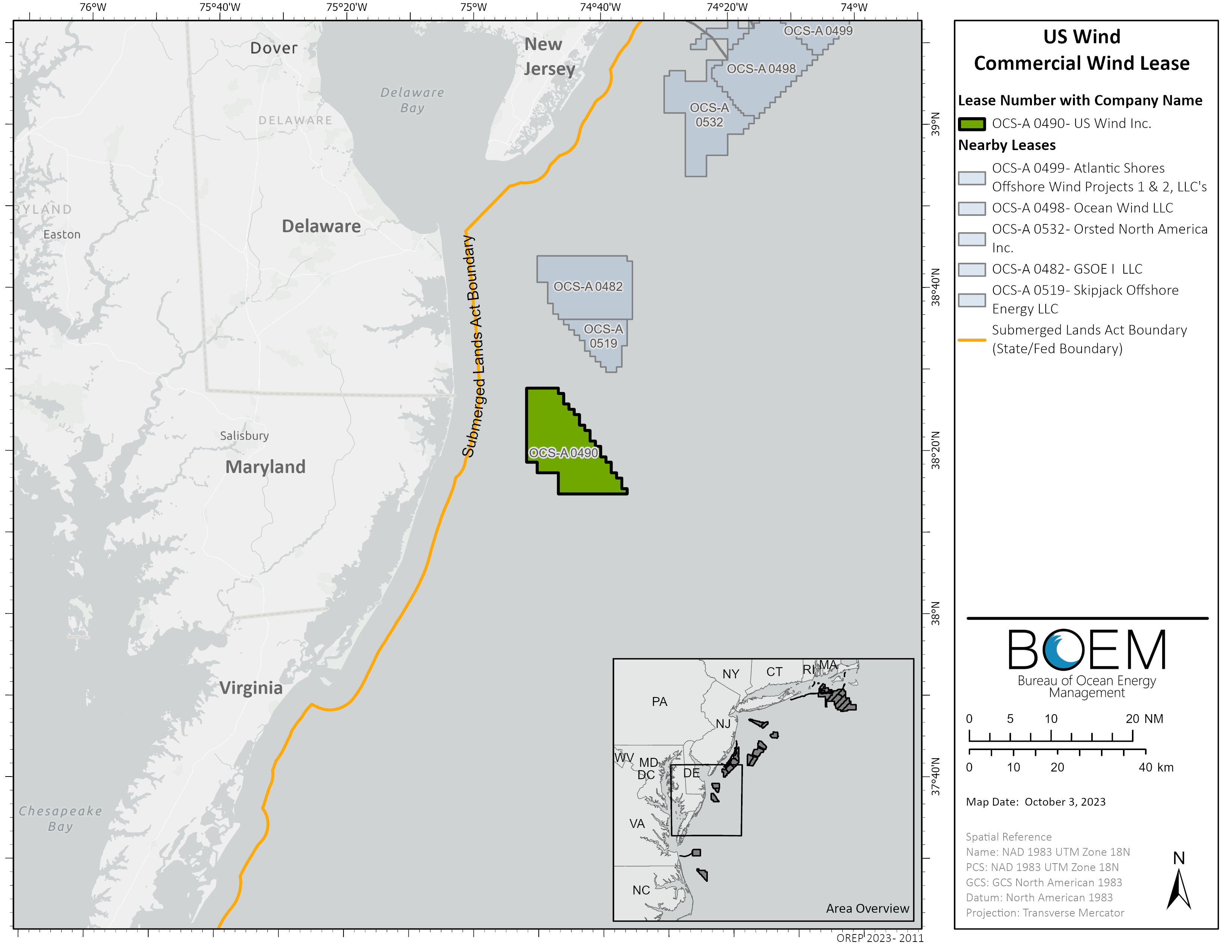
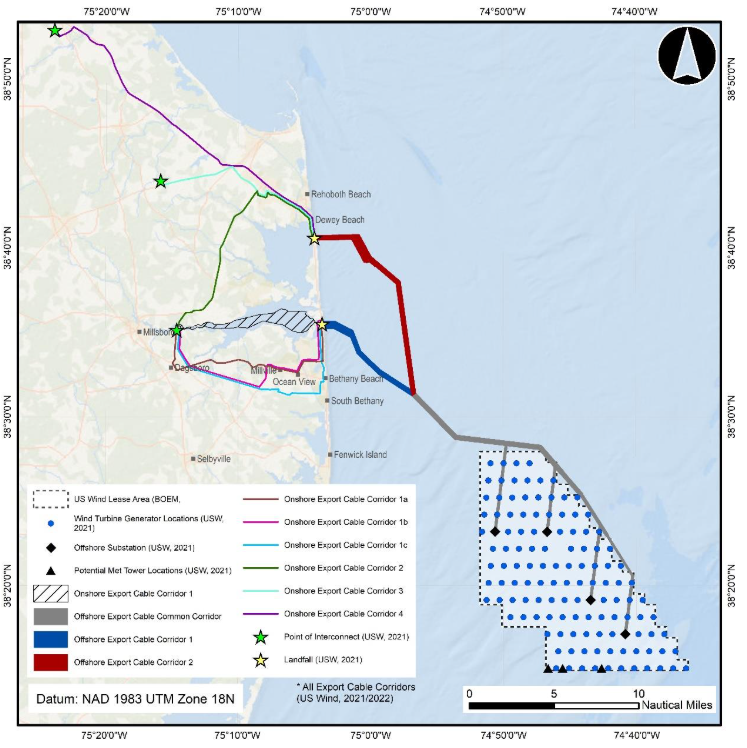
A new court filing (attached) informs that the Dept. of the Interior is reconsidering the Construction & Operations Plan (COP) approval for US Wind’s Maryland Offshore Wind (“MarWin”) Project (maps above). That approval is the subject of litigation filed by Ocean City MD and others.
The key section of the Federal government’s filing is pasted below.
An extension in this case is necessary as Interior intends to reconsider its COP approval and move in the District of Maryland—the first-filed case—for voluntary remand of that agency action. See, e.g., Util. Solid Waste Activities Grp. v. EPA, 901 F.3d 414, 436 (D.C.Cir. 2018) (recognizing that administrative agencies have the authority to reconsider their decisions). The outcome of Interior’s reconsideration has the potential to affect the Plaintiff’s claims in this case.
Drilling Safety Leaders Pilot Programto be proposed.
Comments on the Dept. of the Interior’s regulatory reform initiative are due by July 21.
DOI’s “Deregulation Suggestions” form implies that their review may be limited in scope. The form focuses solely on rescinding regulations. True regulatory reform requires a broader assessment of regulatory methods and strategies.
Offshore safety regulations address known or perceived operational risks. Deleting individual provisions without considering the effect on the regulatory objective could introduce new risks without reducing the burden on operators and regulators.
More meaningful regulatory reform, and the associated improvements in operator and regulator efficiency, can be achieved by addressing regulatory fragmentation and providing regulatory incentives for companies with outstanding safety and environmental performance records.
My comments to DOI will address fragmentation and the challenges associated with updating regulations and standards. A Drilling Safety Leaders Pilot Program will be proposed. This pilot program would offer a more flexible regulatory regime for operators with outstanding safety records.
The regulatory system can constrain leading operators and delay innovation. The top performers should be encouraged to stay ahead of the technology and management curves. Most of the requirements that were added after Macondo had been adopted by leading operators well before the blowout.
Congratulations to Walter Cruickshank on his retirement from the U.S. Dept. of the Interior!
Walter’s policy acumen, in depth understanding of the offshore program, and balanced perspective on energy development earned him the respect of the political leadership from both parties, a rare achievement. As a result, Walter served more time as Director and Deputy Director of both the Minerals Management Service and Bureau of Ocean Energy Management than any other individual. He also served as Acting Secretary of the Interior during the latest transition, a first for a career offshore program employee.
Walter earned a Bachelor of Arts in Geological Sciences from Cornell University and a Doctorate in Mineral Economics from the Pennsylvania State University (We Are!). Although his Federal career spanned more than 40 years, he has rather remarkably retained his intellect and sanity! 😉
Best wishes to Walter going forward. I hope he finds time to root for his Harwich Mariners in the Cape Cod Baseball League!
Consistent with the proud tradition of the OCS program, I am posting the masterpiece “Rig at Sunset” in Walter’s honor.
“Rig at Sunset” was painted 50 years ago by a US Geological Survey (USGS) employee who chose to remain anonymous. The masterpiece was presented to USGS (later MMS) engineers and scientists who had made important contributions to the offshore oil and gas program. Understandably, the intended recipients were so humbled by the magnificence of the painting that they could not accept it. As the painting grew in value and international prominence, framed copies were presented to retirees and the original painting was kept at a secure, undisclosed location.More on the painting’s important symbolism at a later date. 😉




 Bud's Offshore Energy (BOE)