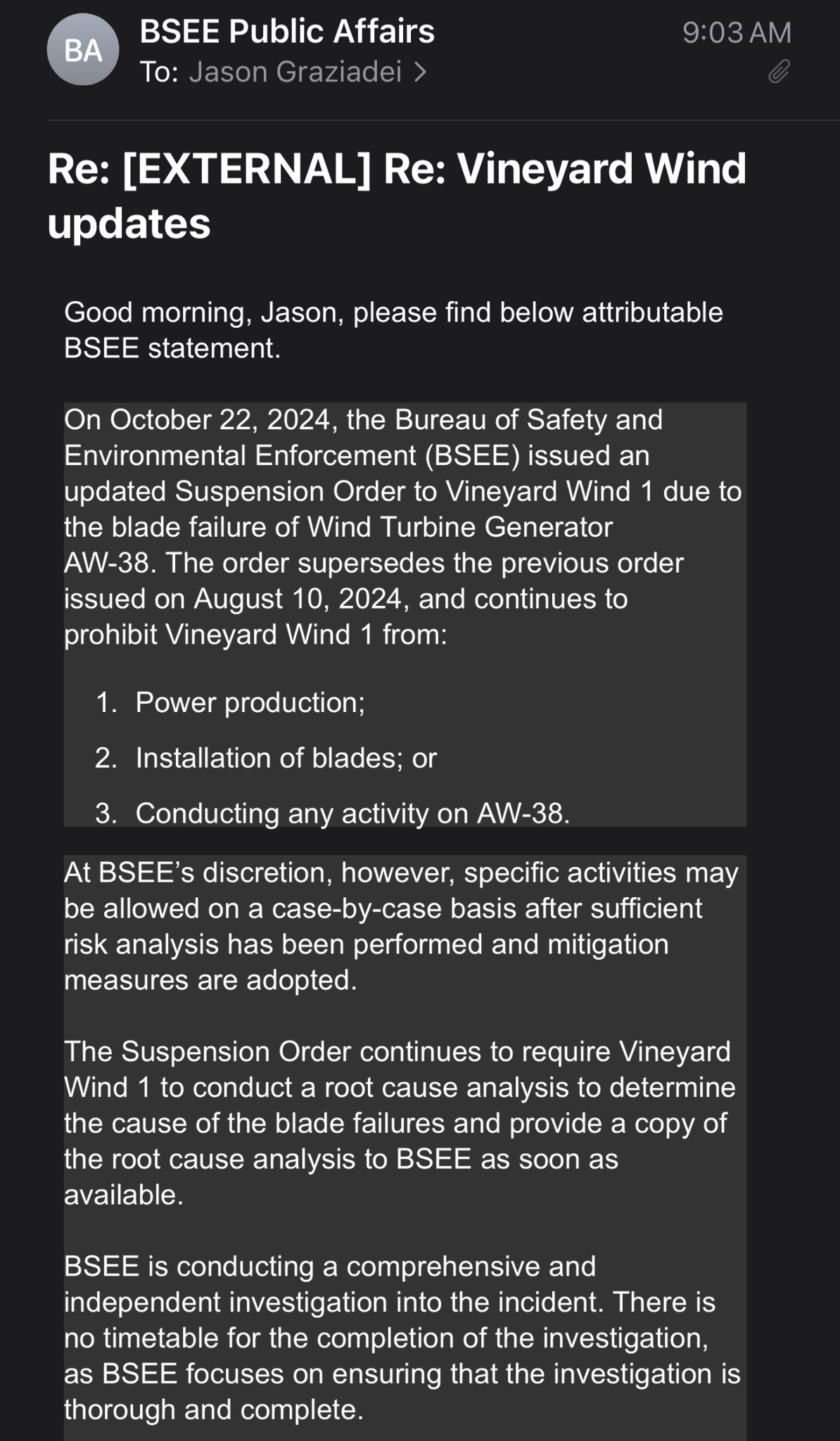
BSEE: Vineyard Wind is still prohibited from installing blades, producing power or conducting any activity on the damaged A-38 turbine.
GE: We are “really now getting to a point of shifting back to execution out at sea.” (Not at all what BSEE said.)
BSEE: BSEE may permit other specific activities after a risk analysis has been performed and mitigations adopted.
GE: We were “granted approval to return to installing new blades on turbines at the project once stringent safety and operational conditions are met.” (Positive spin of the BSEE statement implying that approval is assured.)
BSEE:Root cause analysis of the blade failure has not yet been provided to BSEE.
GE: “We have finalized root cause analysis and confirm the blade at issue at Vineyard Wind was caused by a manufacturing deviation from our factory in Canada.” (Then why doesn’t BSEE have the analysis? Is the Canadian plant being scapegoated?)
BSEE:No timetable for completion of BSEE investigation (This could present a dilemma for BSEE. How do you allow the resumption of blade installation and power generation before the investigation has been completed? Will the report be held until the Harris or Trump administration gives the go-ahead?)
BREAKING: Vineyard Wind and GE Vernova will be removing “some blades” from the wind farm following inspections and re-examination of ultrasound images, along with physical inspections of blades with “crawler” drones.
The attached letter was obtained by the Nantucket Current through a FOIA request. Key points:
Vineyard Wind power generation and blade installation suspension order remains in effect.
Vineyard Wind directed to conduct a site-specific study that evaluates the environmental harm and other potential damage from the blade failure, and to identify potential mitigation measures.
Vineyard Wind was required to submit a plan for the study by Oct. 11. It’s not clear whether the plan was submitted.
The study must include a mass balance of unrecovered debris material based on the weight of debris recovered and the weight of the subsea debris retrieved.
Comments:
The study requirement is appropriate given the significance of the blade incident and the implications for offshore wind development.
Why was a FOIA request needed to learn about the study requirement?
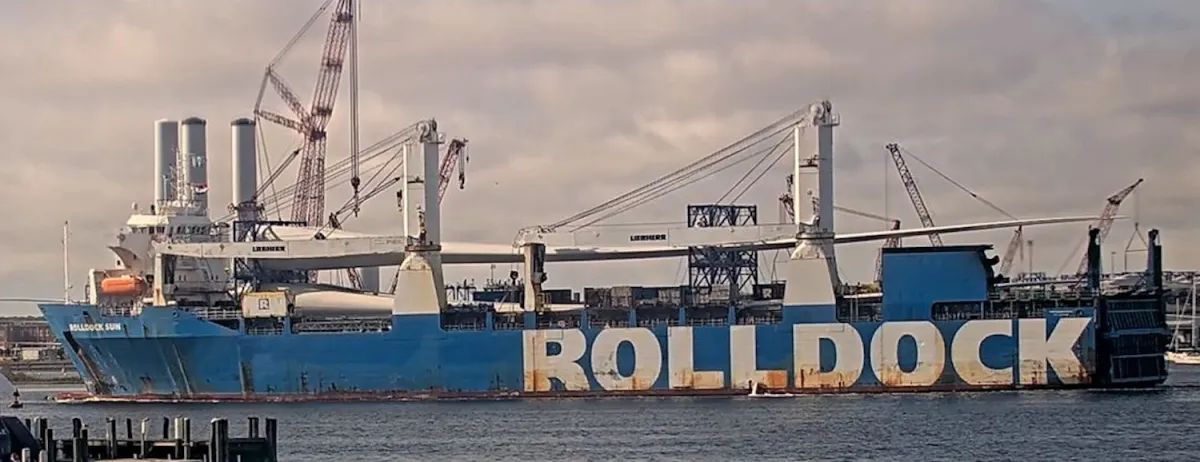
New Bedford Light: The Rolldock Sun leaves New Bedford on Friday with two blades visible. Credit: Courtesy of West Island Weather
Per the New Bedford Light, the turbine blade delivery vessel Rolldock Sun was seen on Friday carrying at least two blades out of New Bedford. It was not headed for the Vineyard Wind site. According to vessel tracking websites, the Rolldock Sun was en route to the Port of Cherbourg, where GE Vernova has a blade manufacturing facility.
The most likely explanation for returning the blades to Cherbourg is that defects were detected or suspected. The blade that failed, reportedly as a result of a manufacturing issue, is probably not the only one that was defective.
The New Bedford Light asked GE Vernova, Vineyard Wind, and the Federal regulator BSEE why the blades were being transported to Cherbourg. They received the following responses (my comments in parentheses):
GE Vernova: “No comment on this matter.” (This is the worst possible response. In the absence of information, people are left to speculate. If there was no problem with the blades, why wouldn’t GE simply provide an explanation? Their non-response simply reinforces suspicions that the blades were defective. If that is the case, why not take credit for procedures that identified the suspect defects, albeit belatedly?
Vineyard Wind:“The weekend has gotten in the way of the information flow,” and they would share information should they hear anything. Another request for information was not answered as of noon Monday. (Not exactly confidence inspiring from the company whose blade failure littered beaches and the offshore environment. They are deservedly being watched, and need to be more transparent and responsive.)
BSEE:A BSEE spokesperson did not answer questions and said by email that the agency has no new information. (Disappointing, but not surprising.)
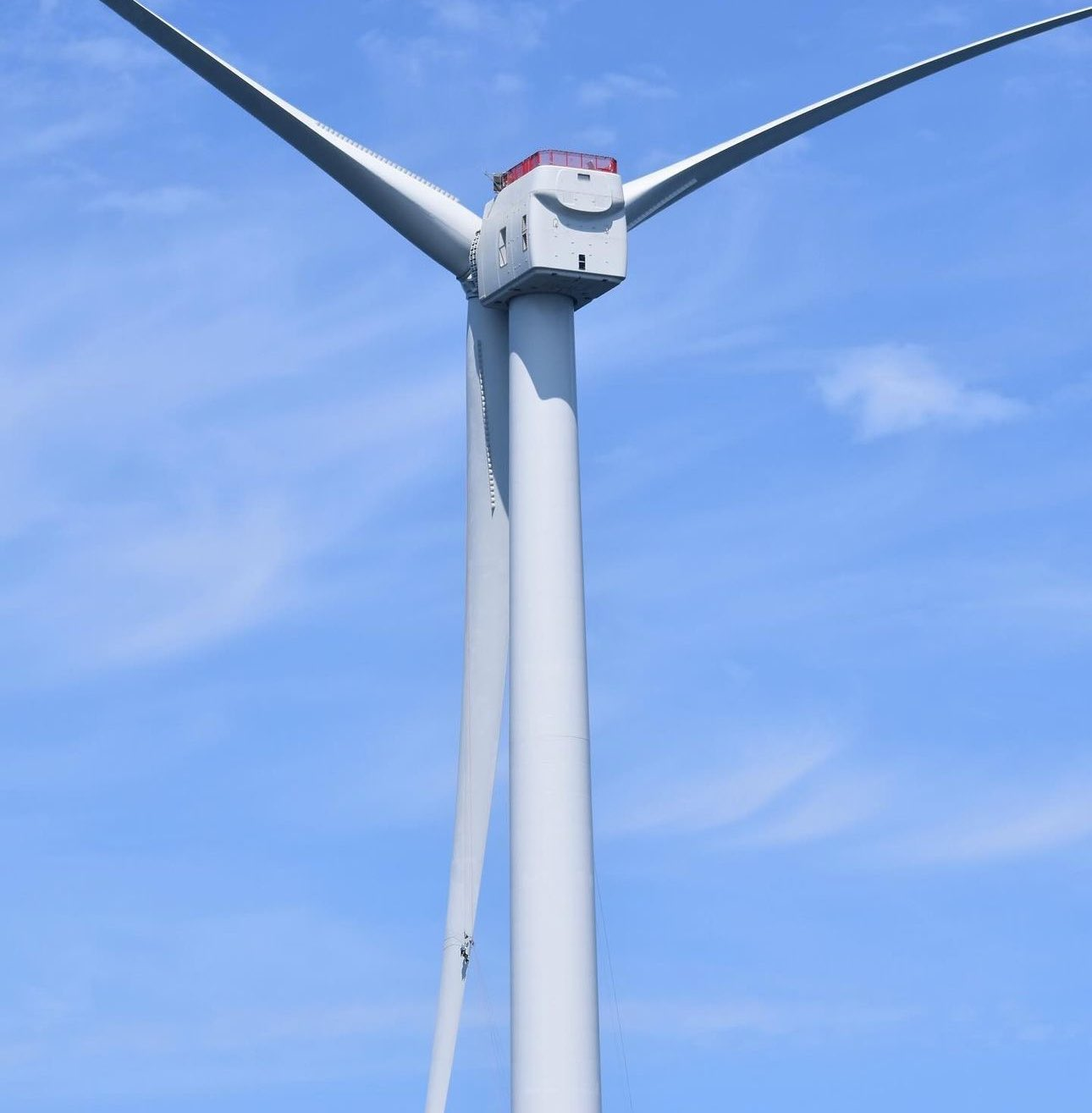
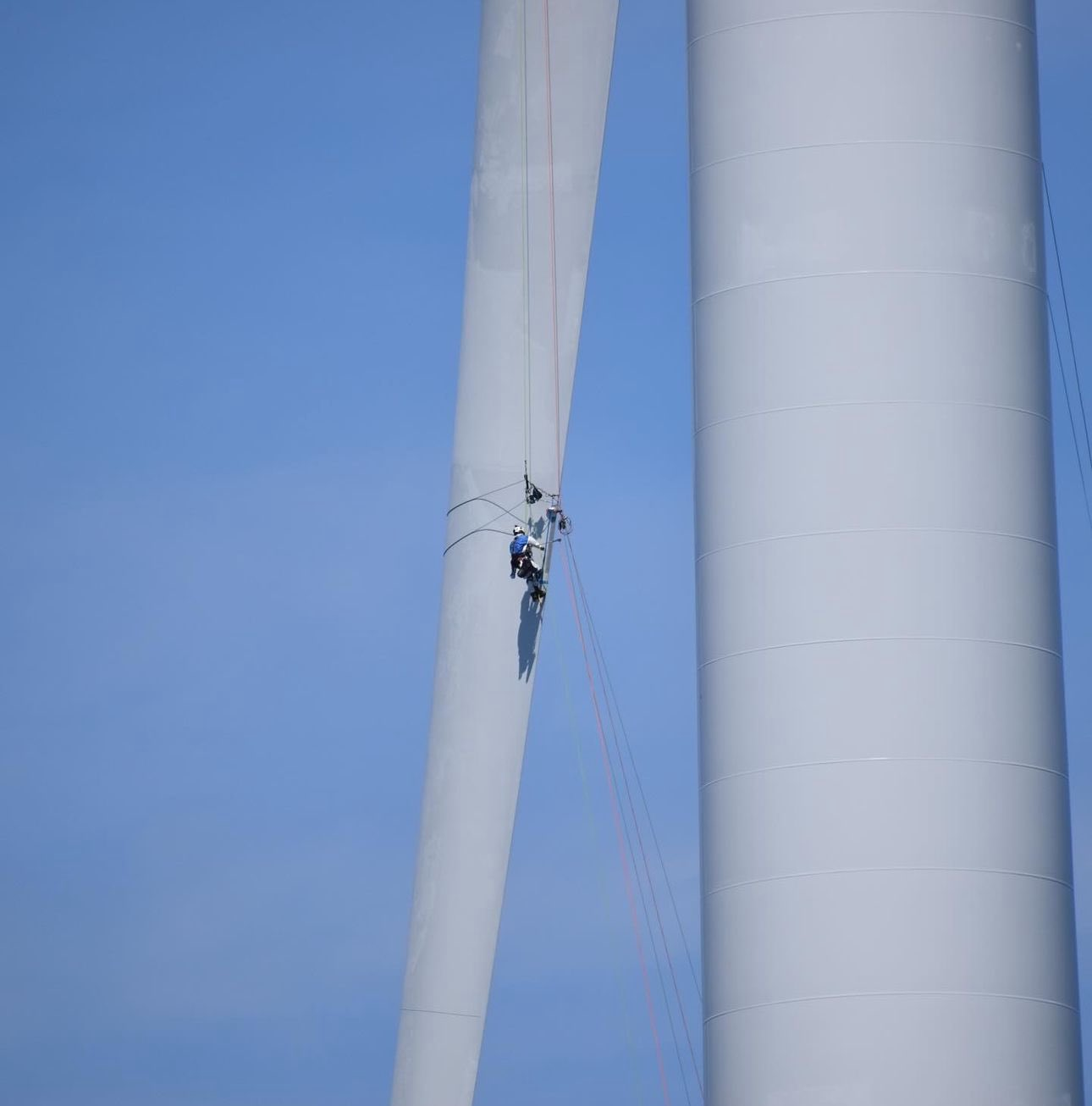
This real-life Spider-Man, seen on a Vineyard Wind turbine blade, is Tyler Paton. Tyler is an independent composite specialist who inspects and repairs blades on site. The Nantucket Current shared these images on X.
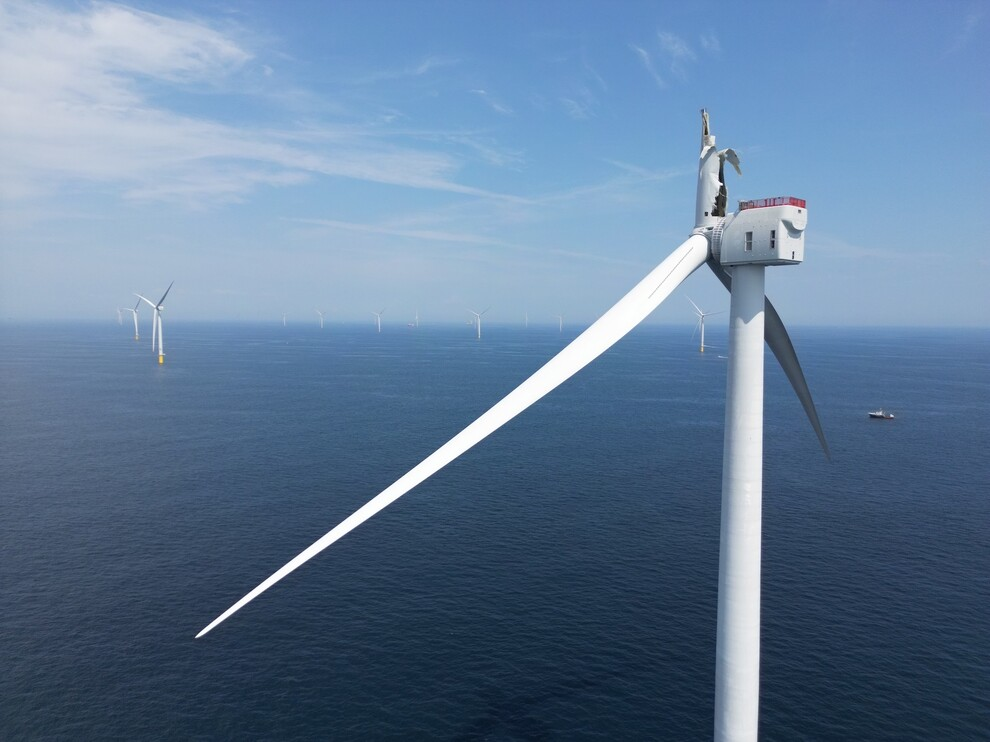
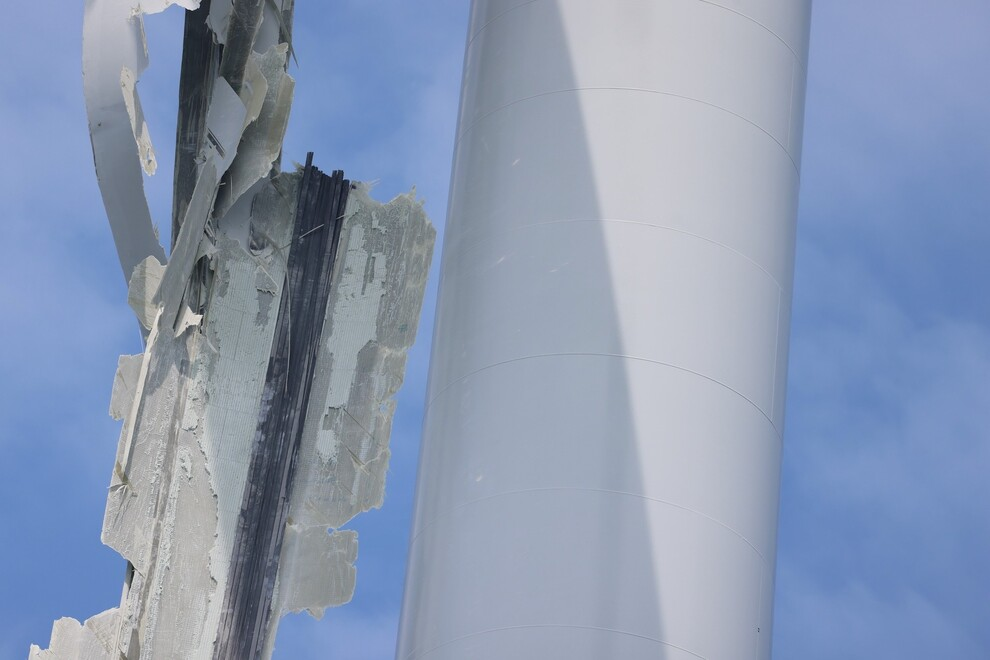
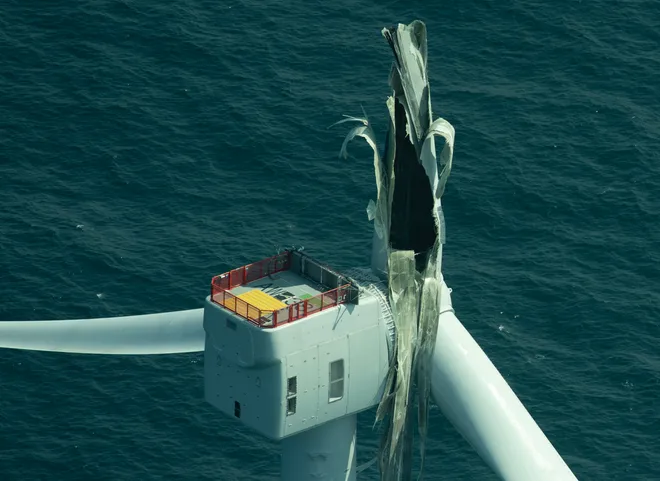
We sent our drone up to get a better look at what remains of the damaged blade on one of GE Vernova’s Haliade-X turbines at the Vineyard Wind lease area 15 miles southwest of Nantucket: pic.twitter.com/yynXpsunCv
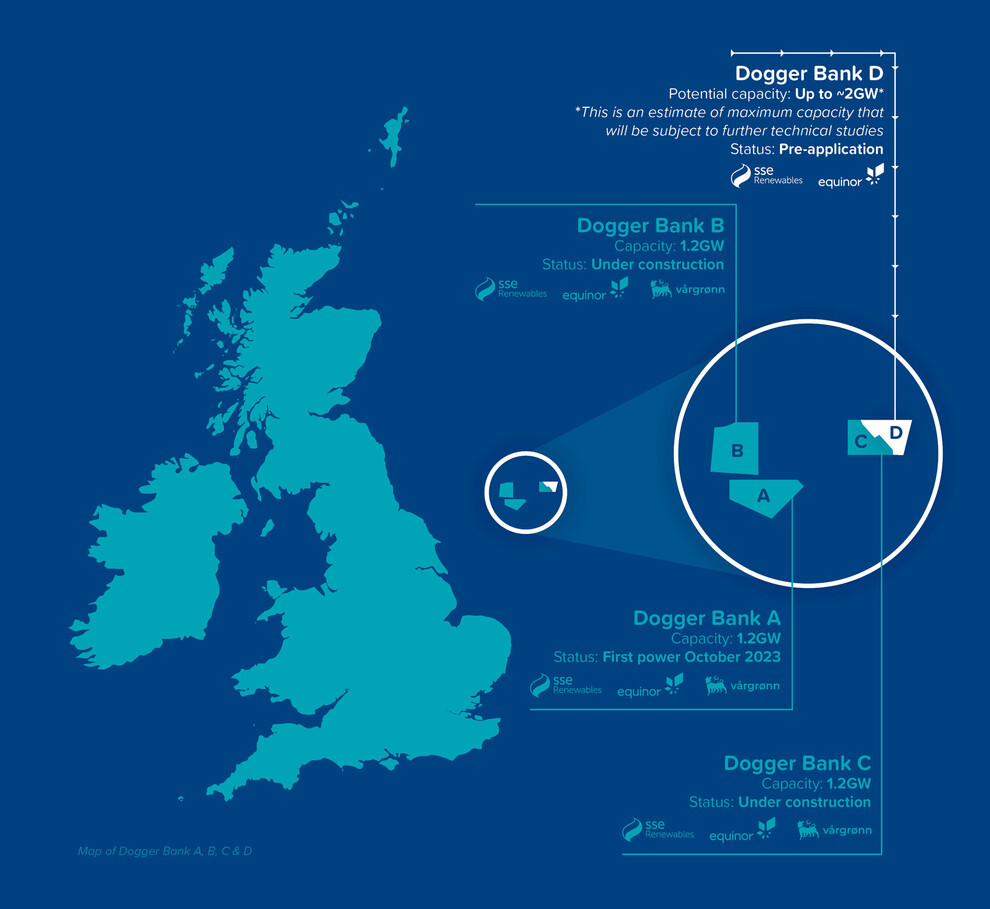
The operator of the wind farm released this short statement yesterday (8/22/2024):
We are aware of a blade failure which occurred this morning on an installed turbine at Dogger Bank A offshore wind farm, which is currently under construction. In line with safety procedures, the surrounding marine area has been restricted and relevant authorities notified. No one was injured or in the vicinity at the time the damage was sustained.
We are working closely with the turbine manufacturer, GE Vernova, which has initiated an investigation into the cause of the incident.
Further updates will be issued in due course as more information becomes available.
Additionally, ultimate authority over the wind farm remained unclear, with various federal agencies claiming responsibility over different portions of the permitting, licensing, review, and operation of the wind farm.
“Sometimes I have a hard time figuring out, who do we talk to? Who is going to keep us safe? Who is the responsible boss here? Who is going to make the hard decision?” Select Board member Matt Fee asked.
Separate legislation granting redundant or overlapping authority to different departments or agencies.
Legislation that is non-specific, assigning broad authority to the President or cabinet level level officials, leaving it up to the bureaus to resolve.
Bi- and multi-lateral agreements like MOA’s and MOU’s, which are intended to “coordinate the redundancy,” often cause more confusion than they prevent, creating gaps in the process.
“Fixing” problems by adding redundancy.
The Dept. of the Interior’s division of responsibilities for offshore wind, which was finalized in January 2023, inexplicably assigns review and approval of Construction and Operations Plans to the Bureau of Ocean Energy Management (i.e. the land manager, lessor, and wind energy promoter) rather than the Bureau of Safety and Environmental Enforcement (i.e. the principal regulator of the activities described in those plans).
More significantly, the offshore wind responsibilities of the 2 bureaus are so intertwined (as is also the case for offshore oil and gas), that attempts to separate the functions have, at a minimum, created inefficiencies and increased regulatory and operational costs.
FTR, the idea that having the BOEM and BSEE functions combined in a single bureau, as was the case with the predecessor bureau (MMS), had anything to do with the Macondo blowout is a complete fallacy. Regarding the accusations that were made toward MMS, the Chief Counsel for the national commission that investigated the tragic incident found no evidence that ethical lapses on the part of MMS employees played any role in causing the blowout.
There were important regulatory changes made after the Macondo blowout. These included capping stack requirements, mandatory safety management systems, and updated rules and standards for cementing/zonal isolation and blowout preventer systems. None of these improvements were precipitated by or dependent on the division of MMS into two bureaus.
The Town of Nantucket would like to provide you with an important update regarding the controlled detachment of the Vineyard Wind turbine blade and the ongoing efforts to manage any resulting debris.
August 11, 8:00 PM – Early this morning, portions of the remaining hanging sections of the Vineyard Wind turbine blade detached from the hub. The controlled detachment follows a series of exercises conducted late last week to pitch the blade, which, in combination with storm winds, led to the safe separation of the sections below the root of the blade.
Vineyard Wind and GE Vernova are currently assessing the situation to determine if any remaining sections pose a risk of detachment. The root of the blade, still attached to the turbine, is being monitored, and we are informed that plans are in place for its removal. Vineyard Wind has maritime crews on site to secure and contain any debris immediately.
The U.S. Coast Guard continues to enforce a 500-meter safety exclusion zone around the turbine. Vineyard Wind is utilizing ocean current and wind pattern models to predict potential debris movement. Depending on wind direction, more debris could potentially arrive on Nantucket beaches over the next hours or days. The Town of Nantucket will provide updates when necessary.
Under a federal preservation order, Vineyard Wind is responsible for retaining all debris, and only their employees, contractors, or those appointed by town officials are authorized to handle and recover debris materials. We urge the public to avoid handling any debris.
REMINDER TO THE PUBLIC
DO NOT put any debris in your home garbage.
DO NOT bring the debris to the landfill.
DO notify the proper authorities immediately if you have debris so they can remove it for analysis and proper disposal.
Only trained employees or contractors are responsible for collecting and removing the debris. To report any remaining debris, please contact:
Phone: 833-609-5768
Reports of debris can also be sent to the cleanup contractor here.
As the above examples illustrate, turbine blade failures, like the Vineyard Wind incident near Nantucket, are not unique to GE Vernova. GE’s rivals, Siemens Gamesa and Vestas, have also experienced serious quality control issues.
Per ReviewEconomy (2023), “Unexpected and increasing wind turbine failure rates, largely in newer and bigger models, are savaging the profits of some of the world’s biggest manufacturers, as Siemens Gamesa, GE and Vestas report heavy repair and maintenance losses.”
In light of the manufacturing challenges, all 3 companies report increased emphasis on quality control. Why has quality control to date been inadequate and how will the past problems be corrected?
Has the wind industry’s sense of entitlement, as evidenced in their tax credit, rate increase, and departure expectations, affected their safety and quality culture? Has industry and governmental wind energy promotion rushed development and compromised design and fabrication decisions? It’s time for wind developers, manufacturers, and regulators to make sure their priorities are in order.
Contrary to the regulations, Vineyard Wind was authorized to begin the fabrication of facilities beforeBOEM “received and offered no objections to the their Facility Design Report (FDR) and Fabrication and Installation Report (FIR).” The approval letter is attached, and excerpts (emphasis added) are pasted below. [Note: The requirement that was then at §585.700(b) is found at §585.632 in the current regulations.]
“Vineyard Wind requests a regulatory departure from §585.700(b) requiring that fabrication of approved facilities not begin until BOEM provides notification that it has received and has no objections to the submitted Facility Design Report (FDR) and Fabrication and Installation Report (FIR). Vineyard Wind proposes to fabricate, but not install the following project elements: 1) Monopile foundations; 2) Electrical service platform; 3) Export cable; 4) Inter-array cables; and 5) Wind turbine generator facilities.
….allowing these fabrication activities to take place earlier in time would allow Vineyard Wind to adhere to its construction schedule, maintain its qualification for the Federal Investment Tax Credit, and meet its contractual obligations under the Power Purchase Agreements with Massachusetts distribution companies.
30 cfr 585.103 requires that a departure provide safety and environmental protection equal to or greater than the provision in the regulations that is waived. BOEM’s letter fails to explain how allowing fabrication to begin before fundamental design and fabrication reports are submitted and reviewed meets this test.
Perhaps even more troubling is BOEM’s response to subsequent requests by other companies to waive the FDR and FIR requirement (example). In these responses, BOEM asserts that their “current interpretation” is that no departure is needed because “the regulation prohibits only fabrication and installation activities on the Outer Continental Shelf (OCS) itself.” How does that make sense given the important activities, including the fabrication of turbine blades and other turbine components, that take place onshore?
In their letters approving the Vineyard Wind and other departures, BOEM implies that their review of these reports is unnecessary because “the design and fabrication of these components would occur under the supervision of the approved CVA” (Certified Verification Agent). That assertion misconstrues the role of the CVA. These agents, nominated and funded by the operator, provide third party oversight that is complementary to, not a substitute for, BOEM/BSEE project reviews.
According to this memo, DNV was the CVA for Vineyard Wind. Their insights on the turbine blade failure will presumably be included in BSEE’s investigation report.