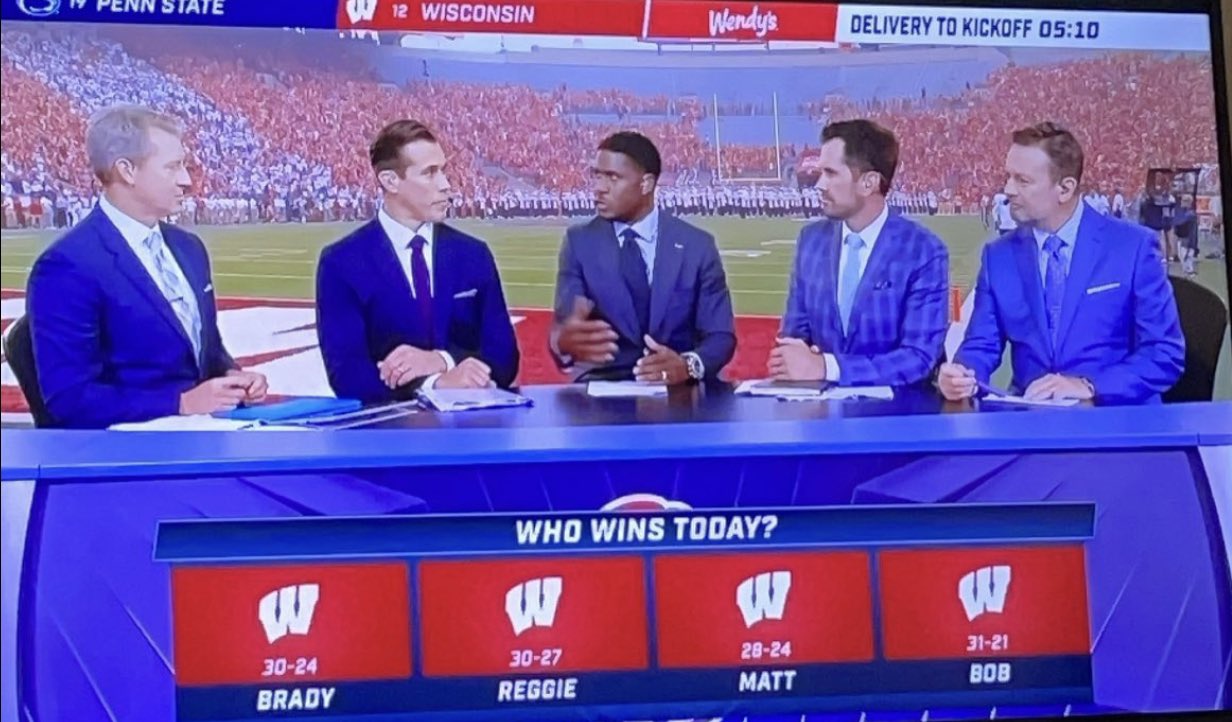
In sports, the experts are soon exposed. In regulations and standards, consensus misjudgments are less obvious and may take years to be demonstrated. Also, regulations and standards are often outdated and may not reflect best practices. That is why compliance with regulations and adherence to industry standards is not sufficient. We need to continuously assess risks, observe, listen, review data, and actively manage our operations to achieve safety and environmental objectives.
Posts Tagged ‘standards’
Consensus opinions are often wrong.
Posted in Offshore Energy - General, Regulation, tagged Penn State, regulations, safety, standards, Wisconsin on September 5, 2021| Leave a Comment »
BP announces enhanced standards
Posted in accidents, Regulation, tagged bp, Deepwater, drilling, Regulation, standards on July 15, 2011| 2 Comments »
Standards: Will policy challenges surpass content challenges?
Posted in Regulation, tagged Coast Guard, Deepwater Horizon, drilling, macondo, Regulation, safety, standards, transocean on June 15, 2011| 2 Comments »
In their comments on the Coast Guard’s Deepwater Horizon Joint Investigation Team Report, Transocean made these statements about BOP maintenance standards incorporated in MMS drilling regulations:
By glossing over the contours of the regulatory language, the Draft Report unilaterally converts API Recommended Practice 53 from an advisory guideline into a mandatory requirement. Notwithstanding the Draft Report’s insistence otherwise, the API’s recommendation that the BOP “should” be disassembled and inspected according to the manufacturer’s guidelines is not mandatory. The API clarifies that the word “should” indicates a recommended practice for which a comparably safe alternative is available or which may be impractical or unnecessary in some conditions. In contrast, to denote a recommended practice that is “advisable in all circumstances,” the API uses the word “shall.” The API also emphasizes that “the formulation and publication of API standards is not intended in any way to inhibit anyone from using any other practices.” Though it recommends specific practices, API acknowledges that “equivalent alternative installations and practices may be utilized to accomplish the same objectives.” On its face, the language of API RP 53 makes clear that the recommendation that the BOP “should” be disassembled and inspected in accordance with the manufacturer’s guidelines is a recommendation, and nothing more.
Although the MMS regulations governing BOP maintenance incorporate API RP 53 sections 17.10 and 18.10 by reference, this does not convert the API’s recommendations into a mandatory requirement. As the MMS has clarified, “[t]he legal effect of incorporation by reference” is merely that “the material is treated as if it were published in the Federal Register.”
Treating API RP 53 as if it had been published in the Federal Register does not imbue its language with more regulatory significance than it had before. The API’s recommendations regarding BOP maintenance—as well as the API’s acknowledgement that alternative practices “may be utilized to accomplish the same objectives”—remain recommendations, not requirements. Transocean’s complete comments are posted on their website.
I’ll withhold my comments on the above statements, except to say that my opinion differs substantially from Transocean’s.
More significantly, these and other recent industry and government comments demonstrate the complexity of standards policy issues. How are standards most effectively applied by operators in formulating safety management programs, operating plans, and safety cases? Contractors? How should deviations from standards be assessed and documented? How should regulators use standards? To what extent should standards be incorporated into regulations? What is the appropriate role for regulators in standards development? These issues may prove to be more challenging than updating technical requirements. Stay tuned!
While we were gone
Posted in accidents, cuba, drilling, energy, Uncategorized, tagged Australia, Brazil, deepwater drilling, drilling, energy, ISO TC 67, Japan, macondo, Mexico, Montara, Ningaloo Reef, nuclear, offshore energy, offshore safety institute, Petrobras, standards on March 12, 2011| Leave a Comment »
Japan will likely need more imported oil and natural gas due to closures of nuclear reactors caused by Friday’s earthquake and tsunami, but volumes can’t be calculated accurately as it is unclear how much industrial output has been affected by the disaster and how long power nuclear and thermal power plants will remain closed. Wall Street Journal
- Proposed ISO/TC 67 programme for drilling, well construction and well operations standards, resulting from the Montara and Macondo accidents. TC 67 Post-Montara-Macondo action plan – This is an ambitious and comprehensive post-Macondo action plan for updating international standards.
- National Commission paper on the importance of international standards.
The CEOs of major oil and gascompanies will meet March 18 to decide how to proceed with the formation of a US offshore drilling safety institute, William Reilly, the co-chair of the National Oil Spill Commission, said March 8. Platts Oilgram News
Marco Aurelio Garcia, foreign policy adviser to President Dilma Rousseff, told reporters in Havana exploratory work off Cuba’s northern coast had not shown good results and that Brazil wanted to concentrate on its own oil fields.
Since BP’s disastrous Deepwater Horizon accident in the Gulf of Mexico last April, the risks of offshore oil drilling have been a hot topic. One place it isn’t questioned much is Brazil, whose oil production industry is one of the fastest-growing in the world because of vast new deepwater oil reservoirs discovered in the past five years.
Pemex has just begun to explore in Mexico’s Gulf of Mexico waters deeper than 1,000 feet, but 28 billion undiscovered barrels of oilequivalent are thought to exist in that area, some of which borders US territorial waters. Pemex officials said the company is forging a development plan for its first deepwater field, Lakach, located northeast of the state of Veracruz in about 3,200 feet of water. First production is expected in 2015.
Environmentalists are furious at a proposal by the petroleum company Shell to start exploration drilling off one of Western Australia’s most treasured reefs. Ningaloo Reef off the north-west coast, has been nominated for World Heritage listing.
Ensco swallows its Pride! (Our take on mergers)
Posted in Uncategorized, tagged Ensco. Pride, mergers, research, standards on February 9, 2011| Leave a Comment »
With its acquisition of Pride, Ensco is about to become the worlds second largest drilling contractor (behind only Transocean). Further consolidation and a drilling boom are being predicted by giddy reporters.
Good luck to Ensco and Pride. I hope the merger serves them well. My comments are not about them, but about the broader implications of oil and gas industry mergers.
- Mergers reduce diversity. When two companies merge or are acquired, two opinions become one. The industry loses some of the diversity of thought that is so important in managing safety and environmental risks. There is no single perfect approach to conducting operations, and differences among companies lead to better operations throughout the industry.
- Mergers reduce the number of participants in standards development and conferences. Standards meetings no longer include representatives from Mobil, Amoco, Arco, Getty, Gulf, Texaco, Superior, Pennzoil, Sohio, and other successful companies that have been acquired over the past 30 years. Mergers among contractors, most notably in the drilling industry, and service companies have further reduced participation.
- Cuts in combined research are among the “efficiencies” that can be achieved through mergers. When companies merge, research budgets seldom grow, and often decline.
New and expanding independent producers could fill the voids, but these companies tend to be less involved in industry-wide programs and projects. This needs to change and there are some encouraging signs.
There is a lot on the offshore industry’s plate right now including cooperative risk-management programs and a long list of standards projects. Hopefully, everyone will be able to maintain their focus on those needs, and the merger-mania will not be too much of a distraction.
API provides free access to industry standards
Posted in Regulation, tagged API, safety, standards on October 28, 2010| Leave a Comment »
As promised, API is now providing free access to referenced safety standards. Ironically, the system was initiated while I was looking for online access to RP 53. I tried the new system and it seems to work fine. Registration is required, but the process is quite easy.
Kudos to API for taking this important step.
Same test should have prevented both Montara and Macondo
Posted in accidents, well control incidents, tagged accidents, Australia, blowouts, Deepwater Horizon, drilling, Gulf of Mexico, macondo, Montara, negative pressure test, offshore oil, oil spill, safety, standards, well control on September 15, 2010| Leave a Comment »
Despite the vast differences in location and water depth, both the Montara and Macondo blowouts would have been prevented if negative pressure tests had been properly conducted and interpreted after the production casing had been set.
A negative pressure test simulates an underbalanced condition in which the formation pressure exceeds the pressure exerted by the fluid column. The purpose of the test is to determine if there are leaks in the casing shoe track, casing, or seal assembly. At Macondo, the test was conducted and the evidence of inflow is quite clear. Unfortunately, that evidence was misinterpreted. See slides 14-17 in the linked presentation.
At Montara, the testimony suggests that a negative pressure test was not properly conducted. PTTEP therefore had a false sense of security regarding the integrity of the casing shoe. See page 9 of this transcript.
Both wells subsequently flowed through the shoe track and inside production casing for a combined duration exceeding 5 months.
There are currently no industry standards for conducting and interpreting negative pressure tests.
Screaming About Standards
Posted in Uncategorized, tagged ANSI, ISO, macondo, offshore oil, safety, standards on September 13, 2010| 4 Comments »
Despite the stunning post-Macondo media revelation that regulators <gasp> use “industry standards” (you can’t slip anything past these folks!), there is no need to be fearful or anxious. Regulators of most technologically advanced industries, in the US and throughout the world, depend on such standards. Almost every US Federal agency uses standards to fulfill some of their objectives.
“Industry” standards are really consensus standards developed by experts who work for manufacturers, operators, service companies, universities, regulators, NGOs, and even consultants (for whom I suddenly have great respect :)). Standards development, which is in accordance with specific protocols, is closely monitored and audited by designated organizations.
In the US, the use of standards is mandated by legislation that stipulates:
All Federal agencies and departments shall use technical standards that are developed or adopted by voluntary consensus standards bodies, using such technical standards as a means to carry out policy objectives or activities determined by the agencies and departments
However, it is important to note that regulators have the final say about which standards or parts of standards they incorporate in their regulatory programs. Regulators are under no obligation to incorporate standards that they believe would compromise safety or environmental objectives.
US standards programs are administered by ANSI. ISO, a network of the national standards institutes of 163 countries, with a Central Secretariat in Geneva, Switzerland, administers standards worldwide.
While standards developed by API and other organizations have served the US offshore oil and gas program well, improvements can be made. A few suggestions follow:
- Increase the participation by technical specialists from all sectors of industry. In some cases, corporate mergers and low participation have reduced the diversity of opinion and expert input needed to develop the best possible standards. All offshore operators, service companies, and contractors should recognize their obligation to participate on standards committees. Their plans for such participation should be outlined in their safety and environmental management programs.
- Increase regulator participation. While resource constraints limit the involvement of regulators, participation in offshore standards committees should be a high priority. Wherever possible, Federal, State, and international regulators should pool resources to ensure that standards committees are effectively monitored.
- Standards should be available online at no charge to any interested party. API has taken an important step in that regard by agreeing to provide free access to standards referenced in OCS regulations.
- Spin-off API’s standards programs into a new entity. While API has managed standards development independently from its advocacy functions, the credibility of the standards programs would be enhanced if that work was performed in a separate organization. API’s highly visible advocacy work could be perceived as influencing standards development practices and priorities. Such perceptions are detrimental to public confidence in critical safety and pollution prevention standards.


This Well Control Rule comment, endorsed by 7 trade associations, hit a nerve. Here’s why.
Posted in drilling, Offshore Energy - General, Regulation, well control incidents, tagged BSEE, NTTAA, standards, standards vs. regulations, trade association comments, Well Control Rule on November 30, 2022| Leave a Comment »
The comment (pasted below) by the trade associations asserts that BSEE ignored the requirements of the National Technology Transfer and Advancement Act (NTTAA).
Reaction:
Read Full Post »