Feeds:
Posts
Comments

Posts Tagged ‘safety’

No deepwater horizons in Russian arctic:

Developed by SevMash, the first Barents Sea oil rig will be a steel table the size of a football pitch and capable of withstanding temperatures of down to minus 50 Celsius. The whole point of it is that standing on the seabed, it will allow drilling and pumping the way they are done of firm land. This is a very far cry from the Deepwater Horizon. That platform was semi-submersed, positioned dynamically and designed to pump oil from beneath a mile of sea. When the oil gushed, the spill proved almost unstoppable. The Barents Sea platform will employ a very different production technology, which involves the use of powerful pumps. Chief Technology Officer of the Gazpromneft Shelf company Dr Alexander Kisser

Comment:

  1. Don’t demonize deepwater production to promote the arctic (or vice versa). The world needs responsible production from both.
  2. “Can’t happen here (or to me)” talk impresses no one. Explain how a disasters can happen to you and what you are doing to prevent them.
  3. Identify the special risks at your site and how they will be mitigated. Don’t tell us why the arctic isn’t the Gulf of Mexico.
  4. Perhaps we should present Can’t Happen Here awards as part of the Not My Job awards program.

Read Full Post »

Toronto Sun

“If the sea state is too rough for a successful emergency ditching, then a helicopter shouldn’t be operating, period,” TSB’s Wendy Tadros said at a press conference in St. John’s Wednesday afternoon.

On Friday, the Canadian Association of Petroleum Producers said Newfoundland’s three offshore oil operators — Hibernia, Terra Nova and White Rose — would adopt the TSB’s recommendation.

Read Full Post »

U.S. OFFSHORE OIL EXPLORATION: MANAGING RISKS TO MOVE FORWARD

Click for the agenda and webcast.

Read Full Post »

Area map with helicopter track and impact position

BOE’s Cheryl Anderson has been tracking this story. Click here for the full TSB report.

Occurrence Summary:

On 12 March 2009 a Cougar Helicopters’ Sikorsky S-92A on a flight to the Hibernia oil production platform had a total loss of oil in the transmission’s main gear box. The flight crew descended to 800 feet and headed towards St. John’s. Approximately 35 nautical miles from St. John’s, during an attempted ditching, the helicopter struck the water in a high rate of descent. One passenger survived with serious injuries and the other seventeen occupants of the helicopter died of drowning.

Safety Issues

  • Category A rotorcraft certified under the “extremely remote” criteria may not be capable of continued operation for 30 minutes with only residual main gear box lubrication.
  • Given today’s operating environments, it may now be technically feasible and economically justifiable to produce a helicopter that can operate in excess of 30 minutes following a massive loss of main gear box lubricant.
  • Helicopter crews and passengers in Canada remain at risk where helicopters are operated over sea states exceeding the capability of their Emergency Flotation Systems.
  • Without a supplemental breathing system, occupants have very little time to egress from a submerged or capsized helicopter before breaking their breath-holds in cold water.

TSB Recommendations

  • The Federal Aviation Administration, Transport Canada and the European Aviation Safety Agency remove the “extremely remote” provision from the rule requiring 30 minutes of safe operation following the loss of main gearbox lubricant for all newly constructed Category A transport helicopters and, after a phase-in period, for all existing ones.
  • The Federal Aviation Administration assess the adequacy of the 30 minute main gearbox run dry requirement for Category A transport helicopters.
  • Transport Canada prohibit commercial operation of Category A transport helicopters over water when the sea state will not permit safe ditching and successful evacuation.
  • Transport Canada require that supplemental underwater breathing apparatus be mandatory for all occupants of helicopters involved in overwater flights who are required to wear a Passenger Transportation Suit System.


Read Full Post »

From the Australia Resources Minister’s Press Conference on 4 February in Canberra (click for the full transcript):

I might also say that I was in the United States last week and these issues were clearly top of mind in my discussions in Washington (l didn’t know he was here and have seen no US coverage of these meetings.)

I reinforced my previous commitment to work closely with the United States in terms of the consideration of the outstanding recommendations of the Macondo report and our determination to put in place a single national regulator in Australia

Discussions were also held with the companies and the US administration about an international conference we will hold in Western Australia in August of this year, focusing on the recommendations of the Macondo and Montara reports. That conference will be highly technical in nature.

It will in my opinion be a very important regulatory conference because it’s about basically having a look at where we are, what national and international responses can be coordinated, any specifications that might have to be changed so that we get a uniform approach to industry practice and the nature of equipment used. (Is the Minister unaware of the Vancouver conference and the ongoing work among regulators?)

(On the report about the Varanus Island explosion) Firstly I’d love to get my hands on it because I want to fully assess it. But I can’t get access to it at the moment because the WA government has determined it would be inappropriate to release it because it may impinge on potential legal proceedings.


Read Full Post »

From today’s Platts Oilgram News:

Offshore drilling giant Transocean expects to release its internal investigative report next month on last year’s Macondo disaster in the Gulf of Mexico as the first of several milestones toward resolving liability issues, Transocean CEO Steven Newman said February 8.

The BOP section of TO’s report should be very interesting.

Read Full Post »

U.S. OFFSHORE OIL EXPLORATION: MANAGING RISKS TO MOVE FORWARD

Interesting lineup of speakers.

Read Full Post »

Noise Matters

In addition to managing the catastrophic risks associated with fires, explosions, and structural failures, chronic health and safety risks must also be effectively managed.  Hearing loss is one such risk, and PSA Norway has challenged industry to minimize the effects of noise on the health of offshore workers.
The risk level in the Norwegian petroleum activities (RNNP) shows a relatively high number of noise injuries. These are chronic injuries that will worsen with age. The RNNP questionnaire survey shows that 37 per cent state that they quite often/very often/always suffer from a high noise level. Five per cent state that they suffer some or quite a lot from impaired hearing, and 45 per cent of them believe noise in the working environment is the reason for their impaired hearing.

Click here to view the article, presentation, and recorded seminar.

Read Full Post »

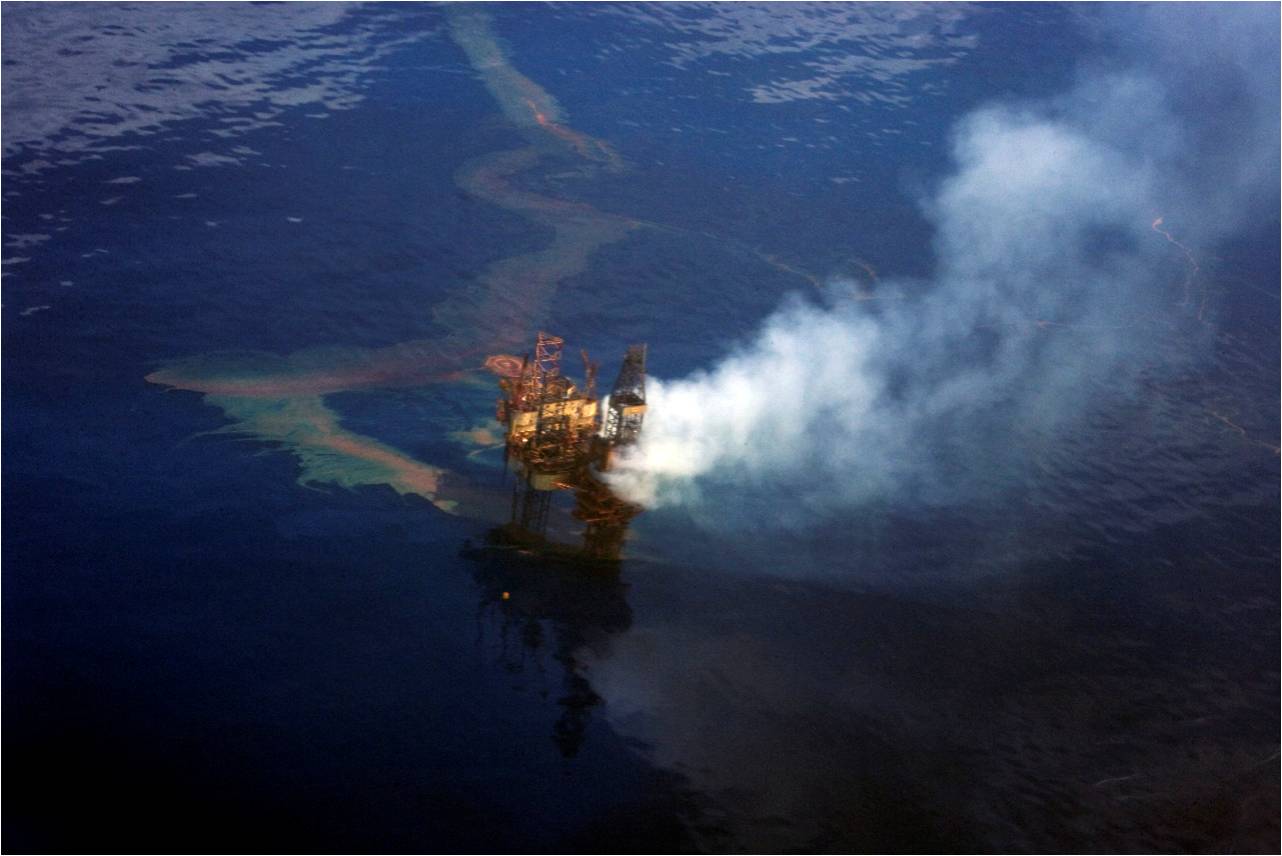
Montara Blowout - Timor Sea

Link

PTTEP will have to report monthly and meet quarterly with Mr Ferguson under a binding agreement for the next 18 months.

Comment: That “penalty” is almost comical. What is the next level of punishment – weekly meetings with Ferguson? Also, shouldn’t the Minister let the regulator oversee PTTEP? Shouldn’t the Minister receive such reports and briefings from the regulator?

There is no disincentive, there’s no penalties. That’s what I think many Australians will be scratching their heads about. Paul Gamblin, WWF WA Director

Comment: I have to agree with the World Wildlife Federation. As one who has been following Monatara since the blowout was first reported and has read every page of the submissions and testimony, it seems inconceivable that PTTEP is able to continue its operations with no apparent penalty.

Read Full Post »

This cartoon reminded BOE sage Odd Finnestad of the Deepwater Horizon BOP “forensics” testing.

While the BOP testing is now in its 4th month with no official updates and no information on the badly neglected investigation website (where items from last August are listed as the “latest news”), there is online video evidence that gives us good clues about what happened.  However, this is partial evidence, and concerned operators, contractors, and regulators need complete information. While we wait, wells are being drilled around the world without the benefit of even preliminary findings.

When a plane crashes, information is released as soon as possible so that future accidents can be prevented.  Why is that not the case with this investigation? The absence of urgency and transparency is most disappointing.

Read Full Post »

« Newer Posts - Older Posts »