Feeds:
Posts
Comments

Posts Tagged ‘safety’

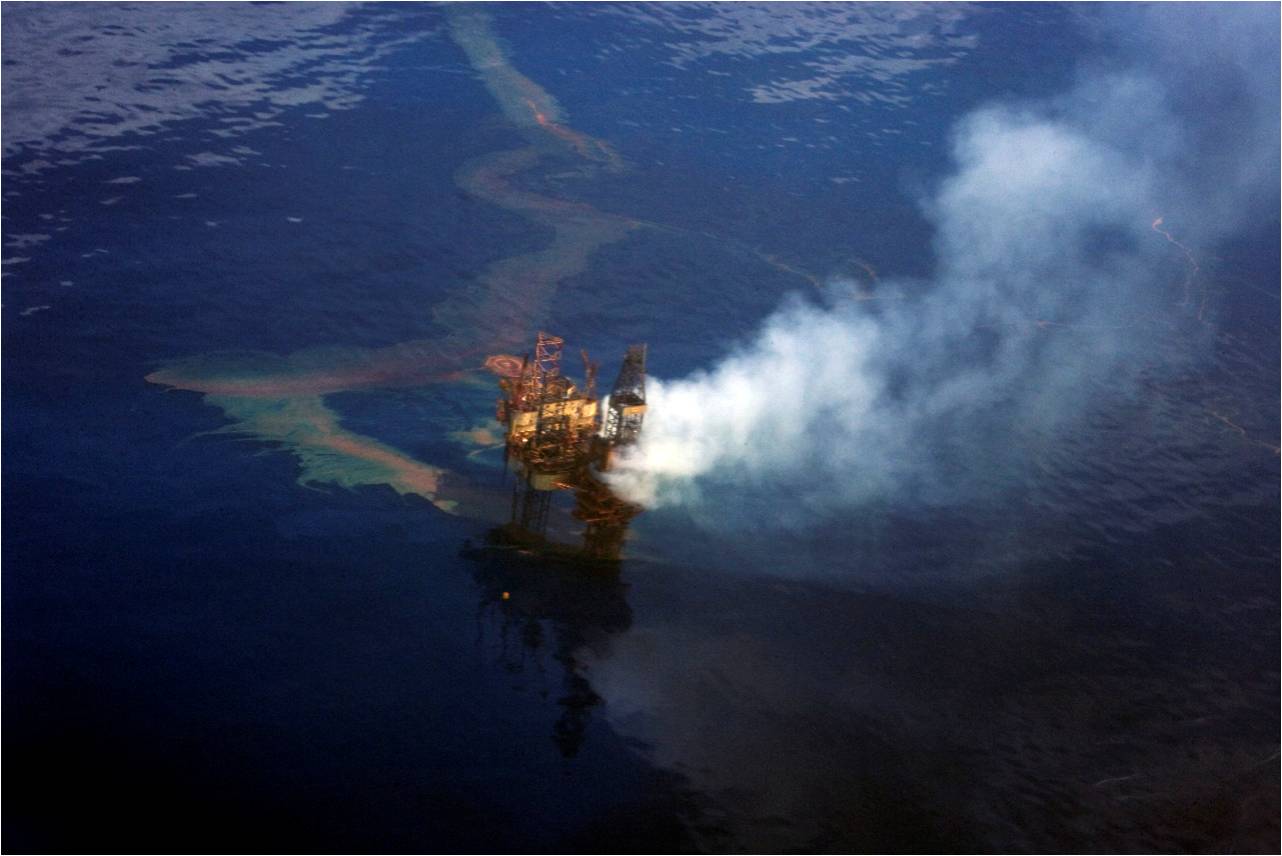
Montara Blowout - Timor Sea

Link

PTTEP will have to report monthly and meet quarterly with Mr Ferguson under a binding agreement for the next 18 months.

Comment: That “penalty” is almost comical. What is the next level of punishment – weekly meetings with Ferguson? Also, shouldn’t the Minister let the regulator oversee PTTEP? Shouldn’t the Minister receive such reports and briefings from the regulator?

There is no disincentive, there’s no penalties. That’s what I think many Australians will be scratching their heads about. Paul Gamblin, WWF WA Director

Comment: I have to agree with the World Wildlife Federation. As one who has been following Monatara since the blowout was first reported and has read every page of the submissions and testimony, it seems inconceivable that PTTEP is able to continue its operations with no apparent penalty.

Read Full Post »

This cartoon reminded BOE sage Odd Finnestad of the Deepwater Horizon BOP “forensics” testing.

While the BOP testing is now in its 4th month with no official updates and no information on the badly neglected investigation website (where items from last August are listed as the “latest news”), there is online video evidence that gives us good clues about what happened.  However, this is partial evidence, and concerned operators, contractors, and regulators need complete information. While we wait, wells are being drilled around the world without the benefit of even preliminary findings.

When a plane crashes, information is released as soon as possible so that future accidents can be prevented.  Why is that not the case with this investigation? The absence of urgency and transparency is most disappointing.

Read Full Post »

BOE’s Chery Anderson has alerted us that the Petrobras P-33 platform, which had been shut-in at the direction of the Brazilian regulators, has resumed production. Unfortunately, as has been the case with many post-Macondo articles, the author felt compelled to link the Petrobras problem to deep water.

…the accident once again raised concerns about the safety of deep-water oil output in the wake of last year’s disaster in the U.S Gulf of Mexico.

Contrary to popular opinion, water depth was a relatively minor factor in the Macondo blowout, and had nothing to do with the maintenance issues at the P-33 and other Campos basin facilities. Shallow water was a more significant contributing factor to the Montara blowout (batched completions, mudline suspensions, and two-stage platform installation) than deep water was at Macondo.

Read Full Post »

From Platts Oilgram News (3 February 2011):

Mitsui affiliate MOEX Offshore has received invoices from BP seeking $2.64 billion in reimbursement related to the Macondo oil spill in the US Gulf of Mexico, Mitsui said February 2.

A wise attorney (not an oxymoron :)) recently mentioned that you had to be very careful about ventures that you are buying into (as a partner) or selling into (as a contractor or manufacturer). If something horrible happens, your company’s economic future could be jeopardized, even if your role was rather small.

Read Full Post »

Australian Department of Resources, Energy, and Tourism

The Independent Review concluded that the Montara Action Plan effectively responds to the issues identified by the Montara Commission of Inquiry and sets PTTEP Australasia on the path to achieving industry best practice standards for both good oil field practice and good governance.

Comments:

  1. Perhaps the results of the “Independent Review” should have been released before PTTEP announced that it was moving ahead with development of the Montara field.
  2. Macondo was a model operation compared to Montara which was suspended for months with only a flawed casing shoe and a corrosion cap as barriers. When well activities resumed after the suspension, and the corrosion cap was removed, they could have tied back the 13 3/8″ casing and installed the BOP stack, but instead moved to another well so they could optimize efficiency. When the well began to flow, there was no means of even attempting to shut it in or install a surface cap.
  3. PTTEP has not been fined or penalized in any way by the Australian government. I wonder how Commissioner Borthwick and the folks who participated in the Montara Inquiry, which did an admirable job and was very critical of PTTEP, feel about that.

Read Full Post »

Link to letter

The Louisiana coastal parishes are united in working with each other and with you to see the drilling process expedited as quickly as possible.  It is imperative to our collective economies that we move forward with the process of providing the energy that moves our nation.

Read Full Post »

Reposted from Platt’s Oilgram News (31 January 2011):

Brazil’s Petrobras said January 28 it was forced to shut output at its Cherne II production platform after a January 19 fire on the structure, one of the oldest working in the offshore Campos Basin. The fire in an oil transfer pump unit was brought under control without injuries to crew members, damage to the environment or major structural damage to the platform, Petrobras said in a statement. The platform was producing about 9,300 b/d of crude oil when output was shut, Petrobras said, adding the field should be ready to restart production on February 1. Brazilian oil regulators, the country’s navy and environmental officials, and Petrobras technicians are investigating the cause of the fire, Petrobras said. The platform is one of two in the Chernefield, which recorded output of about 22,000 b/d of crude in November. Brazil’s petroleum regulator had an on-site inspection of the platform scheduled for June.—Jeb Blount

Read Full Post »

A little bit of information on the BOP “forensic” testing from the Louisiana Record:

Justice Department attorney Michael Underhill said that a forensic report on the failed blowout preventor (BOP) which led to the Deepwater Horizon explosion and subsequent Gulf of Mexico oil spill should be finished in March.  Underhill spoke at a status conference for the BP multidistrict litigation in Judge Carl Barbier’s chambers at U.S. District Court for the Eastern District of Louisiana.

Barbier expressed concern over reports that the testing for the BOP and the cement used in drilling the Deepwater Horizon was falling behind. Underhill stated that the testing on the BOP should be done by the first week of March, but that’s “not a promise.” Underhill stated that the BOP investigation has already cost millions of dollars and has involved laser scanning all the equipment removed from the device. He also said that the forensic report on the BOP should be done by the end of March.

Read Full Post »

Good Financial Times article:

A plan to create a safety organisation for deep-water drilling is being drawn up by leading oil companies and could be launched within weeks, in an attempt to restore public confidence in the industry after last year’s BP oil spill in the Gulf of Mexico.

However, a division has emerged over whether the new body should be part of the American Petroleum Institute, the industry group that was strongly criticised by the official National Commission inquiry into the Deepwater Horizon disaster.

Stay tuned; this will be interesting.

Read Full Post »

Some post-Macondo commentary has characterized MMS employees as regulatory Neanderthals who couldn’t see beyond their checklists, had no understanding of operating systems and the associated process-safety risks, and were dreadfully behind their industry and regulatory peers. The reality is quite different, as those who worked with or for the MMS know. Someone who did both, Doug Morris, an engineer and attorney with extensive industry and regulatory experience, shared this excerpt from an April 1988 Federal Register notice. The Notice publishes the outcome of a 5-year regulatory review that updated and consolidated all MMS operating requirements for offshore oil and gas operations. One of objectives was to establish performance standards for all types of operations to encourage innovation and discourage a “compliance mentality.” Keep in mind that this Notice was published before Piper Alpha, the Cullen report, and the worldwide wave of regulatory reform that followed.

The following summarizes the major changes from current rules:

(1) Performance Standards. Performance standards were added which describe the safety, environmental, property, and resource protection goals intended to be achieved by specified design and engineering requirements. These additions are intended to identify the purpose of the detailed requirements and thus provide a basis for approving an alternative method for achievement of the stated purpose. New, different, better, and more efficient techniques and practices are intended to be available to lessees on the basis of these performance standards.

(a) Performance Requirements. A “Performance requirements” section was added. This section clarifies that the specific detailed requirements of the rule do not preclude the approval for use of alternate or new techniques, procedures, equipment, or activities when the lessee satisfies MMS that the proposed alternate approach provides equal or greater protection than that provided by the requirements specified in the rule. The establishment of performance standards in addition to specific detailed requirements is intended to remove obstacles to innovation and ensure that MMS’s regulations are not unnecessarily prescriptive.

Read Full Post »
« Newer Posts - Older Posts »