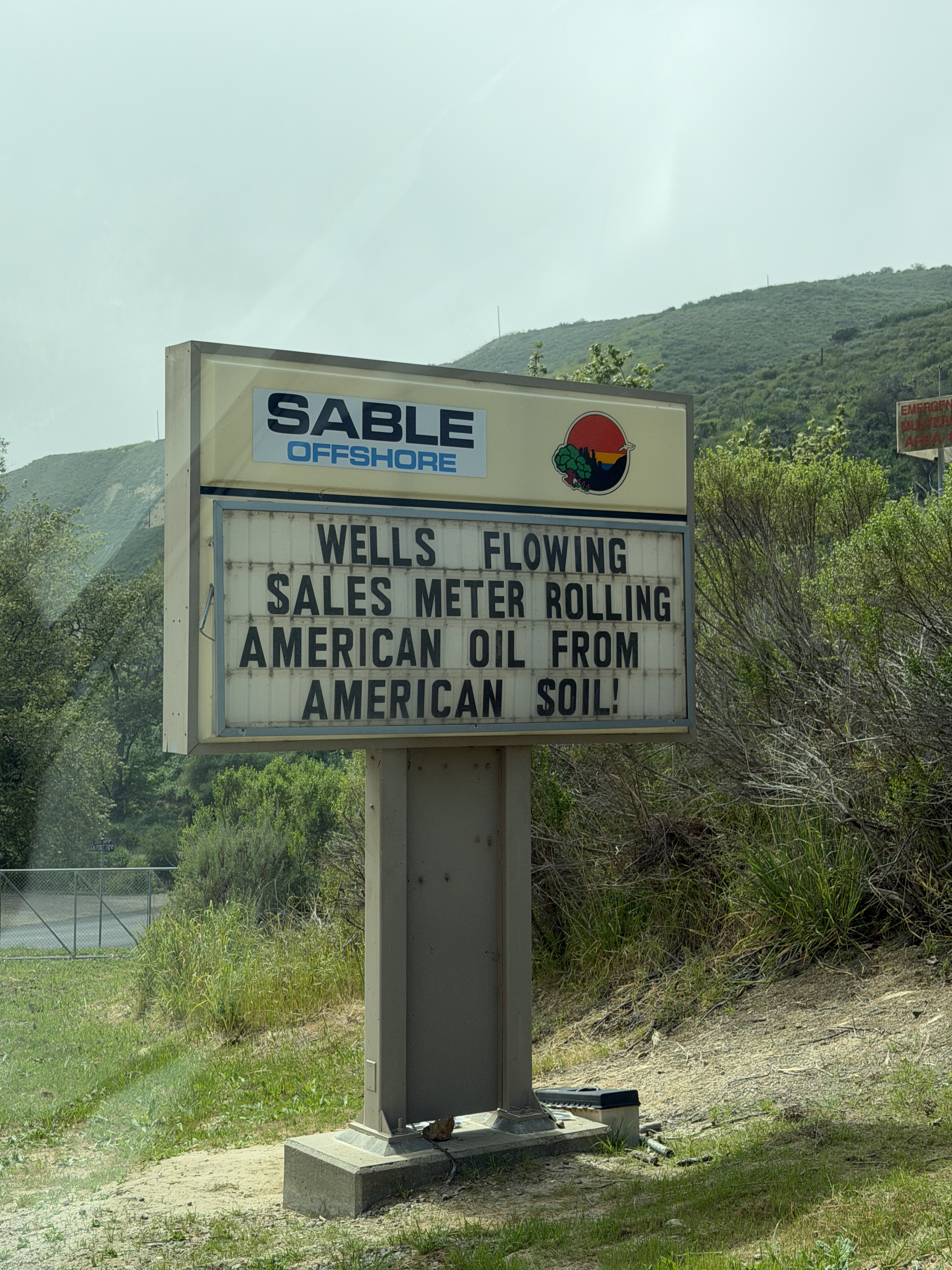
$SOC Field Update: Hydro-testing finalized this morning. System has officially transitioned to Line Fill. Nitrogen displacement by crude is underway. Expecting first oil at Pentland early-mid Jan. The operational window is now locked.
$SOC: Ninth Circuit order grants leave to intervene, but denies the request to stay PHMSA’s Dec. 22 Restart Plan approval and Dec. 23 Emergency Special Permit. Case is expedited and goes on the next available calendar. Briefing: opening Jan. 26, 2026; answering Feb. 17;… pic.twitter.com/YdGeVMu6cI
All eyes are on the 9th Circuit. No injunction yet. Will the Court intervene to block Sable?
No evidence of intervention by the State.
Does Sable restart production tomorrow?
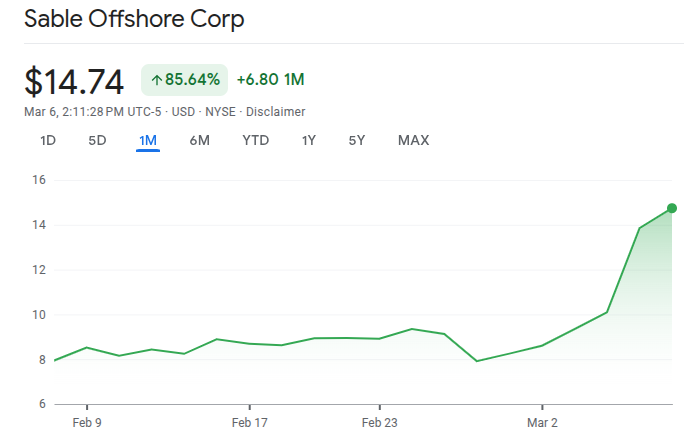
Traders on edge. Bulls are feeling optimistic. See X post below. 😉
Spend my barrel, parked in a harbor ‘Neath the platform spotlight Pump it up tight, let the oil start flowin’ A little crude movin’ on a federal green light Fits my life, oh so right My Sable Offshore Delight— Victory II (@VictoryII1) December 30, 2025
Attached are PHMSA’s Christmas week Emergency Special Permit and Permit Analysis document. Is the path clear to restart SYU production before New Year’s day?
Three excerpts from the first attachment are pasted below. The last paragraph on p. 2 succinctly explains PHMSA’a emergency permit:
PHMSA was able to assume jurisdiction from the State because the pipeline transports Federal OCS oil and is thus inherently interstate. The perceived problem with a PHMSA takeover had been the court approved Consent Decree that was executed following the 2015 Refugio pipeline spill. That Decree specifies that the State Fire Marshal must approve a restart of the pipeline. The first paragraph on p. 2 of the permit explains PHMSA’s position that the Consent Decree has been superseded.
The provision pasted below (p. 4 of the permit) seems contradictory in that it stipulates compliance with the Consent Decree. However, PHMSA apparently sees no contradiction in that references to the Fire Marshal (OSFM) should now be read as references to PHMSA. PHMSA presumably included this provision to reaffirm the need to comply with the technical requirements in the Decree.
The second attachment is PHMSA’s analysis of the special permit. Note that the permit expires in 60 days. Public notice and opportunity for comment would be required for a renewal.
Environmental organizations reacted quickly to the PHMSA permit, filing an emergency motion in the 9th circuit (third attachment). Observations:
Impressive effort given the time crunch. The PHMSA permit was issued on 12/23, just 3 days prior to the court filing. No Christmas break for those folks!
If you wonder why the petition was filed with the 9th Circuit (seemed convenient given the 9th Circuit’s reputation), a filing at the Circuit level is required for appeals of PHMSA orders.
Petitioners strongest argument: Sable is not entitled to emergency relief, as there is no real emergency. PHMSA asserts that EO 14156, which declared a National Energy Emergency, supports the emergency permit.
The petitioners environmental doom prediction is not compelling. PHMSA’s position is that the mitigations they are imposing (reduced operating pressure, inline inspections, testing and sampling, etc) provide protection equal to or greater than than the corrosion remediation requirement that is being waived.
The petitioners asked the Court for relief no later than 12/26. That date has passed. Will there be a ruling today?
Barring an injunction, odds are that Sable restarts production prior to New Year’s Day, when a requirement (SB 237) for a new Coastal Development Plan, takes effect.
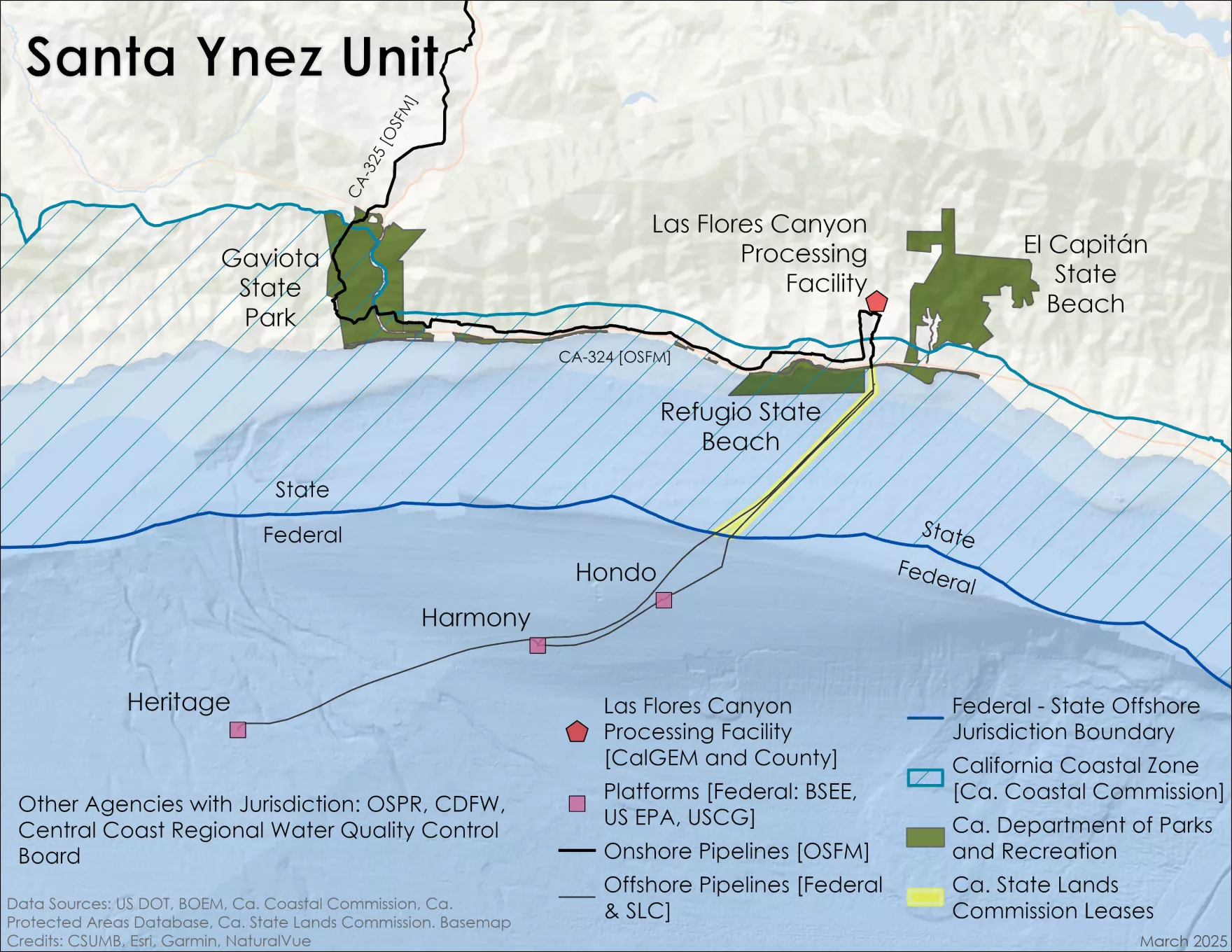
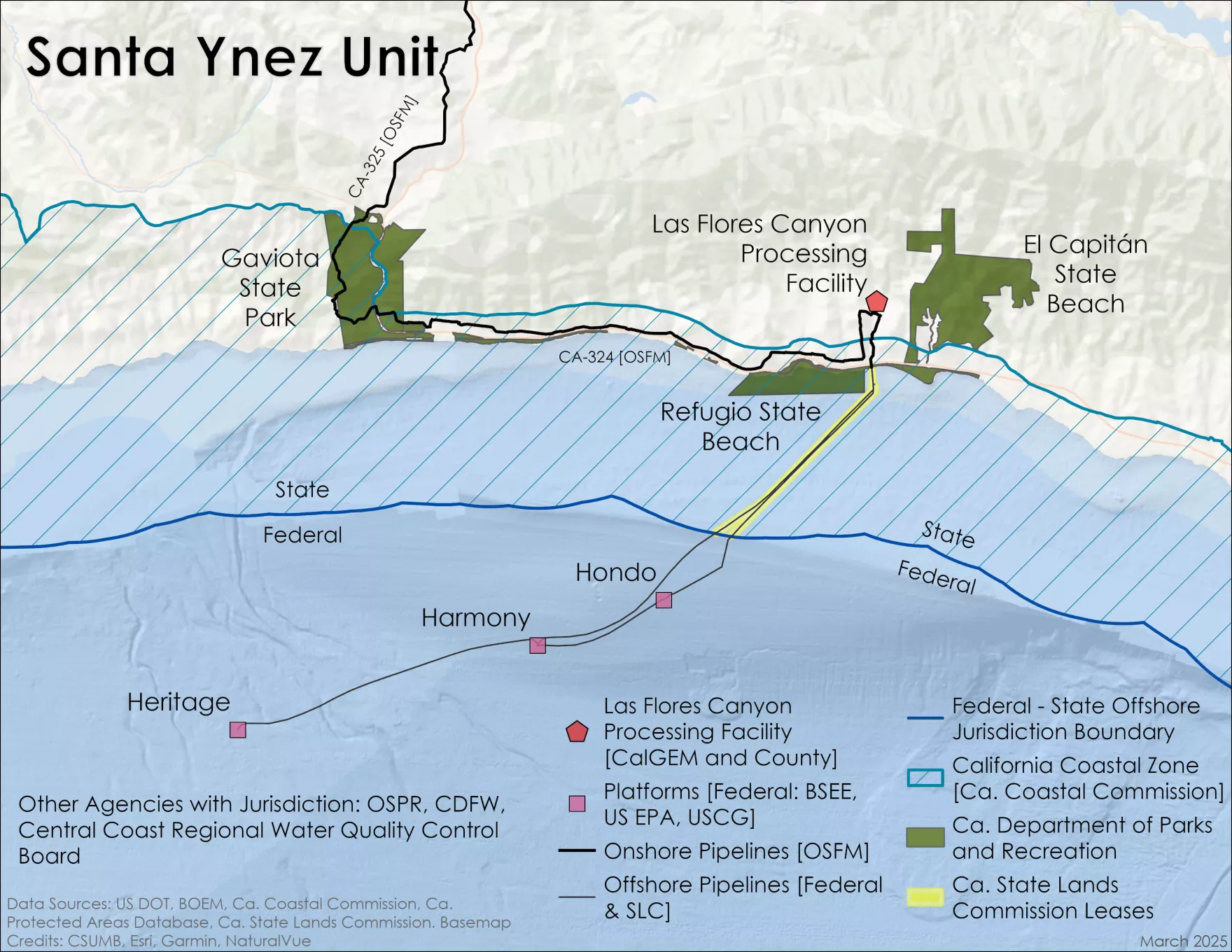
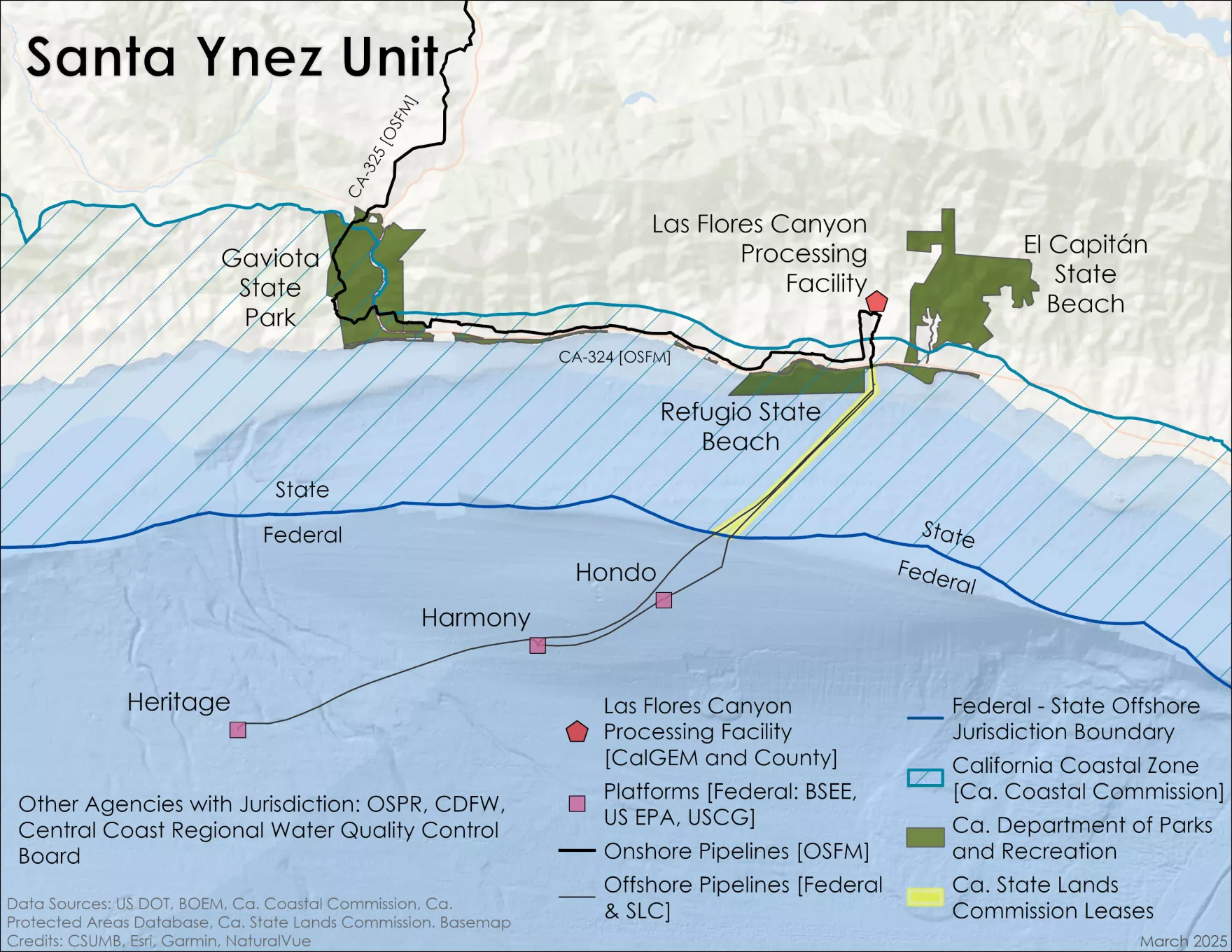
The anticipated State-Federal jurisdictional battle over Sable’s Las Flores Canyon Pipeline is on! See the attached letter from the Pipeline and Hazardous Materials Safety Administration (PHMSA) declaring that the pipeline is under Federal jurisdiction.
The major hurdle for PHMSA/Sable is thecourt approved Consent Decree that was executed following the 2015 Refugio pipeline spill. The Decree, which designates the California Fire Marshal as the sole regulator for the pipeline, is not mentioned in the PHMSA letter. Needless to say, another major legal battle looms.
Excerpt from the PHMSA letter:
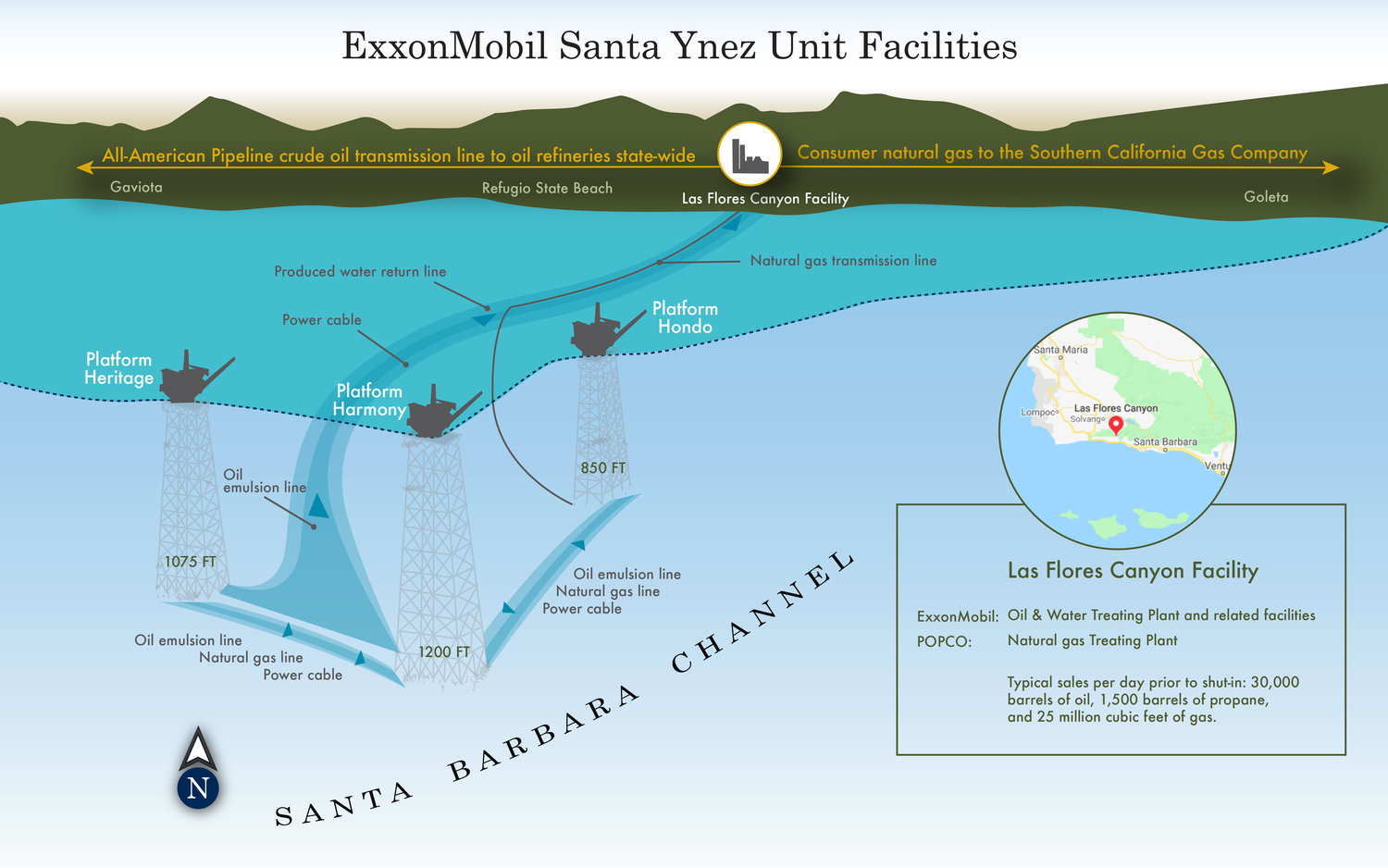
PHMSA’s evaluation of the Las Flores Pipeline confirms that it transports crude oil from the OCS to an onshore processing facility at Las Flores Canyon and continues the transportation of crude oil from Las Flores Canyon to Pentland, California. Consistent with Appendix A, the Las Flores Pipeline is an interstate pipeline. As portions of the Las Flores Pipeline were previously considered to be intrastate and regulated by OSFM, PHMSA is notifying OSFM that the Las Flores Pipeline is subject to the regulatory oversight of PHMSA.
The vote on the transfer of Santa Ynez Unit (SYU), Pacific Offshore Pipeline Company (POPCO) Gas Plant, and Las Flores Pipeline System permits from Exxon to Sable Offshore was the last item on the Board’s agenda, so those of us who were streaming the meeting for that topic had to be patient.
The Sable session began with a surprise announcement that opened the possibility that perhaps the outcome might not be as expected. Supervisor Hartmann, who owns property close to the pipeline, had once recused herself from voting on this matter. When it was thought that her property was ~900′ from the pipeline, the Fair Political Practice Commission (FPPC) cleared her participation. However, after a 12/3/2025 letter from Sable informed that her property was as close as 8′ from the pipeline, the FPPC reversed its position and Supervisor Hartmann again recused herself.
Supervisor Hartmann’s re-recusal added some drama to the session given that there were two sure votes against Sable and one sure vote in favor. The swing vote would be that of Supervisor Lavagnino, who was very much supportive of the oil industry, but not Sable.
After strong but predictable presentations by the Environmental Defense Center/Center for Biological Diversity team and Sable, the floor was open to public comments. Although there were more speakers opposed to the Sable position (13), this observer found the Sable supporters (7) to be more compelling. Most were California natives who worked on the project and demonstrated a sincere commitment to the safety and environmental values that we all support. One aptly noted that California unnecessarily imports 2/3 of its oil from foreign sources, some of which aren’t particularly friendly.
As an aside, a County staffer pointed out that 400,000 barrels of SYU oil were in storage as a result of the resumption of production in May prior to receiving the necessary approvals to transport oil through the onshore pipeline.
The vote opened with Supervisor Nelson supporting the transfer of permits to Sable. His commented that the County was “attacking Sable’s finances at the same time they were trying to bankrupt them.”
Sable opponents held serve with Supervisors Capps and Lee opposing the transfer. Ms. Capps deserves credit for the sincere respect she showed for the Sable workers who were present.
So Supervisor Lavagnino would cast the deciding vote. He once again voted against the transfer noting that he was a long time supporter of the oil industry, but that he had lost confidence in Sable.
Bottom line: The outcome was as expected, but the recusal drama and strong presentations made the stream worth watching.
Sable Offshore is attempting to restart the same pipeline that caused the Refugio Oil Spill in 2015. | Credit: Paul Wellman File Photo
Sable Offshore oil believes the federal Pipeline and Hazardous Materials Safety Administration (PHMSA) , not the California Fire Marshal, should have jurisdiction over the company’s onshore pipeline.
I once had the same opinion as Sable. Their pipeline is, by definition, an interstate line because it carries OCS production. Then I read Appendix D of the court approved Consent Decree that was executed following the 2015 Refugio pipeline spill. That Decree is quite clear regarding regulatory jurisdiction, and would have to be overturned to transfer authority to PHMSA.
The full Consent Decree is attached. Pasted below is an excerpt from Appendix D:
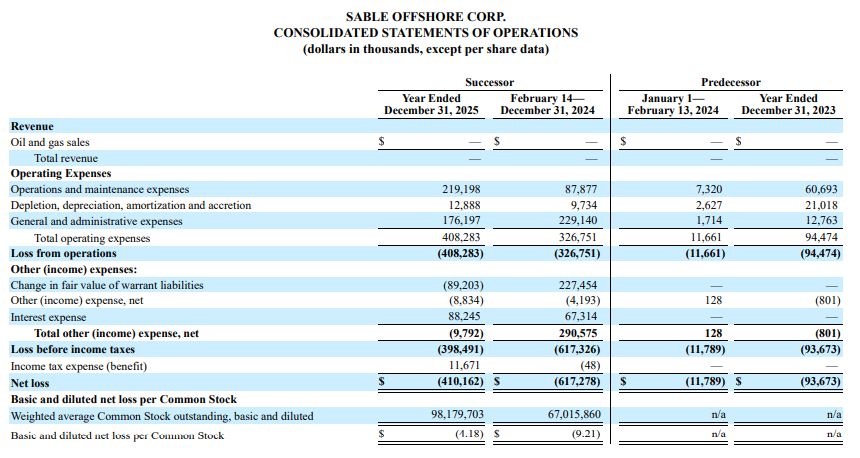
SEC filing reveals Sable entered October about a month from potential bankruptcy. The company had $41.6 million as of September 30, with $39.7 million in average monthly burn in 3Q25.
When Sable announced its $250 million financing on November 10 at $5.50 per share, the company likely had single digit millions in the bank based on its reported burn, against over $163 million in accounts payable and accrued liabilities. Sable does not generate any revenue.
Sable needs to raise significantly more money: According to leaked audio of Sable’s CEO briefing for select investors, the company will require $2.3 billion to achieve commercial production of oil and gas from its three platforms off the coast of Santa Barbara.
That includes at least $900 million to buy out Exxon, to which Sable must pay 15% interest on debt due by March 31, 2027. By then, the loan would be about $1.1 billion, accruing $200 million in added debt.
One of Sable’s only known assets other than the oil and gas project is a private plane the company purchased from its CEO, Jim Flores. The plane recently flew round-trip from Houston, where Flores lives, to Louisiana, in time for a football game at the CEO’s alma mater.
Comments from Santa Barbara County Supervisor Steve Lavagnino, an oil industry supporter, that explain his opposition to the transfer of Exxon’s pipeline permit to Sable:
“The final straw for me was a Hunterbrook article, which was as disturbing as anything I’ve read. I have many friends in the oil industry and I will continue to support efforts to access our natural resources, but it has to be done responsibly by operators who put safety above profits.”
Sable’s limited response to the Hunterbrook report includes information on decommissioning financial assurance:
Sable’s original SYU Purchase and Sales Agreement (PSA) with Exxon required Sable to post a $350 million decommissioning bond “150 days following the resumption of production from the wells.”
According to Sable, production resumed on May 15, 2025. The bond would have thus been required in October. (SYU production was halted by court order on June 6, so that “resumption date” may be irrelevant. Regardless, the Oct. financial assurance deadline is immaterial given the recent update to the PSA.)
The PSA update extended the date for posting the decommissioning bond to three business days following the new Exxon Loan Maturity Date of March 31, 2027 or 90 days after first sales of hydrocarbons, whichever comes first. (Note the change in language from “resumption of production” to “first sales.” Brief well test production does not trigger posting of the decommissioning bond.)
Under certain circumstances after the bonding is in place Exxon may seek an increase in the bonding amount to $500 million.
The decommissioning obligations are moot if Sable runs out of funds or is unable to resume SYU production prior to the 3/31/2027 PSA deadline.Exxon would remain fully responsible for SYU decommissioning.
Is it time for a public statement from Exxon on the SYU and Sable?
Attached is John Smith’s comprehensive summary of lawsuits related to Sable Offshore’s attempts to restart Santa Ynez Unit production.
If you are keeping score, there are 10 separate cases including a class action lawsuit filed by investors. New legal battles are sure to follow given Sable’s OS&T strategy. Per John:
“The combined legal challenges, injunctions, and restraining orders have significantly delayed Sable’s restart plans and prompted the company to pursue an Offshore Storage and Treatment Vessel (OS&T) strategy, which was utilized to process SYU production in federal waters from 1981 – 1994, and transport oil to markets using tankers.“