How can AI and emerging technologies be used in risk management trending and operations?
Why are we not learning from accidents?
Breakthroughs in investigation techniques and sharing
The first IRF Conference was held 20 years ago in London followed by the 2007 conference at the Trump International Resort in Miami (little did we know 😀). More historical background.
The informed, diverse viewpoints about managing and regulating offshore operations sets these conferences apart from your typical professional events. The 2025 conference is highly recommended for those interested in offshore operations, risk mitigation, and regulatory policy.
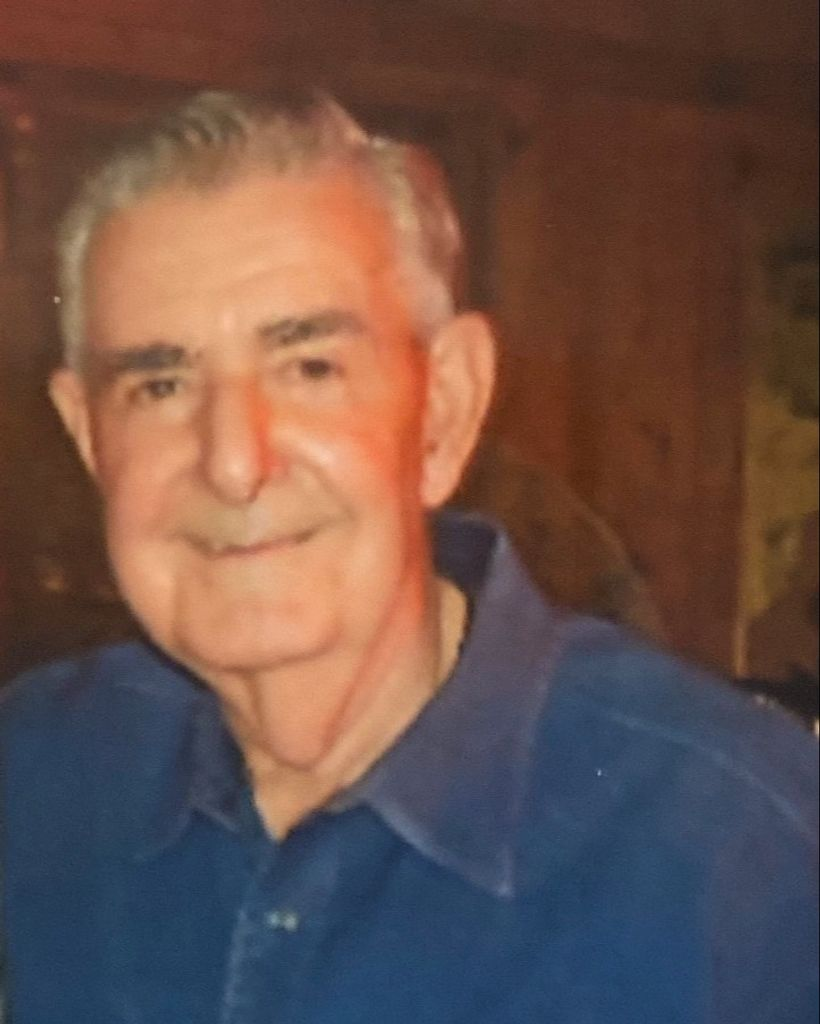
John Borne was an exceptional engineer and offshore safety leader in our OCS oil and gas program during the US Geological Survey (Conservation Div.) and Minerals Management Service (MMS) eras.
Some thoughts on John’s leadership followed by tributes from distinguished colleagues:
John’s Houma District office was a model for the rest of the OCS program. Houma was the program’s busiest district in terms of operational activity, and the most effective in meeting permitting, inspection, and investigation targets.
The few serious accidents that occurred in the District were carefully investigated and the findings were shared in a timely manner with the goal of preventing their recurrence. If John signed a report, you knew it was complete and accurate.
John was knowledgeable about the complex offshore oil and gas operations he regulated, and was an outstanding teacher and mentor.
John treated all companies the same from the super-majors to the small independents – no biases, no favors, and no ethics issues.
John expected companies to fully comply with the regulations. Any departures had to be clearly in the best interest of safety and the environment.
From Ken Arnold (ex-Shell engr, Paragon Engineering President, NAE): As part of the Shell Training program in 1964 I was assigned to trail John in East Bay for a week. One night I was talking to another trainee on a logging barge tied up to a posted barge rig in SP Blk 24. John was also on the barge. Without warning the barge started pulling away from the rig. The three of us jumped from the barge to the rig but I slipped and fell in the canal. I don’t think I was in the water long enough to get wet, when John and a rig hand fished me out. Unfortunately my glasses fell off and were in the mud. John got a scissors device and retrieved my glasses in a matter of minutes.
I greatly appreciated my week with John. What he took the time to teach me about field work was critical to my subsequent successful career in Shell and in Paragon. He was a gentleman and a first class teacher. I was lucky to have known him.
Jodie Connor (founder and retired President of J. Connor Consulting): John was an excellent representative of the MMS, always fair in his decision-making and approvals. I endearingly called him “By the Book Borne”. He enforced the regulations as they were written, which was fair to all operators. Always kind and willing to explain MMS policies.
Lars Herbst (retired MMS/BSEE Regional Director, Gulf of Mexico): What a legend at MMS! A testament to his leadership are the number of Regional leaders that came out of Houma District. Just to name a few: Mike Saucier, Bryan Domangue, Troy Trosclair, and even Jack Leezy! That work ethic that John instilled has continued even to the next generation of leadership! I was fortunate that John let me act as Drilling Engineer when Saucier went hunting each December. My career at MMS was never the same after that opportunity!
Jack Leezy: (President, Avenger Consulting, retired MMS): John served in the Marine Corp during the Korean war. Upon discharge from the Marine Corp John attend the University of Lafayette and earned a BS degree in Petroleum Engineering. John started his oilfield career when he went to work for Shell Oil in 1960 until 1970 as a Petroleum Engineer.
John joined U.S.G.S. In 1970 as a Petroleum Engineer in the Lafayette District. John accepted a promotion in 1972 in the Regional office and was selected as the first District Supervisor in the newly formed Houma District office in October1974. John remained as the District Supervisor until his retirement in 1995. John was instrumental in developing Bureau policies of which some are still in place as of today. John served on countless MMS and industry committees alike during his career. John was looked upon as professional and highly respected by MMS and industry alike. He performed is duties in such a way that even if you may not have liked his decision, you respected it. John’s demeanor never changed as he never lost his composure and worked evenly though all the trials and tribulations during his career at MMS. John even won MMS’s Engineer of the Year award. I owe a lot to John in helping me form my career at MMS as I tried to handle my supervisory duties in the same manner in which John did.
RIP John. You were a superstar! As an engineer, regulator, leader, teacher, and colleague, no one did it better!
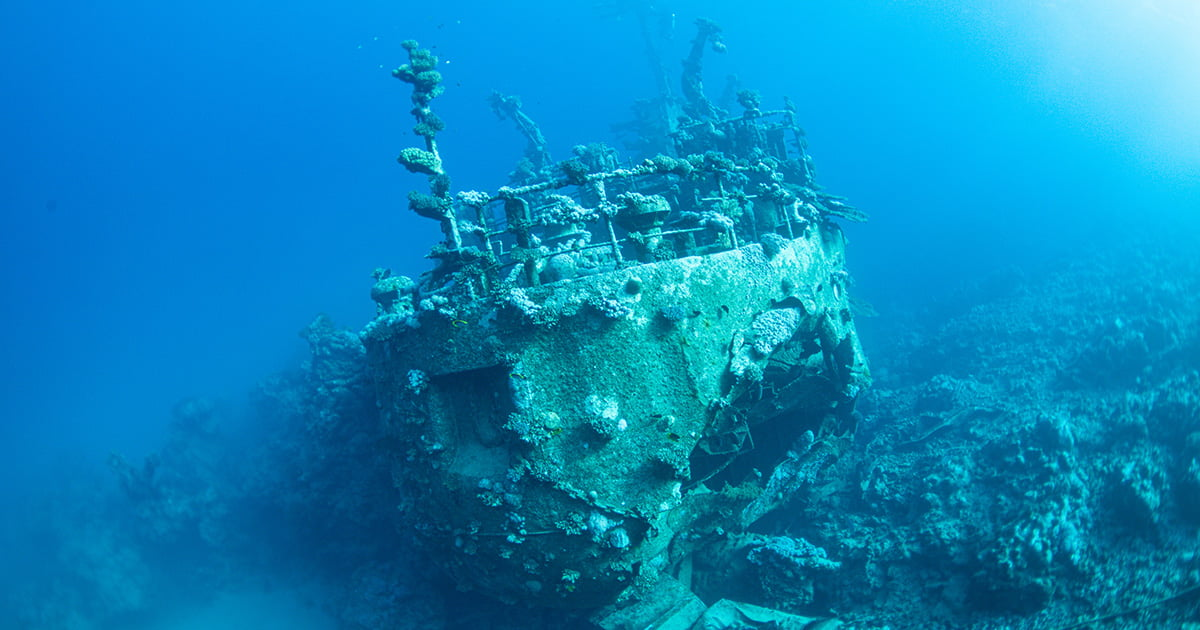
Exercising authority granted in the Congressional Review Act (Chapter 8 of Title 5 of the United States Code), Congress passed Joint Resolution 11 nullifying the Bureau of Ocean Energy Management rule titled “Protection of Marine Archaeological Resources” (Sept. 3, 2024).
Nullification of a final rule is not common. Since its Enactment in 1996, the CRA has been used to overturn only 20 rules. This is the first time an OCS energy rule has been nullified.
Enactment of a CRA resolution of disapproval is unlikely in most circumstances, because a President would be expected to veto a joint resolution disapproving a rule issued by the President’s own Administration.
There are also time limitations for nullifying a rule. The joint resolution must be introduced during a 60-days- of-continuous-session period beginning when the rule has been published in the Federal Register and been received by Congress. However, if within 60 session days after a rule is submitted, Congress adjourns its session, the periods to introduce and act on a disapproval resolution reoccur in their entirety in the next session of Congress.
It’s also noteworthy that a CRA resolution cannot be filibustered if the Senate acts on the resolution during a 60-days-of-Senate-session period beginning when the rule has been received by Congress.
Most of the 20 nullifications involved rules finalized at the end of a previous administration that were nullified at the beginning of a new administration with a majority in both chambers of Congress. That is the case for the Marine Archaeology Rule, which was published at the end of the Biden administration and nullified at the beginning of the Trump administration. .
The nullified OCS rule required operators to submit an archaeological report identifying potential archaeological resources with any exploration or development plan. The rule modified regulations that only required such a report only when a BOEM regional director had reason to believe that an archaeological resource may be present in the lease area.
Archaeological survey requirements have been somewhat contentious since they were introduced in the 1970s. There were concerns about decisions to require the protection of speculative, low probability sites that could significantly alter operating plans.
A reasonable balance and an apparent consensus was achieved by limiting the report requirements to areas where studies and other information indicated the potential for such resources. BOEM’s new rule tightened the requirement considerably, which led to opposition and ultimately nullification.
Withdrawal from the Paris Climate Change Agreement:The US Ambassador to the UN shall immediately submit formal written notification of the US withdrawal from the Paris Agreement under the United Nations Framework Convention on Climate Change.
Regulatory Freeze: Agencies may not propose or issue a rule until approved by a Presidential appointee. OMB may exempt emergency or urgent rules (déjà vu for regulators 😉).
Alaska: Withdraws a Secretarial Order intended to halt ANWR oil and gas leasing. Rescinds cancellation of ANWR leases.
Encourage energy exploration and production on Federal lands and waters, including on the Outer Continental Shelf.
Eliminate the electric vehicle (EV) mandate.
Requires immediate review of actions that could burden the development of energy resources.
Develop and begin implementing action plans to suspend, revise, or rescind all unduly burdensome agency actions.
Revoke climate change and “clean energy” EOs.
Terminate all activities, programs, and operations associated with the American Climate Corps (RIP 😉).
Expedite and simplify permitting processes.
Facilitate the permitting and construction of interstate energy transportation and other critical energy infrastructure, including pipelines.
Disband the Interagency Working Group on the Social Cost of Greenhouse Gases.
Terminate the Green New Deal.All agencies must immediately pause the disbursement of funds appropriated through the Inflation Reduction Act of 2022 (Public Law 117-169) or the Infrastructure Investment and Jobs Act (Public Law 117-58).
The Secretary of Energy is directed to restart reviews of applications for LNG export projects as expeditiously as possible.
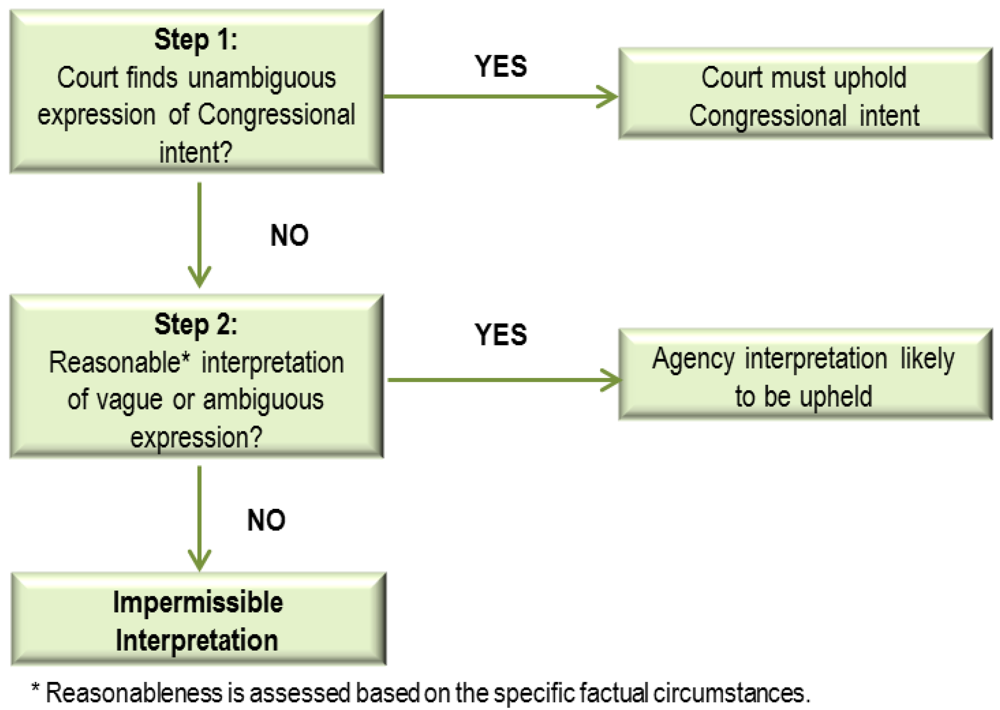
In a major decision, the Supreme Court overturned the Chevron doctrine, which for four decades led judges to defer to how federal agencies interpreted a law when its language wasn’t clear. In a later post, we will speculate on how this ruling could affect the offshore regulatory program.
One of the most important principles in administrative law, the “Chevron deference” was coined after a landmark case,Chevron U.S.A., Inc. v. Natural Resources Defense Council, Inc., 468 U.S. 837 (1984). The Chevron deference is referring to the doctrine of judicial deference given to administrative actions. In Chevron, the Supreme Court set forth a legal test as to when the court should defer to the agency’s answer or interpretation, holding that such judicial deference is appropriate where the agency’s answer was not unreasonable, so long as Congress had not spoken directly to the precise issue at question.
Firstly, taking 2.5 years to publish an investigation report is unacceptable for an organization with BSEE’s talent, resources, and safety mandate. Unfortunately, such delays now seem to be the rule as the summary table (below) for the last 4 panel reports demonstrates. The most recent report implies that the actual investigation was completed in 2-3 months. Why were another 2+ years needed to publish the report? (Note that the lengthy and complex National Commission, BOEMRE, Chief Counsel, and NAE reports on the Macondo blowout were published 6 to to 17 months after the well was shut-in.)
incident date
report date
elapsed time (months)
incident type
5/15/2021
10/31/2023
29.5
fatality
1/24/2021
7/24/2023
30
fatality
8/23/2020
2/15/2023
30
fatality
7/25/2020
2/15/2023
31
spill
Four most recent BSEE panel reports
The subject (May 2021) fatality occurred during a casing integrity pressure test, and some of the risk factors were familiar:
The platform was installed 52 years prior to the incident, and had been shut-in for more than a year.
The well of concern (#27) was drilled in 1970, sidetracked in 1995, and last produced in February 2013.
Diagnostic tests clearly demonstrated communication between the tubing, production casing, and surface casing.
In light of the known well integrity issues and the absence of production for more than 8 years, the prudent action would have been to plug and abandon the well in a timely manner. However, under 30 CFR 250.526 as interpreted at the time, Fieldwood had another option – submit a casing pressure request to BSEE to confirm the integrity of the outermost 16″ casing and (per p. 10 of the report) “continue to operate the well in its existing condition.” Given that the well had not produced for 8 years and that the platform had been shut-in for more than a year, the option to continue operating the well should not have been applicable.
The only issue for Fieldwood to resolve with the regulator should have been the timing of the plugging operation. Additional well diagnostics would only serve to create new risks and further delay the well’s abandonment.
The resulting pressure test of the outermost (16″) casing was solely for the purpose of confirming a second well bore barrier. Per the report (p.10), there is a “known frequency of outermost casings in the GOM experiencing a loss of integrity as a result of corrosion.” Whether or not the 16″ casing passed the test, the inactive well had clear integrity issues and should have been plugged.
Fieldwood proceeded with the pressure test rather than correcting the problem. The regulations, as interpreted, thus facilitated the unsafe actions that followed. These factors heightened the operational risks:
Extensive scaffolding and a standby boat were needed for the test.
Process gas via temporary test equipment was used to conduct the test.
The Field-Person In Charge (PIC) heard about the test for the first time on the morning of the incident.
The PIC and victim had no procedures to follow, and had to figure out how to conduct the test on the fly.
A high pressure hose was connected without a pressure regulator or pressure safety valve.
The digital pressure gauge had two measurement modes, one to display pressure in psi and the other in bars. (One bar is equivalent to 14.5 psi. Assuming that the readings were in psi rather than bars would thus result in serious overpressure of the casing.)
Seconds after the victim told the field-PIC the pressure was 175 psi (presumably 175 bar and 2538 psi), the casing ruptured. The force of the explosion propelled the victim into the handrail approximately 4 feet away, which bent from the impact. The victim’s hardhat was projected 60 to 80 feet upwards, lodging into the piping.
The investigation report fails to address the wisdom of conducting the pressure test and the regulatory weaknesses that enabled Fieldwood to defer safety critical well plugging operations. The pressure test option in 30 CFR § 250.526, was not intended for long out-of-service wells with demonstrated well integrity issues. The only acceptable option was corrective action (plugging the well) without further delay. The pressure test option added risks without addressing the fundamental problem and helped enable the operator to further delay decommissioning obligations.
Postscript: According to BOEM data, the lease where the fatal incident occurred expired on 7/31/2021. Per the BSEE Borehole and structures files, neither the platform (#14) nor any of the other 4 structures remaining on the lease have been removed, and the well (#27) has yet to be plugged.
The Supreme Court will hear a case that could significantly scale back federal agencies’ authority, with implications for regulations affecting the US offshore program. The court could overturn a precedent known as the “Chevron doctrine” that instructs judges to defer to federal agencies when interpreting ambiguous federal laws.
Few Supreme Court doctrines have been stretched more by regulators and lower-court judges than Chevron deference, which says judges should defer to regulators’ interpretations when laws are supposedly ambiguous. The High Court agreed Monday to give Chevron a much-needed legal review.
One of the most important principles in administrative law, the “Chevron deference” was coined after a landmark case,Chevron U.S.A., Inc. v. Natural Resources Defense Council, Inc., 468 U.S. 837 (1984). The Chevron deference is referring to the doctrine of judicial deference given to administrative actions. In Chevron, the Supreme Court set forth a legal test as to when the court should defer to the agency’s answer or interpretation, holding that such judicial deference is appropriate where the agency’s answer was not unreasonable, so long as Congress had not spoken directly to the precise issue at question.
Promoting the offshore wind program is a very high BOEM priority. The bureau is charged with deploying 30 gigawatts of offshore wind energy capacity by 2030, which requires extensive advocacy. However, BOEM is also a core regulator for offshore wind projects, and the concern is that their regulatory role could be compromised by their advocacy priorities.
Per Notice to Lessees 2023 N-01, which arguably should have been published for public comment given its regulatory significance, BOEM has retained important responsibilities for wind project development and operations. These include review and approval of construction and operations plans, site assessment plans, and general activities plans. BOEM may also exercise enforcement authority through the issuance of violation notices and the assessment of civil penalties.
BOEM exists because in 2010 the Administration wanted to separate the OCS program’s leasing (sales/advocacy) and safety (regulatory/enforcement) functions. The intent was to avoid conflicting missions (or the appearance thereof) in the post-Macondo era. (More on this in an upcoming post.)
Ironically, the Save LBI comment describes BSEE as “a distinct unit within BOEM.” That may seem to be the case, but BSEE is actually a separate bureau in the Department of the Interior.
BOE an independent, unsponsored blog that is dedicated to offshore safety, pollution prevention, energy production, effective regulation, and responsible energy policy. If you would like to submit a post, leave a comment to that effect at any time.




 Bud's Offshore Energy (BOE)