Feeds:
Posts
Comments

Posts Tagged ‘pipeline spill’

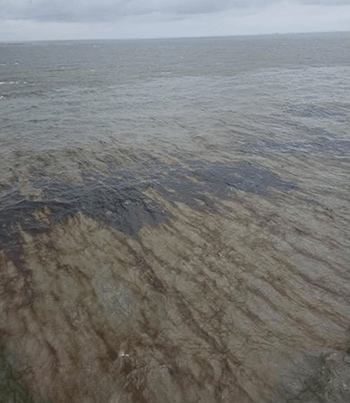
After 3 months of investigation, only a small connector leak has been identified in or near the Main Pass Oil Gathering system. According to the Coast Guard, that leak was not the source of the large November spill (pictured). The absence of findings raises many questions:

  • Is the Main Pass Oil Gathering system still being implicated? Surrounding pipelines?
  • Was a vessel or some other source responsible?
  • Were sheen samples fingerprinted and are those results definitive?
  • Given that the source has not been identified, what was the basis for the large (and rather sensational) spill volume estimate? The sheen was not indicative of a spill of that magnitude.
  • How much production has been shut-in since the slick was first identified? November production data indicate a GoM-wide oil production decline of ~80,000 bopd decline from September.

Given the public claims that were made about the size and potential implications of this spill, the authorities need to be more forthcoming regarding their findings to date.
Read Full Post »

  • Location: Spotted Thursday morning 19 miles east of the mouth of Main Pass; slick moved southwest on Friday, toward the mouth of South Pass
  • Operator: Main Pass Oil Gathering, a subsidiary of the Houston oil company Third Coast.
  • Volume transported: 80,000 bopd
  • Age: Pipeline was completed in Aug. 2022
  • Spill size based on slick estimate: 291 bbls

The cause of the spill is unknown at this time. External damage (perhaps anchor dragging or vessel contact with exposed section) is a good bet.

Read Full Post »

HOUSTON, April 10, 2023 (GLOBE NEWSWIRE) — Amplify Energy Corp. (“Amplify” or the “Company”) (NYSE: AMPY) today announced that it has received the required approvals from federal regulatory agencies to restart operations at the Beta Field. Initial steps to resume full operations will involve filling the San Pedro Bay Pipeline with production, a process which commenced over the past weekend and is expected to take approximately two weeks to complete. Following the line fill process, the pipeline will be operated in accordance with the restart procedures that were reviewed and approved by the Pipeline and Hazardous Materials Safety Administration (PHMSA).

Amplify Energy

Odd that the news release didn’t mention BSEE, the agency which would have had to approve the resumption of production.

18 months after the pipeline spill near Huntington Beach, settlements have been reached, fines have been paid, and production from the Beta Unit has resumed, but the Federal investigation report is still unavailable. Why?

Also, per our 10/6/2021 post:

One would hope that this spill will lead to an independent review of the regulatory regime for offshore pipelines. Consideration should be given to designating a single regulator that is responsible and accountable for offshore pipeline safety (a joint authority approach might also merit consideration) and developing a single set of clear and consistent regulations.


Read Full Post »

A group of international shipping companies and their subsidiaries tentatively agreed Wednesday to pay $96.5 million to Houston-based Amplify Energy Corp. to dismiss one of the last remaining lawsuits over the oil spill, which sent at least 25,000 gallons of crude into the waters off Huntington Beach in October 2021.

LA Times
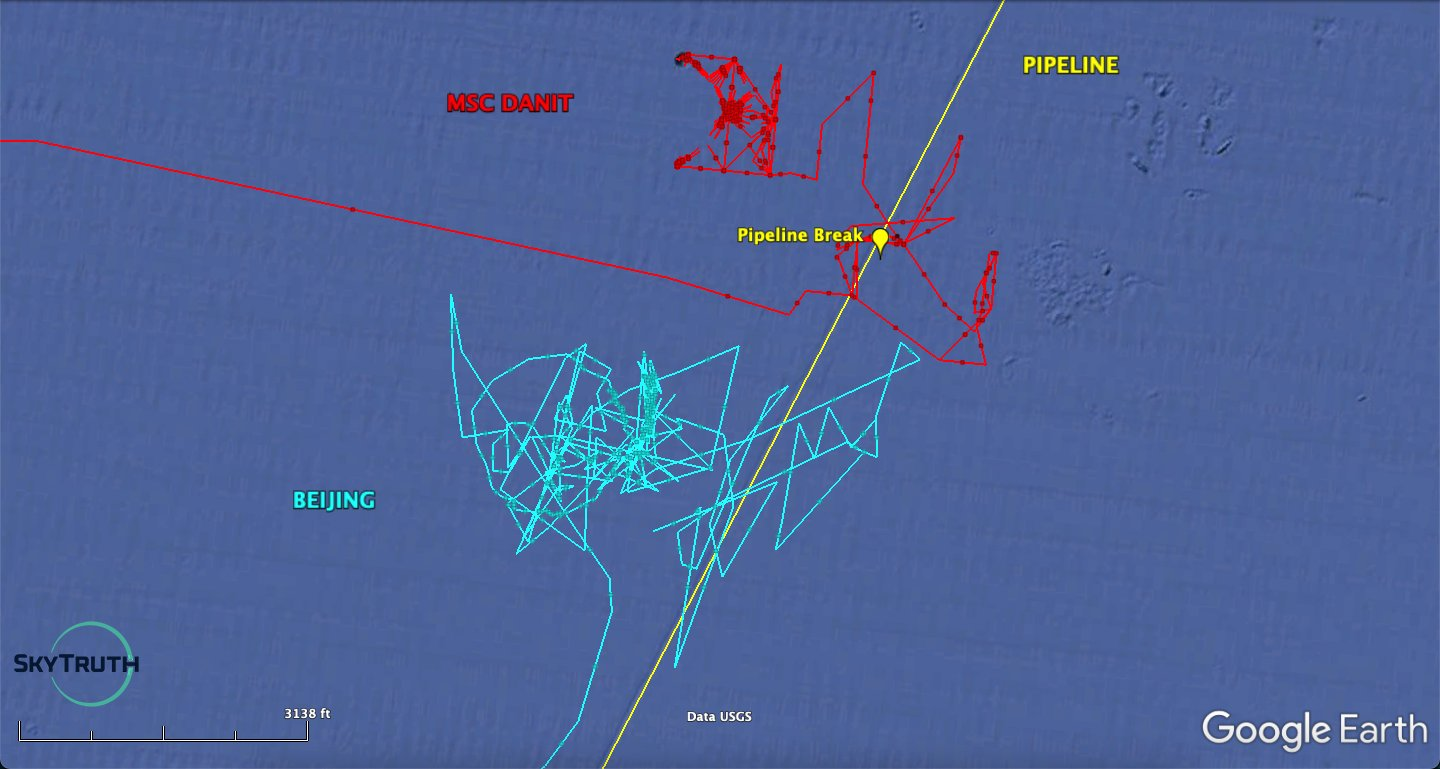
MSC Danit and Beijing were ID’d by Sky Truth as likely dragging anchors over the damaged Beta Unit pipeline

Although the Coast Guard’s investigation report has yet to be published, available information suggests that the pipeline was well maintained and that Amplify’s Beta Unit facilities had a good safety and compliance record. Absent the anchor dragging captured in the above image, a spill would have been highly unlikely. The large settlement in favor of Amplify is therefore quite understandable.

Read Full Post »

MSC Danit and Beijing were ID’d by Sky Truth as likely dragging anchors over the damaged Beta Unit pipeline

Per the LA Times, companies linked to the cargo ships accused of dragging anchors over Amplify Energy’s pipeline have agreed to pay $45 million to settle lawsuits. The ships were identified by Sky Truth (see above image) shortly after the spill (October 1, 2021).

Meanwhile, Amplify is suing the vessel owners for damaging the pipeline and failing to notify the authorities after the damage occurred. Amplify would seem to have a good case given that inspection reports indicate that the pipeline was in good shape prior to the anchor damage and that the Beta Unit platforms had a good safety and compliance record.

Finally, when will we see the investigation report for this spill? It has now been nearly 17 months since the incident.

Read Full Post »

A fresh start for Aera Energy with IKAV, a German asset management company that purchased Aera from Shell and ExxonMobil.

From 1997 to 2007, Aera operated the Beta Unit offshore Huntington Beach. Since selling those facilities, all Aera operations have been conducted onshore, primarily in Kern County, a historically important California oil production area. Aera will continue to operate these onshore properties for IKAV, which looks like an interesting company.

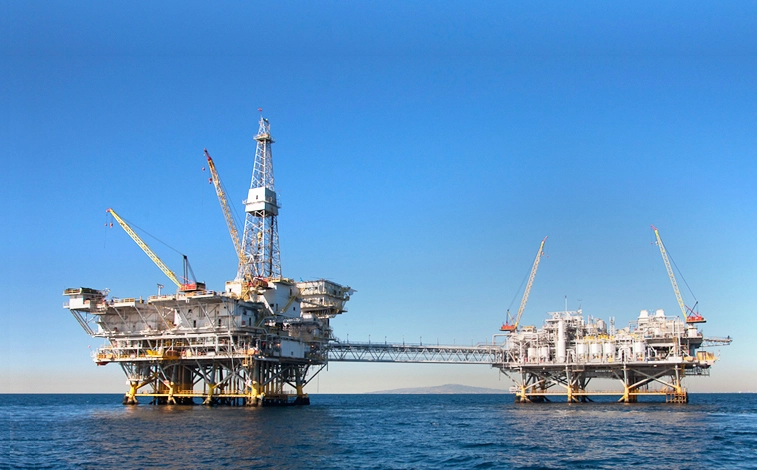
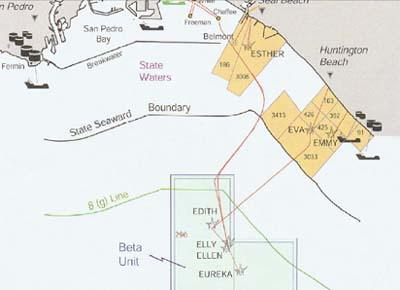
Platforms Ellen and Elly, Beta Unit

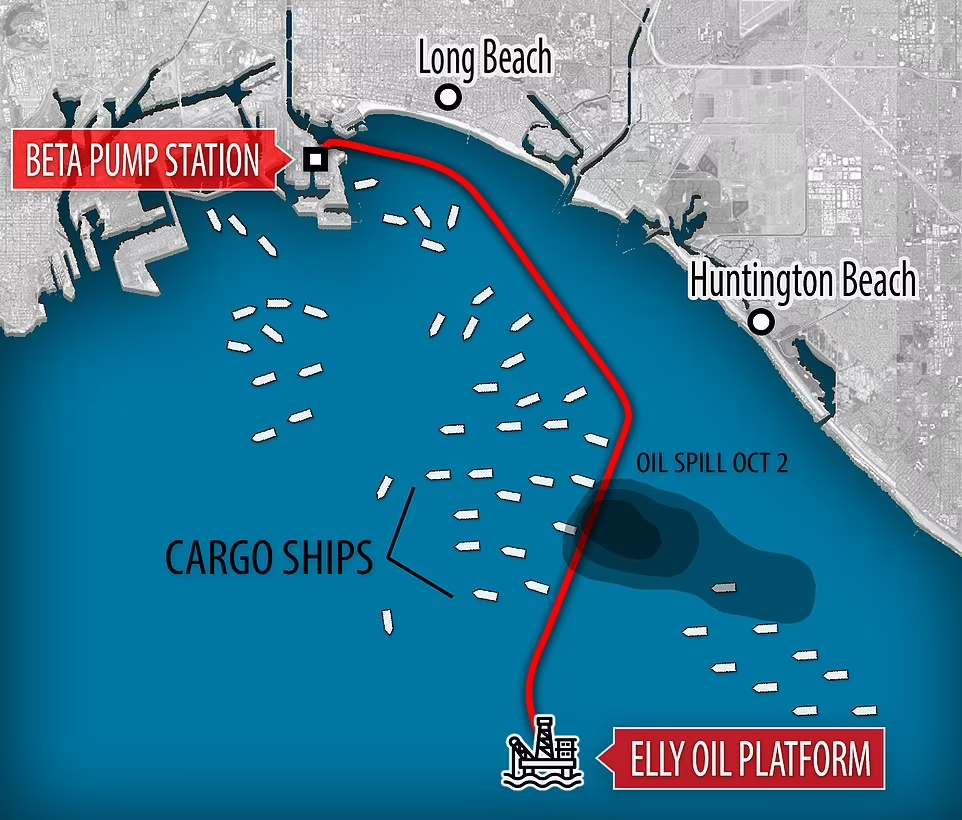
Meanwhile, the Beta Unit has been in the news because of the October 2021 spill from the pipeline transporting Beta Unit production from Platform Elly to shore.

Read Full Post »

In addition to the settlement with the Dept. of Justice, the pipeline operator has reached settlements with the State and County. In addition to a $4.9 million fine, the company agreed to inspection and leak detection measures similar to those in the Federal settlement.

Read Full Post »

Dept. of Justice announcement

In addition to the penalty and reimbursement elements of the plea agreement, there are two Amplify commitments that may be of particular interest to BOE readers:

  1. New leak detection system for the pipeline: More information on the leak detection improvements for this low pressure oil pipeline would be helpful.
  2. Notification to regulators of all leak detection alarms:
    • Which regulators? DOT? BSEE? State? All?
    • Real time reporting or periodic compilations? With real time reporting for every alarm, the distinction between the pipeline operator and regulator(s) would be blurred and new organizational and competence risks would be added. The probability of communications errors and delayed decisions would increase, and the operator would no longer be accountable for bad decisions.

Also, given that the investigating agencies have still not issued their report on the October 2021 spill and no action has yet been taken against the shipping companies that caused the pipeline rupture, the congratulatory Coast Guard, EPA, FBI, and DOT quotes in the announcement seem rather premature and self-serving.

Two final thoughts:

Read Full Post »

Martyn Willsher, Amplify’s President and Chief Executive Officer, commented, “We are pleased to have reached an agreement in principle regarding the civil litigation resulting from the Southern California Pipeline Incident last October. Although we are unable to provide additional detail at this time, we negotiated in good faith and believe we have come to a reasonable and fair resolution. We will continue to vigorously pursue our substantial claims for damages against the ships that struck our pipeline, and the Marine Exchange of Southern California that failed to notify us of the anchor strikes.”

Amplify Energy
Vehled

Read Full Post »

Although we are still waiting for the report on the 2021 Huntington Beach pipeline spill, all evidence indicates that the spill was caused by a container ship anchor. Available information to date also suggests that the pipeline was well maintained and properly operated. The volume spilled and resulting damage was less than predicted. Nonetheless, some vocal opportunists took full advantage of the spill to further demonize offshore production.

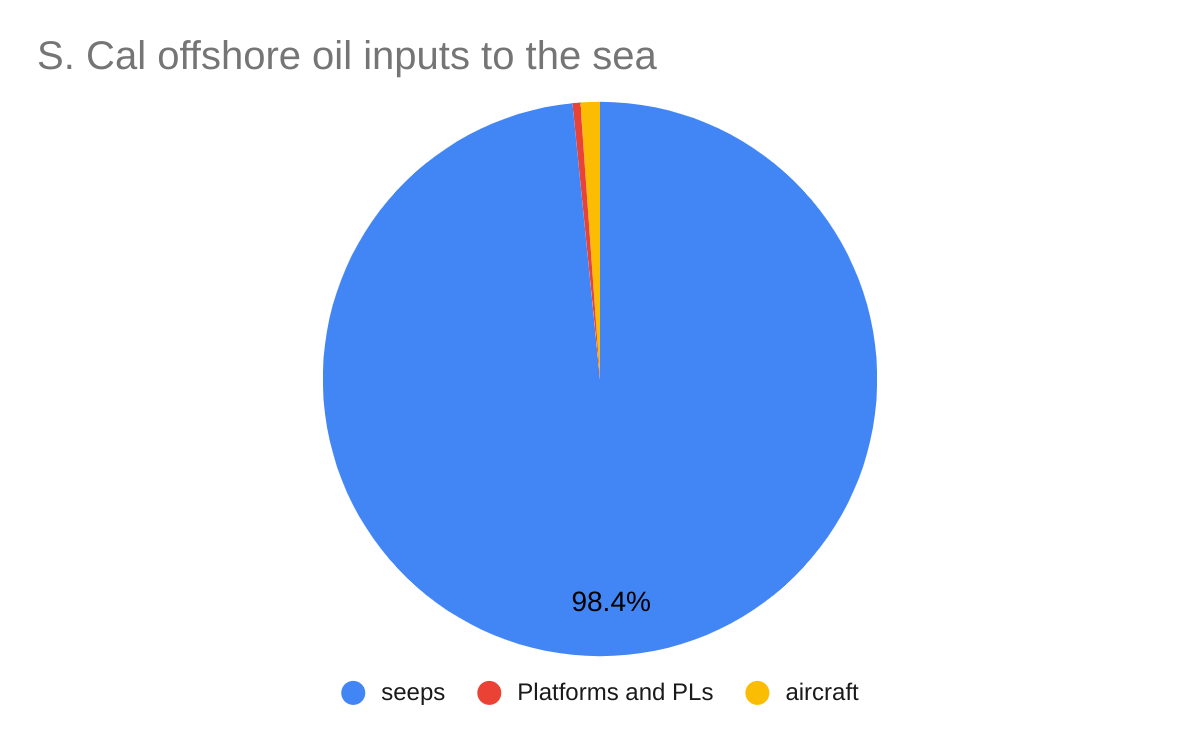
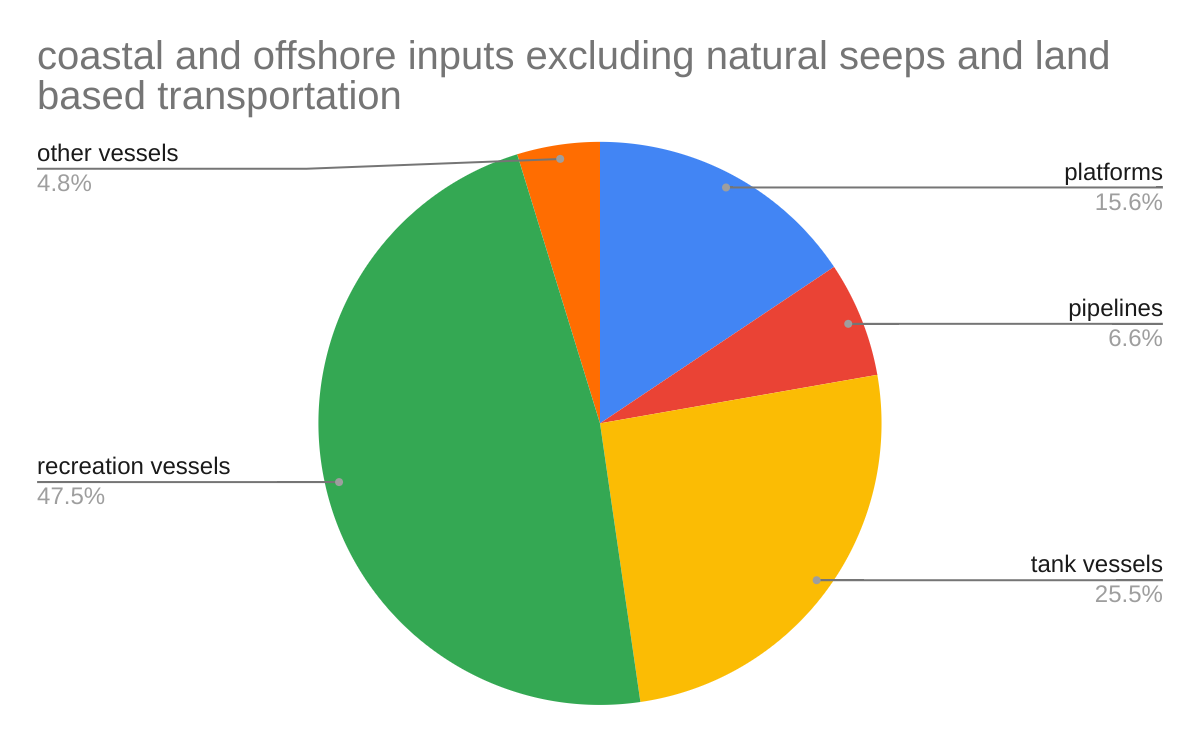
One of our very savvy BOE readers shared data (attached) from Oil in the Sea III, a National Academies report that is the best source of information on oil inputs into US waters. The data for Southern California are presented below in 3 charts. The first chart shows that natural seeps are overwhelmingly the leading offshore source of oil entering SoCal waters, with offshore platforms and pipelines accounting for <0.5% of the oil.

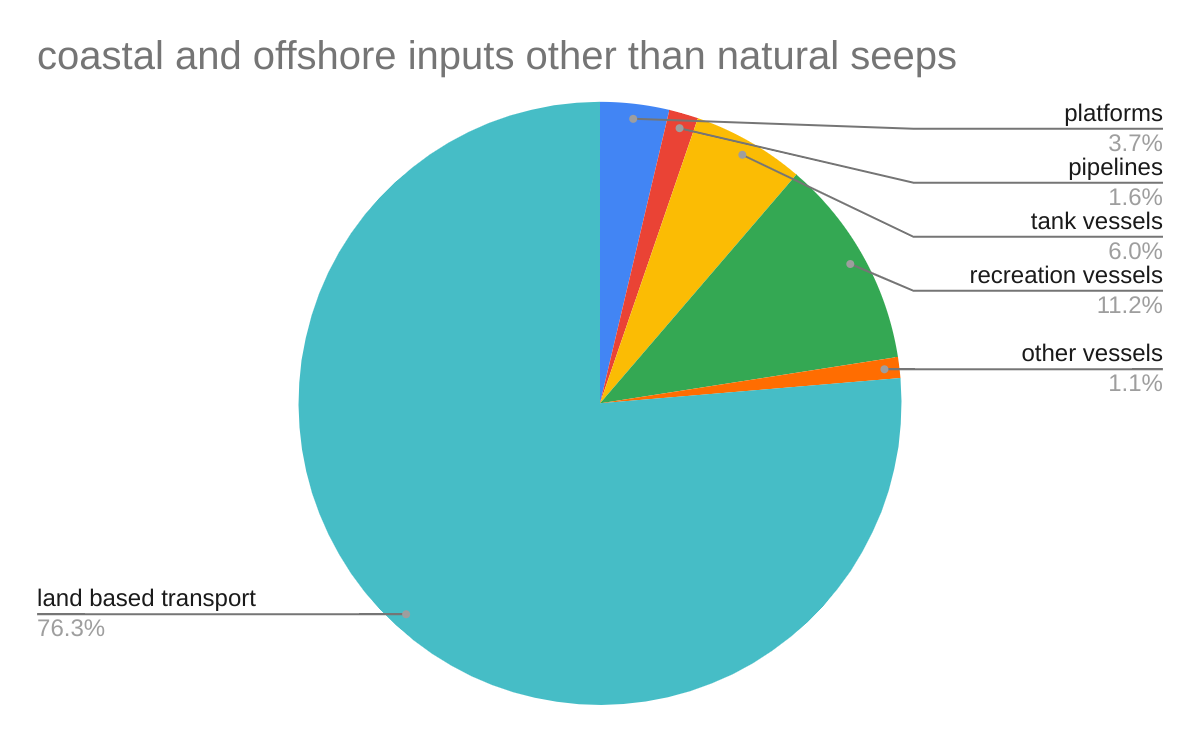
The second and third charts exclude natural seepage and compare the coastal and offshore oil inputs from the other sources. When land based transportation inputs are included (chart 2), platforms and pipelines (combined) account for 5.3% of the oil.

Excluding natural seepage and land based transportation inputs (chart 3), recreation vessels are by far the leading source of oil (47.5%), with platforms and pipelines (combined) accounting for less than half that volume (22.2%).

These data add important perspective, but are not intended to discount platform and pipeline spills. These spills can have significant localized impacts, and every effort must be made to prevent their occurrence.

Read Full Post »

Older Posts »