Feeds:
Posts
Comments

Posts Tagged ‘OS&T’

Attached is John Smith’s comprehensive summary of lawsuits related to Sable Offshore’s attempts to restart Santa Ynez Unit production.

If you are keeping score, there are 10 separate cases including a class action lawsuit filed by investors. New legal battles are sure to follow given Sable’s OS&T strategy. Per John:

The combined legal challenges, injunctions, and restraining orders have significantly delayed Sable’s restart plans and prompted the company to pursue an Offshore Storage and Treatment Vessel (OS&T) strategy, which was utilized to process SYU production in federal waters from 1981 – 1994, and transport oil to markets using tankers.

Read Full Post »

Energy Secretary Chris Wright

In a post on X, Chris Wright commented:

Only in California! Newsom is blocking oil production off California’s coast from reaching their own refineries, driving gasoline prices even higher for Californians! Now, this oil production will have to be shipped elsewhere, lowering gas prices for other areas— just not for California! This is the opposite of common sense!

BOE was a fan of Chris Wright long before he became Energy Secretary, and I agree that the resumption of Santa Ynez Unit production is economically desirable for California and the nation. However, his comment implies that OS&T processing and tanker transport is a realistic option, and I do not believe that is the case.

John Smith and I have discussed Sable’s OS&T announcement on a number of occasions, and we don’t see a reasonable path forward for this option. In addition to the significantly higher capital and operational costs and the need to acquire and retrofit a suitable floating production, storage, and offloading vessel (FPSO), the legal and permitting challenges could be even more complex than for the pipeline option (as daunting as that may sound).

The OS&T option would require a revised development and production plan, and the associated environmental review (almost certainly an EIS).  An EIS would not favor this option, and the California Coastal Commission would surely rule that the OS&T/tanker alternative was inconsistent with their CZM plan. (Keep in mind that the SYU/OS&T production in the early 1980’s was approved prior to the passage of the Coastal Zone Management Act.) The Secretary of Commerce could overrule the Commission’s consistency determination, but legal objections to the override would likely delay the project for years and have a good chance of success.

Onshore processing and pipeline transportation using existing facilities is clearly the environmentally and economically preferable option. The only reasonable path forward for Sable or Exxon is to continue to pursue the onshore pipeline approvals. Federal attention should focus on jurisdiction over that pipeline, which is inherently an interstate line because it transports OCS production, and State actions that are blocking interstate commerce.

Finally, keep in mind that the SYU would still be producing today were it not for the entirely preventable pipeline rupture and the resulting Refugio oil spill. Plains Pipeline, the party responsible for this ugly incident, is no longer the owner, but that doesn’t comfort coastal residents; nor does it absolve the companies that transported their oil through the line from all responsibility.

The Refugio spill will be discussed further in an upcoming post.

·

Read Full Post »

Thumbs up to Santa Ynez Unit production from Phil Mickelson!

Phil also believes SYU production would reduce natural seepage:UCSB and State Lands Commission studies (Quigley, Luyendyk, Hornafius, Peltonen, and others) have shown that when oil production is active, reservoir pressure is reduced and natural seepage declines by up to 50%. That means: •Cleaner beaches (less tar and oil) •Cleaner ocean surface (fewer sheens) •Healthier marine life with reduced chronic stress

Note that those studies are specific to Platform Holly and the Coal Oil Point area. To the best of my knowledge, no studies have associated SYU production with a reduction in natural seepage.

From a related 2010 BOE post entitled “Slick Talk About Seeps” (note that production at Platform Holly has since been terminated):

While Platform Holly may be a negative spillage facility (i.e. Holly’s seep reduction may significantly exceed the platform’s production spillage), this type of seepage reduction has not been demonstrated at other platforms.  Decisions on offshore exploration and development should be driven by the economic, energy security, and environmental benefits.  To the extent that production reduces natural seepage, all the better.  However, seepage reduction is not a primary reason for producing offshore oil and gas.

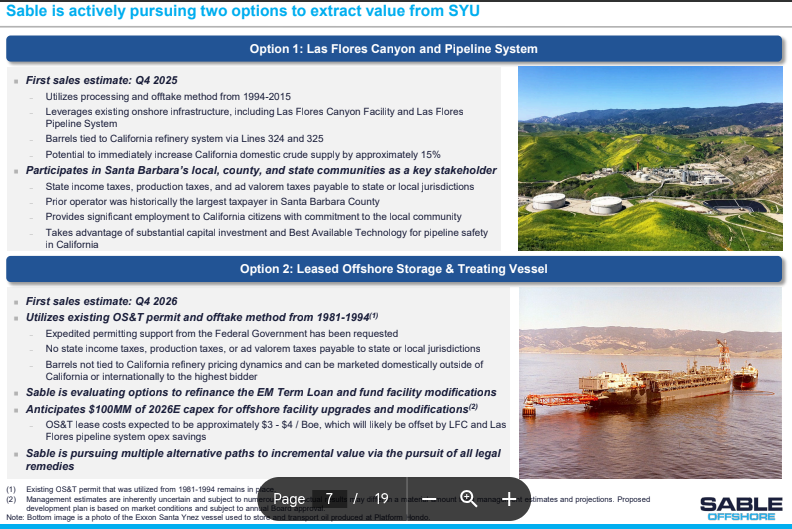
Thoughts on Sable’s production options:

Option 1 (use of existing onshore infrastructure) is preferable from cost, air emissions, spill risk, State and local revenue, and regional energy supply standpoints. This is the only option that makes sense despite the enormous permitting challenges.

Option 2 (floating processing facility and tankers) would literally be an “in your face” act of defiance given the coastal visibility of the offshore facilities. Supporters of this option should be aware that there was no Coastal Zone Management Act when Exxon produced from Platform Hondo (the only SYU platform at the time) to the Offshore Storage and Treatment (OS&T) vessel in the 1980s. An EIS would not favor this option, and the California Coastal Commission would surely rule that this option was inconsistent with their CZM plan. The Secretary of Commerce could overrule the Commission’s decision, but legal objections to the override would seem to have a good chance of success.

The only reasonable path forward is to do the right thing and continue to pursue the State pipeline/onshore approvals. Although these approvals are substantively warranted, more litigation is probably inevitable. It will be far better to defend a good project (option 1) than a contrived workaround (option 2).

Read Full Post »

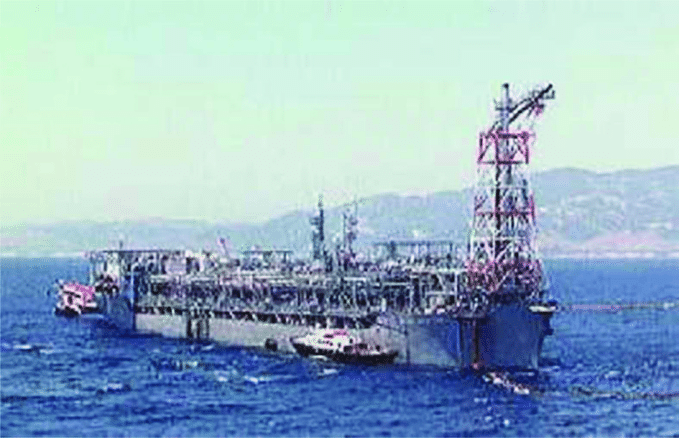
Those of us who were involved with OCS oil and gas operations in the 1970s remember the heated battles between Exxon and Santa Barbara County that led to the installation of the infamous Offshore Storage & Treatment (OS&T) facility in Federal waters. This was the first floating production, storage, and offloading facility (FPSO) in US waters by 3 decades!

In light of Sable’s difficult (bordering on impossible) onshore permitting challenges, the company resurrected the OS&T option in a recent presentation to investors (pertinent slide pasted above). The extent to which this is purely a tactical maneuver remains to be seen, but this option would be very difficult to execute, even with a supportive Federal regulatory environment.

Stay tuned!

Read Full Post »

A.S. Bull and M.S. Love

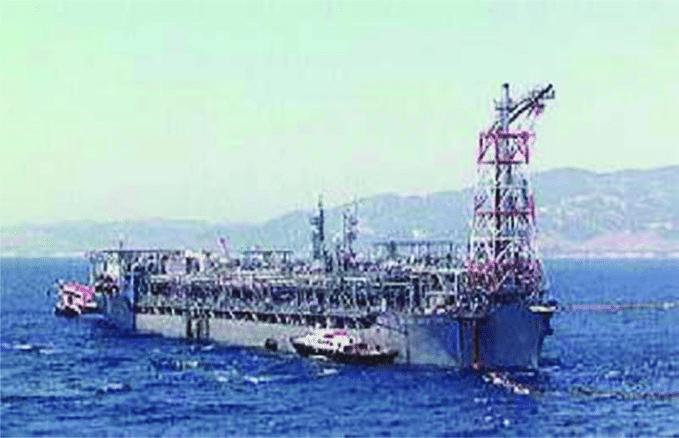
When Exxon was unable to get approval for an onshore oil processing facility, the company installed this offshore storage and treatment (OS&T) vessel and single anchor leg mooring (SALM) 3.5 miles from shore, just seaward of the State-Federal boundary. The OS&T, a converted tanker, operated from 1981 to 1994. By 1994, the onshore gas processing facility in Las Flores Canyon had been expanded to process Santa Ynez crude, eliminating the need for the OS&T. While the OS&T had a very good performance record, the highly visible vessel was less than endearing to most Santa Barbara County residents, and there was no apparent sadness when the OS&T and SALM were decommissioned in 1995.

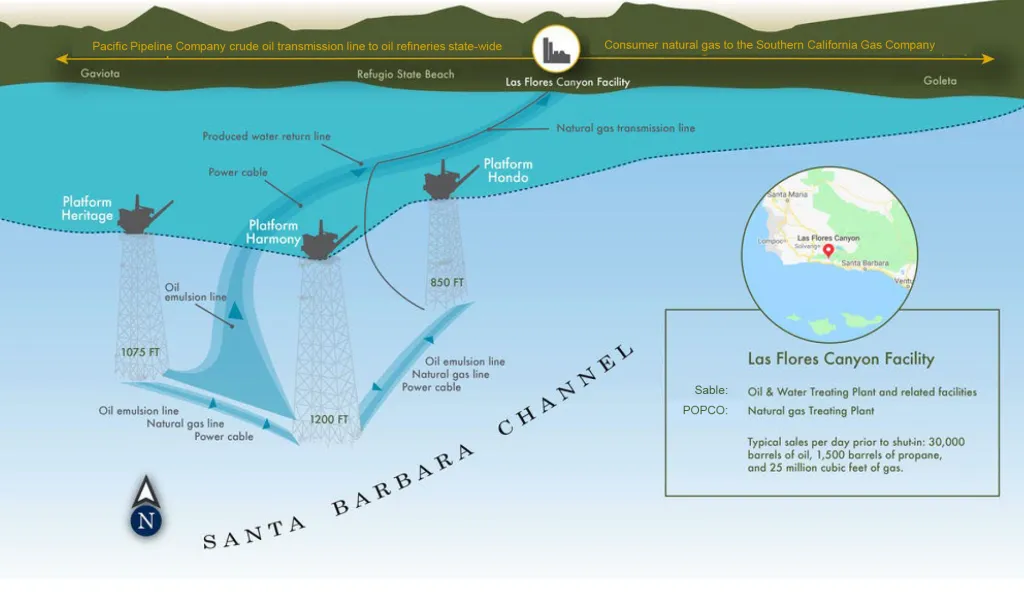
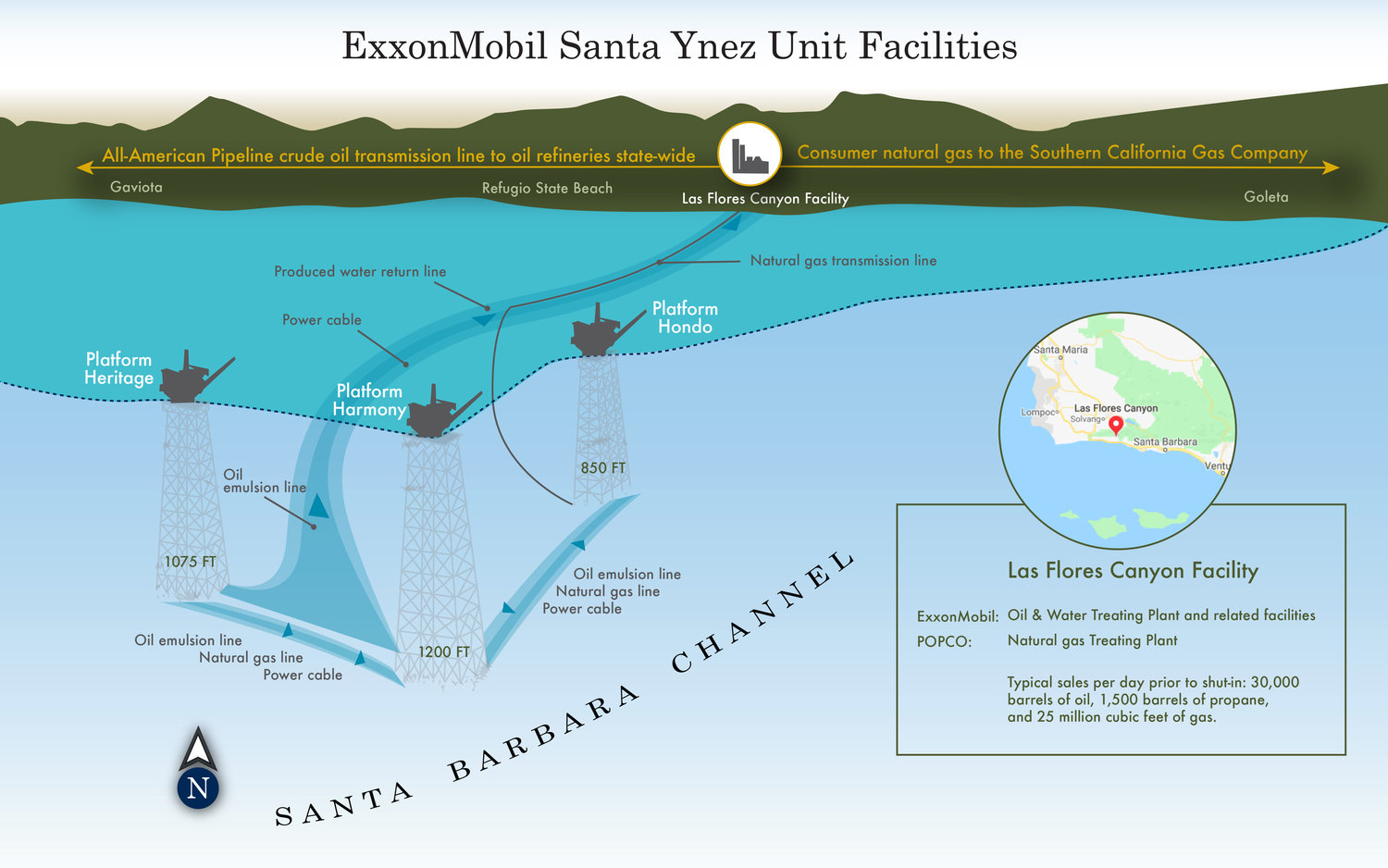
Current Santa Ynez Unit facilities:

Read Full Post »