Feeds:
Posts
Comments

Posts Tagged ‘offshore oil’

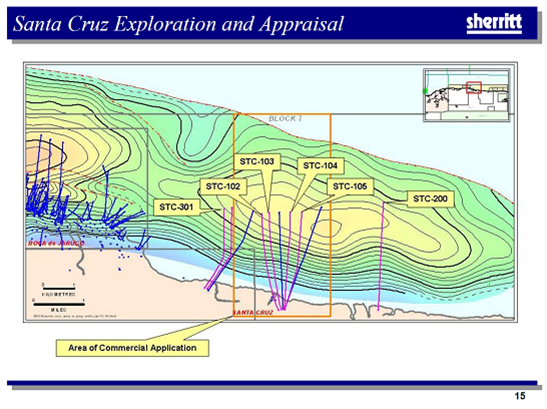
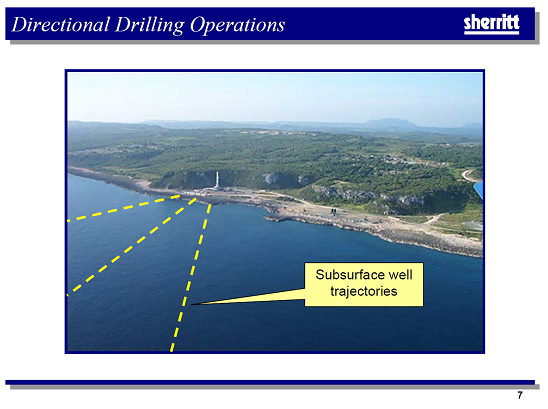
After reading our previous Cuba post, Paul Post reminded BOE that Cuba has been drilling directional wells from shore to offshore targets for many years.  He sent along some images from a 2005 report on Sherritt International Corporation’s operations in Cuba.  Two of those images are pasted above and below.

Read Full Post »

A little bit of information on the BOP “forensic” testing from the Louisiana Record:

Justice Department attorney Michael Underhill said that a forensic report on the failed blowout preventor (BOP) which led to the Deepwater Horizon explosion and subsequent Gulf of Mexico oil spill should be finished in March.  Underhill spoke at a status conference for the BP multidistrict litigation in Judge Carl Barbier’s chambers at U.S. District Court for the Eastern District of Louisiana.

Barbier expressed concern over reports that the testing for the BOP and the cement used in drilling the Deepwater Horizon was falling behind. Underhill stated that the testing on the BOP should be done by the first week of March, but that’s “not a promise.” Underhill stated that the BOP investigation has already cost millions of dollars and has involved laser scanning all the equipment removed from the device. He also said that the forensic report on the BOP should be done by the end of March.

Read Full Post »

Good Financial Times article:

A plan to create a safety organisation for deep-water drilling is being drawn up by leading oil companies and could be launched within weeks, in an attempt to restore public confidence in the industry after last year’s BP oil spill in the Gulf of Mexico.

However, a division has emerged over whether the new body should be part of the American Petroleum Institute, the industry group that was strongly criticised by the official National Commission inquiry into the Deepwater Horizon disaster.

Stay tuned; this will be interesting.

Read Full Post »

Some post-Macondo commentary has characterized MMS employees as regulatory Neanderthals who couldn’t see beyond their checklists, had no understanding of operating systems and the associated process-safety risks, and were dreadfully behind their industry and regulatory peers. The reality is quite different, as those who worked with or for the MMS know. Someone who did both, Doug Morris, an engineer and attorney with extensive industry and regulatory experience, shared this excerpt from an April 1988 Federal Register notice. The Notice publishes the outcome of a 5-year regulatory review that updated and consolidated all MMS operating requirements for offshore oil and gas operations. One of objectives was to establish performance standards for all types of operations to encourage innovation and discourage a “compliance mentality.” Keep in mind that this Notice was published before Piper Alpha, the Cullen report, and the worldwide wave of regulatory reform that followed.

The following summarizes the major changes from current rules:

(1) Performance Standards. Performance standards were added which describe the safety, environmental, property, and resource protection goals intended to be achieved by specified design and engineering requirements. These additions are intended to identify the purpose of the detailed requirements and thus provide a basis for approving an alternative method for achievement of the stated purpose. New, different, better, and more efficient techniques and practices are intended to be available to lessees on the basis of these performance standards.

(a) Performance Requirements. A “Performance requirements” section was added. This section clarifies that the specific detailed requirements of the rule do not preclude the approval for use of alternate or new techniques, procedures, equipment, or activities when the lessee satisfies MMS that the proposed alternate approach provides equal or greater protection than that provided by the requirements specified in the rule. The establishment of performance standards in addition to specific detailed requirements is intended to remove obstacles to innovation and ensure that MMS’s regulations are not unnecessarily prescriptive.

Read Full Post »
On 9 November 2010, the Petroleum Safety Authority Norway (PSA) conducted an audit of BP Norge’s follow-up of new work processes within drilling and well activities using information and communication technology (ICT)

summary of the audit

Read Full Post »

It sounds like they are talking about drilling directionally from onshore locations to offshore targets:

Cuba will drill 20 new oil wells in 2011, mainly in the area from Havana to Varadero, some 120 kilometers east of the island’s capital, said Rafael Tenreyro, head of the exploration group of the Petróleos de Cuba Company. He noted that the drilling will take place from the coast to the sea, to reduce the environmental impact, reported IPS. Havana Times

Read Full Post »

Brazil and Angola share more than a common language. Both aspire to be presalt production leaders.  According to Platts Oilgram News (not available online):

BP, Total, Eni and other international majors have been awarded concessions to explore in Angola’s ultra deepwater presalt blocks, a ministry of energy official told Platts January 26, as companies hope to replicate in the southwest African country the successof the pre-salt plays offshore Brazil.

Per a separate Platts article:

According to the US Energy Information Administration website as of January 2010, Angola had proven oil reserves of 9.5 billion barrels while government statements in December 2009 put total reserve numbers as high as 13.1 billion barrels.

Read Full Post »

Unfortunately, this isn’t a Cajun joke.  According to Upstream, Noble’s Clyde Boudreaux, a deepwater semisubmersible, is being moved to Brazil to work for Shell.

We expect to see additional units leave the Gulf region, which may at some point impact the broader deepwater market. Roger Hunt, Noble

Read Full Post »

While thunder-snow created a surreal setting outside, the scene was rather predictable inside as the National Commission co-chairs testified before the House Natural Resource Committee.  Members acknowledged the Commission’s service, questioned qualifications, expressed frustration with the “permitorium,” raised concerns about our economic and energy future, and disputed the conclusion that “systemic industry failures” contributed to the disaster.  Others suggested that Macondo safety issues had not been resolved, that the risks associated with offshore drilling were not being managed properly, and that everyone else in the world regulates offshore operations more effectively than the US (or at least their disasters have been less recent).

Putting all that aside, I was pleased by the interest of the members in the BOP failure. They seem to share our frustration with the delays in the BOP examination/testing/forensics/autopsy. Perhaps the Committee can determine the status of this very important aspect of the investigation, and provide a summary of what has happened since the stack was recovered and what work remains to be accomplished. That would seem to be a reasonable request.

Read Full Post »

Good news first:

Scientists at the Woods Hole Oceanographic Institution in Massachusetts found circumstantial evidence that the chemicals guided some oil into underwater currents, stopping it from bubbling up to the surface, where it would do more damage, said marine chemist Elizabeth Kujawinski.

Now the bad:

But she added, “the dispersant is sticking around,” which is worrisome. The chemicals didn’t seem to biodegrade the oil and gas as fast as basic chemistry would predict.

See the AP article recommended by BOE oil spill guru Cheryl Anderson.

Read Full Post »

« Newer Posts - Older Posts »