Feeds:
Posts
Comments

Posts Tagged ‘Norway’

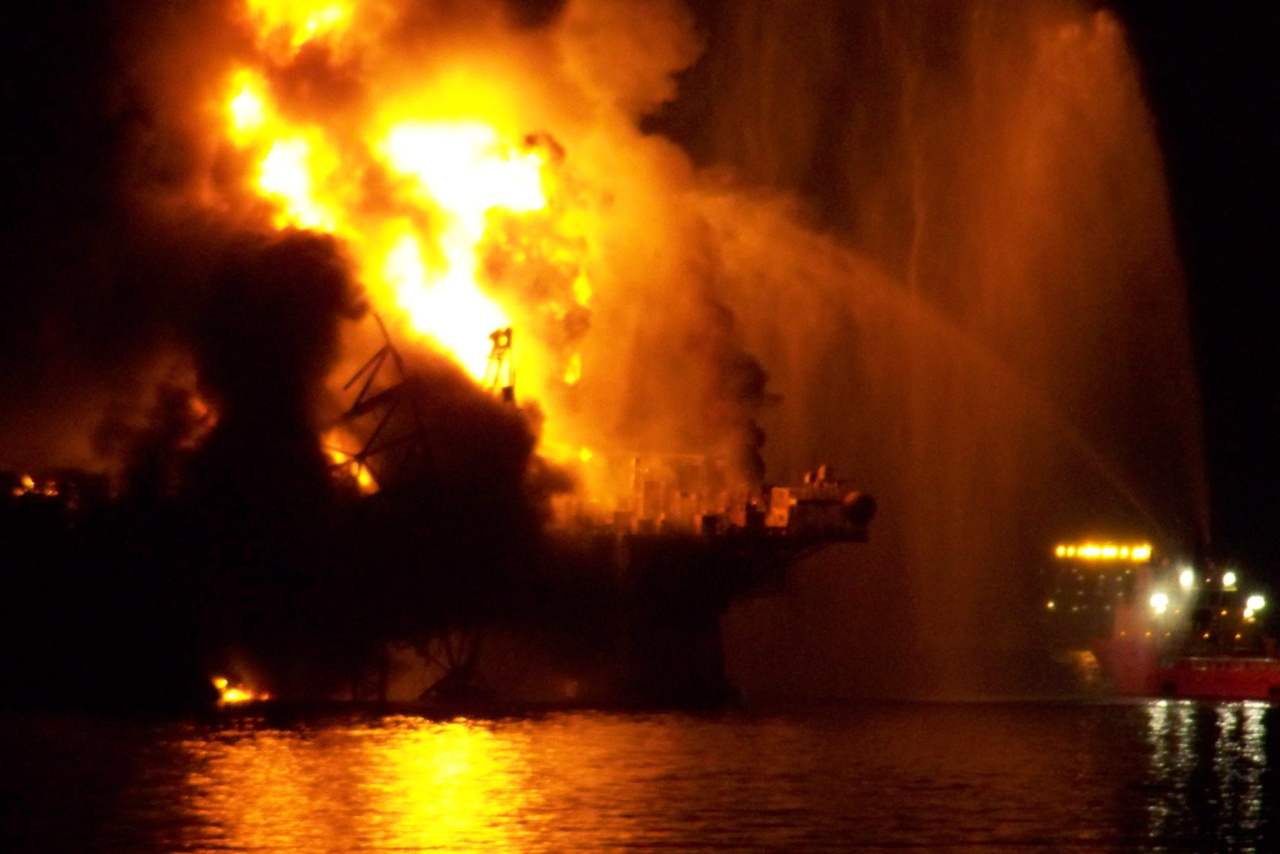
“Can’t happen again” was the mantra of the OCS oil and gas program for 40 years after the Santa Barbara blowout.  “Can’t happen here” was the short-lived message of government and industry after last year’s Montara blowout in the Timor Sea.   Surprisingly, new versions of the “can’t happen” message have been heard since Macondo.  Companies have boasted that “it couldn’t happen to us,” and some government representatives have claimed that their regulatory regimes would have prevented the blowout.  The beat goes on.

Macondo will not be the blowout that ends all blowouts, and Macondo will not be the last major offshore accident.  We need to focus on reducing the risks of another disaster during drilling, production, or transportation, in deep or shallow water, arctic ice, and every other environment where operations are conducted. The new mantra, no matter where you operate or regulate, should be “CAN HAPPEN AGAIN.”  That is the attitude we need if we are to prevent future accidents.  We should preach the “CAN HAPPEN AGAIN” message loudly and clearly, no matter how many years (hopefully decades) elapse before the next major accident.

We’ve heard a lot of details about the shortcomings of the well design, the companies involved, and one of the regulators.  However, consistent with the CAN HAPPEN AGAIN message, we need to also look at the high-level management, leadership, and regulatory issues. How do we sustain outstanding performance and minimize the risks of major accidents?  Here are four suggestions that have received little attention since the blowout:

  1. Challenge industry.  One lesson I have learned from the Norwegians is to make industry take ownership for their problems. Instead of halting deepwater drilling for six months while the government attempts to fix the problems (real and perceived), we should have given offshore operators six months to develop a plan for not only preventing another Macondo, but reducing the risks of any major drilling, production, and pipeline accidents.  If the government wasn’t satisfied with the industry plan, operations could be curtailed until a good plan was developed.
  2. Improve management systems and cooperative industry programs.  US operators and contractors are understandably in a reactive mode with a goal of lifting the moratorium. However, the next disaster will not duplicate this one.  The offshore industry must provide the leadership needed to improve management systems and develop cooperative programs that will monitor performance, evaluate technology and procedures, and asses risks.
  3. Truly reorganize the OCS regulatory program by consolidating safety and pollution prevention functions into a single authority. Wells, platforms, and pipelines are integrated systems.  You can’t divide the components among regulators and expect the regime to function effectively and efficiently. That’s not possible. A few examples (there are may more): separate agencies should not regulate connecting OCS pipelines; separate agencies should not regulate offshore cranes based on the type of facility; and multiple agencies should not regulate the integrity of floating structures.  Because of the complexity of the OCS regime, regulatory and industry personnel spend too much time resolving and coordinating administrative and procedural matters.  This time would be better spent focusing on mission critical safety issues.   A single agency should be responsible and accountable for safety and pollution prevention at offshore facilities, including the review of plans, permit applications, and management systems, and the conduct of inspections and audits needed to assess performance and verify compliance.
  4. Request assistance from international regulatory partners. While numerous US entities have questioned regulators in Norway, the UK, Australia, Canada, and elsewhere, no one has actually asked these organizations for assistance.  In lieu of one or more of the official US inquiries, international regulators should have been called on to review the accident and the regulatory regime. Who has spent more time assessing regulatory options than other regulators?  Who knows more about establishing and achieving safety performance objectives? Who else is knowledgeable and objective, yet insulated from US political influences?

Read Full Post »

Gro Brækken

The function-based regulations in Norway allow for continuous development, while at the same time, the operatingcompanies have a very clear and specific responsibility. This means extra quality control in all operations. I have no doubt that this contributes to the high level of safety. Gro Brækken, Director General of the Norwegian Oil Industry Association

This is an important report for BOE’s regulatory philosophers and those who are involved in one of the post-Macondo reviews.  The description of the US regime is not entirely accurate, but this comparison is nonetheless very useful.

Read Full Post »

BOE does not officially resume posting until 30 August, but we wanted to make sure you were aware of Magne Ognedal’s recent remarks to Upstream

“It is very frustrating,” Ognedal said. “We do not have the information we need to finish the job. We know from the transcripts of the inquiry that the Macondo and Montara blowouts appear to have very similar causes.  However we cannot draw any conclusions until we have access to the report.”

I also suggest that you read the text of Magne’s excellent speech during the Safety Luncheon at ONS in Stavanger.

Magne Ognedal Addresses ONS Safety Luncheon

Read Full Post »

Hart E&P shares reader feedback about the infamous Tiger Mike. (also, see our precious post)

Meanwhile BOE Senior VP Odd Finnestad recalls experiences with Mike-like characters offshore Norway:

For some reason I think there were many – and still are some – Tiger Mikes around in the business. I know they were here in Norway when our first field, the Ekofisk, was discovered by the “Ocean Viking” and later developed the field way back in the sixties. And when you would be sacked simply for having been clumsy enough to have had your fingers crushed by the makeup or breakout tongs. The comment of the ODECO supervisor would then probably be: “Five minutes for a smoke. Then you come back or you f…. jump on the first f…. helicopter!” He might even have added: “And, if you do, I don’t want to see your f…. face again!” well knowing that it was not really necessary for him to elaborate on the fate of the poor Norwegian roustabout that had just signed on for the good money!

You do not find so many of these supervisors in the offshore NCS today. But I think I can still see some – busily harassing employees in other types of oil and gas related organisations.

The Tiger Mikes of today are much more subtle.  While they may say the right things (at least officially), their actions and offhand comments send other signals.  They insist on making every decision, create an atmosphere where employees are afraid to raise safety concerns, and ignore warning signs that might delay operations and increase costs.

When things go wrong, the temptation for both operators and regulators is to be more like Tiger Mike – more memos, more prescription, and more approvals. While this approach may address certain technical or operational details that contributed to a specific accident, it does not address the fundamental leadership, organizational, and cultural shortcomings that must be corrected to improve operational performance and reduce safety and environmental risks.

Great organizations stimulate and harness employee energy and ingenuity such that the whole is greater than the sum of the parts. Similarly, great regulations foster organizational excellence on the part of both the regulated community and the regulator.

Don’t be like Mike!

Read Full Post »
Dette kan skje igjen (This could happen again)~ Magne Ognedal, Director General, Petroleum Safety Authority Norway

Magne’s quote in the Stavanger Aftenblad acknowledges that tragic accidents like the Macondo/Horizon blowout or Alexander Kielland sinking could happen again (see English translation of full article by BOE Europe Chief Odd Finnestad).  Magne goes on to say:

We must appreciate there are risks associated with our petroleum activities, and in our yearly risk assessments we attempt to put in concrete terms what those inherent risks are.  It is up to our national political system to determine whether this risk picture should be accepted or not.

and

We must endeavor to learn from whatever happens around the world, and if there is something that is also relevant to Norway we must apply those lessons, both regulators and industry

Industry and government officials would be wise to follow Magne’s lead and avoid “can’t happen here” statements.  A few of these statements were made in the US after the Montara (Timor Sea) blowout, and we know how that worked out.

Some very experienced and capable offshore managers have had “there but for the grace of God go I” moments in the wake of this disaster.  They know that this is not the time for boasting, piling-on, or schadenfreude.  Like Magne, real leaders are focused on monitoring the investigations, studying the findings and recommendations, and applying the lessons as necessary to further reduce their operating risks and the risks of others who conduct offshore oil and gas operations.

Read Full Post »

Syttende Mai

Children's Parade in Oslo, Stortinget (Parliament) in Background

Best wishes to our many Norwegian friends on their National Day, which celebrates the signing of their Constitution on May 17, 1814. Enjoy the holiday!

Read Full Post »

Magne Ognedal

BOE is pleased and honored that Magne Ognedal, Director General of the Petroleum Safety Authority – Norway, has agreed to the blog’s first interview.  Magne is an internationally recognized authority on offshore safety and regulatory policy.  He has been a leader of the International Regulators’ Forum since its inception in 1994, has assisted governments with emerging offshore energy programs, and served as program and steering committee chair for major international conferences.   He was recently appointed by the King’s cabinet to a second 6-year term as Director General.  I’m sure you will be interested in Magne’s candid and informative comments about offshore safety, regulatory policy, and international cooperation.

I am glad Norway is one Kingdom!

Update: See Magne’s 10 February comments about offshore safety and PSA’s report- Safety Status and Signals, 2009-2010.  For an e-book version (nice work by Ole-Johan Faret!) click here.

Read Full Post »

« Newer Posts