
On 9 November 2010, the Petroleum Safety Authority Norway (PSA) conducted an audit of BP Norge’s follow-up of new work processes within drilling and well activities using information and communication technology (ICT)
Posted in Norway, Offshore Energy - General, oil, tagged bp, Norway, offshore oil, PSA, safety on January 29, 2011| 2 Comments »
On 9 November 2010, the Petroleum Safety Authority Norway (PSA) conducted an audit of BP Norge’s follow-up of new work processes within drilling and well activities using information and communication technology (ICT)
Posted in Norway, Offshore Energy - General, Uncategorized, tagged Norway, offshore drilling, PSA, safety on January 5, 2011| Leave a Comment »
Posted in accidents, Norway, tagged accidents, Norway, PSA, safety, well control on November 20, 2010| Leave a Comment »
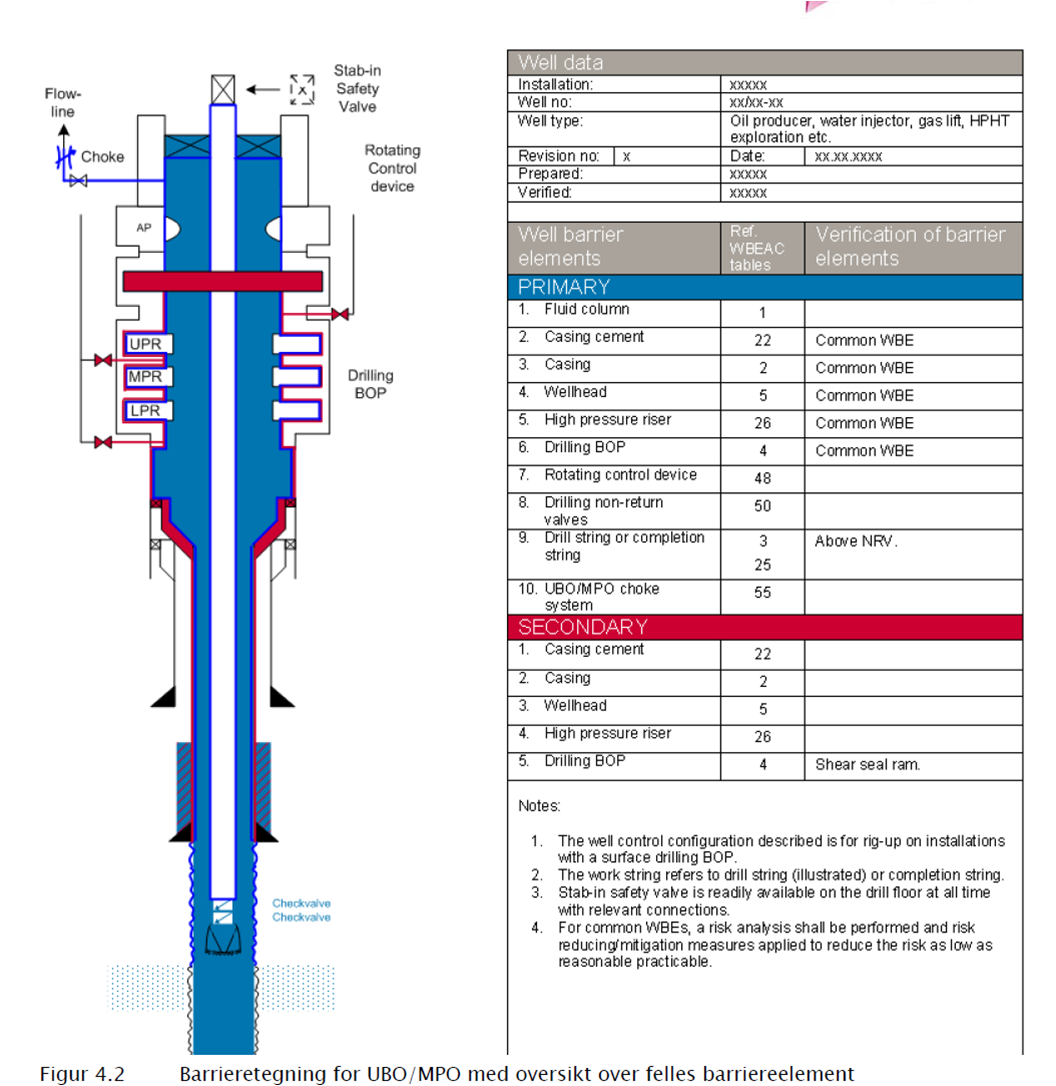
The Petroleum Safety Authority of Norway has commented on Statoil’s report on the well control incident at Gullfaks C:
The PSA regards the incident as very serious. It involved the lengthy loss of a barrier. Only chance averted a sub-surface blowout and/or explosion, and prevented the incident from developing into a major accident.
PSA had directed Statoil to do the following:
Posted in Norway, Offshore Energy - General, tagged Bjorn Vidar Leroen, Drops of Black Gold, North Sea, Norway, offshore oil, Phillips Petroleum, Statoil on November 19, 2010| Leave a Comment »
Yesterday, I was fortunate to receive a copy of Bjørn Vidar Lerøen’s excellent book “Drops of Black Gold” which chronicles the history of Statoil and Norwegian offshore oil and gas development. Of particular interest was a letter on page 17 of the book (not available online) that I had heard about but hadn’t seen. The letter, dated October 29, 1962, is from Phillips Petroleum to the chairman of a Norwegian government committee considering offshore oil and gas exploration.
Phillips’ request is quoted below. You have to give Phillips high marks for taking an aggressive negotiating position (or was it pure chutzpah?). No small lease blocks for them. Phillips asked for the whole Norwegian shelf including any future additions! And what would they offer in return – a seismic survey program costing an estimated $1 million.
We have reason for believing that the geologic basin in which large reserves of natural gas have been discovered in Holland may be extended northward into the Norwegian portion of the North Sea. Therefore, Phillips Petroleum Company is interested in obtaining from the Norwegian government an oil and gas concession covering the lands lying beneath the territorial waters of Norway plus that portion of the continental shelf lying beneath the North Sea which may now or in the future belong to or be under the control of Norway.
Posted in Norway, tagged accidents, Norway, offshore oil, PSA, safety, safety culture on November 14, 2010| Leave a Comment »
 This week I read two pioneering PSA publications: HSE and Culture and Thought Processes. In January 2002, Norway became the first offshore petroleum regulator to require that companies have a sound health, safety, and environmental culture. The purpose of the two publications was to help industry better understand the concept of HSE and Culture and the goals of the regulation. I recommend that you take a few moments and take a look at the publications.
Excerpt from HSE and Culture:
Organisations with a sound HSE culture are characterised by the ability to learn, and constantly question their own practice and patterns of interaction. Informed organisations accommodate dialogue and critical reflection on their own practices. People respect each other’s expertise and are willing to share and furtherdevelop their HSE knowledge.
Excerpt from Thought Processes
Vulnerability deals with the relationship between cause and effect. A vulnerable system can be completely disabled – permanently – by a single non-conformance or a series of errors. That sounds dramatic, and fairly unlikely. But it has happened:
• Alexander L Kielland flotel
• P-36 floating platform
• Piper Alpha platform
•Sleipner A GBSAnd it can happen again. Because vulnerability begins in the brain. When things are going well, people easily become over-confident. Traditional constraints are challenged and established practices rejected. The consequences spread to the rest of the production system in the formof untried technology, complex solutions, faster execution times and narrower safety margins.
Posted in accidents, well control incidents, tagged Gullfaks, Norway, safety, Statoil, well control on November 8, 2010| Leave a Comment »
The incident occurred on 19 May 2010. We appreciate Statoil’s timely completion and public release of the report. The report is in Norwegian, but an English summary is provided.
What happened:
Statoil’s near-term action items:
Posted in accidents, conferences, IRF, tagged Australia, hydrocarbon releases, macondo, Netherlands, Norway, offshore oil, performance measurement, UK on November 2, 2010| 1 Comment »
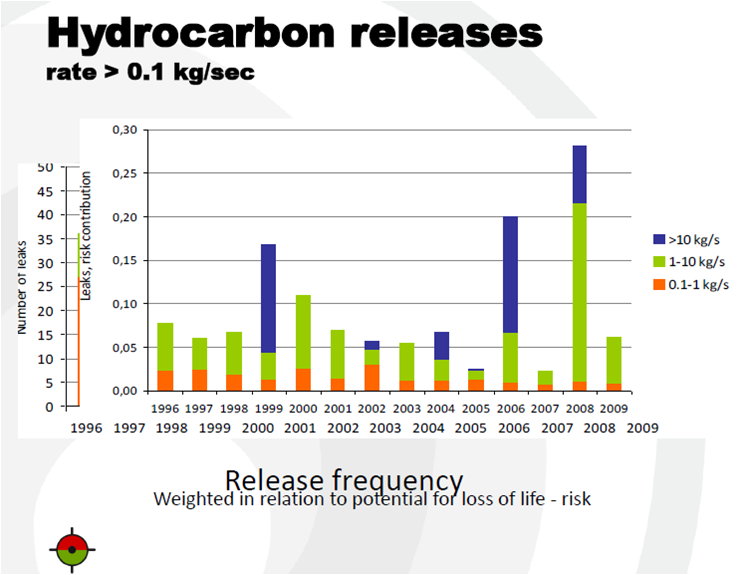
The above slide is excerpted from Torleif Husebo’s presentation at the Vancouver conference. Since Piper Alpha in 1988, offshore safety leaders have been gathering and assessing hydrocarbon release data. Norway, the UK, Australia, the Netherlands and other nations track these data because they are an important indicator of fire and explosion risks. The IRF reports these data as part of their performance measurement project.
Obviously, when hydrocarbons are unintentionally released at an offshore facility you have the potential for a very dangerous situation. However, because of objections voiced when the MMS updated incident reporting requirements 5 years ago, the US government does not collect the detailed information needed to track the size and cause of these releases. The US is thus unable to monitor trends and benchmark against other nations around the world.
Offshore companies have done well in responding to the drilling issues raised following the blowout. However, the post-Macondo offshore industry needs to provide broad safety leadership. A commitment to collecting performance data and assessing risk trends at OCS oil and gas facilities is absolutely essential. A good place to start would be to initiate a cooperative hydrocarbon release data gathering program.
Posted in accidents, Norway, tagged accidents, Norway, PSA, risk management, safety, Torleif Husebo on October 28, 2010| Leave a Comment »

With all the discussion about risk management, what should government and industry be doing to identify and address potential weaknesses in drilling and production systems? A good place to start would be to review the reports that have been prepared by the Petroleum Safety Authority – Norway (PSA) for the past ten years. These reports use a variety of indicators to assess safety risks on the Norwegian Continental Shelf. Torleif Husebo presented a summary of PSA’s risk program at the Vancouver conference. The full text of their latest report can be viewed here.

No single indicator can pick up all relevant aspects of risk. Developments are accordingly measured by utilising a number of relevant indicators and methods, such as the collection and analysis of incident indicators and barrier data, interviews with key informants and a major questionnaire survey every other year.
Risk management is complex and there is no cookbook. Technological, human, organizational, and procedural factors must all be considered, and everyone needs to be engaged.
Posted in accidents, tagged accidents, blowouts, Deepwater Horizon, Denmark, drilling, germany, Gulf of Mexico, Norway, offshore oil, ospar, safety, UK on September 26, 2010| Leave a Comment »

Oil-producing countries on Thursday rejected a German proposal for a moratorium on deep-water drilling in the Northeast Atlantic that reflected environmental concerns after the BP Gulf of Mexico oil spill.
So Germany, which has essentially no offshore oil and gas production in its sliver of the North Sea, proposed a ban on deepwater drilling at an OSPAR meeting in Bergen, Norway? Does the word chutzpah come to mind? The equivalent might be a Norwegian proposal to ban the manufacturer of luxury cars at a meeting in Stuttgart!
The German proposal also called for making sure that offshore operations meet the highest safety standards and demanded an analysis of whether the circumstances that led to the Deepwater Horizon accident could also occur in the Northeast Atlantic.
Now there is some original thinking. No one has ever suggested that before! (sarcasm intended) Don’t you think Norway, the UK, Denmark, the Netherlands, and other countries that actually produce oil and gas might be looking into these issues? I can assure you that they are, but that they are doing so quietly and professionally without the type of “grandstanding” demonstrated by Germany at the OSPAR meeting in Bergen.
Representatives from Germany and other nations with concerns about the safety of offshore oil and gas operations are encouraged to join us in Vancouver next month for serious discussions about the regulatory practices, technology, and management systems that minimize safety risks.
Posted in accidents, well control incidents, tagged accidents, Australia, blowouts, Canada, Deepwater Horizon, drilling, Gulf of Mexico, macondo, Macondodrama, Norway, offshore oil, oil spill, relief well, safety, UK, well control on September 14, 2010| Leave a Comment »
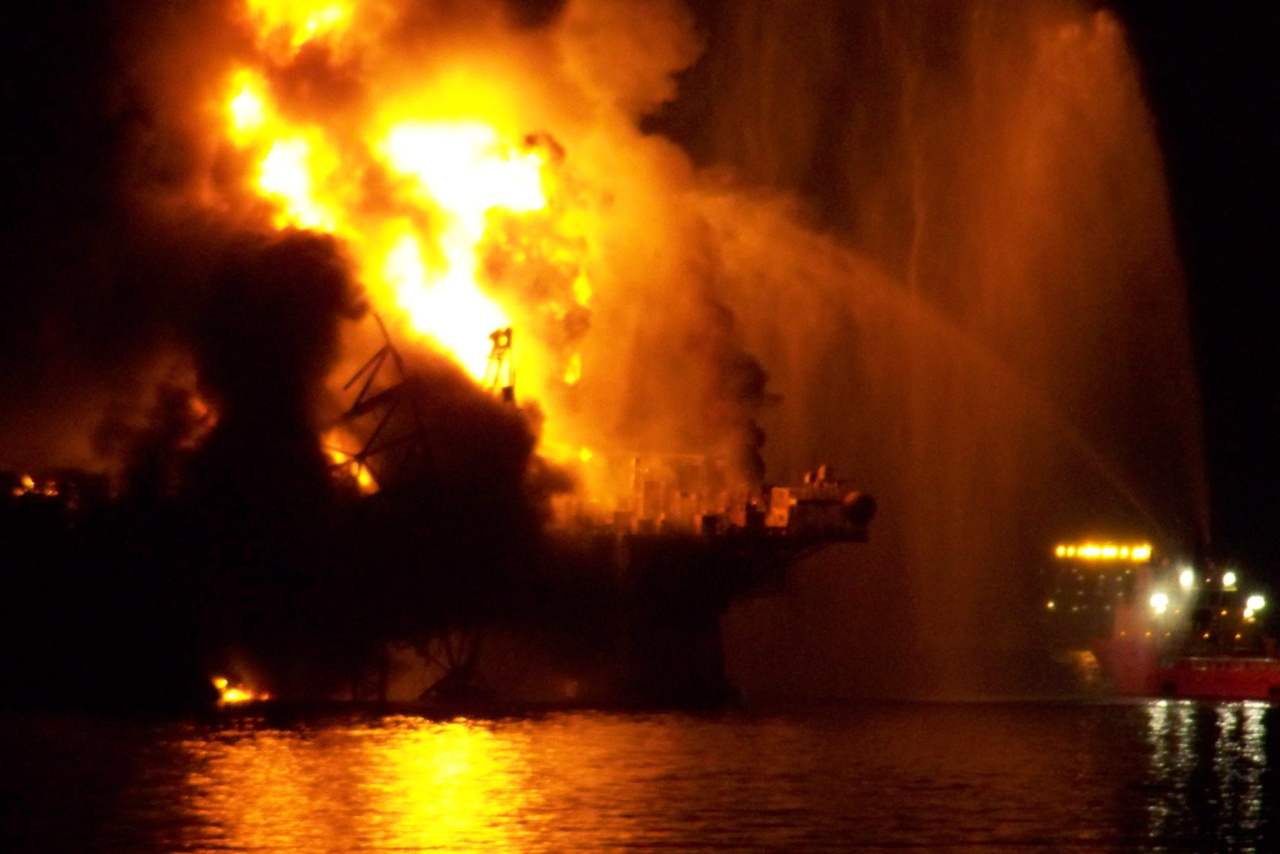
“Can’t happen again” was the mantra of the OCS oil and gas program for 40 years after the Santa Barbara blowout. “Can’t happen here” was the short-lived message of government and industry after last year’s Montara blowout in the Timor Sea. Surprisingly, new versions of the “can’t happen” message have been heard since Macondo. Companies have boasted that “it couldn’t happen to us,” and some government representatives have claimed that their regulatory regimes would have prevented the blowout. The beat goes on.
Macondo will not be the blowout that ends all blowouts, and Macondo will not be the last major offshore accident. We need to focus on reducing the risks of another disaster during drilling, production, or transportation, in deep or shallow water, arctic ice, and every other environment where operations are conducted. The new mantra, no matter where you operate or regulate, should be “CAN HAPPEN AGAIN.” That is the attitude we need if we are to prevent future accidents. We should preach the “CAN HAPPEN AGAIN” message loudly and clearly, no matter how many years (hopefully decades) elapse before the next major accident.
We’ve heard a lot of details about the shortcomings of the well design, the companies involved, and one of the regulators. However, consistent with the CAN HAPPEN AGAIN message, we need to also look at the high-level management, leadership, and regulatory issues. How do we sustain outstanding performance and minimize the risks of major accidents? Here are four suggestions that have received little attention since the blowout:

 Bud's Offshore Energy (BOE)