Feeds:
Posts
Comments

Posts Tagged ‘Gulf of Mexico’

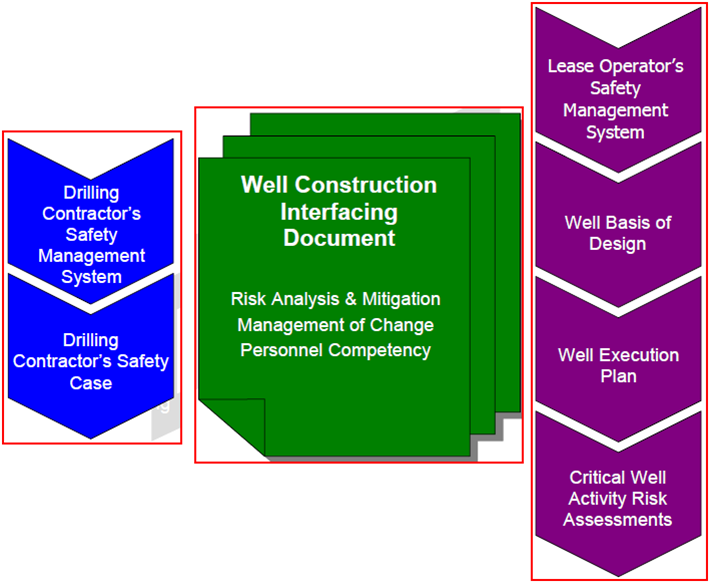
Click for an excellent summary of what may have gone wrong at Macondo and what can be done to prevent future incidents.

While there are no new details on the causes of the blowout, available information on the possible contributing factors is nicely summarized.  The presentation also includes a very good summary of risk management considerations.

Barriers against accidents are not only technical and operational and “physical” but are also non-physical built around strategic and organizational measures and decisions

During the Montara hearings and later in Macondo discussions, we raised concerns about the timing of the production casing pressure test. This issue has not received enough attention in our view, possibly because most of the Macondo focus has been on annulus flow and barriers.  It was good to see this comment in the presentation:

Pressure tested well far too early – could have blown out cement of shoe track

Read Full Post »

Some readers have suggested links and information on the official US investigations of the Macondo blowout.  Some basic information is provided below.  The links will be added to the blogroll in the right column.

We will be examining the relevant facts and circumstances concerning the root causes of the Deepwater Horizon explosion and developing options to guard against, and mitigate the impact of, any oil spills associated with offshore drilling in the future.  This may include recommending improvements to federal laws, regulations, and industry practices.

Joint BOMRE – Coast Guard Investigation

The purpose of this joint investigation is to develop conclusions and recommendations as they relate to the Deepwater Horizon Mobile Offshore Drilling Unit (MODU) explosion and loss of life on April 20, 2010. The facts collected at this hearing, along with the lead investigators’ conclusions and recommendations will be forwarded to Coast Guard Headquarters and Minerals Management Service (MMS) for approval. Once approved, the final investigative report will be made available to the public and the media. No analysis or conclusions will be presented during the hearing.

This study will address the performance of technologies and practices involved in the probable causes of the Macondo well blowout and explosion on the Deepwater Horizon. It will also identify and recommend available technology, industry best practices, best available standards, and other measures in use around the world in deepwater exploratory drilling and well completion to avoid future occurrence of such events.

The CSB intends to proceed with an investigation of the root causes of the accidental chemical release that destroyed the Deepwater Horizon rig and took the lives of 11 workers. The investigation will include the key investigators who were involved in the CSB’s 2005-2007 investigation of the March 23, 2005, explosion at the BP Texas City refinery.

Various congressional committees are also reviewing issues associated with the blowout, most notably the Senate Committee on Energy and Natural Resources and the House Committee on Energy and Commerce.  As time permits, BOE will post updates on post-Macondo legislative actions.

Read Full Post »
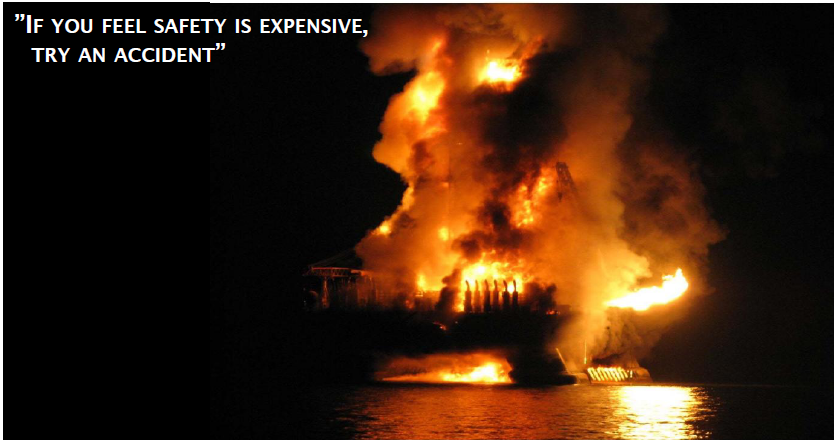
This powerpoint presntation describes industry’s deepwater drilling safety initiatives.  Click to view.

Read Full Post »

Gro Brækken

The function-based regulations in Norway allow for continuous development, while at the same time, the operatingcompanies have a very clear and specific responsibility. This means extra quality control in all operations. I have no doubt that this contributes to the high level of safety. Gro Brækken, Director General of the Norwegian Oil Industry Association

This is an important report for BOE’s regulatory philosophers and those who are involved in one of the post-Macondo reviews.  The description of the US regime is not entirely accurate, but this comparison is nonetheless very useful.

Read Full Post »

  1. They spent the week fishing (for drill pipe) at Macondo, without much success.
  2. More negative pressure tests have confirmed that the well is dead.
  3. The objectives of the relief well intercept are still a bit of a mystery.  As we have previously discussed, there are other (better?)  means of ensuring that the production casing annulus is plugged.  Is the intercept  just a risky and expensive ceremony?  Not according to BP CEO Bob Dudley who offered the following explanation: “there are several reasons for the relief well to be completed, including demonstrating that the difficult procedure can be done, providing more scientific data about the leak and giving closure to an oil-weary public.” The first and third reasons confirm the “ceremony” theory.  We don’t need to prove that you can complete a relief well, and the public needs solutions, not symbolic gestures. With regard to the “scientific data” argument, the intercept may provide some limited information on the condition of the annulus that will help to better understand the cause of the blowout. Whether that information is sufficiently important to justify the delays and added risks remains to be seen.
  4. The hurricane season continued to be kind.  Will the good luck hold?  While time has been less critical since the well was capped on 15 July and the endgame should not be rushed, we are surprised by the absence of urgency.
  5. We continue to wonder what the response would have been like if the responsible party was not a supermajor.
  6. BP and the Unified Command have still not given us their latest thinking on the Macondo flow path, even though some legislative and regulatory actions are being driven by flow path assumptions and speculation.
  7. Another garbage article about MMS’s “flawed culture” appeared in a major newspaper.  These articles are great theater; too bad their major premise isn’t true.
  8. A few former government officials, who showed little or no interest in offshore safety during their careers, have emerged to criticize the OCS oil and gas program.  Where was the criticism during the 40-year period when all was going well?  Why are the officials who have publicly voiced strong support for MMS personnel not being quoted?  These supportive comments have received almost no coverage.  Also, why are the Inspector General quotes limited to those that paint the worst possible picture of the offshore program and MMS?  These same Inspectors General have praised the overwhelming majority of MMS personnel.  Finally, those calling for more inspectors and other regulatory personnel might want to start by showing some respect and support for the staff that is already onboard.
  9. More silly comments about the evils of “industry standards” have appeared in the press.  BOE will address this nonsense later in the week.

Read Full Post »

BOE does not officially resume posting until 30 August, but we wanted to make sure you were aware of Magne Ognedal’s recent remarks to Upstream

“It is very frustrating,” Ognedal said. “We do not have the information we need to finish the job. We know from the transcripts of the inquiry that the Macondo and Montara blowouts appear to have very similar causes.  However we cannot draw any conclusions until we have access to the report.”

I also suggest that you read the text of Magne’s excellent speech during the Safety Luncheon at ONS in Stavanger.

Magne Ognedal Addresses ONS Safety Luncheon

Read Full Post »

Colin Leach brought this paper to my attention: Subsea Accumulators – Are They a False Reliance? As BOP actuation and shearing power issues take center stage, this paper warrants further review.  Unfortunately, we were only able to link the abstract at this time.  We will post the full paper if permission is granted.

Read Full Post »

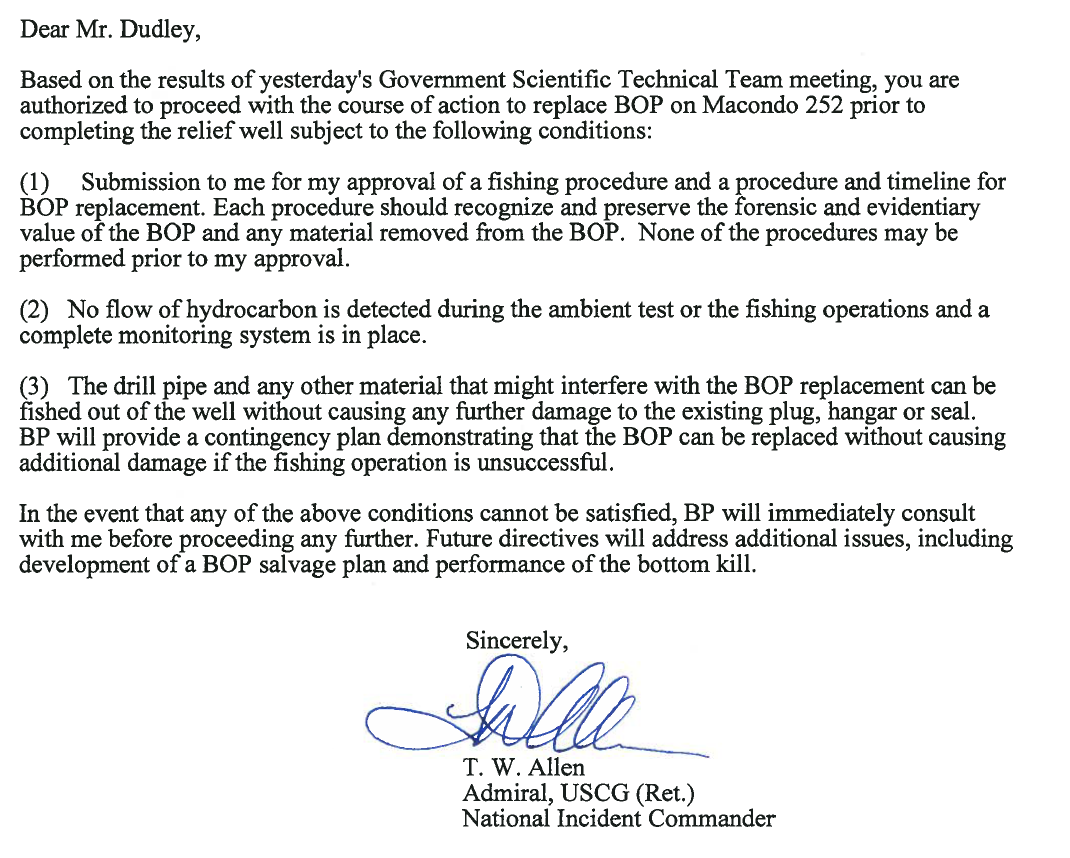
Aug. 19, 2010 letter, click to enlarge

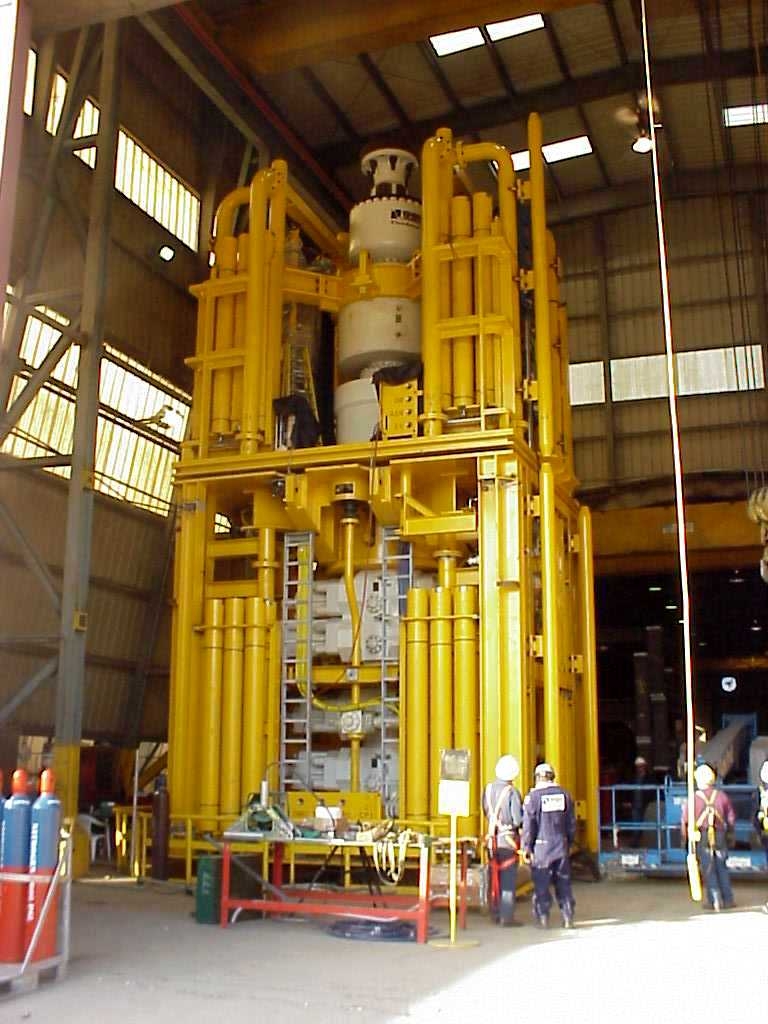
With the new BOP in place, and the capability to enter the well from the top, squeeze cement into the annulus, and set and test plugs, the relief well intercept appears to add nothing but risk.  Is the relief well being finished because of the repeated “read my lips” statements about its necessity or is there a valid reason that we are missing?

Also, with the well killed, should the Incident Commander be directing and approving operations that seem to fall under the plugging and abandonment category?  Those operations are under the purview of the Bureau of Offshore Energy Management, Regulation, and Enforcement (BOEMRE) in the Department of the Interior.  (Actually, according to the applicable MOU, (see section 10), BOEMRE should have had the lead on well control and flow abatement since the well blew out on April 20.)

Read Full Post »

Like all swinging voters, Dirty Harry – a saltwater crocodile admired for his prediction prowess – took his time sniffing out the candidates in his enclosure at Crocosaurus Cove in Darwin today. Refusing to make a snap decision, Harry – reluctantly it seemed – chose the chicken carcass that was attached to a caricature of Prime Minister Julia Gillard.

Link

Should the croc be correct, BOE friend Martin Ferguson will presumably retain his cabinet position and release the Montara report as promised.  Why is the release of this report so important?

  1. While the transcripts of the Inquiry hearings do a pretty good job of identifying the well planning, cementing, barrier, and management issues that were contributing factors, the Commission’s confirmation of the specific root causes of the blowout is essential.
  2. Only a few BOE geeks and a handful of others have actually read all of the testimony and submissions.  The Macondo planners and Deepwater Horizon crew either were totally unaware of what happened at Montara or ignored what they had learned.  I suspect that the former was the case.
  3. Important emergency response issues, which received minimal attention during the Montara hearings, will likely be discussed in the report.  Montara demonstrated that capping and containment operations can be more difficult for a surface well than they are for a subsurface well.   For safety reasons, a surface capping operation was prohibited at Montara.  Even if the operation was allowed, it probably wouldn’t have been successful because of the way the well was suspended.  Should well suspension practices take into account the possibility of a surface capping operation?
  4. The decision to move a rig from Singapore to drill the Montara relief well, rather than use rigs that were operating off Australia, has broad industry and regulatory implications.  Will this decision be assessed in the report?
  5. Finally, the Montara Commission makes recommendations for Australia’s offshore regulatory regime. These recommendations will be of great importance to the US and other nations that are reorganizing or initiating their regulatory programs.  We expect the Commission to recommend that a single agency regulate operational safety offshore Australia.  This is consistent with the recommendation in my testimony before the Senate Committee on Energy and Natural Resources and the approach taken by Norway and other leading offshore regulators.  A regulatory regime that includes multiple agencies with overlapping or segmented jurisdiction guarantees conflict, confusion, gaps, and inefficiency.  Wells, platforms, and pipelines are integrated drilling and production systems, and must be regulated as such. Similarly, permitting, auditing, and inspection are integrated regulatory functions that cannot be effectively divided among multiple agencies.  One regulator must be responsible and accountable.

Read Full Post »

Not surprisingly, the television networks embraced the “Georgia Study,” which estimates that up to 79% of the Macondo spillage remains in the Gulf. Correspondents, bobbing from boats, rushed to report the news.  Does this mean that the networks will resume their courageous Key West oil-watch?  How about those damage projections for East Coast beaches?

Anyone who thinks that 79% of the oil remains hasn’t spent much time observing oil spills.  NOAA’s peer reviewed numbers are more credible.

The major newspapers, to their credit, seem to be providing balanced coverage of the new report.  The New York Times has a good article and this comment from Ed Overton seems to be pretty much on target:

Other marine scientists involved in evaluating the impact of the spill defended the government’s findings. “I generally agreed with the results,” said Edward Overton, a biologist at Louisiana State University who was one of several scientists who reviewed the federal study prior to its release. “I think it’s close to being on the mark.”

Read Full Post »

« Newer Posts - Older Posts »