Feeds:
Posts
Comments

Posts Tagged ‘financial assurance’

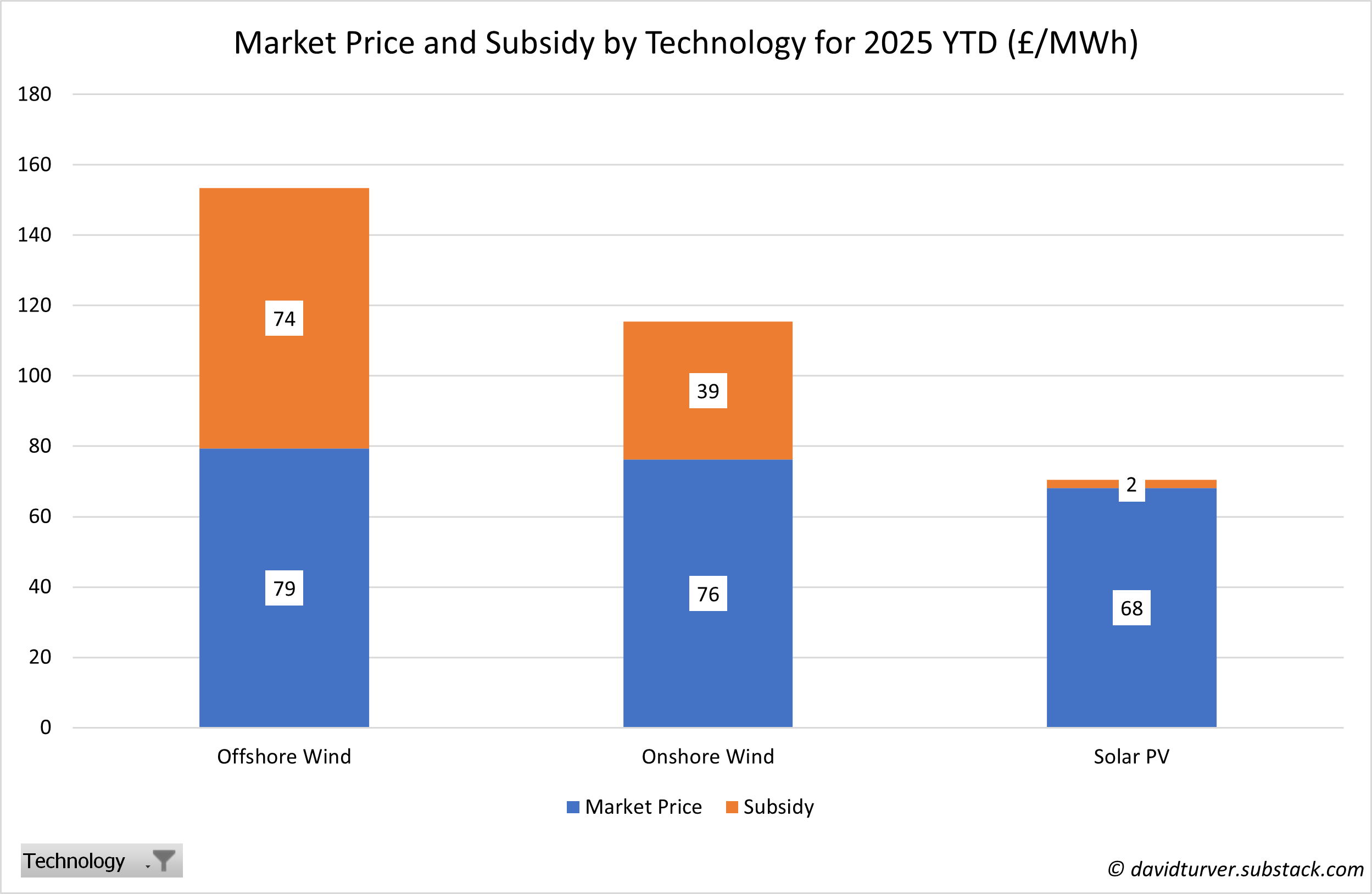
JL Daeschler informs that UK offshore wind energy is 82% foreign-owned. Foreign companies are thus the primary beneficiaries of the UK’s generous renewable energy subsidies (chart below).

David Turner comments as follows in his informative piece on UK wind energy:

We have been warning for some time that it is crazy for a developed economy to try and run its electricity generation system using technologies that are dependent on the weather. Even though there has been only a relatively modest decline in wind output this year, the operators and owners of wind farms are learning the hard way that it is very difficult to run a business that is at the mercy of the vagaries of the weather. Many of these companies are up to their eyeballs in debt. They better hope the wind blows hard this Autumn and Winter so they can collect higher subsidies, or they will be in real trouble.

We have consistently raised concerns about decommissioning financial assurance for offshore wind facilities. Turner echoes those concerns noting that the wind industry’s perilous finances are an even bigger reason to insist that proper funds are set aside to fund decommissioning or the long-suffering taxpayer will be on the hook for another hidden cost of renewables.

Read Full Post »

Attached is the Dept. of the Interior’s Semiannual Regulatory Agenda (9/22/2025). BSEE and BOEM decommissioning rules are excerpted below.

Of particular concern is the revised BOEM regulation (107) that “would reduce the amount of supplemental financial assurance required from oil gas, and sulfur lessees operating on the OCS.” See our previous post on this regulatory action. Note that a proposed rule is expected to be published by year end.

  1. REVISIONS TO DECOMMISSIONING REQUIREMENTS ON THE OCS [1014–AA53]
    Legal Authority: Outer Continental Shelf Lands Act, 43 U.S.C. 1331 to 1356a
    Abstract: This proposed rule would address issues relating to (1) idle iron by adding a definition of this term to clarify that it applies to idle wells and structures on active leases; (2) abandonment in place of subsea infrastructure by adding regulations addressing when BSEE may approve decommissioning-in-place instead of removal of certain subsea equipment; and (3) other operational considerations.
    Timetable:
    NPRM ……………… 07/00/26
    NPRM Comment Period End: 10/00/26
  1. RISK MANAGEMENT AND FINANCIAL ASSURANCE FOR OUTER CONTINENTAL SHELF LEASE AND
    GRANT OBLIGATIONS [1010–AE26]
    Legal Authority: 43 U.S.C. 1331, OCS Lands Act; E.O. 14154, Unleashing American Energy
    Abstract: This proposed rule would rescind BOEM’s final rule ‘‘Risk Management and Financial Assurance for OCS Lease and Grant Obligations.’’ The proposed rule would revise the criteria for determining whether oil, gas, and sulfur lessees, right-of-use and easement grant holders, and pipeline right-of-way grant holders are required to provide financial assurance above the current minimum bonding levels to ensure compliance with their Outer Continental Shelf (OCS) Lands Act obligations. This rule, if finalized, would reduce the amount of supplemental financial assurance required from oil gas, and sulfur lessees operating on the OCS and would support the goals of E.O. 14154; Timetable: NPRM ……………… 01/00/26

Read Full Post »

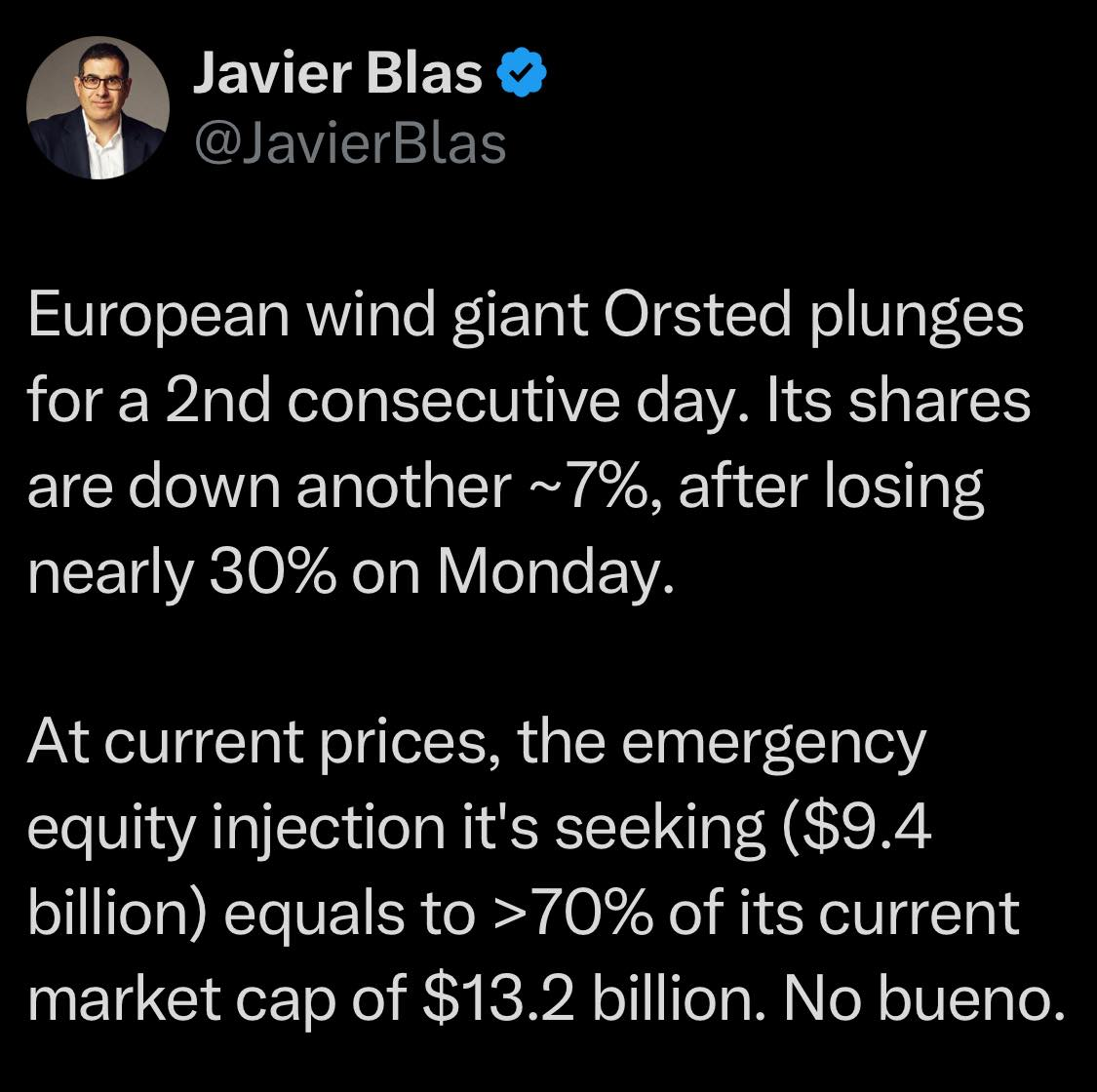
Following the announced $9 billion rights offering to shore up its finances, Orsted’s long-term issuer credit rating has been downgraded to BBB- by S&P, just one step above junk.

Will BOEM now require decommissioning financial assurance pursuant to 30 CFR § 585.517(b)?

§ 585.517 How will BOEM determine the supplemental financial assurance associated with commercial leases?

(b) If your cumulative potential obligations and liabilities increase or decrease, we may adjust the amount of the supplemental financial assurance.

Read Full Post »

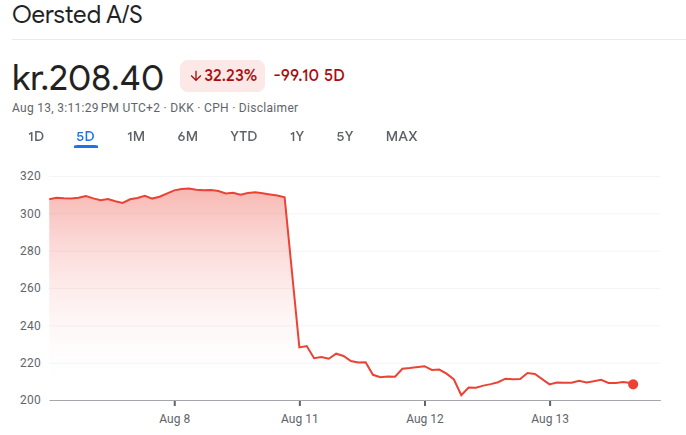
Ørsted’s stock price plummeted on Monday following the announcement of a $9.4 billion rights issue to fund the Sunrise Wind project. The share price has remained depressed (chart below).

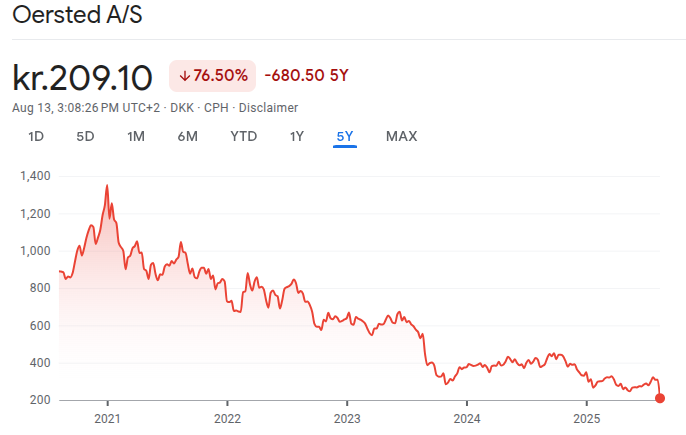
Also, although Ørsted attributes its financial woes to the change in US policies, it’s apparent in the second chart (5 year trend) that the decline in Ørsted’s valuation has been ongoing since 2021.

In March, Fitch downgraded Ørsted’s rating to BBB from BBB+, and its subordinated rating to BB+ from BBB-. Further downgrades would seem to be a distinct possibility.

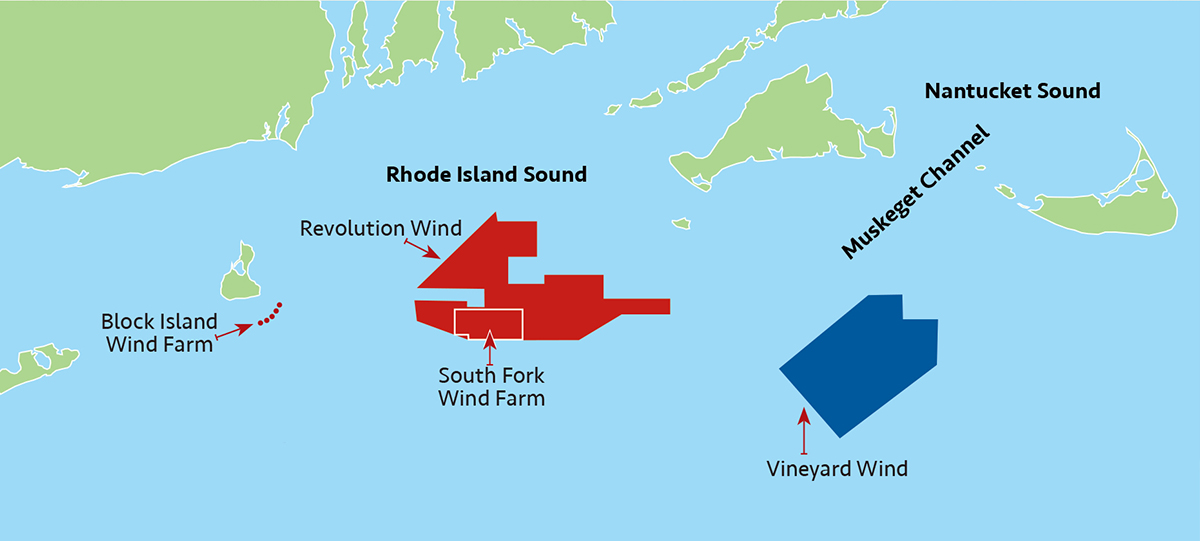
Meanwhile, decommissioning financing for the 3 Ørsted projects under construction in the US Atlantic is far from assured:

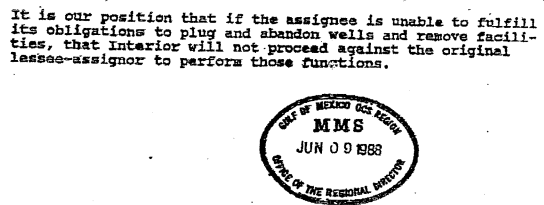
  • Revolution Wind: As they did for Vineyard Wind, BOEM approved Ørsted’s request to defer full decommissioning financial assurance until 15 years after the beginning of construction (see attached letter). This approval was prior to the Renewable Energy Modernization Rule (effective June 29, 2024), which eliminated the need for such waivers.
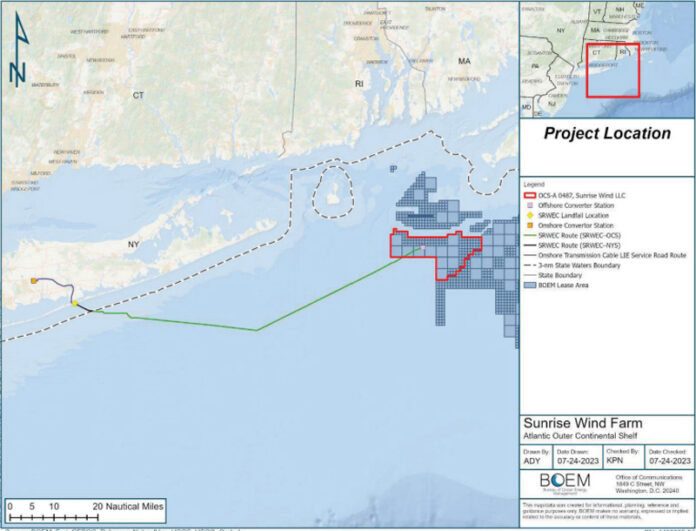
  • Sunrise Wind: Ørsted is now solely responsible for funding and constructing this project given the company’s failure to find investment partners. Presumably, decommissioning financial assurance was not required given BOEM’s latitude under the so-called “Modernization Rule.”
  • South Fork Wind: As is the case with Sunrise Wind, BOEM presumably allowed Ørsted to defer financial assurance for decommissioning as permitted by the “Modernization Rule.”

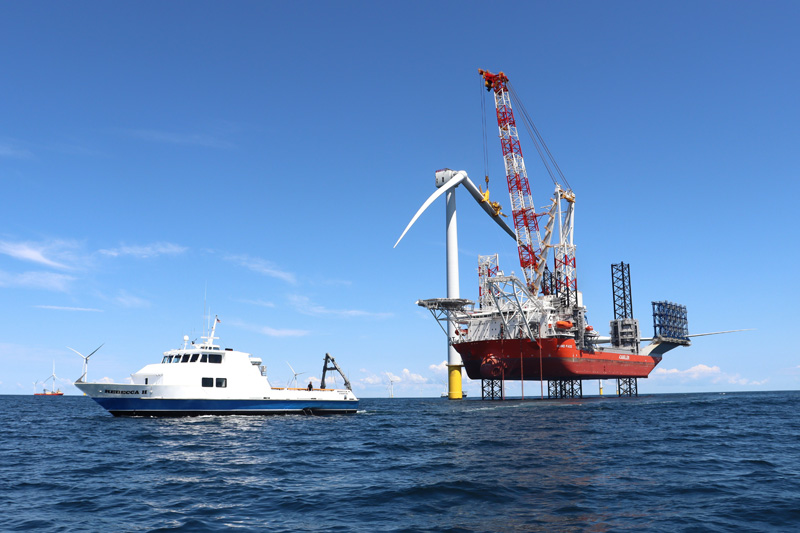
According to Ørsted, almost 70% of the turbines are installed at Revolution Wind and the first foundations have been installed at Sunrise Wind. South Fork Wind, 12 turbines and an offshore substation, is complete.

Given Ørsted’s strained finances, will BOEM now opt to require decommissioning assurance as provided for in 30 CFR § 585.517?

Ørsted’s situation is atypical in that the Danish government owns a majority (50.1%) stake in the company and Equinor, which is 2/3 Norwegian govt owned, holds a 9.8% stake. How will government ownership factor into BOEM decisions regarding decommissioning assurance? Note that Norwegian govt lobbying may have been one of the factors influencing the decision to allow the resumption of construction on Equinor’s Empire Wind project.

Meanwhile, two Danish opposition parties are calling for the state to relinquish its ownership stake in Ørsted.

Read Full Post »

The Dept. of the Interior is reviewing offshore wind regulations including “the Renewable Energy Modernization Rule, as well as financial assurance requirements and decommissioning cost estimates for offshore wind projects…”

Concerns about offshore wind financial assurance were first raised on this blog in response to a precedent setting waiver of the “pay as you build” requirement. Vineyard Wind was authorized to defer providing the full amount of required decommissioning financial assurance until year 15 of actual operations.  The waiver request, which had been denied in 2017, was resubmitted in 2021 and approved. This questionable decision was consistent with the administration’s enthusiastic promotion of accelerated offshore wind development.

BOEM’s streamlining rule codified the deferred financial assurance option. The rule authorizes the transfer of decommissioning risks from developers to taxpayers and consumers by (1) not requiring any additional supplemental financial assurance at the Construction and Operations Plan (COP) approval stage, (2) not requiring supplemental assurance at the installation stage, and (3) providing for incremental supplemental assurance post-installation (e.g. for Vineyard Wind, the full amount is not due until 15 years after installation). See the rule’s previous and current language in the table below (emphasis added).

30 CFR 585.516 – What are the financial assurance requirements for each stage of my commercial lease?

financial assurance required before BOEM will: language prior to 4/24/2024 “modernization” rulecurrent language
Approve your COPA supplemental bond or other financial assurance, in an amount determined by BOEM based on the complexity, number, and location of all facilities involved in your planned activities and commercial operation. The supplemental financial assurance requirement is in addition to your lease-specific bond and, if applicable, the previous supplement associated with SAP approval.There is no supplemental bond requirement at the COP approval stage.
Allow you to install facilities approved in your COPA decommissioning bond or other financial assurance, in an amount determined by BOEM based on anticipated decommissioning costs. BOEM will allow you to provide your financial assurance for decommissioning in accordance with the number of facilities installed or being installed. BOEM must approve the schedule for providing the appropriate financial assurance coverage.A supplemental bond or other authorized financial assurance in an amount determined by BOEM based on anticipated decommissioning costs of the proposed facilities. If you propose to incrementally fund your financial assurance instrument, BOEM must approve the schedule for providing the appropriate financial assurance.

The current financial assurance language is fuzzy enough that BOEM could deny deferred funding requests and require full financial assurance at the time facilities are installed. However, revising the language to clearly require that assurance be fully demonstrated prior to installation would provide clarity and eliminate the deferral option going forward.

The more difficult challenge may be adjusting financial assurance requirements for the projects already under construction. It’s also important to ensure that parent corporations are not shielded from decommissioning and other liability risks.

Read Full Post »

MV Times -blade replacement continues

MV Times: “The recent site visit raised questions on the production of the wind farm. The Times has been able to neither verify the report independently nor confirm disparities between visuals on the ground and the Iberdrola report.”

  • Avangrid, an Iberdrola subsidiary and one of Vineyard Wind’s developers, reported that 17 out of 62 turbines were currently sending power to the Massachusetts grid.
  • The MV Times counted between five and nine turbines spinning at different points, and for different intervals, in their two hour visit.
  • BOE comment: Although there are many possible reasons for this discrepancy, it’s reasonable to question the absence of turbine output data. Developers assert that generator specific data are sensitive and could have market implications. However, these turbines are operating on public lands and were in part publicly funded. Output data and other performance metrics clearly have policy implications.
  • Note that Iberdrola “expect[s] no impact from new federal budget legislation, as it doesn’t impact 1,000 megawatts under construction.”

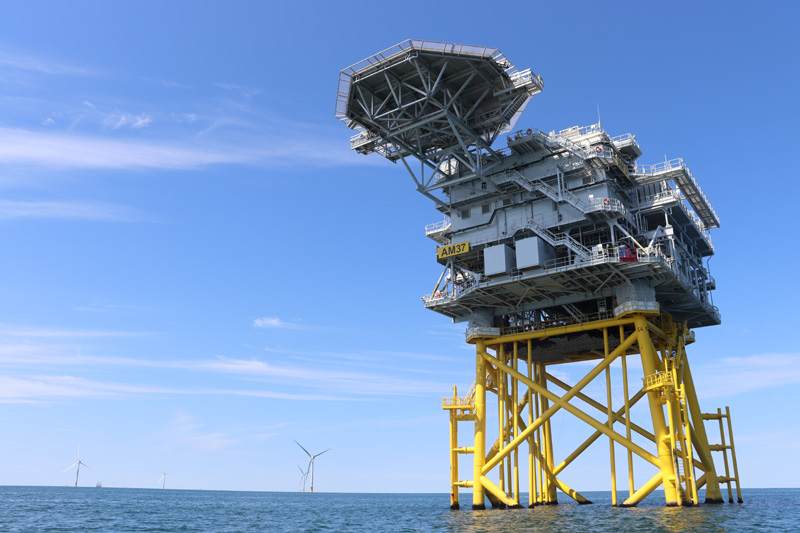
An MV Times photo of a Vineyard Wind substation is pasted below. These substations are large structures. Per the Construction and Operations Plan (COP) for Vineyard Wind, the topsides for a conventional electrical service platform (ESP) (also known as an offshore substation or OSS) are 45 x 70 x 38 m, which is larger in surface area than a typical 6-pile oil and gas platform (~30 x 30 m), and is comparable in size to a large jackup drilling rig.

Decommissioning financial assurance requirements were relaxed to reduce development costs, thus increasing taxpayer liability risks. This policy decision should be reviewed.

Vineyard Wind substation

Read Full Post »

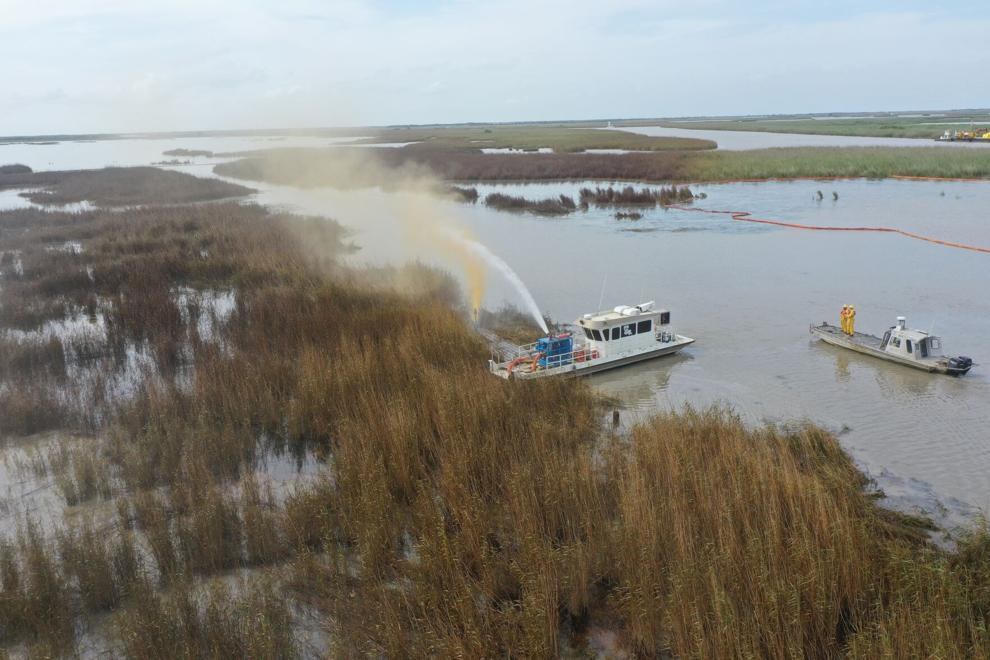
Coast Guard photo. Thanks to Lars Herbst for bringing this incident to my attention.

In what the Coast Guard is describing as an “uncontrolled discharge” (euphemism for blowout), an 82-year-old oil well has been spewing oil, gas, and water into the coastal marshes of southern Plaquemines Parish, Louisiana, for more than a week.

In hopes of future production, prior and current owners had elected not to permanently plug the well, apparently with the State’s acquiescence.

The well is currently operated by an affiliate of Spectrum Energy. Typical of these situations, the previous owner, Whitney Oil and Gas, was in bankruptcy.

The Coast Guard has taken over the response and has accessed the Oil Spill Liability Trust Fund.

We don’t need relaxed decommissioning and financial assurance requirements. We need a cooperative Federal, State, and industry effort to ensure that wells are plugged in a timely manner and that financial assurance is provided to protect the public interest.

Read Full Post »

The U.S. Department of the Interior today (5/2/2025) announced its intent to “update” the Bureau of Ocean Energy Management’s 2024 Risk Management and Financial Assurance for OCS Lease and Grant Obligations Rule. 

Those who are concerned about minimizing the Federal government’s decommissioning risk exposure should closely monitor this process. Some companies and their political allies have sought to minimize the financial risks associated with plugging wells and removing facilities. As a result, it has been necessary to defend BOEM from unwarranted commentary about decommissioning issues and the financial assurance rule. Stay tuned!

Read Full Post »

Check it out!

Of particular interest are mandated reviews of the:

  • RIsk Management and Financial Assurance Rule: Those who want to gut this rule should come to the table with proposals that better protect the taxpayer from decommissioning liabilities. Pretending that decommissioning financial risks don’t exist or that they are someone else’s (or the govt’s) problem is unacceptable.
  • 5 Year leasing program – This review is urgently needed. See this and this!
  • BOP/Well Control Rule – This keystone safety rule has undergone multiple reviews in recent years. Because of the rule’s importance, further review for continuous improvement purposes may nonetheless be warranted. Here are the blog comments on the current version of the rule.

Not on the list, but should have been: A review of the fragmented regulatory regime for offshore pipelines, and the outdated and inconsistent regulations.

Read Full Post »

Forbes (USGS map of active wind turbines): “The U.S. Wind Turbine Database contains more than 74,695 wind turbines built since 1980, spread between 1,699 wind power projects in 45 states. However, thousands of wind turbines are reaching the end of their operational lifespan and need to be either repowered to make way for updated (often larger) turbines or entirely decommissioned to allow for new uses of the land they occupy. Unfortunately, there is no uniform legal framework to regulate the steps involved, nor is there an accepted industry-wide set of best practices, and the environmental costs are considerable.”

Forbes:As is often the case when new technologies come to market, unintended downstream consequences are not always immediately obvious to the players. Enthusiasm for clean energy initially pushed the first wind turbines into existence in the U.S. without considering the environmental and monetary costs that would be involved in either upgrading or bringing projects to a close later in their life cycle. “

Similarly, BOEM’s enthusiasm for offshore wind projects has increased decommissioning financial assurance risks for power customers and taxpayers. Their “Rule to Streamline and Modernize Offshore Renewable Energy Development” is intended to “make offshore renewable energy development more efficient, [and] save billions of dollars.” The savings associated with relaxed financial assurance requirements come at the expense of transferring decommissioning risks to those who have received little or no financial benefit from the projects.

Related story: “Osage Tribe Wins Again, Federal Judge Orders “Ejectment” Of 84 Wind Turbines By Next December”

Read Full Post »

Older Posts »