Feeds:
Posts
Comments

Posts Tagged ‘Exxon’

A good Nick Welsh, Santa Barbara Independent article has been brought to my attention by John Smith. Bonus points for the baseball analogy:

In baseball, ties famously go to the baserunner, but in county government it’s forced a legal fight in the courts.”

The oil company Sable Offshore is insisting that when the County Board of Supervisors voted 2-2 on whether or not to allow another oil company, Exxon, to transfer its permits to Sable, the tie goes to Sable.”

Accordingly, Sable — much in the limelight recently — just filed a lawsuit against the Santa Barbara County Board of Supervisors in federal court to make that point. Joining Sable in this dispute is ExxonMobil, the oil giant that sold Sable its three offshore platforms, its 120-mile pipeline, and its onshore oil storage and processing facilities known as the Santa Ynez Unit two years ago.”

Because the Planning Commission had voted  3-1 to allow the transfer, Sable argues that the 2-2 Supervisors vote upholds the Planning Commission decision.

Never a dull moment in the Santa Ynez Unit restart doneybrook. More on the tie vote here and here.

Read Full Post »

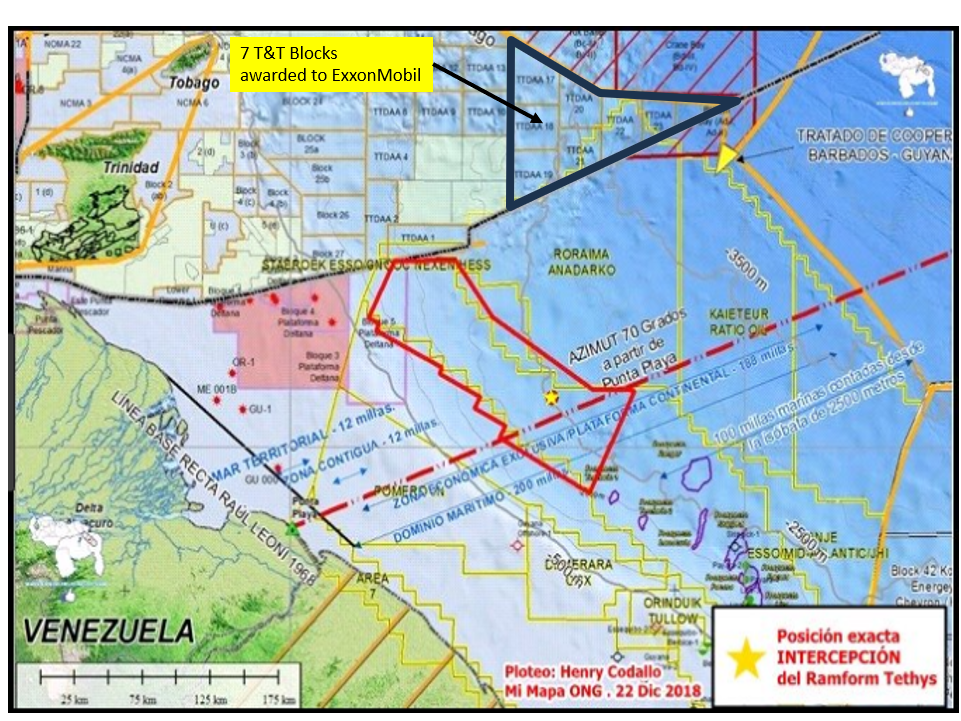
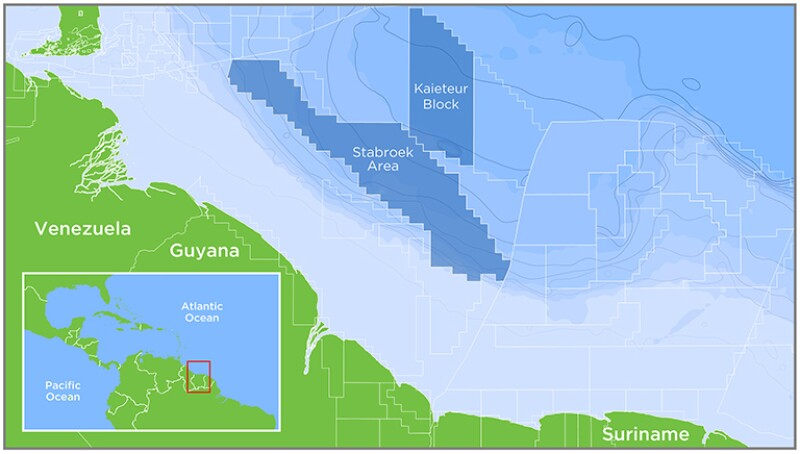
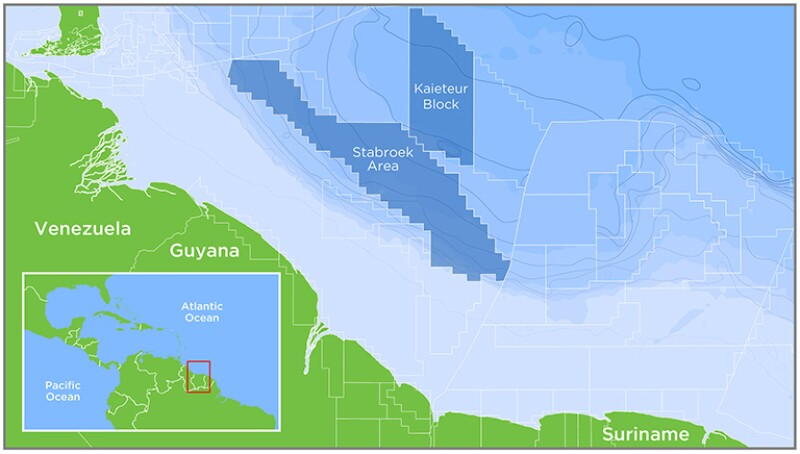
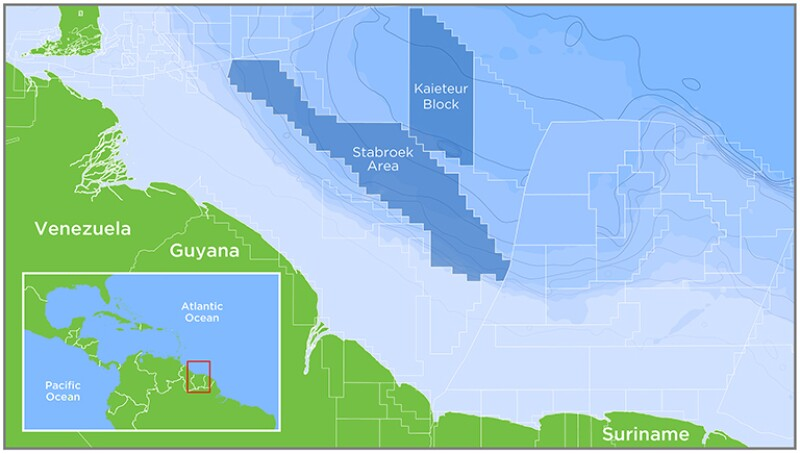
On May 26 in London a three-judge International Chamber of Commerce panel will finally begin considering the Exxon claim that the Stabroek joint operating agreement grants them the right-of-first-refusal in Chevron’s acquisition of Hess’s 30% share of the massive field (>11 billion boe) offshore Guyana.

Exxon’s position claim seems weak to most analysts given that Chevron is not buying the Stabroek share; they are buying the company (Hess) that holds that share.

Exxon’s rather unlikely ally in this case is state-owned China National Offshore Oil Corp. How did CNOOC get a stake in Stabroek and why is their position on the Hess acquisition hypocritical?

CNOOC became a 25% Stabroek partner by acquiring Canadian Nexen in 2013. Their Nexen acquisition, which included Canadian, US, and international assets, was only reluctantly approved by the Canadian and U.S. governments, and probably would not be approved today.

CNOOC’s Stabroek acquisition is thus very similar to Chevron’s. In both cases, the entire company, not just the Stabroek asset, was acquired.

The Stabroek acquisition has proven to be most fortuitous for CNOOC, not only because of the oil and gas resources, but also through the deepwater development expertise that has been gained. Now CNOOC is trying to further leverage their Stabroek position by joining Exxon in challenging the Chevron acquisition.

It would be great if the arbitration proceedings were streamed, but that will not be the case. It also appears unlikely that media will be allowed to attend or that transcripts will be made available.

As previously noted, I would have liked the Guyanese government to be more assertive in this dispute. Stabroek is Guyana’s offshore gem, their most important economic asset. This lengthy dispute has to affect partner teamwork and communication. From safety, environmental, and production standpoints, do you want feuding partners managing such an important national asset?

Read Full Post »

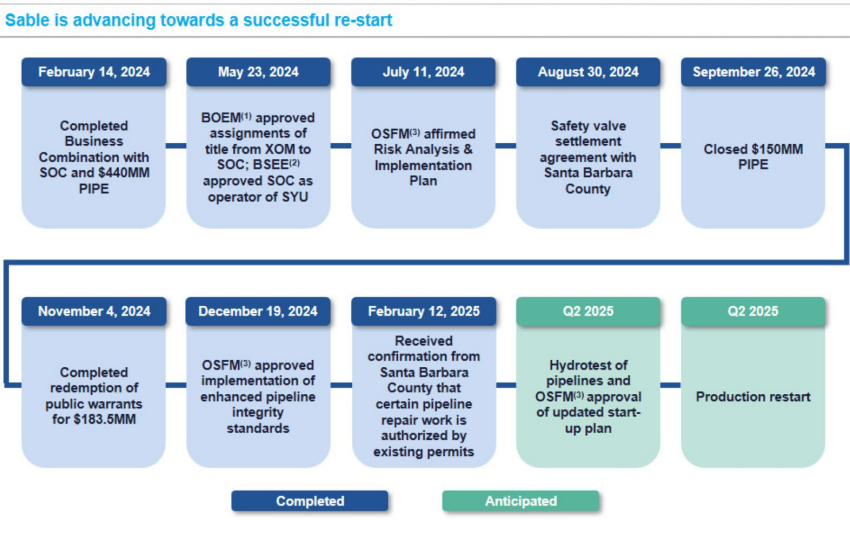
Attached is a recent Sable Offshore presentation for investors. Notably, Sable is now projecting to resume Santa Ynez Unit production in Q2 2025 (see slide below). John Smith thinks this is unrealistic, and I have to agree.

It’s tough for an offshore producer to succeed in California, but Sable is making a strong effort. Exxon must agree, because they have extended Sable’s first production deadline to 3/1/2026, which reflects a more plausible Q1 2026 restart. Additional extensions seem likely if necessary given that Exxon’s other options aren’t very attractive.

Read Full Post »

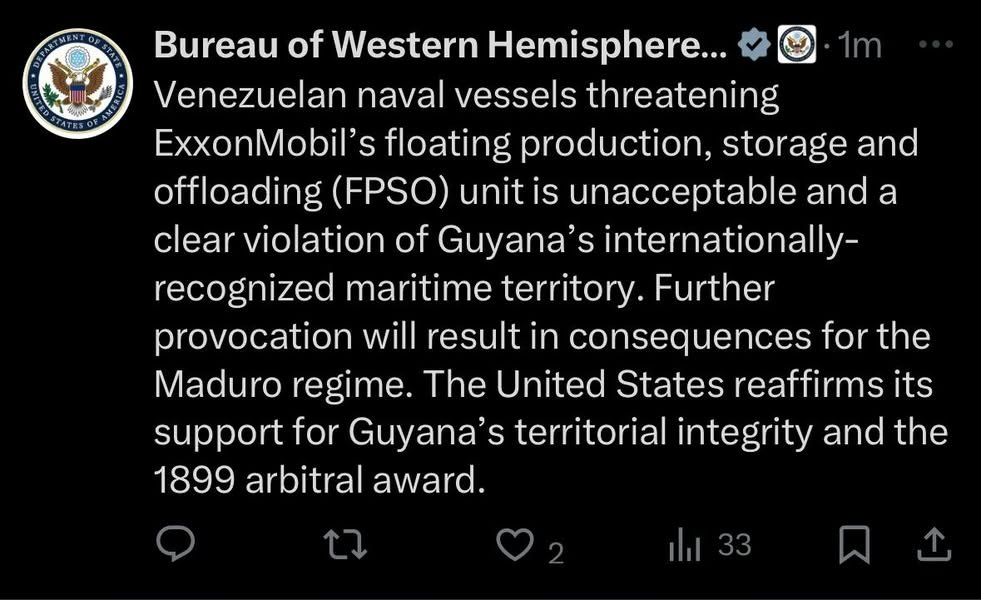
Exxon’s Prosperity FPSO
Guyana President Dr. Irfaan Ali chairs a meeting of the Defense Board in response to a Venezuela Navy vessel’s incursion into the Guyana’s EEZ

Read Full Post »

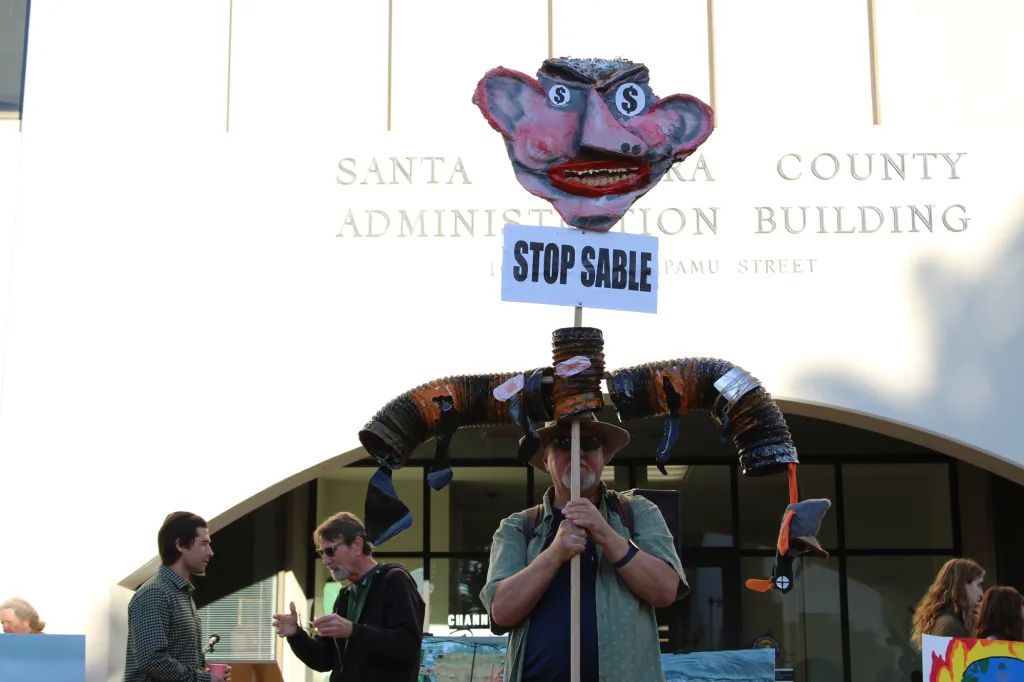
The Santa Barbara County Board of Supervisors tie vote on the transfer of permits from Exxon to Sable has both sides declaring victory! (And I thought I was the only one who was confused!)

Noozhawk photo

Per Noozhawk:

“During Wednesday’s meeting of the county Planning Commission, Lisa Plowman, director of Planning & Development, expressed uncertainty about the future of the permits and said the split vote meant that the board took no action.

“We are in the process of (…) determining what that actually means in the long run for Sable and the opponents,” Plowman said.”

“The county has not in recent memory had a tie vote under this section. The county is looking into what happens next.”

Sables’ take: Sable is pleased the appeals failed and the Planning Commission’s approval of the Santa Ynez Unit permit transfer to Sable stands. We look forward to continuing to work with the county to finalize the permit transfer and to safely restarting production as soon as possible.”

Environmental Defense Center’s take: “We applaud the Board of Supervisors’ decision to NOT transfer permits to Sable to operate a defective pipeline and dangerous processing facilities on our shores.”

Just when you thought this couldn’t get more complicated!😖😣

Read Full Post »

SANTA BARBARA, Calif. — A controversial oil project on California’s Central Coast remains unresolved after the Santa Barbara County Board of Supervisors deadlocked 2-2 on a vote regarding a permit transfer for a pipeline linked to the 2015 Refugio oil spill. The stalemate means Sable Offshore Corp.’s application remains pending without approval or denial, leaving the next steps up to the company.

“They still have a pending application with no action taken on it,” said Kelsey Gerckens Buttitta, public information officer with Santa Barbara County. “It hasn’t been approved or denied. It’s now up to Sable to decide what to do next.”

Read Full Post »

Per the Daily Compounder on X:

The Board voted 2-2 to uphold the approval of the transfer of permits from Exxon to Sable. The tie vote meant the appeal of the previous approval failed.

Interestingly, one of the Supervisors reportedly slammed the California Coastal Commission for being politically motivated and abusing the law.

Read Full Post »

The Santa Barbara Independent has published a long, balanced article on Sable’s Santa Ynez Unit production restart which has reached a critical juncture. Today (2/25/2025), the Santa Barbara County Board of Supervisors will be asked to approve the transfer of the project from Exxon to Sable.

This will be the Board’s first and last chance to have any influence over restarting the pipeline, and thus allowing the three offshore platforms to begin drilling again.” (Expect initial production to be from existing wells supplemented over time with new drilling, well workovers, and recompletions.)

The Board has limited authority in this matter: “The county’s legal advisors and energy planners have told the supervisors that there are no grounds to say no. It is not up to them to determine whether Sable’s liability insurance is enough to cover the costs of a reasonable worst-case oil-spill scenario; it’s only up to them to ascertain whether Sable has filed a certificate of insurance with the proper state agency.

All the essential questions regarding the pipeline’s safety measures are in the hands of California state agencies, headquartered in cities far away, with names so confusing that even people working there can’t tell you what the acronyms mean.” (see Regulatory fragmentation)

Interesting tidbits: Danielson (the Sable representative) let me know that he would not be answering these questions. He was cordial, but he was not happy about a recent Independent story featuring attorney Linda Krop of the Environmental Defense Center perhaps Sable’s most implacable and formidable opponent, expounding in an unchallenged format on what a threat the pipeline still posed. Interviewing Krop was Victoria Riskin, herself a committed anti-oil advocate. Actress and Montecito resident Julia Louis-Dreyfus — of Seinfeld and Veep fame — apparently liked the article enough to send it to her social media followers.

Below are the pros and cons of the SYU restart as cited by the Independent. (Clarification: The 10 billion bbl oil reserves number (“pros” slide) is at least an order of magnitude too high and is perhaps a typographical error. BSEE’s June 2023 data sheet (excerpt pasted at the end of this post) indicates remaining oil reserves of 190 million bbls for the 3 SYU fields. Adding the gas reserves ups the total to 243 million bbls of oil equivalent (boe). Additional reserves could likely be confirmed with new extended reach wells, but anything more than 1 billion bbls would be highly unlikely. Sable’s investor presentation (p.5) indicates 646 million bbl of Remaining Total Net Estimated Contingent Resources.)

Read Full Post »

Most investors see Chevron and Hess emerging as victors in the case, Goldman analyst Neil Mehta said in an interview.”

This is consistent with the opinion previously expressed on this blog. How does a partner in a single Hess asset prevent Chevron from acquiring the entire company?

Chevron is not buying the Stabroek share; they are buying the company that holds that share. Hess is to be part of Chevron and there would be no change of control from the standpoint of the partnership.

As an offshore operator, Exxon has been highly responsible from a safety standpoint. However, the company is not reluctant to stretch the envelope when it comes to contract rights. The most recent example was their acquisition of 163 GoM oil and gas leases for carbon disposal purposes, contrary to the terms of the sale notice and lease contracts.

Interestingly, Exxon’s partner in this dispute is state-owned China National Offshore Oil Corporation. CNOOC acquired their 25% Stabroek share when they purchased Nexen, a Canadian company (sound familiar?). Both the Canadian and US governments had reservations about this acquisition and nearly nixed the deal. Would either government bless that acquisition today?

An International Chamber of Commerce arbitration panel will hear the Stabroek case in May 2025, and the final decision is expected by September 2025.

Read Full Post »

Exxon CEO Darren Woods’ is concerned that US withdrawal from the Paris climate agreement would threaten carbon capture and sequestration (CCS), the foundation for which is government mandates and generous taxpayer subsidies.

Exxon projected a $4 trillion carbon capture and sequestration (CCS) market by 2050. The company was a primary driver behind the late additions to the 2021 Infrastructure Bill. That bill authorized carbon disposal on the OCS, exempted such disposal from the Ocean Dumping Act, and authorized $2.5 billion for commercial CCS projects.

Exxon sought an edge over CCS competitors by improperly acquiring 163 OCS oil and gas leases (map below) for carbon disposal purposes. Conversion of these leases is not authorized, which means they will expire at the end of their primary (5 year) term absent legislative or regulatory action.

The only solid support for CCS is from companies hoping to benefit from subsidies and charges to industries and individual energy consumers. It’s time to end the Federal government’s CCS programs.

199 oil and gas leases were wrongfully acquired at Sales 257, 259, and 261 with the intent of developing these leases for carbon disposal purposes. Repsol was the sole bidder at Sale 261 for 36 nearshore Texas tracts in the Mustang Island and Matagorda Island areas (red blocks at the western end of the map above). Exxon acquired 163 nearshore Texas tracts (blue in map above) at Sales 257 (94) and 259 (69).

Read Full Post »

« Newer Posts - Older Posts »