The main effect of the EPA ruling (attached) appears to be that permit appeals will be submitted to EPA rather than the State of Maryland.
Posts Tagged ‘EPA’
EPA rules that Maryland improperly issued US Wind permit
Posted in Offshore Wind, tagged EPA, Maryland, PSD permit, US Wind on July 12, 2025| Leave a Comment »
Protect Our Coast NJ petitions EPA to withdraw permit allowing Sunrise Wind to use open loop cooling
Posted in Offshore Wind, Regulation, tagged EPA, HVDC cooling systems, Protect Our Coast NJ, Sunrise Wind on May 13, 2025| Leave a Comment »
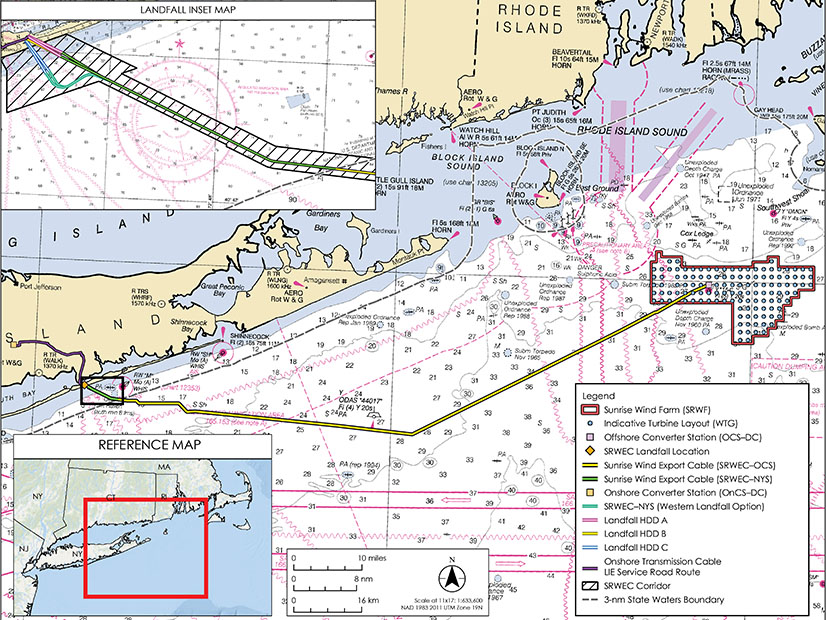
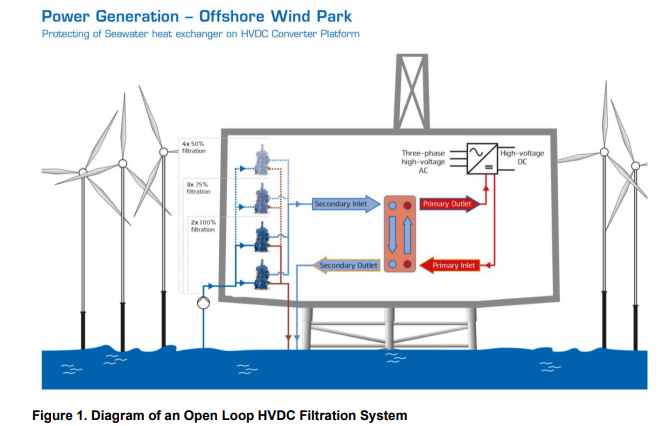
Protect Our Coast NJ submitted a petition (attached) on May 12, 2025 requesting EPA to withdraw a permit that would allow the Sunrise Wind to use an open loop cooling system. The gist of the filing:
“Sunrise Wind has obtained an EPA permit to pull nearly 8 million gallons per day (MGD) of seawater from the Atlantic Ocean and discharge it, after use in cooling and mixture with sodium hypochlorite (chlorine), back into the environment at elevated temperatures. This open-loop system was authorized by EPA Region 1 under NPDES Permit MA0004940. However, approval of this method ignores EPA’s Best Technology Available (BTA) requirement and no rigorous alternatives analysis was conducted to justify this method over a closed-cycle cooling system, despite the known and broad negative environmental impacts that will result, including harms to early life stages of marine species.
The facility lies within a biologically rich and economically vital region of southern New England and the New York Bight. NMFS and BOEM have acknowledged this area as essential fish habitat (EFH) for numerous federally managed species, including Atlantic cod, winter flounder, and longfin squid.“
Atlantic wind: attention shifts to EPA
Posted in Offshore Wind, Regulation, tagged Ack for Whales, air emissions, Atlantic Shores, Atlantic wind, EPA, New England Wind, Vineyard Wind on March 25, 2025| Leave a Comment »

In February, EPA Region 2 asked the agency’s Environmental Appeals Board to remand Atlantic Shores’ air emissions permit back to the Region for reconsideration. That remand (attached) was granted on 14 March over the objections of Atlantic Shores Offshore Wind.
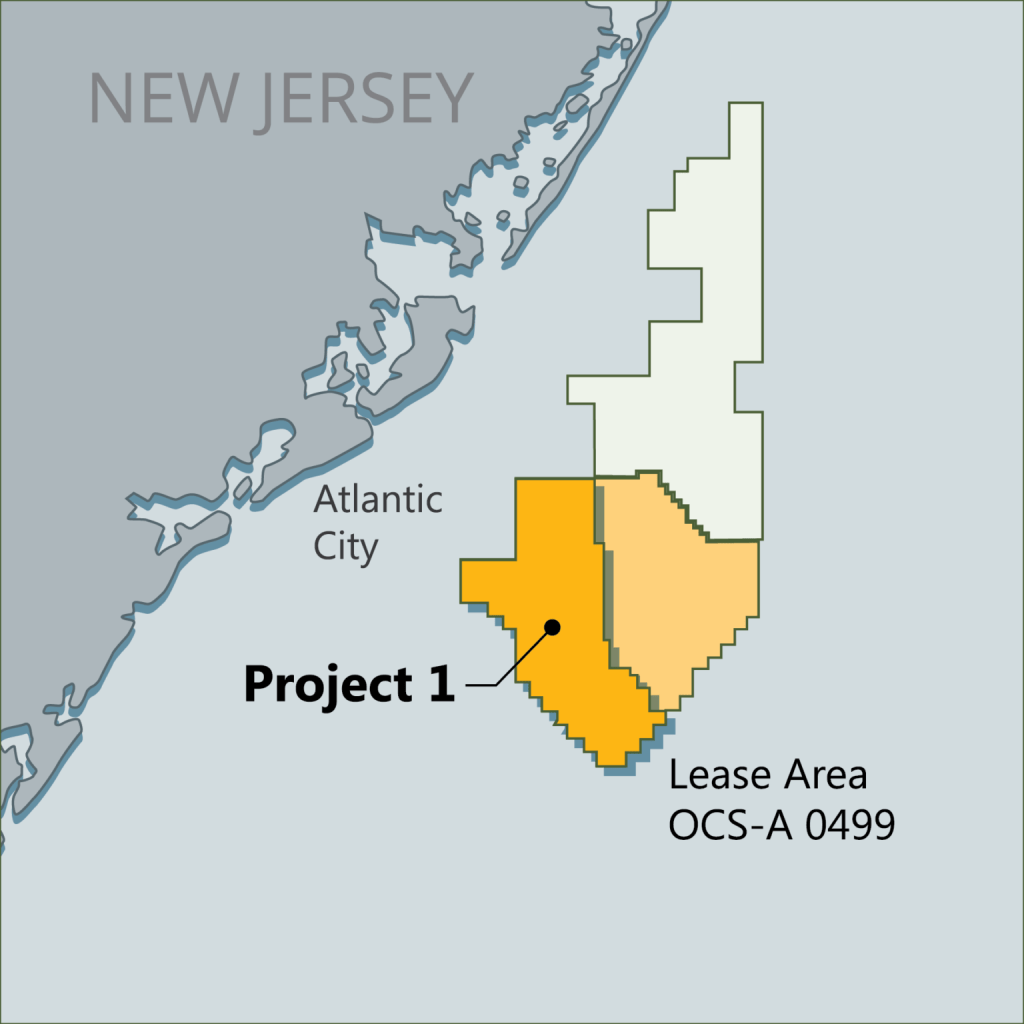
Atlantic Shores Offshore Wind still exists despite the exit of 50% partner Shell and a $940 million write down by the remaining owner EDF. The diagram depicts Atlantic Shores South (0499) and North (0549) lease areas.
EDF intends “to preserve the company and its future development.” Whether or not they can hold the leases indefinitely without pursuing development remains to be seen. BOEM’s diligence regulations for offshore wind projects are vague, and neither the Construction and Operations Plans nor BOEM’s Record of Decision (Atlantic Shores South) include work schedules.
Does EDF have the right to sit on the lease until the financial and regulatory environment is attractive? That is not allowed for oil and gas leases, and rightfully so. (See a related post on Total’s wind lease.)
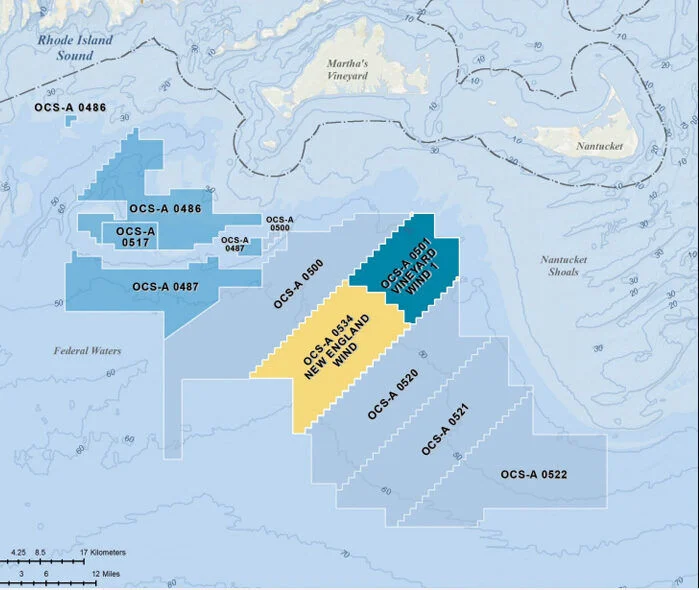
Meanwhile, ACK for Whales has petitioned EPA Region 1 to reopen and reanalyze the air permits for permits for the New England Wind 1 and 2 projects asserting that:
- The analysis does account for emissions related to and resulting from blade failures, which would warrant emergency repairs or replacement activities.
- The decision to group Vineyard Wind 1, New England Wind 1 and New England Wind 2, as a single stationary source is both legally questionable and could have the effect of masking localized emission spikes.
- Insufficient consideration of cumulative vessel emissions could lead to 1-hour NO₂ exceedances.
- The emissions from pile driving are not adequately modeled in isolation or synergistically.
US offshore carbon disposal: And so it has begun…
Posted in CCS, climate, decommissioning, energy policy, Gulf of Mexico, Offshore Energy - General, Regulation, tagged Bayou Bend CCS, BOEM, carbon disposal, DOI CCS regulations, EPA, Louisiana, Ocean Dumping, Texas on March 7, 2024| Leave a Comment »
Bayou Bend CCS LLC commenced drilling an offshore (Texas State waters) and an onshore stratigraphic well for carbon sequestration in the first quarter 2024.
Talos

Is offshore carbon disposal ocean dumping? One of the provisions that was slipped into the “2021 Infrastructure Bill” exempted carbon sequestration from the Marine Protection, Research, and Sanctuaries Act of 1972 (Ocean Dumping Act). This exemption revises the OCS Lands Act and thus does not apply to State offshore lands. The Texas offshore wells must therefore be permitted by EPA as “Class VI wells,” as is the case for onshore disposal wells. However, Texas and Louisiana have asked the EPA for “primacy,” which would allow state agencies to approve and oversee these operations.
Meanwhile, the regulations for carbon disposal on the OCS, which the Infrastructure Bill mandated by November 2022, have yet to be published for comment. The latest Federal regulatory agenda indicates a publication date of 12/00/2023 for these regulations. Presumably the staff work has been completed and the rule is stalled in the review process.
Despite the absence of a regulatory framework, BOEM has accepted sequestration bids at the last three oil and gas lease sales. These bids were evaluated as if the leases were being acquired for oil and gas exploration and production, even though the bidders’ intentions were widely known. Why was BOEM a willing participant in this charade, not just at one sale, but at three sales in succession?
Given that the perceived carbon disposal bonanza is dependent on mandates and subsidies, one has to wonder about the massive revenue projections for this industry and raise concerns about the associated public and private financial risks. What is the long term business plan for this industry? Who will be monitoring the offshore wells (in perpetuity)? How will the public be protected from financial assurance and leakage risks? We will see how the myriad of carbon sequestration issues are addressed in the proposed regulations.
Proposed EPA rule prohibits venting of associated gas
Posted in energy policy, Gulf of Mexico, natural gas, Offshore Energy - General, Regulation, tagged Argonne, BSEE, EPA, flaring, methane, venting on November 4, 2021| Leave a Comment »
Among other provisions, EPA’s proposed rule, issued on 11/2/2021, specifies that associated gas be handled as follows:
Route associated gas to a sales line. If access to a sales line is not available, the gas can be used as an onsite fuel source, used for another useful purpose that a purchased fuel or raw material would serve, or routed to a flare or other control device that achieves at least 95 percent reduction in methane and VOC emissions.
Because the Dept. of the Interior has jurisdiction over air emissions on most of the Gulf of Mexico OCS, I assume this proposed rule does not apply to those facilities. However, the EPA proposal is not entirely clear in that regard. If the EPA proposal does not apply, will BOEM/BSEE be proposing similar restrictions in their regulations?
MMS/DOI considered prohibiting venting, but determined that adding flaring capability was not feasible for many shelf platforms, and for some platforms there would have been a net increase in emissions. That said, venting is not insignificant. A 2017 Argonne study indicated (table 2) that, for shelf platforms from 2011 through 2015, more than 3 times as much gas was vented as was flared. More recent data should be reviewed to get a better sense of the costs, benefits, and safety considerations associated with achieving further reductions in venting.
Current flaring/venting regulations for OCS facilities are here.
EPA Phase 2 Dispersant Toxicity Test Results
Posted in accidents, tagged dispersants, EPA, macondo, oil spill on August 2, 2010| Leave a Comment »
Link to EPA Release. The results are not surprising.
These results confirm that the dispersant used in response to the oil spill in the Gulf, Corexit 9500A, is generally no more or less toxic than the other available alternatives.
Good, timely work by EPA. Also:
EPA believes dispersants should only be used sparingly and when absolutely necessary. Since the well was capped, only 200 gallons of dispersant have been applied to the Gulf, but constant monitoring continues.
Does anyone know if this is true?
Posted in Uncategorized, tagged discharge standards, EPA, macondo, oil spill on June 30, 2010| 2 Comments »
Quote from a Financial Post article:
The voracious Dutch vessels, for example, continuously suck up vast quantities of oily water, extract most of the oil and then spit overboard vast quantities of nearly oil-free water. Nearly oil-free isn’t good enough for the U.S. regulators, who have a standard of 15 parts per million — if water isn’t at least 99.9985% pure, it may not be returned to the Gulf of Mexico.
Is (was?) this EPA discharge standard being applied to water that is collected during the oil spill response operation? If so, the author’s harsh criticism is justified. Why haul mixtures that are 90% water to shore when you can separate the oil and discharge relatively clean water? Why make all those trips to shore delivering cargoes that are mostly water? A lot of the reporting on the spill has been inaccurate, so we don’t want to jump to conclusions. Can anyone confirm or refute the author’s charge?
 Bud's Offshore Energy (BOE)