Feeds:
Posts
Comments

Posts Tagged ‘BSEE’

ainonline:

  • This was the second crash for the operator (Rotorcraft) in two weeks, its second fatal for the year, and the third in the Gulf of Mexico since October.
  •  On December 15, a Rotorcraft Leasing Bell 206L-4 with three aboard crashed while taking off from a platform 35 miles south of Terrebonne Bay, Louisiana. In that accident, one of the helicopter’s skids caught under the helipad’s perimeter railing, and the aircraft fell into the water below. (We have concerns that yesterday’s incident may have had a similar cause.)
  • On October 26, a Westwind Helicopters Bell 407 with three aboard crashed into the Gulf 25 miles south of Morgan City, Louisiana after the pilot apparently experienced an in-flight medical emergency and told his front seat passenger he “was not going to make it” and then slumped over the controls. The front-seat passenger then attempted to gain control of the helicopter prior to the water impact. After several hours, both passengers were rescued with serious injuries, but the pilot died. (This is why I never liked single pilot aircraft.)
  •  Another of the company’s Bell 407s crashed on January 14 near Houma, Louisiana, killing both occupants. A witness to the accident said the helicopter appeared to dive nose-down into terrain. To date, investigators in that accident have not discovered any mechanical or structural failure that would account for that crash. 

Get to work HSAC, NTSB, BSEE, USCG, FAA, and all others who are involved with offshore helicopter safety.

Not a word about this tragedy on the Rotorcraft, Walter Oil & Gas, or BSEE websites, and no public statements can be found. At a minimum, one would have expected condolences to the families and a commitment to find out what happened and prevent recurrences.


Read Full Post »

As we approach the end of 2022, I’m still waiting for:

Read Full Post »

The comment (pasted below) by the trade associations asserts that BSEE ignored the requirements of the National Technology Transfer and Advancement Act (NTTAA).

Reaction:

  • BSEE and its predecessors (MMS and the Conservation Div. of USGS) have been incorporating industry standards since 1969, 27 years prior to the enactment of the NTTAA (1996).
  • 127 standards are currently incorporated into the BSEE regulations. Does this imply ignoring the NTTAA?
  • The keystone of the BOP regulations, API Standard 53, is cited in 250.730, the very section of the rule that is under discussion. Seven other industry standards are cited in that section of the rule. Does this imply ignoring the NTTAA?
  • Regulators cannot cede their authority to standards development organizations. If a standard is outdated or deficient, the regulator must address the issues of concern.
  • Deviations between provisions in the regulations and API Standard 53 are expected and specifically provided for in 250.730 as follows: “If there is a conflict between API Standard 53 and the requirements of this subpart, you must follow the requirements of this subpart.
  • For years, the production safety system regulations specified different leakage rates for surface and subsurface safety valves than those allowed in the API standards. An MMS research project addressed and helped resolve these differences.
  • While essential to safety and regulatory programs, standards are not a panacea; nor is the standards development process without weaknesses. One need only consider the case of the delayed cementing (zonal isolation) standard to appreciate both the importance of standards and the potential weaknesses in the development process.

Read Full Post »

Per Regulations.gov. BSEE received 30 comments on the proposed revisions to the Well Control Rule, 25 of which have been posted. The other comments were presumably deemed inappropriate for posting per the guidance at Regulations.gov.

Two of the responses were submitted collectively by 8 industry trade associations. Only 3 operating companies commented and their comments largely echoed the trade association responses. Only 2 drilling contractors responded independently. Four service and engineering companies commented.

Three environmental organizations, a group of Atlantic states, a government watchdog, and a law school provided comments.

Three individuals and 4 anonymous or unknown parties commented.

Below is a list of the respondents preceded by their comment identifiers. More to follow.

  • 0003 Foley Engineering
  • 0004 Frank Adamek
  • 0005 Anonymous
  • 0006 Project on Government Oversight (POGO)
  • 0007 E.P. Danenberger
  • 0008 Chevron
  • 0009 B. Mercier
  • 0010 Anonymous
  • 0011 Anonymous
  • 0012 Foley Engineering (2nd comment)
  • 0013 HMH (?)
  • 0014 NYU School of Law
  • 0015 Beacon Offshore
  • 0016 Shell
  • 0017 Diamond Offshore
  • 0018 7 industry trade associations: API, IADC, IPAA, NOIA, OOC, EWTC, USOGA
  • 0019 NOV (service company)
  • 0020 NRDC
  • 0021 Oceana
  • 0022 Transocean
  • 0023 Louisiana Mid-Continent Oil & Gas Association
  • 0024 Kinetic Pressure Control Limited
  • 0025 Attorneys General of Maryland, Connecticut, Maine, Massachusetts, New York, and North Carolina
  • 0026 Ocean Conservancy
  • 0027 Rigscope International

Read Full Post »

On Monday, the offshore world lost Mike Conner, an outstanding engineer and a major contributor to the success of the US offshore program.

Mike is the person most responsible for the Deepwater Operations Plan (DWOP), a pioneering safety-case approach to regulating deepwater oil and gas development. The DWOP program was initiated 30 years ago and facilitated deepwater production at a time when there were no deepwater-specific regulations or standards. Innovative tension leg platform, compliant tower, spar, production semisubmersible, and subsea projects would not have been possible without the DWOP program. 93% of Gulf of Mexico oil production and 76% of the gas is now attributable to deepwater production facilities. Thanks in large part to the DWOP program, these facilities have had a nearly flawless safety and environmental record.

While his obituary is no yet available, this link announces Mike’s well-deserved selection for the OTC Heritage Award in 2017, and provides good information on Mike and his career.

Read Full Post »

Comments on the proposed revisions to BSEE’s Well Control Rule are due on Monday (11/14/2022). My comments were submitted yesterday, and I have attached a copy for those who might be interested. Bud

Read Full Post »

BSEE’s temporary abandonment/decommissioning solicitation has been posted. Some details:

  • 14 wells to be decommissioned
  • 1 well to be checked to confirm temporary abandonment
  • Well depths: 2359′ to 11934′
  • Water depths: 70′ to 477′
  • 11 gas wells, 3 oil wells
  • Well completion dates: 2006-2008
  • Last production: 2010-2013 (Presumably, the short productive life of these wells either contributed to or was because of the lessees’ bankruptcies.)
  • $25,000😀 minimum to $100,000,000 maximum contract guarantee

If I was an offshore contractor, I wouldn’t touch this work without:

  1. Ironclad liability protection after the work is completed and inspected. A contractor should not inherit the perpetual liability that the lessees knowingly and willfully accepted when they purchased the leases and conducted operations; nor is the contractor responsible for the failure of industry and government to establish a financial assurance framework that protects the taxpayer from such liabilities.
  2. Protection against likely cost overruns related to the uncertain downhole condition of the wells.

Previous posts on this matter:

Taxpayer funded decommissioning – troubling precedent for the US offshore program

NOT a shining moment for the offshore industry

Read Full Post »

Comments on BSEE’s proposed revisions to the Well Control Rule are due in 27 days (by Nov. 14). Given the fundamental importance of well control to offshore safety and pollution prevention, all interested parties are encouraged to comment. Although some of the proposed revisions are rather nuanced, the document is neither long nor complex.

My completely independent comments are being drafted and will be posted here after they have been submitted to Regulations.gov.

My comments will explain why the proposal may reduce the rigor of the BOP system performance standard and will address a related shear ram issue. The comments will also discuss the management of BOP equipment failure and other safety data, the use of independent third parties and standards development organizations, dual shear rams on surface BOP stacks, ROV intervention capabilities, and BOP test data reporting and management.

Read Full Post »

Hopefully, the attached response is indicative of the quality of comments BSEE will receive on their proposed WCR revisions.

The comments, which were submitted by a retired engineer (always the best commenters 😉), express the opinion that BSEE should not remove the option for submitting failure data to BTS. While my comments will express a somewhat different opinion, I thought he made good arguments in support of his position.

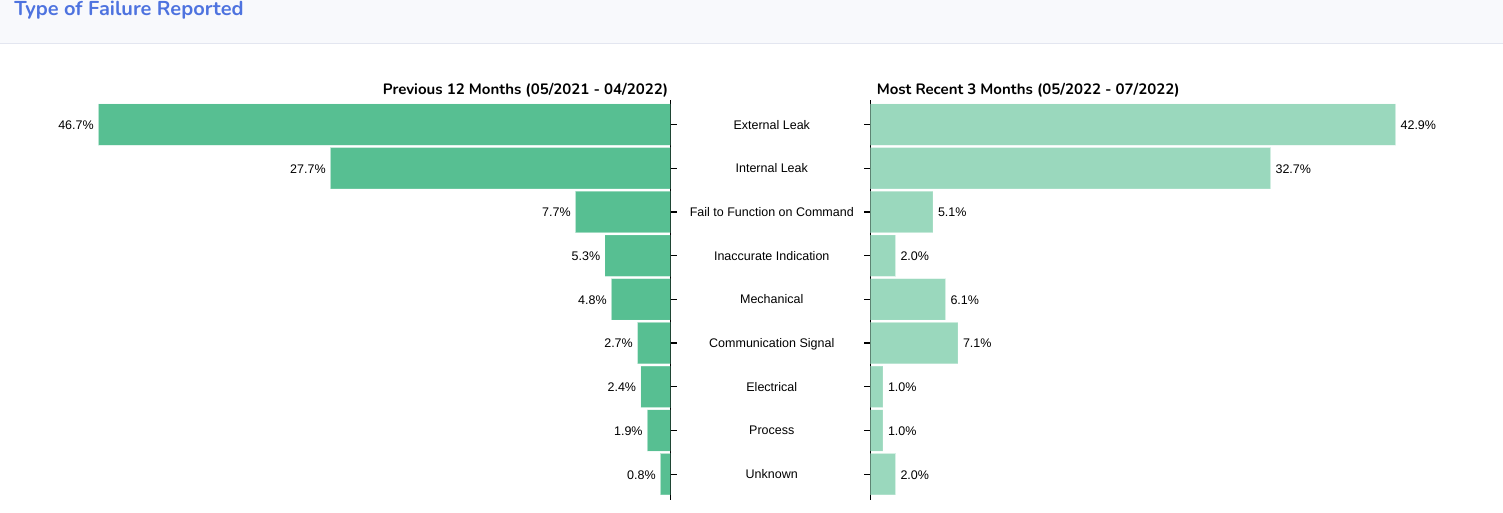
The chart below is excerpted from the SafeOCS Dashboard cited in the comment letter:

Read Full Post »

190,358 BOPD shut-in as of 12:30 p.m. ET today. Presumably, most of the shut-in production is associated with the major deepwater platforms mentioned in our previous post. Given the projected storm track, these shut-ins should be brief.

Read Full Post »

« Newer Posts - Older Posts »