Feeds:
Posts
Comments

Posts Tagged ‘API’

The court filing is attached. See the previous post on this matter.

This Court should grant Plaintiffs—the State of Louisiana, the American Petroleum Institute (“API”), and Chevron U.S.A. Inc. (“Chevron”)—a preliminary injunction and prevent those unlawful provisions from permanently disrupting the result of the fast-approaching lease sale (which Congress has directed must occur by September 30, and which cannot be delayed without causing Plaintiffs even more serious injury).

Read Full Post »

See the attached document.

From a regulatory policy standpoint, this appears to be a strong filing. Operationally, the most important points pertain to the costly and premature Rice’s whale restrictions first discussed on this blog.

Most notably, the plaintiffs seek (p.39):

  1. A preliminary and permanent injunction striking, setting aside, and enjoining BOEM from implementing the specific challenged provisions of the Final Notice of Sale and Record of Decision for Lease Sale 261;
  2. An order vacating the specific challenged provisions of the Final Notice of Sale and Record of Decision for Lease Sale 261;
  3. An order compelling Defendants to proceed with Lease Sale 261 on September 27, 2023, without the challenged provisions;

Read Full Post »

Per a very good OGJ update, API, Louisiana, Chevron, bp, Shell, NOIA, the EnerGeo trade group of geophysical contractors, 14 states filing jointly, and the US Chamber of Commerce have submitted briefs to the US Court of Appeals for the District of Columbia Circuit.

Don’t expect a decision soon. The environmental advocacy groups are not scheduled to file their responses until Aug. 26, after which replies can be filed. No decision is expected before November at the earliest.

Previous posts and background information on Lease Sale 257.

Read Full Post »

Good response from Exxon to the White House letter.

In the short term, the U.S. government could enact measures often used in emergencies following hurricanes or other supply disruptions — such as waivers of Jones Act provisions and some fuel specifications to increase supplies. Longer term, government can promote investment through clear and consistent policy that supports U.S. resource development, such as regular and predictable lease sales, as well as streamlined regulatory approval and support for infrastructure such as pipelines.

Exxon

Perhaps Exxon will return to the Gulf of Mexico if the Administration commits to regular and predictable oil and gas lease sales. The company hasn’t drilled a well in the Gulf since 2019.

The longer API letter comments on the fundamentals of refining markets and operations while also addressing the Administration’s “end fossil fuel rhetoric” and negative regulatory signals. Who would want to make major refinery investments under these circumstances?

Read Full Post »

Yesterday, EIAP issued a report for API and NOIA that estimates economic impacts from leasing program delays. The fundamental reason for regular sales has not received much public attention, but is summarized succinctly in the report:

In most cases, additional leases are required to produce an existing field fully or to underpin the economics of processing and transportation infrastructure. It is thus important for the industry to have continued opportunities to secure leases through a predictable leasing program.

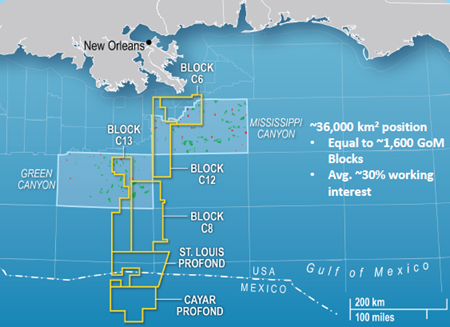
Keep in mind that US lease blocks are the smallest in the offshore world, too small for optimal development in deepwater and frontier areas. The smaller the blocks, the greater the importance of regular lease sales. Pictured below is a 2017 graphic graphic which superimposes Kosmos Energy’s blocks off Senegal and Mauritania on the Central Gulf of Mexico.  Note that the six West African blocks encompass 36,000 sq km and are the equivalent of 1600 GoM lease blocks.  

Read Full Post »

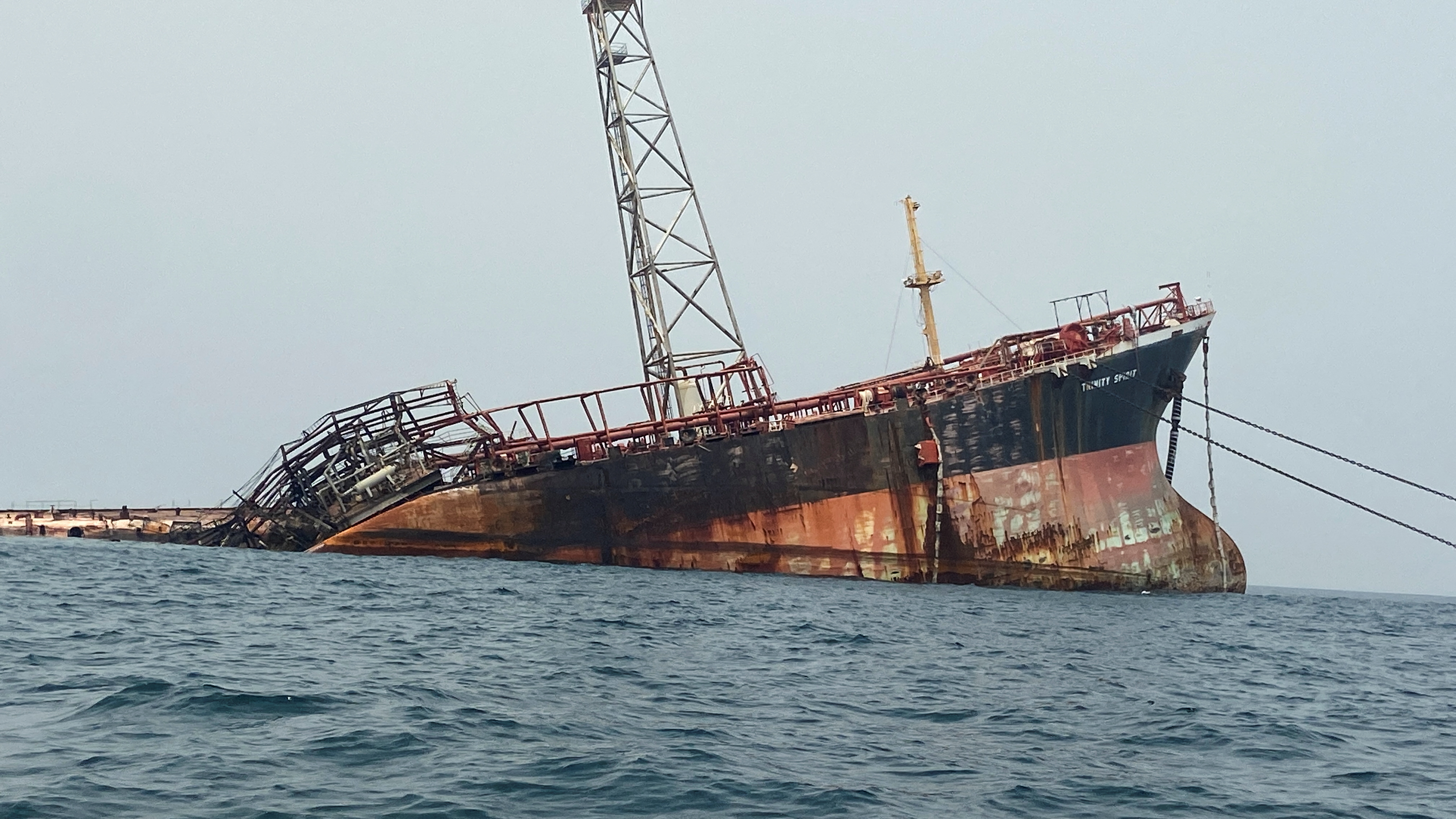
Wreckage of theTrinity Spirit floating production, storage and offloading (FPSO) vessel is seen after an explosion and fire broke out at Shebah Exploration & Production Company Ltd (SEPCOL) offshore production site on Wednesday, in Warri, Nigeria February 4, 2022. REUTERS/Tife Owolabi
Trinity Spirit FPSO

Two weeks after the Trinity Spirit FPSO fire offshore Nigeria we still don’t know the fate of the crew. Neither the operator nor the regulator websites include any mention of the fire. The last operator statement (more than a week ago) advised that 3 workers were confirmed dead and others were still missing. There has been no subsequent update and the media have moved on, as is usually the case when there is no ongoing oil spill.

The absence of transparency in reporting major incidents and subsequent findings is not unique to Nigeria. BOE has commented on US shortcomings in that regard and the failure to release important information about past incidents worldwide.

We need an international standard that identifies incident information to be publicly disclosed and specifies the timeframes and methods for releasing this information. An API or ISO committee would seem to be the best means of developing such a standard. If these organizations are unwilling to take the lead, perhaps the International Regulators’ Forum can do so. The credibility of the offshore industry is at stake.

Read Full Post »

“At a time of rising energy costs and heightened geopolitical tensions, the misguided decision to cancel the only lease sale held last year is contributing to significant uncertainty for U.S. natural gas and oil producers and limiting access to the affordable, reliable energy that’s needed here in the U.S. and around the world. We call on the Department of Interior to join us in this effort and appeal the court’s ruling …

API release

When will we hear from the Department of the Interior?

Update: We understand that Louisiana has also appealed the Sale 257 decision.

Read Full Post »

In the early 1990’s, Department of the Interior (DOI) and Department of Energy (DOE) leadership dabbled at re-branding the OCS Oil and Gas Program by reversing the order of the words. Clever? Perhaps by Washington public relations standards. One senior manager even changed his license plate from “OCS OIL” to “MMS GAS” (not much competition for those tags 😃). Technical staff were less enthused about this simplistic marketing gimmick that misrepresented the historical and scientific facts about oil and gas production. For many years, natural gas was a byproduct of oil production that was commonly flared. (This practice continues in some regions of the world, although to a lesser extent than in the past.)

Understandably, the Oil and Gas Journal wasn’t very impressed by the change. I saved a copy of their 1/24/1994 editorial (attached) on the subject. Per the OGJ:

We at the Journal love natural gas. But that doesn’t warrant an attempt to repeal the laws of nature and ignore the weight of tradition by renaming everything “gas and oil” this and that.

John L. Kennedy, Editor, Oil and Gas Journal, 1/24/1994)

To their credit, BOEM and BSEE web pages and announcements during recent administrations (both parties) indicate a preference for the more traditional “oil and gas.” (The DOE website largely ignores the existence of either oil or natural gas.) Surprisingly, the American Petroleum Institute (API), an industry trade organization with more than 100 years of history, is now consistently using “natural gas and oil.” This rearrangement of words is not entirely consistent with the interest of API’s members. In the offshore sector, the primary interest of API members is in finding and producing oil. if you think otherwise, look at the EIA GoM gas production data. Most of the Gulf’s declining gas production is now associated with deepwater oil production, and BSEE rightfully requires that this gas be used for fuel or transported for sale. Similarly, gas is a secondary consideration for API members exploring in Alaska given that 35 trillion cu ft of North Slope gas still awaits a pipeline.

Oil companies, and those who represent them, should be proud of their current and historical role in producing oil (and gas) for our economy, security, and way of life; and of the men and women who have toiled to locate and produce petroleum resources for the benefit of society. Are there better energy alternatives? Perhaps, but issues with these alternatives remain to be resolved, and oil and gas will continue to be important. Let’s focus on producing these resources as safely, cleanly, and reliably as possible.

Read Full Post »
I don’t buy the argument that industry and regulators have paid too much attention to personal safety at the expense of process safety. Casualties from falls, falling objects, helicopter crashes, and other workplace activities have been persistent, and safety management programs must emphasize practices and procedures that will reduce occurrence rates.

Also, process safety has hardly been ignored. API RP 14 C has proven to be an effective safety analysis procedure for addressing undesirable events associated with each process component of a production facility.  For more complex facilities, Deepwater Operating Plans and API RP 14J, “Recommended Practice for Design and Hazard Analysis for Offshore Production Facilities, ” are good risk management supplements to RP 14C.

That said, we need better programs for sustaining the focus needed to further reduce the probability of low frequency, high consequence events.  When memories about the most recent disaster start to fade, what do we do to keep workers on edge and prevent complacency? What more can be done to prevent events with enormous consequence potential?  Some thoughts:

  1. Establish programs to remind employees about past disasters – how they happened and how they could have been prevented. How many offshore workers know the chain of events that led to the Santa Barbara blowout, Ocean Ranger sinking, Alexander Kielland capsizing, Piper Alpha fire and explosion, Ixtoc blowout, and other historic incidents? When discussing international incidents, we need to explain how our facilities or region might have been vulnerable under similar circumstances.
  2. Present information on minor incidents that could have escalated into disasters, emphasizing what could have gone wrong and why.
  3. Don’t just focus on the last disaster.  While addressing the operational and organizational issues that surfaced at Montara and Macondo, we also must assess incident data and identify activities and practices that could lead to the next disaster.
  4. Operators should not rely on the regulator to manage their operations. Reading about Montara and Macondo, one senses that the regulators were called on to referee internal company disputes and protect the operators and contractors from themselves.
  5. Regulators should not be making day-to-day operating decisions. Regulators should make sure that the regulations are clear and that operators have effective management procedures for adjusting programs as new information is obtained. Regimes that provide for regulator approval of each activity or adjustment promote operator complacency and are not in the best interest of safety over the long term.
  6. Service companies and contractors must challenge operators and regulators.  Operators should expect contractors to think and question, not to simply execute orders. There are impressive examples of contractors insisting on safety improvements, and being willing to forego business rather than compromise on safety.
  7. All sectors of the offshore industry should participate in standards development. Effective standards are dependent on diverse input.
  8. Industry and government leaders should promote innovation. Obvious weaknesses should be identified and industry should be challenged to propose solutions. For example, why do concerns about “false alarms” preclude automatic alarm activation (see Transocean’s Macondo report)? Data from redundant sensors can be analyzed by predictive software that is capable of quickly identifying real events. Similarly, why have advances in BOPE, including monitoring systems, been so slow? Why are BOP capabilities still poorly understood? Why are well integrity and casing pressure issues (producing wells) so common?

Read Full Post »

“After extensive review and development, the oil and natural gas industry has approved the creation of the Center for Offshore Safety, which will promote the highest level of safety for offshore operations, through an effective program that addresses management practices, communication and teamwork, and which relies on independent, third-party auditing and verification,” said Jack Gerard, API president and CEO. “The board directed API to further develop the operational framework and timeline for the center—working with other industry stakeholders—to enhance industry safety and environmental performance.”API Announcement

Comments:

  1. Encouraging decision.
  2. Organizational details will be critical.
  3. It’s good that the center will be affiliated with the standards function and located in Houston (not Washington).
  4. Member support must be consistent and sustained.
  5. Operating companies that are not API members should be involved.
  6. Non-US companies should be welcome.
  7. Contractors and service companies should be involved.
  8. The focus should not be solely on deepwater operations.  Most major accidents have occurred on the shelf, and most of the contributing factors to Macondo were not deepwater related.
  9. A comprehensive, verified international incident data base is critical.

Read Full Post »

« Newer Posts - Older Posts »