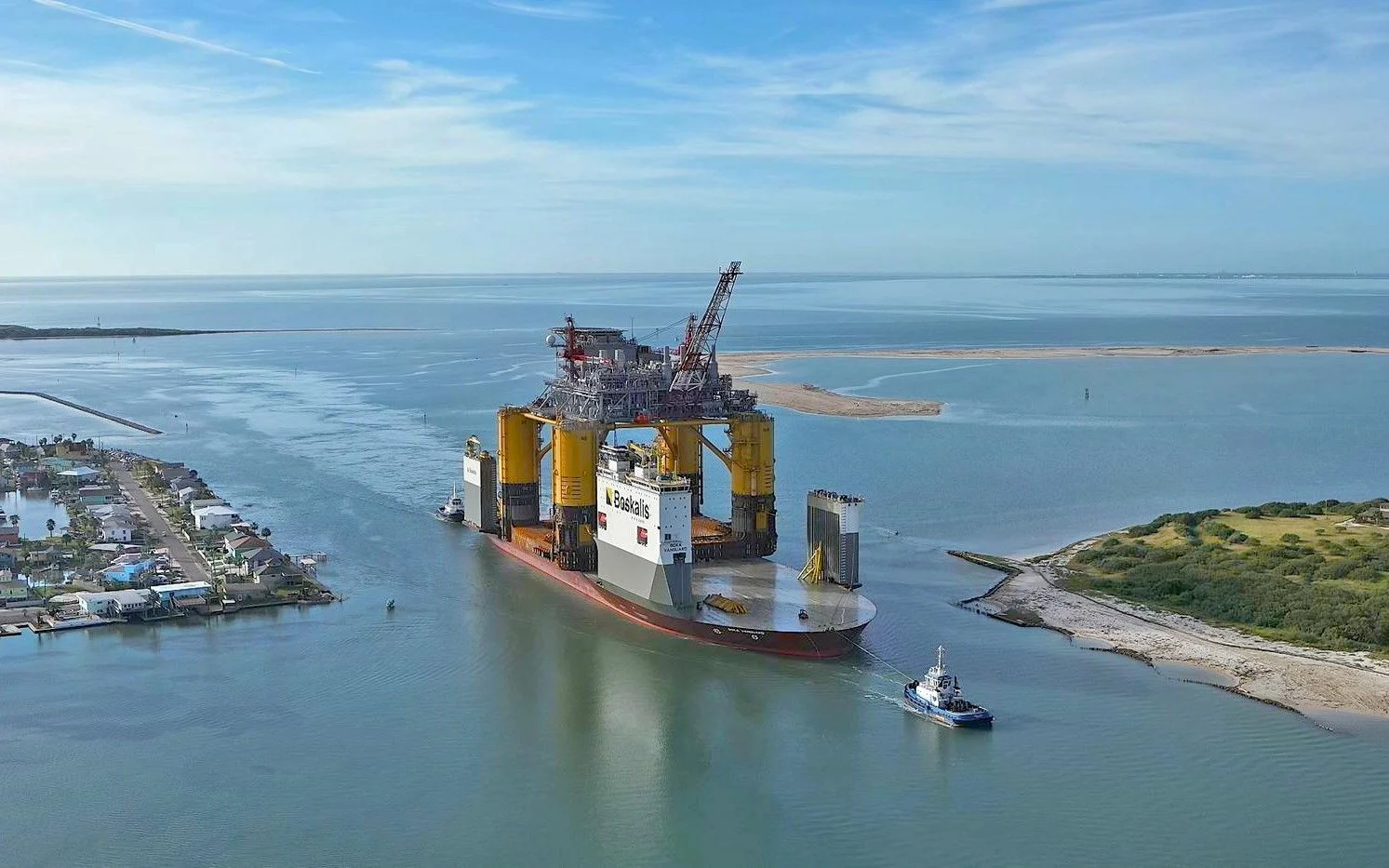
Lars Herbst noted another endangered whale sighting by the US Coast Guard. Unlike their erroneous Rice’s whale report in September (still waiting for their mea culpa), the Coast Guard has gotten this one right. The 25,000 ton Whale is pictured above.
Whale’s species is indeed endangered with the most serious threats coming from a faraway place on the Potomac River. The “newborn” Whale is one of only 15 of its species in the Gulf of Mexico. The entire platformus deepis genus numbers only 59, but their importance to society is enormous (read more).
Perhaps the wise people who control our offshore lands will do more to encourage and support these floating behemoths. Unfortunately, their 5 year management plan is not encouraging in that regard.
Per our previous post on policy decisions that favor production in Iran and Venezuela over US offshore production, Senator Manchin made this statement:
“I also want to briefly express at the outset my strong concerns about the news last night that this administration has lifted most sanctions on Venezuelan oil for the next 6 months. On the heels of announcing the smallest 5-year offshore oil and gas leasing plan in decades, this administration is turning to Venezuela — they know I have a problem and I’m sure many of you will have feelings on this — one of the world’s dirtiest energy producers and an oppressor of its own people, to help make up the production that they refuse to allow in America. I understand that the administration believes this will encourage Venezuela to make democratic reforms, that has been tried, and we’ve failed before. It makes no sense at all to reward bad actors before they actually take the action you want. We tried that with Iran, and now here we are with Venezuela.” said Chairman Manchin.
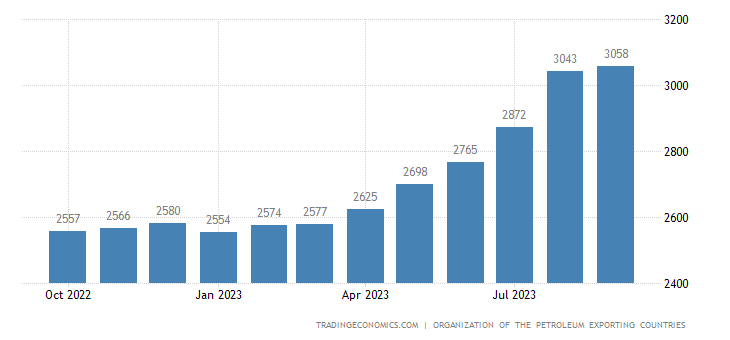
Given that further depletion of the SPR was no longer politically acceptable, a cynic might suggest that oil market considerations associated with the end of SPR withdrawals and OPEC tightening (Iran is currently exempt from OPEC quotas) factored into decisions regarding the relaxation of sanctions on Iran.
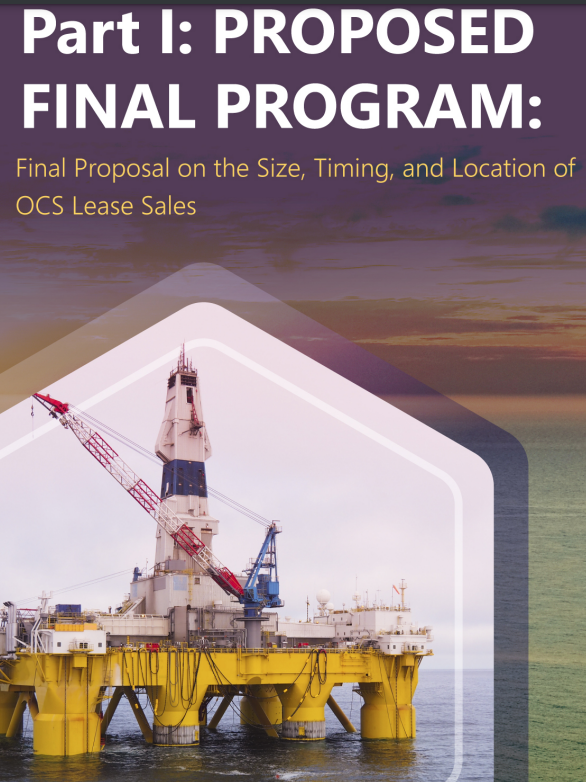
The Polar Pioneer was once a good rig for sub-arctic operations, but is not at all similar to the modern drilling units that are used on the deepwater Gulf of Mexico leases that now account for 93% of OCS oil production and 76% of the natural gas. With the exception of the GoM shelf, which is laudably being gleaned by independent producers, the deepwater GoM blocks are all that is left of the once robust US offshore leasing program.
Unless the picture of the scrapped drilling rig is intended to be symbolic of the current state of the leasing program, the photo choice implies inattention to significant technical details. The document does not include a single picture of a deepwater drilling unit or production facility.
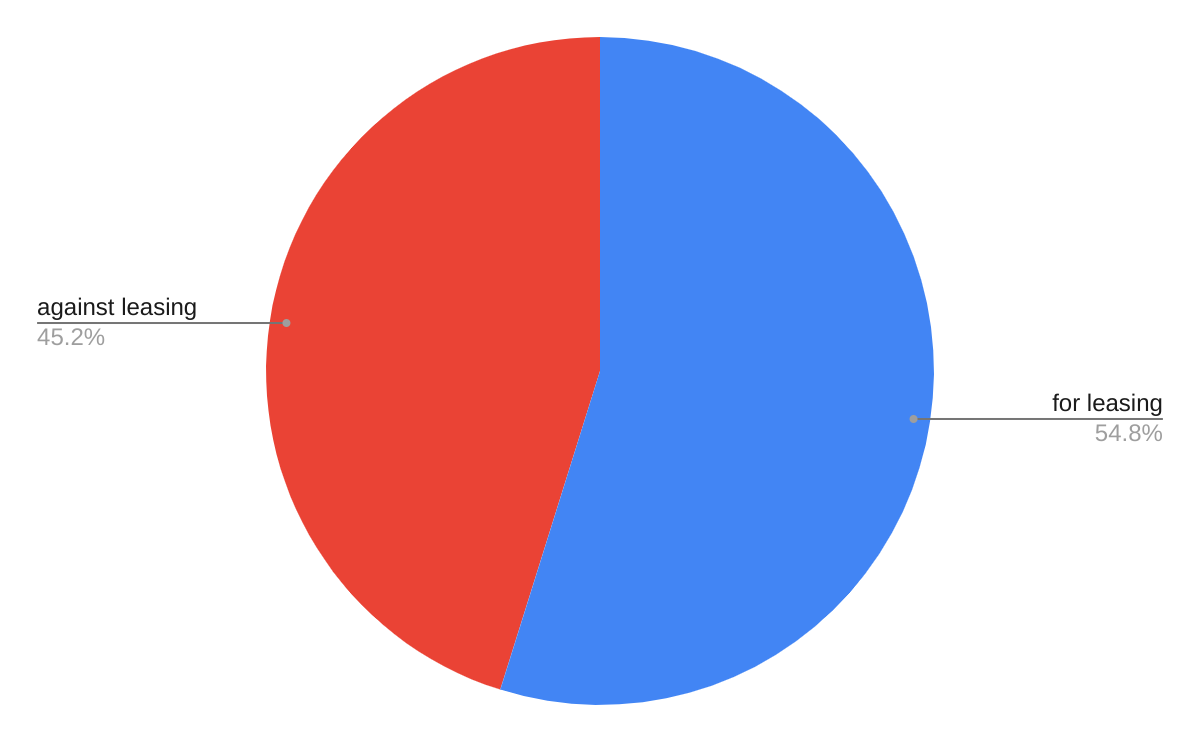
BOEM’s five year plan presented one of the few recent opportunities to “vote” solely on the issue of offshore oil and gas leasing. Advocates facilitated the voting process by providing form letters for and against leasing. Both opponents and supporters are quite good at these campaigns, so neither side had a significant organizational advantage.
BOEM summarized (Table A-11 of the plan) the public comments, and I tabulated the 748,719 letters on the attached spreadsheet. The number of letters supporting oil and gas lease sales exceeded those opposed by 72,383 or 21.4%. The supporters campaign also had more breadth in that there were 49 separate campaigns vs. 45 for leasing opponents.
The NRDC demonstrated their organizational clout with the largest single campaign (107,355 letters). Denise Neal, a name that is unfamiliar to me, impressively organized the largest proponent campaign (61,122 letters).
Summary:
letters supporting offshore oil and gas leasing: 410,551
letters opposing offshore oil and gas leasing: 338,168
letter campaigns supporting leasing: 49
letter campaigns opposing leasing: 45
largest campaign: NRDC – 107,355 letters in opposition (32% of all such letters)
largest pro-leasing campaign: Denise Neal – 61,122 letters in support (15% of all letters in support)
reduce energy costs, farming costs, prices of gasoline and other goods
climate
jobs
environmental justice, local communities
energy independence
fisheries
intl competitiveness
marine environment
national security
marine mammals
GoM production is lower in carbon intensity, higher US environmental stds.
fossil fuel dependency, unnecessary to meet energy needs, oppose new fossil fuel investments, leasing “would not reduce gas prices”
domestic oil and gas preferable during transition
oil spill risks
help improve supply chain
air pollution
help address inflation
stockpiling ocean space, energy price gouging
Interesting contradiction: Opponents of Sale 257 argued in Federal Court that BOEM failed to consider the positive GHG effect that higher prices (the logical result of lower production) would have as a result of reduced demand. The judge agreed with that argument and vacated the sale. Some of the same groups have now commented (per the BOEM summary) that additional leasing “would not reduce gas prices.”
The current leasing policy as articulated in both the draft and final proposed program is to phase out oil and gas production:
The long-term nature of OCS oil and gas development, such that production on a lease may not begin for a decade or more after lease issuance and can continue for decades, makes consideration of net-zero pathways relevant to the Secretary’s determinations on how the National OCS Program best meets the Nation’s energy needs.
Basing leasing decisions on highly uncertain “net-zero pathways” would seem to be a considerable stretch of the Secretary’s authority under the OCS Lands Act. A strategic shutdown of the offshore oil and gas program, which would dramatically increase energy supply and security risks going forward, should be authorized by Congress. Even the threat of such a shutdown could have major economic implications.
The Proposed Final Program includes a maximum of three potential oil and gas lease sales – the fewest oil and gas lease sales in history – in the Gulf of Mexico Program Area scheduled in 2025, 2027 and 2029.
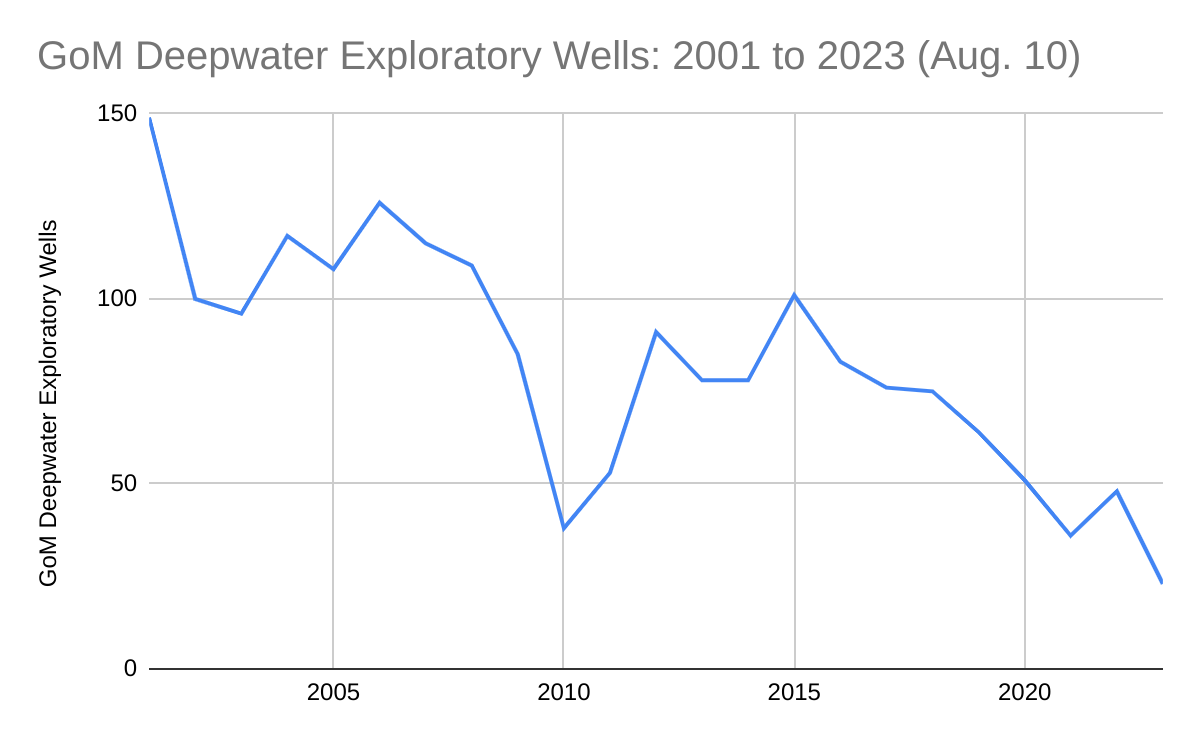
Record low exploratory drilling: 2023 will be the third consecutive year with fewer than 50 deepwater exploratory well starts. The only other year this century with <50 deepwater exploratory well starts was 2010 when there was a post-Macondo drilling moratorium.
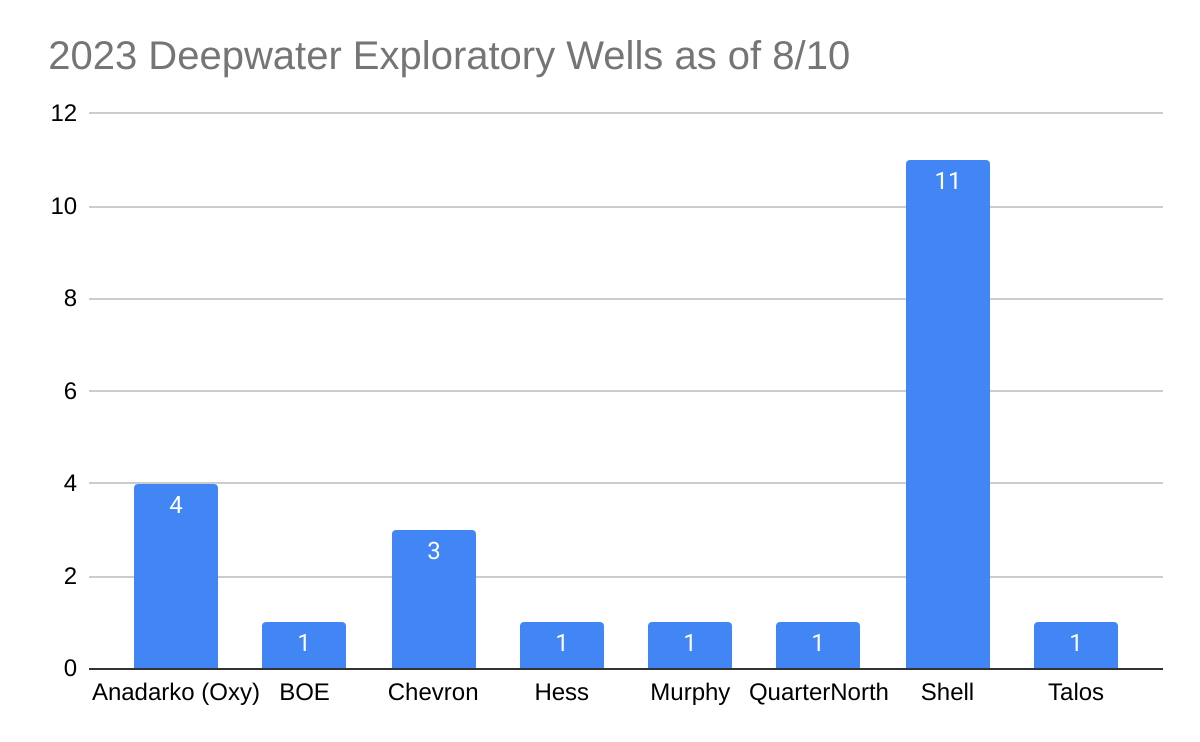
Low participation: Only 8 companies have started deepwater exploratory wells in 2023 YTD. Anadarko, Chevron, and Shell drilled 78% of the wells, with Shell alone accounting for 48%. Compare these numbers with 2001, when 24 companies drilled 149 deepwater exploratory wells.
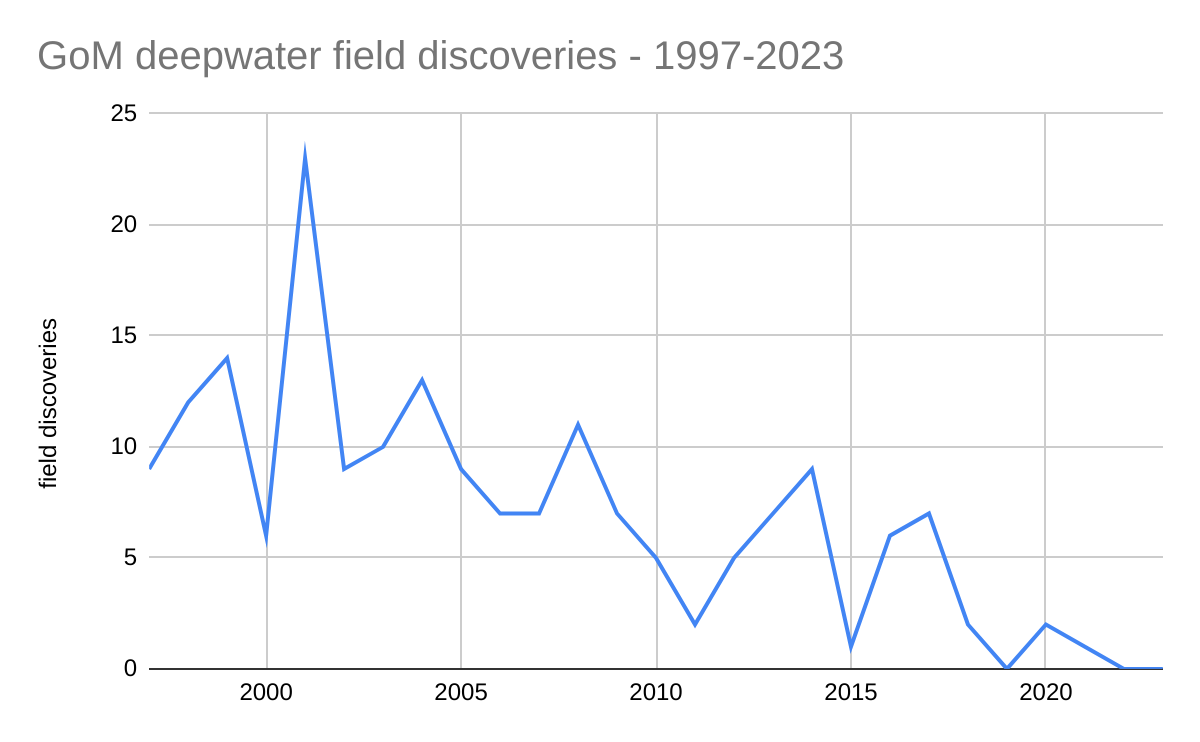
Absence of new field discoveries: Per BOEM’s database, no deepwater fields have been discovered since March 2021 and there were only 3 discoveries in the past 5 years (see chart below)
Leasing and regulatory uncertainty: When will the 5 year leasing plan be finalized and how much will leasing be restricted? What will be the effect of the expanded Rice’s whale area on deepwater operations? To what extent is this expansion justified? What other legal and regulatory threats are on the horizon?
Unrealistic expectations regarding the “energy transition:” In a stunning introductory statement, the Proposed 5 Year Leasing Plan expressed concerns that new leases would produce too much oil and gas for too long. OPEC+ must love the way the US sanctions its own energy production, most notably the oil and gas resources of the OCS. More than 96% of the OCS is off-limits to oil and gas leasing, and the 5 year plan proposed to constrain leasing in the only areas that remain. The favored offshore wind program was intended to be a complement to, not a replacement for, the oil and gas program. Wind energy is limited by intermittency, space preemption, navigation, and wildlife protection concerns.
Some companies have visions of the GoM as a carbon dumping hub: The largest US oil company, which hasn’t drilled a well in the GoM in nearly 4 years and operates just one production platform, seeks praise and profit by sequestering CO2 beneath the Gulf while maximizing oil production elsewhere. How will this sustain economically and strategically important GoM oil and gas production?
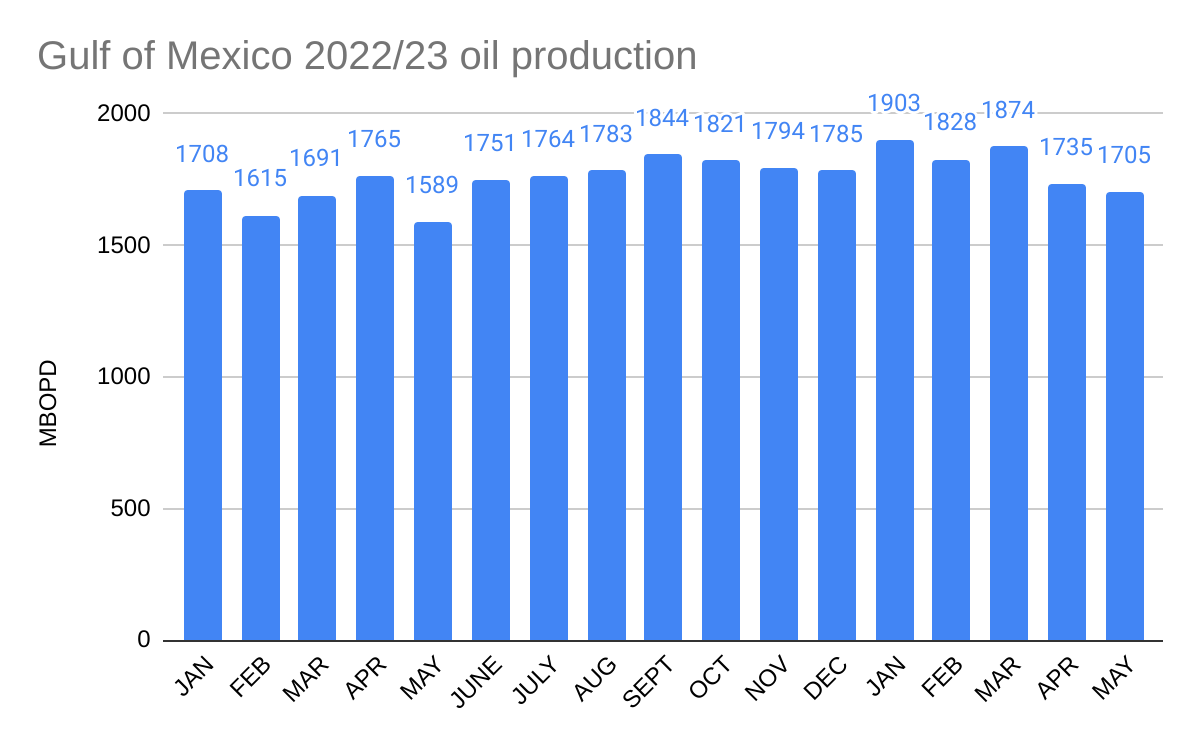
Gulf of Mexico 2023 oil production has dipped over the past 2 months, and is down 10% since January.
2023 production is reasonably well aligned with the EIA forecast which shows new production being offset by declines in existing fields.
Last year, BOEM forecast that production would average 2.0 million bopd in 2023. That forecast was justification for curtailing BOEM’s Proposed 5 Year Leasing Program. For the first time in the history of the OCS program, the primary concern of the program managers was that production might be too high for too long! This stunning quote from the 5 year leasing plan explains why so few lease sales were proposed:
“BOEM’s short-term (20-year) production forecast for existing leases shows steady growth from 2022 through 2024 and declining thereafter (see Section 5.2.1). The long-term nature of OCS oil and gas development, such that production on a lease can continue for decades makes consideration of future climate pathways relevant to the Secretary’s determinations with respect to how the OCS leasing program best meets the Nation’s energy needs.“
Washington, DC — Today, U.S. Senator Joe Manchin (D-WV), Chairman of the Senate Energy and Natural Resources Committee, released the following statement on the Department of the Interior’s (DOI) unprecedented delay in releasing a five-year leasing plan.
“Monday night, the Department of the Interior made it painfully clear – again – that they are putting their radical climate agenda ahead of our nation’s energy security, and they are willing to go to great lengths to do it. The earliest that Interior will release a legally required program for 2023-2028 offshore oil and gas leasing will be the end of this year. That’s 18 months late. This is the first time in our nation’s history that we haven’t had a 5-year leasing program released before the old plan expired. Every other Administration, Democrat and Republican, has managed to follow the law in a timely fashion.
“Let me be clear – this is not optional. The Outer Continental Shelf Lands Act mandates that the Secretary of the Interior “shall prepare” this program to “best meet national energy needs.”
“What is even more terrifying is that on top of this disturbing timeline, Interior refuses to confirm if they intend to actually include any lease sales in the final plan, which is an issue I sounded the alarm about when Secretary Haaland appeared before the Senate Energy and Natural Resource Committee on May 19, 2022. I will remind the Administration that the Inflation Reduction Act also prevents them from issuing any leases for renewables, like offshore wind or onshore solar unless there are first reasonable lease sales for oil and gas that actually result in leases being awarded. And I will hold their feet to the fire on this.”

 Bud's Offshore Energy (BOE)