From a regulatory policy standpoint, this appears to be a strong filing. Operationally, the most important points pertain to the costly and premature Rice’s whale restrictions first discussed on this blog.
Most notably, the plaintiffs seek (p.39):
A preliminary and permanent injunction striking, setting aside, and enjoining BOEM from implementing the specific challenged provisions of the Final Notice of Sale and Record of Decision for Lease Sale 261;
An order vacating the specific challenged provisions of the Final Notice of Sale and Record of Decision for Lease Sale 261;
An order compelling Defendants to proceed with Lease Sale 261 on September 27, 2023, without the challenged provisions;
The Bureau of Ocean Energy Management (BOEM) is extending the public comment period on our notice of proposed rulemaking (NPRM), “Risk Management and Financial Assurance for Outer Continental Shelf Lease and Grant Obligations,” by 10 days.
The expanded Rice’s whale area is based on a single 2022 study that concluded that Rice’s whales were “the most plausible explanation” for moan calls observed in the northwest GoM shelf break area. No Brice’s whales were sighted in the expanded area during this study. Is this sufficient basis for restrictions that threaten operations that are critical to our economy?
Stipulations are part of the lease contract and can be difficult to modify, even when the lessor and lessee are in agreement.
Why not rely on voluntary measures until further studies have been completed? The offshore industry has a good record of cooperation with the government to protect sensitive biological resources. The Flower Garden Banks is a good example of such cooperation.
In addition to the lease stipulation, the entire expanded Brice’s whale area has been excluded from the lease sale. Senator Manchin strongly criticized that decision:
Let me be clear, the exclusion of more than 6 million productive acres from the upcoming offshore oil and gas lease sale in the Gulf of Mexico based on a settlement reached in the name of protecting Rice’s whale while conveniently only targeting oil and gas is yet another example of this Administration’s intentional undermining of the strong energy security provisions in the Inflation Reduction Act.
Slide 13: “In 2022, the rate of occupational fatalities, reported for activities on facilities where BSEE has primary investigation authority, decreased to being near the historical national average of approximately 0.9 fatalities per 25,000 full time equivalent workers per year. However, considering all offshore risk factors, including helicopter transportation, diving, marine transfer, and COVID-19 exposures, the occupational fatality rate for all OCS activities has remained high since 2019.“
Slide 15: “In 2022, the TRIR for both production and construction operations increased to the highest levels recorded since 2010 and remained high even after discounting the impact of COVID-19 illnesses. The TRIR for drilling and well operations, however, remained near their historical lows.“
Comments:
These charts and tables are helpful for assessing trends.
The data raise concerns that merit further analysis. Absent the specific incident summaries, which have yet to be updated for 2022, it’s difficult to assess the nature and extent of the issues.
The parsing of fatality data according to regulatory jurisdiction adds to previously expressed concerns about regulatory fragmentation and its implications for offshore safety.
The latest International Regulators’ Forum country performance data are for 2020. The absence of regular, timely updates makes international comparisons difficult and limits the value of what is arguably the most important IRF workstream.
The attached comments were submitted to BOEM via Regulations.gov. The comments address specific provisions of the proposed rule and include a recommendation to hold companies fully accountable for their lease transfers, but not for subsequent transfers in which they are not a party.
Do I get a t-shirt for being one of the first 2000 entries? 😀
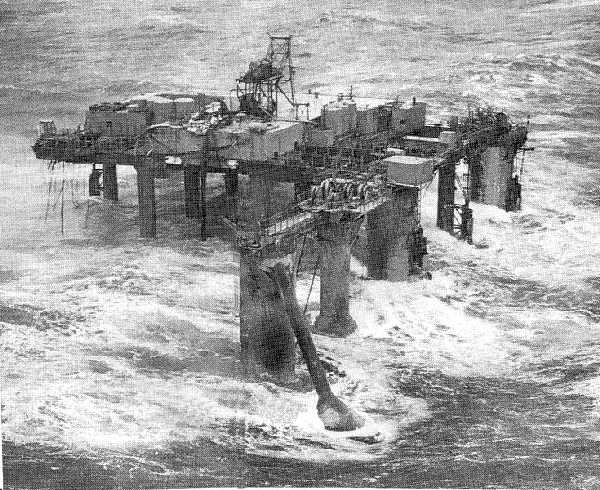
“At about 2 am on the day of the storm, the rig’s superstructure was torn off during a gale. By 7:10 am about a third of the drilling plattform had dissapared under 60 feet water.”
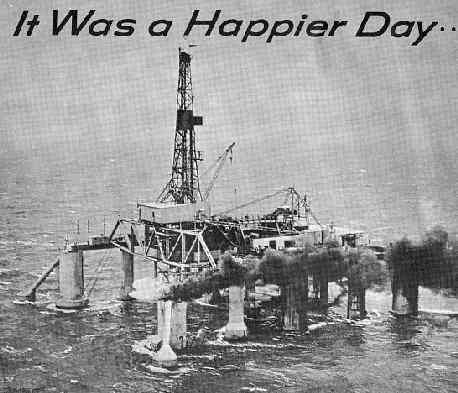
I didn’t realize that some early North Sea wells were drilled with semisubmersible rigs that were sitting on bottom, ala submersibles.
Per JL Daeschler, “the barge master on Ocean Prince was unsettled about sitting on a sandbank in the North Sea with waves as deep as the water depth, hence accelerating the scouring around the pontoon on the sea bed and distorting the forces on an unsupported hull. On a semisubmersible floating rig there is a great level of compliance between the mooring system and the forces on the leg and bracing. Worst case, you let the mooring go and drift.
It’s noteworthy that: “During the same storm which claimed the ”Ocean Prince,” the rig’s sister ship ”Ocean Viking,” while drilling afloat, withstood winds and waves of equal force.”
The entire crew of the Ocean Prince was safely evacuated.The helicopter pilot’s last name was fitting given his bravery during the rescue!
“Hero of the rescue effort was Capt. Robert Balls, 32, a former naval pilot who was alerted to remove the stranded crewmen. Within 45 minutes after he was awakened at Scarborough Hotel at 6 a.m., he was piloting a Wessex 60 helicopter across the North Sea fighting gale winds 400 feet up.”
“Captain Balls flew the copter with a minimum load of fuel in order to carry more than a full passenger load to the oil rig ”Constellation,” which was drilling about 20 miles south of the ”Ocean Prince.” On the first lift he transported 19 men. Usually, the capacity of the Wessex 60 is 16. On the second trip he took 18 crewmen. The final trip, he flew eight men directly to Scarborough.”
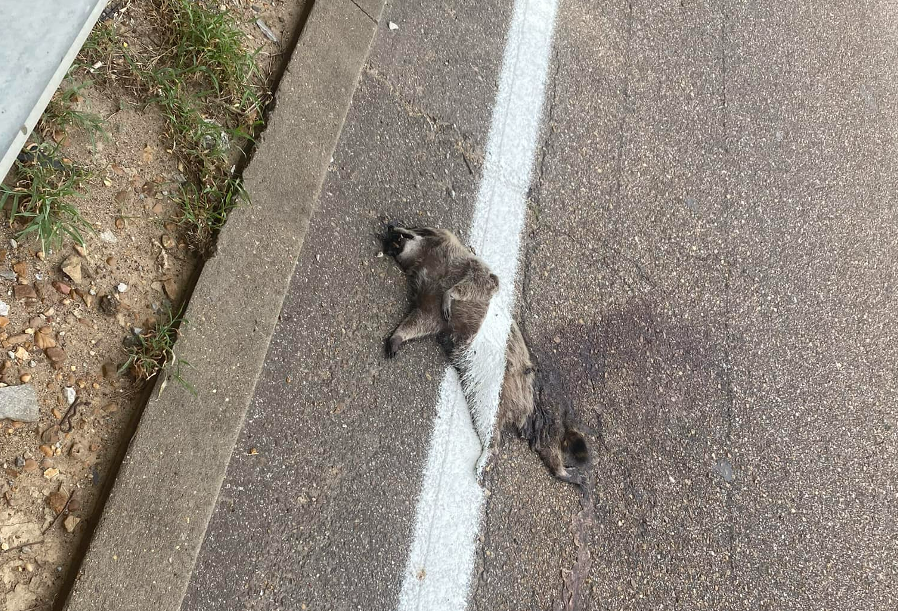
My former colleague Jim Lane, who shared the original Not My Job Award photo many years ago, has forwarded impressive evidence (below) that the NMJA work ethic is still proudly on display. 😉
Jim commented that the freshly painted raccoon is a more modern and universal NMJA symbol than the old armadillo.
Either image, properly presented, is appropriate recognition for proud Not-My-Jobbers in your organization or industry. 😉
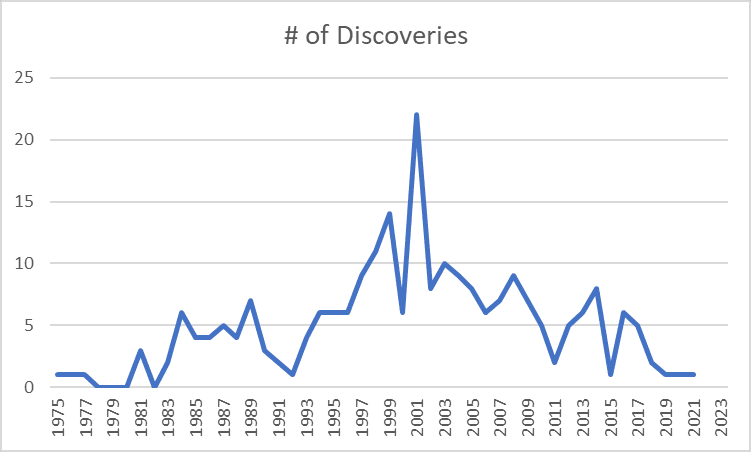
Per our previous post, “Ominous signs for the future of Gulf of Mexico production,” Lars Herbst has plotted (below) deepwater GoM field discoveries dating back to the early days of deepwater drilling operations.
These are official USGS, MMS, and BOEM data (depending on the era) for field discoveries in >1000′ of water. Note that the last discovery was in March 2021.
This is a discouraging graphic given that the deepwater GoM is currently the only option for significant new US offshore production.

 Bud's Offshore Energy (BOE)