November 24, 2010 by offshoreenergy

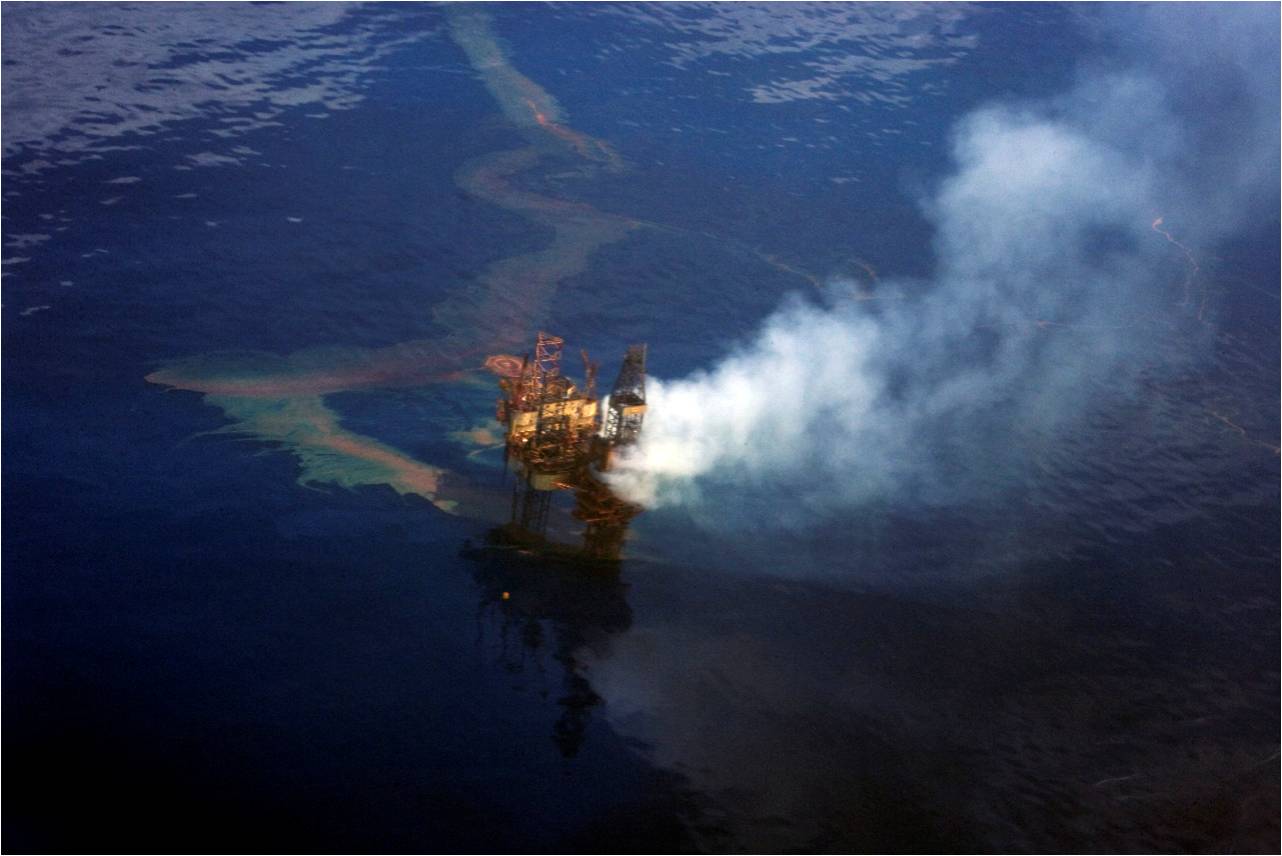
Montara Blowout - Timor Sea
Our virtual vigil is over. I awoke to messages from Odd, Anthea, and Kevin that the day had finally arrived – the Montara Report has been released. Not only do we have the Inquiry report, but also the government’s response and PTTEP’s action plan. We’ll be digesting this over the next few days (along with a turkey dinner), but below are a few key items (direct quotes from the government’s response) that are likely to be of interest to BOE readers:
- To create a single national regulator the Government will expand the functions of the existing National Offshore Petroleum Safety Authority (NOPSA) to include regulation of structural integrity, environment plans and day-to-day operations associated with petroleum activities in Commonwealth waters. There is a fundamental connection between the integrity of structures, the safety of people, and protection of the environment. The expanded authority – to be named the National Offshore Petroleum Safety and Environmental Management Authority (NOPSEMA) – will also regulate safety, integrity and environment plans for minerals extraction and greenhouse gas storage activities in Commonwealth waters.
- In recognition of the global nature of the offshore petroleum industry, and Australia’s increasingly important role, the Government intends to host an international conference for governments, regulators and the offshore petroleum industry to share the lessons from Montara and to learn from the experience of other nations. The conference will beheld in Australia during 2011.
- An important feature of objective-based regulation is that it encourages continuous improvement rather than acompliance mentality. It is essential that a regulatory system encourage the creator of the risk to move beyond minimum standards in a continuous effort for improvement, and not just accept the minimum standard. The risk of specific standards is that they can shift the burden of responsibility from the operator to the government and stifleinnovation. The Australian objective-based regime retains the focus clearly on the operator to evaluate risk andachieve fit for purpose design in order to reduce risk to ‘as low as reasonably practicable’.
Posted in accidents, well control incidents | Tagged accidents, Australia, blowouts, Montara, NOPSA, offshore oil, oil spill, relief well, safety, well control | Leave a Comment »
November 23, 2010 by offshoreenergy

This well-written draft report is fascinating reading for those who closely followed the various attempts to contain and kill the Macondo well.
A couple of concerns:
- The report relies heavily on anecdotes and qualitative judgments attributed to unnamed individuals. For example, twelve sources are cited in the footnotes on page 6, but only one is mentioned by name. No information is provided about the qualifications or responsibilities of the unnamed sources, so it is difficult to assess the significance of their comments.
- The narrative ends rather abruptly without any discussion about the decision to continue with the relief well after the successful static kill operation. The report simply states that BP proceeded with the relief well to finally kill Macondo. As indicated previously on BOE, this is not entirely accurate. Macondo was already killed, and the well could have been secured through conventional plugging and abandonment procedures. The relief well was presumably continued to verify that the annulus was sealed and provide information that might be useful as part of the investigation. However, the relief well did not kill the well and the intercept was not necessary for that purpose.
Posted in accidents | Tagged accidents, blowouts, Deepwater Horizon, drilling, Gulf of Mexico, macondo, National Commission, offshore oil, relief well, well control | Leave a Comment »
November 23, 2010 by offshoreenergy
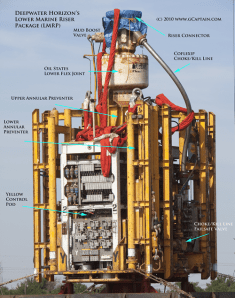
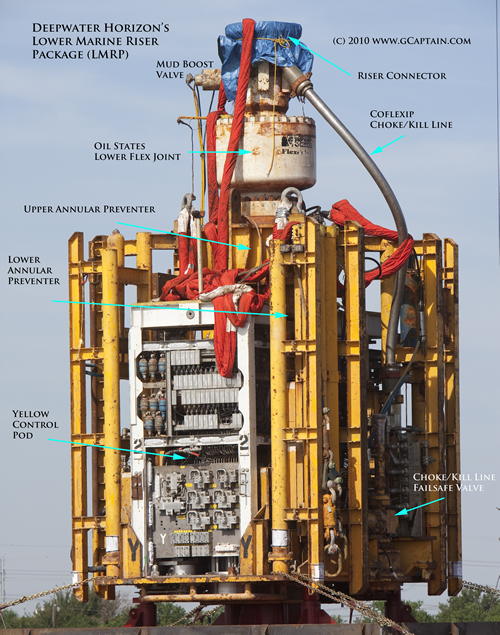
BOP stack awaiting post-Macondo inspection (from gCaptain.com)
In my 11 May 2010 testimony before the Senate Energy and Natural Resources Committee, I made ten recommendations. While many of the issues raised in that testimony are being addressed, one of the more important recommendations (no. 4) has received little or no attention. This recommendation calls for a public or private system for collecting and assessing failure date for blowout prevention equipment. To the best of my knowledge, the only publicly available performance data for BOPE were collected by MMS and SINTEF and pertain to failures during BOP pressure testing, not failures during other operations. How can we have a credible safety system without comprehensive failure data for such critical well control equipment?
Dr. Malcolm Sharples, an important BOE contributor, identified a number of BOP performance issues since Macondo. Here are a few examples:
- During routine tests on the device, the locking system of one of the rams jammed in a locked position. Sevan is working with Petrobras and the supplier, Cameron, to find a solution.
- Reliance suspended all drilling work in the block after the Transocean rig Deepwater Expedition developed technical problems in its BOP. Reliance was drilling the KGV-D3-W1 well in the contract area since April 2010.
- The rig was offshore Australia for Shell early last month when newly installed BOP components failed during operations. Following several unsuccessful attempts to rectify the problems in the field, the failing BOP component is currently undergoing repairs in Singapore.
How is this information not important to every operator, regulator, and drilling contractor? A comprehensive BOP failure reporting system should be a high and immediate priority for the offshore industry. The information should be verified and published so that all may learn and future performance improved. Requirements for providing such information should be included in contracts and, if necessary, regulations.
An other major void that I have been talking about for years, without much success, is the absence of a comprehensive and verified international incident reporting system. I assumed this would be universally recognized immediate necessity, and a critical element of the offshore industry’s initiatives agenda. Apparently that is not the case. More on this to follow.
Posted in drilling, Uncategorized | Tagged BOP, BOPE, Deepwater Horizon, drilling, failure reporting, macondo, Malcolm Sharples, offshore oil, safety, well control | Leave a Comment »
November 22, 2010 by offshoreenergy

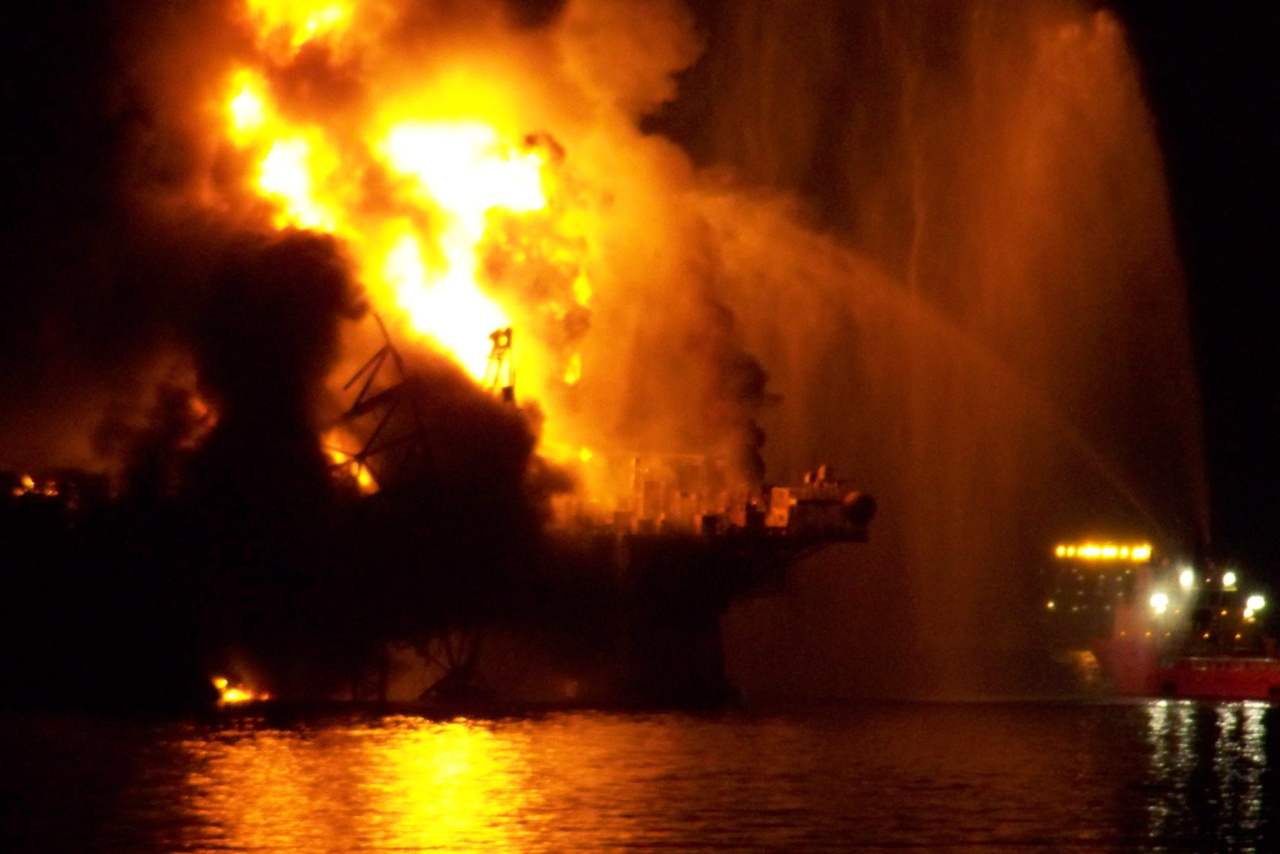
Deepwater Horizon
Nothing new, but a but a very good Macondo commentary by Bill Campell, a retired Shell employee. Worth reading.
In my opinion this event is not so much about the well as designed but the well as installed. Installing a well is similar to any other civil engineering project in that what is installed has to be tested or commissioned before it is put into use, just as you would test a vessel or pipeline designed to contain hydrocarbons under pressure. Wells, which are discovered to have a problem during integrity tests indicating for example a connection between the well and the reservoir, are worked over to rectify the problem and in a few hours after remedial activities have been undertaken, the integrity testing is re-commenced. Bill Campbell
Posted in accidents, well control incidents | Tagged accidents, Bill Campbell, blowouts, Deepwater Horizon, drilling, Gulf of Mexico, offshore oil, safety, well control | Leave a Comment »
November 22, 2010 by offshoreenergy

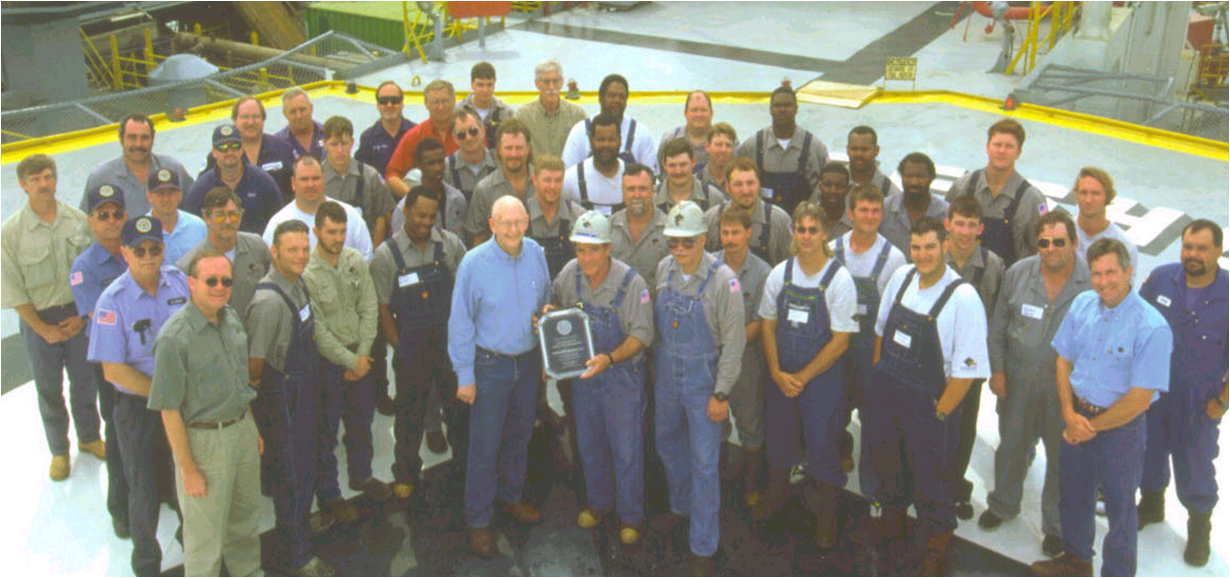
Every day workers demonstrate that they want to do their jobs well, prevent accidents, and protect the environment. Only a few workers are “Not My Job Award” candidates. A bulldozer driver did the right thing in Colorado and the result is the fossil find of the century:
The idea to dig at Snowmass was sparked after a bulldozer driver stumbled upon what he believed to be the remains of a mammoth in the small town’s reservoir. The driver contacted the Denver Museum of Natural Science about his discovery, and the museum immediately sent up a team to investigate, uncovering a hidden trove of prehistoric remnants unlike any other.
While the mammoth fossils and the scientists are receiving most of the attention, the real star is the bulldozer driver.
Lately, we have heard a lot about offshore workers who made mistakes, and it’s important that we learn more about those mistakes so we can prevent their recurrence. However, workers have the most at stake and are the people who are most committed to accident prevention. We need to embrace this commitment by fostering a culture that allows workers to be safety leaders, not just implementers who follow directives from managers and regulators.
Posted in Uncategorized | Tagged bulldozer, mammoths, offshore workers, safety, safety culture, safety leadership training | Leave a Comment »
November 20, 2010 by offshoreenergy
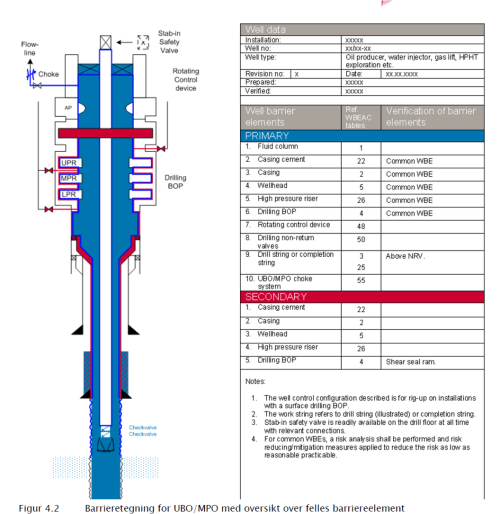
The Petroleum Safety Authority of Norway has commented on Statoil’s report on the well control incident at Gullfaks C:
The PSA regards the incident as very serious. It involved the lengthy loss of a barrier. Only chance averted a sub-surface blowout and/or explosion, and prevented the incident from developing into a major accident.
PSA had directed Statoil to do the following:
- To review and assess compliance with the work processes established to safeguard the quality and robustness of the well construction process on Gullfaks. This must include an investigation of why important deficiencies were not picked up during the work. Necessary improvement measures related to the work processes and their use must be identified and implemented.
- To conduct an independent assessment of why measures adopted after earlier incidents, including the gas blowout on Snorre A in 2004 with similar causes, have not had the desired effect on Gullfaks. Based on the results of this work, the company must assess the need for and implement new and tailored improvement measures on Gullfaks.
- To assess the results of the work done under items 1 and 2 and – on that basis – implement measures in the rest of the company.
- To prepare a binding plan for the way this work is to be executed and followed up. This plan must be submitted to the PSA.
Posted in accidents, Norway | Tagged accidents, Norway, PSA, safety, well control | Leave a Comment »
November 20, 2010 by offshoreenergy
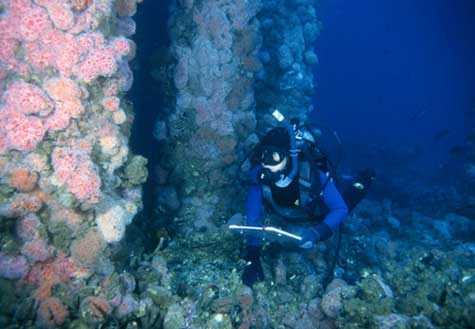
Platform Gina - Santa Barbara Channel
The Marine Science Institute of the University of California Santa Barbara has completed a 6-year study to investigate the differences between the types of fish that live around offshore oil and gas production platforms off the coast of California and the species that inhabit natural reefs in the same geographic area. This research strengthens and confirms observations made in previous studies.
Among the important conclusions (full study linked here):
- There is very extensive diversity in the species assemblages around the oil and gas platforms of California. Factors driving this variability include A) location around the platform, B) geographic location of the platforms, and C) bottom depth of the platform.
- Around each platform, there are three, unique, fish assemblages: midwaters, bottom, and shell mound. While a suite of rockfishes (of 43 species) dominate most platform assemblages, a number of other taxa (e.g., lingcod, combfishes, sculpins, and seaperches) are also important.
- Midwater fish assemblages tend to be similar across platforms; there are substantial differences among those found at bottoms and shell mounds.
- In general, the assemblages of platforms and natural sites are different. These differences are primarily based on differences in species’ densities rather than the presence or absence of taxa.
- The role that habitat complexity plays in structuring platform fish assemblages should not be underestimated.
For a less scientific look at the reef effect and other uses of offshore platforms, see our Rigs-to-Reefs+++ page, a BOE exclusive! 🙂
Posted in Uncategorized | Tagged offshore oil, offshore platforms, rigs-to-reefs, Santa Barbara Channel, UCSB | Leave a Comment »
November 19, 2010 by offshoreenergy
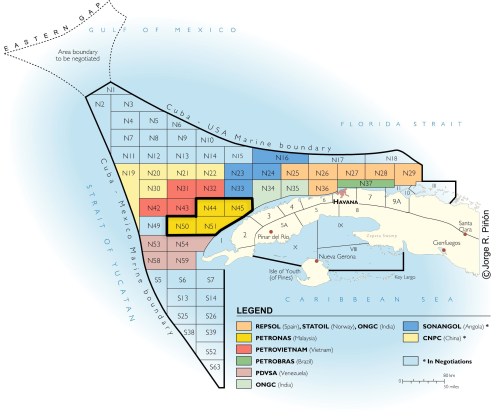
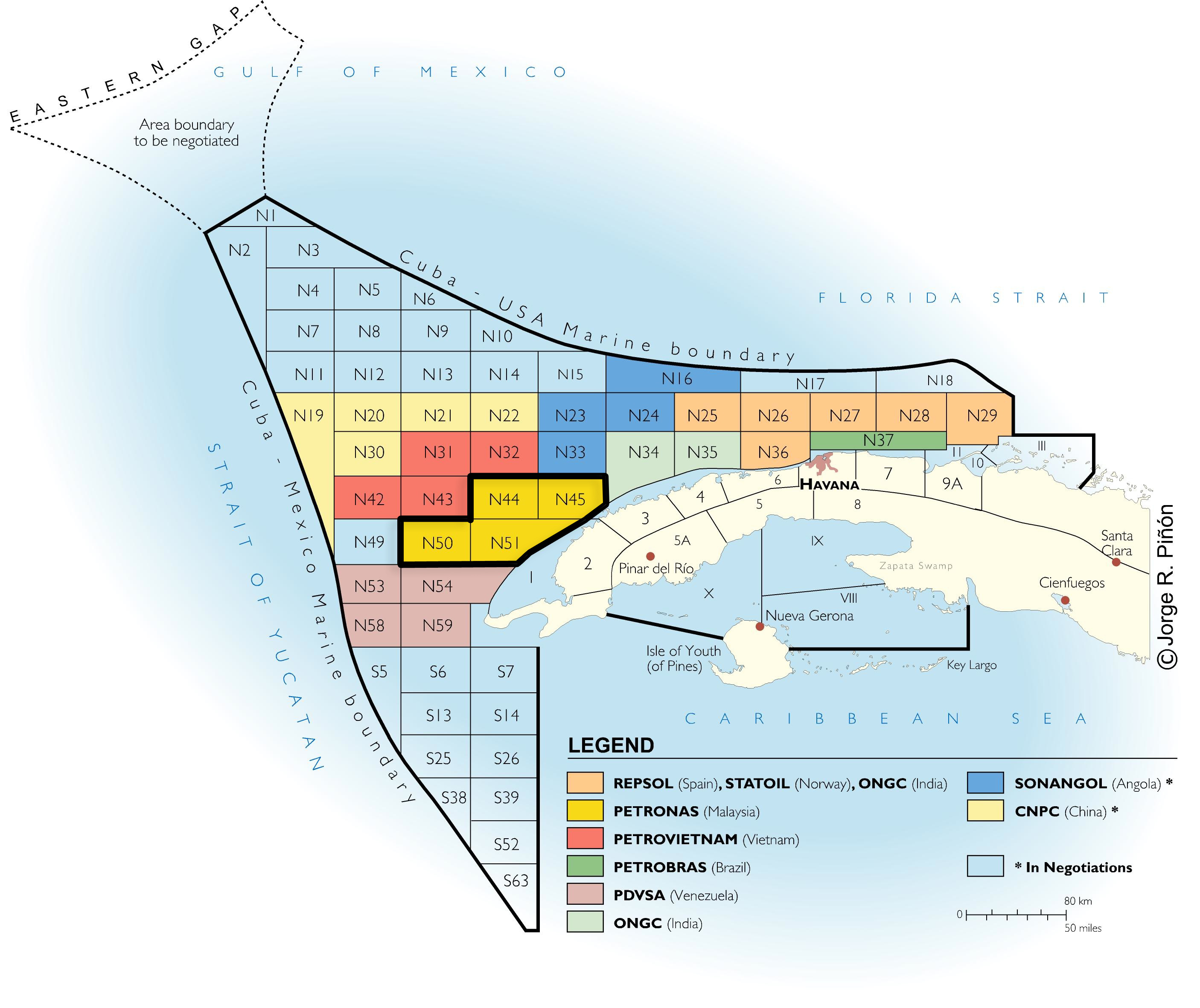
According to CubaStandard.com, we can add Petronas, with Gazprom as a major partner, to the list of companies that will be drilling offshore Cuba next year. So, as best we can determine, beginning in 2011 the following companies will be using Saipen’s Scarabeo 9 to drill wells offshore Cuba:
- Repsol (Spain) with Statoil (Norway) and ONGC (India) each holding a 30% interest
- PdVSA (Venezuela)
- Petronas (Malaysia ) with Gazprom (Russia) holding a 30% interest
Contrary to our energy, economic, and environmental interests, the US continues to prohibit governmental consultations on these important issues and participation by US companies in any aspect of Cuban offshore operations.
Posted in cuba | Tagged cuba, Gazprom, offshore oil, ONGC, Petronas, Repsol, Statoil, venezuela | Leave a Comment »
November 19, 2010 by offshoreenergy
Yesterday, I was fortunate to receive a copy of Bjørn Vidar Lerøen’s excellent book “Drops of Black Gold” which chronicles the history of Statoil and Norwegian offshore oil and gas development. Of particular interest was a letter on page 17 of the book (not available online) that I had heard about but hadn’t seen. The letter, dated October 29, 1962, is from Phillips Petroleum to the chairman of a Norwegian government committee considering offshore oil and gas exploration.
Phillips’ request is quoted below. You have to give Phillips high marks for taking an aggressive negotiating position (or was it pure chutzpah?). No small lease blocks for them. Phillips asked for the whole Norwegian shelf including any future additions! And what would they offer in return – a seismic survey program costing an estimated $1 million.
We have reason for believing that the geologic basin in which large reserves of natural gas have been discovered in Holland may be extended northward into the Norwegian portion of the North Sea. Therefore, Phillips Petroleum Company is interested in obtaining from the Norwegian government an oil and gas concession covering the lands lying beneath the territorial waters of Norway plus that portion of the continental shelf lying beneath the North Sea which may now or in the future belong to or be under the control of Norway.
Posted in Norway, Offshore Energy - General | Tagged Bjorn Vidar Leroen, Drops of Black Gold, North Sea, Norway, offshore oil, Phillips Petroleum, Statoil | Leave a Comment »
November 18, 2010 by offshoreenergy

Sound familiar?:
The amount of failures is unprecedented,” said Richard Woodward, a fellow Qantas A380 pilot who has spoken to all five pilots. There is probably a one in 100 million chance to have all that go wrong.”
But it did.
Solution:
What we have got to ensure is that systems are separated so that no single point of failure can damage a system completely, Woodward said. In this situation the wiring in the leading edge of the wing was cut. That lost multiple systems.
Yahoo link
Posted in accidents | 1 Comment »
« Newer Posts - Older Posts »