As expected, BSEE’s 8/30 update indicates that the shut-in production volumes remain about the same. The process of inspecting facilities, returning workers (some of whom may be dealing with damage and other challenges at home), and restoring production will take some time.
Other than the sketchy reports about the Globetrotter II, there is no information on Ida-related offshore incidents at this time. .
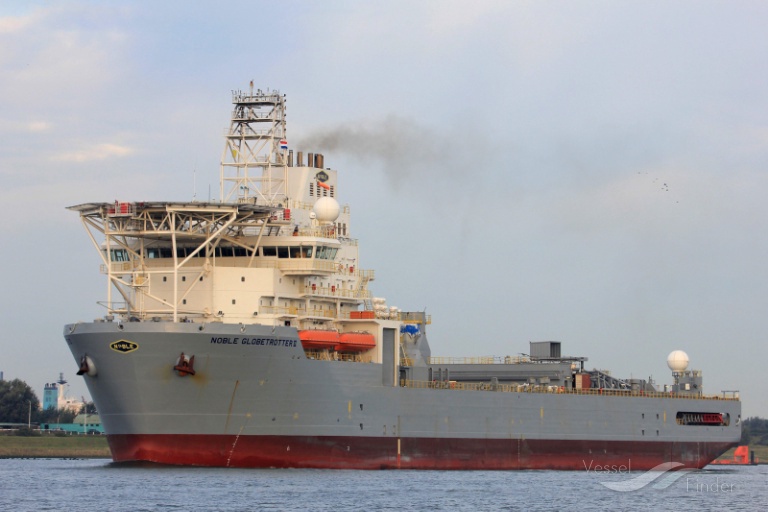
SUGAR LAND, Texas, Aug. 29, 2021 /PRNewswire/ — Noble Corporation (NYSE: NE, “Noble” or the “Company”) today announced that all personnel onboard the Pacific Sharav, Noble Globetrotter I, and Noble Globetrotter II ultra-deepwater drillships in the US Gulf of Mexico are safe and accounted for following Hurricane Ida. Each rig successfully secured its respective well in progress and took evasive actions to avoid the storm’s path. Of the three, the Noble Globetrotter II is the only vessel that encountered hurricane-force conditions. The vessel maintained stability throughout the weather event and is operating on its own power with functional marine and safety systems. A full assessment of its condition will be completed as soon as the weather clears.
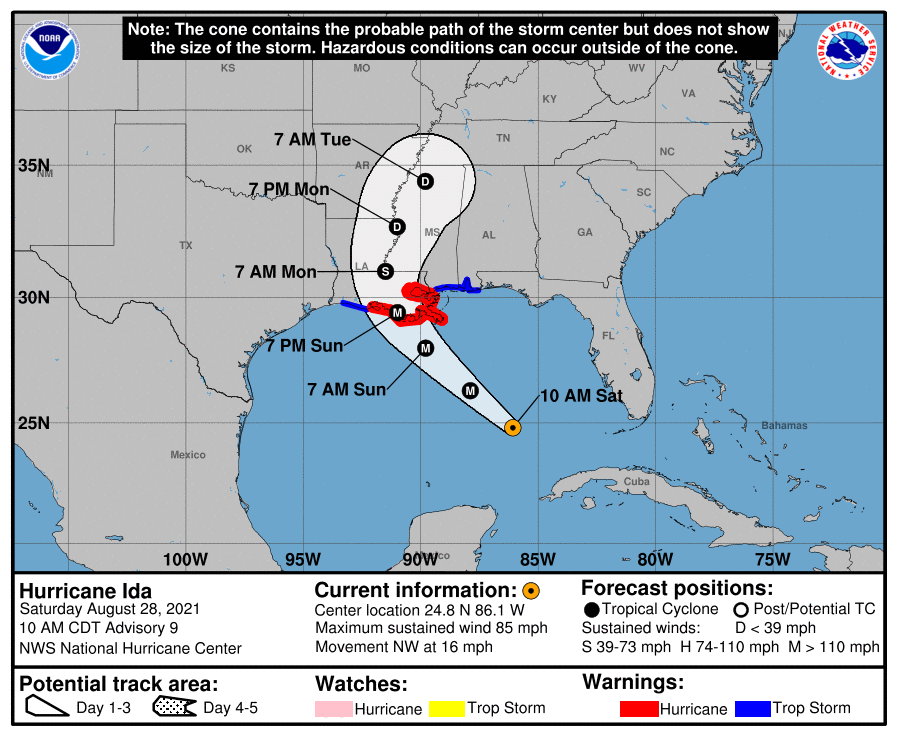
BSEE’s 8/29 update indicates that over 1.74 million BOPD have been shut-in by Ida. Based on the most recent EIA production data, this is essentially all Gulf of Mexico oil production.
There has also been some early noise on social media about offshore facility damage. None of these reports have been confirmed by the Coast Guard, BSEE, or the companies involved. The most credible reports relate to the Noble Globetrotter II deepwater drillship. Per the reports, allegedly from workers on the rig, the Globetrotter II was hit by Ida before the riser was disconnected and recovered. The rig is reported to have sustained significant damage and there may have been injuries. This type of incident has occurred in the past when dynamically positioned drillships have not successfully pulled their riser and relocated prior to the storm’s arrival. One report indicated 60′ waves and 140 mph winds at the rigs’s location.
Per BSEE’s 8/28 update, 90.84% of GoM oil production is reported to be shut-in. Given that there is some uncertainty in both the numerator (production shut-in) and the denominator (base production), there is a margin of error (~5%?) in that figure. The large discrepancy in the % of manned facilities evacuated (only 50) and % of oil production shut-in (90+) illustrates the dominance of deepwater facilities, mostly shut-in, in GoM oil production.
In light of the projected storm track for Ida, forecasting uncertainty, and the need to err on the side of caution in making evacuation and shut-in decisions, particularly for deepwater facilities, look for at least 75% of Gulf of Mexico oil production (approximately 1.3 million BOPD) to be shut-in temporarily.
After an amazing 38 year career with MMS and BSEE, Lars Herbst has announced that he will retire at the end of 2021. Lars had important technical and managerial roles in the development of the deepwater Gulf of Mexico, the response to major hurricanes including Ivan, Katrina, and Rita, controlling the Macondo blowout and addressing the related regulatory issues, and the offshore industry’s response to the COVID-19. Lars was an active participant in the International Regulator’s Forum and is recognized worldwide for his operational and regulatory expertise. Best wishes to Lars as he transitions to the next phase of his life.
This graphic update gives a better sense of the horrific tragedy that unfolded:
MEXICO CITY (AP) — Mexico’s state-owned oil company said Tuesday the possible remains of two missing subcontractors had been found on one of its oil platforms in the Gulf of Mexico following a weekend fire.
Pemex Director Octavio Romero said the apparent remains were found in a control room on the platform where temperatures reached around 1,800 degrees (1,000 degrees Celsius). Such heat would have burned the bodies beyond recognition.
Given the magnitude of the event, the restart schedule seems pretty aggressive. Hopefully, the risks have been fully assessed and the resumption of production is not being rushed.
Pemex said that by Aug. 30 it hoped to restore all of the 421,000 barrels per day in production knocked out by the blaze.
Mexico’s energy ministry has designated Petroleos Mexicanos as the operator of the country’s largest oil discovery by private companies, in the latest sign of the government’s nationalist approach to the energy industry.
Talos said it was “very disappointed” with the decision and will explore “legal and strategic options” regarding Zama. The company added that the energy ministry had informed Talos of its “sudden” decision only three days after the driller received a letter directly from Pemex arguing for operatorship.
The Mexican government’s decision is indicative of the Lopez Obrador administration’s commitment to rolling back the reforms that had encouraged private sector participation in Mexican offshore exploration and development.
Questions had already been raised about Pemex’s ability to fund Zama development and operate the field safely. This week’s deadly incident and a July pipeline fire add to those concerns. In light of the background political and financial issues, will it be possible to for Pemex and the Mexican regulators to conduct a fully independent investigation of the tragic fire that just occurred?
5 workers killed – 4 contractors and one Pemex employee
6 workers injured, one in critical condition
2 workers are missing
The fire occurred in the power generation and compression area of the platform
Contractors Cotemar and BMCI were performing maintenance at the time of the incident
The fire has now been extinguished
No reports of an oil spill
Massive loss of production – 421,000 BOPD shut-in
Defensive and rather shameful comments by the CEO:
“There is not a problem of lack of investment, there is not a problem of lack of resources,” Romero said. “The oil industry is a risky industry. We have had accidents, which in numbers are less than in previous years.”