Feeds:
Posts
Comments

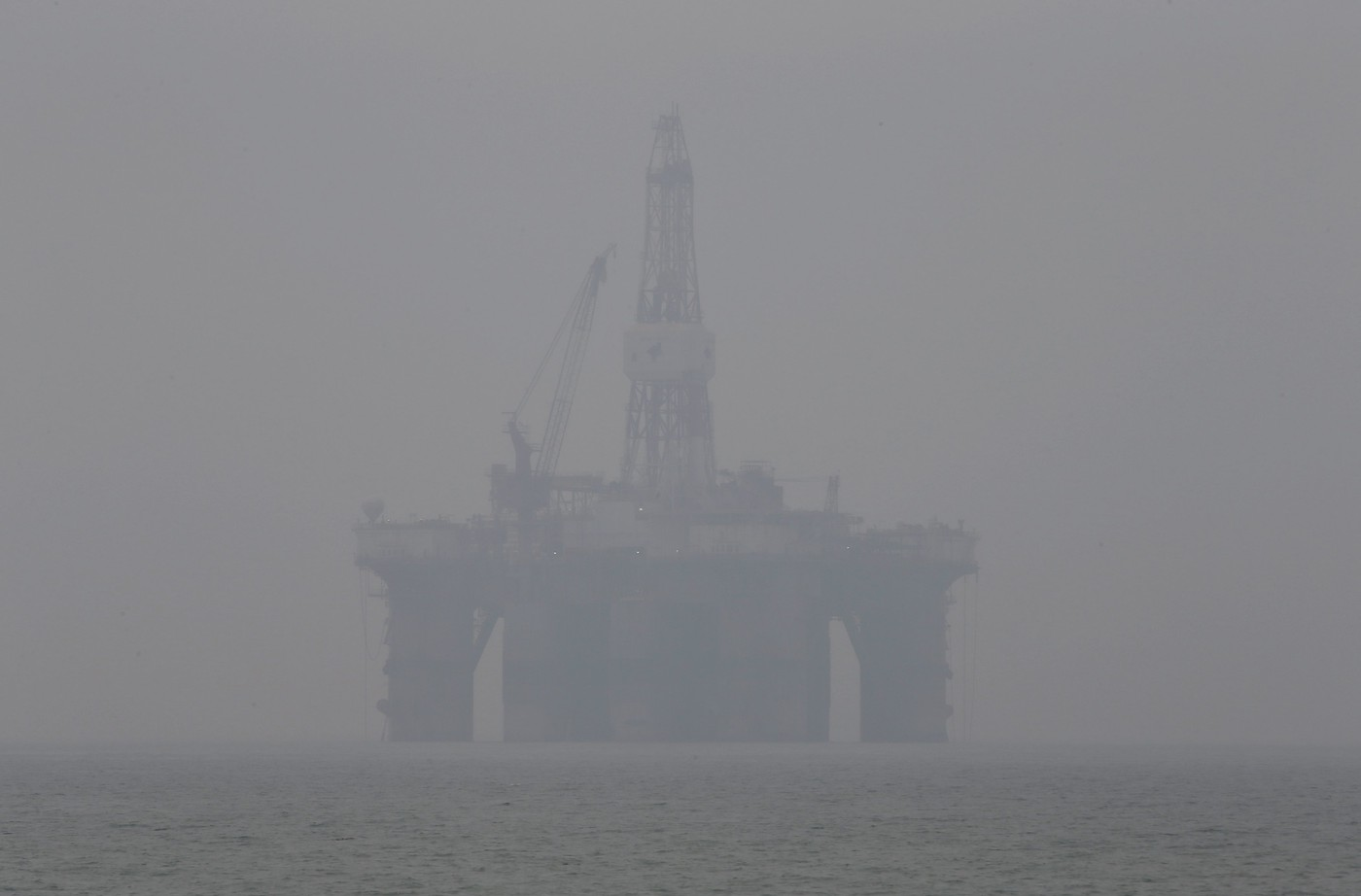
In the past the thought was that we would be importing LNG, i.e. “Rigs-to-Regasification.” Now that we are exporting LNG, we are adding “Rigs-to-Refrigeration” to the alternative use list.

Per our previous post on this topic, New Fortress Energy is moving forward with fast-track LNG projects in the Gulf. Three converted jack-up rigs purchased from Maersk will make up the first “Fast LNG” liquefaction train.
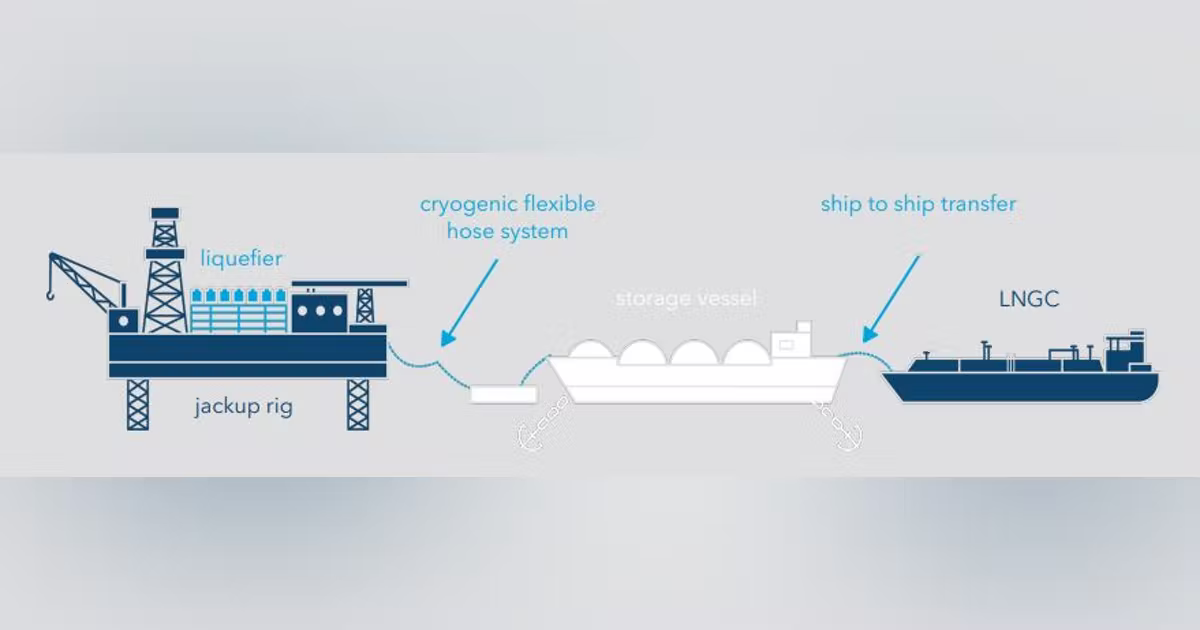
New Fortress is planning to install its first two “Fast LNG” units in West Delta Lease Block 38, located about 16 nm off Grand Isle, Louisiana. The two independent liquefaction trains at this deepwater “port” would export about 1.4 million tonnes per annum (mtpa) of LNG each. Though small by shoreside standards, the plant design would offer a number of advantages, like low cost and speed to market – a critical factor at a time of high demand for LNG. The company says that it should be able to produce each facility on an 18-20 month timescale, from engineering through construction and commissioning. 

Maritime Executive

Given the challenges posed by tropical storms, particularly for jackup units, the design criteria for these “permanent” jack-up liquefaction facilities and the role of classification societies are of particular interest.
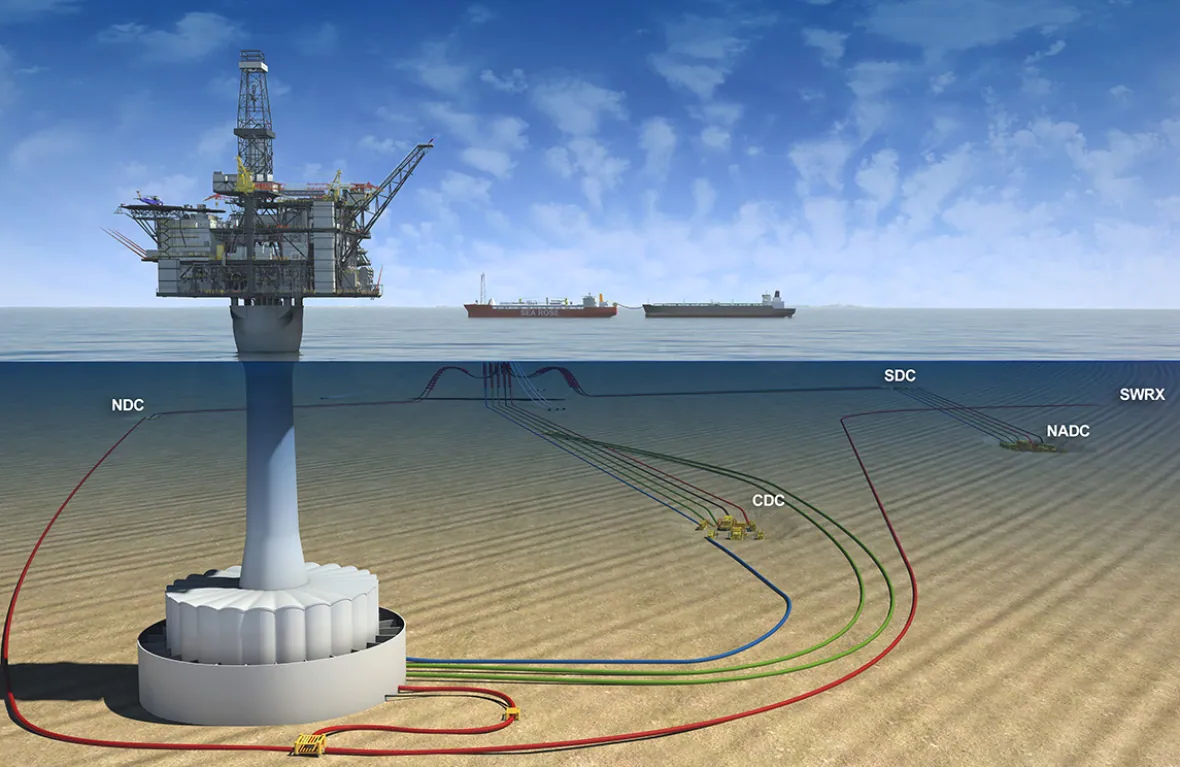
Newfoundland is only 30 to 90 minutes ahead of the other Atlantic provinces and states, but the offshore energy gap is much greater. Newfoundland continues to be the only Atlantic producer, and the future is looking brighter with another positive step by industry and the provincial government.

Calgary, Alberta (May 31, 2022) – Cenovus Energy Inc. and its partners have agreed to restart the West White Rose Project offshore Newfoundland and Labrador. First oil from the platform is anticipated in the first half of 2026, with peak production anticipated to reach approximately 80,000 barrels per day (bbls/d), 45,000 bbls/d net to Cenovus, by year-end 2029.

Construction includes the completion of the concrete gravity structure and topsides, which will serve as the drilling platform for the project. Once installed, the platform will be tied into existing infrastructure.

Cenovus
West White Rose Extension Project

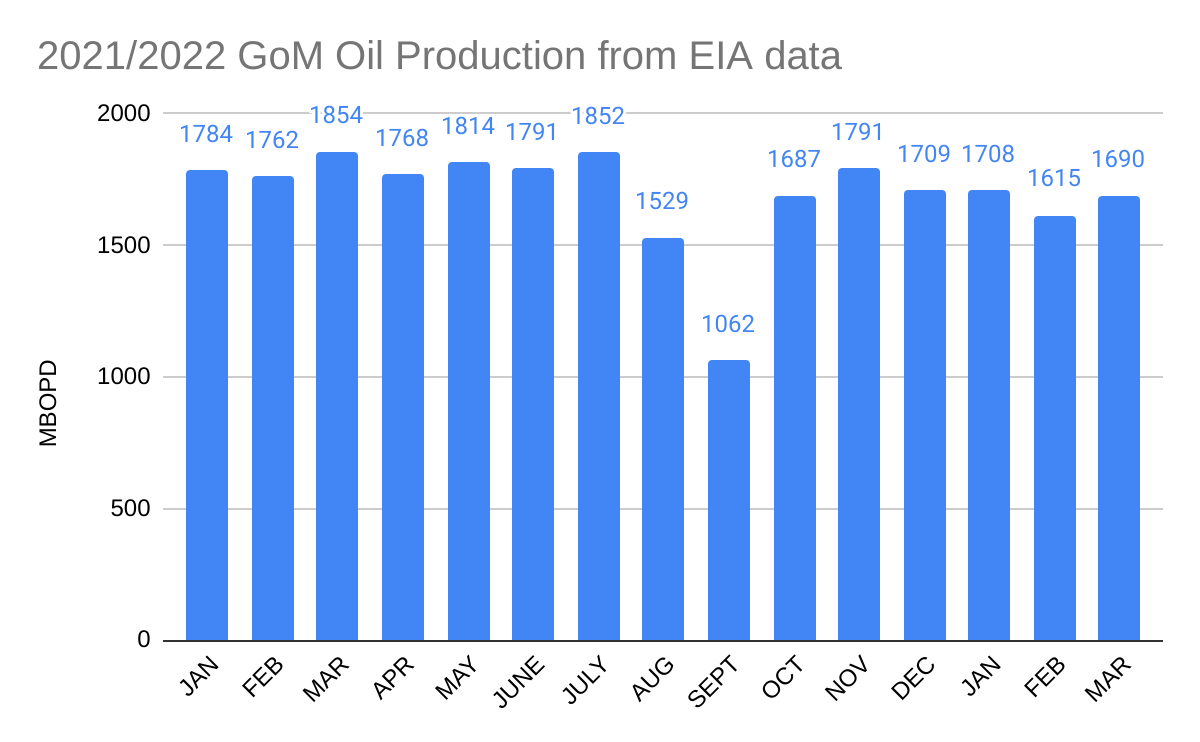
Waiting for a boost from the deepwater startups. The first of that group, King’s Quay did not begin producing until April.

Offshore California, the best that most facility operators and their predecessors (to the extent they continue to hold decommissioning liabilities) can hope for is a graceful exit with manageable financial losses. (The situation is a bit different for Exxon’s Santa Ynez Unit, which has been shut-in since 2015 while the company seeks to resolve oil transportation issues resulting from an onshore pipeline rupture. Here is the latest episode of that amazing saga.)

California’s Federal offshore, where 9 mobile drilling units (MODUs) were operating concurrently in the early 1980s, hasn’t seen a MODU in over 30 years. However, 23 production platforms, some of which are massive structures, remain (see the presentation below). At this point, these platforms are expensive monuments given that their combined production (per EIA) is only 7000 BOPD.

Regardless of their production status, the California offshore platforms continue to be ecologically significant. Dr. Jerry Schubel is among the many marine scientists who understand the importance of the life that has grown on and around these structures. The scientific community also sees other research, educational, and recreational uses for these platforms as per our Rigs-to-Reefs +++ page. 

In the absence of workable State reefing/reuse legislation, not much is going to happen. Questionable Federal decisions on the management of decommissioning funds are another impediment to timely action. (See “The troubling case of Platforms Hogan and Houchin.”)

To their credit, State and Federal agencies, trade organizations, and interested third parties continue to discuss the issues and consider alternatives. A recent workshop was helpful in that regard. Attached is the excellent presentation by Bob Byrd and John Smith, who have been at the vanguard in addressing California decommissioning issues. Embedded below is the YouTube video of the presentations from their session. These are excellent updates for those who have an interest in decommissioning issues.

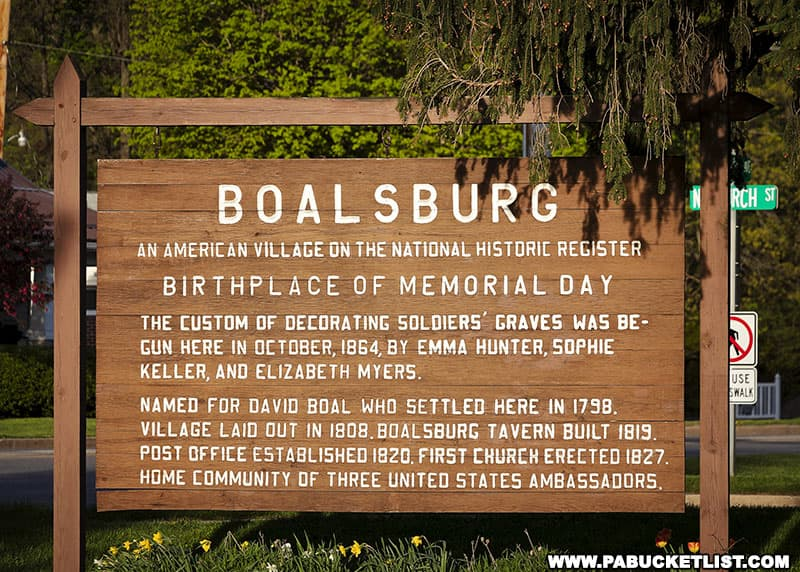
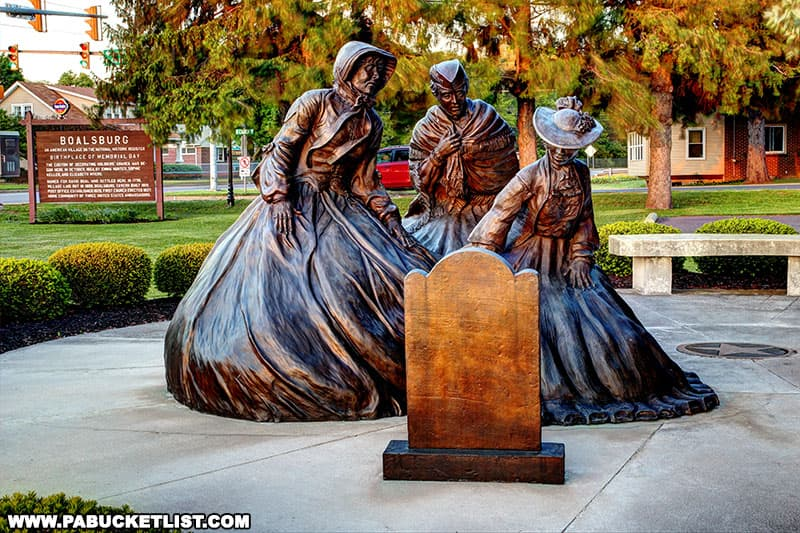
Boalsburg is a charming village in central PA near Penn State University. The custom of decorating soldiers graves began during the Civil War and was originally known as “Decoration Day,” which is what my grandmother always called this day of reflection.

The men of Boalsburg, an abolitionist community in Centre County, led by Professor James Patterson, joined the Union Army in response to a call for volunteers by President Abraham Lincoln. The women of Boalsburg, with their husbands, sons and brothers at war, organized daily meetings at the Boalsburg Academy. They prepared packages and sewed and knit uniforms for their men at war. They arranged for the Boalsburg Brass Band to perform concerts to raise funds for wounded soldiers.

The men of Boalsburg suffered multiple causalities throughout the Civil War. It was the fifth casualty, the death of Dr. Reuben Hunter, on September 19, 1864, that inspired three women to visit the cemetery and decorate the graves of the fallen men. The three women, Emma Hunter, daughter of Dr. Reuben Hunter, Elizabeth Meyer, whose son Amos Meyer, was killed at the battle of Gettysburg, and Sophie Keller, decided to meet the following Sunday, share a bouquet of flowers to decorate the graves of their family members and friends.

After the decorating the graves of the recently fallen Boalsburg soldiers, they also decorated the graves of those men who had died in the War of 1812 and the Revolutionary War.

psu.edu

There won’t be a deal without significant energy production provisions and Manchin is on the record regarding the need for action on offshore oil and gas leasing. We’ll see what happens.

Dr. Malcolm Sharples, a leading offshore engineer for many years, forwarded this interesting presentation by Peter Zeihan. It’s long (2.5 hours) but you can watch in chunks or jump around based on your particular interests.

I was surprised by Peter’s firm prediction that a US oil export ban was coming soon, but now I see that such a ban is actually being considered. This excellent assessment by the Federal Reserve Bank of Dallas explains why a ban on crude exports would not lower gasoline prices, but would reduce domestic exploration and production, increase the trade deficit, and increase US dependency on crude oil imports. Offshore projects, which require massive capital investment, could be particularly hard hit. Unfortunately, an oil export ban would be such a bad decision that it might actually happen.

His speech began with a slide declaring that “unsubstantiated, shrill, partisan, self-serving, apocalyptic warnings are ALWAYS wrong.”  Stuart Kirk, HSBC

Financial Times

Here is the presentation that caused the furor:

Sadly, any oil industry exec who dared to publicly question climate orthodoxy would face a similar or worse fate.

I do like this very sensible quote:

A former Blackrock executive focused on sustainable investment said Kirk’s remarks had “done us a service” in discussions on climate change risk by “infusing a dose of honesty into a debate that is otherwise leading us nowhere,”

NY Post
Federal Oil & Bas Corp. (FOGCO)

Guyana’s pending decision regarding the formation of a national oil company brings back memories of unsuccessful attempts to do the same in the US in the 1970s.

The most serious attempt at forming a national oil company in the US was a 1975 Senate bill to establish the Federal Oil and Gas Corporation or FOGCO. (Oddly, the bill’s sponsors weren’t troubled by that acronym.) FOGCO was proposed at a time when natural gas supplies didn’t satisfy demand, and that was the primary impetus behind the legislation. (Supply issues went away when price controls were lifted.)

Concerns about a FOGCO then and now:

  • The political pressures under which a national oil company operates are not conducive to sound, expeditious decisionmaking. (Unfortunately, some current industry execs seem overly responsive to pressure from governments and activist organizations, which is not always in the best interest of the company and its shareholders).
  • Would limit competition and private investment.
  • Would delay or prevent innovation:
    • The shale revolution was driven by nimble private companies operating on private land in supportive states. Why is there Marcellus shale development in PA, WV, and OH, and none in NY? (Hint: It’s not the absence of resources.) Why could the US shale experience not be replicated in Europe?
    • Innovative deepwater development projects were driven by private companies and the supportive public policies of the 1990s.
  • A national oil company could be the first step in the process of nationalizing the petroleum industry.

Guyana is far different from the US and should do what is perceived to be in their best interest. Best wishes to the people of Guyana as they weight their options.