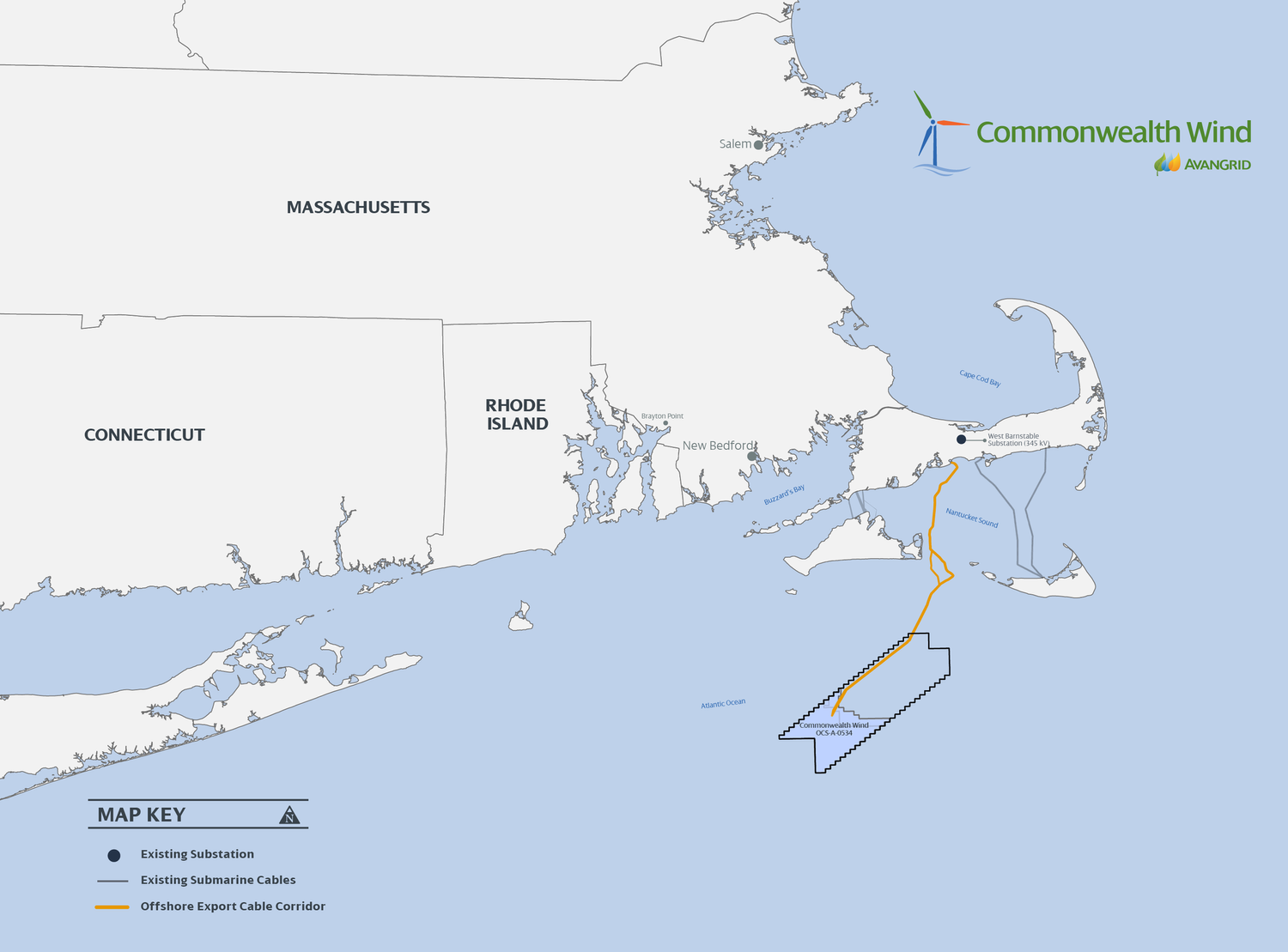
In particular, this suspension would allow the parties to examine the effect of unprecedented commodity price increases, interest rate hikes, and supply shortages on the overall viability of Commonwealth Wind’s offshore wind generation project that is the subject of the PPAs (the “Project”), including whether it remains economic and whether it can be financed under the current terms of the PPAs. A one-month suspension would also enable the parties to consider potential approaches to restore the Project’s viability – including cost saving measures, tax incentives under the newly enacted Inflation Reduction Act, an increase in the PPA prices, and improvements to Project efficiencies – and to determine whether additional time, beyond the period requested in this Motion, is needed to resolve the appropriate path forward or provide a complete record.
At a minimum, the expected commercial operation date, already more than 5 years into the future (2028), would seem to be threatened.
The supply of diesel in the United States has dropped to its lowest seasonal level since 1945, according to federal data, meaning there’s less than a month of the fuel stockpiled in the country.
LONDON, Oct 29 (Reuters) – Russia’s defence ministry said on Saturday that British navy personnel blew up the Nord Stream gas pipelines last month, a claim that London said was false and designed to distract from Russian military failures in Ukraine.
No evidence was presented to support the Russian claim; nor was any information provided on the results of their blitz investigation.
Tennessee Twist:TC Energy’s $29.3 million investment in a RNG (renewable natural gas) production facility near the Jack Daniel’s Distillery will see the Canadian operator producing RNG with a carbon-intensity score that is 50% lower than traditional natural gas, saving up to 16,000 tonnes of CO2e per year, according to the company.
“This investment is our first in the production of renewable natural gas,” said Corey Hessen, TC Energy executive vice president and president, power & Energy solutions. “The production of RNG onsite at the Jack Daniel’s Distillery offers TC Energy one more opportunity to meet the challenge of growing energy needs and reducing emissions while providing customers with access to an affordable, reliable, source of energy.”
Nord Stream AG, or the operator of Nord Stream 1 pipeline, sent a specially equipped vessel on Thursday to investigate damage to the pipelines under the Baltic Sea.
Nord Stream AG, whose majority shareholder is Russia’s state energy giant Gazprom, said the chartered vessel arrived at the location of damage in Sweden’s exclusive economic zone.
The vessel, bearing the Russian flag, would have specialists aboard to assess the damage within a day and investigation would take three to five days, the company said.
Nord Stream AG said it didn’t have relevant permits to conduct an investigation until now.
By comparison, vented Gulf of Mexico methane emissions in 2021 totaled 1953 mmcf. This converts to 82 million pounds at atmospheric pressure and 60°F. The identified Turkmenistan sources would thus release the amount of methane in a month that all Gulf of Mexico facilities vent in a year (2021).
East of Hazar, Turkmenistan, a port city on the Caspian Sea, 12 plumes of methane stream westward. The plumes were detected by NASA’s Earth Surface Mineral Dust Source Investigation mission and some of them stretch for more than 20 miles (32 kilometers).
ONRR mandatory production reporting data are being sorted to assess GoM flaring and venting trends. This will help resolve inconsistencies previously identified. In the meantime, the table below summarizes the 2021 data. 1.03% of the gas produced that year was flared or vented. 0.25% of the gas production was vented.
Interestingly, more gas-well gas was vented than flared. This is presumably because older shelf facilities without flare booms still produce 25% of the gas (versus only 7% of the oil), mostly from gas wells. More to follow.
gas production
flared (%)
vented (%)
flared & vented (%)
OWG
582,204
5919 (1.01)
1405 (0.24)
7324 (1.26)
GWG
209,779
311 (0.15)
548 (0.26)
859 (0.41)
total
791,983
6230 (0.79)
1953 (0.25)
8183 (1.03)
OWG=oil well gas; GWG=gas well gas; all volumes are in MMCF
These oil and gas leases may not be repurposed for sequestration or other purposes unless an alternate use RUE is issued competitively in accordance with 30 CFR § 585.1007.
So what’s next for these 94 leases, 31% of the entire sale?





 Bud's Offshore Energy (BOE)