Feeds:
Posts
Comments

Archive for the ‘Offshore Wind’ Category

Unsurprisingly, 17 States (plus DC) filed the attached lawsuit in Massachusetts federal court asserting that the directive to suspend offshore wind activities is illegal.

This will be interesting given that the OCS Lands Act grants broad authority to the Secretary of the Interior to suspend activities when necessary to ensure safety, protect the environment, or allow for further study of potential impacts.

Those who are familiar with the administration of the OCS Lands Act know that there is really no such thing as a “fully permitted project.” The Secretary can call for further review whenever concerns are raised and there is a need for further investigation.

Read Full Post »

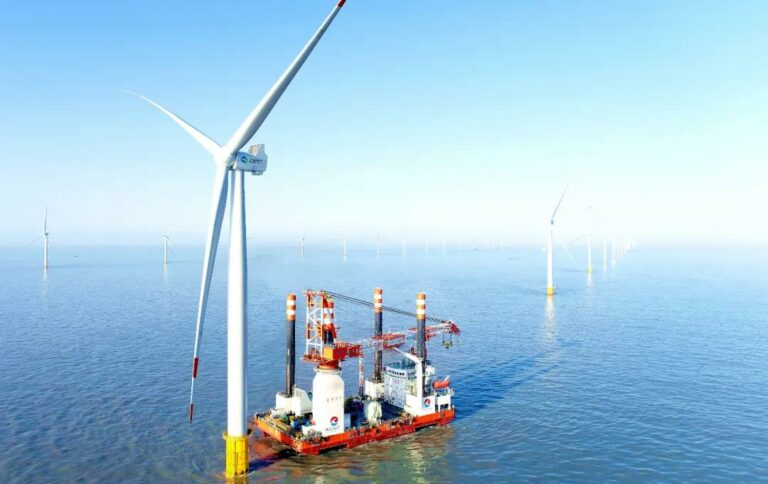
Qidong Wind Farm, SASAC photo

Read Full Post »

BP dropped the regrettable Beyond Petroleum campaign and has now cut their renewable energy investments to focus on oil and gas production. They are doing quite well in the Gulf of America where they are the no. 2 oil and gas producer.

The leading Gulf of America oil and gas producer, Shell, has also slowed its renewable investments and is no longer participating in any US offshore wind projects.

Only Equinor (formerly Statoil), which is 2/3 Norwegian government owned, remains committed to renewable projects, much to the chagrin of some private investors. Equinor’s Empire Wind misadventure may be matched in the Pacific where their floating wind project offshore California is a long way from reality.

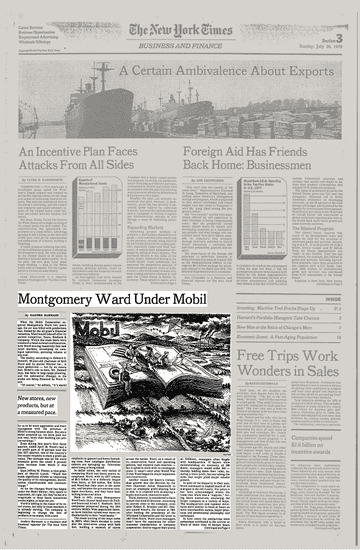
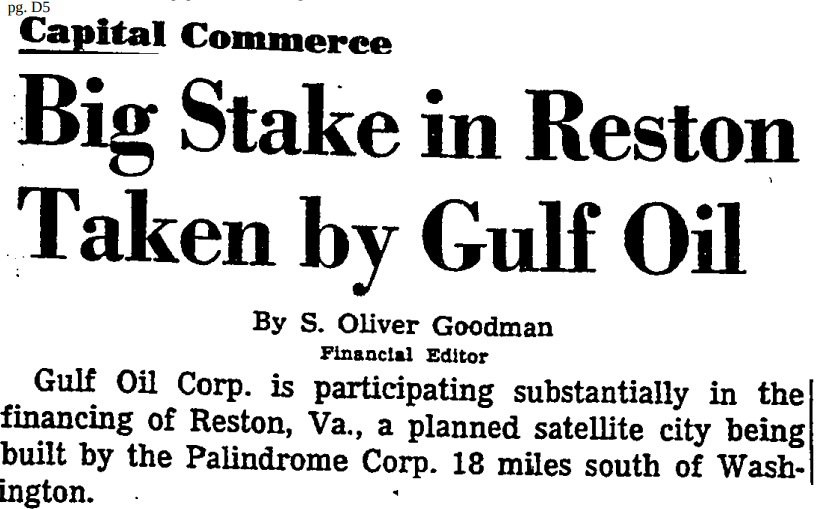
Farther in the past, there were noteworthy failures (below) like Mobil’s acquisition of Montgomery Ward, Exxon’s investment in Reliance Electric, and Gulf’s real estate ventures.

Finally, don’t expect the carbon sequestration boom that some are forecasting. As wind investors have discovered, industries dependent on mandates and subsidies are risky.

Not much unites climate activists and skeptics, but they are largely aligned in their opposition to carbon sequestration (euphemism for disposal), as are fiscal conservatives. The word chutzpah comes to mind when companies seek public funds to dispose of emissions associated with the combustion of their products.

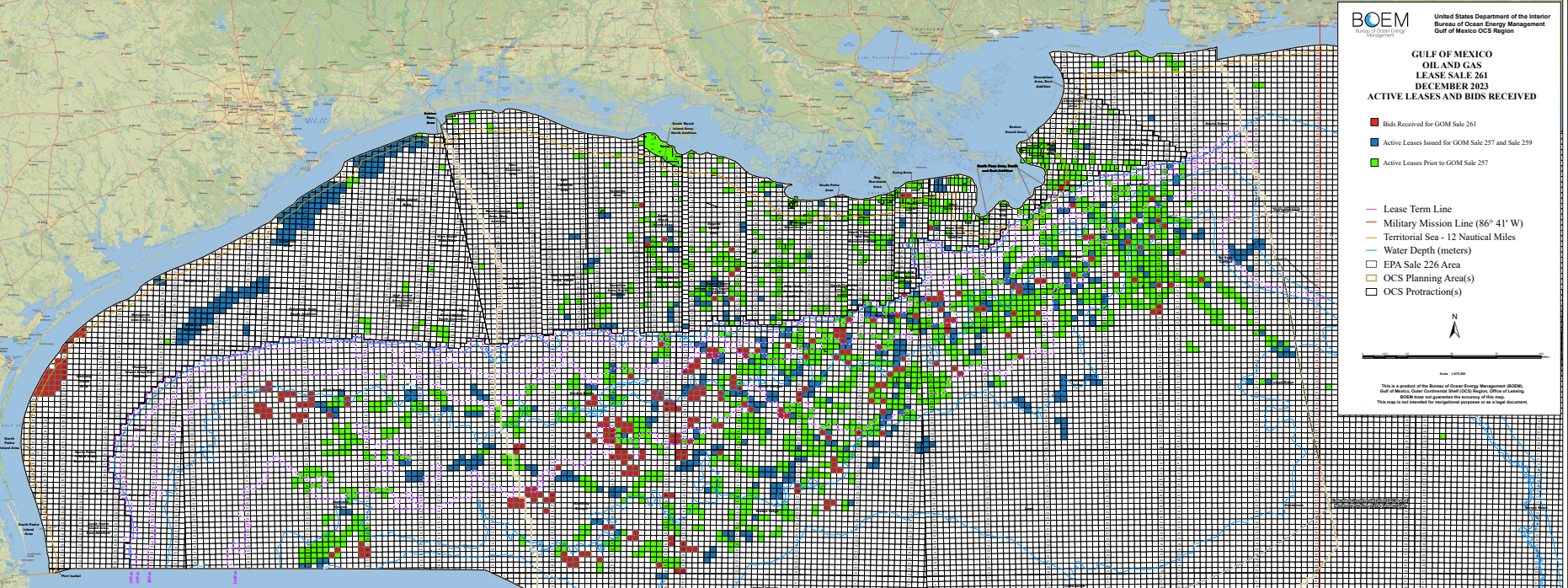
And how are those 199 wrongfully acquired carbon sequestration leases in the Gulf working out (graphic below)? Barring some legislative sleight of hand, those leases are worthless.

199 oil and gas leases were wrongfully acquired at Sales 257, 259, and 261 with the intent of developing these leases for carbon disposal purposes. Repsol was the sole bidder at Sale 261 for 36 nearshore Texas tracts in the Mustang Island and Matagorda Island areas (red blocks at the western end of the map above). Exxon acquired 163 nearshore Texas tracts (blue in map above) at Sales 257 (94) and 259 (69).

Read Full Post »

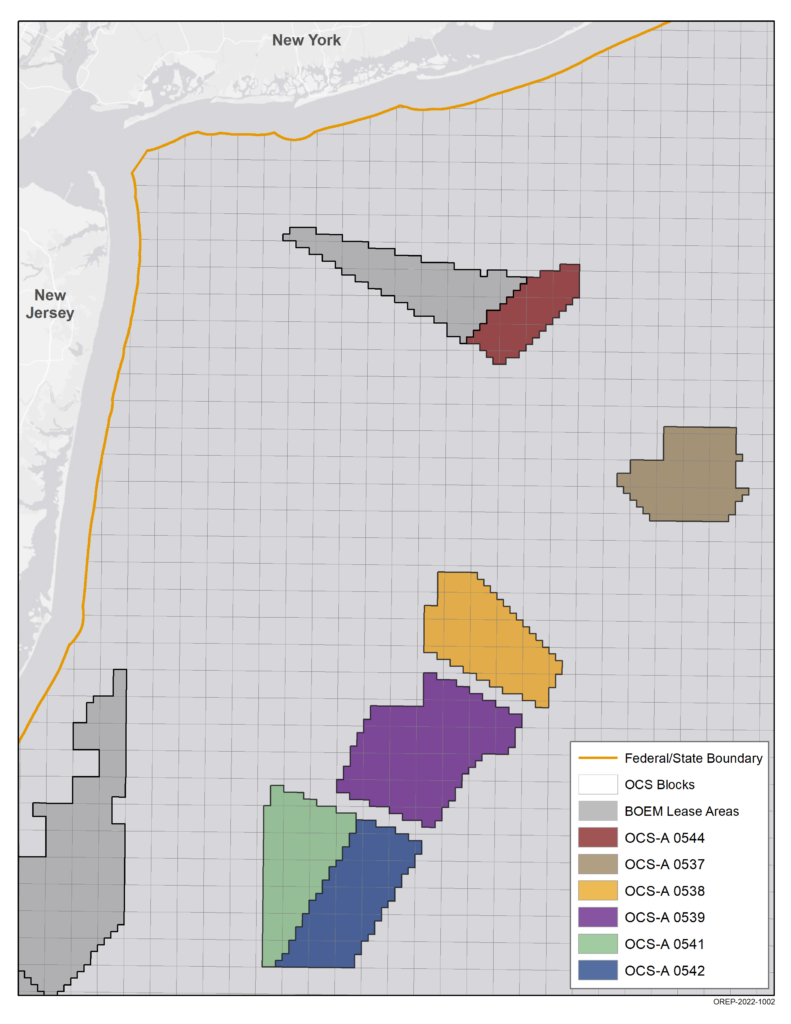
Bidding at the February 2022 Atlantic (NY/NJ) wind sale seemed incomprehensible given the economic and political uncertainties associated with offshore wind development.The 6 leases garnered bids ranging from $285 million to an astounding $1.1 billion, with total high bids of $4.37 billion! The Administration’s victory message correctly boasted that this was the “nation’s highest grossing competitive energy lease sale in history.”

The intense bidding was driven by the lure of subsidies, guaranteed power sales, unprecedented Federal and State promotion, peak climate activism, inattention to mounting public opposition, and irrational expectations regarding the role of offshore wind in powering the regional economy.

That wind bubble has since burst, as demonstrated by the lackluster (at best) August 2024 Atlantic sale, the disinterest in Gulf of America wind leases, and recognition of the costly realities of floating turbine projects in the Pacific. Any air that remained in the balloon was released following the Presidential election.

The table below summarizes the sale results and the current status for the 6 leases issued following the 2/2022 sale. One lease has been essentially terminated by the partners and the State. The other leases are in holding patterns in the planning phases.

high bidderlease #acresbid ($millions)status
Bluepoint Wind (EDP, ENGIE, Global Infrastructure Partners)053771,522765Site Assessment Plan (SAP) review
Attentive Energy
(Total and Corio Generation)
053884,332795Construction and Operations Plan (COP) review
Community Offshore Wind
(RWE, National Grid)
0539125,9641100no plans submitted
Atlantic Shores
(Shell, EDF)
054179,351780dead?
Invenergy
054283,976645no plans submitted
Vineyard Mid-Atlantic (Avangrid, Copenhagen Industy Partners)054443,056285COP review

The first US commercial offshore project, Vineyard Wind, has proven to be a major step backward for the wind industry. After being granted questionable financial and quality assurance waivers to reduce costs and “allow Vineyard Wind to adhere to its construction schedule,” the July 2024 turbine blade failure and subsequent lightning strike have raised new questions about the technology, industry, and regulatory regime. The report on the blade failure, which should arguably be a precursor to the resumption of Atlantic wind development, has yet to be released.

The one shining light, relatively speaking, for Atlantic wind development, has been Coastal Virginia Offshore Wind. That large project is on track to be completed at the end of 2026. Although the cost has risen about nine per cent, to $10.7 billion, that increase is understandable given the higher than anticipated costs for upgrading the onshore network.

Read Full Post »

The letter is attached. Excerpt:

The Bureau of Ocean Energy Management (BOEM) is issuing this Director’s Order to Empire Offshore Wind LLC to halt all ongoing activities related to the Empire Wind Project on the outer continental shelf to allow time for it to address feedback it has received, including from the National Oceanic and Atmospheric Administration (NOAA), about the environmental analyses
for that project. BOEM received this and other feedback regarding Empire Wind as an outgrowth of the review that the Department is engaged in related to offshore wind projects. See the President’s Memorandum of January 20, 2025. 90 Fed. Reg. 8363 (January 29, 2025).

Read Full Post »

Equinor’s Empire Wind project had been challenged by New Jersey congressmen and questioned by Norwegian investors. I suspect that Equinor saw the writing on the wall.

Read Full Post »

The Government Accountability Office report on Offshore Wind Energy (full report attached) does a good job of summarizing the potential impacts from offshore wind development. They are categorized in the report as follows:

  • Marine Life and Ecosystems (see table pasted below)
  • Fishing Industry and Fisheries Management
  • Economic Development and Community Impacts
  • Tribal Resources, Including Sacred Sites and Established Fishing Grounds
  • Defense and Radar Systems
  • Maritime Navigation and Safety

Unfortunately, GAO’s recommendations, which focus on consultation and staffing (perennial favorites), are rather meaningless. Does GAO really think more consultation will resolve the fundamental concerns of the tribes and fishing industry? Does GAO really think increasing BOEM/BSEE staff is a solution? Wind was the signature offshore energy program of the previous Administration, and it was well resourced.

When the legislation authorizing offshore wind energy development was drafted, we envisioned energy alternatives that could complement thermal energy sources like gas, coal, and nuclear plants. Natural gas plants are particularly important to intermittent energy sources, because their power can be readily dispatched on demand.

Never did we expect attempts to ban the dispatchable energy sources on which renewable energy goals were dependent. Policies that limit gas production, transportation, and consumption don’t boost offshore wind development, they doom it.

In a rush to achieve the Administration’s energy goals, the wind leasing program brushed aside important economic, safety, national security, and environmental issues. Coastal residents, tribes, fishing interests, power customers, and other affected parties have rebelled. Their concerns won’t be smoothed over by increasing consultation.

So now the wind program is in a dark and windless place (a regulatory dunkelflaute?). Five projects are under construction or in the early stages of operation. Construction has been authorized for 6 other projects. Five more projects are in various stages of permitting. What next?

Meanwhile, we still haven’t seen a report on the ugly and embarrassing Vineyard Wind blade failure offshore Nantucket last July. Shouldn’t that report be a precursor to further offshore wind development in the US Atlantic? Also of note, that same turbine was struck by lightning 2 months ago.

Should directed suspension orders be issued pending a complete review of the wind program? If so, for which leases and for how long? Suspension of projects still in the permitting phase would be relatively painless and maybe even attractive given the current state of the wind industry. However, financial impacts for projects in the construction phase would be significant. These important next-step decisions need to be made soon. Muddling along is not a strategy.

Table 2: Examples of Potential Impacts of Offshore Wind Development to Marine Life and Ecosystems

ImpactDescription
Acoustic disturbanceConstruction and survey activities produce underwater noise that can disturb sensitive marine species. Offshore wind projects take measures to mitigate underwater noise, including the use of bubble curtains to dampen pile driving sound and pausing operations if protected species are sighted.
Changes to marine habitatInstallation of infrastructure, such as turbine foundations and transmission cables, introduces new structures and causes changes to the ocean floor that can alter marine habitat and affect the distribution, abundance, and composition of marine life in the area. These new structures can create artificial habitat that may benefit some species while displacing others and could affect bottom-dwelling species through disturbing the seabed. Artificial habitat effects of wind turbines are well documented, but research is ongoing to monitor and understand impacts on marine life.
Hydrodynamic effectsOperation of wind turbines can affect hydrodynamics and ocean processes such as currents and wind wakes, but little is known about regional effects of widescale deployment on ecosystems.
Vessel disturbanceVessels can disturb some species and pose strike risks to large marine animals, but the increase in offshore wind vessels is projected to be small compared to the total volume of vessel traffic. Offshore wind vessels are required to take measures such as following speed restrictions and employing protected species observers.
Entanglement riskStructures, such as mooring cables from floating wind turbines, could snag fishing gear and other marine debris and create entanglement risk to marine animals. Wind projects employ measures to minimize entanglement (e.g., mooring systems designed to detect entanglement), but there is uncertainty about the extent of the risk from floating turbines because of limited deployment.a
Collision risk to birds and batsTurbine blades pose a collision risk to some sea birds, but little is known about offshore collision risk to bats. Research on collision risks and mitigation measures (e.g., lighting and curtailment) is ongoing.

Read Full Post »

  1. Responsible Offshore Development Alliance (RODA), Petitioner, Amicus briefs submitted by Green Oceans, America First Policy Institute, and the Save Right Whales Coalition
  2. Seafreeze Shoreside, Inc., Petitioner, Amicus briefs submitted by Green Oceans, Protect Our Coast NJ, America First Policy Institute, and the Save Right Whales Coalition

Given that the SCOTUS declined to hear a Vineyard Wind challenge by the Nantucket-based ACK for Whales group, the odds of the new challenges being heard would seem to be low. However, it’s noteworthy that both Vineyard Wind and the Federal Government have waived their right to respond to these petitions. The Government’s waiver to respond to the RODA petition is pasted below.

Read Full Post »

Analysis by Jonathan A. Lesser:

Of all commercial renewable generation technologies, offshore wind is the costliest, far more so than solar photovoltaics and onshore wind. The newest incarnation of offshore wind—floating turbines that can be sited in deep water—are more expensive still. Although offshore wind is supposed to benefit from more prevalent ocean breezes, it remains, like land-based wind and solar power, an intermittent source of electricity. Hence, as offshore wind comprises a larger share of total electricity capacity, it requires ever more backup generation or storage to compensate.”

Offshore wind’s high cost and intermittency raise a simple question: Why have renewable energy advocates and policymakers in many Atlantic Coast states, as well as those on the West Coast, placed such emphasis on this technology? One justification, like all forms of renewable energy, is that offshore wind will reduce U.S. greenhouse gas emissions. Whether that is true remains an open, empirical question. Offshore wind’s high costs, which require substantial—and increasing—taxpayer and ratepayer subsidies, will raise electricity rates and reduce electricity consumption. Even offshore wind manufacturers such as German-based Siemens Energy admit this. By itself, reduced electricity consumption may reduce greenhouse gas emissions slightly, as will offshore wind replacing lower-cost natural-gas-fired generation. However, any such reductions will be so small as to have no measurable effect on climate.

Full article

Read Full Post »

Below are interesting pictures of Vineyard Wind’s repair and installation activity taken today by Nantucket pilot Doug Lindley. He commented that only of the turbines was spinning.

Note the lightning damage to the turbine with the failed blade. The lightning protection system was not operational on that turbine.

Also note the vessel transporting replacement blades.

It’s a bit difficult to rationalize all of this, but the Administration of Massachusetts Governor Maura Healey sees these projects as being critical to the Commonwealth’s energy future.

In December 2023, the Governor ordered a transition away from natural gas and set a goal of making Massachusetts carbon-neutral by 2050. As a candidate for governor in October 2022, then-Attorney General Maura Healey bragged,Remember, I stopped two gas pipelines from coming into this state. This in a State where half of the households are heated with natural gas.

Read Full Post »

« Newer Posts - Older Posts »