“A team of BSEE experts is onsite to work closely with Vineyard Wind on an analysis of the cause of the incident and next steps,” the agency said in a statement.
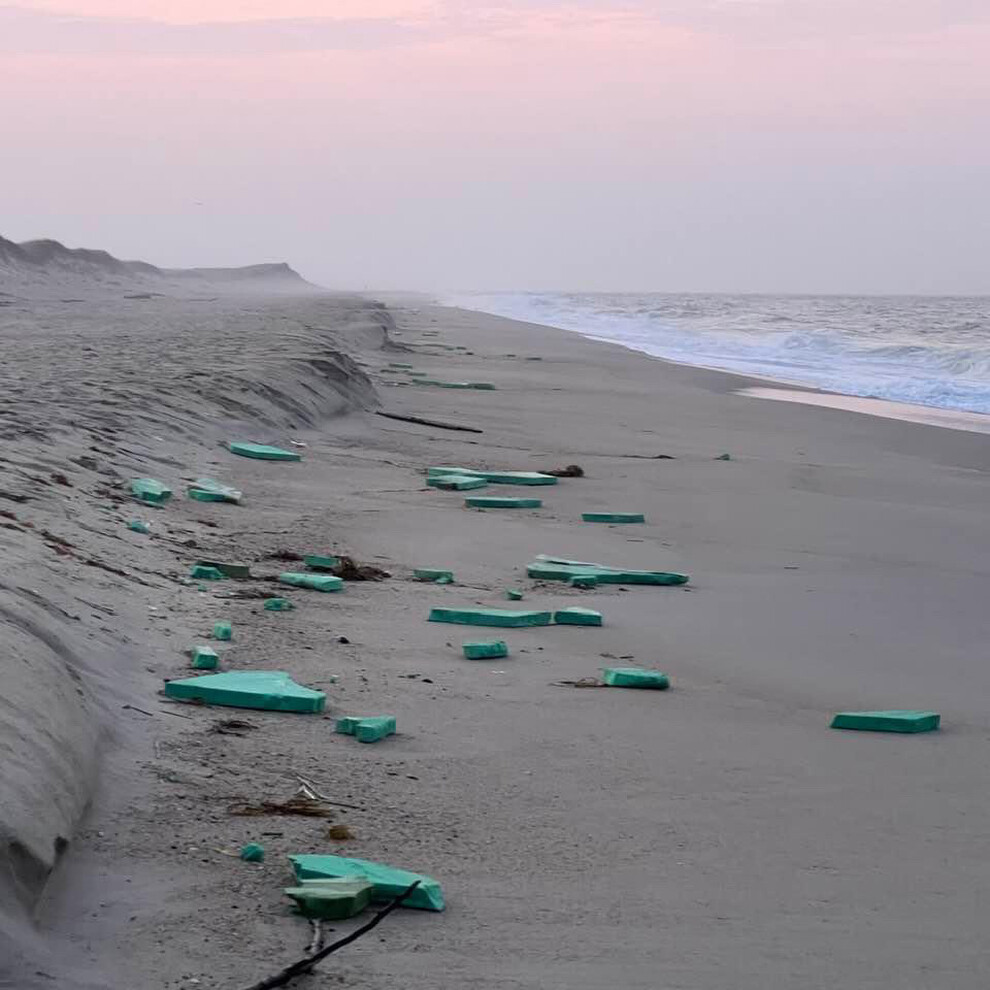
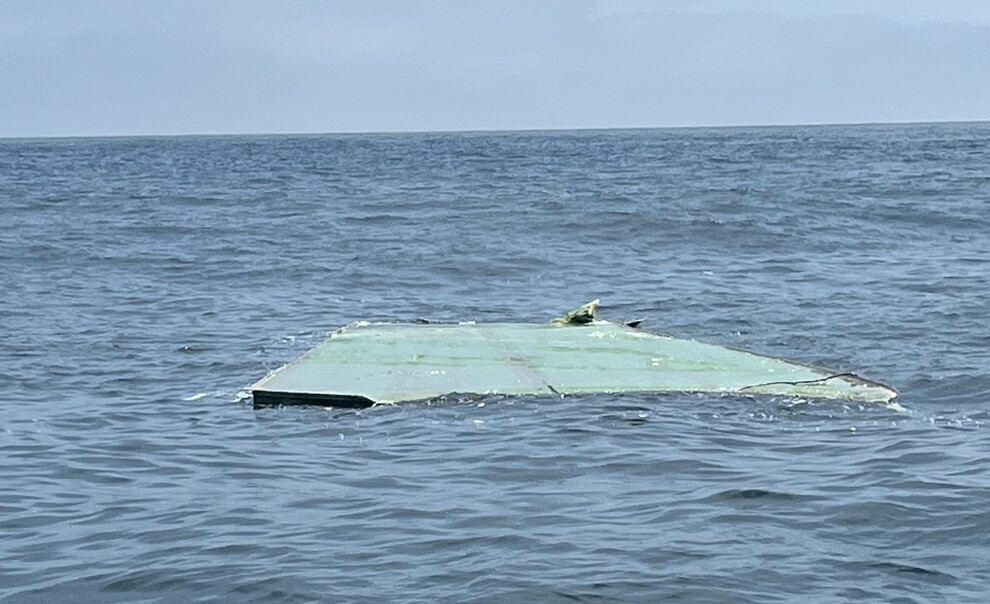
On Sunday (7/14), Capt. Carl Bois, of the fishing charter Topspin out of Nantucket, told the Current he noticed a significant amount of debris in the Vineyard Wind lease area.
“There was so much debris at the wind farm,” Bois said. “We covered many miles and only saw the debris at the wind farm site: big sheets of fiberglass with foam core and lots of loose foam.”
On Saturday night (7/13) the Coast Guard warned Mariners as follows: “Coast Guard received a report of 03 floating debris 10 meters by 2 meters in the vicinity of approximately 26 NM SE of Marthas Vineyard and 22 NM SW of Nantucket in position 40 59.559N 070 25.404W. All marines are requested to use extreme caution while transiting the area.“
On Monday (7/15), Vineyard Wind confirmed that a turbine blade incident occurred on 7/13: “On Saturday evening, Vineyard Wind experienced blade damage on a wind turbine in its offshore development area. No personnel or third parties were in the vicinity of the turbine at the time, and all employees of Vineyard Wind and its contractors are safe and secure.”
On 7/16, Vineyard Wind issued another statement advising that they were deploying teams to Nantucket to clean up debris from the incident.
Comments:
Not a good look for the first large-scale offshore wind project in the US.
It’s unclear what the status of operations was at the time of the incident.
Vineyard Wind seems to be passing the buck a bit when they note that “GE, as the project’s turbine and blade manufacturer and installation contractor, will now be conducting the analysis into the root cause of the incident.” While GE’s findings are critical, Vineyard Wind, as operator, is fully responsible and accountable for the incident and should be leading the analysis.
Was their a third party review of the turbine design?
Was the incident reported to BSEE, the safety regulator for offshore wind? State and local government?
BSEE and the Coast Guard should ensure that Vineyard Wind’s findings and their own independent report are made publicly available in a timely manner. Ditto for Safety Alerts.
What other incidents have occurred during offshore wind facility construction and operations?
BOEM’s land rush approach to offshore wind leasing will add up to 1086 turbine towers and 28 offshore substations (OSSs) in the Atlantic just from active projects with approved Records of Decision (RODs). (See the table below.) Another 17 active Atlantic commercial projects have yet to reach the ROD stage. Those projects should increase the total number of structures to >3000. Five more Atlantic wind lease sales are scheduled.
project
turbine towers
offshore substations
Coastal VA Offshore Wind
202
3
Revolution Wind
100
2
Sunrise Wind
94
1
Atlantic Shores South
200
up to 10
Ocean Wind 1
98
up to 3
Vineyard Wind 1
100
2
Empire Wind 1 & 2
147
2
New England Wind (phases 1&2)
150
5
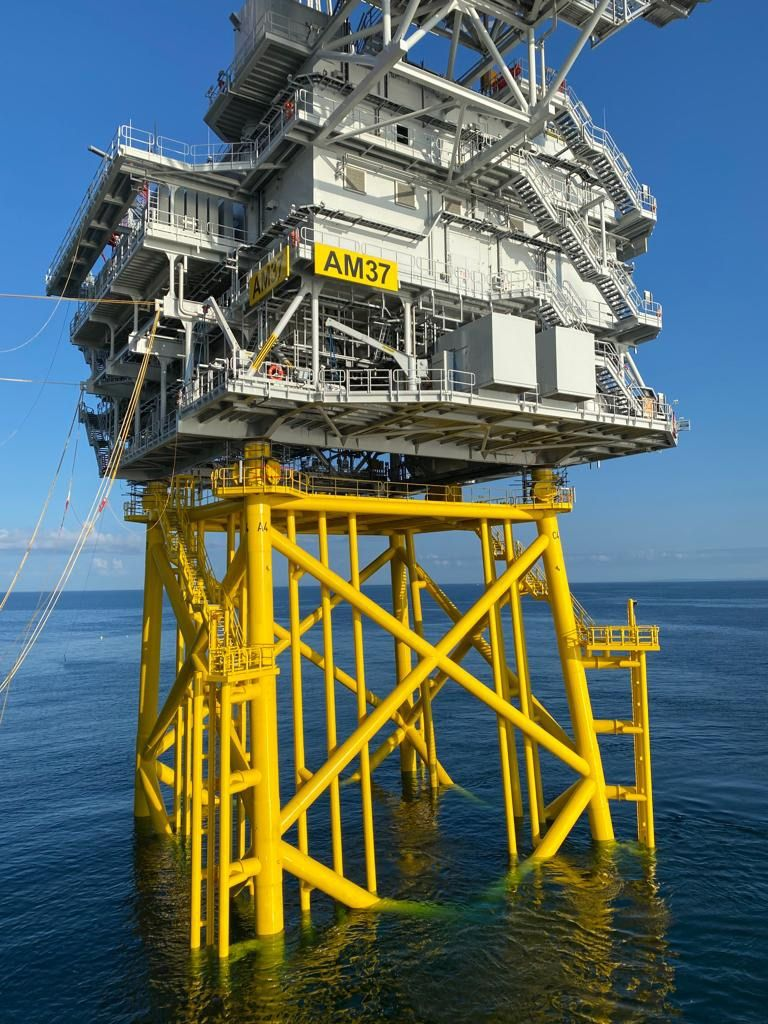
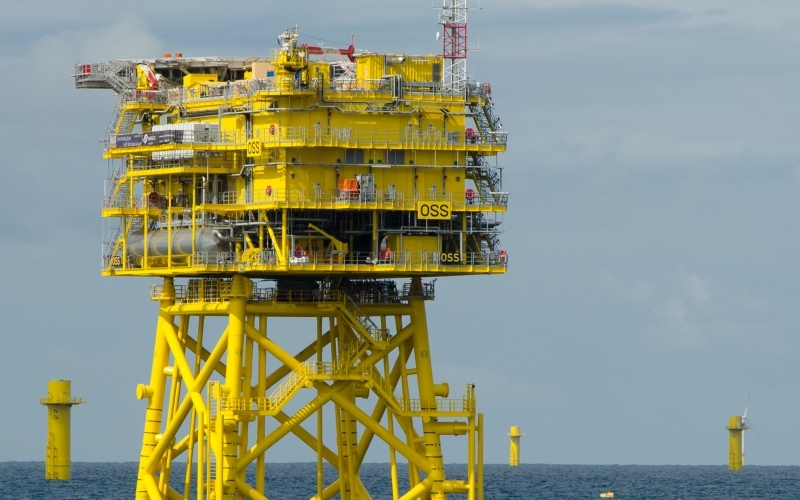
Per the Construction and Operations Plan (COP) for Vineyard Wind, the topsides for a conventional electrical service platform (ESP) (also known as an offshore substation or OSS) are 45 x 70 x 38 m, which is larger in surface area than a typical 6-pile oil and gas platform (~30 x 30 m), and is comparable in size to a large jackup drilling rig.
The Atlantic Shores plan calls for 10 small, 5 medium, or 4 large OSSs. (Uncertainty regarding the number and types of structures seems rather common in wind COPs.) The large OSSs have topsides that are 90 m by 50 m and rise to 63 m above MLLW. These are large offshore structures whether for wind or oil and gas.
Per BOEM, the “Rule to Streamline and Modernize Offshore Renewable Energy Development” is intended to “make offshore renewable energy development more efficient, [and] save billions of dollars. Unfortunately, the savings associated with relaxed financial assurance requirements translates to increased risk for power customers and taxpayers.
BOEM signaled their intentions on offshore wind (OSW) decommissioning three years ago when they granted a precedent setting financial assurance waiver to Vineyard Wind. Despite compelling concerns raised by commenters, the “streamlining” regulations codified this decision.
No one knows what the financial future will be for wind projects and the responsible companies. Financial assurance should therefore be established when the structures are installed, not years into the future as allowed by the revised regulations. What leverage will BOEM have then?
Nordsee One substation, Germany. Rystad Energy projects 137 new power substations offshore continental Europe this decade, requiring $20 billion in total investment.
…Rick Carrier became the first allied soldier to discover the Buchenwald concentration camp. The next day, April 11, 1945, he marched into the camp with Patton’s Third Army and liberated the prisoners.
More than a half century later, and after leading a successful effort to protect the American bald eagle, he was the first person to submit an offshore wind application to the Minerals Management Service.
Rick wanted nothing from the government except the opportunity to demonstrate his green hydrogen concept with a single turbine in the Atlantic. He did not ask for any subsidies or research grants. This war hero from the greatest generation just wanted to continue doing great things for the country and the world.
Unfortunately, the Energy Policy Act of 2005 had yet to be enacted, and the framework for permitting such projects had not been established. While we tried to find a way to make the project possible, the legal obstacles were too great.
It was an honor to have worked with Rick on his green hydrogen initiative. RIP.
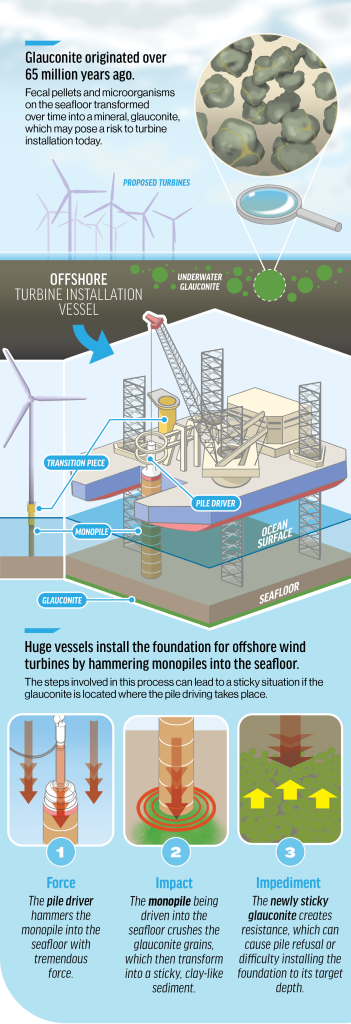
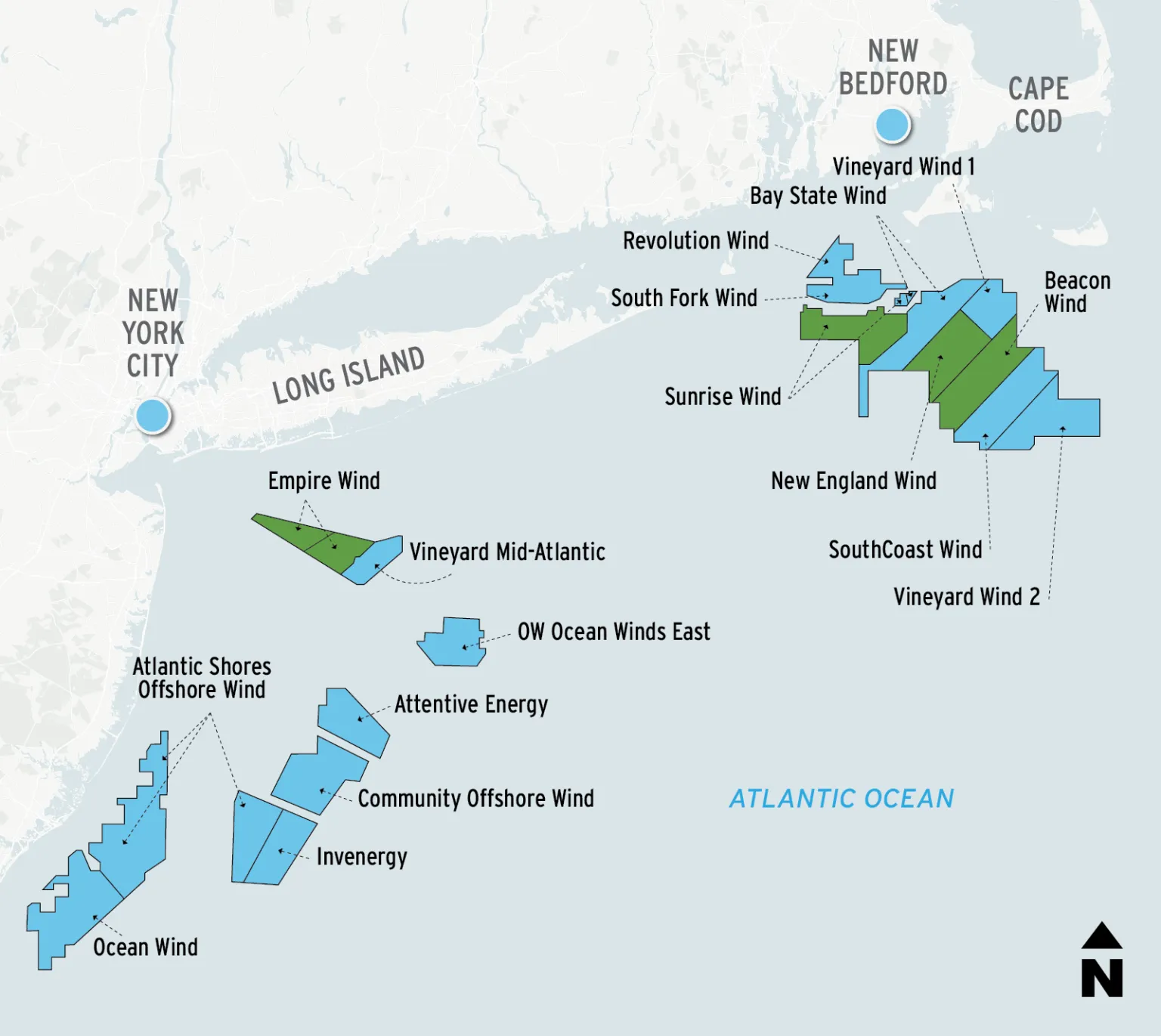
Illustration credit: Kellen Riell / The New Bedford LightGlauconite has been identified within the boundaries of lease areas marked with green. Credit: Kellen Riell / The New Bedford Light
Anastasia Lennon has published several informative articles in the New Bedford Light on the challenges posed by the presence of glauconite on North Atlantic wind leases. The above illustrations explain those challenges and identify where glauconite has been found to date. Per her latest article:
Preliminary geotechnical analysis for New England Wind, an Avangrid project, showed a risk of turbine pile foundation refusal in 50 of nearly 130 turbine locations, or about 40%, according to 2023 records obtained through a Freedom of Information Act request.
The mineral’s behavior poses a “significant risk” to offshore wind development, said BOEM, the federal regulator of offshore wind, in a paper last year.
BOEM’s “Rule to Streamline and Modernize Offshore Renewable Energy Development” is intended to “make offshore renewable energy development more efficient, [and] save billions of dollars. Unfortunately, the savings associated with relaxed decommissioning financial assurance requirements translates to increased risk for customers and taxpayers.
BOEM signaled their intentions on offshore wind (OSW) decommissioning three years ago when they granted a precedent setting financial assurance waiver to Vineyard Wind. Despite compelling concerns raised by commenters, the “streamlining” regulations have codified this decision.
Cape May County, New Jersey, was among the commenters objecting to BOEM’s departure from the prudent “pay as you build” financial assurance requirement. The County commented as follows (full comment letter attached):
“[e]nergy-utility projects are in essence traditional public-private partnerships where technical and financial risks are transferred to the private sector in exchange for the opportunity to generate revenues and profit. Under the proposed rule, the Federal government is instead transferring risks associated with decommissioning to the consumer rather than to the private sector.”
Cape May added:
“[w]hile BOEM believes that if a developer becomes insolvent during commercial activity that a solvent entity would assume or purchase control, the County believes this is a risky assumption as the most likely reason for default is that a constructed wind farm developer is unable to meet its contractual obligations set forth under a Power Purchase Agreement (PPA) because its energy production revenues are not in excess of its operating costs. A change of hands would not remove these circumstances or make the project profitable.”
Cape May and others also commented on the threat of premature decommissioning as a result of storm damage. In response, BOEM asserts that these risks have been addressed in the latest standard for North American offshore wind turbines (Offshore Compliance Recommended Practices: 2022 Edition (OCRP-1-2022)). However, design standards, particularly those for offshore facilities, are not static. The recommended practice for OSW is likely to change multiple times in the coming years as storm, operating, and turbine performance data are updated and analyzed. The design standard for Gulf of Mexico platforms has been repeatedly refined and improved and is now in its 22nd edition.
In their response to public comments on the decommissioning risks, BOEM repeatedly asserts that they can adjust the amount and timing of required financial assurance as they monitor a lessee’s financial health. Unfortunately, a company’s finances can change quickly and BOEM’s options will be limited when it does. Increasing the financial burden on a struggling company that is providing power to a regional power grid will not be a simple proposition.
(2) the Secretary may not issue a lease for offshore wind development under section 8(p)(1)(C) of the Outer Continental Shelf Lands Act (43 U.S.C.1337(p)(1)(C)) unless— (A) an offshore lease sale has been held during the 1-year period ending on the date of the issuance of the lease for offshore wind development; and (B) the sum total of acres offered for lease in offshore lease sales during the 1-year period ending on the date of the issuance of the lease for offshore wind development is not less than 60,000,000 acres.
Lease Sale 261 was held on 12/20/23. Absent legislative action, no wind leases may be issued after 12/20/24 unless another oil and gas lease sale is held prior to that date. Given that the minimalist 5 year oil and gas leasing plan, which is being challenged, does not propose a sale until 2025, wind lease issuance will likely be suspended at the end of the year. (Note: I wonder if the legislative restriction also applies to lease assignments from existing owners to new owners? Probably not, but that would be very significant given the current state of the offshore wind industry.)
Perhaps the wind program should be required to develop 5 year leasing plans, as is the case for the oil and gas program. This might facilitate a more holistic approach to wind energy development and ease concerns about cumulative impacts.
Offshore facility decommissioning is a frequent target of Federal auditors given the complex financial and regulatory challenges. Unfortunately, the reviews have done little to better protect the public interest. As have previous inquiries, the new GAO report (attached for your convenience) calls for improved regulations and enforcement practices. That, of course, has been the objective for decades, but the problems have only worsened.
While the GAO recommendations are unsurprising, the body of the report is informative. Most notably, GAO (p. 29) raises a significant inconsistency on a key provision in the proposed decommissioning financial assurance regulations published last year:
One of the five criteria BOEM would no longer use under the proposed rule is demonstrated reliability, as shown by record of compliance with laws, regulations, and lease terms, among other factors. BOEM’s June 2023 regulatory analysis concluded this criterion is not a good predictive indicator of default on decommissioning obligations. However, BOEM and BSEE officials we spoke with told us that poor compliance records—such as safety and maintenance issues or delayed decommissioning obligations—can be an indicator of potential decommissioning noncompliance or financial stress.
Why was there such a disconnect between the opinions of BOEM and BSEE officials (who are directly involved with decommissioning) and BOEM’s decision not to include a company’s compliance record among the factors to be considered in determining the need for supplemental financial assurance? As pointed out here and here, safety performance is arguably the most important predictor of financial failure and decommissioning noncompliance.
The GAO report correctly acknowledges the difficulties in disqualifying operating companies. However, the regulations at 30 CFR § 250.135 specifically provide for disqualification for poor performance. While the regulations could be tighter, enforcing disqualifications regulations is dependent on persistence and strong support from management and DOI attorneys. Given the political risks associated with disqualifying operators, that support is often lacking.
Disqualification difficulties make it imperative that BOEM carefully consider past performance before approving lease assignments or determining financial assurance amounts. Provisions in 30 CFR §585.408 and §585.107 could have been used to disapprove assignments to Signal Hill, Fieldwood, Cox, and other problem operators. The failure to do so has significantly delayed decommissioning and increased public exposure to financial risks.
In some cases, lease assignments to unqualified companies have not only been approved but they have been facilitated by BOEM/MMS. The case of Platforms Hogan and Houchin, in the Santa Barbara Channel, is a particularly good example. (Did GAO inquire about the Inspector General report on this matter or ask why that report has still not been released?)
Most operating companies are responsible about planning for and fulfilling their decommissioning obligations. The problem is the exceptions, and they are not difficult to identify if you look at compliance data and obtain input from BSEE inspection personnel.
Other important decommissioning questions that need to be considered:
Given that decommissioning responsibility is divided between BSEE and BOEM, is regulatory fragmentation limiting their efficiency and effectiveness? Is coordination between BSEE and BOEM delaying action on fitness to operate and disqualification matters?
As concerns about wind leasing mount, it is becoming increasingly apparent that the rush to hold auctions may not be in the best long-term interest of the wind program. The primary objective should be cost-effective and responsible development, not gigawatt deadlines.The administration’s vision for wind energy capacity, particularly the 15 GW goal for floating turbines by 2035, is unlikely to be achieved and rushing the process is not helpful.
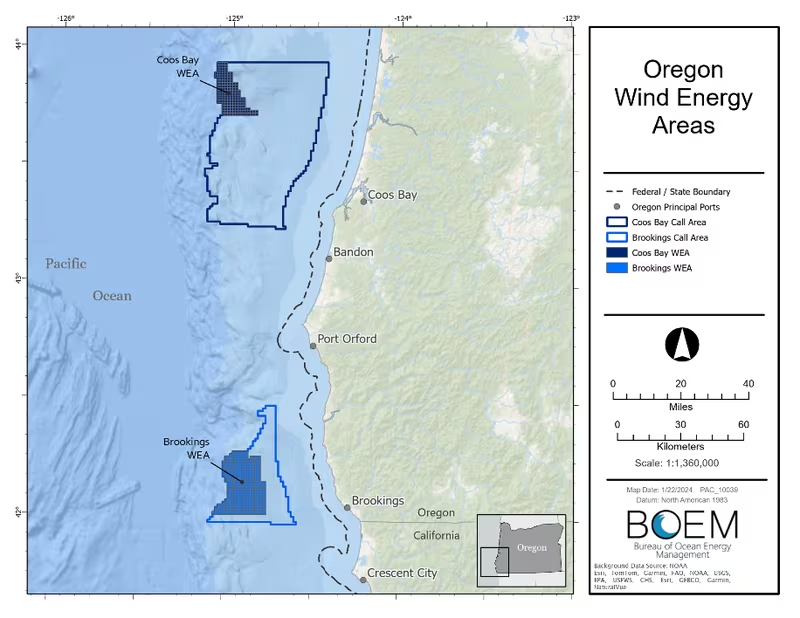
The Confederated Tribes of Coos, Lower Umpqua and Siuslaw tribal council unanimously passed a resolution opposing offshore wind energy development off the Oregon coast.
The federal government states that it has ‘engaged’ with the Tribe, but that engagement has amounted to listening to the Tribe’s concerns and ignoring them and providing promises that they may be dealt with at some later stage of the process. The Tribe will not stand by while a project is developed that causes it more harm than good – this is simply green colonialism.
A previous post commented on the bonding waiver for the Vineyard Wind project’s offshore facilities. According to this presentation by Cliff Carroll at the “Close to the Wind Summit” (Jan. 27 in Hyannis, MA), certain onshore bonding requirements are also being waived. Per Mr. Carroll, the Massachusetts Energy Facilities Siting Board has overruled the Town of Barnstable’s objections to bonding waivers for large transformer substations to be located withing the town.
Now there is no Federal bonding on decommissioning and now we have no bonding as a town.
Mr. Carroll’s brief bonding comments begin at the 11:30 mark. Prior to that he considers some of the environmental risks associated with these substations.








 Bud's Offshore Energy (BOE)