
Archive for the ‘Uncategorized’ Category
Ouch! Too close to reality for some families and businesses?
Posted in California, Uncategorized, tagged Babylon Bee, California Coastal Commission on August 24, 2025| Leave a Comment »
JL shares this gem from the Scottish tapestry exhibition
Posted in Offshore Energy - General, UK, Uncategorized, tagged Great Tapestry, history, JL Daeschler, North Sea oil and gas, Scotland on August 22, 2025| Leave a Comment »
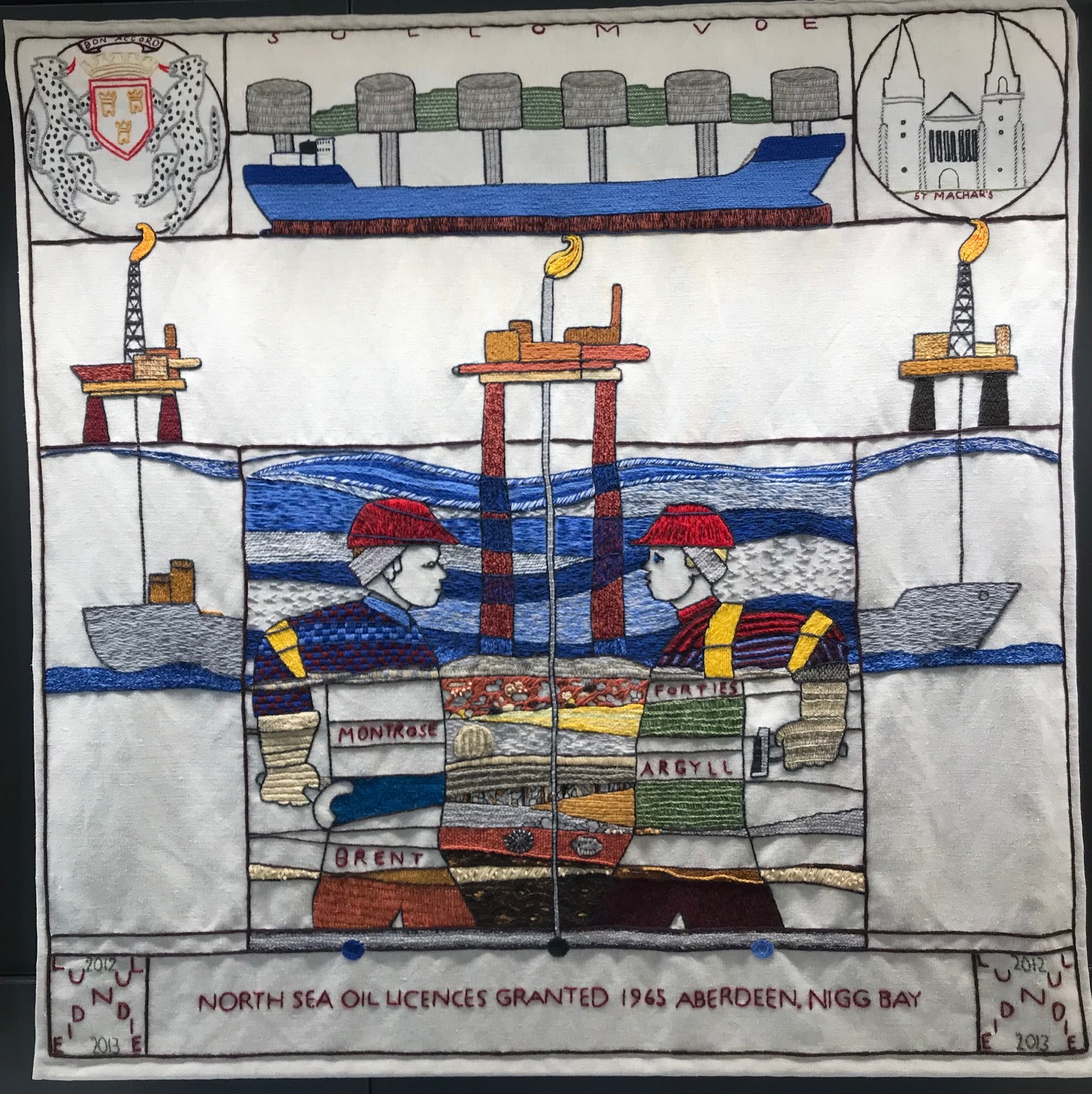
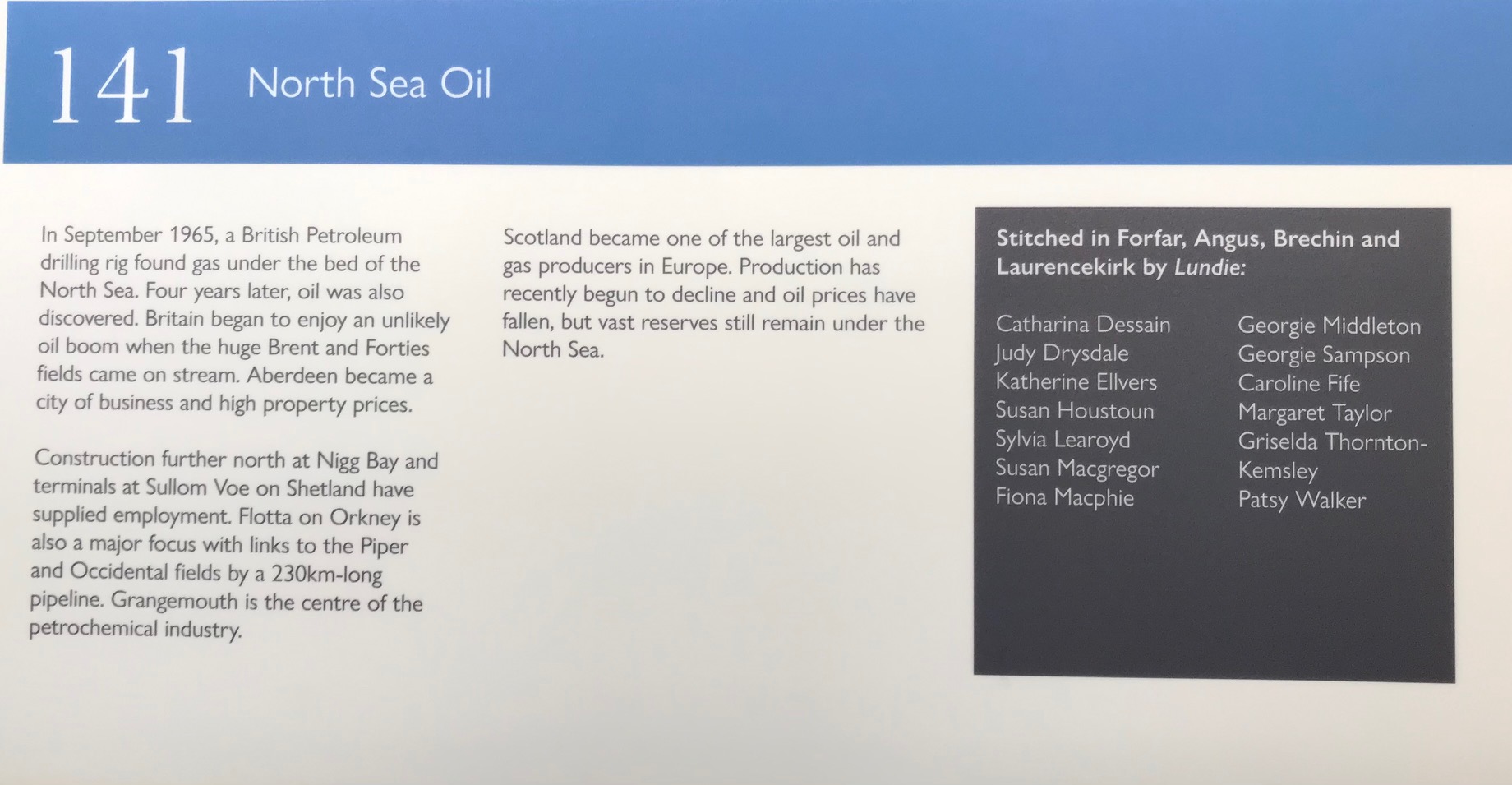
JL Daeschler, pioneering subsea engineer, artist, resident of Scotland, and BOE contributor, visited The Great Tapestry of Scotland exhibition in Galashiels. He shared this image of a tapestry tribute to North Sea workers.
JL reports that the Great Tapestry is 143 m long, and that more than 1000 people worked 50,000+ hours on the various historical panels!
Beneath the North Sea oil panel is some historical information and the names of those who did the stitching:

The winds of change! 😉
Posted in energy policy, Offshore Energy - General, Offshore Wind, Uncategorized, tagged BOEM, BSEE, OCS energy, policy changes, wind vs. oil and gas on August 8, 2025| Leave a Comment »
2023 vs. 2025: Not so subtle changes
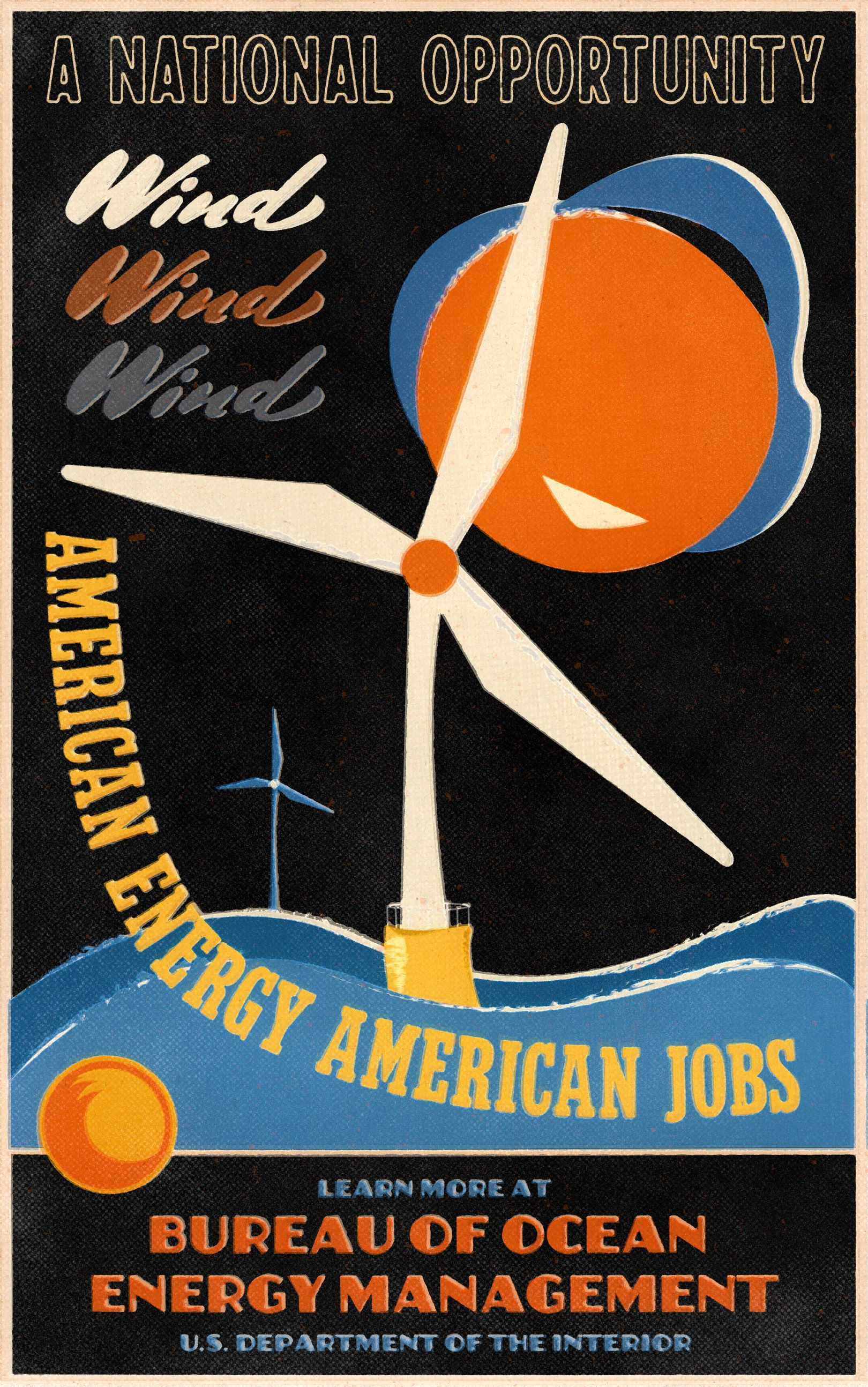
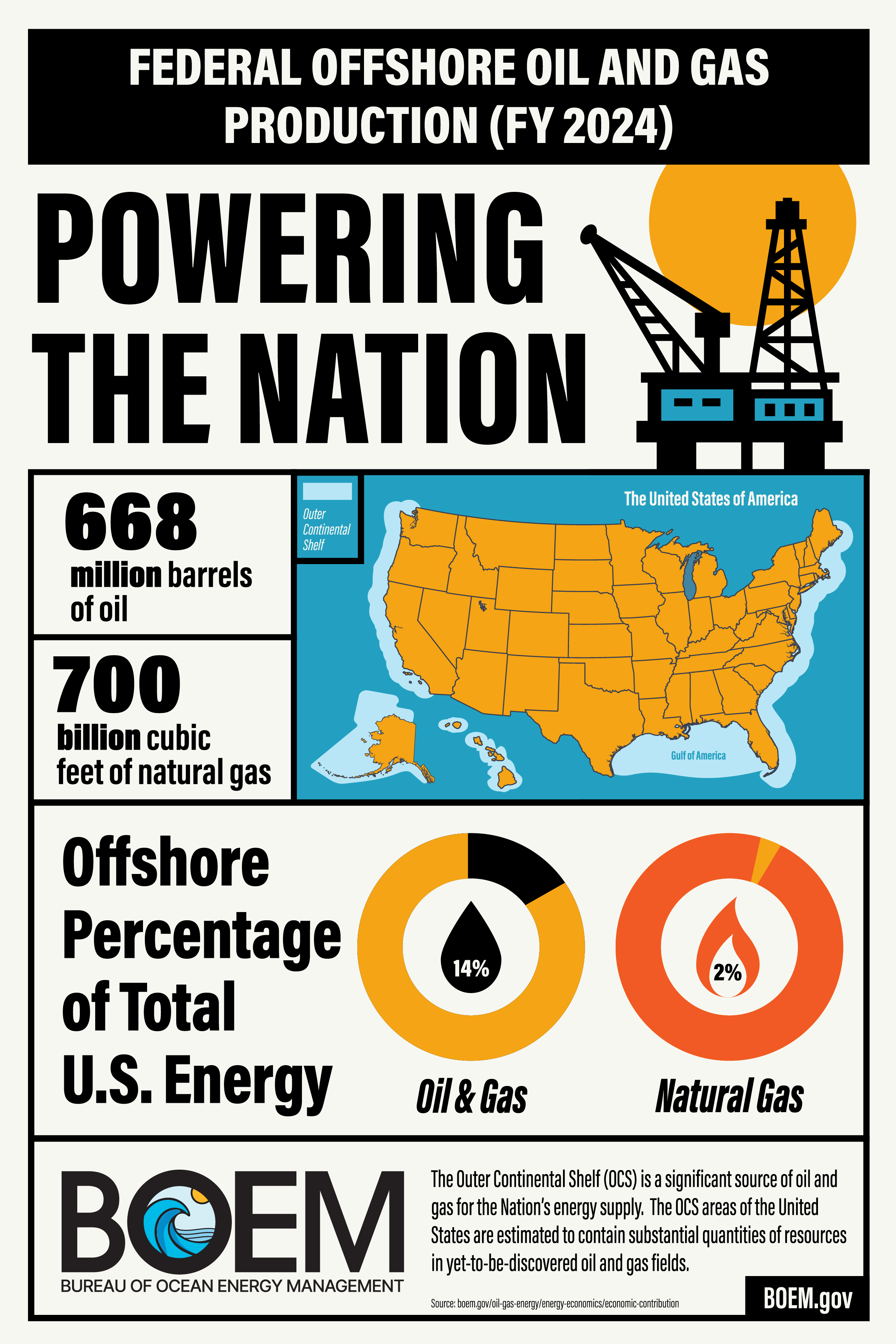

BTW, the new BSEE logo appears to have been influenced by the masterpiece Rig at Sunset 👍 😉

Brian Wilson, the Beach Boys, James Watt, Hawthorne High, and the OCS oil and gas program
Posted in energy policy, Offshore Energy - General, Uncategorized, tagged Beach Boys, Brian Wilson, Congressman George Miller, Hawthorne High, James Watt, Nancy Reagan on June 13, 2025| Leave a Comment »
Brian Wilson, the music genius who passed away this week, was indirectly connected (sort of) to the OCS oil and gas program.
In 1983, Secretary of the Interior James Watt, whose overzealous approach to offshore oil and gas leasing galvanized opposition, bizarrely banned the Beach Boys from performing at the National Mall 4th of July concert. This stunned Nancy Reagan and almost everyone else in Washington. The Washington Post reported, “a ban on apple pie couldn’t have brought a stronger reaction.”
Congressman George Miller, who later restored the OCS civil penalties program, dropped the names of Beach Boys songs while commenting on the House floor:
‘I was sitting ‘in my room’ ‘all summer long’ saying, “‘Do you remem- ber,’ Mr. Watt, ‘Do you remember’ those ‘Good Vibrations’ from the ‘Fourth of July’ when all we did was ‘dance, dance, dance,’ ‘all summer long’ to the Beach Boys in the ‘spirit of Americas?”” Miller said according to Congressional records. “But ‘help me, Ronald, help, help me Ronald,’ ‘don’t let him run wild.’ And if you cannot do it alone, get help from ‘Barbara Ann.'”
The White House gave Watt a plaster foot with a hole as a symbolic gesture of his mistake. The Beach Boys returned to the National Mall the following, playing in front of a crowd of more than half a million people.
The Beach Boys had another indirect connection to the OCS program in that they attended Hawthorne High with Glenn Shackell, one of our top engineers. Glenn served in Vietnam, studied petroleum engineering at USC, and had an outstanding career in our Pacific Region office. He has an encyclopedic knowledge of oil and gas operations in the Pacific.
Here is a video of Brian Wilson returning to Hawthorne High:
“Almost Heaven” for lateral drilling!
Posted in California, drilling, energy policy, Offshore Energy - General, Russia, Uncategorized, tagged ADNOC, Expand, horizontal reach wells, lateral drilling, longest well, Platform Heritage, Sacate field, Sakhalin drilling, Santa Ynez Unit, Upper Zakum field, West Virginia on June 11, 2025| Leave a Comment »

“Country roads” take us to Moundsville, West Virginia where new records were set drilling a “postcard well.”
In addition to the records noted in the picture, these impressive company marks were achieved:
- 24-hour footage record: 12,370 feet
- daily footage record: 2,774 feet/day
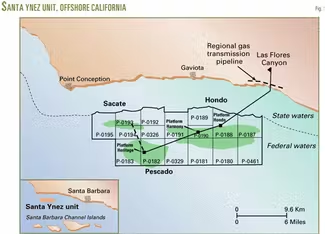
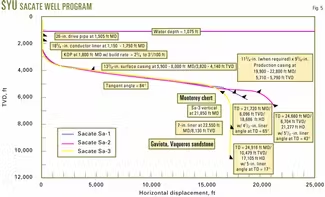
The record US offshore lateral well is in the Santa Ynez Unit, which has been much discussed on this blog and elsewhere in light of Sable Offshore’s efforts to resume production. In 2010, Exxon drilled a well with a horizontal reach of 6 miles from Platform Heritage into the Sacate field (see the diagrams below).
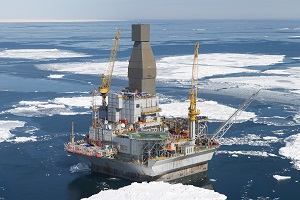
The world’s longest horizontal reach well appears to be the O-14 well drilled by the Sakhalin-1 Consortium in the Sea of Okhotsk, Russia, in April 2015. This well had a horizontal reach of 14,129 meters (46,358 feet).
ADNOC, the Abu Dhabi National Oil Company, has the world record (2022) for the longest well (50,000′) in the Upper Zakum field. However, no horizontal reach distance is provided, so it is assumed that the Sakhalin well had the longer reach.
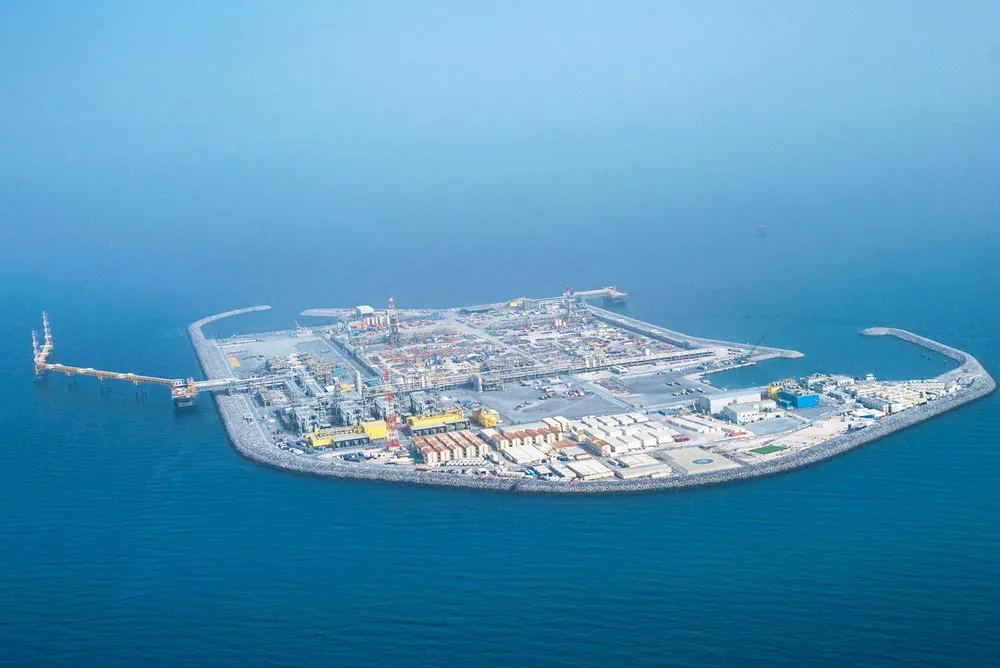
Congratulations Walter Cruickshank!
Posted in energy policy, Offshore Energy - General, Uncategorized, tagged BOEM, Cape Cod Baseball League, Minerals Management Service, retirement, US Dept. of the Interior, Walter Cruickshank on June 10, 2025| Leave a Comment »
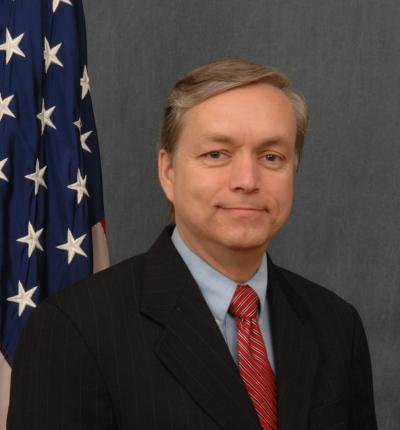
Congratulations to Walter Cruickshank on his retirement from the U.S. Dept. of the Interior!
Walter’s policy acumen, in depth understanding of the offshore program, and balanced perspective on energy development earned him the respect of the political leadership from both parties, a rare achievement. As a result, Walter served more time as Director and Deputy Director of both the Minerals Management Service and Bureau of Ocean Energy Management than any other individual. He also served as Acting Secretary of the Interior during the latest transition, a first for a career offshore program employee.
Walter earned a Bachelor of Arts in Geological Sciences from Cornell University and a Doctorate in Mineral Economics from the Pennsylvania State University (We Are!). Although his Federal career spanned more than 40 years, he has rather remarkably retained his intellect and sanity! 😉
Best wishes to Walter going forward. I hope he finds time to root for his Harwich Mariners in the Cape Cod Baseball League!
Consistent with the proud tradition of the OCS program, I am posting the masterpiece “Rig at Sunset” in Walter’s honor.

On Memorial Day…
Posted in energy policy, Offshore Energy - General, Uncategorized, tagged energy independence, energy workers, gratitude, Memorial Day, security on May 26, 2025| Leave a Comment »

Thinking of those who gave their lives to protect our freedoms, including workers who died providing the energy needed to power our economy.
abundant, reliable, affordable energy 🡆 economic strength, security, & independence
New Orleans woman named President of Shell USA
Posted in Offshore Energy - General, Uncategorized, tagged Collette Hirstius, New Orleans, President USA, Shell, St. Mary's Dominican, Tulane on May 8, 2025| Leave a Comment »

Colette Hirstius, currently Executive Vice President, Gulf of America, will take on the responsibility of President, Shell USA, in addition to her current role as Executive Vice President, Gulf of America, effective August 1, 2025.
In a city where high school ties tend to be strong and enduring, Ms. Hirstius is a graduate of St. Mary’s Dominican HS. Supreme Court Justice Amy Coney Barrett, whose father was an attorney for Shell, and my former Minerals Management Service colleague Kathy Swiler, are also St. Mary’s Dominican graduates.
Ms. Hirstius stayed in New Orleans as an undergraduate, receiving a B.S. degree in geology from Tulane.
Shell is the no. 1 oil and gas producer in the Gulf of America. In 2024, the company produced 171.7 million bbls of oil (26.2% of the GoA total) and 167.4 bcf of gas (24.4% of the GoA total).
38 House members call for repeal of IRA subsidies
Posted in CCS, climate, energy policy, Uncategorized, tagged 38 House members call for repeal, energy subisidies, Inflation Reduction Act on May 1, 2025| Leave a Comment »
“Despite our previously unified stance, some Members of our conference now feel compelled to defend wind and biofuel credits, advocate for carbon capture and hydrogen subsidies, or protect solar and electric vehicle giveaways. Keeping even one of these subsidies opens the door to retaining all eight. How do we retain some of these credits and not operate in hypocrisy? The longstanding Republican position has been to allow the market to determine energy production. If every faction continues to defend their favored subsidies, we risk preserving the entire IRA because no clearly defined principle will dictate what is kept and what is culled.“
The full letter is attached.
“Deepwater Horizon – Living Your Legacy” – a message from Jason Mathews
Posted in accidents, Uncategorized, tagged Deepwater Horizon, Jason Mathews, LA Spirit - Fame, macondo, offshore safety, Shane Roshto on April 21, 2025| Leave a Comment »
The following message is from Jason Mathews – petroleum engineer, football coach, proud father, and outstanding offshore safety leader.
Happy Easter – BSEE Family and Friends
The explosion on the Deepwater Horizon oil rig occurred on April 20, 2010, at approximately 9:45 p.m. CDT. Shortly after the initial explosion, a series of further explosions and a firestorm engulfed the platform that forever changed our industry and eleven families.
This past week, I was in Orlando with my family attending an International Cheer event – All Star World Championship. As I was sitting there, I noticed a young athlete with a date written on her shoes, and she touched the date as she walked back with her team. My assumption was it was something to inspire her.
It quickly reminded me of a young man by the name of Shane Roshto. At only 22 years young, he was a victim of the Deepwater Horizon explosion, and he had written the date of his wedding and his son’s birthday on the inside of his hard hat. Those dates served as reminders of the important people and events in his life while working on the rig miles away from those who meant the most to him.
On Wednesday evening, they brought the top ten teams at the cheer competition onto the stage and called out each finalist on the stage until there were three left, and my daughter’s team was still remaining. While those girls were on stage, I thought back on the countless hours her coaches pushed her and always requested more from them because they had a collective goal to win Nationals and Worlds, and then they called the third-place finisher. It seemed like forever before they called the second-place finisher, but when they did, I got to witness athletes, coaches and families reach something they had put everything into since they began cheer. A date LA Spirit – Fame will never forget – April 16th, and only four days from a day we will never forget – April 20th.
At the conclusion of the day after taking everything in and calming down, I sent this message to the coaches of my daughter’s team – “Coaches thanks for “living your legacy” with our girls at LA Spirit. Every one of your goals, expectations, and coaching styles foster a meaningful life well beyond cheer that leaves a positive impact on our girls. All too often, our girls are told what they can and can’t do with their schedules, their abilities, or their choices. Y’all showed them they can do whatever they set their mind to if they want it bad enough and are willing to make sacrifices for it. As a parent, thank you for making positive memories and experiences that have a ripple effect and continue to inspire our girls for years to come.”
Although the two events have nothing in common (one being a tragedy and one being a highlight), they both drive individuals to live their legacies. At BSEE, all of us (not just inspectors and engineers) have an awesome responsibility to live our legacy in the oil and gas industry by actively shaping our life’s story and influence by focusing on our values, actions, and contributions to those around us (and those who work offshore).
Whether you have days like April 20th or April 16th, always “Live Your Legacy.”
Respectfully,
Jason Mathews


 Bud's Offshore Energy (BOE)