“Stampede,” Gulf of Mexico: Hess 25% owner and operator, Chevron 25% owner
Most importantly, both companies have excellent safety and compliance records as evidenced by their Honor Roll achievements.
Hess is an attractive company with impressive assets. Were there other suitors?
Chevron is currently a partner on the Stampede, Esox, and Tubular Bells deepwater projects that are operated by Hess. There is thus an established deepwater development relationship.
The acquisition of Hess means that Exxon and Chevron will now be partners in Guyana. That should be interesting.
Chevron’s CEO Mike Wirth is quoted as saying “We’ve got too many CEOs per BOE, so consolidation is natural.” That comment seems a bit self-serving, but makes sense from the perspective of an acquiring CEO. Employees of the companies being acquired may have a somewhat different view.
In the Gulf of Mexico, will the combined company be greater than the sum of the parts in terms of lease acquisition, exploration, and development?
Will combining the companies limit the diversity of geological assessments and exploration strategies?
Consolidation affects participation in workshops and on committees engaged in assessing technology and developing standards. More limited participation in these activities, which are critical to offshore safety, was a justified concern of my former boss, the late Carolita Kallaur.
Add Hess to the list of important offshore operators that, for all intents and purposes, no longer exist. This list includes (among others): Amoco, Arco, Texaco, Getty, Gulf, Unocal, Sun, Anadarko, BHP, Mobil, Phillips (or Conoco), Noble Energy, Pennzoil, Kerr-McGee, and Newfield.
Costco’s new CEO Ron Vachris started in an entry level warehouse position at Costco 40 years ago. It’s nice to see that such stories, while less common, still exist.
Ron is a Costco veteran, with over forty years of service to the Company, starting as a forklift driver, and subsequently serving in every major role related to Costco’s business operations and merchandising activities.
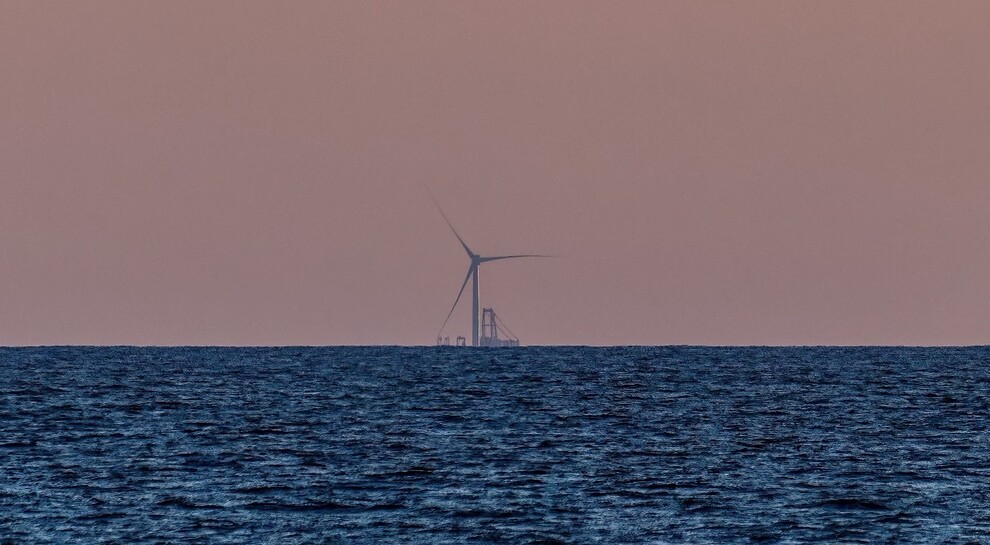
Additionally, the Maria Mitchell Association and the Nantucket Preservation Trust, co-signers on the Good Neighbor Agreement, canceled scheduled interviews despite the fact that the only thing rising quicker than the first visible wind turbine off Nantucket’s south shore is the local level of uneasiness associated with this eyesore.
In my opinion, the long-term sustainability of offshore wind farms simply doesn’t add up. Seaside communities like Nantucket will become the visual victims of the federal government’s desire to have 30 gigawatts of offshore wind production by 2030. Especially from a financial perspective, what sounded so good a few years ago doesn’t appear so rosy today.
The first Vineyard Wind turbine 15 miles off Nantucket. Photo by Charity Grace Mofsen
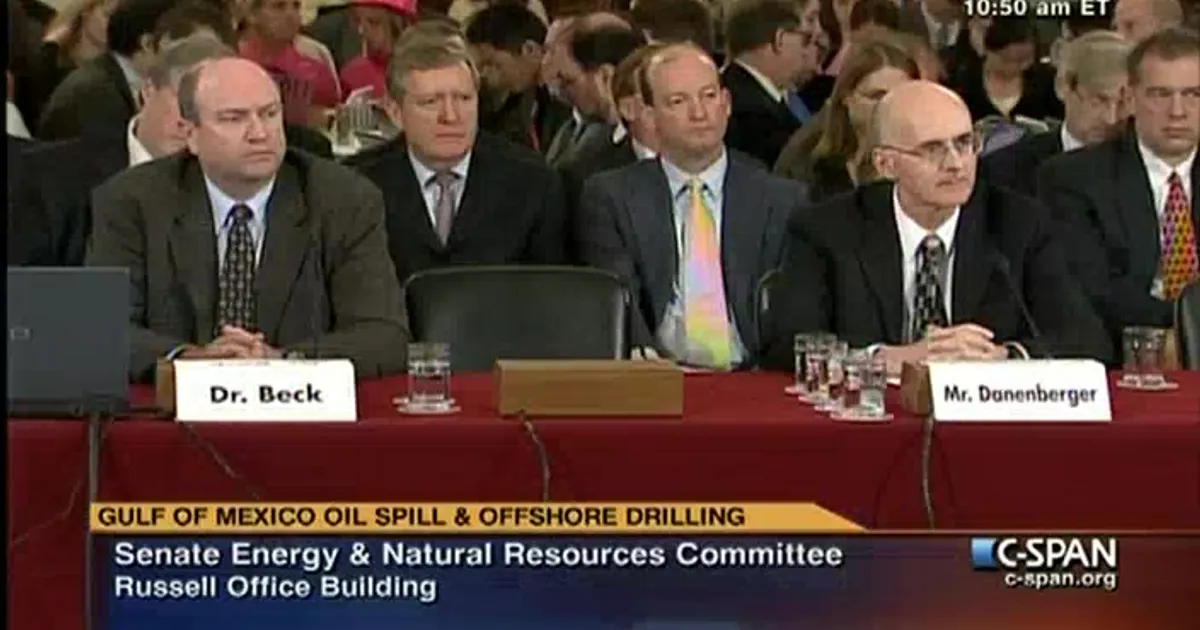
I was on the first panel to appear before a Senate committee during the Macondo blowout. All of the senators were respectful and professional with two exceptions, one of whom was Bob Menendez. Perhaps Senator Menendez’s penchant for political grandstanding was an indication of more significant character flaws.
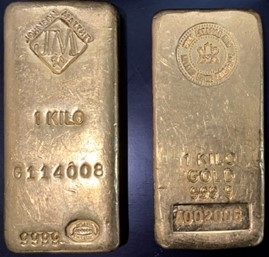
Robert Menendez Allegedly Agreed to Use His Official Position to Benefit Wael Hana, Jose Uribe, Fred Daibes, and the Government of Egypt in Exchange for Hundreds of Thousands of Dollars of Bribes to Menendez and His Wife Nadine Menendez, Which Included Gold Bars, Cash, and a Luxury Convertible
Last week, Sen. Menendez was cited for additional charges accusing him of accepting bribes from a foreign government and conspiring to act as a foreign agent.
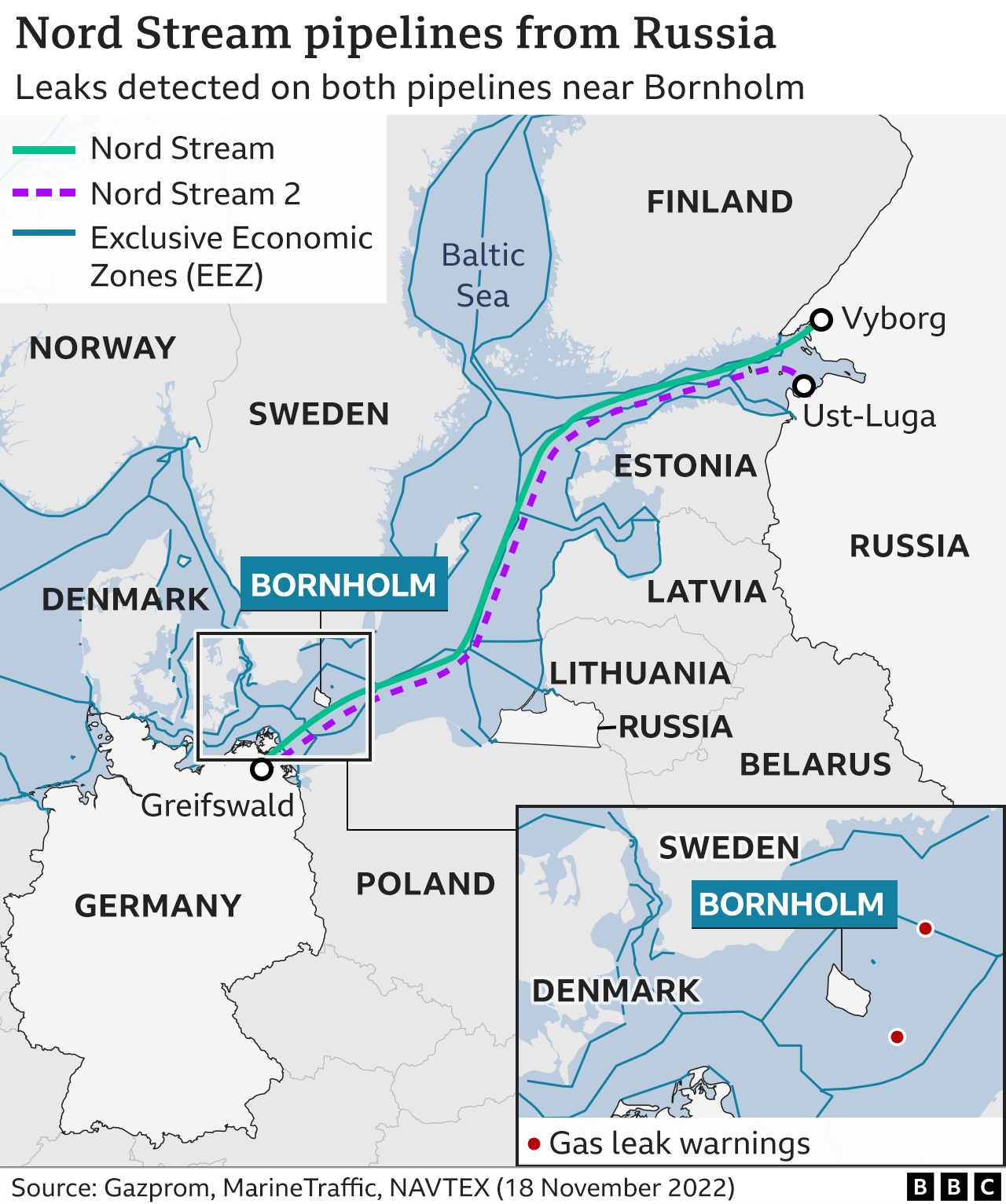
Not only have no official findings been released, but there has been little new speculation since our June 2023 update. Given the political stakes, it is increasingly unlikely that the responsible parties will be identified.
As has been previously discussed on this blog, the renewable energy source that shows the greatest promise for generating the power needed to support economic growth is ultradeep geothermal.
This JPT article nicely describes the opportunities and challenges
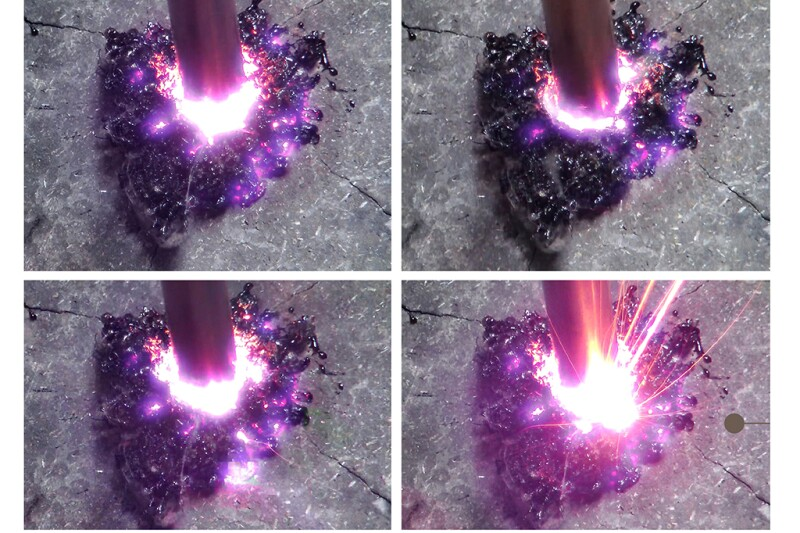
Microwave drilling test. Source JPT/Quaise Energy
Good comparison of drilling into hard basement rock with conventional and millimeter wave (microwave) technologies:
The technical readiness level (TRL) for microwave drilling reflects that it has yet to be field tested. The drilling rate includes an estimated amount of flat time. The levelized cost of energy (LCOE) is an all-in estimate of the cost per megawatt-hour (MWh). Source: JPT/Quaise Energy.
Quaise Energy’s first full-scale testing of a hybrid drilling rig combining conventional rotary drilling and millimeter wave drilling capabilities is scheduled for 2024.
Some northeast states and their public utilities may be in a bit of a bind. Either they accept higher electric rates and the likely public backlash, or they deviate from their staunch anti-gas, anti-nuclear orthodoxy. Similarly, oil companies that have invested heavily in offshore wind may find that they are not just less profitable, but (even) less popular.
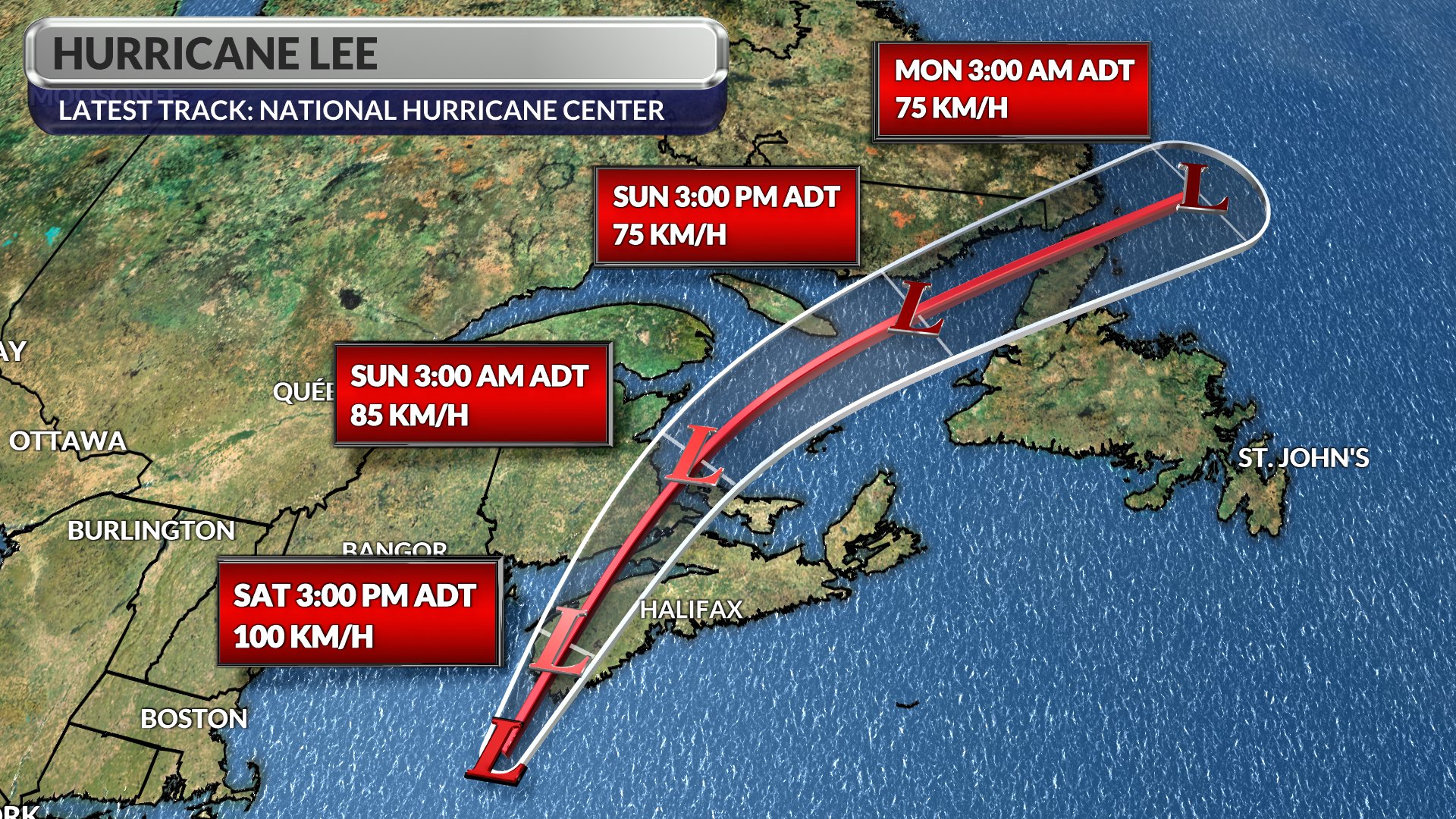
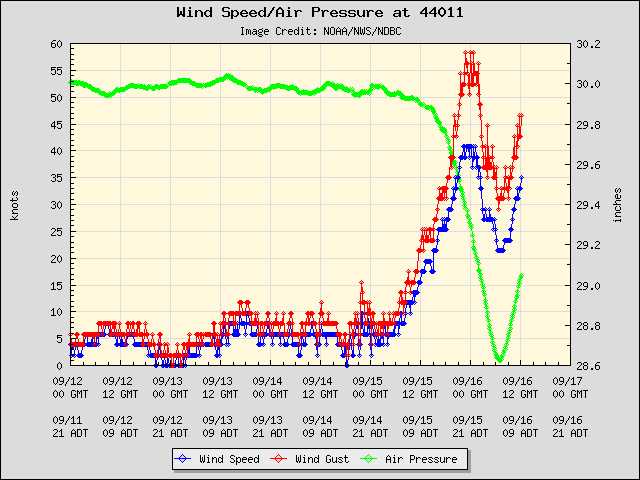
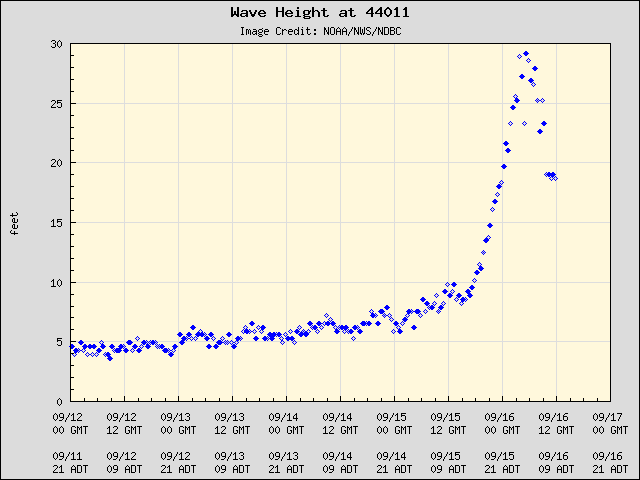
The worst conditions were relatively common by Georges Bank standards. Per the NOAA data buoy (see plots below), the wind speed peaked at 40.8 kts, gusts at 58.3 kts, and wave height at 29.2 ft.
Looking back at my Georges Bank Exploratory Drilling paper (1983), a spring storm in April 1982 generated 105 mph winds and 35 foot swells. I’ll post information on the rig performance issues during those operations at a later date.
Venus is very impressive in the pre-dawn September sky and will peak in brightness over the next week days. Worth checking out!
Venus will be brightest in the morning sky around September 19, 2023, and will reach 44 degrees elongation from the sun by the end of the month. Venus will brighten from magnitude -4.6 to -4.8 during the month.
The reason that the planet Venus is so dazzlingly bright is because it is completely enshrouded in thick clouds that reflect sunlight at us.
In ancient times, mariners looked up to the night sky for guidance, and one celestial body held a special role in their navigation: Venus. With its bright and consistent appearance, Venus served as a reliable reference point for sailors venturing across vast oceans. This article explores the significant role that Venus played in early navigation, guiding mariners safely to their destinations and paving the way for future advancements in seafaring.
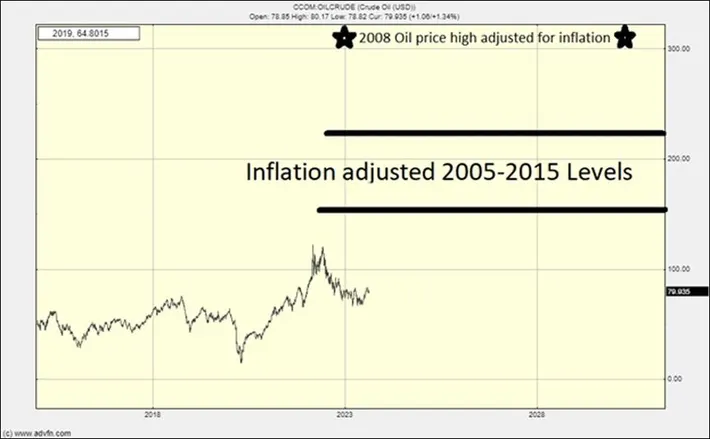
The title grabs your attention, but the justification isn’t terribly compelling. The author simply adjusts the brief 2008 price spike ($200/barrel) for inflation to justify his forecast.
Per the author:
The thing about commodities like oil is that while they can be acutely volatile because of supply and demand and political events, long term their price is a function of the technology needed to create them and the state of inflation in the denominating economy.