Published today.
Archive for the ‘Offshore Energy – General’ Category
Final BSEE well control rule is attached
Posted in drilling, Offshore Energy - General, Regulation, well control incidents, tagged BSEE, Well Control Rule on August 23, 2023| Leave a Comment »
Comments on BOEM financial assurance rule for decommissioning
Posted in California, decommissioning, Gulf of Mexico, Offshore Energy - General, Regulation, tagged BOEM, compliance and safety, decommissioning, financial assurance, oil and gas reserves, proposed rule on August 22, 2023| Leave a Comment »
The attached comments were submitted to BOEM via Regulations.gov. The comments address specific provisions of the proposed rule and include a recommendation to hold companies fully accountable for their lease transfers, but not for subsequent transfers in which they are not a party.
Do I get a t-shirt for being one of the first 2000 entries? 😀
The sinking of the Ocean Prince (1968) and the heroic North Sea rescue
Posted in accidents, drilling, Offshore Energy - General, UK, tagged 1968, heroic evacuation, North Sea, Ocean Prince, sinking on August 21, 2023| Leave a Comment »
Offshore veteran JL Daeschler brought the historic destruction of the Ocean Prince to my attention.
“At about 2 am on the day of the storm, the rig’s superstructure was torn off during a gale. By 7:10 am about a third of the drilling plattform had dissapared under 60 feet water.”
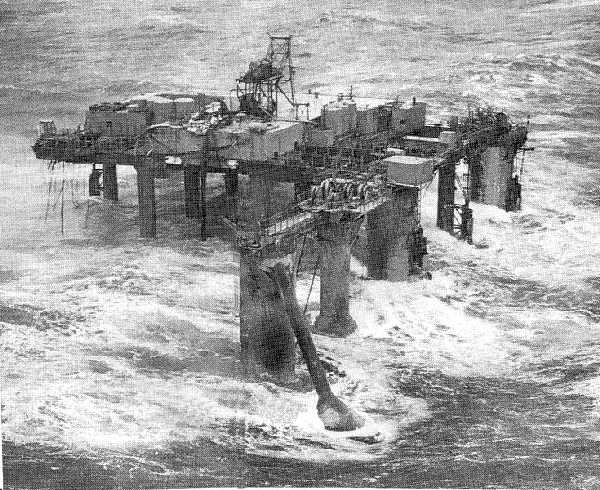
I didn’t realize that some early North Sea wells were drilled with semisubmersible rigs that were sitting on bottom, ala submersibles.
Per JL Daeschler, “the barge master on Ocean Prince was unsettled about sitting on a sandbank in the North Sea with waves as deep as the water depth, hence accelerating the scouring around the pontoon on the sea bed and distorting the forces on an unsupported hull. On a semisubmersible floating rig there is a great level of compliance between the mooring system and the forces on the leg and bracing. Worst case, you let the mooring go and drift.
It’s noteworthy that: “During the same storm which claimed the ”Ocean Prince,” the rig’s sister ship ”Ocean Viking,” while drilling afloat, withstood winds and waves of equal force.”
The entire crew of the Ocean Prince was safely evacuated. The helicopter pilot’s last name was fitting given his bravery during the rescue!
“Hero of the rescue effort was Capt. Robert Balls, 32, a former naval pilot who was alerted to remove the stranded crewmen. Within 45 minutes after he was awakened at Scarborough Hotel at 6 a.m., he was piloting a Wessex 60 helicopter across the North Sea fighting gale winds 400 feet up.”
“Captain Balls flew the copter with a minimum load of fuel in order to carry more than a full passenger load to the oil rig ”Constellation,” which was drilling about 20 miles south of the ”Ocean Prince.” On the first lift he transported 19 men. Usually, the capacity of the Wessex 60 is 16. On the second trip he took 18 crewmen. The final trip, he flew eight men directly to Scarborough.”
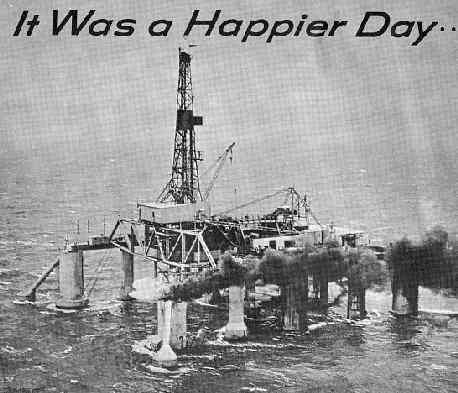
Before the storm:
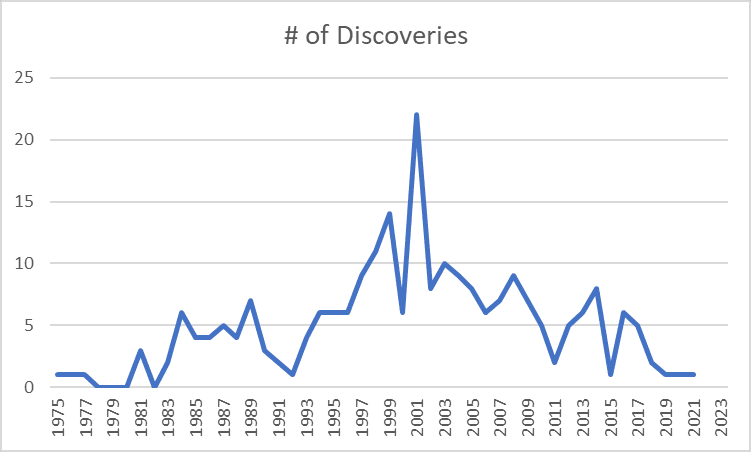
Deepwater GoM field discoveries since 1975
Posted in Gulf of Mexico, Offshore Energy - General, tagged deepwater field discoveries, Gulf of Mexico on August 18, 2023| Leave a Comment »
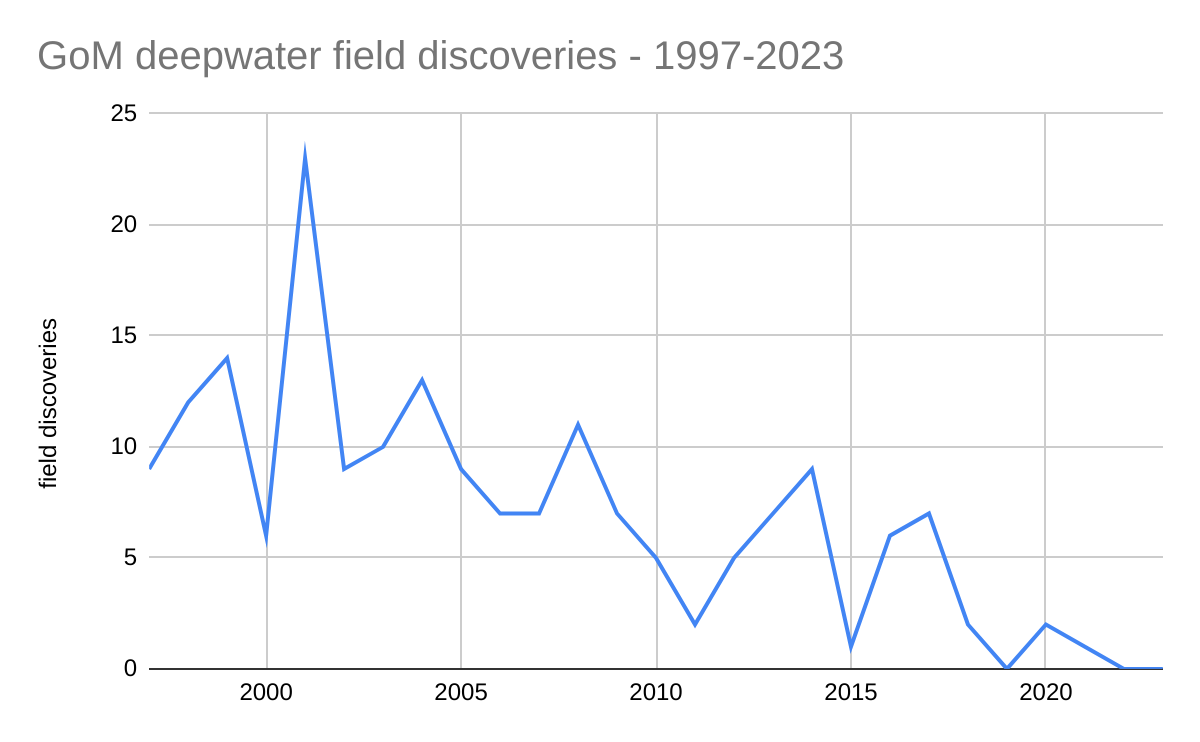
Per our previous post, “Ominous signs for the future of Gulf of Mexico production,” Lars Herbst has plotted (below) deepwater GoM field discoveries dating back to the early days of deepwater drilling operations.
These are official USGS, MMS, and BOEM data (depending on the era) for field discoveries in >1000′ of water. Note that the last discovery was in March 2021.
This is a discouraging graphic given that the deepwater GoM is currently the only option for significant new US offshore production.
Excellent interview with the late Alden “Doc” Laborde, father of the mobile offshore drilling unit
Posted in drilling, Gulf of Mexico, Offshore Energy - General, tagged Doc Laborde, Gulf of Mexico, MODU, Mr. Charlie, Murphy, Odeco, offshore drilling, semisubmersible, submersible on August 17, 2023| Leave a Comment »
Ominous signs for the future of Gulf of Mexico production
Posted in climate, energy policy, Gulf of Mexico, Offshore Energy - General, Regulation, Wind Energy, tagged 5 year leasing plan, carbon sequestration, Gulf of Mexico exploration slump, Gulf of Mexico oil production, offshore leasing, Offshore Wind on August 16, 2023| Leave a Comment »
Record low exploratory drilling: 2023 will be the third consecutive year with fewer than 50 deepwater exploratory well starts. The only other year this century with <50 deepwater exploratory well starts was 2010 when there was a post-Macondo drilling moratorium.
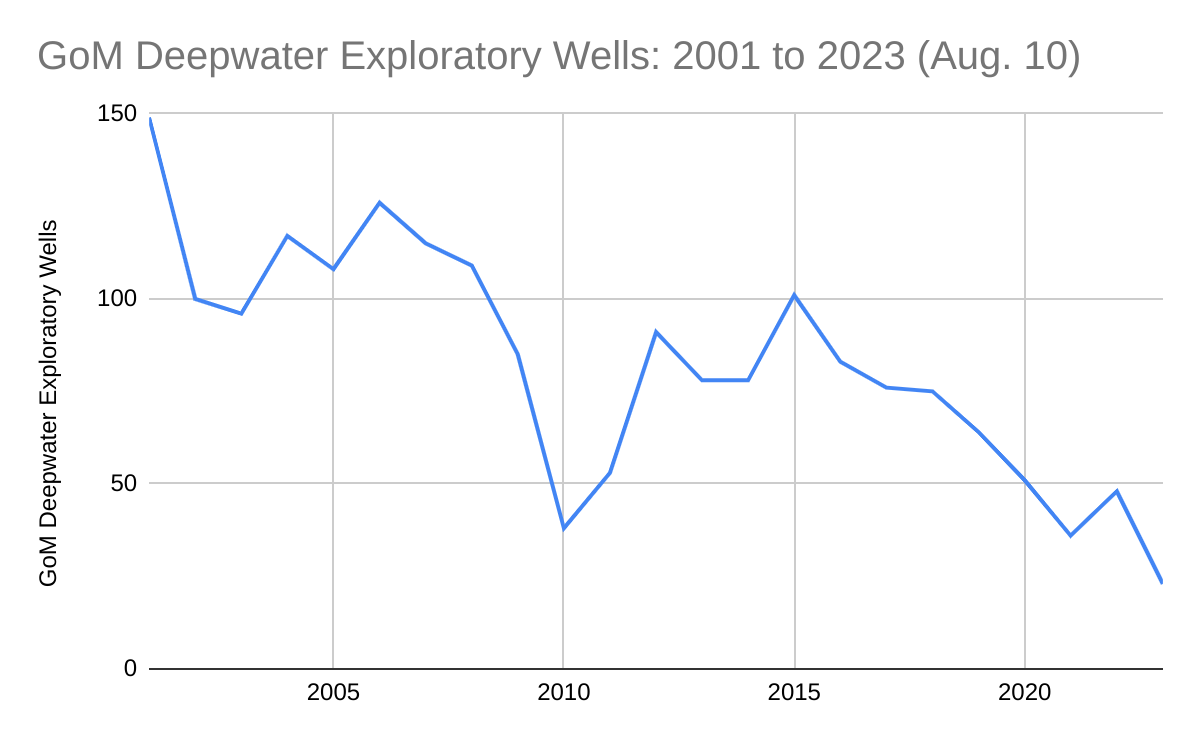
Low participation: Only 8 companies have started deepwater exploratory wells in 2023 YTD. Anadarko, Chevron, and Shell drilled 78% of the wells, with Shell alone accounting for 48%. Compare these numbers with 2001, when 24 companies drilled 149 deepwater exploratory wells.
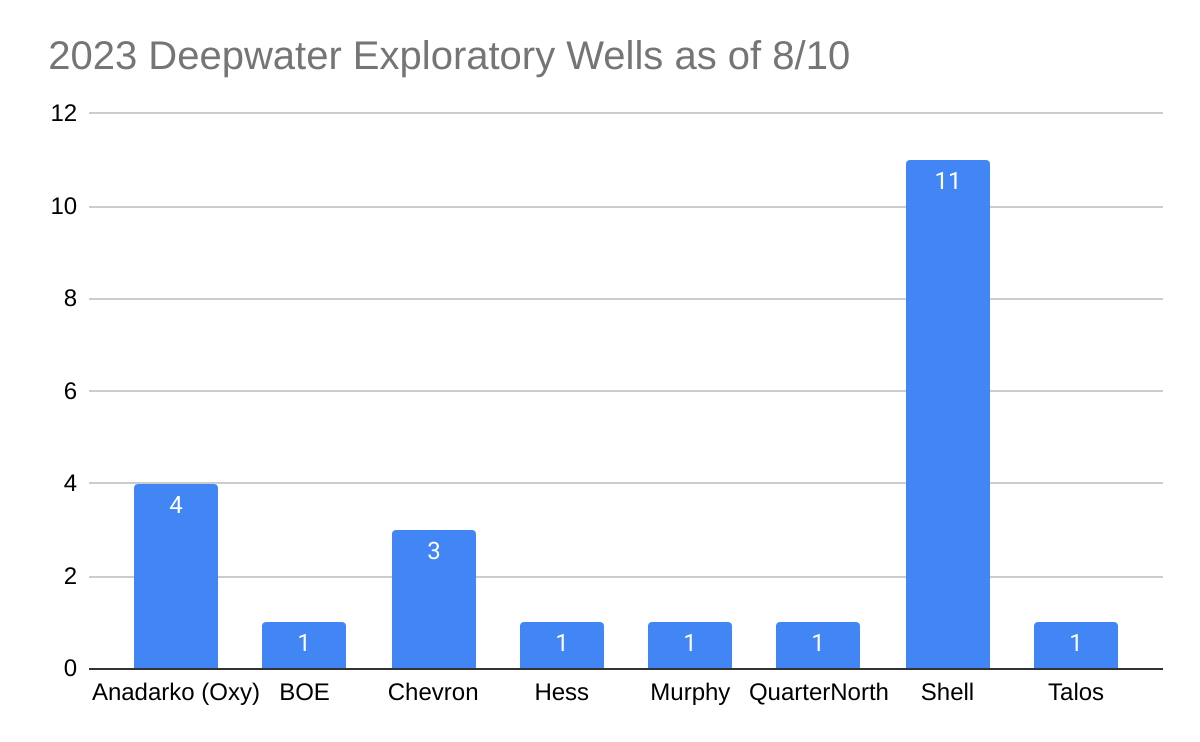
Absence of new field discoveries: Per BOEM’s database, no deepwater fields have been discovered since March 2021 and there were only 3 discoveries in the past 5 years (see chart below)
Leasing and regulatory uncertainty: When will the 5 year leasing plan be finalized and how much will leasing be restricted? What will be the effect of the expanded Rice’s whale area on deepwater operations? To what extent is this expansion justified? What other legal and regulatory threats are on the horizon?
Unrealistic expectations regarding the “energy transition:” In a stunning introductory statement, the Proposed 5 Year Leasing Plan expressed concerns that new leases would produce too much oil and gas for too long. OPEC+ must love the way the US sanctions its own energy production, most notably the oil and gas resources of the OCS. More than 96% of the OCS is off-limits to oil and gas leasing, and the 5 year plan proposed to constrain leasing in the only areas that remain. The favored offshore wind program was intended to be a complement to, not a replacement for, the oil and gas program. Wind energy is limited by intermittency, space preemption, navigation, and wildlife protection concerns.
Some companies have visions of the GoM as a carbon dumping hub: The largest US oil company, which hasn’t drilled a well in the GoM in nearly 4 years and operates just one production platform, seeks praise and profit by sequestering CO2 beneath the Gulf while maximizing oil production elsewhere. How will this sustain economically and strategically important GoM oil and gas production?
Lots of public comments on BOEM’s proposed financial assurance rule (decommissioning)
Posted in decommissioning, Offshore Energy - General, Regulation, tagged BOEM, decommissioning, financial assurance, Regulation on August 15, 2023| Leave a Comment »

1137 comments to date per Regulations.gov. This would imply one or more organized commenting campaigns.
I will share my comments on this blog after they have been submitted.
Collective failure to protect the public from decommissioning liabilities; long past time to fix the financial assurance framework
Posted in decommissioning, Gulf of Mexico, Offshore Energy - General, tagged BOEM, BSEE, compliance, decommissioning, financial assurance, Matagorda Island on August 14, 2023| Leave a Comment »
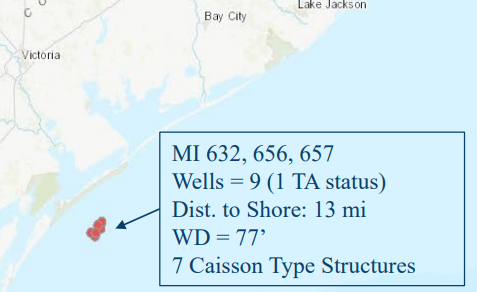
For the first time in the history of the US OCS program, Federal ontracts have been awarded for the decommissioning of facilities in the Matagorda Island area of the Gulf of Mexico. The use of taxpayer funds for this purpose should be an embarrassment for the offshore industry and its regulators, past and present.
Rather than touting these contracts, the regulators should be explaining how this happened and how it will be prevented in the future. Fortunately, BOEM’s proposed decommissioning financial assurance rule is open for comment until the end of this month, so we have an opportunity to provide input.
Matagorda Island Gas, the company whose wells the public will be plugging, had a poor compliance record, and is another example of why compliance should be a primary factor in determining supplemental financial assurance requirements.
Hidden Gem deepsea mining vessel is still parked near Manzanillo, MX
Posted in Mexico, Offshore Energy - General, Uncategorized, tagged Andrew Konczvald, deepsea mining, Hidden Gem, Manzanillo, Mexico, TMC on August 9, 2023| 1 Comment »
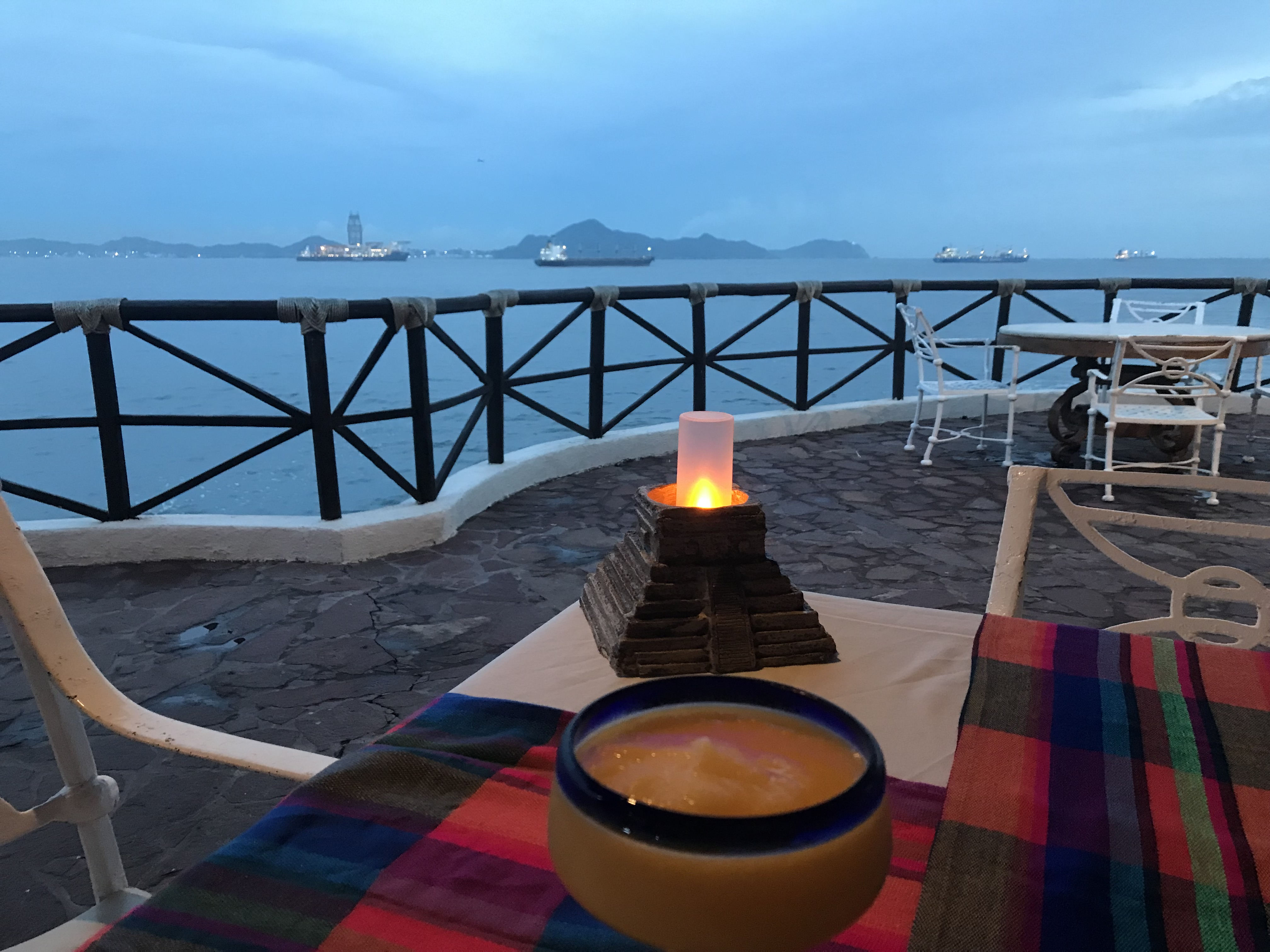
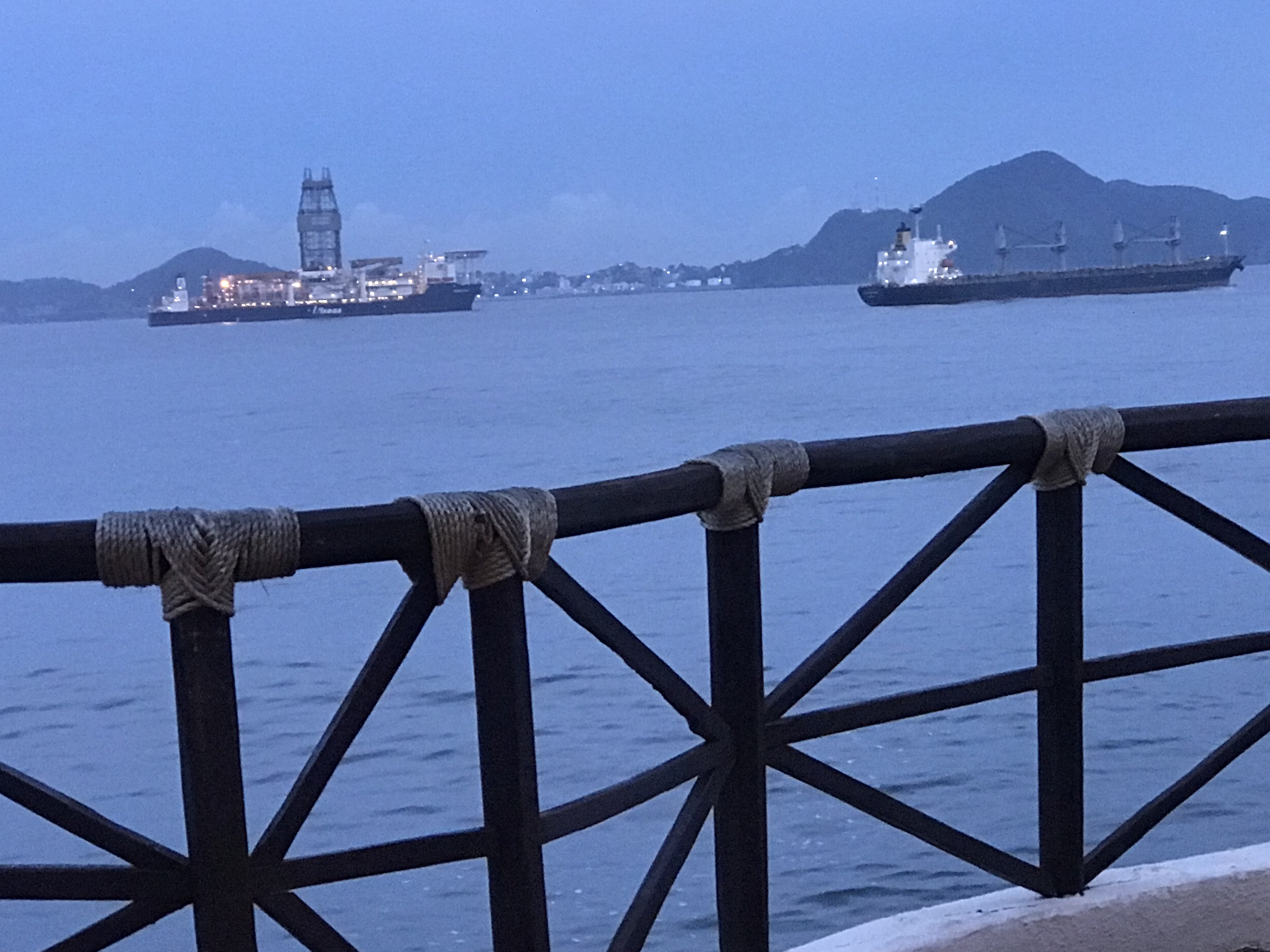
Our Mexican correspondent, Andrew Konczvald, reports that the Hidden Gem, a deepsea mining vessel owned by The Metals Company (TMC) is still parked offshore Manzanillo. The ship has moved a couple of miles and is now near a shipping lane. See Andrew’s pictures below.
Per TMC’s latest update, the earliest that deepsea mining operations could be conducted is late 2025, so the vessel is likely to remain in Manzanillo for Andrew’s viewing pleasure. Nothing like a water view with a rig on the horizon. 😉
Rotors to Reefs? 😀
Posted in Offshore Energy - General, Offshore Wind, rigs-to-reefs, tagged Block Island Wind, BOEM, mussels, reef effect, rotors to reefs on August 7, 2023| Leave a Comment »
 Bud's Offshore Energy (BOE)