Feeds:
Posts
Comments

Archive for the ‘Offshore Energy – General’ Category

The Supreme Court has decided to allow the 9th Circuit decision on offshore well stimulation to stand.

From a regulatory and technical standpoint, the 9th Circuit decision is highly questionable. The limited well stimulation operations offshore California were conducted 9-31 years ago and were carefully reviewed and monitored. No fluids were released or escaped to the marine environment.

During the Obama administration (and under the capable leadership of Directors Brian Salerno and Abigail Ross Hopper), BSEE and BOEM conducted a Programmatic Environmental Assessment (EA) and issued a Finding of No Significant Impact (FONSI) from the use of specific well stimulation treatments in oil and gas activities on the Pacific OCS. The 9th Circuit decided that wasn’t enough and the SCOTUS chose not to review their decision.

Given the current state of Pacific offshore operations, the court decisions will have little or no effect on well activity now or in the foreseeable future. If the BSEE well permitting site is up-to-date, there have been no Pacific well operations in the past 3 years. For the 2 years prior to that, the only well operations were for plugging and abandonment purposes. Therefore, the main concerns are the decision to require an EIS prior to any future well stimulation operations, and perhaps more importantly, the implications of the decision on offshore operations elsewhere.

Read Full Post »

In the attached paper, John Smith and Robert Byrd summarize the daunting decommissioning challenges facing California offshore operators:

  1. Large, deep-water structures.
  2. Lack of decommissioning infrastructure and services locally.
  3. High HLV mobilization costs.
  4. Jones Act restrictions.
  5. Limited onshore processing and disposal options.
  6. Air quality compliance costs.
  7. Site clearance and debris removal requirements.
  8. Environmental and space use operating constraints.
  9. A complex regulatory framework and risk of litigation.
  10. An unworkable reefing law and lack of a State approved artificial reefing program.

Does the regulatory framework prevent you from doing what the regulations require? Catch-22?

Read Full Post »

All we know at this point is that a Woodside contractor died during work activities at noon today (AWST).

The North Rankin complex is in 135 km offshore from Dampier on the northwest coast of Australia and is in 125 m of water.

More to follow.

North Rankin complex

Read Full Post »

Read Full Post »

This CBC story, which includes excellent video interviews, was brought to my attention by Newfoundlander Howard Pike, an engineer and offshore safety leader.

Rigs-to-Removal (carbon)?

We know a lot about Rigs-to-Reefs, and the importance of active and reefed platforms in providing the habitat, shelter, and food that is necessary to increase biodiversity and productivity. However, the carbon reduction potential of artificial reefs has received little attention.

The linked CBC story is particularly interesting in that it includes interviews with artificial reef researchers who are assessing the carbon capture aspects. To date the results are encouraging:

As for the impact on climate change, the researchers say they have found some evidence that an artificial reef could hold more carbon compared to a natural reef.

Read Full Post »

Platform Houchin

For those who have been following the saga of Platforms Hogan and Houchin, decommissioning specialist John B. Smith brought this update to my attention:

Platforms Hogan and Houchin: These platforms are currently being manned, monitored and maintained as part of an agreement between BSEE, BOEM, DOI Solicitors Office, and the three predecessor lessees as they await a decision on the predecessors’ appeal to the IBLA. BSEE estimates an approximately $5 million deficit in financial assurance to decommission 21 orphaned sidetrack wells associated with these platforms.

BSEE

Comments:

  • Although the status of the decommissioning account for these platforms has not been disclosed, permanently abandoning these 21 wells will be costly. if the over/under is an additional $5 million, bet on the over.
  • After the wells are plugged, the platforms have to be removed at great cost to someone (hopefully not the taxpayer), and when will the matter of who pays finally be resolved?
  • BSEE estimated decommissioning costs of $74.3 million in 2014. What are the current estimates?
  • When will the 9/20/2020 Inspector General report that found significant irregularities in the use of the decommissioning escrow funds be made publicly available?

Read Full Post »

BOEM has accepted 76 of the Sale 259 bids to date including 18 of the 29 legitimate (non-CCS) bids for shelf leases.

Interestingly, none of Exxon’s 69 high bids for shelf leases have been accepted to date. Given that the Exxon bids were for tracts that are presumably considered “nonviable” from an oil and gas production standpoint, those bids should have been accepted by now were they deemed to be valid.

Perhaps BOEM, to their credit, is planning to reject the CCS bids as they may when an unusual bidding pattern has been identified. It is now quire clear (unlike in the immediate aftermath of Sale 257) that Exxon was seeking to acquire these leases for carbon sequestration purposes. That is not allowed given that both Sales 257 and 259 were oil and gas lease sales. As similarly noted for Sale 257:

  • Sale 259 was an oil and gas lease sale. The Notice of Sale said nothing about carbon sequestration and did not offer the opportunity to acquire leases for that purpose. Therefore, the public notice requirements for CCS leasing (30 CFR § 556.308) were not fulfilled.
  • Because there was no draft or final Notice of Sale for CCS leases, interested parties and the public did not have the opportunity to consider and comment on CCS leasing, tract exclusions, bidding parameters, and other factors.
  • 30 CFR § 556.308 requires publication of a lease form. No CCS lease form was posted or published for comment.
  • CCS operations were not considered in the environmental assessments conducted prior to the sale.
  • No evaluation criteria for CCS bids have been published.

Meanwhile, the decision on Green Canyon Block 777 will also be of interest, given that a higher Sale 257 bid for this block was rejected.

Finally, there was a second bid (red block below) from Focus Exploration for one of the blocks Exxon bid on (blue). Will that lower bid, which was presumably for oil and gas exploration purposes, be accepted if the Exxon bids are rejected?

Read Full Post »

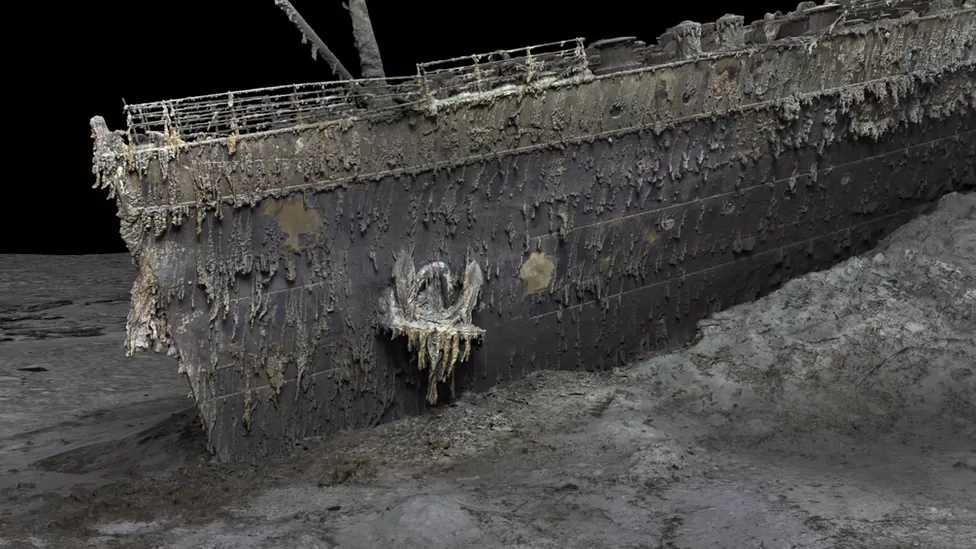
BBC article

The images were provided by Magellan, a UK company that conducts surveys for the offshore oil and gas industry:

Established in 2015, Magellan is driven by a management team whose background includes offshore contracting, geotechnical survey and ultra-deep water ROV operations, including environmental and site investigation.  These operations have been conducted for a wide range of clients across the oil and gas, fibre-optic and subsea recovery industries.

Supported by the board, the management team have guided and overseen the integration of standard oil and gas practices as well as the building and development of 6,000m ROVs, specialist and innovative winches and a range of purpose-built subsea tooling.”

Read Full Post »

The NOIA/ICF report is favorable from a Gulf of Mexico perspective, but 2 general caveats should be highlighted:

  • “The estimation of the production related GHG for various crude oils and condensates is a complex process that is hindered by lack of public, up-to-date, and high-quality data.
  • “There is considerable controversy regarding certain critical data including quantity of gas flared, operational flare efficiencies, and the volumes of methane releases along oil and gas supply chains.”

Comments:

  • More work is needed to better determine cold venting volumes:
    • Table 7, p. 13, of the NOIA/ICF report indicates venting (methane) emissions of 71,200 metric tons/year for GoM operations. That number is aligned with the 2017 GOADS data (70,488 tons per Table 6-11, p. 112).
    • ONRR venting data are in the same ballpark as the ICF and GOADS data. Per ONRR data, 2.35 bcf (~61,000 metric tons) were vented in 2022.
    • The recent PNAS report found that much more gas is being vented: 410,000 – 810,000 tons annually. If the PNAS findings are accurate, venting is being significantly underestimated and/or under-reported.
    • Per ICF, lower flaring and venting volumes are the main reason for the GoM’s lower GHG emission intensity, so data accuracy is important. The difference between the government data and the PNAS findings (see table below) should be carefully assessed.
  • The NOIA/ICF report did not distinguish between GoM deepwater and shelf emissions.
    • The PNAS report indicates much higher methane emissions intensity on the shelf, as do most subjective assessments.
    • Future studies should provide separate GHG intensity data for shelf and deepwater facilities.
  • All production cannot be from the lowest emission intensity sources. The objective should be to minimize emissions from each source, not to eliminate production. GoM shelf operations have other advantages, most notably the production of nonassociated natural gas.
sourceGoM gas vented (annual in metric tons)
ICF report71,200
GOADS 201770,488
ONRR 2022 data61,000
PNAS report410,000 – 810,000

Read Full Post »

Kudos to offshore-energy.biz for drawing attention to the recent Coast Guard medevacs from the pipelay vessel Solitaire. Three health-related medevacs from the same facility in <2 months would seem to warrant further scrutiny. Will the Coast Guard investigate?

The only timely information on medevacs is from Coast Guard news releases. Information on private medevacs is seldom provided, except as included in the BSEE incident tables, which are typically more than 1 year behind, and update presentations by BSEE’s Gulf of Mexico region.

Below is information on 2023 YTD Coast Guard medevacs associated with Gulf of Mexico oil and gas activities. As previously posted, at least 12 workers died at OCS facilities in 2021-22 of natural causes. Unfortunately, “natural cause” fatalities and illnesses receive little industry or regulator attention.

datevessel or platformdescriptioncondition report
5/18OSV Brandon Bordelon 50-year-old male crewmember with an injury to his legstable
5/17Allseas’ pipelay vessel Solitaire65-year-old male crewmember was experiencing heart attack-like symptomsstable
4/26crew boat Mr. Fredhalted search for missing crewmemberpresumed dead
4/23Allseas’ pipelay vessel Solitaire32-year-old male crewmember experiencing severe abdominal pain.stable
3/22Allseas’ pipelay vessel Solitairecrewmember was experiencing seizure-like symptomsstable
3/18BP’s Atlantis platform28 year old male, eye injurystable
3/13unidentified platform 40 miles south of Port Fourchon37-year-old man having difficulty breathingstable

Read Full Post »

« Newer Posts - Older Posts »