Feeds:
Posts
Comments

Archive for the ‘Offshore Energy – General’ Category

Offshore Energy Awakening?

When you wake up after a long nap (in this case 25 years), you don’t just leap out of bed.  You first squint at the light, yawn, flex an arm, stretch your legs, and prepare to rise and actually do something.  The President’s decision to open a small slice of the Atlantic to  exploration and consider new areas in the Atlantic and Eastern Gulf of Mexico in the new 5- Year Program may seem modest, but it demonstrates that the nation is waking up to the importance of our offshore energy resources.  After 25 years of neglect, almost everyone agrees that US energy policy has been an economic and national security disaster.  More and more Americans are also recognizing that denying access to offshore resources is not in the best interest of the environment – regionally, nationally, and globally.

Some political leaders remain in dreamland as evidenced by the large blue areas in the map below.  When you have cried “wolf” about offshore drilling for your entire political career, you either believe what you have been preaching or are concerned about the political implications of changing your position.  However, demonizing offshore energy development is no longer a smart political strategy, and the views of these anti-energy stalwarts may finally be challenged, even in their own states and districts.

We operations, safety, pollution prevention, and regulatory professionals have to hold up our end.  Safety disasters or pollution spectaculars are not acceptable.  We need to examine our programs, operations, and incidents openly and honestly, and anticipate what might go wrong.  When an accident occurs, we need to learn what happened and why, and make sure it doesn’t happen again – anywhere in the world.

Read Full Post »

I want to suggest to you that the primary purpose of PCCs is actually to perform an anticorrosive function, particularly in relation to MLS systems that are subsurface of the sea – Tom Howe, Counsel for the Inquiry

-Mr. Howe made it clear that these caps are primarily for corrosion prevention, particularly in the case of mud line suspensions such as the Montara wells.  Regardless of their pressure containing capabilities, PCCs are difficult to test in situ and must be removed with the BOPE in place to avoid operating without a barrier.  Other highlights of the Day 3 testimony:

-Seadrill/Atlas engaged in a bit of damage control after implying yesterday that their OIM had lead responsibility for all operations at the facility.  In a response to a question from the Seadrill attorney, Mr. Gouldin (Seadrill) rephrased his position as follows:

In various parts of my evidence yesterday, there were issues that came up about the OIM having full responsibility, but he can only undertake that responsibility if he is given clear and full information and facts from the other parties involved in the operation.  He cannot operate in isolation. When I answered that the responsibility is there – yes, the responsibility is there to be transparent to him at all times in order to allow him to fully enact his duties. That’s what I meant in my response.

-In questioning Mr. Gouldin and Mr. Millar (Seadrill/Atlas), Mr. Howe clearly established that there was fluid influx following the cementing of the 9 5/8″ casing and that the response to this influx (injecting cement and fluid volumes greater than the influx) likely exacerbated the problem.

-Mr. Howe presented evidence that the the inhibited sea water that was left in the suspended well may not have been sufficiently weighted to over-balance the formation pressure in the reservoir

-Insufficient cement volumes may have facilitated gas migration during cementing.

-Senior PTTEP personnel were aware that the 13 3/8″ corrosion cap had not been installed.  Mr. Howe suggested that the cap may not have been installed because it was in poor condition.

Read Full Post »

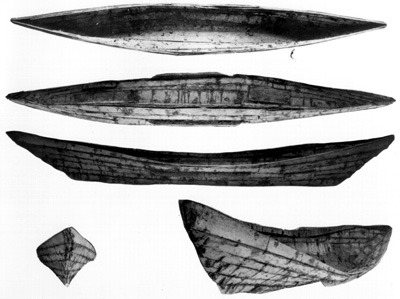
canoe caulked with asphaltum from natural seeps

The first consumers of petroleum used oil that seeped to the surface naturally.  Native Americans in California used petroleum seepage to caulk their canoes.  Marco Polo witnessed oil being recovered from seeps in 1264 in Baku (then part of Persia).
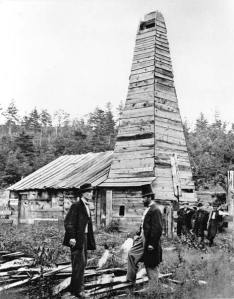
Drake Well, 1859, Titusville, PA

Natural seeps helped Colonel Drake target the first commercial oil well in the U.S. (Titusville, PA, 1859).  The amount of oil that seeps to the earth’s surface is surprisingly high.  In fact, a Norwegian Petroleum Directorate article on natural seeps estimates that “at least 1/3 of all oil formed below ground escapes to the surface as seepage.”

Natural seepage has increasingly factored into the offshore drilling debate.  The MMS Oil Spill Fact Sheet notes that “natural seeps introduce 150 times more oil into U.S. marine waters than do OCS oil and gas activities.” These data are intended to provide context, not to downplay the significance of drilling and production spills.  A large spill is an undesirable event at the location where it occurs,  regardless of how the spill’s volume compares with  regional, national, or international seepage totals.

Natural Seeps, Coal Oil Point

A California advocacy group, Stop Oil Seeps, has taken the “seep argument” a step farther by promoting  offshore production as a means of reducing natural seepage and the associated air and water pollution.

While SOS’s position is interesting and perhaps justified for areas like Coal Oil Point (Santa Barbara Channel),  not all production prevents or reduces seepage.  Offshore oil and gas seepage results when hydrocarbon-bearing formations are exposed to the sea floor either directly or via fractured or permeable overlying sediments.  Where such conditions do not exist, oil and gas production will not reduce seepage.  SOS’s enthusiastic support for California offshore production is refreshing, but advocates should exercise caution in making claims regarding seepage reduction.  Prospects for seepage reduction from offshore production range from highly likely (Platform Holly and Coal Oil Point) to highly unlikely (deep formations protected with impermeable cap rock).

While we applaud their enthusiastic support for offshore production, the SOS plan raises a number of questions:

  1. Is SOS suggesting that offshore production only be allowed if such production will reduce seepage?
  2. How much can offshore production reduce overall seepage in the region?  Is it cost-effective and feasible to achieve significant, long-term reductions in seepage that has existed for thousands of years?
  3. If the objective is to produce oil and gas, and generate the associated revenues, why not say that straight away?  Why is seep reduction necessary to justify responsible offshore production?
  4. Since the resources of the OCS are owned by all Americans, how does California justify “negotiating to retain the full fees and royalties for federal OCS leases and production revenue.”  Should Louisiana, Texas, Alaska, and other states also receive all fees and royalties for production from Federal waters?  Should these payments be retroactive?  Should states also receive all royalties and fees for wind and hydrokinetic energy produced in Federal waters?

While Platform Holly may be a negative spillage facility  (i.e. Holly’s seep reduction may significantly exceed the platform’s production spillage), this type of seepage reduction has not been demonstrated at other platforms.  Decisions on offshore exploration and development should be driven by the economic, energy security, and environmental benefits.  To the extent that production reduces natural seepage, all the better.  However, seepage reduction is not a primary reason for producing offshore oil and gas.

Read Full Post »

The Florida Legislature may soon decide whether to lift the 20 year ban on oil and gas exploration and production in State waters.

As part of  the review process, the State has prepared a list of questions on the management and regulation of offshore oil and gas resources.   Responses to these questions will help define the general terms of the regulatory regime that the State would follow if the ban is lifted.

The State is inviting input on any or all of the questions.  Please email your responses to adam.blalock@myfloridahouse.gov by the close of business on Monday, March 15.  Response should be limited to no more than 500 words per question.

Read Full Post »

The case for increasing production offshore California is relatively straightforward:

  1. The oil is there and production could be increased relatively quickly.
  2. Because of existing infrastructure and advances in extended reach drilling technology, additional offshore facility needs would be minimal.
  3. The safety and environmental record, while not perfect, has been exceptional.  (Opponents and supporters of California offshore production should fully agree on one point: We must never forget the 1969 blowout, and must challenge operating practices that make these type of incidents possible.)
  4. An effective regulatory regime is in place.
  5. Both the State and Federal governments need the revenue.
  6. Importing 50+% of our petroleum is detrimental to our economy and has significant national security implications.
  7. 25 years of offshore leasing moratoria demonstrated that you don’t reduce domestic consumption by restricting domestic production.
  8. Because of common infrastructure and support service needs, offshore oil and gas operations are complementary to (and may accelerate) wind and hydrokinetic energy development.

Read Full Post »

Magne Ognedal

BOE is pleased and honored that Magne Ognedal, Director General of the Petroleum Safety Authority – Norway, has agreed to the blog’s first interview.  Magne is an internationally recognized authority on offshore safety and regulatory policy.  He has been a leader of the International Regulators’ Forum since its inception in 1994, has assisted governments with emerging offshore energy programs, and served as program and steering committee chair for major international conferences.   He was recently appointed by the King’s cabinet to a second 6-year term as Director General.  I’m sure you will be interested in Magne’s candid and informative comments about offshore safety, regulatory policy, and international cooperation.

I am glad Norway is one Kingdom!

Update: See Magne’s 10 February comments about offshore safety and PSA’s report- Safety Status and Signals, 2009-2010.  For an e-book version (nice work by Ole-Johan Faret!) click here.

Read Full Post »

The acronym is awkward but the International Committee on Regulatory Authority Research and Development is a great source of information about offshore safety and pollution prevention research.  If you need more information about a design, operational, or management issue, there’s a good chance that an ICRARD member has conducted a relevant study.  Go to the ICRARD site and give it a try!

Read Full Post »

Dan Field, North Sea Danish Sector

BOE applauds Denmark, not just for its leadership in conservation and wind energy, but also for its commitment to offshore oil and gas production.  Denmark (population 5.4 million) currently produces approximately 250,000 barrels of oil per day from fields in the Danish sector of the North Sea.  On a population basis, this is the equivalent of 14.4 million bopd for the US (310 million people), more than 10 times current US offshore production and more than double total US (onshore and offshore) production.   Does the US need to be more like Denmark?  Yes, we need to produce more and consume less!

Read Full Post »

No mas!

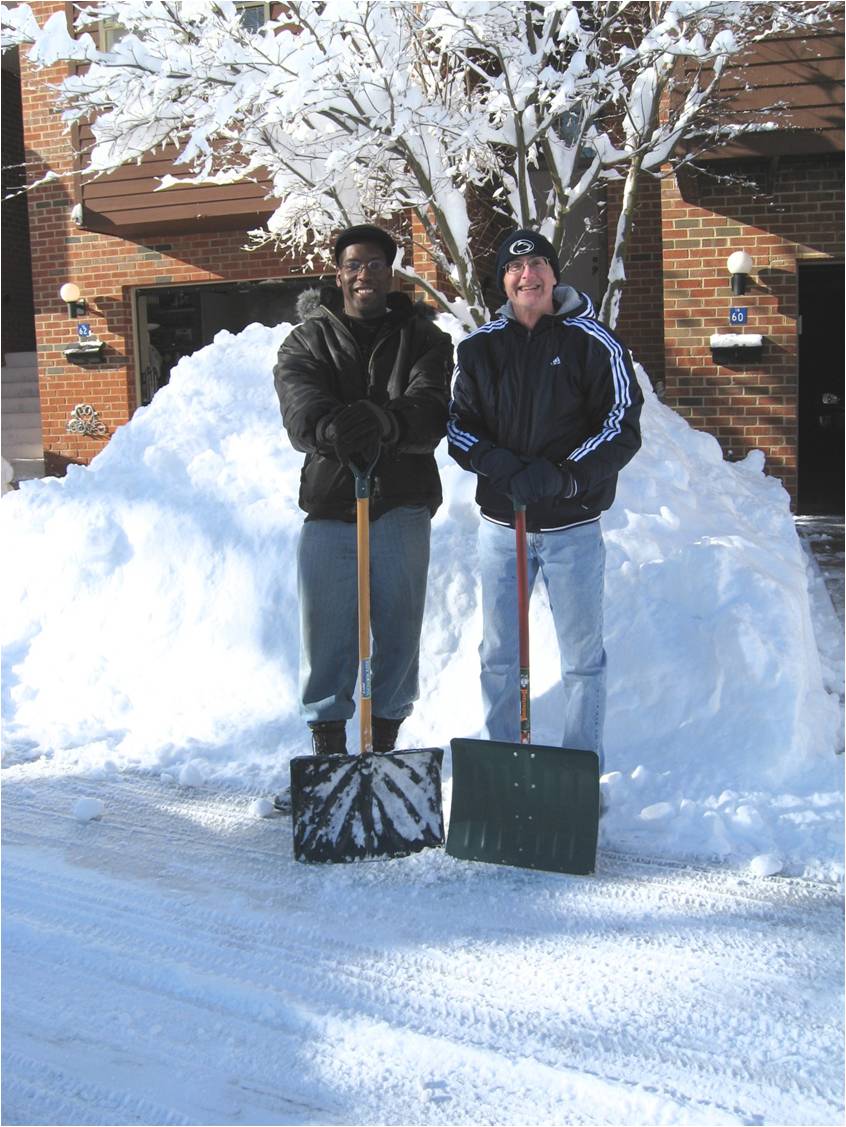
Like Roberto Duran in the famous “no mas” fight with Sugar Ray Leonard,  the DC area has proven to be no match for the relentless winter of 2009-10.  In offshore facilities design terms, we have experienced two 100-year storms, multiple lesser storms, and lots of snow fatigue!

Powered by Renewable Energy

At BOE headquarters, our low-carbon, renewable energy snow removal system has been seriously tested by the record snowfall, and the planners didn’t take snow-piles (mountains?) into account when they designed our “smart growth” community.

This winter has definitely given a boost to telecommuting advocates.  Commuting in these conditions makes little sense for the typical office worker who can work from home.  Businesses and government need to fully incorporate telecommuting into their business plans so they can continue operations during snow and other emergencies.

Read Full Post »

« Newer Posts